Ginny Finn: The Currency That Counts is Kindness
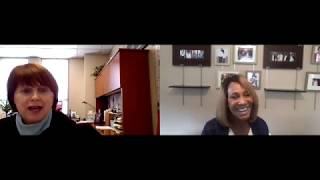
A recorded conversation (May 8, 2020) between Beth Ridley and Ginny Finn (CEO, YWCA Southeast Wisconsin) about adapting to the COVID-19 pandemic. They discuss maintaining staff connection while working remotely, the chance to reset priorities (health, kindness, and community), challenges of being an essential service, intergenerational leadership modeling, wellbeing (sleep, rest, reflection), and accelerated adoption of technology.
Chapters
So today I have the pleasure of speaking with Ginny Finn, who is CEO YWCA Southeast Wisconsin. Ginny, thank you so much for joining me.
Delighted, Beth. Nice to see another person.
Yes, exactly. So, Ginny, you know what? We connected early on. It might have been just that first week of the stay at home order. And you know what? One thing I really admired about you, it felt like you had already embraced the new normal. You know what I mean? You were sort of navigating and finding your way. You are upbeat. And so I'm just curious to know, like, a month in, how are you feeling today?
Well, today is great. Maybe Friday wasn't, you know, all that. You know, that's. I think the thing we all have to get used to is that this is a constantly evolving situation. And the more we accept that, the easier it will be. It won't be easy, but if we expect predictability, if we expect things to go in a straight line, I think we're all going to be disappointed. So that's part of it. I also, even though I'm not physically working with people, I obviously am still connected and working with my colleagues. And we're funny people. I mean, we like to laugh just as a matter of normal stuff. So we've made a point of trying to make each other laugh even as we're going a mile a minute. And then I think the other thing is just simply the nature of our work. Because. Because we're an essential service and part of an essential network of support. We have a frame of reference that we're lucky. I mean, we're working. We have the ability to work remotely, and we are so grateful to the members of our community that are doing all the things that we can't do. So I think those things make you upbeat even when reality strikes. I mean, we have had COVID 19 strike very close to home for our staff and some of our close community members. So it's all a mix. I wouldn't say balance, because you're juggling. Right. But it is a mix. And I think recognizing that helps you keep upping.
Yeah, no, very well said. But you had mentioned that you're an essential service. Right. So on one hand, lucky, but also I would imagine there's like, a lot of pressure, right, as an essential service. A lot of people are depending on YWCA and they're looking to you, particularly in a time of need and challenge and difficulties. Are you guys giving a lot of thought to what your services look like in a new normal? Right. You know what I Mean, I'm not sure that we're going to go back to exactly the way things were. You know, it might be phased in, and even then, the new normal may be a little bit different. How much of you guys, in addition to block and tackling during the day, you're giving thought to a future that you might not have envisioned a month ago?
Well, we started those conversations pretty much 10 minutes after we made sure everybody was remotely connected in some ways. I mean, no one wants to get there the way we are all getting there. But the idea of a new normal is not a bad idea. We have been living in a world that has been overextended. There's a wonderful thing about go, go, go and being connected and being energetic. And there's a downside because you don't necessarily give yourself or your fellow human being the time to reflect. The time to actually go outside for a walk. To be in constant motion can be really exciting, but it's not necessarily healthy when it's constant. I think it also is important to know we're all at different places in life and to be in constant motion if you're healthy and you have a good paycheck and an education is a different thing than to be expected to be in constant motion when you don't have those things and you're just trying to figure out how to build a healthier, better life for you and your kids. And so I'm actually hoping that we can be more reflectful, reflective. I'm not sure if I'm saying the right word.
I get what you mean.
So that when we do go back to normal. Part of going back to normal is defining a world as we want it. I'm not suggesting we're going to throw out the baby with the bathwater, but maybe we're going to prioritize our health as a community better. I mean, the simple thing of maybe if we all just stay home when we have the regular flu or a cold, now, that alone would just make us so much healthier, for heaven's sakes. If we don't now appreciate what teachers do every day, then we're pretty blind. But I'm also. I don't want to sound Pollyanna, but because there's a lot of hard work to do and there's a lot of work where we have to honest with ourselves about what's broken. But I think there have been ways that we've come together as community that surprise us. I'm in a particular couple of chat rooms with other CEOs and executive directors of nonprofits in the social sector throughout the country. And number of people were reporting how their bankers were working over Easter to process paperwork. And I thought, well, isn't that an interesting world? We're going to actually admit that bankers are part of, you know, making things right. And, you know, we are now finally appreciating the people on the front lines who drive our trucks and work in our retail establishments and of course those who are in health care settings, whether they're a medical professional or the janitor. We now understand all those dots connect in a way that I think we would say we understood before, but now we understand it in our bones.
I totally agree with you. I mean, that really has been a silver lining through all of this pandemic is that we have the opportunity to kind of reset with our priorities, our values, putting people first, showing more compassion. I love all those things and the optimist in me feels like we can carry some of that goodness going forward. But then sometimes I'm like, will we really? So what are your thoughts on that? And even for you personally, are you committing to do anything differently to maintain some of that silver lining that was uncovered during this pandemic?
Well, I think your point about will we really do it, I think we will. And I think we'll take one step forward and two step back and a couple sideways and then three steps forward. I think what doesn't change is that we're human, right? So we are going to be fallible. We're not going to get it right. What I hope has shifted is that if we don't get it right, we won't dismiss that it was a bad idea and that we will still try to create a new normal that is more inclusive and that is working for everybody, not just some people. And to recognize that if we try something and it doesn't work, that doesn't mean we're on the wrong path. I think the other thing that I personally have to remember is this is a marathon, this is not a sprint. I mean, and perhaps the health dynamics are a good analogy for us all. We're going to shelter in place till an appropriate time based on the data that's available, and then we will move back into having social norms again. But it doesn't mean it's going to be a straight line. There will be flare ups, there will be medical concerns. What goes on in a large metropolitan community may be very different than happens in rural areas. And both experiences are going to be real and valid. How I keep myself upbeat Focused on that. And honestly, some days I do a really great job and sometimes I don't, quite frankly. This past weekend was tough. I didn't have 900 things to do and I realized that I wasn't actually taking the time then to reset like I just said I should five seconds ago. And I found not being busy made me anxious. So actually reflect what's going on with me personally and then how does that translate into whether or not I'm being supportive of my colleagues and my staff?
Right. Yeah. I think our culture is. So normally we put a premium on being busy. I think a lot of us don't value. Sometimes we need to do nothing or reflect and rest and recharge or we don't feel that we're being of value or service to others unless we're do, do, do in constant execution mode. So I think maybe that's a unique challenge just for us Americans that are uncomfortable not being busy. But I really like how you are. You almost have a certain. You exude sort of like patience a little bit. Appreciate. I really like what you said about just because we want to be intentional about keeping the things that have been good lessons during the pandemic and it doesn't necessarily work out or we'll take two steps backwards, three steps back, that it's not a good idea to not give up on that good idea. For me, it's almost like when I try to stick with healthy eating, like if I have a day where I have a brownie, I'm like, the whole thing is not working and I'm ready to throw the whole thing out. It can't be done. But I'm going to channel you going forward. Remember, just when you slip, that doesn't mean that it's not a bad idea and it still doesn't mean that it can't be done if you have that long term perspective.
But it's hard to remember that in the moment.
It is hard to remember that in the moment.
I know, oh my God, I had a brownie. Now I guess I'm going to have this too, right? I hear you. I mean, you know, I can, we can all talk a good game, right? But living it is the tough part. Living the tough part. So maybe that's the best thing we can do for each other is reinforce this and to find that mix of giving each other a little slack when we screw it up, but also, you know, allow someone who's, if I've screwed up, give me a little slack and invite me back onto the right track. Rather than say, no, you can't be part of the solution anymore because you didn't do X, Y or Z. Yeah.
I would say being kind to ourselves. Yes. Again, back to the diet thing. I will beat myself up if I have that brownie. You know what I mean? Rather than saying I had the brownie, you know, move on. Right, Move on. Yeah. Make the next decision a better one.
Well, and we model that behavior for our kids, whether they're our own personal kids or other kids in our life. And, you know, they can tell the difference if we're saying one thing and doing another.
So if we're saying our kids, employees too. Right. As the leaders looking at you.
Exactly. Well, and that's particularly interesting. It's interesting when you talk about the work setting, I think we forget there's so many different generations there. And so that modeling of that behavior is intergenerational, not necessarily about your title, what you're doing. I think the older generation, which I guess I'm close again to be part of, if we can remember that. But it's interesting that you mentioned the employee thing because on our first all staff meeting, which was a video chat, the meeting had already been scheduled. We had to switch to being a video connection. And then what was interesting is, so I'm of a certain age and worked in a certain industry. And so I was asked, you know, in front of everybody else, have you ever been through anything like this? And of course, I don't think any of us have, at least not me. But I was a young professional working in San Francisco and then New York City during the decade plus, that was the big part of the AIDS epidemic and happened to be working in the performing arts. And that was an industry that was immediately affected. I remember everybody being sick quickly. Now, it wasn't obviously everybody the way now, and certainly it was a communicable disease, but in a different way. But I remember having everything offended. I remember, as you say, the only currency that counted was kindness. Not just in your everyday life, but especially at your office. And for those of us that muddled through that time, I remember that feeling and I think it's been really helpful because no matter what goes on, the sun is going to come up tomorrow. We are still going to have a lot of stuff to get done, and we have to look out for each other. And who's vulnerable is being redefined, but we will get through this. So that's the optimism, the pessimism, I think just comes in with exhaustion. Sometimes you're just tired.
Yeah.
Like you said, you have to just give yourself time to reflect and step back because it's essential. You have to do it.
Yeah, it is. And I think that's another thing a lot of people are coming to realize again sort of with this go, go, go, we're only good if we're busy culture. You know, I think and the lack of sleep, like we're so sleep deprived just as a people in general. And I always feel like everything seems more possible and more positive when I get a good night's sleep. So knowing when to shut it off and get a good night's sleep, I'm even seeing it with my kids.
Really?
Well, with my teenage kids. Right. So they would have so much homework and then they would have after school activities. They may not be getting. Sometimes my oldest son isn't getting to bed till like midnight or 1am because he's just trying to keep up with everything. And now, you know, no more after school activities. And their online school pretty much ends at noon. You know, they're going to bed at 9pm and I can definitely see a difference in just their attitude. I think, you know, we get used to operating in a certain mode. I don't think we appreciate how tired and exhausted we are until we have that opportunity to maybe, you know, sleep more and we can actually feel the difference.
Absolutely. Well, it's funny you say that because I do find even on weekends, this weekend being an exception, but I've been taking little cat naps and actually had deliberately scheduling quiet time. Like I'll just tell my husband I'm by myself for a while, etc. And he does the same thing. But, you know, you know, how did. The question, I guess, is how to translate these things to work culture when all of us, first of all, we didn't all start with the same work culture, right. So been taking the lessons we're learning now and then bringing back to the office. How well they'll be received and how we integrate them depends on the work culture that we started with. Certain industries will have different demands on people's time different ways. Right. I mean, it's not going to be one size fits all.
Yeah, yeah. I think those are all really good questions. And what I'm hopeful about is that this was enough of a disruption that I think we can never completely go back to normal or forget this experience. And it does provide an opportunity to reflect and possibly reset, even with workplace cultures that were nothing like this before. So I think at the very least, people might be open to the conversation might be open to reflecting. What have we learned about ourselves, our culture, our leadership, and what are the things that came out of it that we might want to continue? That's what I'm hopeful about.
Well, the technology thing is fascinating. Not in terms of, not just in terms of delivering services and whatnot, but I had been taking some classes on the side to learn different technology tools that I'd been kind of self doing and move along all that fast. Well, now that I've got blocks of time, been making much better progress and I'm also seeing how to translate that to my everyday work. And so that's kind of exciting.
That is. That is. I think we've all become an old.
Dog learning new tricks.
Yeah, well, we've all become a little bit more tech savvy. If I can get my two 85 year old parents on Zoom, anything's possible.
You got your dad on Zoom?
Now that I know my dad, it took a couple tries. He's Zoom savvy now. Yes.
That's fabulous. We haven't yet tried with my mom, but it is a goal. We actually get her to put her hearing aids in, so that's a good thing.
Well, Jenny, I don't want to take up too much more of your time, but this has been really inspiring. So thank you very much for your leadership and thank you for sharing your wisdom and insights as well.
And thank you for reaching out and thank you for sharing the news that YWCA is an essential service and reality. We're busier than ever.
Yeah, we'll keep it up. Thank you. Take care.
Bye. Bye.








