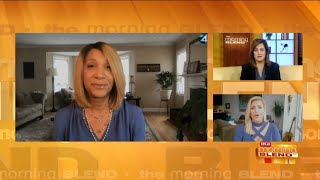
Beth Ridley interviewed over 30 CEOs about leading through crisis. The ones who'd built positive, inclusive cultures beforehand fared better. She recommends putting employees first, clear communication, and taking one day at a time.
Chapters
We are in crisis. We look to our leaders to provide guidance. From our bosses, to our faith leaders, to our government. These leaders are facing unprecedented challenges just as we are.
Joining us now is leadership expert, it's Beth Ridley who has recently spoken with over 30 CEOs from a range of industries to find out how they are managing this new normal with courage and compassion. Good morning to you, Beth.
Good morning, ladies.
Thanks for joining us today. Let's talk about this 30 CEOs that you had a chance to interview. What are you learning from these interviews? This is something really unique that a lot of people never get the opportunity to get inside those brains.
Yeah, exactly. I started doing it because quite frankly, I needed some inspiration myself. Just how do I sort of pick up in this new normal when everything around me felt difficult and challenging? So I looked to some of the leaders who I really admired and respect to get inside their mind. And really they shared 2, 2 overall themes with me. First of all, they noted that during times of crisis, the strengths, the weaknesses, the good and bad of their own leadership as well as their company cultures really started to come through. Those leaders who had always been investing in building positive, inclusive, thriving company cultures really felt that they had a stronger base to work off of. And they felt like they were in a much better position leading during crisis because they had made those investments. So that was learning number one. Learning number two is that they were noticing themselves and employees really stepping up in new ways in terms of being compassionate with one another, things that people really appreciated. And so now the question on their mind is how do they maintain some of these things that they started doing during difficult times that would be great to maintain even after the crisis is over.
See, I think that's so great. Like take what we're learning. Let's learn the lessons. But then let's not forget, let's bring it forward, which I love. You talk to them about some of their best practices. And the one that you list first, I think is so key and that is putting people, your employees first.
Yeah. And that was really across the board. Everyone felt like now is the time to put people first. Their employees are scared and anxious. Really more than anything, they just want to know that leaders care about them. And sometimes, sometimes the smallest thing, like checking in with people and asking them how are you? Really, really makes a big difference.
So simple. Let's go through some more of the best practices. You say invest in your own self care.
Yeah, that's really, really important because everyone feeds off of the attitude or the vibe that the leader has. So it's really important that the leader is somewhat optimistic, expressing a sense of calm. So whatever leaders need to do to sort of, you know, build their own positivity. And the responses I got were really across the board. For some leaders, it was vacuuming and they were saying their house is really clean these days. For other leaders, they found optimism in terms of, like, reaching out to other people, watching Netflix, exercising, getting more sleep, it almost doesn't matter. Just tap into whatever works for you so that you have a sense of calm, you have some optimism during these difficult times.
Why is it important for good leaders to rely on their teams?
Yeah, I mean, I think this is a situation where no one can figure out all the challenges alone. And if you feel that you have to be Superman or Superwoman, that just adds more stress and it doesn't help to boost your own optimism and positivity. That's so important for the reasons that we just talked about. So now is the time for leaders to really rely on their teams, to embrace new ideas, to encourage diverse perspectives. Because, you know, we need creative solutions, innovation, to figure out how to move forward. So the more ideas on the table to help, the better.
I think we all need to learn this next one. But I love that you say leaders in particular need to take one day at a time.
Yeah. And so I really took a lot of comfort in this one because I think sometimes as leaders, you feel like you have to know all the answers. And it's really difficult to do that when you really don't know what the future holds. So one leader put it really well. He said, you know what, all I can do is forge forward with the most right thing at the time and to take one day at a time and to make the best decisions you can do at the time. Because sometimes you really don't know what the future holds, even the next day, let alone, you know, a few months from now, a few years from now.
Why is it so important to have that clear, concise, but constant communication?
Yeah, communication is really important because, you know, in times of crisis, employees are really looking for information that's relevant to them, but also too much information, which I think we're getting a lot of, can be really anxiety producing. So one of the best things a leader can do is just sort of synthesize all the information that's out there, figure out what's relevant to share with employees, but also to communicate in a really consistent way, whether that be the same time every day. Because that consistency sort of gives people a sense of assurance and some sense of certainty when everything else around them is uncertain, out of time.
But just in a sentence, the last one you say is think upward, think onward, and think inward.
Yep.
So now's the time to challenge ourselves, to really think. Kind of like how we started this conversation. What have we learned about ourselves, our employees, our cultures that we can take and implement going forward so we can emerge from crisis even stronger?
Beth, some really great words of wisdom. Thank you so much for joining us today. Stay healthy, stay safe.
Thank you, ladies. You as well.
Thanks, Beth.
Always great to chat with you. And to rewatch this segment or to learn more about Beth, you can visit our website. It's themorningblend.com.