Kate Meyer: Lean into Worst Case Scenarios
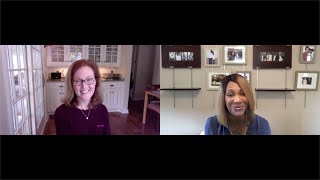
Kate Meyer, co-founder of BizTimes Media, talks about running a local news business through the early COVID-19 pandemic. She advises leaders to lean into worst-case scenarios to find options and innovation, and credits faith, family, and her own resilience from losing her mother at 14 and surviving cancer for sustaining her optimism.
Questions this video answers
April 10, 2020.
Payroll Protection (PPP) application (submitted; awaiting funding).
BT360 (new revenue-focused business segment; already underway and accelerating).
14.
In her mid-20s.
Chapters
Today I'm chatting with Kate Meyer, who is co founder of BizTimes Media. And we were chatting before we started recording that. Kate, as a small business owner of a business that is going full force covering the news of the coronavirus, you are not only wearing so many multiple hats, you're so connected with the impact that this is having in Milwaukee. So with all of that you're immersed in these days, what is your own just state of mind like, how did you wake up feeling this morning? Wow.
Well, thanks, Beth. Thanks for having me on. You know, I feel like my state of mind is like the stock market. One day I'm on and things are on an upswing swing. And then other days, not so much. Today, I'd say I feel pretty steady. We went through the whole process as a small business with the payroll protection application. And that was unnerving and kind of a scary process, but one we learned from. And our application is in at this point. We don't have word yet about the availability of funds, but we are hopeful, and it feels good to have that done. And that certainly helps my mindset right now.
Yeah, so you'd mentioned hopeful. So for me, you know, my journey through this, I find that if I can find even just a crumb of hope, that really helps to motivate me to pick up, to take, you know, each day at a time and put one foot forward. Because you see so much just in the community, in the reporting that the magazine is doing. How do you remain hopeful? Because there is a lot of bad things that are. That are happening, devastating things. How do you remain hopeful? What are your own personal tips and techniques for that?
Well, I think the number one thing I go to is just recognizing how fortunate and blessed I am and our organization is. And, you know, we've got this terrific team, such talent. And our editorial team right now is just entrenched. As you mentioned, they're working so hard, and there are good stories out there. And so when you have those moments to engage in the good stories, it really. It just kind of reassures you. But our team is really working hard on all the levels of our wonderful staff. The other thing that I like to remember is that we got so many great people in terms of resources. Our accountants, for example, have just been incredible. Right when the CARE act came out, and it was even before parts of it were actually passed, we were working with them. We were unpacking it, you know, trying to get to the bottom of what it was going to mean, and they were working so hard I just had such, like, a tremendous amount of gratitude and respect for, you know, their availability to us and what they were trying to do in this crazy time. And I remember being part of a call and Nancy, one of the partners at the firm that we work with, you know, was literally on for, you know, 15, 20 minutes, and then she had to go to the next call. And I knew that, you know, she was doing that day long with people like us. And that just resonated with me and has stayed with me. Because when you see commitment like that, and I see it with our banker, both our personal banker and our business banker, it happens to be the same bank. But boy, I mean, both these individuals have just stepped up, they had new ideas, they just want to be helpful. And I think when you have that kind of, you know, I guess, assistance in your, in your life, you recognize that there is a reason to be helpful and it kind of makes you want to be hopeful to other people in turn.
Yeah, I agree with you. I think seeing that commitment from other people, it's contagious in a way, and it makes you want to step up and help someone in whatever capacity you can.
It kind of empowers you to put your best foot forward, even if you're not certain what you can do. And sometimes just being there and just saying, hey, I just want you to know we're here.
So let me ask you this. There's so much that you're blocking and tackling just in the day to day. Are you starting to think about what Biz Times Media looks like on the other side of this crisis? How much are you investing in thinking about the future, if at all?
Very much so. Because, you know, for as you can imagine, being a local media company has its own challenges. And especially as the landscape has changed, the way we digest news is evolving so quickly. And so we went digital a long time ago, and we've put a lot into our website. We've invested in that. We want it to be nimble, we want it to be helpful. We wanted to have all kinds of different offerings. So those things were in play. And another trend that we're really excited about in our industry is content. And so we are in the process of launching a new business segment called BT360. And fortunately, this was already underway. And so now it's just accelerating at this point. And so we're excited about that because we believe it to be a really strong revenue model.
One of the things I love about you is that you're always thinking about the next Next new idea, right? You're very just sort of innovative and you love to think outside of the box. How can you continue to be relevant in good times? What's your advice for business owners, entrepreneurs, leaders in terms of how to innovate, retool, rethink, even in difficult times, or maybe especially in difficult times? What advice would you have for other people to be able to exercise that degree of creativity and innovation while there's still uncertainty around us?
Yeah, that's a good question. I was thinking about how I've been able to sort of tap into new ideas and I think what has happened and it's an uncomfortable place to be, but I think what we all need to do is be willing to go into those worst case scenarios. And so we started doing it right away as things were sort of falling apart and becoming very clear that the economic impact of this whole situation was going to be so dramatic. Dan and I right away were just like, okay, so let's just say that this is going to happen. And then we, what about this? And what if this does impact our employees, as it likely has and will all these different worst case scenarios we started leaning into. And then I did the same thing for our family and for our personal finances and for all these different things. So it was probably early last week or even late the week before that I started just taking some quiet time and putting pen to paper and sort of writing out what that looks like. And when you go deep into worst case scenarios, you start to recognize that you actually have options and what comes out of it is really options that you would have probably never considered as good ideas. And they suddenly become things that, yeah, actually that is an idea. It wouldn't be something that I would have chosen a couple months ago, but now, given today, it's actually a legitimate idea. Then you start kind of capturing those ideas and you recognize that when you have ideas and options, it's empowering and, you know, it provides you with this opportunity to kind of, you know, start to reflect on, well, why wouldn't have I. Why wouldn't have I considered that a couple months ago? And that exercise has actually been really helpful to me.
Yeah, I love it. Well, thank you for sharing because that's very practical and tangible that others can embrace and find a silver lining or opportunities even during difficult times. So, Kate, my last question for you is it seems like you kind of make it seem almost easy or natural for you to stay optimistic and to feel empowered when there's so much around us that is uncertain and challenging Is there anything that you reflect on in your personal life that helps to give you that sense, sense of strength and how to navigate during these difficult times?
Yeah, Well, I have to be honest, I've been in tough circumstances before and.
I think.
I'll share. So my mom died when I was 14. She had breast cancer. And I'm the oldest of six kids. And our dad is a fabulous father and he's strong, but at the time he had a very busy job. And so I took on a leadership role at a very young age in my family. And I learned ways to kind of read my dad and figure out ways to help him see what I thought my siblings and I needed at the time. So drawing from that experience, and then as I got older, I actually had cancer in my mid-20s. So again, I've been in these situations where the rug gets pulled out from you. And the more you go into those kinds of things, because we all have them, and you see that you can actually get through it. You recognize that you actually have this muscle. And this muscle may not be exercised on a day to day basis. But you know what, it's time to pull out that muscle again because we all have it to some degree and use it, lean into it and recognize that. Yeah, this is really crazy. This is so unprecedented, so uncertain on so many levels. But, you know, we've all been there and, you know, to some degree. And I think, I think we can. I think we can tap into that strength. I would say my faith is a big part of that too. Having some kind of faith practice or part of faith in your life is very helpful to many. And I would say, you know, my dad said to me right in the beginning of all this, he's still with us. He's almost 89. He'll be 89 this month. And he's very engaged in his own business still. He still works full time. He said, you know, everything's going to be okay. He said, the opposite of fear is faith. And, you know, you have your faith and so, you know, really lean into that at this moment. And that has resonated with me lot. And I kind of hold that deep in my heart because it's a good reminder on those days when my emotional state is like the stock market plummeting.
I remember that, you know what, Kind of interestingly enough, the stock market always goes up. You know, there's a lot of up and down in between, but overall money there, because it does go up. So I think it's almost kind of just like what you were saying, I think on any given day we'll have our ups and downs, but overall, we all have that resilient muscle. We may not know it until we're able to tap into it.
And Beth, I think this especially is a great moment for our kids to experience this adversity. I think, yes, there are plenty of kids who are highly challenged, but there are plenty of kids who have had parents who really paved the way for them. And, you know, life has not been hard the way I might have experienced life at 14. And I'm encouraged because I do think when we have these adverse situations in our life, we become better, stronger people. And so I see. I'm actually really optimistic for young people. I think if we can all support them the best we can, I think there's just going to be a lot of opportunity for really strong, interesting young adults.
You know, it is really interesting. I mean, these life shaping moments do leave an indelible mark on our young people and it does shape what kind of adults they become. So when I was working in corporate at one point I had accountability for our internship program and hiring young students to work over the summer. And a lot of these students were maybe like in high school during the 2008 economic crash. And a lot of them were saying, I saw my parents lose their jobs, things really changed. We suddenly were okay financially and then we weren't. And that really left an impression on them. And a lot of young people were saying, I put a value on stability and security, which you don't typically hear that coming from a young person, but I realized the impression that that experience left on them, you know, at that age, caring to them through adulthood. And maybe there's a generation of young people who will be, you know, value more security and stability and who knows? But I think also when I look at my high school kids, the impression that that's going to have on them and carry with them to adults. And yeah, I think a good thing is that they are developing and exercising that resilient muscle at a young age that, you know, I might not have had to when I was their age, so.
Right, right.
I can always count on Kate to provide some perspective, some very helpful words of wisdom. So, Kate, thank you very much for your time.
Oh, thank you, Beth. It's been fun.








