Kimberly Kane: Keeping the Wellbeing of Employees Top of Mind Every Day
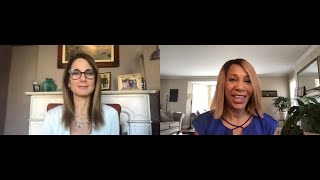
A short interview (recorded April 3, 2020) with Kimberly Kane, president & CEO of Caine Communications Group, about leading through the COVID‑19 crisis. Kane describes maintaining a positive mindset and daily habits (finding joy, scheduling breaks, getting outside, planning the next day), shifting leadership priorities to employee health and wellbeing when the pandemic intensified (around March 17), increased trust from remote work, and her agency’s public information campaign Stay Home MKE to encourage compliance with safer‑at‑home guidance.
Chapters
I am chatting with Kimberly Kane, president and CEO of Caine Communications Group. Kimberly, thank you very much for spending time with me. I know this is a very busy time for you, so I appreciate taking the time.
We'll always make time for you, Beth.
Oh, that's kind of you. I appreciate that. Thank you. All right, so, Kimberly, we're talking about leadership during times of crisis and challenge and how leaders are having to evolve and sort of new things that they're embracing. And also, just how are you keeping your own positive mindset up so that you can lead and be there for others? So my first question to you is, how did you wake up this morning? What was your own mental state of mind? And has that been evolving and changing much since we've all been now staying at home?
Yeah. You know, I always wake up positive and excited about the day. I think I've always been that way. When you're a leader, when you run a company, when you're a parent, there is always so much stress on your shoulders. Right. And I think we just have to expect that and we have to accept it. And I always find that I'm most productive and able to empower the people around me when I go into the day with a positive mindset, no matter what the challenges are. I think when you're a leader, you always have to be ready to solve problems, and it's much harder to do that when you're angry or you're stressed or you don't have a positive attitude. So that's the approach I try to take every day.
Yeah, I love it. So that hasn't really changed for you. You really lean into your role as a leader, but on an ongoing basis. Do you have any tips or techniques that you do so you can wake up every morning with a positive mindset? What are your own personal habits that help with that?
Yeah, well, I think one of the most important things to do is to find joy every day, no matter how difficult the day is, no matter how stressful the day is. I think, you know, there are lots of memes, right, that are going around right now because of the difficult situation that we're in with COVID 19. And some of them are ridiculous, but you really have to laugh at them. I mean, I enjoy it when people share those with me because you have to press, pause and laugh a little bit. You know, I also happen to have my four children home with me, so two of them are home from college, and there's a new set of chaos I think that they have brought with them. You know, having a 19 year old and a 22 year old back at home. And so I think as life throws kind of new challenges your way, you have to try to find kind of the positives in all of those things just to keep going. So finding joy every day, you know, finding some positives in chaos. I think also, Beth, being really organized. So the night before, I really try to put together a good list of what I need to get done the next day. So no matter how tired I am the night before, I know that if I'm not pretty organized going into the day, the next morning, it's going to be harder for me to prioritize my time. And it's also harder to take a break. So as human beings, we need to give ourselves a chance to just step away from the computer and press pause. So I like to try to schedule that time in and take a break and getting outside. The other thing that I think is important for all of us to do is get outside, take a walk, even if the weather's bad, to get fresh air. So we've scheduled that into the day as well.
Yeah, I like that. I think sometimes we have to schedule it in order to do it. Like, I think intellectually it's important, but we never get around to it. So I love the fact that you actually are scheduling it to make sure that that happens. So, Kimberly, give me, like, maybe one or two examples of how you might be leading a little bit differently during this time. Right. So things have changed. Right. We don't have all the answers in terms of what the future holds. People are working remotely. What have you done differently? Or how are you leading differently because of the circumstances around you?
Yeah. Well, I'll go back to March 17th. So it was a Monday or a Tuesday, and that was the day when our clients really started bringing us in to help them full force. With COVID 19 communications. And leading up to that, I think the team had been looking around and thinking about, how is this going to affect me? We're still really focused on client service and making sure that we're doing all the things we need to do for our clients. But over the course of those two days, the attitude and the energy of my team shifted. And Beth, they were afraid. I was getting text messages saying, should we be working remote? Should we even be here? And when I looked at my employees, there was fear in their eyes. And this was a crossroads I had never expected I would be at as a leader, where I was in a position where, you know, I'm so Used to being in charge and feeling like I have some control. But in that moment, what was best for the business was not what was most important. What was best for my employees and my team was what was most important. And since that time, we have all been working remotely and that's had to stay top of mind for me. Yeah, productivity is critical. Making sure we're staying in touch with our clients and meeting objectives is critical. But every day I make it a point to reach out to them and say, how are you doing? How's your family? Are you staying safe? So I think that's been one of the biggest changes for me as a leader is to make sure that I'm keeping the true health and well being of my employees top of mind every day.
Do you envision that that is something that you will continue if when we go back to normal, you're finding value in that, that that's something that you'll continue?
Absolutely. Yeah. I really love it and it's really brought the team together a lot closer. What's interesting is I think working remotely has increased the trust among our team members. We can't see each other, we can't track each other down physically. We have to rely on each other in a remote setting. So I think it's improved the communication across the team and I think it's really improved trust. It's absolutely taken our relationships with each other to a different level, which is neat. Yeah. I'm not sure how that's going to translate when we get back into the office. You know, it's funny, I was putting together an employee engagement survey, so looking at developing an employee engagement program before this, you know, COVID 19 issue hit, I think that's going to look different when we get back together.
Absolutely. And you know, it's really fascinating because I think people are really stepping up leaders and employees in different ways because we have to. And some of that is a silver lining because there are things that we probably should have been doing and should absolutely try to continue. So I think I agree with you. The trick will be can we continue it, you know, when things sort of go back to normal. Because some of these things are really good things like the compassion, the care, the empathy, the trust, you know, all those things are. I think people really appreciate it now. Right. Appreciate it after. Will we keep doing it? I think that'll be the challenge.
That's such a great point. You know, how do we not take some of these really important.
Before we sign off, I really want you to share a little bit about some really important work that you're kicking off on behalf of Milwaukee county called Stay Home.
Thanks, Beth, for giving me the opportunity to talk about it and for your involvement in the campaign as well. And I hope we get to talk about that just a little bit, too. So Stay Home MKE is a public information campaign that we're just beginning to get off the ground here in Milwaukee. And it was really born from the input of public health and health system leaders and public safety leaders from across the 19 municipalities here in Milwaukee county who said, listen, we have this safer at home order that's come down now from the governor. We know that safety, staying at home and being compliant with what all of the health experts say we need to do is the way we're going to begin to flatten the curve and save lives here in Milwaukee. But how do we enforce that? How do we get people to actually embrace that and do it? Because we don't want to enforce it from a law enforcement perspective. And it became clear that a very proactive messaging and public information campaign was the way to go. So Stay Home MKE was born from that effort. We now have a website. Well, we'll have PSAs that are running. We'll start working with the media to talk about this. And really, the message is we can all do our part. Every one of us can do our part to stay home and keep people in our community safe. We know we have essential workers who are out on the front lines. We have law enforcement. We have nurses and physicians. We have public health practitioners who don't have that option. We have individuals we rely on when they go to the grocery store and the gas stations and other places who don't have that option. So how can each one of us who does have that option protect them and protect our families? By reducing the spread of COVID 19. And that's by staying at home. Each one of us can do our part.
You know, I really like that because it does give everyone a sense of feeling empowered when everything else around us is out of our control. Right. Like, that is one thing that everyone can do to contribute in a meaningful way, because it actually does make a difference. And I struggled with that when the first stay at home order came. Right. I've got three teenage kids who want to go out, and they're sort of of the mindset like, we're young, we're healthy. You feel kind of bad. I'm like, well, I don't know. Are other parents letting their kids go out? My parents are 85, so I was really trying to be protective of them, but they still want to go and do their routine. So I have been kind of struggling over the past couple of weeks of how do we all do this together and take that accountability? So I feel like the campaign will only help me because then I won't feel like I'm just one mom and one trying to make these decisions by myself. I can feel like, no, I'm part of something and we can all play our part together. So it's kind of empowering from that standpoint. So I love it. I'm super excited to help spread the word, so. Yeah, well.
And you're going to be working with us as an influencer, so that's really exciting, Beth. Really, you'll have the chance to share your story. And, you know, I think we all have trusted people in our networks, right? And you've got such a phenomenal network, and, you know, those are the people that each one of us can turn to and say, hey, did you know about Stay Home, Mke? And why don't you join me in this? Because we can all do this. It's ironic. We're all going to do this together, right, by staying at home. So it's a huge collaborative. I hope there's a lot of pride that everyone, you know, develops as they get involved with this. Let's champion this message. Stay home, stay safe, save lives at Milwaukee. We can do this together.
Yeah, I love it. I think that's a great place to end on a very positive note. And, Kimberly, thank you very much for your leadership and this big effort for the community and sharing some of your tips and your practices to do that with us today. So thank you. Absolutely.
Beth, great to work with you. And thanks so much for the time to have this conversation.
Thanks.








