Lisa Caesar: Be Pragmatic, Not Just Positive
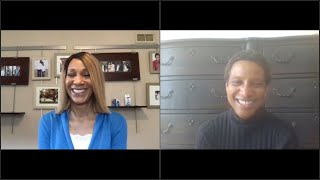
Lisa Caesar, COO of NO Studios in Milwaukee, explains how the social club pivoted to online skillshares and livestreams during COVID closures. She argues for pragmatism over forced positivity, stresses keeping routines like daily runs and team meetings, and credits community strength for getting through until physical gatherings return.
Questions this video answers
March 24, 2020
1037 W. McKinley Ave., Milwaukee
57 years old
20, 17, and 13
Chapters
So welcome, everybody, to a Brimful Life podcast Coronavirus special edition, where I am interviewing leaders and people who are leading with optimism through these challenging times and finding creative ways to stay connected. And so my first guest is Lisa Caesar, who is the chief operating officer of NO Studios. Hi, Lisa. Hello. All right, in case you are not familiar with no Studios, it is Milwaukee's new social club for artists, creatives, and entrepreneurs. And the whole vision and spirit of New Studios is to create a beautiful place where creatives of all kinds and folks from all diverse corners of Milwaukee can come together, connect, collaborate, and meet and socialize with purpose. But clearly, the physical space is a key part of that vision. And now, like so many other places, it is closed due to health concerns. So, Lisa, my first question to you is, how are you doing? And how are you sort of managing and leading through these challenging times when the main focus of no Studios, you know, the physical space can actually not be open.
So, you know, the essence of no Studios is the opposite of social distancing. I mean, we had to rework, you know, really our business model. So what we've decided to do is pivot to just having everything online. Even the live streaming at this point is really impossible because we don't want anyone in our space for obvious reasons. So what we're doing is we're focusing on the online component. We have a skillshare plan for later this week. We've invited someone from Los Angeles to talk about his job. He is a location scout. We're doing curation of films through an online streaming service where they're selecting films and we're making those films available for our members, and we're working on live stream activation. So we're doing what we can do in the current environment, but it's definitely a departure from what would be normal for GNOME Studios.
Yeah. And so it's funny because this is kind of like forcing you to embrace new technology to do things that you maybe were thinking about doing in terms of expanding your reach to more people virtually, but it wasn't a top priority. Would you say that that may be a silver lining in these challenging times? Or what do you look to that could be a silver lining for you and your business?
I think it is. I mean, we had always contemplated a virtual activation because we wanted no studios to exist beyond the physical geography of, you know, 1037 W. McKinley Ave. In Milwaukee. I always knew that that was important, and we had actually invested in technology about a year ago to allow us to expand in that way. But I never. We never had the chance to explore it fully because we were so busy with the in venue activation. So now we have plenty of time to focus on our online activation. And what I envision is that in the inevitable recovery, we'll maintain those connections to our online community.
All right, so you're already planning for the recovery, inevitable recovery, as you call it. So you're clearly optimistic that we will get through this and emerge on the other side even stronger and better. I'm curious to know, where do you, what is your source of optimism? I've known you for a long time and you're always an optimistic person. I've never seen you down or in the dumps or anything like that. So would you say you're just lucky in the sense that you're wired to be optimistic, or are you having to tap into your optimism reserves at this point in time?
Well, I would say a couple of things. I mean, first of all, on the inevitable recovery, the recovery is in fact inevitable. I don't call that optimism. I just call that fact based on we don't know when that recovery will happen, but it's not an if, it's a win. And so one of the things I've mentioned to my staff is that we need to navigate this incredibly challenging environment. And we shouldn't trivialize it. I mean, it is a very, very serious and difficult environment, but it ends. And we also have to prepare for the recovery. And I think that's important. I mean, for me, I'm 57 years old. This is not my first challenge. You know, I lived through 9, 11 and the credit crisis and a variety of different really life altering events. As everyone has, you just live through more of them the older you get. And what you begin to realize is that every challenge has its arc and it has a beginning and it has its duration and it does have an end. And it's important to navigate the full arc and not just, you know, the immediate challenge, but we really do have to plan for what we will look like on the other side of this. And also that just it's healthy because you're not just navigating the current problem, but the eventual success, which is going to happen in one way or another.
So I think that's great advice for people who are not as fortunate as us to have, have wisdom that comes with longevity. So all these young bucks out there, I think knowing that we have all gone through things and there is the inevitable other side, I think is good for them to keep in mind. So one thing that you were saying before we turn the camera on is you really talk to your team about not necessarily focusing on being positive, but being pragmatic. So can you say a little bit more about what you mean by that?
So I think it's important to not feel a burden to be positive when the information that we're confronted with on an almost hourly basis is incredibly challenging. We shouldn't trivialize that or mask it. We have to confront it. I mean, this is the reality. And so I think the communication, especially with our team, needs to be pragmatic and fact based. There should be no hiding the reality because when we confront it, we can solution around it. But it's okay to not be positive. I just think it's important to be pragmatic and actually continue to move forward. So that may be a little bit of a different message. What I try to communicate is the truth and also to be balanced. Although there are a number of challenges, there are solutions attached to the challenges. Some of them are unpleasant, but they do exist. And I think we just need to be balanced and focus on not just the challenge, but the solutions and the path to recovery. So it's the whole continuum, not just all the bad news, but the fact that solutions are being put in place and that we need to just, you know, every day find, discover the new challenges, the solution to the challenges, and keep moving forward.
So you really are trying to keep sort of emotion out of it and just really stay focused on the information and addressing that information. Even if sometimes the decisions have to be unpleasant. You are taking action. And I think a lot of times simply taking action is, is a way to stay positive because you feel at least you are maintaining some type of control over what you can control when everything around you, you know, everything else around you may be out of control.
And that, that, that is a really important point. So much of what is happening now is outside of our control, but there are things that we can control. And one of the suggestions that I had for myself and also for the staff is to have a routine. You know, there are things that you can control in your daily life. Just create predictability, even in small ways. Your daily routine. A lot of folks working from home, they're not typically working from home. So this, this is new. But that doesn't mean that you need to abandon a structure completely. And I think there's comfort in that. I think there's comfort and predictability. So try to develop those structures. And so with our team, we have a weekly meeting that will not change for the duration of this disruption. So that if folks feel that they want to dial in, they can dial in. I will always be there with our general manager. Just so that there's a sense of. Of structure in an environment which is by definition chaotic.
Yeah, I like that. A sense of structure. So we're all sort of embracing new elements in our routine to make this unusual situation a little bit, I guess, adapt to the new normal as much as we can. So is there anything new that you've embraced in your routine in your day that you know what, you kind of like it and maybe it's something that you'll maintain in your routine, you know, even when we come out on the other side.
I'm a runner. I've always been a runner, but now I'm making a real effort to run every morning and I try to do it at around the same time. I think it's a great way to start the day. I'm not a person who's into meditation because I just don't have the patience for it, but I feel like that's something that I can do while I'm running. I need to do that with something. I need to multitask in some way and I just, it's refreshing. It's a great way to start the day. And then I reserve the afternoons for work. And always, you know, there's always a conference call. There's always someone to connect with the other thing. And Beth, this is a tip that I got from you actually, which, which I think is a great tip is sometimes we get in our own heads and we're worried about, as we should be concerned with our own well being. But I think a great way to get out of that space is to help someone else. And it can be just a phone call. There's some really funny kind of memes going around, funny little social media things that really. I try to share them with as many people as possible as my way just to touch base, lighten the mood. There's always humor to be found. And if I can make someone laugh or divert their attention from the news, that to me is a small way to help.
Yeah, humor is almost one of the. Always the best anecdote for challenging times. So, Lisa, just a few more questions. So you really focused and I guess not letting. Not being paralyzed by the situation that we find ourselves in. So when we do recover and get to the other side, what do you hope is maybe something that has carried through for no studios, like something new, a new capability or something like that that you Hope to see that stays with no Studios on the other side, if that question makes sense.
You know, I really just, I feel the strength of our community. I really do. I get an email or a text or a random message through Facebook from one of our members. It could be a tenant, it could be a staff person, it could be a member every day. And it's just a check in. How are you doing? Looking forward to getting back to normal. To me, that has just reinforced my strong belief that community is so incredibly important. And it doesn't have to be in the space, it doesn't have to be a physical encounter. It's just knowing that there is a shared commitment to the community's well being. And that to me is super gratifying. And I think that that's the intent of no Studios. It always has been. And I believe that when we're back to the ability to physically connect with each other, we'll just be more grateful. Like even, I mean, there has to be a sense of gratitude through all of this. Will be even more grateful that we didn't have to endure this disruption alone.
Yeah. So changing hats a little bit, taking off your COO hat and putting on your mom and wife hat. You are a wife and mom of three who are all trapped in your house in Westchester for the next who knows how long. So how is that going and how do you maintain optimism at home? Is it different than the techniques that you've used to remain optimistic in your work?
Well, So I have three kids, 20, 17 and 13. You know, the thing about kids, and I think it's a lesson for all of us, kids are very adaptive. You know, they actually roll with the situations that they're confronted with. I've been honest with them about the seriousness of the situation, but they sort of take every day as it comes. And I also think with kids it becomes as serious or as tragic as you make it, you know? You know, it's important to communicate the seriousness of the situation, but it's important to not obsess over it. And the kids will take their cues. So for them, they're very technology savvy, as all kids are. They're doing, they're all in school, they're doing the distance learning. One of my son has a routine like me where he gets up and he runs every day. My younger daughter is, she hasn't missed a beat. It's as you know, social media to her is almost like being there with the person. So for them this is a new normal that they're embracing I just think it's really important as an adult, we have a deeper understanding of the risks. And. And I think it's a balance between shielding them from the contours of the crisis that they can't comprehend at that age or necessarily do anything about, but at the same time, letting them know that this is a serious situation that has a beginning, a middle, and end, and this is just an opportunity to learn how to endure because this is a muscle that they're going to need for the rest of their lives.
That's such a great point. I think on one hand, there's a lot that adults can learn from kids and how adaptable and resilient they naturally are. But then to remind all of us that there is a beginning, middle, and end, everything does have an end. And I think we would all be better off if we develop some resiliency when we do come out from the other side. I figure we're going through hard times, they might as well benefit us in some way. So, Lisa, this is all really great advice. Thank you so much. My last question for you is, what are you most looking forward to when we're released? What's the first thing that you cannot wait to do?
Well, I can't wait to get back to no Studios when I'm actually. I can actually bar again and sit on our rooftop deck and have a beer with, you know, our members and the community and the staff and, you know, look back on this and just have it all be a memory.
Yeah.
So I'm looking forward to that. But it's the small things. It's just being able to, you know, meet with a person at a restaurant or a bar or a coffee shop and, you know, share a story or a drink or a beverage. Those are the things that just seem, you know, so small just two weeks ago that now have become incredibly important and meaningful.
Yeah. Isn't that the truth? Right. Like, you know, hopefully we'll all not take for granted the little things in life and the importance of, you know, face to face connection. But I hear you with wanting to get back onto the no Studios rooftop. And so I say let's have a huge post coronavirus celebration on the rooftop deck when we can reconvene again. So. But until then. Absolutely.
We're ready. Thank you so much.
Thank you for being a beacon of light and positivity and continue to lead with optimism and pragmatism too, which we learned from you is really important. So thank you.
Thanks, Beth. See you later. See you on the other side.
Bye. See you on the other side.








