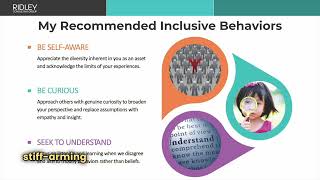
Beth Ridley outlines three simple, research-informed behaviors leaders can adopt to be more inclusive: 1) be self-aware — know and lean into your own identities and strengths while remaining humble about their limits; 2) be curious about others — ask about colleagues' life experiences and perspectives to broaden understanding; and 3) change your behaviors — seek to understand (not necessarily agree) with different views and update leader behaviors to create belonging. She emphasizes these behaviors are practical, flexible, and applicable to leaders in any role, and that they form a reinforcing 'flywheel' for inclusive leadership.
Chapters
And I said I got to come up with something better. Some. Some behaviors that align with the true essence of diversity, equity, inclusion. But at the same time, the actions are clear. They're simple, digestible, doable in the day to day, no matter what your role is in the organization, not just relevant to folks who work in hr. That was my challenge and I spent a lot of time thinking about this to come up with my three recommendation behaviors that hit the mark. I will not go into detail the research that I did to come up with these behaviors. I actually talk about it and explain it in my most recent LinkedIn newsletter, which is in that list of resources that Aaliyah hopefully put in chat or you'll get after this so that you can appreciate it included observations tapping into my own leadership journey interviews. I just say all that so you know I'm not making this up and pulling it out of my hat. There's three. There are three behaviors. So as simple as they might seem, a lot of thought and research went into them. Okay, so without further ado, here are the three. Let me explain them a little bit. So. So when leaders ask me, great, what do I do to be a more inclusive leader? I say focus on these three things. Number one, be self. Aware. What does that mean? It means really do understand and appreciate your own unique strengths, identities, backgrounds, life experiences and lean into that and be as authentic of a leader, leaning into innately who you are as possible. We need more examples of authentic leadership. So yay, because proud of who you are at the same time. Also be humble enough to know everything that makes you special is just what makes you special. Everyone else has their own unique identities, backgrounds, life experiences that make them unique. And by the way, everyone then based on their unique identities, sees the world, sees work differently than you. We just have to appreciate that your way is just your way. The way you see things is just the way you see things. I know that sounds so simple, but the truth of the matter is in the haste of our day to day, our default is everyone thinks how I think because I'm reasonable, you know, and we don't pause to consider there might be another way to look at this. There could be something else or what may I be missing? And before we know it, because we were just in a rush to get our work done, we rush to make decisions and we sort of have incomplete knowledge and they weren't quite as inclusive or thoughtful as they could be. So one, be self aware. Two, once we're sort of laying the groundwork for more self Awareness, we can then be more curious of others. So once we can admit we don't know everything, we sometimes may be wrong. The limitations of our own life experience. You just got to ask, you got to ask others to understand their life experience, understand how they see something, invite in their perspectives. And so when we do that, we broaden our own perspectives and we start to replace our own innate assumptions that we all have with a little bit more empathy and insight. And then the third inclusive behavior is, hey, the more we ask, we're going to hear stuff that we don't like. That wasn't my idea. Ooh, sorry I asked. I'm interacting with people. How can they think that way? What kind of life experience or background. Whoa, no, no, no. Not my values, not my beliefs. And then that gets challenging. And I think unless we acknowledge that this is why a lot of people are kind of like stiff arming around inclusion and belonging because they feel like now I got to change my beliefs. This is, and this is, you know, I don't want to be all woke, you know, I think the way I think and I'm doubling down on that. So I really, really emphasize it is not about changing your own beliefs or values. It may not even be changing your mind about anything. But I am asking you to change your behaviors, especially as a leader, appreciating that you work with people who are different than you. Fact. And so we need to seek to understand, not agree, but seek to understand, especially when we don't agree. And simply by understanding, we become more self aware, which allows us to become more curious. And it really sort of creates, you know, these three behaviors really work well together as sort of like a flywheel for someone to be leading in a more inclusive way. So that's sort of the magic of these three behaviors. They're so simple, they're very intuitive, but they, they pack a lot of punch, I will say. So the other thing is, after I introduce this, these behaviors, I then ask leaders, so what are you already doing in this space that's doing well? That, that, that maybe comes naturally to you, that you sort of lean into and you do well. And everybody has an answer. And again, I really want to emphasize their strengths. And so then there's like a lot of sharing. Like I do this and they have tangible examples of how these behaviors get demonstrated at work. And what I love about this is these behaviors are simple but strategic, but also flexible enough that people can demonstrate them in an authentic way. And that's really important. I really want to reinforce there is no one way. To be an inclusive leader, we need all ways that still lay the foundation for, for, for people to feel that sense of belonging. So that's sort of like a relief to people. They're like, oh, I can do this, and I can do this my way. I'm. I don't have to be restricted to, like, any one way.