Positivity in Politics: Interview with Deb Andraca, candidate for WI State Assembly
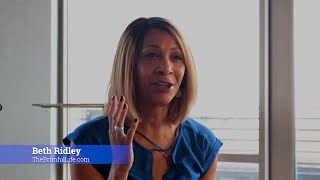
Deb Andraca ran for Wisconsin State Assembly in 2020 after Emerge Wisconsin encouraged her to run. She talks about canvassing, her work with Moms Demand Action, and the daily habits she used to stay optimistic while campaigning across political differences.
Chapters
So I am here in the beautiful no studios with my friend Deb Andraka.
It's great to be here. Thank you.
And you are running for Wisconsin State Assembly. Yes.
All right.
So I really wanted to have this conversation with you because I do consulting work all around bringing positivity into the workplace. Because sometimes workplaces can get negative and dysfunctional.
We need a lot more positivity.
And when you told me that you were running for office, I thought the only place probably more negative than the workplace and is politics.
It can be seen that way. Yes.
So you have got to have some really great optimism, positivity, best practices. So I thought I should interview you because you're really probably putting them to the test in your campaign and running for office.
I do my best.
Fair enough. Yeah. Yeah. All right, so, Deb, first tell me, like, what is your why for even wanting to step into the arena, so to speak?
I'm running for state assembly to create a safer, smarter, healthier Wisconsin. That's the theme of our campaign. That's why I got in this in the first place. So safer means better gun laws, smarter is support for our schools and teachers, and healthier is both better access to high quality health care and a cleaner environment.
Yeah. So how did it even. Like, how did it even start to become a serious idea for you?
Well, my first career out of college was in politics. That was a long time ago. When I was in college, I had an internship in the governor's office. My first job out of college, I went to Washington, D.C. and I worked for a renewable energy trade association. And while I was working there, I got a master's degree in political management. Because I did think that I would be going into politics. I never actually thought that I'd be a candidate. Shortly after that, I worked on a successful congressional reelection campaign as a press secretary. But then once my husband and I relocated to Wisconsin, she. Shortly after my first daughter was born, I decided to stay home full time with my kids. So I left politics behind. Eventually, as my kids grew up and got a little bit more independent, I started volunteering more and more. And I started volunteering with a group called Moms Demand Action for Gun Sense. And that's where I started getting really involved in common sense gun policy and common sense gun laws. And because I had the political background, I helped them organize Advocacy Day in Madison. I trained volunteers on how to talk to their legislator. And the more I learned, the more sort of upset I was about the state of so many of these issues. And ultimately, I learned that the person who represented me, my own assembly person, didn't believe we should have background checks on all gun sales. He didn't believe we should have policy. He believes in policies that take funding away from public schools. And he doesn't believe in climate change, and he's a former weatherman. So that it really surprised me. And it just spurred me to realize that, well, I have done some of this before. I have a skill set that could be useful. And the more I realized that I couldn't change his mind on these issues, I decided that I could change his job. So that's why I like that.
So it makes sense, right? You do have some relevant background, for sure. But still, I think for me, taking that step is still like a really big leap. Right? So a lot of people are upset and want to see change. Very few people throw themselves in it. So was there. Did you even pause on making that decision to really throw your hat in the ring? Like, did you have to think about it long and hard, or was it a fast decision for you?
No, it wasn't a quick decision at all. It was sort of a gradual realization. You think that you can. When you talk to someone and you present something like background checks and all gun sales, it just makes sense to me. It makes sense to just about everybody that I know. And then you come to the realization that, well, you're never going to change this person's mind, so what else can you do? And so my friend and campaign manager, Erin, we work together with Moms Demand Action. She had just gone through a program called Emerge Wisconsin, which trains women who run for office. And I'm lucky enough to be going through that right now. And she's just like, you are a good candidate. You need to run. And she kept kind of poking me. And eventually I sort of thought, yeah, I think I can do this. This is something that I should do. And then I realized it's something that I had to do because nothing's going to change unless we get new leadership. Right?
So it's always nice to have a friend sort of pushing you a little bit beyond your comfort zone or pushing you before you're completely ready.
And the Emerge network of women is just fantastic. They are there to cheer you on, and they give you the skills and the tools and the confidence, quite frankly, that, yeah, you can do this.
So that's interesting. So we had two. Well, more than two. We had a bunch at one point. Pretty viable candidates for presidency, female women candidates for the presidency. None of them made it to the finish. Line in terms of Democratic candidates. This program is called what?
Emerge, Emerge, Emerge, Emerge. Wisconsin, but it's also in about 36 states or so.
Do you feel that, I would imagine there's not the equivalent for men, is there?
Well, no, that's just called running.
That's just called running.
Men usually don't have to think as long and hard about it because they have more role models.
That's true.
You look at who has traditionally been in office. And so, I mean, and I have two daughters. And so this is really important to me. When you have role models out there, you can see yourself in that kind of a position. There are people that look like me in positions of power. We're starting to see more and more women enter public office. There's been a couple of legislatures that have actually tipped majority female, which is very exciting. But it was really important for me too, for my daughters to be able to see that, you know, their mom can go out and run for office. And this is something. This is something that women do. This is something that girls can aspire to.
But in the program. So you'd mentioned, like, the confidence building. Do you feel like there's certain things that as women stepping into politics that maybe the program really focuses on because it's something that we as women really need to think about or strengthen in us in order to be.
They really focus on what a lot of people, what you called your. Why. Why are you running for office? What are the issues that are important to you? And for me personally, it was harder because a lot of women have many different roles and they've done different things and different jobs. They haven't always had a linear career track. I myself took some time off and stayed home with my kids when they were younger. And you don't always think about that as being a qualification for office. And what they show you is that all of your experiences, whether they're in the workplace or community volunteering or going back to school, all of those give you different tools that help inform who you are and also give you the ability to connect with lots of different people. I have worked for not for profits. I've worked for large multinational corporations. I have done lots of volunteer work and they're all very different. But it helps you relate to lots of different people who have those different kinds of experiences.
It's actually really similar in the corporate world. So I work with a lot of women executives and a lot of people have very varied jobs and careers. And it's a source of maybe like feeling less confident because it hasn't been really linear. And so they feel like, well, maybe I am not really prepared or qualified for this job because I haven't done anything exactly like it. So just like you said, I spent a lot of time talking about how all these different experiences really do give you a broad perspective, especially the higher up you go in leadership. It's about connecting dots, about being able to move and connect with people also. And so I think maybe we as women have to recognize that a little bit more because men may see a job. I've never done that before, but why can't I do that?
Or there have been people who have had a similar career trajectory. And it doesn't matter what your trajectory is. It's not linear. It's the skills that you pick up along the way. And you can pick up those skills whether or not you're working from home, whether or not you're not in the workforce. It's sort of what you do in your spare time.
And not to mention being able to be nimble, flexible, change agile, and move in different environments and learn quickly is in itself a really great skill to have.
Anyone who's taken two young kids to target right before nap time probably knows what it means to be able to change on the dime and be nimble.
Yeah, that's great. Well, I'm glad to hear that. That sounds like a really amazing program. Okay, so then you're going through the program, you have your why, as you were stepping into this, what were your biggest hopes, but also the things that maybe caused you fear or worry?
I guess the thing I was worried the most about would be the impact on my family. We sat down and had the family meeting and talked about what this would mean. I have been the stay at home mom for a very long time, and so it's been an awful lot of change in a short amount of time. But they've been great and everyone has stepped up in their own way. My older daughter Mia is 17 and so she helps with the driving and getting people from point A to point B. My younger daughter, Andy, she is helping with meals and grocery shopping and prep. And my husband, Mark, fun fact, on our very first date, he made calzones from scratch, made the dough, did everything else, and then pretty much left the cooking to me for the past 21 years. But he's resurrected those skills and so now he is in charge of family dinners. So the thing I was most worried about was probably the impact on my family. The thing I'm probably most excited about is that I'M not on the hook for dinner every night anymore.
Well, it's funny, the thing you were most worried about is also the thing that is really positive about it too. You're worried about the impact of the family, but look at how the family is really pitching in in new ways, supporting one another. And then like you mentioned, the example for your daughters too.
Change is hard. It doesn't matter if it's with your family or whether it's in the workplace. Getting used to different routines is very difficult. But yeah, they've been great and I'm super proud of all of them.
So what has been maybe most surprising for you in your journey so far? Either a skill set or a competency that you've had to develop or you're using just what's been surprising that you've learned about yourself?
I've always been really curious as a person. I love trying new things or going new places. And I think that's partly what drove me to go back and get my teacher's license. Because it's always something different every day and the kids are different and you're always learning from them. And running for office, you get to meet so many interesting people from all around the 23rd district and all around the state. I think it's easy for us to be in our bubble. We go from home to work to the grocery store and we start to see the same people. But when you go out and you're knocking on doors and you're talking to voters, you get to understand people's perspective that you might not have come across otherwise. And so that has been great. I really enjoy getting to know people and learning more about situations that are not similar to mine and that we are all in the community together.
All right, so now you mentioned knocking on doors. Yes. Okay. So I try to do canvassing with my own kids and knock on doors. It is so frightening. That little pause before they actually come, you're like, so what is frightening if there is anything for you in your journey and how do you manage and work with your fear or any self doubt that may come when you have to do things that maybe you might be doing for the first time that aren't comfortable for you?
Well, when it comes to knocking on doors, that doesn't really bother me. I'm actually worse at talking on the phone for some reason. Although it's a lost art. I don't think my teenagers actually know that their devices are phones sometimes. So that's. So that doesn't really scare me. Just trying to stay Focused on what's in front of you and step by step. When I was 40, I ran my first marathon. And that.
Oh, I think I remember that. Yeah, we went together.
Your knee was broke. Your knee was broken.
I did not finish.
That's right.
I peeled off. When we passed my house, I ran home. That's as far as I got.
I did manage across the finish line.
And your husband took us right to the. That's right.
In the dark, where you're driving and driving and driving and you're thinking, oh my God, I'm about to be running all of this. It was pretty terrifying. So that was when I was 40. And you get a plan and you just kind of focus. What are you doing that day? You start with the five miles, as you know, you start and then you go to the eight and you just kind of focus on that. And campaigns are sort of similar. You know, you have your campaign plan and you know what you need to do, how many voters you need to talk to, how many calls you need to make. So I try to focus just day by day and making sure that we're staying on track and then also connecting that with the larger purpose. Why are we running? To make Wisconsin safer, smarter and healthier. And every little step that you take feeds into that bigger mission. So that's super helpful. When maybe you don't want to run that extra mile or you've got that long run on the weekend, you're like, oh, I can't do that. I don't know what it is about milestones. So I'm turning 50 this year. So when I turned 40, I ran a marathon and I'm turning 50 and I'm running a campaign. So I like it. They're both endurance races in a different way.
I like that. So that's really good advice. So basically have a plan and just do the work of the plan. And the more you focus on the work or the task in front of you, you really don't have time for all that self doubt and negative self talk to seep in. Right. And then keep reflecting on the why are you doing this? So you have purpose, purpose behind it.
The why. And also trying to cultivate gratitude. That is something that's been really important to my family ever since the kids were little. Every night before dinner, we used to have what is called saying thankfuls. And every person has to say one thing that they're thankful for, big or small. Either something nice that they did to someone else or something good that happened in their day. And just pausing to take. Pausing to think about that makes you realize even if you've had the worst day in the world, you can always find that one thing. And on the campaign, what I've actually found is that writing thank you notes, we have hundreds of people who have either volunteered or donated.
I got a thank you note from you, by the way. Thank you.
Oh, well, good.
And, you know, the nice thing about thank you notes is because they actually don't happen that often. And so when you actually do get one, you realize the thought that really went into it.
Well, and it is that thought. I mean, just the act of taking out my ultra fine Sharpie and putting on my third grade teacher hat and using my best cursive, it forces you to reflect on this person, has confidence in you or trusted you or did something for you in some way. And when you have that feeling of, oh, can I really do this? You have all of these people and you see the thank you notes stack up and you're like, they think I can, so, you know, I should think I can.
Yeah. And probably the act of actually writing the thank you note makes you feel good too, in the process. Right. So it's a win, win.
And I practice my cursive for when I go back to teaching third grade.
But, you know, they don't even teach that in school anymore, so that's a lost art. All right. So I love it. So you incorporate all of these, I call them happy habits. Right. To boost your own positivity and your optimism in a field that I think could potentially feel or get pretty nasty. Right. I mean.
Yeah.
You know, yeah.
So.
Anything else in terms of regular habits that you try to do, to always lead your campaign with a sense.
Of optimism, focusing on the big picture. Focus. Focusing on what we're trying to do, trying to make Wisconsin safer, smarter, and healthier. And when all else fails, a good playlist. There you go.
Craig, what's on your playlist? What do you put on to really get you in a good mood?
I've got a Lizzo playlist that really puts you in a good mood that you can, you know, you're going door to door or talking to people or just want to put a smile on your face. And if it's singing in the car, no one sings Madonna better than I do, quite frankly. So my daughter, you must say so yourself, my daughter will not confirm that because I'm a terrible singer. But, you know, you just put the window down, but you sing anyway. I do, which is great. My daughter is actually very talented. Aspiring actress. She had the lead in her middle school musical, and she sings. I have no idea where that talent came from, because it clearly did not come from my side of the family. And she will remind me that, no, mom, you're not the singer. So she is.
Yeah. There's nothing like teenagers to. To keep you humble.
Yes, yes.
Right.
Well, people will say, why are you going into politics? It's so mean and it's so nasty, and people are fighting all the time. And I say, well, first of all, I live with two teenagers and I've taught kindergarten, so difficult people are kind of my thing. Yeah. But when you're talking about people being negative, what? I have found that when you talk in person with someone and you focus on the values that you share, you have a lot in common. I mean, it's very easy to throw out a snarky tweet or to say something mean online or to criticize, but when you're face to face, it's a lot harder. And when you're talking about values like, we all want to have a safe community. We all want to have clean air. We all want to feel safe at home and at school and at our places of worship, that's a place that you can agree on. Now, you might differ in the details, but it's another way to stay positive and to connect with something that we share rather than our differences.
Yeah. I think that's so important in terms of that personal relationship, to bridge differences and to find what you agree on. And usually there is so much. I think we really overlook the power of just sitting down and having a conversation with someone. Absolutely. So I do a lot of, like, diversity and inclusion training. And one of the best things in terms of bridging differences and bridging across diversity is simply just to get to know the person. Right. And it's usually when we don't know someone or we don't have facts, that's when stereotypes seep in, because we try to make up, you know, information to close that gap. But it's when we actually get to know someone. And I had the experience of. So I'll be very honest, and maybe this is why I'm so, like, amazed by you. And I could never do what you do, because the dimension of diversity I struggle with is political difference. Like, I really have a hard time, like, sitting down with someone with different political views. And you have to do that all the time.
Well, you should do that all the time. I mean, one of the big problems I think we have is that the Parties just talk to each other. And with the gerrymandering situation that we have here in Wisconsin, it is possible to just deal with members of your own party because your elected representatives don't have to be responsive to the voters when it's gerrymandered. They just have to be responsive to their party. And that's partly what feeds into these differences. But we need to cross party lines. I mean, I would love to talk to someone, and I do talk to a lot of people who disagree because you want to understand their perspective rather than just assuming that they're wrong. Where are they coming from? How did you arrive at that conclusion? What are the facts behind it? I know I've changed my mind on a lot of things just having some of these conversations. And even if you don't agree, just understanding where that person is coming from, it helps to bridge some of the devices.
Absolutely. And that's such an important skill, just in terms of, like, communicating across differences. Seek to understand. You don't have to agree, but just simply seek to understand, which requires listening. I did want to ask you then. What do you find most challenging?
Most challenging is probably staying focused on the big picture day after day, because you can get lost in. I have to talk to these many voters. I have to do this, and I have to do this.
Do you have your why written down somewhere? Do you. Do you actually pull it out and read it and look at it?
It's in my head, so it's pretty ingrained.
It's with you wherever you go.
It's on my brochures and it's on my website, so I see it an awful lot.
So, Deb, really great tips. Wonderful to hear. Sort of like your mindset and your own techniques for staying positive and being able to do something that I think is actually really, really hard to do. Very admirable. So some fun questions just to get to know Deb. Who are you? Your morning routine.
Well, I like to start the day with boot camp. I've been going to the same boot camp.
Is it Kathryn?
Yeah.
You know, Catherine, I did that for, like, 10 years.
Yeah. Yeah. So, yeah, I like to start the morning at least two or three mornings a week with her because you get your exercise out of the way for the day and you are done. So.
But that means she does not joke around. No, it's, like, called boot camp for a reason.
It's no joke. It's heavy weights. You know, it's a lot of work. A lot of hills in the summers down at the lakefront.
Which is beautiful.
I mean, watching the sun rise out of Lake Michigan is gorgeous. So that's how I like to start my day.
Nice. I like that. Okay, so. And then what about breakfast? Do you eat breakfast?
Yes, when I'm on the run. It's probably a protein shake.
What?
Or yogurt. Yeah, yeah. But my. Probably most often, it's really boring. Oatmeal. Like, kids are like, mom, that's so boring. Maybe we go out for breakfast or we'll go to Blue's Egg or someplace and I will order oatmeal.
No, oatmeal is making a comeback.
Oh, I think so.
Oh, absolutely. And you can make. You can jazz it up with fruit and bananas. Those kids do not know what they're talking about.
Yeah, well, I'll be fine in the senior home because it's all, like, bland food. Right.
Okay. Anything that you've read or consumed lately, if you've got a favorite podcast or a book or a movie, something that has inspired you recently.
Oh, I love podcasts because it's like reading on the run. A lot of them are political these days. Just to stay up with current events. When I'm not listening to political podcasts. Pop Culture Happy Hour from NPR is one of my favorites. And the book that I'm finishing right now is called the Overstory, which is this massive book about trees.
You said trees?
Trees, yes, it's about trees and how the trees are connected. And it's lots of short stories, and the characters gradually get interwoven. I have been finishing it for a while because by the time I go to bed, I usually read two pages and fall asleep. So it's taken a while, but it's been worth it.
It's a novel.
Yeah.
Interesting. Okay, I'm gonna have to check that one out. What would we most likely find you doing on a Saturday when you're not campaigning?
On a Saturday when I'm not campaigning. We don't have too many of those Saturdays. But I'm not campaigning anymore, though.
How about just. What do you. What's your favorite way to relax?
Favorite way to relax is probably to go for a walk with my dog and my husband down to Lake Michigan. So we bring the tennis ball. I have a Labradoodle. She's a tennis ball addict. We'll chase a tennis ball until she collapses. So, yeah, just to walk down to the lake and catch up with my husband and find out what's been going on.
Nice. And then what is something people would be surprised to learn about you.
Surprised to learn about me. I love to travel. I've been to over 30 countries, go to as many as I can a couple of years ago. My husband has worked for Johnson Controls now Klarios for since we've lived in Wisconsin for so for 17 years now and we did an expat assignment with Johnson Controls and we lived in Singapore for two years and so my kids did elementary and middle school there for two years and that was really fun and we got to travel a lot. So we got to go to Japan and Australia and New Zealand and Thailand and Cambodia. So that was pretty awesome.
Very cool. Very cool. Well, Deb, thank you for spending time with me.
Oh well, thanks for having me. Thanks for having us here at no Studios.
This is absolutely beautiful space and I said we're going to have your victory party here too.
Awesome. I look forward to that.
I do too. Thanks.
Thanks.








