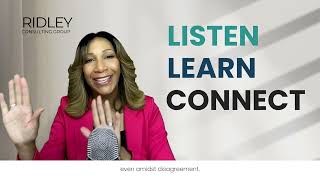
Beth Ridley explains how to listen to people you disagree with without needing to change your mind. Set a goal to understand their perspective, ask questions about what shaped their views, and practice active listening. You can find common ground and build connection even when you don't agree.
Chapters
The third inclusive behavior, is seek to understand, especially when you encounter perspectives and ideas you don't agree with and dimensions of diversity that are unfamiliar to you and may make you uncomfortable. This is how we can bridge across differences as an inclusive leader. Now, I want to be clear that being an inclusive leader does not mean you have to change your mind, change your own beliefs, or change your values. Now, it's possible that as you increase your exposure to different life experiences and perspectives by getting to know people beneath the surface, you may very well change or evolve your outlook on things. But that doesn't need to be the going in expectation. The truth is, if you feel that you have to change your beliefs to be good at fostering belonging for others, you're unlikely to engage at all. So So a more productive competency is to practice seeking to understand even when you don't agree. Too often we're conditioned to think that there's one right way, our way. But the truth is no one has the monopoly on the truth, and accepting that can help take the edge off the resistance we all feel when our beliefs are challenged. Remind yourself that you can always learn, even when you don't always agree. And when we broaden our understanding beyond our knowledge and experiences, we become better informed, more thoughtful, and more balanced. Engaging in conversations with those we disagree with can be incredibly challenging, especially when the topic is sensitive. However, it's essential to recognize that actively listening to someone doesn't equate to endorsing their viewpoints entirely. Often we conflate listening with agreement, but they are distinct and actions. In tough discussions, you can sit and attentively listen to someone and ask probing questions without necessarily aligning with their perspectives. So when you find yourself in conversations where you disagree or feel discomfort with the difference between you and someone else, set a goal to solely comprehend their viewpoint without aiming to assert your own. This challenge fosters the skill of listening even amidst disagreement. Another strategy to understand someone when you disagree is to dig deeper into why they hold their views. Instead of opposing their stance right away, ask about their experiences and information that shaped their perspective. By exploring what motivates their opinions, you can find common ground and better understand their perspective. This can lead to more meaningful and empathetic conversations, which fosters connection and empathy without needing agreement. Embracing the practice of seeking to understand, especially when faced with differing and uncomfortable perspectives, is a cornerstone of inclusive leadership. It's not about changing your beliefs. It's about being thoughtful of your behaviors and being open to learning and broadening your horizons. By listening and exploring the reasons behind others viewpoints. We cultivate more empathy and connection. This enriches our understanding and and fosters a sense of inclusion and belonging in others. The true power of inclusivity lies in our ability to listen, learn and connect, even amidst disagreement.