Beth Ridley shares a reflection exercise for leaders: recall someone who made you feel you mattered, then ask if your team would say that about you. The technique uses personal stories and emotion rather than business arguments to motivate inclusive behavior.
Chapters
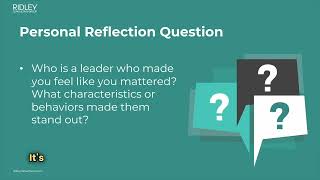
So I want to dive into how my tips and techniques, my personal strategies in terms of boosting that sense of desire to embrace inclusive behaviors. So I do start first with just the business case. I talked a little bit about that when I covered how do I create the awareness? You know, at this rate, there is like so much data out there making the case for why inclusion and belonging is good for employee well being, better engagement, collaboration that leads to better decision making and outcomes, recruiting, retention, all that good stuff. It's really important to lay the case for that. But I'm not going to cover that today. What I want to do is jump straight to the desire piece. So building the business case is really good, but it really speaks to more of the analytical side of what's good for business and the head. I think to get that desire, you got to pull on those emotional strings a little bit and speak to the heart. So I have a lot of questions like self reflection questions that I pose to leader to get them to think about them as a leader, their aspirations as leaders. What does leadership mean for them to make that more emotional case? I'm not going to share with you all of my questions. I don't want to give away all of my trade secrets, but I am going to share the question that I think works better than most, most of the time. So the one reflection question that I want to share with all of you that I pose to leaders, if I'm doing like a workshop, for example, is reflect on a leader who made you feel like you matter, who really inspired you, who got you, who made you feel that anything was possible, and you felt brave to take risks. Who is that leader and what characteristics or behaviors made them stand out? So I posed this question because most people have one person that comes to mind, and frankly, when they think about that person, they go to a real happy place. It's joyful to reflect on those memories and to think about someone who really poured themselves into you and what that felt like and what it meant for you. It usually leads to a lot of storytelling. Sometimes I got to cut it off and be like, okay, we got to move on here. Because people want to share about the leader that was really impactful to them. It really sparks talking about and positioning inclusive leadership from a place of inspiration, also from a place that's familiar. And it also helps leaders sort of tap into. They can personally feel and recall the transformative power of inclusive leadership. So it doesn't feel like an abstract concept. It immediately felt, you know, that emotional connection. So I posed that question people really think about it. Then I also asked them, so, you know, how about you? And if I were to pose this question to members of your team, would their answer be you? To what extent are you being that kind of leader that was so impactful in your own life? And what would it take for you to be able to be that kind of leader more to more people and more consistently? Is that something that you would want to be able to do? And who's going to say no to that? And so that's really a great way to, again, connect.