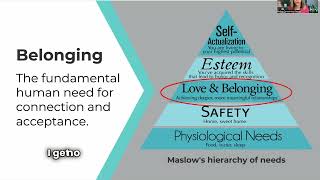
A short presentation by Beth Ridley arguing that ‘belonging’ is a more approachable outcome-focused framing than traditional DEI. Ridley defines belonging as a fundamental human need (linked to Maslow), describes a practical, measurable model—the ‘four Cs’ (Comfort, Connection, Contribution, Commitment)—and explains how framing work around belonging helps engage people who resist DEI.
Chapters
The first word that I use, and I've actually been using this word for like six years now, it really invites people into the conversation. It's far more approachable than dei. I don't mention those words anymore and I call it belonging. The outcome of what we want to do together, certainly rooted in values around diversity, equity, inclusion. We want to create a culture of belonging. Belonging is the outcome. We want everyone to feel like they belong at work. People immediately get belongings. It's a fundamental human need. The human need for connection and acceptance. And when I talk about belonging, I actually show this slide because belonging appears on this Maslow's hierarchy of needs. What we all need to be self motivated to move forward in life. And as you can see, I didn't make up the word belonging. It's in this right along with love are the foundations for a strong self esteem and a high sense of self worth. So it's one of those universal human needs that people can immediately connect to. We want to create an environment where I belong. I can, that resonates with me and where everybody can belong. I get no pushback on that. None whatsoever. So they're already open and receptive to the work and so I bring them in to kind of co create and just have a more conversation. But what does belonging mean to you? When do you feel the greatest sense of belonging? People aren't used to talking about it or thinking about it in the context of work. They really do enjoy this question because it's something that everyone can answer and people do like talking about themselves. I've been using the word belonging for a long time. So I've really worked hard to be able to really define it and measure it. I don't want it to be so squishy. So when I work with clients to do a cultural belonging survey, I measure four things. They call them the four C's. Comfort. People feel confident being who they are. They don't feel like they're walking out around at work on eggshells or feel like they have to minimize or hide who they are to fit in. They don't have to work so hard to fit in. Connection. You know, you feel like you know your work has meaning. You're part of something bigger than just the tasks that are part of your responsibilities. And you feel a genuine sense of fondness and understanding with your colleagues contribution. Everyone wants to feel like they matter and that people are interested in your thoughts and ideas and take them seriously. Commitment leaders have to demonstrate that they do care about people. They care about culture. For the other three Cs to exist. These we can measure right? So I don't even show the definition the four Cs when I ask people who are somewhat resistant or indifferent towards CEI when do you feel the greatest sense of belonging at work? And they'll always have an answer and it might be something like oh when people laugh at my jokes, when people say good morning to me, when people ask for my opinion, when people consider me to be an expert whatever they say it's going to fall in those four Cs so whether they know it or not I've already brought them into our DEI strategies. I don't talk about DEI but your DEI strategies are moving these Cs forward in some fashion or another so before they know it they're already sort of thinking about and being part of the solution helping to co create what the vision for a better workplace culture should be because it now has resonates with them. Belonging is a wonderful word to.