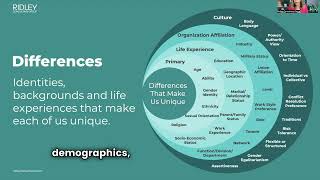
Beth Ridley argues that "differences" is more inclusive than "diversity" because it helps people see that everyone has invisible traits affecting belonging. Introversion, mental health, remote work, neurodiversity, and political ideology all matter as much as visible demographics.
Chapters
Get to belonging. There are pillars of belonging. There are things that we have to pay attention to. If we want everyone to feel that sense of belonging that you described. How can others feel that as well? And the first thing is we need to talk about differences. Diversity, a little bit of a trigger word because when you hear diversity, some people think like, oh, they're diverse people and they're non diverse people. Generally diverse people means, you know, women, people of color, lgbtq, for example. And if someone doesn't identify with those demographics, they think, I'm not diverse. This work has nothing to do with me. And in fact, it might put me at a disadvantage somehow just using the word differences. No one is arguing with that. I don't ever get pushback with differences. We're all different. We have different identities, backgrounds, life experiences that make us each unique. Resonates with people. This circle chart I have been using just to simply show there is visible diversity or differences that we tend to pay attention to because they're visible. But there's also really people are full people. They're more than just the rapper that we come in. I like to say all these other hidden differences that really matter in terms of how someone defines themselves and thinks of themselves. And this picture always resonated with people because they're like, oh yeah, I see myself in like geographic differences. I see myself in like different, like military status or my tenure. All those things that they don't necessarily associate with diversity, but they can see how differences applies now. How do I engage them now that they've warmed up to? Yes, I acknowledge everyone is different. We all have differences at work. I really talk about here are the differences that I see at work that are sort of invisible. They're not obvious, but they really do impact someone's sense of belonging or not. And these are ones that honestly, like I just took a tally over the past month that clients have raised these differences are causing a little bit of tension at work because they're not helping everyone feel a sense of belonging. Some of these are oldie but goodies and have always been there. Department, for example, a lot of organizations, if they have a sales unit or a revenue generating unit, that those people in that department are treated a little bit more on a pedestal. Maybe they're given a little bit more credibility because they bring in the money. If someone is in an admin team or an operations, a cost center, maybe they feel that they're a second class citizen. That ain't new. It's just that when we talked about diversity, we started and ended the conversation with race and gender as an example. Now we're getting to other things that more people can relate to. Personality traits, Introverts versus Extroverts. Some of the newer ones though, that I like to bring up just to show that this work is always evolving. We always have to pay attention to culture because there's always differences that make more of a difference. Certainly location Most organizations do have fully remote or hybrid employees. You know, do they feel that same sense of belonging as an in person employee? Neurodiversity is a big topic that is coming into the forefront, especially with your early career professionals. Younger employees are far more open. Talking about My brain processes information differently. I have adhd. It's hard for me to be on zoom calls all day. I'm dyslexic. Can I receive information or can I have more time to process? Mental health People are becoming more comfortable talking about their mental health needs at work that are different for everyone. Political Ideology as we head into the election season, you might assume, oh, we all sort of think the same politically and then realize, oops, no we don't. Causing tension at work. So just with this list, I think it gets people's wheels spinning and a lot of times they can see themselves in this. Like yes, that I identify with that it doesn't feel good. So again, I've brought them into the conversation.