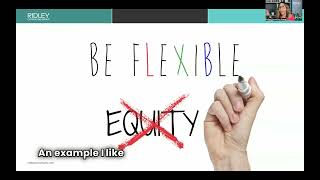
Short excerpt of a talk by Beth Ridley arguing that 'flexibility' is a more effective term than 'equity' when communicating organizational adjustments. She recommends emphasizing adaptable, individual-aware practices (e.g., 'dress for your day') rather than one-size-fits-all rules, and notes that flexibility often requires small, exploratory changes rather than large initiatives.
Chapters
The last word, change. I say flexibility, equity just required way too much explanation. That was a real trigger word. And people were confused. What's the difference between equity and equality? So, you know, I just say it's about being flexible, recognizing that we're all different. We have different needs, ideas, beliefs, backgrounds. You know, how can we be flexible in our approach? So not everything is just the way that we've always done it. Not everything is one size fits all, because occasionally it just doesn't fit everybody. A lot of times, flexibility means not a big initiative. It just means we're willing to explore. An example I like to give people, especially if I'm doing something in person, is look around the room. What are we all wearing today? Most organizations have sort of moved to dress for your day. When I first started working, it was business attire, right? Women couldn't wear certain things, had to wear suits and that type of thing. Now you look around, you got suits if you want to wear a suit, because maybe you have a meeting with the client. More casual. Casual if you're internal. And so that's flexibility. It's actually equity. But I don't say that. And people resonate with flexibility.