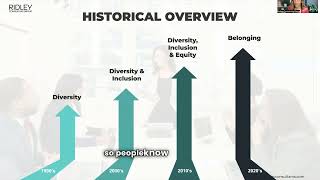
Beth Ridley walks through why DEI terminology keeps shifting. In a recent workshop, a third of participants had stopped using the term entirely. The language has evolved from 1990s compliance training through diversity and inclusion as business value, then equity after George Floyd, and now toward "belonging" as a simpler umbrella term.
Chapters
You want to change your words or think about it without confusing people. Did I share? I think I can't remember when I first started. I was in a. Leading a workshop or leading, facilitating a panel of a bunch of DEI practitioners. And this topic came up. I said, how many people are not using DEI anymore and using different words? And a third of the room raised their hand. It's okay to change your words. And I give a little bit of a historical context so people know this work is always evolving as it should. You know, the people entering the workforce, the differences that are making a difference continue to evolve. So the way that we talk about it should evolve as we do and learn more. So I just give a little bit of historical context. These words have always been around, but they, they sort of reflect like where we are with our understanding of them at the time. So in the 1990s, when I first started working, there was no DEI, it was just diversity and it was diversity training. And that meant you go to hr, watch a video around what not say to women and people of color at work, stick with, you know, talking about sports and weather because that's safe. And diversity is like a no, no you know, to engage at work. And that was, that was the mentality. Then fast forward maybe another decade and too much research started coming up like, no, diversity means diverse thoughts and perspectives that leads to better decisions and outcomes. We gotta embrace diversity, celebrate it, include it. So the reflection around that, because that's what we were understanding then, was diversity and inclusion. Fast forward and really in more sort of modern times, think post George Floyd. You know, it's like, let's explore the systemic barriers that are really preventing people from fully full inclusion. And that's equity. So dei, diversity, equity and inclusion has been what we've been talking about, like over the past, you know, five, ten years or so. And what I like to tell people now is we can't add another word that gets too long, right? We're already short on time. Let's streamline and be efficient, bundle it up and call it belonging. And I was like, that's reflective of where we are today. A broad and inclusive lens around our differences, flexible in our approach to create a sense of belonging. And by the way, we as a reserve the right to change it again in another five, 10 years or, or maybe tomorrow. And what do you think we should call it? It's a great way to bring people into the conversation.