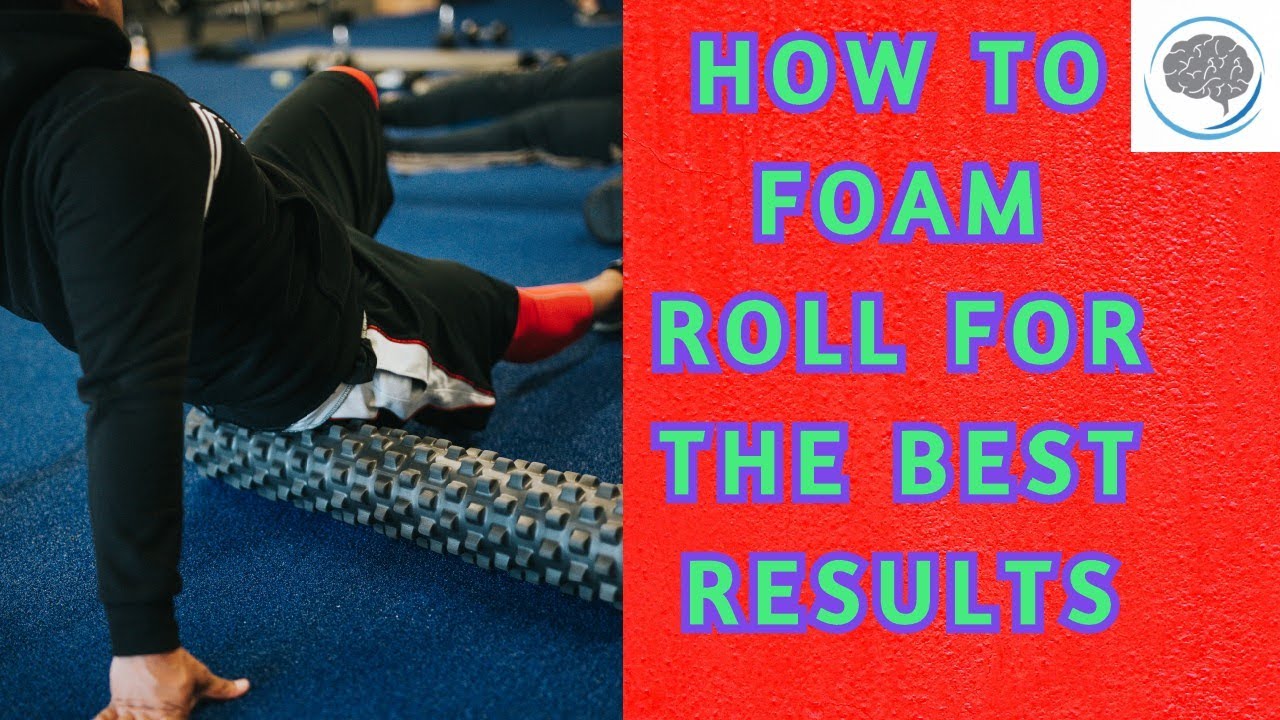
Bill Daniels breaks down four foam rolling techniques matched to different muscle problems. Use quick rolls for warm-up, the GTO technique (pressure on tendons while stretched, three-second hold) to calm overactive muscles, and muscle-spindle rolling on contracted muscles to activate weak ones. Test first with manual muscle testing or an overhead squat to know which approach you need.
Chapters
Foam rolling is something that a lot of people do to try and gain mobility, but are you doing it the right way? There's actually several techniques on how to foam roll, and I'm going to show you how to figure out what the right way is for you. Hi, I'm Bill, owner of beyondfitnessonline.com, where we think outside the box to help you lose weight and get out of pain so that you can live the active, healthy lifestyle that you deserve. Now, today I want to talk to you about foam rolling. Now, if you've done foam rolling before, you might know that there's a lot of different ways to do it. There are the standard rollers that people have, and there are varying tensions to those. So some are very soft, some are more firm. You might have used a tennis ball or a golf ball to use to do this, and all of those techniques can be really beneficial. So when we're talking about foam rolling, I want you to think of it like this. You've got millions and millions of fibers that line up, and you've got actin and myosin, and you can think of them like little caterpillars crawling on each other. As you flex the muscle, they crawl in on each other, and as you stretch the muscle, they pull away from each other. Now, surrounding those is your myofascial tissue, and when we're doing foam rolling, this is the area we're after. That myofascial tissue can tend to get into a knot As a mechanism to kind of freeze up the muscle. And it will do that because it wants to keep the muscle from moving so that it can either repair the tissue, or that particular muscle may be in a constant position, so it's trying to hold it there. So what we're trying to do is just get the muscle to be able to move again. So we apply pressure on that knotted area, which houses about 80% of your nerve endings, by the way. And then over time, that can start to break up. Now, there's a lot of techniques when it comes to foam rolling. And if you're not using the right technique for you, you may not be getting the results that you're hoping for. So I want to go over several different ways to do this and how to test yourself to determine if you're rolling the right way. Now, in this first example, you'll see people— this is what people do most of the time. They tend to just roll right through an entire muscle, and sometimes they go really quickly. Now, this can have some benefit in terms of getting blood flowing, in terms of getting the muscle to become a little more pliable and work out some knots, but for a lot of people, they're doing this and actually not getting the benefit out of it that they could be. If you're going to use this and you don't have any existing injuries or anything like that, then This could be a good technique for your warm-up. Now, another technique is similar to ART, which is Active Release Technique. Now, if you're familiar with Active Release Technique, it's in the massage world where they will pin down a muscle and move a joint, and that's going to be used to get muscles to, to pull apart from each other. Now, the fascia of a muscle That we talked about earlier can stick to the fascia of another muscle, and the bigger muscle can take over and not allow the other muscle to do its job. So by using this technique, you can start to pull those muscles apart and hopefully get them to slide over each other the way that they're supposed to. Now, there's 2 parts to the muscle that we want to look at. There's the muscle spindles, and then there's the Golgi tendon organ, or the GTO. Now, if we're going to do the GTO, that's located right up here in the tendon area. And when a muscle is tight or overactive, then what you'll want to do is really target that specific part of the muscle. And you'll want to get that muscle into a stretched position. So for example, if you're using your quad like you are here, we're going to get up to the top of that rectus femoris muscle. And we are going to put the pressure there. And we are going to bend the knee, because that puts that muscle in a stretched position. We're going to roll onto the Golgi tendon organ for about 3 seconds. You're going to roll off of it. Let the muscle relax. Come back into a stretched position. Go back onto it for 3 seconds. And you're going to repeat this about 5 times. That should, over time, teach the muscle to not be so overactive and get it to relax a little bit. Okay. Now, if you have a muscle that's weak, which is tested with muscle testing, you can activate that muscle by getting more into the muscle spindle. So that's right in the belly of the muscle, right in the middle of it, and you're going to go ahead and flex that muscle. So again, if we're using the quad as an example, we're going to tighten that quadricep muscle, get right in the middle of it, and we're going to spend some time just finding some tender areas in there and rolling on that. Now, what you'll find is after about 30 seconds or so, that muscle should be more active. This is a great technique to use on areas like if you have a valgus collapse, meaning your knees buckle in. If you do that on your hip, it wakes up those stabilizers and can become more active so that your knees don't buckle anymore. So here's how we test to find out if you have a muscle That is weak. What you're going to do is you're going to put a muscle into the middle of its range of motion, and you're going to have somebody press on that limb. You don't ever want to touch the muscle that you're testing because that can throw it off. So you can brace the body somewhere else, allow that person to apply tension with that muscle, and you just apply pressure to meet that. If they cannot sustain that tension, then that shows that that muscle is a little bit weak and underactive, and that is an example of when you're going to want to target the muscle spindle. Now, if you do a test, say an overhead squat, and you find that the quadriceps are very tight, causing you to lean really far forward, that's an example of where we might want to use the technique on the Golgi tendon organ, or the GTO. So that we can get that muscle to let go a little bit and allow freer movement. I hope that you found this helpful. Go ahead and try some of these different techniques. If you have any questions, please go ahead and leave me a comment below. And until next time, live healthy.