Vision Exercise - How Your Eyes Influence Your Body, Movement, Pain and Strength
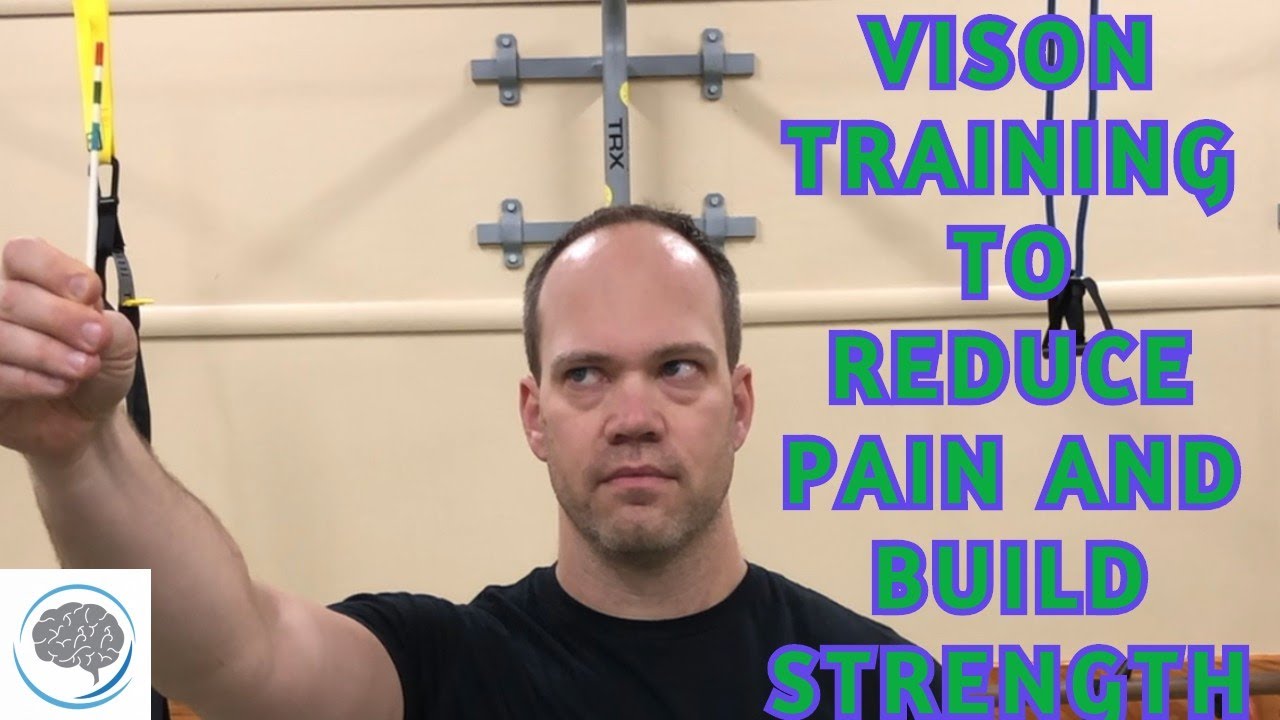
Bill Daniels shows how your eyes control movement and strength through four visual functions that link to your brainstem. He teaches you to find your dominant eye, use a Brock string to spot visual suppression, and perform gaze exercises that enhance range of motion and lift performance by changing where you look.
Chapters
Hey everybody, I'm really excited about this video. This is all about vision. This is how it influences your movement. It's probably the most underrated thing you can do for yourself. As a matter of fact, I've even, in my world of sports that I've been in, have heard people say you can't train vision. And I'm here to tell you that that is absolutely false, that you can both improve your vision. Vision can hinder your movements, your bodily movements. And so it's important to be able to train for those reasons. There's so much to this, so I'm really excited to dive in here. So the body's first line of defense is vision. If you kind of take us back to our primitive form, if you're out in the wild, your body is supposed to protect you. Your brain is supposed to protect you first. Your brain sits inside of this little box we call the skull, and it only gets input from the senses. The number one sense is your vision. A huge portion of your sensory input to your brain comes from your eyes, and that is because it can see danger coming from further away than what you could hear it or smell it or even feel it. So the 4— the eyes have 4 primary jobs. Okay, you've got your what's called foveal vision. This is just how clearly you see something. Okay, and there's 4 ways that that can happen. Your target that you're looking at is stationary and you're stationary. So this would be an example of this picture of reading. Okay, so if you're reading something, that's that first example. How about if your target moves and you're stationary? So if you're watching something move across the field of vision right in front of you, that is important. You have to be able to do that. If you are able— if you are moving, And your target is stationary. Maybe you see something off in the distance and you're walking towards it or away from it. You want to be able to see where that is. You need to be able to see that clearly. And then if both you and your target are moving. Okay, also very prevalent in sports. Most sports require this skill. Your second primary job of your eyes are your eyes being able to move properly. If your eyes can't move properly, you're going to end up with a problem because you can only really see what's right in front of you. And if your eyes have to jump to something else, You're gonna have a difficult time seeing it, and that's gonna influence your brain to protect you and make you more stiff and, and be in more of a protective mode, which also increases your stress. Okay, your peripheral vision. So if you're looking at this screen right now, are you able to focus on one of the letters on this screen and still see what's outside of the range of your vision, maybe away from your screen? Are you able to see around you without actually looking over there? Peripheral vision is huge because if something is coming towards you really quickly, like maybe somebody threw a ball, And they didn't see you not looking, are you going to be able to notice that something's coming and protect yourself really quickly? And then depth judgment. Are you able to see how far away something is? That's really important because if you can't tell how far away something is, then one, you're probably only using one of your two eyes and don't even realize it. But two, you're not able to properly gauge your level of danger if something's coming at you because you don't know how far away it is. Okay, so why is vision training so important? The eyes are controlled by the cranial nerves. Now you have 12 cranial nerves. We're not going to dive too much into this anatomy right now. I work a lot with the cranial nerves because they have such a huge influence on so many different things in the body. But your eyes are controlled by cranial nerves 2, 3, 4, and 6. So they all have different roles. Cranial nerve 2 is actually what transmits vision to the brain. Cranial nerve 3 moves the eyes inward. Cranial 4 moves the eyes outward, and so on. Cranial 6 moves the eyes in other directions. So it's important that you're able to do this. Now here's another key to knowing what cranial nerves are doing, because they don't just control those things. They innervate the brain at different areas. You've got your brainstem, your medulla, and on top of that is your pons, and then there's other parts of the brain on top of that. Those different parts of the brain control different things. Things in your movement. So for example, your pons on top of the medulla controls or helps facilitate extension movements. So if you're trying to, say, look up, or you're trying to reach your arms down and behind you, if you're trying to extend your hips, the, the pons plays a big role in that. If you have tight hips and you can never really push your leg behind you very well, you can't get good hip extension, Oftentimes, if you do an exercise that stimulates one of the nerves that goes into the pons, that extension will instantly get better. Now, on the flip side of that, the medulla facilitates flexion, and that can play a huge role in movement in the opposite of the pons. So if those aren't balanced, that's going to create movement problems. If you have movement problems, we can manipulate these with sometimes eye movements. There's a lot of other ways to do that, but eye movements are one of my favorite things to do because I think it kills two birds with one stone. So it's really, really cool to see this stuff work because it's almost instantaneous. So if you're curious, for example, cranial nerve 6 innervates the pons. You could try looking up, and that— just your eyes, not your head, but looking up with your eyes, and then try and go into an extension movement and see. Try it without looking up first. And then try it with your eyes up and see if it makes a difference. I think you're going to be really surprised. Now, here's another thing. Everybody's got a dominant arm. You've also got a dominant eye. It's important to know what that is. Here's how you figure it out. Make a little triangle with your thumb and finger, just like that. Not very big. You want it to be small. You want to extend your hands out in front of you and see something, one little specific thing out in the distance in front of you. And then you're going to bring your hands towards your face. And you're looking at it with both eyes through here. And as you bring it towards your face, whichever eye you end up on is your dominant eye. You do it without thinking. Now, here's— this can get a little tricky because also if you do it at a target that's within arm's reach, you may find that your dominant eye is different than your distance dominant eye. That does happen sometimes. Why is that important? Because if you have a dominant eye, you're going to slightly turn your body and you're going to create imbalances in the muscles that way. So it's important that if you do have those things, you're aware of it so that you can change the way you move or at least be conscious of it during your exercise. Visual suppression. So what I've got here is what's called a Brock string. You can get a Brock string now on Amazon. You can make your own. It's literally a string with beads on it. Now, this is a really, really important test for people who have a problem with depth perception. What you do is you basically have the string attached to something off in the distance. It's got several beads. In this picture, you can only see the one that's closest to me. It's that red bead right there. You hold the bead or hold the string to your nose with the beads out in front of you and you look directly at the bead. What you're ideally seeing while you're focused on that bead is peripherally you're seeing 2 strings going into the bead and 2 strings going out so that it looks like an X. That means that both eyes are working properly. Sometimes you'll see 2 strings going in and 1 string coming out. That means 1 of your eyes is not seeing distance properly. You might see 1 string going in and 2 coming out, or you might just see 1 string all the way through. What happens in visual suppression is that 1 eye is not sending a clear, clear photo to the brain. And so your brain just ignores that picture, and you end up with only actually seeing out of one eye. You're not blind in the other eye, and the other eye may work at different times, but it's being suppressed, and there are specific exercises you can do to fix that. And again, it's very commonly fixed instantaneously, at least while you're doing the exercise. You may need to repeat the exercise several times a day for a few days in order for visual suppression to become more clear. So if you want more information on that, please send me an email. I'm happy to show you how to do this, and this has been life-changing for some of my clients. Here's the key when you're exercising. You want to use your eyes. If you find that you close your eyes while you're weightlifting, for example, there's probably something going on there visually. Okay? So here's the key. Keep your eyes open. See if you can fixate them on one spot. If you can, then you can progress this to looking at where you're going. So if you're doing an extension exercise, let's say you're doing something like a lat pulldown, you're pulling your arms straight down from your head down to your hips. Try looking up. Look at where you're starting. You're looking up here and you keep your eyes up there. See if that helps you because this arm's going down is shoulder extension. OK. OK? If you're doing flexion exercise, you can do that. You can look the opposite. So say you're doing an arm curl. You can look down at your hands. OK? So kind of looking at what you're doing. Looking down for flexion exercises, looking up for extension exercises. If you're doing a lateral movement or a rotational movement, put your eyes in that direction that you're going, and that will help you facilitate that movement. OK. You may find that you're getting more range of motion or better strength just by moving your eyes in those directions. If you're not sure if it's working or not, you can try the opposite on the next set and see if you're actually feeling weaker. It's really— in many, many cases, it will make a huge difference in how effective your exercises are. You also have 3 other exercises. And I don't have videos, I have pictures here, but you can test yourself to see if this is difficult. You have gaze stabilization. The first picture I've got up here on the left is me just staring at a point right in front of me. How long can you stare at that? Is it difficult? Is it making your eyes water? Is it making you nervous? Are you shaking? Are you having a hard time doing it? If you do, then you need to do this in small doses. Okay. Smooth pursuit. So are you able to watch a target move across your field of vision? So start with that same position in the gaze stabilization. So in this middle picture, I've now taken it and literally just moved that target out and back and followed it with my eyes, not with my head, just with my eyes. See if you're able to do that. If your eyes are jumping all over the place, this is something you need to practice. Then there's also convergence and divergence, which are really huge for those cranial nerves 3 and 4, which I briefly touched on earlier. You're starting again in that gaze stabilization. You're bringing your target— you're staring at the tip of a pen and bringing it right to the bridge of your nose and back out, following it again with your eyes. Can your eyes converge on it? You'll want to bring that in as close as you can before you see double. It will get blurry. It's okay if it gets blurry. If you see double before you touch your nose, then you've got to work on that. Now, this is really important because convergence and divergence— these nerves actually penetrate the dura gray matter in your brain that will reduce pain. This can actually make pain in any part of your body go away just by doing this cross-eyed exercise. You're going to go cross-eyed, and that's okay. Can you do it with control? If you have difficulty doing this, again, you need to practice it because these are eye movements That help you see things close or far away. If you have any other questions, you're absolutely welcome to email me. If you want to know how your vision assessments look, if you want to try any of those last few exercises and get them on video and send them to me, I'm happy to evaluate them for you. I didn't talk about this much in the ebook, or at all really, and I really want to make sure that you understand what's happening. I'm happy to assess you. and see how that's going and tell you if you need to work on something like one of these more than any others. Otherwise, up next we're going to talk about the second bonus video. We're going to get into balance. Balance is a huge issue for a lot of people, young and old. So we're going to talk about not just how to improve it, but why it's important and how it can really influence your movement. So we'll see you over there. Thanks, Bill.
More from Bill






Stop Stretching Your Neck. Try This Instead (It Might Improve Your Vision Too)




