Why do we have pain - The way pain works in your body and brain
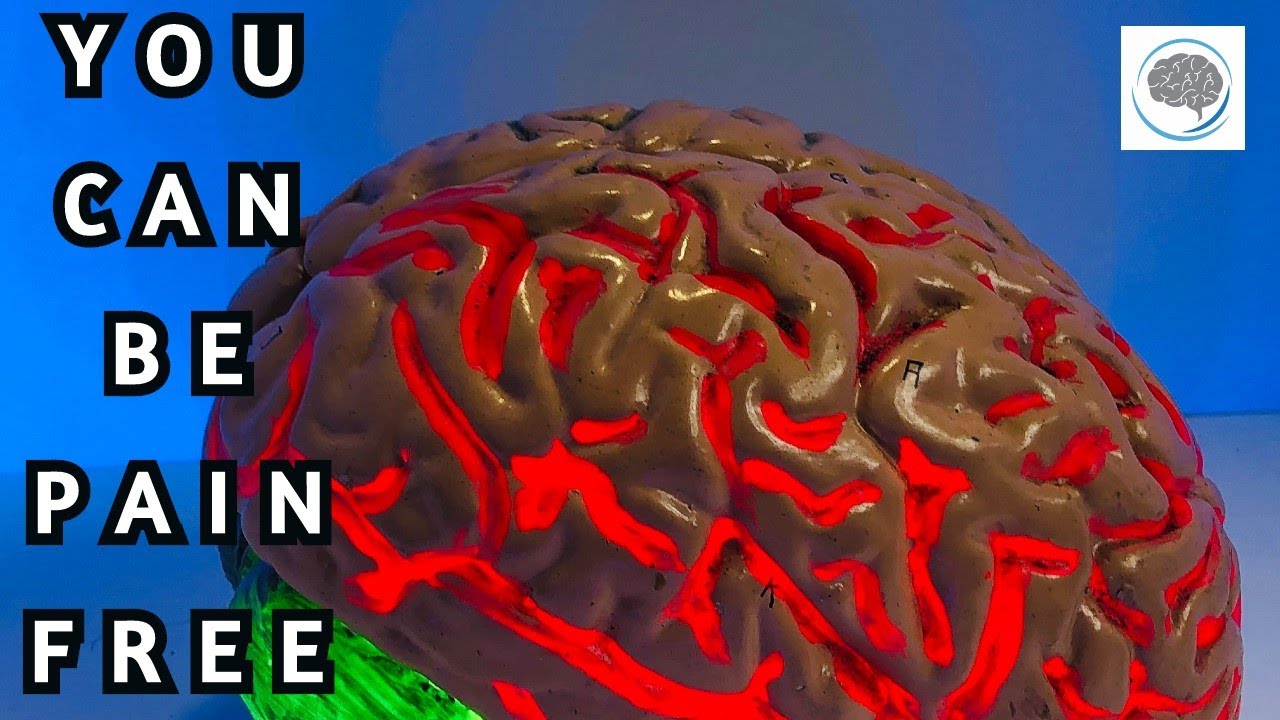
Bill Daniels explains how pain becomes chronic when repeated neural firing creates a durable "pain neuromatrix" across 9-12 brain regions, even after tissue heals. Seven strategies can rewire this circuitry: breathing to lower cortisol, moving pain-free to remap your brain's body map, positive self-talk, and engaging in activities you enjoy.
Chapters
If you suffer from chronic pain, or pain keeps you from doing the physical activities that you want to do, then you want to watch this video. Hi, I'm Bill, owner of beyondfitnessonline.com, and today we're going to talk about how pain actually works from a neurological level and why it feels the way that it does. So, a couple of things I want to talk to you about first. Let's talk a little bit about the anatomy of the brain. You've got what's called the old brain, which includes the brainstem here, and then the little piece on top. And those primarily control all of your subconscious things. So anything that you're not really aware of, that's controlled in that part of the brain. Now that part of the brain also connects through the thalamus to the outer part of the brain, which is that wrinkly part you see in pictures. And that's your second brain, or your new brain. That part of your brain is responsible for all of your conscious thought. It helps you to put together movement. It tells you what you're seeing, what you're hearing, and all of those different things. Now, if we dig down a little deeper into the brain, there's all these neurons that connect. So there's these little things that sit right next to each other and they send signals to each other. They're the little cells in the brain. And this is how thoughts and actions happen. Is one cell fires to the next cell, to the next cell, to the next cell. Now what ends up happening is if you take a baby, for example, learning how to walk. A baby's never walked before. And as it's learning, it's very wobbly and uncontrolled. Now the thoughts and actions are happening in the baby's brain. And the cells are firing the signals. But they're not firing efficiently. So what happens is the more often we do things and practice them or say them, or think them, the more myelinated that strip of cells becomes. So you can think of that like a wire sends an electrical signal, and when we put the rubber tubing over the top of it, then that adds insulation to it to make the cell— or the signal fire better from cell to cell because it keeps it all contained. Now, the more often we do an action or think or whatever it is we're doing using our brain, the more often that that pathway is myelinated, the thicker it gets and the more efficient it gets. Now that kind of thing happens with pain. And that's important to know because of this. When you have pain, there are 9 to 12 different spots in your brain firing at once. And they're all connected. And it's called the pain neuromatrix. And there's a couple of guys out of Australia that have put together this term, and there's a lot of books out there, and I can link some of those below. But what we're going to talk about here is that when you have pain, if you keep trying to move through that pain, that pain signal, all those nerve cells in your brain, they myelinate and they get that thickness around them and it becomes a more permanent Pain. And that's what chronic pain is. We end up getting all of this signal so strong that whenever our brain thinks, hey, something's going on here, it's going to fire that, and it's going to fire so efficiently you'll be like, no, it hurts. And that's really what's happening, is it's all happening up here. Now that means that you may actually have an old injury that is completely healed. And when you still try to move in certain ways, that myelinated neuromatrix in your brain fires and you get the pain signal. So what we want to do is understand what all of these different parts of the brain are and then talk about how we can fix that. So when we look into the old brain, you've got several different areas. You've got the spinal cord, which is where it all starts. Now, if there is an actual injury, then what happens is the signal goes from the peripheral nerves up to the spinal cord, and the spinal cord shoots it up to the brain, and then the brain starts this whole process. From there, you've got the hippocampus. Which is involved in motivation, emotion, memory, and learning. So from here, we know that we can learn that certain movements hurt. You've also got the cerebellum, which sits in the back of your brain, right back here. And the cerebellum is responsible for the accuracy, balance, and coordination of movements. It's also really big cognition. Your hypothalamus and thalamus are responsible for the stress response, for your autonomic regulation, for motivation, and the thalamus actually serves as the gatekeeper between the old brain and new brain. And what's actually interesting is there are studies that show the thalamus only lets through about a third of the pain that you could possibly be feeling. And it does that because it decides what is important for you to be aware of and what's not important. And it can actually just eliminate a bunch of pain right off the top just because it's not important and it's not really a threat to your well-being. We've also got the sensory cortex. So right on the top of your brain on the outside, you've got 2 little strips right here. The sensory cortex and the motor cortex. Now the sensory cortex around along each piece has a spot for each part of your body. And it's kind of, you can think of it like a map. What does it feel like in the hand section? What does it feel like when I bend my finger? What does it feel like if something touches my finger? And you've got different spots like that in the sensory and motor cortex right here. Also down deep, you've got the amygdala, which is really a key player in the pain response because the amygdala is responsible for fear and addiction. You've also got the prefrontal cortex, which is up on the top. That's, that's responsible for problem-solving and memory, which is a key piece to this. You've got the cingulate cortex, Which is responsible for concentration and focus. So you start thinking, oh, oh, I can feel that pain. You start to focus on it, and that can create more of a myelination in the brain. And you've got the premotor and motor cortex, which are both deeply involved in prepping movement, and you'll use those movements to usually avoid pain and try to work around it. So as you can see, Most of the parts of your brain that are actually involved in the pain response have a lot to do with memory, has a lot to do with the context of where you are, if there's a threat to your well-being. Now, some of it is movement-related, but not all of it. And as a matter of fact, not most of it. Your brain spends a lot of time comparing past experiences and if when there was initial injury, It remembers what that was like and how you were moving. And when you try to move like that now, even though the initial injury may be gone, you may still be feeling that pain. And that's because a part of your brain is telling you it doesn't know if it's safe. Now here's another interesting piece to this neuromatrix. Your brain now knows after you spent time saying, oh, my back hurts, my back hurts, and you go and you lay down, that when you are under extreme stress or chronic stress, old injuries tend to act up. Why is that? It's because your brain knows that if it tells you what it needs to tell you to stop doing what you're doing to alleviate the stress, it will do that. And the most efficient way for it to do that is to use an already myelinated, thick, thick cellular response. To tell you that there's pain. And all of a sudden you're like, wow, my back keeps hurting, my back keeps hurting, even though I haven't had any problems. Where did this come from? Think about what else is going on in your life. Stress can definitely trigger that. So the moral of the story is that pain is a protective output. It's not an end result. And so that means there's things that we can do about it. And I've got 7 really important things that you can start to think about right now to help eliminate your chronic pain. The first thing is just having cognitive awareness of what pain really is. So this video in itself can actually help alleviate or eliminate some of your pain. The second thing that could help you is actually working on breathing through the diaphragm. Breathing through the diaphragm has actually been shown to lower cortisol levels and your stress hormones, which then in turn could actually lower the threat that your brain is perceiving. And that may in turn actually lower the amount of pain that you're feeling. The third thing is to move. Now it almost seems counterintuitive when we say this, but here's what we want to do. You want to try and do some kind of movement through the range of motion that hurts, but we want to do it without pain. So that means, let's just take elbow pain as an example. Say every time I bend my elbow, it hurts. And I go, ah, no, I can't do that. That hurts. 2 things you can do. One, try to go as far as you can without pain and just move through that. And if you do that a few times a day, you may find that by the end of the day, your range of motion is starting to get better. The other thing you can do is try to take it through as much of a range of motion as you can without pain, but going super, super slow. And sometimes you'll find that, wow, I can actually move further through. This all comes back to the whole concept of there was damage and now there's not, and your brain just needs to be able to use those cortexes, the sensory and the motor cortex, and move through those range of motion really slow so that it can remap those areas and realize that it's actually safe. The next thing is positive self-talk. If you take some time and talk about yourself or your body in a positive way that can actually manifest itself in the brain to create new pathways so that you are not feeling the pain that you normally feel. The next thing is to do things that you enjoy. This will do 2 things. One, if you're doing something active that you enjoy, you are moving more and hopefully remapping those areas of the body in your brain. And therefore creating movement that is more clear and less painful. You'll also be doing something that's relieving your stress and lifting up your attitude, which can also reduce stress. And my last tip is to pay attention to your nutrition. What happens is we often think about stress as being emotional only, but there's such a thing as nutritional stress. When we eat foods that are processed or that we have a hard time digesting, that becomes a stress on the body. That elevates the stress levels and your body says, uh, stop doing what you're doing, and it all of a sudden that pain comes back. And we don't want that to happen. So paying attention to eating good, healthy quality foods, not letting yourself starve, and not overeating. Those are all really good tips for your nutrition to help relieve pain. So in summary, we talked about the different parts of the brain, what their roles are, and how they actually play a role in pain. We talked about different ways that you can start to alleviate that pain by doing different things that you might not have otherwise thought of. I hope this video was helpful. If you liked it, please don't forget to hit the little logo right here and subscribe. And until next time, live healthy.
More from Bill






Stop Stretching Your Neck. Try This Instead (It Might Improve Your Vision Too)




