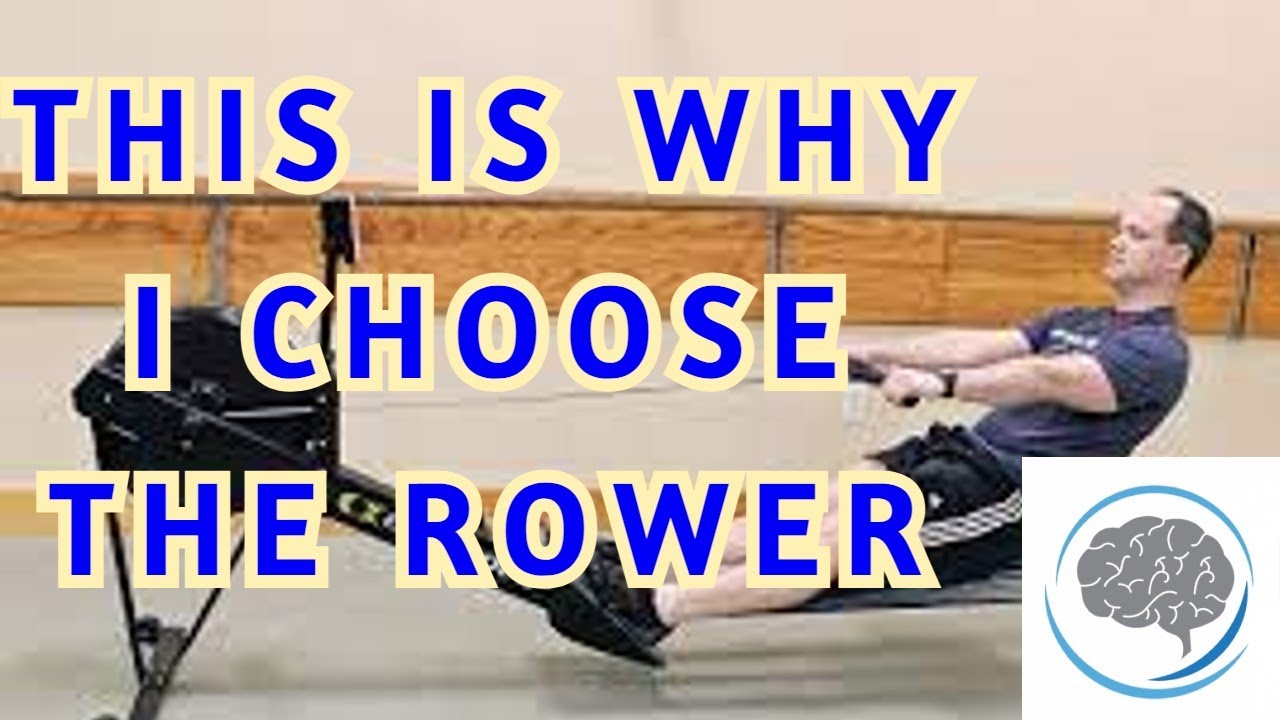
Bill from Beyond Fitness Online explains why rowing aligns your brain's visual, vestibular, and proprioceptive systems better than treadmills, which create sensory mismatch and cause dizziness. He walks through the four-part stroke: leg extension, pull to belly button, arm release, leg bend, with foot straps at the shoelaces and a neutral spine.
Chapters
Hi, I'm Bill from Beyond Fitness Online. Today I'm going to talk to you about why I choose the rowing machine over any other piece of cardio equipment. Now, if you follow me, you understand that I'm a brain-first personal trainer, and so that means I'm looking at what the brain is telling the rest of your body and ultimately how can we impact that to get you the best results. Now, that means we need to take into account things like the vision, the vestibular system, as well as how your joints move. So if we get on a treadmill, our proprioceptive system, our sense of feel, is telling us, yeah, we're walking or we're running. Our visual system doesn't see that. Our visual system sees everything stay the same and says we're not moving. And our vestibular system feels us bumping up and down but not moving forward. So all 3 systems are telling the brain something different. And what ends up happening is we can end up with dizziness, weakness, stiffness, all kinds of different negative effects can come from doing that. Now, nothing beats getting outside. If you can actually go out for a run or a walk or ride a bike outside or really climb actual stairs, all of that is better than the machines, including actually rowing in the water. But with this, we're actually moving forwards and backwards. We're actually pulling, we're moving with our vestibular system. So all 3 areas are sending a more similar signal to the brain to tell us what's going on. So I want to give you a quick demo on how to do this for a beginner, and then you can dive into more details in other videos. Or if you have questions, you can always leave them in the comments below. But what we're going to do is we're going to stick the feet in the holsters. We're going to strap them in so they're nice and tight. The strap should be somewhere right around the tops of your shoelaces. We're going to grip this with an overhand grip and we're just going to break this into 4 parts. Alright. We're going to extend the legs, we're going to pull this into the belly button, then we're going to let the arms out and bend the legs. So it's 1, 2, 3, 4. Now as we're doing this, what we want to pay attention to is what's our spine doing. So you don't want to get into this kind of posture, okay? Keep a good posture and then we just hinge at the hip as we go through that motion. So it's 1, 2, 3, 4. Keep that spinal rounding to a minimum. Keep your posture nice and high. Pick a visual target in front of you so you can see yourself actually moving. And then you can push yourself as hard or as light as you want to on this to get the desired cardiovascular exercise. So I'm Bill. If you have any other questions, please leave them in the comments below. And until next time, live healthy.