Aspire + EOS = Smarter Systems for Growing Green
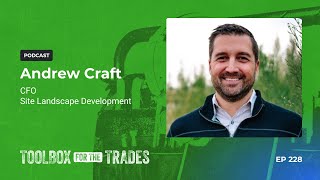
Andrew Kraft, CFO at Site Landscape Development, scaled a fence company from $2M to $11M by adding systems, then joined Site (then $20M) to apply the same approach. He uses Aspire for CRM and scheduling, EOS for vision and processes, and automation to free up time. Site is now at $40M with a five-year target of $100M.
Questions this video answers
Dallas and Fort Worth, Texas area.
About $10–11 million in two years.
About $20 million.
Just over $40 million this year.
To reach $100 million in revenue within five years.
Hello, contractors, and welcome to Toolbox for the Trades. My name is Jackie Aubel, and once again I have the privilege of introducing the one and only Amanda Salvatore. Hey, Amanda, how are you doing?
I'm doing well, thank you.
So, in case you guys missed last week's episode, big news here at Toolbox for the Trades. Amanda Salvatore is joining me as a co host of this podcast. So, moving forward, she's going to be interviewing contractors who specialize in the landscaping industry. And, Amanda, today you're chatting with Andrew Kraft, the CFO at Site Landscape Development, is that right?
Yes. Andrew Kraft is an operations nerd and a good hang. So this episode is not only informative, but fun.
So what are you guys going to be talking about?
Well, we chat about how to establish processes that will create more efficiency in your business and how to use that efficiency to scale.
I can't wait to listen. Let's jump right in.
Andrew Craft, you are the CEO, CFO of Site Landscape, located in the Dallas and Fort Worth, Texas area. And today we are discussing efficiency and process improvements to help scale your business. Thank you so much for coming onto the show today.
Thanks for having me.
Of course. Of course. I'm really excited to get into it, but first and foremost, we always like to start with a little icebreaker so we can get to know you. This icebreaker kind of goes hand in hand with a bit of your work history, which I'm sure we'll get into shortly. So what makes a good video game?
There's a lot of different types of video games, but. And I was in that industry for a long time. I would say engaging gameplay or a compelling story These days, an immersive experience. You know, something that helps you suspend your disbelief. Maybe check out for a little bit. It covers a lot, a lot of ranges. Everything from, you know, the little games on your phone to, like. Some games are like theatrical events. They're really involved. So there's a broad answer for that. And yes, I do love video games, too.
I love that. Excellent answer. So let's get into it. Let's talk about your journey into the landscaping industry. I know you were doing video game distribution, so I'd love to hear how you found yourself in the industry.
Video game distribution was a few lifetimes ago, so I will leave that. When I owned a commercial fence company here in DFW, it was a relatively small company. It was maybe 2, 3 million revenue at the time. No technology, no processes, no system. Their ERP was two Excel spreadsheets that didn't talk to each Other you might have picked up from my video game stuff. I'm just a big nerd. So when I bought that company, I just brought basic systems technology. Hard to even say that. I mean it was just checklist, I mean very basic. But that, that really worked well. It was exactly what the company needed. So that grew to maybe 10, 11 million revenue in two years. So it was, it was working well. I sold that in 2018, was looking for something else to start or buy. That's when I came across site landscape and it was very similar, much bigger at the time. Site was 20 million in revenue, but very similar, very little to no systems, processes technology that QuickBooks, Excel, maybe had cobbled together a few other things, but at that size, things were reactive, they were falling apart. It was a hot mess. I was looking for something to buy. I passed on that because I was like, there's no way that's a problem. Kurt Boyd, the guy that owns it, called me a few weeks later and said, hey, I need some help with this. It's not sellable. My quality of life is terrible. He was involved in every decision and it was a rough situation. The first step we did, we knew we needed a platform to grow on, we needed some improvements. That's almost always the technology answer. I'd say we started a technology journey, but now that's really just a process improvement journey. So that technology journey has now evolved into much more than that. Often it is technology is the answer. There's no shortage of apps and software and things to help us. But even into we use the EOS program or philosophy, I wouldn't put that in the technology class, but that helps us keep all this stuff organized.
I know that you have this clear passion for efficiency and process improvements. You're this self declared nerd, if you will. So what is it about efficiency that really resonates with you so strongly? Why is it so important?
I hate wasting time. When you're efficient, you can get more stuff done. The single most limited resource is time. So if you're inefficient, you're wasting time. I mean, I'm older now, got three kids that are growing fast as weeds. There's just no time. So when you're inefficient with anything, you're just taking time away from those other things you want to do. So being efficient, being able to do more with more, with less or with limited time is good. Just make sure everything counts. You're not wasting resources. That's maybe we're concerned.
Sure. So what would be Your advice to someone who's starting at a new company and tasks for improving efficiency. It sounds like there's just so much to do. Where should they start?
Every company is unique. Every situation is unique. Different companies and at different stages of their journey need different things. You know, the first step is assessing the situation, right? What's working, what's not working? You know, do they have technology in place? Do they have processes in place? Do they work? Do they not work? You know, where, where is the need is? Or sales. The need. So then is there sales process that you might need to implement? Financial data integrity is that important? When I was first here, we were using QuickBooks, our job costing accuracy 60% maybe. So anytime we would look at a job to try to figure out if we made money or not, it was just constant exceptions. Oh, this got miscoded. That got miscoded. So you didn't have the data to make decisions. You know, an example might be, you know, you're good at certain types of projects or not if you have bad data, you're just guessing. You can never make good decisions with.
Apple when it comes to Aspire. I know that you integrated into Aspire and now I'm sure there are many opportunities to create efficiencies. He may or may not be using an Aspire chapstick. Thank you for that product placement, making my job so easy. So when it comes to Aspire, what are some advantages to having a system like this in place when it comes to efficiency?
When I got here, I knew we needed something, some system to do all the different things. We contemplated piecing together different pieces of software, but that would be also expensive. That would take time. Then you're dealing with integrations between everything. Some of the big advantages of Aspire is having everything in one place. So CRM, just for starters, it's super important as you grow to have all that data in one place. For us, if an account manager leaves and all the knowledge about a property that they're handling leaves, when somebody takes those accounts over, they're then not starting from scratch or figuring out things that worked or didn't work or any of those things. So I mean, that's just like the level one kind of basic. Then that knowledge and stuff is part of the company and not part of individual people. It sounds silly now, but I know some people struggle with this. Still having all your centralized pricing, like back at the Fence company and even before we were on Aspire, people would have like these pricing or estimating Excel sheets and there's different Versions floating around. Somebody might be doing estimates off an old version or something. So again, having all that centralized data in one place is just. You then start having fewer mistakes or oh, that job went bad. Well, I used, I underbid it because I used to a two year old pricing sheet on it. So then, you know, you start, things start going right. Scheduling is really difficult once you start getting into a couple crews and stuff. And we have 80 now, so you're not doing that on a whiteboard. Some people might be, but not us. So being able to organize that, direct that traffic, literally, and that's when everything goes right. So then again, where Aspire specifically helps, okay, you have a rain day, everything gets pushed, boom, you just slide it over. Probably pretty soon we'll just be able to talk to it with some AI stuff. It's a move our schedule to tomorrow and then it just does all this, all the. Does it all for you. So those, I don't know. It would be very challenging to manage our schedule without Aspire or a tool like Aspire. We needed a platform to give us the ability to grow and for us that was Aspire. So we were 20 million revenue. Now we're just over 40 million this year. And on our way. Our Eos, we have a five year goal to be 100 million revenue company.
Incredible. I would love to actually pivot to Eos. And some of the tactics that you learned, that you've implemented, that you found success with.
A few of the important things are the vision. Your company needs a goal. You're not just come into work every day and mow a grass. Like what are you, what are you trying to do? Are you trying to grow? Not everybody's trying to grow. There was a year or two we weren't trying to grow. We just wanted to stabilize, work on efficiency again, get everything ready to grow. If you were priced with a negative margin, the worst thing you would want to do is grow because you're going to lose more money. In Eos, you start with the vision. So everybody's okay, we're trying to grow. Once you have that vision, you can then hire and fire on that like your core values. So now when we hire people, we spend a lot of time trying to figure out, hey, this is not just an AP job or it's not just whatever this company, we're on a mission to do this. If you come to work here, you're going to be on that mission too. You're not just coming in, punching the clock in and going home. So the vision is A big part, one of the other parts is data. Without the data, it's hard to make decisions. We are always looking at our, you know, what kind of customers are profitable or if they're far away or close. And you can get infinitely granular on whatever the decision is. But having the data to make decisions is really important. Eos then goes into process. This one's a struggle for us, but we try as much as we can to document everything, sop as much as we can. These things become part of the company and, and again, not just, hey, this person does the job well, that person does the job not so well. It helps create a standard within the, within the company. This is how site pays bills or whatever, whatever. This is how site plants trees. So that in that example might be if we had a different number of crews go out to plant a tree, there's a good chance you're going to get a bunch of the tree planted a bunch of different ways. So, you know, we now have tools where videos and things, hey, this is the way we plant a tree. This is how we do the tree stakes. And then what that translates into a better customer experience or a more consistent customer experience. So different customers, but depending on the crews that go out or whatever, they're more likely to get the same experience. So the people piece of Eos is probably the most important to us. And, and there's a few philosophies or tenants, whatever in there. One of the big ones is right people, right seat. And that just really resonated with us, you know. So the cost of a bad or an employee that's not a fit is hard to measure. The time you spend trying to work it out or do whatever, it's just really expensive. So getting, getting the right people in the right seats and they go through the whole process and they have tools to help figure out this might be the right person just in the wrong seat. They may be suited for a different job where they may just not fit at all. That that happens. Another really important philosophy to me that we've taken a step step further in Eos is delegate and elevate. Within Eos. The idea is, okay, think if you have an org chart anywhere in the org chart, if you can delegate a task down the org chart, that leaves you time for higher value things. For example, my VP of maintenance, if he's doing some data entry for whatever it is, yes, he can do it. But is that the best use of his time? Again, time's the most limited resource. If somebody down the organization can do that, then that frees him time to get new customers, negotiate contracts, things that only he has the skill to do. So like an entry level data entry person doesn't have the experience or skill set to do that. He does. So that's the philosophy there. Taking that a step further and instead of just going down the organization we trying to automate or we're delegated down to the computer level. So we work on a lot like financial automation. So AP automation is one we spend a lot of time on hand keying invoices. Our guys doing it are really good. But you're still hand keying in this day and age. It's, it's just, it seems, you know, silly. So we used to, it would scan it in and then our guy would just review it and code it where it goes. Now we're working on the AI saying, hey, basically I've seen where you coded this the last 50 times. I pretty much know where it goes. So now we're close to taking that step away too. So talking about efficiency, that's really good. When we were hiring this AP position last time we talked about that, hey, there's a lot of technology and automation. You're not just invoices now. But it won't be like that forever. And then we would get, the question is like, well, if you're, if you're going to automate the AP process, why are you hiring this position? Is it a temporary position or like no way. That again, only leaves time for the higher value stuff. And in that case, vendor relationships, you know, how important is that it? Super important. And those are often an afterthought. It's rarely the hottest, most pressing fire. So it kind of happens on the back burner, you know, sometimes. So like in that case, free up more time in that position just leaves time for, hey, vendor, you know, are we paying you the most efficient way or we got you. Do we have all the discounts available to us, you know, and then, you know, you just start making more money and being more efficient.
You touched on this a little bit while you were talking, but I really want to hit it home. But we're here, we're talking about efficiency, but we're also interested in creating efficiency so you can scale your business. So when do you think it is most difficult to scale and why the.
Smaller companies and I mean all the way to startups, Very difficult to scale because there's the most at risk. It's, you know, you usually will see a founder, somebody started a company and then, and then they get, you know, a million tier in revenue. They have a few crew, landscape for example, a few crews. But then what's the first thing? They run short on time. There's only so much time in the day. And if they're the one with the landscape experience, they're out in the field showing the crews, you know, where to mow the grass or whatever. And then, okay, we still got to pay the bills and you still gotta do the website and you still gotta do, you know, the receivables and all the things. We're a small company, too many things to do. So that step of handing that stuff off is very, very difficult. There's a pretty common trait in owners and founders. I won't say control issues, but the ability to build a team or hand stuff off. It's a big challenge. And then also at that time, like any mistake is very impactful. If you mess up a job, they don't pay you or a customer just doesn't pay you at that size it could and it does ruin and close businesses all the time. For us now, I mean we're 40 million and then, you know, some people say, oh, how are you going to get to 50 or 60? Yeah, it's challenging but I mean we got 45 people here help every day. Thinking about it, you're figuring it out. So you got more people, you got more resources, you're more diversified, you have more customers. If any one of those things goes.
Bad, okay, so when you have a smaller company, if you're a million, 2 million and you are looking to scale, is there any advice you have for them when it comes to creating some efficiencies to help those hurdles not be as intense or as aggressive?
It depends on their skill set. What are things you good at? Were you missing, you know, where do you need help? So there's some self awareness there and then the, you know, maturity to say I need help here, I need to outsource here. The other thing I might say is, you know, you don't, especially today, you don't have to reinvent the wheel. Even back to the fence company. We'd be sitting around and this is, that's only eight, ten years ago now sitting around like how are we going to do this? We got to figure out how to do things now it's a YouTube video or googling it or there are so many resources or, and I'm not even getting into the chat GPT AI. That is insane. Now there's so many resources that you know, so you don't have to reinvent the wheel. It's important that what you're doing moves the needle in the right direction. You can work really hard all day and not advance your business. So that's a, that's an important thing to keep in mind.
Before we go, I want to know, and we did discuss it a little bit before, but I would like to know what is next for site landscape and how does efficiency play into that plan?
That's just in our blood now. So what's next for site landscape? We have our EOS goal to grow from 40 to 100 million. It's lofty, but doable, I think, in the next five years. And that's the big goal. So we have that broken down into three year and one year goals. So, you know, we look out. So you have five years under million. Oh, wow, that's way out there. We've got that broken down into, hey, what are the next steps to get there? So we have pretty well articulated goals and things for that. Along with that, we are on this process improvement journey. It's like a mindset people have here. So we're hiring people and everything to talk about this. Everybody here, even down into the crew level, we think about, hey, how do we make this better? How do we do what we're doing better? The one phrase that we hate here, we did it this way because that's how we've always done it. We hate that, hate that. On our way to the 100 million and they go hand in hand. It'll help. The more efficient we are, the faster we'll grow because we'll have more time and we'll just be better. There's not a lot of downsides to being really efficient. So that's it? Yeah, it's in every department, every area. That's what we're about.
Incredible. Andrew, thank you so much for coming onto the podcast. This has been great. Thank you so much.
More from Bill



Capturing the 80%: How SmartAC’s Gen-2 Targets Non-Membership Homeowners | Podcast Ep. 296

Build better customer data with every booking in ServiceTitan | TAD Tune-Up Series

The Biggest Change for Roofers Coming From Other Roofing Software to #ServiceTitan?


