Calling it Quits: The Real Cost of Family Business Ownership |Podcast Ep. 295|Toolbox for the Trades
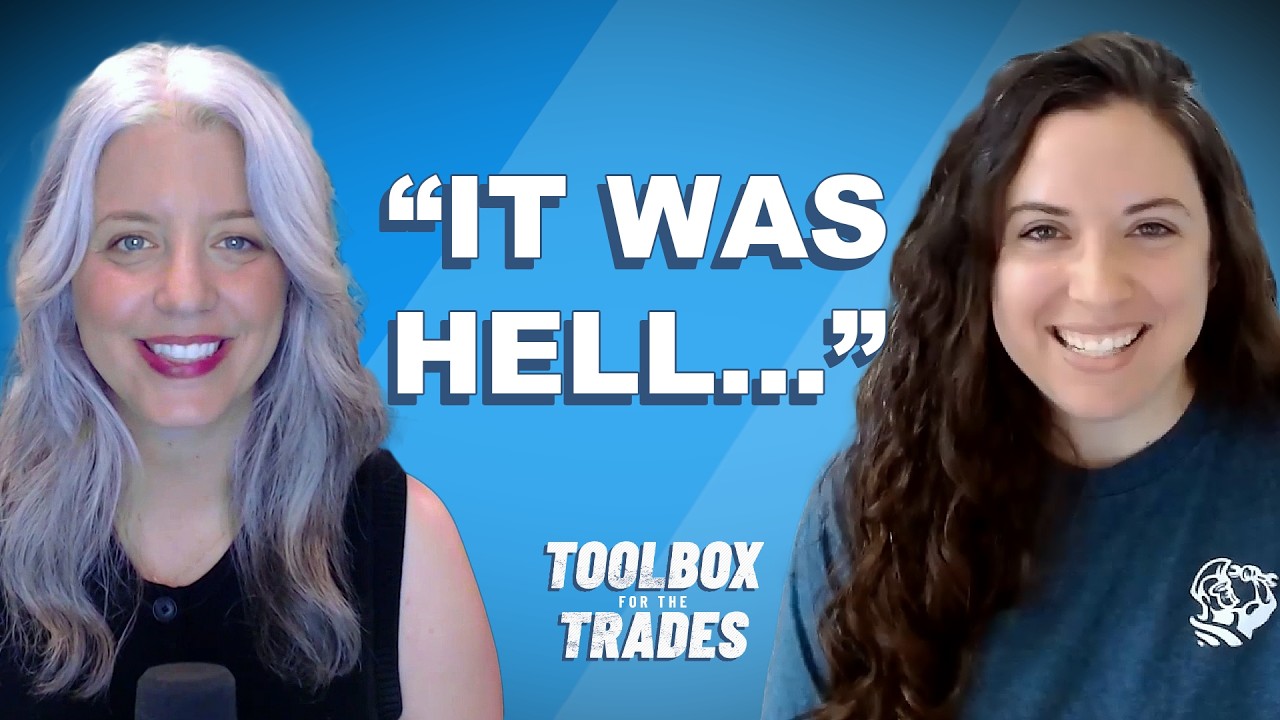
Brittany Burgess co-founded a landscaping business with her husband and a friend, then closed it after weather, equipment failures, and cash-flow strain became unbearable. Both partners stayed only for each other, not themselves. The closure hurt, especially their veteran employees, but it improved her marriage through better communication and clearer boundaries.
Chapters
Hello and welcome to Toolbox for the Trades. I'm Amanda Salvatore, and today I speak with Brittany Burgess, Senior Customer Advocacy Specialist at ServiceTitan. Every day, Brittany has helped trades businesses thrive. All the while, she was living it firsthand. Brittany co-founded a landscape business with her husband, Chris, and their friends, but after a turbulent year, they called it quits. We'll talk about what those early days looked like, The moment she knew she was done, the questions to ask before going into business with family, and the hard lessons she learned about control, responsibility, and what she owed her employees when the business eventually closed. But this isn't a story about failure. It's a story about what success looks like when it shows up in a place you didn't expect to find it. I hope you enjoy this conversation as much as I did. Brittany Burgess, you are the Senior Customer Advocacy Specialist here at ServiceTitan. And today we have a great topic, the ups and downs of navigating business ownership with family and finding success in unlikely places. Thank you so much for coming on Toolbox for the Trades.
Thank you so much for having me. This is gonna be such an awesome conversation.
I think that very often we talk about success What success might look like. And that really comes in when you're looking at your bottom line. But today we're gonna be talking about lessons learned as well as the success that you find within failures and hiccups with a business. So I'm looking forward to kind of flipping this conversation on its ear a little bit and diving in with you. So let's get into it. How did you find yourself in the trades?
It was a total accident. When I was 19 years old, I was living in California with my parents, didn't really have a direction, and I just decided to up and move to Texas because I had friends out here. So I moved out here and I woke up the 3rd day I was here and was like, oh no, I forgot to change my address on my Care.com profile, which was how I got like babysitting gigs. Within 5 minutes, I got a call.
Oh my gosh.
from a lady that was looking for a part-time nanny. The reason they needed a nanny was because they had just started an HVAC company, her and her husband. I was seeing all of the stuff that she was working on. I'm like, hey, I could probably help with that kind of stuff. I could help with your marketing. I could help with your admin work. Then I tripped and fell into the trades and I just stayed in it. I, I worked for them for 6 years.
Wow.
They did mostly commercial and construction. And then after a while I went and started working at a residential shop for a few years. And now I'm here at ServiceTitan and I just, I wanted to stay in the trades and help other shops see what I've learned and see what I'm seeing and try to help them to maximize their usage of software. And so here I am today.
And we're so glad to have you here at ServiceTitan. Everyone speaks so highly of you and we're so excited to have you on the podcast. Now, I know that recently you had stepped into the landscape industry with your husband. Tell me about how that began.
Yeah, also kind of an accident. I think a lot of things in life are, but my husband and one of his good friends were working for a nonprofit and they were starting to find themselves not satisfied with their jobs anymore. They decided to step out and start something of their own. My husband, Chris, his friend had been in landscaping before, so they decided to give that a try. With my background in the trades and then his friend's wife also being really advanced in software and all things technology, they were like, wow, the 4 of us are kind of a powerhouse, so let's do it. Let's build a landscaping company. So we did.
So I know that 4 months into this new venture, into your landscape business, that your business partner, Nick, and his wife had to step away because he was having some serious medical issues. And you and Chris had to decide whether to close up shop or to keep going. What made you choose to keep going?
I just, I adore my husband so much. I would do anything for him, just about. I had seen just a new light in him when we started this company. He was able to take ownership of something. It's something to be really proud of and something he really believed in. And I think that moment when we realized, oh no, it's just the two of us, was really kind of a fork in the road where we could have just closed it up and done something else. But I was like, I think we should do this. I want to help you with this. I think that you have something really great going. And he agreed. And so we just, we kept pushing and I do think that we built something really beautiful.
Yeah, well said. You and Chris had never really worked together in this capacity before. You'd never owned a business together, and even some functions within the home were very almost siloed, if you will. What were those early conversations like when you were defining your roles and figuring out who does what?
Yeah, I think And if we look at this from a non-business standpoint, when we just started living together and then eventually got married, it was just very much Brittany takes care of the house, Chris does his job. I was trying to manage the finances very poorly, might I add. Chris is way better at money than I am. I'm not good at it. But, um, we were trying and we were kind of keeping the train on the tracks, but it was It could have been a lot better, and I don't think we even realized it that much. And then when it came to the business, especially when it was just the two of us, it was kind of obvious that he needed to do all things field and I needed to do things in the office just because I had so much experience with that. And then also like technology-wise, like I used a software that was owned by ServiceTitan company, Crew Control. So I'm like, I'm gonna keep that on the wheels for you. And I also really transparently, I don't like being hot. So poor guy, he's out in the heat all day and I'm like, yeah, you just keep doing that and I'm gonna sit here in my air conditioning. So I think it just kind of fell that way, if that makes sense.
So it sounds that you found similar roles within the business as you did within your home and your family structure. As well. What did the early days look like, especially once you both were on your own? What, how was your day-to-day?
So I think both of us were basically drinking from a fire hose every single day because we're both trying to figure out what do we need to do? What are we not doing? What do I not know? Just kind of trying to fill in all the gaps that we could. For example, if I were to go out into the shop, They're doing maintenance on the mowers. They're taking inventory of trimmer string, I think it's called. Like just all of this stuff that is so like, I have no idea what they're talking about. It's another language. And then Chris might walk in and I'm trying to reconcile QuickBooks and I'm like, oh, look at this cool report. And he is like, I don't know how to read that. Don't show it to me. I think both of us were just at such high capacity and just trying to keep our side of the street clean. I don't know that we had a deep enough appreciation for each other at that moment. It should have been obvious to me when I go out there and see all of the work they're doing outside that they're crushing it. And like, it should have been so obvious to me, but I was so focused on, I have so much to do. I don't know what I'm doing. I don't wanna screw this up. And I would imagine he probably feels the same.
It's so hard, I'm sure, when you're in the thick of it and drinking from a fire hose, like you said, where— how can you look up and actually gain a sense of how things are truly going? So I could see how you would feel like that. There are people right now drinking from that exact fire hose who are listening to this today. So let's talk about What happened next? There is a turning point within the business.
Yes.
You are the one who brought up these issues that you were having within the business and this sense of feeling like we're drowning here. How did you find yourself having this conversation where you finally said, I think I'm done?
Yeah. One thing I will say is shout out to anyone in the landscaping industry. It is wild. I've worked in HVAC, plumbing, electrical, refrigeration, all kinds of different trades. Landscaping was so difficult, so competitive. There's so many things that just trip you up at any point. Lots of wild cards, I guess, is what I would call them. So shout out to all of you. I will say what led up to this kind of final breaking point for us was We had a whole month of just pure chaos, and it was like 2 weeks back to back of just rain, just torrential downpours of rain. And when the sun finally came out, we went to go try and catch up on these lawns because meanwhile, our customers are wondering why their lawns are not getting cut. Look outside, there's a reason. But of course, the day the sun came out, our equipment broke down. We had 2 of our big mowers go out of commission, and those take forever to get repaired. So then we have our guys trying to catch up on lawns with our small equipment, and that was backbreaking work for them. We had customers that expected us to be waiting out front for the rain to clear, and we just can't do that. And it just got to this point where it felt impossible, and I just started to question, why are we even doing this? Is this good for us? Do we want this? And at one point, Chris actually asked, do you want this? And I said no, so, so fast. And it kind of shocked me how fast I said it. And then we started to have a conversation. Well, why are we doing this? And we came to realize that I was holding on so tight because I wanted it to succeed for him. And he was doing the exact same thing for me. And then when we came to realize, oh, both of us are holding on for the other person without actually wanting it ourselves, we realized, okay, I think it's okay to, to just admit we don't want this anymore.
What an incredibly brave conversation to have with each other. That's a huge test for a relationship. That's a huge test for, for a husband and wife to have to navigate. Really incredible that you had the infrastructure there to be able to admit to each other This is not right for me personally. I want to do it for you. And then finding out that you both are are are sticking sticking to it for each other. What was the feeling like once all of those emotions came out? Was there a sense of relief?
Yeah, for me, and I'm pretty sure Chris felt similar. A huge weight got lifted off of our shoulders. It was just like all of this. Stress that had been compounding for so long. It was just like, oh, there's a light at the end of the tunnel. This is going to stop. We're not going to have to feel this way much longer. We're going to have some cleanup to do, but it'll be okay. But I mean, there were some also secondary emotions like, how are our employees going to do? Our employees loved working for us and that we had a lot of guilt. We were like, how are we going to tell them? Is there a way we can try to keep this going in some capacity so that they can keep going? But it was mostly just a huge sigh of relief that we both breathed.
I believe it. I believe it. I know that the business had a mission of hiring veterans, and I know that, like you had just said, there was a lot of worry because there was this responsibility to your employees. What did you learn about control and responsibility through that process? I'm sure as an owner, that's That's where you go right away when things aren't going well. These people rely on us. So now what?
Yeah, that is one of the hardest things. And I honestly think if there were some way to aggregate this statistic, I think a lot of people choose to not go into business to not have that burden. Honestly, like you do feel like you have an obligation to your employees to keep their paychecks flowing exactly as you promised. Even if the hours were low one week, we felt guilty like, oh no, they They don't. They only worked 50% of their hours. Should we still pay them the full? No, you can't do that. You didn't, you didn't complete the work to be able to do that. So ultimately, you have to understand it is a burden, but at the same time, your employees have their own choices to make too. They have a choice whether or not they want to work for you. You don't have to control everything. They— Once we closed for business, They all went off to get way better jobs. They make so much more money. They are working for really incredible people. And so I did think that everything happens for a reason, and they came to work for us for a reason. And I think part of that for some of them was realizing that they like this kind of work. They like being outside. They like working with their hands. They're in similar roles now, just looks a little bit different, but how would they have known to go that route if they hadn't worked for us? So ultimately, you can't worry too much about that. Yes, you have an obligation to your employees, but if it has to fail for whatever reason, they're going to be okay. They really are.
It's great to hear that they're doing so well and using this almost as a diving board for other opportunities and discovering more about what they might be interested in doing or what kind of work that really speaks to them. What would you say is your main takeaway from this experience and what success do you feel has come from it?
Yeah, my biggest takeaway, I mean, I'm not gonna lie, it was hell. It was so hard. I feel like my nervous system needs a reset, um, just because when you work that hard, that for that long, putting so many hours in, It really does change your body, your mind, your everything. But if somebody were to ask me if I were to do it again, I would say yes, absolutely. Wholeheartedly, 100%. So hard, but I learned so much about myself, my husband, our marriage, how we work well together, how we don't work well together. I learned boundary setting. I learned that working with the general public can be really hard sometimes, and I try to remember that. If I get a little spicy with the CSR for another company. So there's so many, so many takeaways. But ultimately, I think the biggest one is the communication that I have with my husband is so much better. And we see each other in new lights. We have so much more appreciation for each other. And our roles around the house have changed completely just because now we see each other differently. I want to hear more about that.
Let's dive into that. You're talking about communication. You also mentioned boundary setting, which I feel like kind of gets into— gets folded into communication, right? But how, how do you communicate differently now within the home?
Yeah, before we just didn't. I mean, kind of like I explained towards the beginning, was that roles just kind of fell into place. We never really talked about them. Now they're changing completely. So since we closed the business down, um, originally I was doing all of the financials for our home, for our business. We also have like rental properties on the side. So we have a lot of baskets with eggs in them and I'm not good at managing them. We realized that, um, he has much more attention to detail. He has a great vision when it comes to money. So we kind of gave all of that over to him after the business shut down.
Mm-hmm.
And oh my gosh, he's a wizard. He is a wizard. Like, I wish we would've talked about this when we first got together because who knows where we'd be now? I have no idea. But, um, I, I know for a fact that we're in better hands there. Um, and then there's also just, we're able to be more honest with each other. Like, this is such a, a small example. I'm gonna make a lot of wives really jealous right now. I hate doing the dishes. It, it just grosses me out so bad. And I just said it one day. I'm like, I just, I cannot stand how gross water feels on my hands. I hate doing the dishes. He's like, I'll do it forever. Like, you don't have to worry about it. Never had that on my bingo card. 'Cause I, you know, I just hear like, you know, women are supposed to keep house in order. Traditional gender roles. No, it doesn't bother Chris. So now Chris does the dishes and I am just over the moon about that.
I'm over the moon for you, honestly. I, uh, and when we spoke previously, we both kind of got excited about this idea because I've had similar conversations with my husband of something stressing me out. This is something that is really bumming me out, and I am— I just don't even want to start it. And he'll just automatically be like, oh, I'll, I'll, I'll do it. Sometimes you just find that they're able to give you the support that you need just by stating it, just by saying it and being a team player. It sounds like you both are team players in your relationship, so that's huge as well.
Oh, 100%. Yeah. And we do for each other too. I mean, don't get me wrong, we still have our disagreements, but it has been so much easier to just say, how you feel, and the other person can take that and do what they will with it. But yeah, it's been incredible.
So when you are giving advice to someone who is about to go into business with their partner or their husband or wife, what questions do you think they should be asking themselves before they enter into business?
This honestly goes for any business, but especially for a married couple. Define those roles. Put it down on paper. Who owns what? How will you go about making decisions? Like if you need to make a change, how are you going to determine which direction you go if both of you disagree? Does somebody have more power than the other as far as like voting goes? It's important to also set boundaries, especially for any family-owned business. If you Do not put an end time on your day. You will just keep working all night. And if you don't have that time set aside to reconnect as a family, it's not going to bode well for the business side either. You do have to have like, okay, this is work time, this is family time. So for us, we, we would determine like, okay, what's our endpoint today? And we would stop working, work phone aside, shut the office door, especially if you work from home. So I'd definitely say those rules, those boundaries. Um, but also, if you work out of your house, make sure that you also have a landing place for your employees. Like, if they're always coming to your house, if something happens personnel-wise and that employee's not very happy, they know where you live now. Um, we, we dealt with that. We got like a couple threats from employees that were let go or left for whatever reason. That just created so much extra anxiety that was so unnecessary. Luckily, we're fine. We're safe. Nothing happened. But just the mere thought of somebody coming to harm my family because they felt they were wronged and they know where we live, that, that took so much energy from us. So I would just say to be really cautious around where you allow your personal and work life to cross.
Well said. Yeah, I'm sure that that's That's so stressful. And when it comes to business, obviously you're bringing in employees that you trust and that you care about, but there is always that possibility of something happening. So that's really great advice as well. Maybe have a separate location for them to be. Absolutely. Brittany, I know that earlier in the conversation you had mentioned that you had worked with in the trades through several facets of the trades. And you mentioned that landscape is incredibly difficult. What about the landscape industry struck you as the most difficult to navigate that was a surprise for you?
It is so competitive. It is so competitive. I mean, I live in Houston, north of Houston in Texas, and We have a lot of AC contractors, especially in the summertime, but we have way more landscapers. I mean, you drive down the street, you're going to see 6 of them. There's just so many, but also the customers are completely different. So you will have somebody who says they love you, you do the most amazing work, and then some random shop will come by and ask, what are you paying for this? And they'll say, $50 a cut, and they're like, well, I'll do it for $45, and then boom, you're dropped. In some cases, our customers wouldn't even tell us. We'd show up and there's another company there, and we're like, hey, you just left us a 5-star review, what's going on? They're like, oh, this company's cheaper.
Brutal.
That's brutal.
Yeah, that's brutal.
Also, just like the— I know weather is a factor for a lot of trades, but I mean, rain can really get you in landscaping because It's so unpredictable sometimes. If it doesn't stop for a while, not only are you not mowing, but the grass is growing so much faster. So by the time you get there, you're taking down grass that's crazy tall and not usually like that. And then additionally, these customers that don't want to pay very much have very high standards for their work too. So it's just, you get hit from every angle. It's just, it is so competitive. It is so, it's very, very different. So hats off to all of you in landscaping. Keep going, keep doing what you're doing. Mad respect.
Is there anything else you want our listeners to know about finding success in apparent failures?
Don't be afraid to fail because oftentimes a failure is just the stepping stone to a success. So in this case, yeah, it was really hard to close the business. There were a lot of tears, there were a lot of hard moments, and you, you can get really down on yourself. But ultimately, sometimes these failures are just setting us up on the right path for the, the right thing that's going to feel good and it's going to feel right. So don't be afraid of falling. It's okay. And don't be afraid of trying something new. I mean, Chris and I put a lot of money into this endeavor and we're not gonna get it back. But, um, what Chris likes to say, which I have so much respect for, he's like, well, people pay this much for a master's degree, so I'm just gonna consider it like a master's degree. Like, I love that mindset. I think everybody needs to adopt that.
I think that's, I think that is incredible. It's truly, when it boils down to it, it's about your perspective.
Mm-hmm.
And his perspective on this. That's great. I think that is incredible. Here's to taking big risks. Here's to trying your hardest and doing great work. Brittany Burgess, I want to thank you so much for coming on Toolbox for the Trades.
Thank you so much for having me and for being open to this conversation. It's not always just about making money.
Yeah, no, thank you for being so vulnerable and sharing, and thanks for coming on.
More from Bill



Capturing the 80%: How SmartAC’s Gen-2 Targets Non-Membership Homeowners | Podcast Ep. 296

Build better customer data with every booking in ServiceTitan | TAD Tune-Up Series

The Biggest Change for Roofers Coming From Other Roofing Software to #ServiceTitan?


