Focus on What’s Important, Automate Everything Else | Podcast Ep. 78 | Toolbox for the Trades
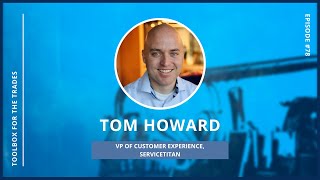
Tom Howard, VP of Customer Experience at ServiceTitan and owner of Lee's Air, talks about scaling HVAC businesses through goal-setting, replication, and smart incentives. He shares how contractors can focus on what matters most and automate the rest.
Tom Howard, VP of customer experience at ServiceTitan, owner at Lee's Air, and my webinar buddy for several years now. Welcome to the podcast. I am so excited to finally have you on.
Thank you. I appreciate it. How are things going, Jackie?
No worries. So we're gonna kick off this podcast the way we do every single one, which is. How did you get into the trades?
Some guy came to fix my fridge. Well, hook up a water line to my fridge when I was, like, 15 years old. And my mother told me at that time that I need to have a job. So I asked that guy for a job. Yeah, 15. She's like, listen, time to get working. And he hired me to clean the warehouse. I use warehouse liberally. There was more like a garage and. Yeah. And help on stuff after school, so that was how I got in.
And you went to college, right?
Yeah, so I. I actually worked for 15 until 19. I did some other stuff. I went and lived in Hungary for two years and came back, and then I had saved up money from air conditioning and stuff to do that. And then I was pretty broke at that point, so I had to get another air conditioning job, this time in California for a company called Lee's. And, yeah, I saved up money there to go to college. And I went to school for two years in California to community college, and then I transferred to Brigham Young University for my degree in finance there. And I got a job working for Western Heat and Air in Orem, Utah, when I was going to college. Angie Snow.
Angie Snow. I didn't know this.
Yes. She was my boss when I was in my 20s going to school.
Holy cow. I didn't.
I didn't know that.
That's so funny.
Yeah.
So you got your degree in finance. You finished up in Utah. I imagine you. Did you expect at that point that you were going to continue in the trades or were you gonna go do something else?
No, when I. When I left to go back to school, you know, I was like. I told my boss that I was going to business school, so I never had to do air conditioning ever again. And he laughed like he. Just like, you're laughing now. Yeah. It's like he got the last laugh, though, because I got out, and in reality, I remember the wage I was making at Western was higher than what. And I was doing a lot of sales at that point. It was higher than what I could make right out of school in finance. And I hated finance, by the way. I know some of you like that. I don't know if that's a problem, but decided, oh, I gotta. I gotta do something else with my life. So, yeah, ended up back in the trades working for Lee's, which I was working for before I left to go to Utah for BYU and took a job as the GM there. And then I ended up purchasing the company.
Talk to me about purchasing the company. So as a little background for anyone who doesn't know you, but you've been working at Service Titan since I think, end of 2019 or beginning of 2020. Right. Something around there. But before that you were a service center customer for a few years. I would love to know how you went from GM to purchasing. Just tell me that story.
Yeah, I. It was the middle of the recession, so it was about 2010, 2000, no, 2011, I think. I went back to Fresno where Lee's was, and the owner had some. Some losses in the family and he had some things to take care of. And he said, look, you know, I'd like to get out. And I basically offered to purchase it. He was, you know, gracious and basically allowing me to buy the company on a note, payable, which means I just had to make him monthly payments. I didn't put any money up front, which was great because I didn't have any money to pay him. So that, you know, worked out for the both of us, I guess. So, yeah, I made that deal. He ended up becoming my business partner for a while and then I eventually bought him all the way out. And yeah, that was my first, like, real company that I owned. I mean, before that, like, I would start a business, you know, on the side washing vehicles or something and you know, whatever side hustle I had before that. But that was my first real, you know, company.
Got it. So you had a couple mini entrepreneurial seizures before the big one, at least.
Yeah, like spasms of sorts.
What came, like, what was it that. Can you tell me about the aha moment you had when you were like, I'm going to buy this business?
I don't know if there was one. Just kind of came in and said, you know, he's looking to get rid of it. And I said, okay, I'll do. Was not a big thing there. I think there was a. There was an aha moment about. With my wife. I think it's kind of a funny story. I had made a deal to buy all of it. And then it was about a year and a half later that that partner came back, said, hey, I'd really like to keep half of it. And I said, well, I think Half is worth more than what I paid for the whole thing kind of thing. And because it had grown by then, we'd almost doubled revenue. And he said, okay. And basically in the end, I didn't have to pay the last. I soloed several hundred thousand dollars on the company and I didn't have to pay it. I was all excited and I ran home and told my wife, I said, hey, I. I sold half my company for, you know, like, what we paid for the whole thing. And I was all excited. And, you know, at this point, we're out of debt and, you know, at least personal debt on that. And I couldn't. Anyway, she just looked at me and she had this stern look on her face. I thought, okay, wait, like, this was supposed to be great news. I was telling you. She said, all right, first of all, you sold half of our company. And I was like, oh, right. She's like. And you didn't talk to me about it? And I was like, oh, okay, that's how this is going to go down, you know, and yeah, it just made me realize, oh, wow, I probably should have talked to her about these things ahead of time. Yeah. And did. The reality is the company kept growing and ended up having to pay a lot more out in the end.
Well, it did end up paying off eventually. Right. You said you were able to double it in the first year. So you took over. You said in the recession. Was that 2008?
No. So I took over as GM in early 2011. So recession was still kind of happening. We're starting to come out of it. And yeah, when you were running Lease.
Air, what kind of growth did you experience those first two years and what strategies did you implement to nurture that growth?
Yeah, so the first couple years, I didn't really know what I was doing or how to do it. And all I knew was that we need to make sure we had a stable company and build up a bank account because we were terrified of the recession and something like that happening again. I want to make sure the company was debt free and that kind of stuff. So we were really being playing things really conservative and we got stable really quickly and started making a little bit of growth. But if you look at it where revenue was about 1.82 million in 2011 and then 2012 or 1.85 and so it wasn't like a huge growth. And then the year after that, that's when we started to really kind of figured out we went from that to 2.7 million that following year. The interesting Thing is, is that I set it like a lifetime goal. It's kind of funny to think about this now is that in my lifetime goal at that point was get to 3 million in annual sales. Because in 2010 we were about 1.6 million. So that was about double, right? And so we had that huge growth, 1.8 to 2.7 in one year. And then my goal was 3. And so we only went to 3 the following year after that. So I. After that I actually had this realization. I thought, well, you know, I think we just hit whatever we set our goal to be. And then we stopped pushing past that. I remember going down and visiting a guy in Texas. His name was Ben Hubbard at Champion AC and he was at 6 million in sales. And I said, wow, 6 million. That's like a bazillion dollars to me at this point, you know. And I said, how long ago were you at, you know, 3 million in sales? He said, oh, about three years ago. I was like, oh my goodness, like that means I could be at 6 million. You know, at least that's what I was thinking. I remember I flew home on the plane and I had took out this yellow notepad and I think I still have it somewhere because I wrote down an org chart of what it would be like to be at 6 million. And my org chart I made, actually when I calculated out, it hit about 5.8 million. So I thought, oh, okay, maybe it's not 6. I'd have to add a couple more pieces of overhead there to add it. But let's make a new goal. 5 million annual revenue. I made a 5 year goal to go from 3 to 5 million. And this I thought was huge. And I went back and we had the chart and the plan. And at that point I said, okay, well this is what we're implement. Well, that following year. And that was a five year goal. That following year we hit exactly 5 million, right? 5 million and like 5,000. It was something like just barely over. And I quickly realized, oh, wow, well, whatever goal we set will probably hit it. So gotta make a new goal though. Five years out, 10 million. Now I just, I'm just throwing out arbitrary numbers. And that year we came back at 9.4 million. So it was like we almost hit 10. And that's when I, you know, after that we, we had different growth rates and things like that. And. But that really, those early days and those early years were really ones that taught me that, you know, if you've got your goals set up right and drive your team, you're going to hit what your goals are. And it's actually Ken Goodrich from Gettle told me once, he said, you know, Tom, one of my issues, he said that a couple years before that he just bought his jet, right? And he said, once I bought my jet, that was, I've hit my all the goals that I ever had made. And he said, I have one regret. And I said, what's that? He said, I wish I had made bigger goals because I would have hit him. And that really hit me and said, you know what, Tom? You really got to make better goals because you can hit them. It's just mentally, you've got to believe. It was like when seeing Ben Hubbard in Texas when I realized, like, oh, wow, he, if he can do it, I could do it. You know, you gotta make the goal and believe you can hit it.
That's awesome. It actually got me thinking about my personal life right now and what goals.
I want to set.
So as you were hitting those goals and you're scaling out your team, you know, a lot of the folks who listen to this podcast, they are at different stages. You got some that are, you know, at 5 million, maybe at 10 million, but you also have a lot that are just starting. What are some of those kind of really key lessons you learned as you were growing, that if someone who was trying to hit those marks now 3,5 million, they were like, tom, I just can't do it. Besides the broad, you know, make bigger goals, what would you say to them?
I think you got to focus on what matters. Which I know sounds cliche, but let me talk about that a little bit. Most of people, if I go online and I look at the groups, the Facebook groups that have like a lot of small contractors in them, right? Maybe a lot of service technicians or, you know, 500,000 to million dollar shops, they tend to have a lot of posts about what the best set of refrigerant gauges is, if you're air conditioning, or what the best pipe wrench is in plumbing or what the best whatever. And you'll see them taking pictures of their tools, taking pictures of their truck setups, that kind of stuff. And there's a time and a place for like determining exactly the best truck set up for the most efficiency, right? If you have 100 or 200 trucks in your fleet, standardizing that, making sure that's just perfect is probably critical at that stage though a lot of times they get very into like, well, I'm gonna be the best at fixing furnaces. I'M gonna be the best at fixing toilets. I'm the best electrician. I'm gonna be the best whatever, and that's gonna make me so successful. And I ask people this all the time. And there's, you definitely should have a high quality within your company, and you need to focus on making sure the quality is good across the whole company. But you personally being the best is probably not the thing that matters. And people kind of get frustrated with me about it. I'm like, let me ask you a question. What is the biggest, most successful burger chain in the United States? McDonald's. Is it because they made the best burgers?
No, of course not.
No. Nobody likes McDonald's cheeseburgers. Nobody. It's, guess what? McDonald's is the most successful one. And why is that? Now, that's not to mean you can't have a higher quality. You know, there's Ruth's Chris makes is a pretty successful chain restaurant. But even then, I would contend it's not about having the best steak. Ruth's Chris has some pretty good steaks, really good steaks, in my opinion. But their customer service and other things matter and scaling and how they do that matters, right? With McDonald's, it wasn't about the customer service or the quality of the burger. It was about their ability to scale, and they're about the ability to replicate what they've done and do it extremely quickly. At the time, people had to wait a ton of time to get a burger right or any meal that they had. But McDonald's actually focused really heavily on how fast can we get it to the door, how can we streamline our processes? They also did some really cool stuff with real estate and became one of the biggest real estate companies in the world. All the best real estate. It's all theirs. You had to turn over your real estate to them anyway. They focus on things that matter the most. And unfortunately, in our industry, a lot of people there, you know, if you grow up as a air conditioning technician or a plumber or an electrician or a landscaper or whatever, like, you get it in your head that if I'm really, really good at my job, I'll make more money, which is true, because your boss will pay you more money for being really good at your job. But when you own a business, what you have to be really good at is business and replication. And if you're going to be better and serve a market that has high quality technicians, what you really should be focusing on in your business is not becoming a high quality Technician. What you should be really focused on is building a process that makes high quality technicians within your company. Because when someone buys your company, they buy the process for making high quality technicians. They don't buy you. You're gone. That's what if you're selling your company, that's what it is like. And that's honestly what helps you scale. In fact, if I went to a large firm that was gonna buy my air conditioning company and they're like, well, tell me about your company. Like, well, I got this really guy, Jimmy. He's awesome. And this gal, Sally, she's so great. She can change out compressors in 15 minutes and doesn't have any callbacks. You know, whatever, some crazy thing. They would be laughing me out of the room because they're like, if I buy your company, Jimmy and Sally could leave at any time, 100%. Tell me what you did to make sure Jimmy's and Sally's get made every single day and make a process that makes it go on and on and on. So when I talk to these small companies, I'm like, guys, stop worrying about, you know, whether you should, you know, fold sheet metal this way or full sheet metal that way. Decide on one quickly and make sure it's followed. Focus on how do I get 100 sheet metal jobs and the next two months, focus on how you make sure that you can replicate that. Focus on how you make sure you get more people that can full sheet mail the same way. You know, so that's. Yeah. Something I heavily. And then when to do that, You've got to look at your marketing, you've got to look at your process for how does, how does the salesperson or me, when I sell it, how do I turn it into my company and how do I make sure that it happens the next day? You know, that's really what I'm focused on 100%.
I'm so glad I asked that question. So as you were growing lease, which you still own by the way, and we'll talk a little bit about that in a second. As you were growing lease and you had people in place that could do a lot of the day to day work, you kind of naturally took on this role of helping other contractors and teaching them what you learned. And this again, like if you took over as GM in 2011, this is, this started happening before you even hit 10 years at Lees the last time. And at a certain point you got approached by service titan. So I would love to talk a little bit about that transition and tell Us how you joined.
Yeah. Okay. So with the transition, I basically, I mean, everything I learned at lease, I learned from other contractors. I mean, going to conferences and stuff. We said instead of doing R and D, which is typically research and development, we did R and D, Rob and duplicate. Right. Like take what they have. Someone's probably doing it smarter, faster, better than we're doing it, and then just, just follow that. And we were growing past 10 million. They were at 15 million. And you know, we kept, you know, pushing the envelope a little bit, getting larger. And when other contractors asked me to help out or for advice, I try to give, give the same. And quite frankly, it wasn't just out of the goodness of my heart. It was more about having fun. At first anyway. It was just me and my buddies helping each other grow businesses. And then I did start charging for it after a while because it got to the point where I was literally gone two or three days a week. And for a while I was doing that for free too. And then I said, okay, I'll start this company. We called it blue collar profits at the time. I've now sold that to the employees that were there. But. And we would help people with their businesses. And almost all of them were service time users. And if they weren't, I would just recommend that they get on service time. Then service site started calling me saying, hey, we've got, you know, XYZ company out there who needs some help. And they'd refer me out to them and, you know, help with some business process that wasn't a service related issue or whatever. And one thing led to another and I ended up getting a call from. It was actually Ross Beesman is a chief Revenue officer asking me if I would come on and work at Service Titan full time. And yeah, I asked him, I said, that's fine, I'm willing to come, but I'm not giving up my businesses. And they said, that's fine. That's exactly what we want. We want someone that knows the trades well enough and understands how our product actually works to basically provide advice on things that should be built, things that shouldn't be built, and be the voice of the contractor inside service time.
Yeah. Which you definitely have been since you joined. So I would just love to know, for anyone who maybe joins our webinars, sees you at Pantheon or just sees your name getting ribbed by Richard Kohberger on the Service Titan Masters Group to Service Titan Masterminds Group, what the heck does a VP of customer experience do anyway? What are you doing At Service Titan.
That's a good question. I don't think anyone really knows that. I think it's a BS title to begin with. So, yeah, it's one of these interesting things. Service has a team called Product and another team called Engineering, another team called marketing and another team Success and onboarding and customer experience is kind of encompassing in all those things. So what Valhe had decided was when we were coming on is to make a separate group called customer Experience. And what we do is that we take all those times you get surveys asking you whether or not you'd refer service item on a scale of 1 to 10. If you get what we call CSAT surveys, that's NPS CSAT. A few other of these types of surveys that you get in the mail. They're not labeled that way, but that's what you get. We receive that information, compile it. We have some statistical analysis that happens. We present that to the other executives on what contractors are saying and what they mean by it. We have. We also oversee a team called Service Design that basically follows the contractor path. When we have things like, well, a typical feature that's not being implemented or utilized by contractors, they show why and things we could do to make it better so that contractors can use it more easily at service time. We have a very, very wide product that has a million features. It's almost impossible for every contractor to be able to implement them all. So we want to be able to explain to the product managers and designers, hey, this is why they don't use it. This is what we need to do to make it so it is more usable. And. Or we also have a team called product marketing that is not marketing for new people coming on, but for contractors that already use the product to let them know about features that are there that they already pay for, that they don't have to pay any extra for. You just need to use it so they can get more value out of it. We do a lot of that. There's several things. If you see Facebook posts online and people from service time responding, that's probably from our team that's responding on there.
Nice. So you're essentially informing the product, making sure that the features that we have, because we do have a lot of them, are being used by our customers as a whole to make them more successful.
I say informing product of why we're not using them is probably yes, but because we have to in the end, like product has behind the curtain. When I finally got here and saw what was happening, because a lot of Contractors like, oh my gosh, like, why'd they build this product? Why haven't they built that? What happens is they got about three or four hundred people back there just in research and development that are building, and they have certain features that they're all working on. And they basically have to prioritize which ones are the most painful right now that we need to work on that help the contractors the most. And so, yeah, we inform them of what contractors aren't using and then they have to make a decision about which things they should work on next.
So being VP of Customer experience. Thank you for explaining that. Very different from running a H Vac business. So what keeps you at servicetitan?
Couple things. Yeah, it is. It is much more exhausting than running H Vac business, honestly. Takes a lot more hours out of the day, those kind of things. But i1, the impact that we can have at Service Titan if we can make a feature that helps contractors across the country raise their revenue, even if it was 1%. Think about the impact that you're having on not only those businesses, but the lives of the owners, the lives of the technicians, the lives of the. The customer service representatives and dispatchers that work inside there. And that's not just altruistic. I'm not BSing you here. Like, you can make an awesome impact in a huge way and I don't always get my way, but the reality is sometimes we do, and that impact is huge. The other thing is that it keeps me on my toes. I still own companies in Sacramento, Fresno, Beverly Hills and Visalia. And I have basically learned to operate them remotely. I have meetings set up anywhere from 5:30am to about 8am or 9am before I start my service time day. And then I start on that service night stuff. And I actually, I've really learned to like it. I can get on zoom meetings with my team, and then if I need to go to service night office, I can or meet with somebody. Yeah, it's been. It's really added a lot of fun to my life and exhaustion at the same time.
That's awesome. So actually that's a perfect segue into what I wanted to ask you about next. I didn't know you also had a company in Beverly Hills. And what was the last town you mentioned?
Vegas. What's it? Vegas. Las Vegas.
Oh, Vegas. Oh my God.
Did I say Visalia? I don't have one in Visalia. I have one in Vegas.
Oh, you said Visalia, but Vegas. I didn't know you had one in Vegas. And One in Beverly Hills. Dang. Tom.
Yeah. I have a partner in Beverly Hills. I've been there for a little over a year and in Las Vegas, it's been about a few months.
I do not envy your accountant. So what advice would you give to other owners who want to free themselves up for data, like from day to day operations to focus on either big picture thinking of, like, how can I optimize, streamline my business? Or maybe they want, they are kind of entrepreneurial like you, and they're like, oh, maybe I want to buy this business or maybe I want to combine these businesses. Like, what advice would you give for that?
Yeah, first of all, you need like extreme adhd or else it just won't be fun. And the reality is that, you know, and this is not a shameless plug for service time, honestly, if I didn't have service running at my companies, I couldn't have done this, period. I would still be running one company. And I can see my reports in my service hunting accounts every morning very quickly. I can get my alerts automatically sent to my phone with text messages when an install sells in a given area. I can see automatic email reports that come to me that tell me the things that are important. And like I said, focus on the things that are important. That was at the beginning of this podcast is if you're focused just on things that are important, you don't get tied up with the messy stuff of the day to day. You know, I don't need to take a phone call from a customer wanting to know if their capacitor can be refunded. I don't have to get a call from the GM asking me if that's okay. There's a process for that and they know that they can refund that capacitor and they can make that decision. So I can use service time to focus on things that are important and then I can empower my people to focus on everything else. It's. Yeah, I think another thing is, is that trust your people, right? Not just trust your people, but give the people the information they need in order to be trusted. A lot of people say, oh my gosh, my. You know, my service manager never thinks like a business owner and he just, he just makes dumb decisions. It's like, well, has your service manager seen the financials? No, of course not. I would never show them that. They can't, they can't be seeing the financials of our company. Those are private. Like, okay, well, does a business owner see the financials? Well, of course. Okay. So you want the service manager to make decisions like a business owner, but he's never seen or has the data that a business owner has. It's like, well, I guess not. Okay, give them the information they need to make a decision. You know, it's not going to kill them. They're like, oh, my gosh. It's so funny to me that, like, financials are so private and you can't show anybody. Like, do you know every publicly traded company has to publish their financials every quarter? Their. Their statement of cash flows, their balance sheet, and their profit and loss every quarter required. I can go up and look at Apple, Pepsi, and if those companies can publish their financials, I'm pretty sure you can too. There's, like, nothing in there that is going to change anything except give your team, you know, a better understanding. They say, well, my team doesn't. They won't understand them. You know, they'll think I'm making a million dollars a year. I'm like, man, they already think you're making 2 million a year of personal income. So if they see it's only a million, they'll be, you know, surprised. First of all. Second of all is, why don't you just give them the training on the financials? Have you ever given financial training? Well, no, you know, I focused on technical training. Okay, so you focus on what was not important. And people are going to hit me hard with that, like, no, no, Tech training is important. Sure. Tech training is important for people that are doing technical stuff. So you invest in hundreds of thousands of dollars of tech training, maybe hundreds of thousand dollars of sales training. How much have you invested in financial training for your managers? That should be looking at your financials. And a lot of times it's almost zero because they're not focused on what's important. So, yeah, I train the team on it. Train the team on what they need and then let them make the decision. You know, I. It's just plain and simple. If you can do that and then you can get the reports that you need. So if there is a flag on something you have to get into, you can get into it. It allows them to go. And. And the reality is, a lot of these people like being able to do that because they like being able to make decisions. They want to be their own people. So.
So they want to be autonomous. They want to be, you know, treated like an adult in business and not like some teenager that has the keys to dad's car or something. Yeah, that was a crappy metaphor on my behalf. That's okay, I'll let it, I'll let it live.
I'll take it.
So given your unique position in the trades, what do you think contractors need to be doing today to run a successful business?
There's, there's. Yeah, it's, I think one is getting boiling your business down to the things that matter. Make sure that you've got the key performance indicators that you, you should be seeing on a daily basis. Make sure your team is aware of those same indicators and make sure they're trained on how to act on those and so they understand what inputs drive those performance indicators and what things have changed when something becomes a problem. Finally, I think something I haven't mentioned yet is incentivization. So you got to align your incentives with your people. That's one another thing I see that people don't do a whole lot of is, you know, okay, well, you know, so and so doesn't care like a business owner cares. I'm like, well, do they make more money when the company makes money? No. Does a business owner make more money when a business makes money? Well, yeah, it's like, well, okay. I mean then they're not incentivized like a business owner. So what I look at them and talk to them about is going, hey, all right, give them an incentive for the things that they can change. So my plumbing manager, my H Vac, service manager, my install manager, they're all bonus based on the gross profit of their department. And each month they've got to hit that gross profit in order to get their bonus. The general manager is incentivized by the net profit of the company. The my controller is incentivized by the net profit of the company. You know, give those key managers incentives based on company performance and then obviously your field staff give them incentives based on their performance. So either if they're, if you're an hourly company, give them incentives to hit certain gross revenue targets. If you're in a place where you can do a lot more performance pay that's just self explanatory, that's going to incentivize them to perform and get them going.
Got it. 100% agree. So I want to know what's one of the most significant customer stories you heard during your time at Service Titan? Because I know a lot of our customers love to talk to you directly.
What's one of the most significant meaning like how they've been helped or something that went wrong in their business that was kind of funny.
I would say most Memorable and let you choose the first thing that comes to mind.
Huh? You know, one of the funniest ones says nothing to the Surge Titan, but, you know, I could totally relate as a business owner that's had everything go wrong at some time. You know, all these lessons I try to tell people, I'm like, hey, you know what? I'm learning lessons every day, too. And all these lessons came for because I messed something up. But I think this was Tiger. I think they're called Tiger Heating Air or something like that. He's giving a speech. It was actually at Surfside and Pantheon Conference, and he was talking about how we can't keep track of our own tools, you know, and stuff goes missing and all that stuff. And I thought, oh, yeah. I mean, we've. We've all been there, you know, and it's just such a. You know, we just get tied up in the business of going and going, you know, and not paying attention. And anyway, he said one time a customer called him and said, hey, when are you going to come and pick up your backhoe? And he's like, you know, backhoe is a giant piece of equipment, right? You don't just lose a backhoe. And so he looks up the customer's account search. It had been six months since they were there. And he's like, what do you mean, when we're going to come pick up our backhoe? He's like, it's in my side yard. You guys, like, left it here. He's like, there's no way. So he gets off the phone, he goes out. There's no backhoe. And. And he asked his team. They're like, oh, we figured it was out. Someone was using it today. So we just haven't been using. We've actually been renting a backhoe waiting for whoever's using it to get done with it. He's like, we lost a whole backhoe, like, at someone's house. It's not like you left a drill or, like a screwdriver and you didn't notice it. You left a backhoe and in their side yard. This is like $100,000 piece of equipment and just forgot about it. He's like, how does this happen? And I'm like, oh, my gosh. I had. I. I'll tell you another one. I had one guy that, like, literally, he. We were exporting from server side in our. Our reports and basically found that we were short on cash for this one job. It was about $1,000. And yeah, we called him about. He said, you know, the customer had paid cash and he didn't turn in the cash. And so, yeah, we called him and asked him to turn it in. And he's like, oh, yeah, I'll turn it in tomorrow, I'll turn in tomorrow, turn in tomorrow and every day come in. He just would never have the cash with him. And we started getting a little frustrated, said, you know, you have to have it by tomorrow, have to turn it in. Well, he comes in the next day, he's like, I got 600 of the thousand right now. And it's like, dude, come on. Like, you clearly took the money, spent it, and now you don't have it and so you stole the money. Anyway, the accountant at the time took the money and he just told me what happened. I said, okay, we're gonna have to, you know, bring him in the next day and terminate. And anyway, this was pretty funny. He. He said, oh, no, no, guys, guys, guys, I was just kidding. I have the cash, I'll be in in the morning. And he's supposed to be in at 8. And he showed up late. And we're literally trying to get him to come in so we could terminate him. He. He showed up like 45 minutes late and he had the cash, the last 400. And we still had, we still terminated him anyway for obvious reasons. But we looked up on the, on the GPS where he went that morning and why he was late. And he stopped by the pawn shop and sold our tools out of the back of our truck to get the cash to pay us the cash he owed us from the customer. I was, I was just like, shocked. I was like, oh, my goodness. I mean, yeah. So anyway, yeah, that's just one of those things.
So that's just one of those things. Thank you for those stories. I love hearing them. We have a few more questions for you. What, in your opinion is a game changer for the trades? Total game changer.
I think. I think data is going to be the game changer. So as soon as we get to the point where we can use data like Amazon uses data, right? When you're cruising around on Amazon and it just sees these things, it's like we suggest for you, it's like, my gosh, how did they know? You know, it's just like, wow, you know, Amazon seems to know more about you, Facebook knows more about you. All this. Google knows more about you than, you know, your spouse does half the time. And the trades don't really use that yet. So imagine. And this is where Serviceitan is going and we actually have a whole data science team that works on this stuff. Imagine if serviceitan could mention to you, hey, here's the people we'd recommend marketing to in your area based on the, you know, customers that you have the highest close rate with, with the highest average ticket, with the highest whatever. And so you don't have to have a whole data science team behind you working on it. And imagine if you get on a job site and you put something on the job and serviceign could automatically go through your price book and look at what probably would have the highest close rate to attach to that first task that you put on in your price book without you having to. Because right now you can go in there and put recommendations of, hey, if, if I sell a, I don't know, a water heater, you probably want to add on a, I don't know, water softener, maybe you want to add on a power venting kit or something like that. What if our data could automatically say, hey, these are the things that we highly recommend selling with this because it has the highest chances of sale or in your company, you typically sell this with that. So we recommend doing it. What happens at that point is that we get smarter and smarter over time and our ability to sell and service the customer, even though we're face to face and not just in a digital experience like Amazon or Google or Facebook, but service that can bring that digital information to the technicians hands in a way that they can actually use. I mean, that's. That is a game changer. And if you're coming to Pantheon, we'll be talking about it when we get there. Shameless plug there. Pantheon's in April of 2022 is a service titan user conference. And the stuff that that data team is working on right now is pretty impressive.
That's awesome. Thanks for sharing that. Okay, a couple more questions. If you could go back in time and give yourself one piece of advice from the early days of running lease, what would it be?
Dream bigger and believe in yourself. You know, I talk to these contractors and they'll say, oh, so and so, so huge. Like, they're so amazing. And they are, they are. I sit in awe. Like, I look at Dave Geiger was one of the original guys that I really looked up to a lot. He, you know, at the time he's doing like 300 million in revenue. And after meeting him, it kind of hit me, you know, because we talked a lot about where he was and when he was there, and it was just, you know, 15 years before that he was at 8 million in revenue. And he kind of talked to me about how he got there and what he did. And I realized like this, this guy's just a down to earth guy. Like he puts on his pants one leg at a time. He thinks this stuff through. I mean, he's not doing anything that no one else can do. He's just. The difference between him and the rest of us is that he just did it. That's, that's the reality of the situation. He. Now, granted, he spent a lot of time learning business and really learning how to build a business. And that's when I really realized, like, I've got to keep my studies going, going to college or something or going to. That that's not going to get you to where you need to be. I have tons of buddies that went to college that are, you know, I don't know, sweeping floors now. So I'm not just saying college degree. I'm talking about like meeting with other contractors, reading books, truly studying and learning what you can and putting in those hours to really get there and believing you can do it. Because if you, if you believe you can do it and you've seen other people do it, like, you're probably gonna do it.
That's awesome. Any book that immediately comes to mind is what you should definitely read. We've talked about a bunch of books on this podcast, but I want to know your prime suggestion.
Yeah, a few of them. One is Tim Ferriss for our workweek. It's pretty cool. I think that really changed up the way I thought about things. I read this is kind of weird one the Toyota Way and is a book about lean management practices. Kind of long and dry, but a good one. And then yeah, I mean, I like all the leadership coaching ones as well, but I think those are more touchy feely and make you feel good and get you pumped up to go out there. Like. But I think those couple are really, like, those have specific tactical things to do. Oh, Extreme ownership by Jocko Willink and Leif Babin. It's really good.
So nice. All right, final question. If you had to choose a song to be the soundtrack of your life, what would it be? I prepped Tom for this question beforehand.
I know, and I don't want to admit it.
Answer.
Hi. You did tell me to think of a song ahead of time. And I was like, oh, gosh. The one that came to my mind right away is like, oh, I don't want to admit this on your podcast, but there's actually a Song that I listened to when I. When I was a. Well, when I was in my early 20s and as a teenager and grade school kid growing up, like, I just kind of did the minimum and. And did what? You know, I kind of settled for whatever I felt like was the bar. Like, getting B's in school was pretty much the bar. So that was like the. I would do the minimum possible to, like, get a B and just make my parents happy and move on. And sometimes I get A's, sometimes I get Cs. Whatever. I wasn't, you know, a stellar student. And anyway, there's this song. When I got older, I was actually. After I went to Hungary for two years, I came back and I was like, man, I really. I gotta do. You know, I've gotta decide if I'm gonna just settle for the rest of my life at this level or not, or if I'm gonna, like, really push it. And there's this song by Sugar Land called Settling or Settling and kind of embarrassing. It's actually written about, you know, about a girl who's going on a date and how she's not going to settle for anything. And it says, I ain't settling for just getting by I've had enough, so. So for the rest of my life I'm tired of shooting too low so raise the bar high. And I listened to that song at least once a day for years. And I just keep telling myself that and telling myself that and telling myself that. And I. I realized I'd spent my whole life settling for just whatever everyone else said was what I should do. And I think if we stop settling and we really tell ourselves that, like, we can do better than we probably can. And this year I think we're going to do about 3, 30 to 33 million in revenue. And to think that, like, my lifetime goal was 3 million in revenue. Yeah, I just. I thought, well, okay, I should have, you know, and. And honestly, like, I. Honestly, I thought it was one location too. That 30 million is coming out of one location that doesn't count Vegas or Beverly Hills or Sacramento. And I'm. I'm pretty happy with that. And I really feel like it really kind of change my thinking.
That's awesome. Tom, thanks so much for a great interview. I knew you were going to be awesome.
Thanks. I appreciate it, Jackie.
More from Bill



Capturing the 80%: How SmartAC’s Gen-2 Targets Non-Membership Homeowners | Podcast Ep. 296

Build better customer data with every booking in ServiceTitan | TAD Tune-Up Series

The Biggest Change for Roofers Coming From Other Roofing Software to #ServiceTitan?


