How the Right Documentation Saves Time & Money | Podcast Ep. 55 | Toolbox for the Trades
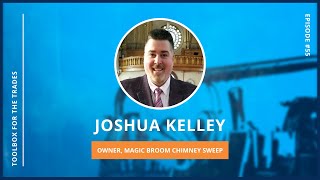
Josh Kelly runs two Maryland businesses with $2.5M revenue and six technicians. He uses custom brochures with embedded videos to reduce price shopping and callbacks, and built a searchable Google Sites knowledge base for SOPs, troubleshooting, and permits. A pellet-stove orientation video cut related callbacks by 90%.
Questions this video answers
Approximately $2.5 million (combined businesses).
Six technicians.
Waldorf, Maryland.
Six counties plus three townships.
About a 90% reduction for that specific issue (cozy pellet-stove orientation callbacks).
Josh Kelly, owner of Magic Broom Chimney Sweeps and Tri County Hearth and Patio in Waldorf, Maryland. Welcome to the Toolbox for the Trades podcast.
Thank you for having me.
I am super excited to chat with you today. You have a really interesting approach to SOPs. You do some really cool stuff with custom brochures and you utilize YouTube in a really wonderful way. And I can't wait to dig into all of these topics on today's episode. But before we do, I'm going to ask you the question I ask all of our guests. How did you get into the trades?
Nepotism.
I mean, that's an answer.
My dad started this in 1978 and I had a few other jobs outside of college and really was building other people's business or not really so much in the commercial banking world. But you know, I was pretty good at solving problems and fixing things and researching and was able to wanted to come, you know, had the opportunity to build something, you know, for myself. Really and truly got it.
So how did that work out that your father was in this business? Did you take over the business from him? Did you start your own? What did that look like?
Well, my father was running the distribution business and if he was in the same building, one of us would be dead. We don't communicate well. But no, I was working and still work some with my mother, but I run all the day to day things here. But no, my dad has been retired for quite some time and our relationship is better because of it.
Got it. So he was on the distribution side of the chimney business, whereas you were more on the service and replacement side of the business.
Correct.
So more customer focused. So talk to me about the difference between Magic Broom Chimney Sweeps and Tri County Hearth and Patio. Before we started recording, I asked you how you wanted to be introduced and you've got these two names. What are the difference between the two? How do they both operate and what does that look like for the business?
So Magic Broom is our service company. That's how we originally started, like I said back in the 70s, that primarily focuses on cleaning and services, hearth appliances, chimney cleanings, inspections, fixing water entry and fixing gas and pellet and wood stove appliances. That's its primary focus, the retail store. We specialize in selling hearth appliances. So we have a recently remodeled large showroom here that focuses on showcasing appliances, outdoor furniture and high end barbecues.
Nice. So one side of it is a service and replacement, the other side is retail. Correct, Got it. So tell me about these businesses, like do you consider them, do they all fall under one umbrella or are you operating them like two separate entities?
They all fall under one umbrella, but I try to operate them as two separate entities because the magic room technicians install all the appliances for the Tri county store. So there's some overlap there.
Got it. All right, so let's actually talk brass tacks when we talk about the business as a whole. Both Magic Broom and Tri County. What's your annual revenue for the business, number of techs, and I guess technically, in terms of locations, you have obviously the showroom. And do you have more than one HQ for the service side?
That's all done in one place right here. But we do have some remote. We're trying remote locations out kind of locally so we can work out the logistics of all that.
Got it. And in terms of annual revenue, number of techs, what does that look like?
Two and a half million and six techs.
That's awesome. Congratulations.
Thank you. Well, I said that includes both stores, too, so.
So congratulations. It's still. It's still. I'm very impressed. So tell me about the sales workflow for chimney and hearth and, like, how it differs from standard service and replacement for H vac plumbing, garage door. You know, historically, Service Titan, our core industries have been plumbing, H vac, electrical, garage door, but chimney really breaks off into a different type of workflow. So, you know, tell me what that difference is and what my audience of toolbox for the trade should know about your type of business.
So our workflow, when most people don't know, they're just usually calling for maintenance. Let's say for chimney cleaning, they don't know that there's problems with their chimney until after we do the inspection. So we have to be able. And again, most people don't understand the function of a chimney or the different parts of it. So we really have to be educators first. We have to document, document, document. We are very heavily dependent on the forms inside of service Titan. We take a lot of photos. There's a lot of auto fill options there. And then we have to disclose that to the customer. And then, of course, then we tell them how much it is to fix it.
Got it. So it's a lot of. I mean, quite frankly, I never grew up in a house that had a chimney, so I also don't know what a chimney serves. What does a chimney serve? And this is a total selfish question. And I want to apologize to listeners who are like, what do you mean this girl doesn't know what a chimney does? Does what? What? What's your answer to that question.
Well, the primary purpose is to remove combustion byproducts from the home. So carbon monoxide, carbon dioxide. So it think, you know, smoke. That's its primary purpose.
Secondary purpose is letting a, you know, a once a year having a man go down it and leave presents for all the children at the house. Obviously, I'm sure you've never heard a Santa joke in your life, Josh.
No.
But here we are. All right, so from what it sounds like, and I mentioned this in the intro, but you are our first chimney sweep guest on Toolbox for the Trade. So thank you for being so patient and wonderful with that question. Let's talk about kind of these three big things that I teased at the beginning. The first, really, I want to talk about is the custom brochures you created for your business. Because as you mentioned, education is such a crucial part. It sounds like a lot of homeowners these days, they either they're not. A chimney isn't something. They're like, my house needs to have a chimney. It sounds like they kind of already have it or they don't. What did the custom brochures tell me about why you created them and what problem they solved for your business?
So a lot of it, you know, we're selling sometimes just a service. And there was a. There was nothing on the market when we started building crowns according to Brick Institute of America standards, there was literally no marketing pieces there. So my first One was an eight and a half by 11 trifold. And it was just kind of explaining, you know, what we were doing was different and you know, what the warranties were, things like that, because we're basically part of. It's just pouring your foreign concrete up on someone's roof, which doesn't sound so bad. But when you start carrying 50 pound buckets up on the ladder, up then up the roof, and you know, there's a lot of work there. So that was the very first one. And from there, some of the products we use are heavily trafficked on Amazon, Walmart.com, things like that. They're pro grade products. There's a distributor out there that decided, well, we're just gonna. They literally sell at the same price I buy at online.
Wow.
So if you keep handing out manufacturers brochures and the products a commodity, well, now the selling process becomes a lot harder. So, you know, because all of a sudden it's like, well, how many gallons of this material are you putting on my chimney? How many, you know, well, you know, it's this so and so much this on the, you know, up there, it's like, well, that's not really what you're paying for. You're really paying for the time experience. You got to be standing there on a ladder, applying the material. And, you know, all the other stuff that goes into running a business is what you're really paying for, not just, you know, the $200 they can buy it on Amazon for. So I got really tired of that conversation, and I did that for a few other services. And so what I did was I rebranded. I came up with my own names. I would sit there with thesaurus.com and I would type in different words until I found something that I liked. And I did that for stainless steel liners because, again, there's a lot of minutia in there and stainless steel liners, you know, and same thing, if I hand out a manufacturer's brochure, it's online. So why. Why go through all that? Well, I can buy this online for 200 bucks. Well, no, you're not really buying the same thing. But it's just a terrible way to start the conversation in here, in the showroom. You know, I have, I think, 30 fireplaces. And, you know, when someone comes in and we learn this, if the price of just the fireplace itself is on there, and then you start building in everything else that goes on afterwards, like, well, I really want this stone and I really want this mantle, and I really. And I want it installed. It's going to be a custom install and I need venting and I need this, you know, expensive face. Well, that really doesn't reflect, you know, the total value because it really starts the conversation in a negative place. So. And we've learned that, you know, just recently after our showroom remodel is like, well, now I can actually move someone into the higher end fireplaces because the conversation doesn't start so negatively.
Yeah.
So we've been able to make that transition. So I stopped getting the phone calls. My CSRs, myself aren't always constantly having to defend ourselves. You know why we're right with the brochures? Because we're not. Again, we're not giving out that brand information for someone just because if. And if it was me, like, I hired a plumber the other day and I'm like, babe, it's a $7 part, but it's going to be $300 labor to put it on. Like, but I knew it because I'm in the trades. Yeah, but the consumer isn't, you know, isn't. Isn't Aware of everything else that goes on to, you know, orchestrating. To getting there, having the part, and, you know, put in the experience to put it on. Because I've known the plumber that does my plumbing work for many years, and I'm like, I'm happy to pay him because he gets it done, and it gets done right?
So totally. So basically, you developed these custom brochures in lieu of the manufacturer's brochures, because what you were experiencing was you hand out these manufacturing brochures, distributor brochures. Folks would see the name. They would just go into Google or, you know, their preferred search engine, and they would see the. That. The cost that you were from them as an uninformed consumer, not aware of how service businesses work. They see, oh, why is this. Why is this guy charging me $1000 for this part? That online is only $200? And that was putting you in a position where you essentially had to justify and explain how business works to a consumer. And so by creating these custom brochures that took out the branding and the specific distributor models, you were able to position your techs and your business as. We are the experts when it comes to installing these chimneys. Do you really want to go ahead on your own roof and try to install this on your own? And so that really removed the conversation that you were having and your CSRs were having.
Exactly. And then one thing I always say is the brochures are structured as a education format, not so much a selling format. There's no place to put pricing or anything like that on there, because I wanted them to be the trusted source of information. So I go through and I have custom graphics made to make sure I get my point across. But I'm really trying to control, you know, that information as well, make sure I bring home. Bring home the point of why they need to get this done. Not so much that the product's gonna fix it, but that we're gonna fix it.
Got it. Yeah. I love that subtle mind shift. That subtle shift between the product's gonna fix it. No, we're gonna fix it. And that's what happened when I first chatted with you a couple months ago. So talk to me a little bit about how you train your text to really present themselves as the trusted source of information. And I imagine that also falls to the guys who are in your showroom and the ladies that are in your showroom and the folks that are running your phones. How do you train them to really. Is it. Do you kind of hand them the brochures and say memorize these or is there any kind of training that you, that you give them to kind of get them in that mindset so they can become the trusted source of information?
Well, I've backstop a few of these brochures with custom YouTube videos that I had made and then I've done and what I do is I have, since I have custom images in there, I like the guys to use the custom images to be able to point out. All right, here's your inspection report on the left hand side and on the right hand side I've got this brochure laid out on the counter and I can, I can walk them through all parts of it. And it kind of just to bring everything home for the consumer that, okay, we're on this part of your chimney. And then here's, here's why it's wrong. Because what I'll do is I'll put pictures of what the damage is. One of them, we do that for water entry because it shows all the varying different degrees of water entry. And they look, your chimney is doing this and you know, here's the picture, here's your trusted source on the other side. So they can really see it side by side that, okay, now we really do have a water entry problem.
Got it. And one thing I really want to call out is the fact that you created custom images which says that these are, you know, more or less patented. They belong to Magic Broom and Tri County. So folks can't just Google and be like, where's that really cool graph of that chimney that that technician showed? That showed to me. Can you tell me the process a bit about how you're going about getting these custom images created and what that looks like in terms of, you know, expenses?
Well, I work with a designer in Spain actually, and I will tell anybody that my relationship with my designer in Spain was a lot better than my relationship with any designer I've had in the US and the reason for that being an early bird like myself and graphic designers or night owls, you're, you're just communicating through emails. You can't actually talk to each other. And that's a very frustrating process. You know, you're like, why aren't you up when I'm up? And you know, like, well, that's not the creative mind person there. I've never known anyone their creative mind to is up at 4am with the rest of us. Like that just doesn't happen. But my guy in Spain is constantly texting me at 7am my time because he's still up in Spain or, you know, or he just got up or whatever. But I'm getting, I get emails of what I'm thinking, like, oh my God, why aren't you in bed? But. But it's like my time because he's six hours ahead. So. So for me and him, we. For his English not being his first language, we seem how to get stuff done with this. And I'm able to somehow communicate to him. We'll get on screen shares, I'll show him something, I'll show him this. And it's really worked really well. So much more than I said. We working with someone in the States, because I can actually get that FaceTime with them.
Got it. And that again, I just want to. For the folks that may be like, what are you saying? Why are you outsourcing labor? Not to. To your country, to where you live. Just in case we have any people thinking about that. I mean, it's really. It sounds like you found out, like I needed to work with a designer, that it works on my schedule. And that's really what you're trying to convey. Right?
Well, I found them and that's right. And that's absolutely the first message. But I mean, he's not my full time. He doesn't work full time for me. He's piecemeal. So I said, okay, well how much to do this? And we get a budget together and then we make something. I said, well, what about this? And he throws a price out, me and I, okay, that's great. And because he's piecemeal, it's worked, you know, really great for us.
Got it. Very nice. All right, so we've got these custom brochures that your technicians, that your showroom operators, your CSRs, everyone has to really help communicate that your business is. You're the experts. You know, you're not just paying for this product, you're also paying. You're paying for our expertise. We're the ones who are going to fix. Sounds like given your experience in the chimney space, you've learned a lot of things, you've seen a lot of things happen. You're pretty savvy at business. I want to now pivot the conversation a bit to your approach to SOPs. And so why don't you tell. Tell me a little bit about where there were issues and problems you were running to in terms of SOPs and how you eventually resolved it and how you did that with Google sites.
So obviously getting SOPs adopted throughout the entire company where they live is Always a challenge for every company because even in this modern day and age, I know someone, she keeps binders all around her business. And I'm like, oh my God, what do you do when you have to update, you know, your handbook? She's like, well, we say it's been updated and we send out a letter and everybody signs it and we all go on with life. And I'm like, but, you know, especially if you're field tech and you're not in the office every day, like, what do you like, that's not really feasible because some, I imagine especially, I mean, we usually see our guys every day because they're usually looking for materials, things like that, their. Their appliances to install. But I imagine if you're just doing straight service, you don't have to come in every day, you know, well, I need to call out, what do I. What is this? What is that policy? What is that policy? So, I mean, I started putting them in Google Drive years ago and I learned that, you know, Google Docs was highly searchable. You know, you just type in a few keywords and usually you can pull it up. Three years ago, I was hiring new. We were training new CSRs. We were pretty close to our busy season. I was like, well, how do I get this in a. In a format that, you know, CSR can understand, they can access quickly? I. There was a company, I believe it's called Blackburns, my friend Jerry told me about years ago, that wrote things, wrote them in HTML code, which.
Yeah, is. Yeah, HTML code. Not exactly the easiest thing to document materials in.
No. And then I went back to. When I was in college and I was like, well, we did write those websites in Google work. I mean, not Word in Word documents. And I was like, can we still do that? I was like, do I really want to learn that process again? Like, that was a long time ago. And for some stumbling around, I was looking at some other platforms. How, you know, what was I going to do? Because I certainly wasn't going to write code and I certainly wasn't going to do it in a word doc. And then I stumbled across Google sites. I was already a Google G Suite user at the time. Now it's workspace. And I started playing with it and I was like, oh, this is really stupid easy. So it really started. And the original website, well, I really started putting the CSR documents on there with FAQs and their workflows and things like that.
And I just want to stop you right there real quick to show that that also was Very helpful because it was one searchable so that new CSR and training could just go on there and be like, oh crap, what's the call script? In case someone's inquiring about X or Y, they could just go in and easily search it. And so this was the goal at the beginning was how can I get my CSR's information? They can pull easily and quickly to close a call.
Exactly.
All right, sorry, continue. I didn't mean to interrupt.
That's okay. That was, that was the very first iteration and. And I really had a lot of sops written before that. And the very first iteration of the website, we called it what Would Josh Do? And I bought the domain name WWJDPro as a shortcut because you've ever used Google sites, the domain names really or the website links are really long. So I bought that as a shortcut and as with the expectation of hey, you know, stop interrupting me for every, every question about everything that is to take that you should remember. And like I said, it used to also say what would Josh do? Another shit you should read before asking Josh. That was the very first iteration. It stayed like that for a year and it kind of developed into more we then I realized like, wait a minute, I can put the handbook up here. I can put troubleshooting guides up here. I can do. There's so much I can do. I put the training calendar up there. I have links to the, the company share folder. I have links to all the documents, the websites, any shortcut links to websites that we frequently visit. I've got a newsfeed in there now. So every time with being in business for so long as we are, we've dealt with a lot of companies over the years. So anytime they send a price update or there's a product update, which one vendor is constantly innovating, they send like three, four a week. It shows up in the newsfeed. Now, not just in an email, but it shows up in our newsfeed. That was a new trick I just learned. I was pretty excited.
Oh, so an actual newsfeed. So when employees log into the Google site, it's almost like Facebook or something where they get the most recent updated information, the front page. Am I understanding that correctly?
It's right on the top, which is just in short links. It's just an email chains. But those emails that come from vendors will populate right into that newsfeed sort of thing. I'm able to put our social media feeds right on the front page as well. So when we're doing, posting, everybody can say, well, I saw it, there's no problems for that. It's everything that has to do with our permits because we're constantly pulling permits. Every policy about pulling permits is on there for every jurisdiction. Every jurisdiction is different. They all have their own different software for every township. Every county has their own process.
Oh my goodness, that sounds exhausting. How many counties do you operate in?
Six, plus three townships.
Oh goodness.
So you know all that's written out in, in, in the, in these policies. So they're, like I said, they're easily searchable. The Google sites is heavily, if you never used it, it's heavily tied into your Google Drive. And in a way it's, it's a visual interpretation of what's in your drive. You know, most people know how to navigate a website. They don't necessarily know how to navigate a cloud folder, even though I thought it was pretty intuitive. There's a lot of people who never use Google Drive. But it's, it's just a way to visually navigate that. And in there I have broken up like work. I have a document under office policies that's the complete, complete call intake process. It's nothing more than a, a workflow that shows, okay, if they say yes, you go here and go here and go here, asking the questions. And every one of those points is backstopped with another Google Doc. So if they have questions about that particular document or question, they can actually click on a link right there and it'll open up the Google Doc that'll backstop that. Rate sheets, brands we service what's included, like I said, call scripts, workflows, troubleshooting guides, some manufacturer specific, some are generic, depending on the. We call it the engine, basically. So just, just so much information. I can park other, I can park YouTube videos there. That's something I do frequently. So if it's somebody's YouTube video that explains something really well, I'm like, hell, I'll put it here, I don't care. Like, saves me from making the video.
So I just want to zoom out real quick because we talk a lot about, at least I do in Service Titan in the content I create. So we did a growth series, we're doing a grow series right now as we're recording this and we're towards the end of it. And the whole concept of this masterclass was it was a weekly masterclass that was teaching you skills as to how to level up your business. Right? One topic was specifically on systems and processes and how it's so important to have systems in place that your employees have access to so they can see how the company works. And one question that was asked was, how do I even begin to operationalize this? Like, do I put it in Dropbox, Do I put it in OneDrive? Do I put it in Google Drive? And you've really gone ahead and you've selected the Google option, but you really zoomed in to what can Google offer me? And I just want to very quickly zoom out one more time, just in case folks aren't familiar with Google Drive. So if you have a Gmail account, you are guaranteed this G Suite that basically gives you access to Google Docs, which is Microsoft Word, Google Slides, which is basically PowerPoint, but for Google, Google Sheets, Excel, but for Google. And Google Sites is one of the products that lives within the Google Cloud. Right. And so it sounds like this site is essentially like a micro site. It's not a website that's accessible by anyone unless you invite them to it. So unless they're in your organization. And you've just essentially documented every single scenario that could happen at Magic Broom or at Tri County.
Yep. And that's the goal. I have a. I have a girl I work with, she's actually in the industry that helps me with my office policies and stuff. She goes, one day I'm going to stump you on something that's not written in there. And I'm like, good luck with that.
So I want to also talk a little bit about how you even began to write these documents and to build this website. So Kathy Nielsen, who's been on this podcast and who's done a couple webinars with me, her approach to systems and processes is get the big stuff first, like, tackle the processes for the stuff that will stop your business in its tracks in case someone gets hit by a truck or if someone decides not to come to work anymore. How did you start thinking about it for your businesses? Like, do you have a crazy mind map in your brain that was red string connecting to things? Did you use index cards? How did you start?
Well, it starts when you're pretty angry at somebody that day, I can tell you.
Good answer.
That's. That's about 90% of them were started with, well, this, this MFER. We're not doing this again.
Oh, goodness.
And a lot of them are written that way. And when I started the journey towards this website, you know, I had to go back and look at a few of them, like, oh, you were really angry that day. And maybe we should change that policy. Just tweak it a little bit. Because that's when you have your most energies. When you're, when someone's just pushed all your buttons that day and you're like, sure, angry keyboard typing, you know, swear I'm gonna break a keyboard. But that's how, that's how most of them started. And then, you know, it really became. When in your. As you're onboarding people, it's like, well, how can I onboard people? Because going back to. And getting light bulb moments is what I call them. That's one of the reasons I like the brochures is because when I'm trying to get a customer to that light bulb moment of here's the problem, you know, I'm all about trying to move them there as fast as I can. So we started documenting, doing some video documentation too of the processes as well. We'd sit here, have the whole, we'll have a company meeting about the process. I'll record it and I'll post it right there with the, with it these days. So there's no. Well, I didn't understand that. It's like, well, why don't you. Did you listen to the video or anything like that? And usually the answer is no. So they get tweaked constantly. I'm constantly, as I learn new things about Google sites, I'm tweaking things. I just revamped the front page last week because I learned some new things and I thought were pretty cool, especially for service titan users. And you have a price book. Your price book is always evolving constantly. And you have to have that same mentality with this. It's like, well, it's never going to be done, but every day we can make it a little bit better.
Got it. Oh, very good price book analogy as well. Your price book constantly has to change with material costs, with manufacturers. If you, if you get a different vendor, so on and so forth, you add a different service. So same thing to consider with your systems and processes. It's an, it's an. It will never be done. We all. I heard everyone's just, I heard telekinetically in the future when this episode airs, everyone just going, oh man. But yeah, it's true. It's. It never. They're constantly evolving. I want to do a quick tangent to onboarding because you mentioned that onboarding a new employee. Employee is a really good place to start thinking about these and that that triggered a light bulb for me. Talk to me a little bit about how you onboard now with the Google site up and running and where you use that new, that fresh set of eyes to maybe tweak or improve the site as it exists today.
So the first thing is we always start with the company handbook and hopefully someone other than me reads word for word through the company handbook. And then that is the main day. One focus is learning that and learning the website because most, more than likely the answer you're looking for is in there. And just recently, as we talked a while ago about Google Cloud Search, that is the greatest new find of this year was Google Cloud Search. And just type in a few keywords, you'll probably find it that that is such a great tool because It'll even search PDFs, it'll search Word documents, Google Docs, it searches your email like it is the. Literally, I can't say enough great things about it. But on the site because most people aren't using G Suite before they come in here, I have links right at the very top of the page to everything. We use gchat internally. So there's a Gchat icon, there's the docs, the sheets, the calendar, the maps, the Google Meet the keep notes. I like that. It's a big one for me. The drive and the Google Search icons are all right on the top of the page. There's like. And really in just below the fold is access to the company share folder, which is where again where some. All these documents exist in a, you know, just a different format. So getting them there and getting them acclimated with that is top priority because it literally there's no reason beyond that on why you didn't know a policy because you can look it up, you can type in one or two keyword searches and you can find what you want very, very quickly. So if you want to know what do I do after I complete a sale? Well, type in complete a sale, a document will come up and boom, here's what you do.
As a little note for the listeners, Josh told me about Google, it's Google Console Search, right?
I just started. That's different. That's a different.
It's Google Cloud Search. Google Cloud Search. He told me about this when we first met and we were talking about what you'd want discuss on the podcast. And Google Cloud Search has changed my life. I'm a big G Suite user. I've been using it for years. And searching within Google Drive is kind of very frustrating at times. But Google Cloud Search makes it a lot easier. So I want to thank you for that very quickly as I was like, kind of looking back at our, our past conversation, I really want to talk about how you have these troubleshooting manuals in the site and those resources for the technicians. You had mentioned that in some cases you can swap out parts made by different manufacturers for certain things. Have your technicians found that very useful and really helpful on the fly? Does that reduce the amount of calls they send over to a service manager or back to the office if they're kind of stuck in a jam?
Yes, absolutely. And they're the ones who ask for that part cross reference diagram. Because I could tell them off the top of my head like, okay, well you can use this part on these, you know, six different models of appliances. And they were all like, well, how are we going to learn that? I was like, well, I don't know, I've been doing this forever. Why can't you remember? I just told you. And you know, most people aren't going to remember that. Like, I can't remember every house I went to as a service technician, but I can't remember the weirdest things. Like, oh, you have the blue stove with the giant record collection. They're like, yeah, I'm like, I could never pick you out of a lineup, but I also remember you had a red tin roof. You know, things like that. I couldn't remember their name or where they live. But you start talking to them like, oh yeah, yeah, I remember that. So technicians, our mentality is next job, next job, next job, next job. So they don't always remember, you know, cross reference stuff, but they're the ones who asked me for that. So I was able to put that. We just did one recently with pellet parts and I was, I put an Excel spreadsheet together for them and it took me a while. I listed just about most stoves that we've ever sold. And I went through and put, you know, what part numbers go on every one. So they can, they can just look at it and go, okay, well I can use this part. And you know, it's one less phone call to the office. Right? Because that phone call happens. You know, if it happens once, it's going to happen again and it's going to happen again.
Yeah, that's increasing efficiency there. And again, a lot of work on the back end just to get it started. But if you stay tuned into the systems and processes, if you stayed into that part cross reference sheet, then you just slowly add it as you add new vendors or, you know, a new model comes out or something like that. But really interesting as you were Describing that I could see you as like a frustrated owner who once was a technician. There's this Mitch Hedberg who was a comedian. He had this really funny line that says go in my head and come back out and tell me that wasn't funny. It's like go in my head and come back out and you'll know everything that I know. So it sounds like you've really kind of solved that problem of really just taking your brain and putting it into a website. Which is why I'm just very excited to talk to you today. Now I'm going to go ahead and assume I know you use Service Titan. Your texts have tablets. The Google site is that super accessible, easy for them to access on the go on their tablet or on their phone.
Yes. It's already optimized for tablets and phones the second you build it.
Amazing.
So yeah, so you don't have to again so there's any Internet connected device, Apple, Android, PC or Apple again it's accessible. You just have to give them access to it which everyone has a company email address and soon as I give them a company email address that will then gives them password protected access to company share folder and the company website.
I love that. Really, really cool. Is there anything that other members of your team have asked to be added to the site? Like was there a specific, you know, system or process a CSR wanted to add or an office manager or any other employees on your team that were like can you please add this to the site?
Well one of the most recent one was we just revamped again the how the office ones looked and then some of it is like the newsfeed is a way just to not blow up your inbox.
Sure.
Because that's a huge problem I have personally is you know, hundreds of unlooked at hundreds of unanswered emails and plus it gets it gets it in front of everybody. Those updates. I'm trying to think the parts cross reference was one of them. I think they asked for before and after photos. So we have a before and after photo gallery so they can show customers they're in a home like all right, here's jobs we did. So you have a photo album. It doesn't matter what device they're on, they can show them or if you've got your tablet here you can open it up on your because usually you have both when you're with you. You know open up the photo reel over here while I still got the estimate open over here. So just and then like staging ideas for Roofs, because we're always, you know, staging roofs anytime someone posts a photo online, like I snatched that up of different roof staging ideas and I put it in there just so the guys were like, okay, well, I'm not sure I'm going to stage this. I'm like, all right, well, let's look through the photos and let's see if someone else has done it before.
Very nice, very cool, very cool. I also imagine that all those brochures we were talking about before are also backed up and in a folder within the site.
Yes, they're all right on the top level for the text to email it if they need to email one. But they are, they're actually large. What are they, 8 by 17 or. No, 8 by 25s. I think they're very large trifolds is what we've moved to. So I like to put that in front of a customer because I realized as I got older and you start watching the customers and they're getting that, doing that, moving the paper back and forward. That's not really comfortable to be doing that. Sure. They went from 8 1/2 by 11 trifold to a 8 by 25 trifold. So we increased the size of them dramatically. Larger pictures, just, you know, one of those things you learn from doing them. Because I've been doing them for almost 15 years, those brochures.
Very cool, very cool. All right, we have. I want to pivot to YouTube. So talk to me a bit about the kind of success you've had on that platform. And just Again, Google owns YouTube so obviously very easy to embed Google videos into a Google site. YouTube videos into a Google site.
It is incredibly easy to do that. You just literally two clicks of a button and there's actually a place just to embed. It says embed YouTube video right here. So the videos I make are. There's first there's training videos which are. Here's how we diagnose this specific part. Like, here's the multimeter. We all use the same multimeter. And we'll take a 60 second video with my cell phone in my office and a multimeter just going in a lighter, just going, okay, here's how we did this and. Or here's how we do this. Or we'll go into the showroom and I'll have reps make videos on an old camp, not so much, but a camcorder and how to set up in a unit the best way. And it takes me, you know, two minutes to post that up on YouTube after he's done. And then my tech then instead of my guy trying to look at a black and white two dimensional photo that's maybe 2 inches by 2 inches, now he's got, you know, a full color video in front of his face. The other kinds of videos I make are get the customer to go away videos is the best way I can describe them.
Get the customer to go away videos.
There's, there's a brand of pellet stoves we sell. And where I went large with my brochures, they went very small with their manuals. So where they take an eight and a half by 11, fold it in half, and then shrink their, their manuals down to like number six font. Well, no one reads that. So we were getting callbacks, callback after callback after callback. So I, so one day I just sat here at the camcorder and all of it was, was because they didn't pay attention during the orientation of the appliance. And you know, we have to go back out there and show them a second time. Well, that's, you know, it's not a warranty call, but it's a goodwill call. Right? So you're not charging the customer for that. But it still costs me money. So one day I went in the showroom, I put the camcorder up and I went to town. I just showed little, just cut through. I showed cleaning the stove, I showed how to adjust the air shutter, I showed how to operate the control board, all in a video. I paid a guy on five or fifty bucks to voice it over. And you know, whenever you type in cozy pelt stoves, it's the number one search result because of it. Another video is people always think, well, they're wood stoves. We get, I can't tell you at least probably a dozen phone calls a year from someone. Again, doesn't pay attention to their orientation and they literally will smoke up their entire house. And depending on the panic level of that customer, they'll call the fire department. The fire department goes, well, there's something wrong with your stove. I'm like, that's not the case. So one day I, you know, we burn appliances here in our showroom. I waited for our chimney to have a very cold draft and I intentionally smoked out the entire, you know, 10,000 square foot showroom. Like, oh my goodness, you could see me, I'm coughing on the video. But. And I'm just standing there, I'm like, I'm taking it, but I'm like, this is what will happen. And the appliances raised up at that time probably three feet. So it's sitting there and I'm seeing a waterfall of smoke come out of the bottom of the unit, literally like a fog machine, like a dry ice fog machine. And it's just rolling down the unit like a waterfall. And just, just so I can show people like, no, this is what it's going to happen when you don't do X, Y and Z first. And you know, we, and then I put, and that's actually not only on our inner site or whatever you call it, your internal website, but it's also, we have a knowledge base page on our, on both websites for both companies on just how to start your website and the effects of it. And the video is like a year old but you can already see it's, it's starting to trend upwards as far as likes and views. And it's a little, I'll admit it's sometimes a little long listed. It's like a 10 minute video. But it really shows this is what's going to happen when you, when you have, when you don't do this. And I have people on there thanking me for making that video because it's calmed them down from, you know, again calling the fire department or what's, what am I doing wrong? Or things like that. And it's literally so I'm like, oh no, you take a propane torch or you roll up some newspaper or, you know, this is really how you get it going. But in case you didn't get it going, this is what's going to happen. And know there's not something wrong with your stove because I'm going to come out there, I'm going to look at you crosswind, I'm gonna do X, Y and Z like I was supposed to. And you're like O. And again you lose money because it's a goodwill call. And the fire department's always, almost never our friends because they all think in our industry there's a lot of. It's mostly volunteers and they're trained on putting out fires and not starting fires. Where I'm into starting fires safely, they're into putting out fires. So their first thing is whenever they come into a house full of smoke, they're going to rip out your appliance, they're going to look all over everything. They're going to try and find the fire. The fire's inside the stove where it was supposed to be. It's just the smoke wasn't going where it was supposed to be.
From that description, I'm imagining there may have been a couple instances in your past where you've had to reinstall appliances that firefighters have taken out.
Yes.
Oh boy. All right, so I want to. There was a bunch of really great nuggets in what you just described with YouTube. I think that we've talked about YouTube a bit on this podcast and it's. A lot of people get a little, I think, intimidated when they talk about YouTube because they're like, it has to be good quality. It has to be good quality. You just straight up said, I shot this with my phone. I got a friend of mine to voiceover it for 50 bucks. Like, it does not have to be high quality. As long as the video is sharing the message that consumers will find useful, it'll still increase in ranking and it will still, I mean, the cozy pellet stove, like you said, is still is the number one search because no one else has thought to make a video on cozy pellet stoves for that particular instance. So I would challenge anyone listening in any industry. This is probably something that you want to invest in. The next thing I want to talk about is you really, through YouTube, you found a solution to callbacks. Well, most common callbacks, I should say so since, like setting up that knowledge base on your website since providing your customers with these follow up videos for when they don't pay attention to their new product orientation. Do you. Have you seen a significant dip in callbacks of that type?
For cozy? It was instantly 90% wow. Just because, as I say, I'm the world's best hand model, even though I had nitro gloves on and. But I'm literally just, you know, going through and pushing buttons, making sure, you know, here's how we orient this piece. Make sure this piece is in here, you know, make sure it's seated properly. You know, here's a video of it. Not if. Here's your. Here's what it looks like when it's not burning correctly. Here's a video, you know, here's a couple different shots of that, a couple different ways. And here's the way it looks, you know, proper. So just by doing that. And it was a four minute video, it was way more informative than trying to read a manual. And it instantly reduced callbacks. And the same thing with the wood stove one you get we get all sorts of calls about, well, my, you know, my stove's not heating. It's like, well what? And you start talking to things about your, your wood supply. And well, my wood guy said it was dry and I'm like, let me tell you something. That one guy likes to eat just like you do. And if he told everyone that his wood wasn't dry in January, he'd starve to death. Like, you know, there's, there's a reality here. Like, if he sold out in October and he still needs to eat November, December, January, February, March, April, you know, he's going to tell you it's, it's wet, like, unless it's been cut in season two years by yourself, then, you know. But all those videos. And I even make again, more brochures about getting started with wood, even explaining about. I have a selectory diagram about the different materials that we, that can be used in the chimney systems. So lots of, lots of different things there, but just to really, again, educate what's going on there.
I love that. That's really cool. I love just the subtle pivot from looking at YouTube as a recruiting tool, a prospecting tool, which we've looked at it about, which I think we've examined it on this podcast before, but more of an education tool. And if folks are interested, check out the Roger Wakefield episode from season two, I believe, where he really talks about educating the customers through YouTube. Have you ever had a customer or a new customer come in and say, oh, yeah, I've seen your videos online.
Actually, Yeah, I have. Who's been in. Usually it's someone who's been on our website poking around. Oh, you're the guy from the videos. And I'm like, yeah, thank you. You know, I'm not doing it obviously for recognition. I'm doing it so, you know, I don't have to do these goodwill calls. So I'm very selfish in that, in that regard.
Oh, so you don't have a drawer filled with signed headshots to get out when people.
No.
Okay, maybe an opportunity later. I have a couple more questions I want to. I would love you to answer, Josh. And the two big ones coming up. One, right now, looking back at your career, and obviously you've been ingratiated in the chimney space for almost your whole life. Looking back at your career, what would you have had done differently if you had the knowledge you have now, back when you first started, or even five, 10 years ago?
I certainly wish I had started on the Google sites journey a while ago, just because sharing information across a company, it's always a very difficult task. And it's like when we have, between the retail store and the service department, this hand doesn't know what the other hand's doing. So that would be one of my first things. I would have gotten out of truck sooner. Out of a truck sooner. That would have been. That would have been another one I wish I'd done. I was in a truck, I think, way too long. Or trying to run the. Be in a truck and run the business too, was. Is a big. Or the big ones. But, you know, one of the reasons I'm trying to get everybody always to row in the same direction and that's a great thing I can do is like, well, when all the information is shared across the company, it's like, there's no excuse for why are you rowing upstream? And everybody's rowing downstream.
Got it. What was the kick in the butt you got that actually finally got you out of the truck? I'm always curious.
I fell off a roof.
Did you really?
Yeah, I didn't get hurt.
Well, oh, thank goodness.
Which is interesting. I. I bounced. But I have a friend who just fell from the same height and he shattered his ankle and his wrist and broke a few of his ribs, too.
Oh, my goodness.
There's other stories where people dying from that. From that same height. And it's literally when you're a chimney sweep and you're on roofs every single day, I could reach the gutter with my hand. Like, that's like walking upstairs. Like, I don't even think about it. I set the ladder up. I knew what I was thinking. Like, I'm trying to get up. Here's the shallow pitch roof. And I'm going to use the shallow pitch roof as a platform to run up the steep pitch roof and not. Not paying one attention to where I'm actually setting the ladder. And I got up to the top and the ladder kicked out from underneath me. And I just remember waking up and the customer standing over my face and I'm seeing stars. And I remember an image of my old football coach, you know, when I got the wind knocked out of me, telling, you know, when I was panicking because I couldn't breathe, telling me, short, shallow, rapid breath. Short, shallow, rapid breath. I just remember Mr. Carrington's face, like, right here in my face, like, inches away, screaming at me to tell me. Telling me how to breathe again. And that's what I remembered. And then, you know, Fortnite went and got checked out, and the doc in the ER is looking at me like, dude, like. And I drove myself to the hospital and he's like, dude, like, this shouldn't be. You shouldn't be walking right now. I was like, yeah, my Knee hurts. I was like, my knee hurts a little bit, but that's because the ladder fell on it, you know, But I thought, you know, I tore my knee or something like that. But. And then just so. I mean, I still worked on. I still did it for a few more months after that and probably another year, but there's early time to get out of the field and stop putting out fires every day.
Got it. Got it. Earlier in our conversation. Thank you for sharing that, by the way. I'm sure everyone has some version of that exact same story. When you're climbing in attics all day, when you're dealing with plumbing, plumbing, the reality of plumbing. When you're climbing on roofs, you get so used to it because you do it every day. And then all of a sudden, oh, crap, I forgot to do this very important safety thing. Very early on in the conversation, you mentioned the BRIC Institute of American Standards Bias, which I love as their moniker. But do you work with any best practices organizations or any other type of business development group to kind of help. To help coach you in any way?
I have. I do work with two industry coaches, sort of mainly so I can bounce ideas off when or they talk me off the edge now that I have. I've also have four kids now, so traveling is more difficult for me than before. So I don't get to always go to seminars like I used to or, you know, I really have to plan my time off and make the best of it.
Got it.
And one of the two of the best books I've read are the first one I always. I remember reading was the E Myth was about, you know, which is really put you on that SOP journey of documenting everything. I was like, crap. I learned more here reading this one book than I did four years of college about how to run a business.
Yep.
And then the one I'm currently reading that I'm really enjoying right now is they ask you answer about. And I noticed a company I just contracted with, they do that. Like, literally they do that. And I'm like, oh, you have all the answers on your website, but we can still pay you. And here I am paying you. And it's like, okay, well, these guys know what they're talking about. And that's on that same thing that I'm doing is I'm alleviating pain points for me. But giving the answers to the customer and improving my. I guess really improving my search. But what that does when someone. We're going to start writing more of blogs and things like that what it really, like, why does this cost so much? You know, because in my industry, you know, like we explained in the beginning, you. There is, you know, some of the materials can be a commodity. You know, they can find them online. But there's really a. The reps in my industry will tell you it's an 80, 20 rule. Like 20% of the chimney companies do it, you know, above board and to the letter of the code. And 80 of them are just wham, bam, thank you, ma', am, let's get in, get out. And you know, they don't really do all the work that is necessary. It's like, well, does the chimney still work? Kind of. But is it right? No.
Got it.
So there's, you know, a real cut through. And most of the people that are in my market, I have one good competitor, but most of them are people I fired for different reasons. Dang. That started their own, you know, single truck operations. So. And they don't, you know, the realtors love them because they, you know, they get paid a little bit money and, you know, stuff gets missed and. Or the realtors know they do a bad job and. Well, I had the chimney inspected, so not to throw all realtors under the bus, but there is some good ones, but, you know, so that's kind of what the market looks like. It's like, well, you can either be the guy I fired or you can. Or you can work for us or you work for. Like I said, I have one. One competitor in my market that does above board work.
That's awesome. They. They ask, you answer. That's the name of the book.
Yes. Which is. It's currently tucked in my hunting book bag.
Any other books that really come to mind in terms of what helped grow you and as a business person and as a leader.
Those were the two. Like I said, that E Myth really puts you on that SOP journey of, you know, how do they. How do they find the answer?
Yeah, I agree. I have the copy of the E. Myth right to the left of me. That book is. That book was instrumental for me realizing understanding the way a service business can be run and super profitable. I have a couple rapid fire questions for you, Josh. Thank you again for your time. This is been great. But the way these work, just first thing that comes to mind when I ask them, are you ready? How do you take your coffee?
Cream and sugar.
If you could have dinner with one person, dead or alive, who would it be?
Oh, I'd miss my grandfather.
Nice. What's the number one thing you're trying to learn more about right now.
Business by the numbers. Really?
Which is money. Go for it.
I say for a guy with a degree in accounting, it's still the daily grind of running the business by the numbers is hard.
Well, I'm glad that at least you're having some difficulty with it because it doesn't make me feel so bad about my math illiteracy. If money weren't in objects, you had unlimited resources. What's the first thing you would do?
Oh, I'd buy a giant hunt camp in the middle of nowhere.
Nice. What's the number one thing every contractor must do to run a successful business?
Oh, that's a tough one, I guess. Really know your numbers on how to build proper estimates. Really and truly.
Yeah, that's actually Know your numbers is. I think the. I should do a score to see what the top answer of that is. But Know youw Numbers is very popular, so you're. You're in very good company in thinking that.
Family Feud style.
Yeah, Family Feud style. Exactly. Josh Kelly, thank you so much for being a guest on Toolbox for the Trades.
Thank you very much for having me.
More from Bill



Capturing the 80%: How SmartAC’s Gen-2 Targets Non-Membership Homeowners | Podcast Ep. 296

Build better customer data with every booking in ServiceTitan | TAD Tune-Up Series

The Biggest Change for Roofers Coming From Other Roofing Software to #ServiceTitan?


