How to Have a Competitive Mindset in HVAC and Plumbing | Podcast Ep. 177 | Toolbox for the Trades
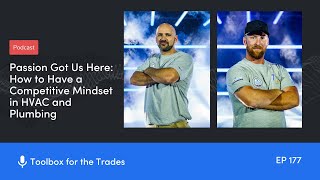
Jackie Aubel talks with 2023 Elite Trades Competition winners Patrick Bolt and Craig Childress about their paths into HVAC and plumbing, how they trained, and what it took to win. They cover vocational school, veteran transition programs, tools, ergonomics, and practical advice for technicians looking to compete.
Hello, contractors, and welcome to Toolbox for the Trades. My name is Jackie Aubel and today I'm talking with the winners of the 2023 Elite Trades Competition series, Patrick Bolt and Craig Childress. Let's jump in. Patrick Bolt, you are a fourth level H Vac and plumbing apprentice located in Lima, Ohio. In 2023, you won the apprentice division of the 2023 Service Titan H Vac National Championship, which in addition to getting you a substantial trophy, you also went home with the $25,000 grand prize. Welcome to the podcast. How are you doing today?
I'm doing really well. It's been, I've been really trying to enjoy this nice weather that we're having and just things are ramping up at work just because, you know, once it gets hot, people start wanting to stay cool in their houses. But overall I'm doing pretty good and.
I'm also here with Craig. Craig Childress, you are a lead plumber for Boston University, and in 2023 you won first place at both professional professional divisions of the Service Titan H VAC National Championship and at the Plumbing National Championship, making you the first ever crossover champion for the Elite Trades Competition Series. In addition to bragging rights, you received $50,000 in prize money between both competitions. Welcome to Toolbox for the Trades. How are you doing today, my friend?
Thank you so much. I'm doing very, very good. How are you doing?
I'm doing fantastic. Really, really excited to talk to both of you today. We're going to talk a little bit about both of your work in the trades, hear a bit about your experience at the Elite Trade Championship Series, which I'm going to abbreviate to etcs because that is a mouthful for an interview and hopefully we're going to have some fun along the way. But I need to kick things off with some drama and I hope you don't mind, mind Patrick, but I'm giving you this question first. What's the worst job you've been on and what did you learn from it?
So there's been a lot, you know, I do things like there's a lot of things that happen, but I, one of the I, I've been thinking about, the one that sticks out in my head was probably when I got into H vac. I was about 3 weeks on the job and I didn't know anything and I was just trying to figure it out and like, just like help where I could and pulling a line set through, through an attic and I don't know what I was doing, but like My foot slipped and I accidentally fell a little bit through the. Through the roof and through their ceiling. And yeah, a little bit of drywall got down, fell into the. Thankfully it fell into their garage, but still, that was about three weeks. And I was like, I thought I was going to get fired after that because I just fell into someone. Into someone's house. But it was a learning experience, obviously. Just make sure you stay on the joists and take your time.
Sure, sure, sure. Oh, my goodness. How did the homeowner react when you did that?
He actually took it very well. I think he was thankful that I actually. It happened in the garage. So most people like, that's if it for a place to fall through the ceiling, that's the. Probably the best place because you don't really need to heat or cool in there as much. But we ended up having. We ended up taking care of it and he was, he was very chill about it, thankfully.
Okay, good. I mean, honestly, I have to say, if I put myself in the homeowner's shoes and a poor tech fell through my. Through my ceiling, I. I don't know if I could be too mad. I'm like, oh, that probably hurt, buddy, didn't it?
I didn't fall all the way through, but I definitely, like. And I caught myself. But yeah, I. I was a little. I was a little dazed for a little bit as I was like, hanging there for a second.
Yeah, yeah, yeah. Abruptly dropping a couple feet will do that to you, I imagine.
Yes, it will. So that was definitely one of my more memorable moments on the job.
Awesome. Awesome. Craig, I gotta ask you the same question. Worst job you've been on and what you learned from it?
Well, I think similar to Patrick, I mean, every job kind of has its up and downs and you learn a lot every. Every single job and every single day. The worst jobs that I've been on, say, was more like a quick equipment being ordered incorrectly or a piece of equipment being incorrectly quoted, because then you, you're. You're backtracking at that point and then you feel bad because, you know, a customer doesn't have any heat. So now you're trying to organize all that. But I mean, even that, that's. That's all learning experiences for all of us, you know, whether it's the person selling it or me. It helped us open up the line of communications better between us and the sales team. So it was actually a good thing that had happened. But I mean, similar to what Patrick was saying, though, with good phone through this building I mean, you get burns and bloods all the time that happened, but it unfortunately kind of come.
Yeah, yeah, that makes sense. Oh, so this was, I'm assuming, the experience you just shared, you know, different equipment being ordered or the wrong equipment being ordered. Was this when you were doing more residential work?
Yeah. So prior to going to Boston University, it was definitely an obstacle that we overcame. But, I mean, working together, we all figured it out, and it certainly helped the guys in the field or the techs in the field communicate better with the sales team about what we were actually looking for. It helped us serve our customers better, which was good.
Awesome. Awesome. All right, Now I got to ask, you know, one of the big questions here on Toolbox for the trade, and I think I've told you guys before, a lot of the times I speak with owner operators here in the industry, and I don't often get the op. The privilege to speak to guys who are doing the frontline work. I need to find out how you guys got into the trades. And, Craig, why don't you take this one first?
So I actually went to a vocational high school. So my freshman year, high school, 14 years old, I was introduced to the trade. So I was able to experience a few different trades throughout my freshman year, and I was able to try each one of them up for a week by four quarter. My freshman year, high school, I was able to pick plumbing, got into plumbing, and spent the next three years in high school doing plumbing. I was able to go into co op my senior year of high school. So I was actually out in the field my senior year of high school, which was cool. Instead of sitting in the classroom learning about plumbing, I was actually doing it and making some money, which was awesome. But it was just a matter of continuing from there and picking up as much as I could.
That's awesome. And so, wow, that's really cool. There's been very few folks on the show who've started as early as 14 years old. Did you have a lot of family support that were guiding you in that direction?
So I actually have two older brothers that went through the vocational school prior to me getting there. One of them is a plumber, and one of them was actually doing culinary arts. But my parents are very supportive. Thankfully, me going to the vocational school, I. You know, being 14 years old, it's difficult to realize what you actually really want to do. So, you know, for me, I'm like, I don't want to leave my friends because, you know, it's going from the city that I grew up into a different city. So it was. It was a tough decision for me because I had all these friends that I didn't want to leave. But ultimately, obviously, mom knows best. So you go with that.
Yeah, yeah, yeah. Oh, my gosh. I can't even.
I think that's a cool concept that you were actually able to take a week to try out all those different trades. And I've thought about that for a long time, that, like, they should probably implement that, like, across the country or what. However you want to put it. Because. And like you said, At 14, you have no clue what you want to do, but are telling you that by the time you're 17, you need to know what you want to start studying for in college so you can have a job. But if you don't, you don't. You might not go to a career in that. Find out you're not. You don't like it. So doing that, a little bit of cross training or just learning was probably pretty beneficial to you. I would bet.
It was amazing. I mean, we. We would spend a week in academics. So, you know, your sciences, maths, English is. And then you go from a week of that to a week of1.1 trade, and then you do a different trade. So we did welding, plumbing, electrical, carpentry. I mean, we did Cosmo for a week just to see what, you know, what you're interested in. So it was actually pretty interesting. So it was. It was a great experience. But we have a lot of those vacation schools up in the Northeast. I don't know how it is the rest of the country, but we're lucky enough to have them in Massachusetts.
We have some vocational schools around here, but it's like you don't really. You kind of have to, like, divert your path. It's not like you go there on your. As your first choice to a degree at like 14 or like, they send you there right away. I don't know if that's how it went for you, but, like, you have to, like, ask that to go down that path.
I think it was pretty accessible for us. It was certainly something that I was aware where I had two older brothers that had gone through it. But I think that prior to me going there, I don't know, 20 years prior to me going there, it seemed like it was more people didn't really want to go. Was kind of the impression that I got from people that were on the field prior to me. And nowadays, I mean, there's waiting lists to get into vocational schools. It's crazy you have to, you know, you have to make sure your attendance is good and make sure that your grades are good and that you're applying. Like, you're applying almost for college, but it's for a high school, which is the high schools that they have from a kid in schools now is. Is absolutely amazing.
Yeah, it totally. And we actually. I've been talking with so many owners and operators about how they're targeting these vocational school and really encouraging them to build up these programs again. I just had a guy on a couple episodes ago, Patrick Midget, who became one of the, like, premier plumbing teachers in. In the. Oh, my goodness. In Pennsylvania. I can't think of the county right now, but he. He took a program that was basically failing, and by the end of his tenure there, he had people waiting lists created for people to go through this plumbing academy and completely change the trades and what it can offer for students in that area. So I'm seeing a bit of a tick of an uptick. And Craig, you're saying, like, I'm seeing wait list in vocational school. So that makes me happy to hear what's.
What's actually cool is a week ago, I was able to be a judge for a high school trades competition. So that was. That was actually really awesome. I just did that last Friday, and it was awesome to see the growth that these, you know, these, these students are coming up with and, and how knowledgeable they are being sophomores, juniors, and seniors in high school. I mean, it's unbelievable the knowledge that these, these students have. Crazy.
That's awesome, man. Oh, my gosh. Okay, we need to find out how Patrick got into the trades, but let me tell you, I could dive into the high school judging competition longer, and I'm gonna make a. So, Patrick, tell me the same story. I would love to hear how you got into the trades and you're still at the apprentice level at this point. And I don't mean still, but I mean, you have. You have so much more opportunities ahead of you, I should say.
I have a lot to learn, and I'm probably going to always continue to learn. But I started out back in high school, like, I kind of followed the more mainstream path of I was always thought, hey, you need to go to college if you wanted to be successful. And that's kind of what I wanted to be in. After going through a year, I realized that college really wasn't for me. I still didn't know what I wanted to do. So I left college, and after a while, I ended up going to join the Marine Corps and then once. And while I was in there, I basically was almost like a tradesman. I was doing heavy equipment operations while in there and I loved it while I was in, but once I got out I was like, I didn't enjoy it as much as I did once I got out. So kind of did some soul searching. One of the my brother in laws, he told me was telling me about H Vac and he didn't, he wasn't doing it, but his father in law owned a company and I ended up going to school and doing that and worked for his company for a while, so. And I've been doing it ever since and I love it.
That's awesome. We talk about the vet to trade pipeline a lot on this show and I would love to hear your thoughts on it. Do you think veterans make great tradespeople?
Absolutely. Because we learn, I could say we learn half the job while we're working. Like part of the job is just being willing to learn and learn how to solve issues and that's half of what H Vac is. Whether it's an installation or service, you need to be able to keep a cool head and figure things out. And they're always like the biggest thing in the military and while you're working is they're all about efficiency. You want to be as efficient as possible so you can, you know, make money and you know, like not waste your time or the customer's time. So I think that's a huge part about it.
Yeah, that's awesome. I need to ask you guys this question. So another little dramatic question throwing a lot of drama at you today. But I would love to know for either of you, was there ever a time in your life where you thought about quitting the trades? Craig, maybe you can take this one first.
So right out of high school I actually was, was going to go to college, realized pretty quickly that it wasn't for me. So I actually kind of backed away from college because I mean I always knew that I had as a fallback. But I ended up backing away from college once I got out into the field and actually was doing hands on and seeing how much I could learn and what I could actually do to help out other people. I never thought about quitting ever. So like just after 18, I knew I was committed to this life for the rest of my life because I loved it. I like creating, I like solving problems. It's, you know, you have so many benefits to being in the trade. Not only, you know, can you do it for a living and make a good living out of it. But you know, you can do things at your house, do things at your parents house or you know, help out friends and families. There was a brief period of time where I didn't think that I'd end up in the trades, but that went away further.
Yeah, yeah. I mean it's definitely a common thread I'm seeing here. Patrick, again, you've, you've been in it for only a couple years at this point, but have, has there been any point in your apprenticeship that you're like, maybe this isn't for me?
Not yet. I think the biggest thing is because I was like I said I was doing heavy equipment before this and when I joined that company I was with, I wasn't working with like the best group of guys and they just, I just couldn't like, I don't know, I just didn't like the people I was working with. So it wasn't that I was thinking about quitting the trade. But my biggest thing is like I would need to change my avenue because I, I cannot sit behind a desk all day. I'm just like, I need to be active. I need to keep my hands in my mind doing something. I just can't sit behind a desk all day. It's like, just not how I'm built. I, I enjoy being out on the field and talking to people and actually like fixing stuff.
Yeah, yeah, that's dope. I love it. So I would love to learn a little bit about how the two of you guys typically work today. So. Right. Patrick, you won the apprentice division of the H Vac national championship. Craig, you won the professional division of the H Vac national championship and the plumbing national championship. So Patrick, why don't you tell me what does your typical day to day job look like now as a fourth level apprentice for both H Vac and plumbing?
For the most part we typically do a lot of not residential, commercial, industrial stuff. So we're in a lot of schools and like libraries and like we, we go to a couple of different refineries and hot spells and such. So we kind of. Our area, our area of operations is pretty wide from whether we drive to like for work and also like how much we have to drive to different jobs. But we still have a few residential jobs for like normal split systems that we go and work on just for our longtime customers or like, you know, the business owners. Like we, we're going to go take care of them because they're for who they call. But I work on anything from chillers to big boilers that to multi sanity units. And I, I get the occasional plumbing call. I don't do too much plumbing, but they still send it on me because they want me to learn.
Got it, Got it. And so it's, Is it a combo of like install, service and repair? What are you looking at with that?
A little bit of both. Like we have a, we do a lot of different installs or replacements and then I, my, my mainstream job or my main job is doing service work like trying to figure out what the issues are like replacing parts or finding out what the actual issue is so we can take care of them or working on their efficiency so their units work a little bit better for them.
Got it. Cool. Craig, same question. Now you're a Boston University and when I first heard that about you, I was like, oh wow, that's so interesting. But I guess it makes sense. I've been to the Boston University campus. It's sprawling. There's so many buildings. I would love to know what your day to day looks like as the, as one of the lead plumbers or the lead plumber. I don't know if you're the lead plumber or one of the lead plumbers.
You can, I'm the lead plumber. So right now my day to day kind of varies depending on what, what's going on. Typically I'll do larger projects. Like right now I'm renovating buildings. So we're doing nine bathrooms, two kitchens, all the new plumbing. I don't do any H Vac at, at Boston University, but it's all plumbing related. So we completely gutted the building starting with foundation going, any piping everywhere. So primarily I'm doing install work. There is some service work that I do have to do, but I'll help out my boss with doing any of the overtime lists where we have to fill shifts. So I do a little bit more of the managerial stuff than the rest of the guys just to kind of fill the void when my boss is either not there or need some helpful stuff. So I'll, I'll set up some of the bigger jobs, set up some of the contract like subcontractors that we need if we need anybody to dig, dig forest or anything like that. A lot of stock on bigger jobs and help kind of run the, the larger projects where we have other guys that do more the, the service or maintenance stuff to, to a lot of our buildings. But you're 100% right. How large Boston University is, is mind boggling. I couldn't believe it when I first saw the map and realized how much property that we actually own and, and the area we have to cover.
And those are some old pipes.
They are.
It's.
But, but it, what's good about it though is it's always something new. It's never, you know, you're not doing the same thing every, every single day. So we could be in a commercial kitchen working one day to a brownstone where we're doing more residential plumbing. Sometimes we're working in labs. It really depends. I mean and we're working with PVC newer, you know, Procrest or whatever, you know, whatever we're doing to oil cast iron with back and forth joint. We see everything which is awesome because it always keeps the job interesting.
Yeah, I can imagine that. So as you guys both know, this podcast is brought to you by Service Titan. So we're obsessed with what technicians are using out in the field to make their jobs easier and you know, what they use on in the day to day. So I would love to know if there's any apps or tools that either of you guys use like on the regular. Patrick, why don't you start?
Yeah, I use a couple of different websites or apps just depending on what we're doing. Like I like Locknervaru or like Train. They're like a lot of the manufacturers like Train, they have like good educational things to help you like understand how their systems are supposed to work so you can more effectively work on it and like have a better understanding because each manufacturer is a little bit different and how they want their systems maintained. And then on the day to day I usually take just my little, my meter bag with me because I like I'm a service tech, I always need my meter to figure out what's going on. But the big one of my favorite tools is a two wheeled cart because I've given up on. I'm, I'm humble. I don't want, I want to do this job for a long time and I don't want to. I am not a 20 year old spring chicken anymore. I will use a two wheel cart to carry heavy things.
Wise words. Wise words. I saw Craig, you're not in there about the two wheel cart. Would you like to add to, to Patrick's list here on tools and stuff you use on the daily.
So I mean similar what Patrick's saying. I mean the Internet, not so much apps, but the Internet alone is, you know, a resource that is so easy to use nowadays compared to, you know, when we had to unfortunately get paperwork and look up manuals or, you know, you're looking at the back of the front cover of a boiler trying to look at the ladder diagram in half of it's, you know, not there anymore. So, you know, it's so much easier to be able to look at wiring diagrams, troubleshooting manuals. Even in, you know, install manuals are helping you go to do the prep work before you actually have the piece of equipment in front of you. Tools wise. I'm a Milwaukee guy. I really enjoy most things. Milwaukee Pro Press. I really. You can't beat it so quick on the outside. When I'm not doing plumbing and I'm doing H Vac on the side, RLS is, you know, you can't beat that either. I mean it's the Procrust equivalent of H Vac. So between the two of those, I mean, those are certainly my go to at this point.
Yeah, I love it. Oh my gosh. You guys gave me an idea for a whole other episode which is just like how techs can keep themselves physically healthy. Because even though so much technology has developed that makes the job easier in some ways I can imagine just with all of the bending picking up, like going into weird spaces can really take a toll on your body in the long run.
Well, not only that, but like I, I get a lot of window time because like my, I drive like I live actually 30, 45 minutes north of my, my shop, but then I cover like a lot of the area north of where we work. So like it's nothing for me to drive 45 minutes or an hour and a half to a job site and then I gotta drive that back. So there's a lot of window time where I'm not moving. And you know, you got to keep yourself fit and active. So yeah, that would definitely be a good thing to talk about. And just it's hard when, when you're like you said, stuck in like a tiny crawl space, which thankfully I'm not in too much anymore. But it's, it can definitely take a toll on your body for sure.
I mean, in piggybacking, what Pat was saying was about the two wheel car, I mean, knee pads, you, you got to protect your body, um, as much as, you know, maybe you don't want to wear them. It's, you know, when you start getting a little bit older, it's, it's certainly easier on your body making sure you get that second hand to lift something. You know, you don't be, don't be stunned and don't be embarrassed by asking for help because it's going to save your body and you know we have a long career ahead of us. You want to make sure that you, you preserve your body.
Yeah, 100%. All right, I'm jumping around a bit because we're already like 24 minutes in. This time is flying guys. So as I said before I want to get into ETCs because like that's the main reason I'm talking to you. But I'm also just loving hearing your guys story. Before we get to etcs, I have to know, you know we have a lot of owners, operators that listen to our show. A lot of folks who are kind of managing the day to day operations of service businesses. If you could change anything about how we qualify, train, even treat technicians, what, what would do you wish you could change? And Craig, I see you nodding so why don't you take this very complicated question first.
If owners would be more interested in feedback from technicians, I guess is listening to what we, you know, what, what we experience. And I've, I've had some good owners, I've had some not as great owners in the past but I mean just, just kind of listen to what we have to say. You know taking even if you're, if it's something that doesn't happen to everybody and maybe it was just me in particular but acknowledging it, you know and saying hey you know, like let's work on that. Let's you know, we'll get together, get a game tonight. But just kind of taking, taking in what we have to say in our recommendations. But I mean like I said I've had some good owners in the past and them supporting training is also another big thing I feel in not just from a sales perspective but I mean obviously that that's important. I feel like some, some of the companies that I, I work with was more about the sales training than about the technical training. But the technical training for sure definitely needs to be. There's so many great opportunities whether it is online or whether it's in person. But the, the technical training for sure.
Is, is I've only worked for two companies. I've been doing this and like I've, both of them have been pretty good to me. But like Craig was saying like it, the training is like a huge thing because there's only so much that you can know and like our, like I was saying earlier, there's so many different things that you could focus on. Like you can focus strictly on residential, on just put systems in, keep your, keep Your hands dizzy or. But there's boilers, there's fuel oil, there's like chillers. Like being having the opportunity to train is a big thing that owners should be pushing just because it's only going to help them be more profitable in the long run, is having better technicians. But, and then, I mean, I've talked to some of the people I've worked with that common go. They said like, they've gone to companies where they basically, they've shown up and say, all right, here you go. And they've just kind of fed them to the wolves, like letting them figure it out, which is a good way to learn to a degree. But you also got to give them like support if like they're not able to figure it out, they've been told them just to figure it out. So giving them the support that they need for, to be able to like be efficient, to be proficient in this job.
Yeah, totally, totally. Little add on to this. What would do you wish people in general knew about the work you do as a technician?
I wish people would understand the level of difficulty that our job is sometimes and how, you know, we're not just dumb tradesmen and women out there. You know, we're. Just because, you know, we may carry a plunger in the car doesn't mean that we're less than anybody else. You know, it, you know, we're all very well trained and very technical and we all spend a lot of time out in the field to learn what we're doing. And we've all, you know, missed birthdays and missed, you know, all these things that other people take for granted. You know, you, you, somebody may have caught water in their house, but that's because we stayed late for, you know, an extra four hours to make sure that was possible. I think an appreciation just for what we do because it's a lot, it's a, it's a lot of blood, sweat and tears that go into it every day. And it is a lot of trainings. You know, it's, it's a lot of. I spent two weeks away from my family for, to get the H VAC training initially. I've gone to trainings for, you know, three or four days out of state. And it's you, you go to school at night and, you know, it's not you do a 12 hour day and then you're doing four hours a night of night schools. It's just what we put into it to actually, you know, for somebody to be able to turn on their hot water or their faucet and get hot water or simply turn on the thermostat and get cool. And it is a lot for us to, to make that happen. You know, it's not just a matter of, you know, here you go, this is all set. That would be my biggest thing is just realizing what we.
Yeah, it is a big sacrifice because there's a lot of times like you when you don't know when you're going to get the call to go out and hey, like you said, my hot water is not working or middle of winter, my house is freezing. I need, I can, can you come out and get me? Come and help us because like there's, there's a weekend couple Christmas come couple Christmases ago where there's a horrible winter storm and I worked probably for like over like the three day weekend. I probably worked like probably 20, 30 hours just because everything was like people lost power so things were freezing and like they, everything would they. No one had heat. So we, it was a busy weekend and it was Christmas. But you know, sometimes you gotta do what you gotta do. It's a sacrifice.
Sure. Yeah. Well put. I'm really happy that we talked about that. I am. I've been in servicetech now for almost seven years. I 100% agree with everything you guys said. The work you do is hard and it's very technical and you need to be really smart to do it. Which is why I'm so happy to have you guys as the reigning technician champions of 2023 on this show today to talk about it. So let's move on to etcs. So this episode is scheduled to air a few days before the qualifying quizzes for plumbing and H Vac close. So if anyone listening here loved some of those prize money numbers that I gave at the top that Craig and Patrick both received for their winnings. And you want to submit yourself or if you know someone in your, in your community who you think would be a great fit. I'm going to link those all in the show notes and your technician, your favorite technician can take those quizzes and see if they qualify. So I would love to hear from both of you. What advice would you give to folks listening who want to take the quiz and see if they qualify for the competition? Patrick, why don't you take this one first.
You can't win if you don't try. And I remember, I. Cause I, I've been lucky enough to go to the competition for both times out of H Vac and it actually came out. I think it started I started hearing about when I was just about to finish H Vac school. And yeah, although my classmates are like, that's dumb. Why would I do that? I'm just like, why would I not spend five minutes to try and potentially win $25,000? Like, it's just like, it's like a no brainer. It's like a five minute quiz. Why would I not? It's just like, I mean, yeah, I didn't know if it was real or not at that time, but once I realized, oh, hey, this is actually real. And then like, I got moved around too, and then to went to Florida, I was just like, yeah, I'm gonna, I, I could do this again. I'm glad I did that. So you can't, you can't. You don't have the opportunity if you don't try.
Oh yeah, Craig, same question. What advice would you give to the folks who are like, should I take this quiz? I don't know.
I completely agree. I mean, with everything Patrick just said. It's a five minute at home test. You know, you can take in the privacy of your, your home, your car. You know, you find a dark alleyway if you wanted to. If you didn't want to be around people, nobody has to even know. You don't, you don't want anybody knowing about it. It's you and your phone or you and your computer. Literally five minutes like Patrick, then you have not absolutely nothing to lose and everything to gain. I mean, so spend five minutes and have the opportunity to go on preacher, right? You go, you get flown down to Florida, all expenses paid. You get to go and be part of the TV show, which, first time ever doing that, we were fortunate enough to be able to win a few awesome trophies at our houses. Two giant checks. I mean, who would ever think that a couple of these guys, we have two giant checks at home. So, I mean, not to mention the memories, the relationships that I've made off of this. And then for me, sitting at home and seeing my kids see me on C, competing was just, you know, absolutely amazing. So for me, I would recommend everybody to go spend five minutes, take this test. Whether you, you know, you do plumbing, you do apac, you do both of them. I can't be more thankful for literature championship series than the one I am. I mean, truly, it's. It's been unbelievable from start to finish. What is put on it just was absolutely mind blowing. I couldn't, I couldn't believe how good of a job that was done down low. It was Truly amazing. So five minutes you get something that you, that can never be taken away from you. If you don't qualify, you at least try. You know, if you do qualify, you have this crazy experience ahead of you. I can't stress it enough to just.
Give it a job. I agree. Like, it was a, a crazy unique experience. I never thought that like you said I would be on a TV show like competing against other people just for doing what we, I do every single day. And then you get to meet all these cool people from across the country and like, I mean like I'm like a night at an amazing location down in Florida. So like there's so many, there's many. So there's so many great things about the competition but like just the overall experience of being able to go down there and like see all these people and just talk, to just be there is just. It's crazy.
Yeah. I'm so excited because I'm actually going to be there this year. I was unable to go the last, the last two years because of some personal conflicts and my boss was like, here are the dates. Please do not book anything for these dates. So I'm super excited. Toolbox for the trades is going to be there. I'm actually curious. I don't know that. So once you guys qualified past the quiz, what was the step after that?
So after you qualified through taking the quiz, you get a box sent to your house out of this box of some fittings and some pipe. It gives you a timer, everything you need pretty much to assemble whatever their task is that you have to assemble and then you have to video it. So you, you have a 20 minute time limit, I believe, and you video it start to finish. There's no stopping it. You get one shot at it. You video it and you submit it. Once you, everybody submitted, they, they basically judged it at that point. And then the top 38. What? No, top 15. One. I think last year there's 38 seconds, round twos and then top 15 went down.
Great. So like worst case scenario, you take that five minute quiz, you get sent another little like package and you just got 20 minutes to do that. And then if you qualify chance you might end up in Orlando this year with me, Craig and Patrick. Because I think you two are going to be there for next year. Right?
I'm taking the quiz until like I'm, I'm doing everything in my power to get back down.
So each, each vac. I've already qualified for round two. I won month one, which is awesome. And I've been currently standing first in plumbing also, so we'll see.
All right.
Hopefully in back town for at least competing, see how it goes.
I wonder, because I saw your name disappear off the leaderboard. I was just like, what happened to Craig?
Yeah, no, they reached out right after the first of the month. I had won the month.
That's awesome.
That's fantastic.
Oh, my gosh.
Okay. I have to ask you just a few more tips for folks who are now, like, okay, I really want to meet Patrick and Craig and see if I can beat them. What skill came the most in handy during your competition?
Patience, I guess. Being able to kind of take it all in. Because it is a lot when you first walk out there and you realize, you know, we were fortunate enough to be able to see one of the other competitions prior to going out the night before, so we were able to kind of get accustomed to it. But just being patient and realizing, you know, this is. Enjoy every. Every second of it, because honestly, it. It is the coolest thing, certainly professionally I've ever done it potentially one of the coolest things I've ever done anyways. But, I mean, it's. It's awesome. So just. Just taking it all in, not letting the moment kind of get too big because it easily can kind of get away from you. But it was. It was so cool to take this test, was all I could really say.
Patrick, any thoughts on skills? Like, what skills you found were the most helpful to you during the competition?
I think the big. One of the biggest thing is you just gotta. You just gotta keep a level head because you. When you're down there for the actual competition, you only have an hour to do a task that might take you two, like, three or four hours. I had to hang a furnace from like. Like chrome, like trusted, like in a makeshift attic. And I had to, one, do that by myself, which typically I would have someone else doing that with me. But then two, you. I only had an hour to get it to the specific specifications that they wanted, and you just need to keep a level head, just realize everyone else is under the same amount of stress as you are, and you just need to do it, do the best job you can. Because time isn't everything you need to have. You need to do the best job you can, and then hopefully you come first in time. But time isn't everything when it comes to this competition. It's being able to do, like a professional job on it.
Yeah. And not to mention, you guys are probably getting used to the fact that there's like, a dozen cameras on you. I. My job, I'm recording myself all the time, so I'm like, whatever. But what was that like for you guys? Like, actually having cameras focusing and, like, zooming in on you? Like, how did that feel?
Well, I do my best to stay away from the camera as often as possible to be down there competing. For me, seeing the competition the night before I think actually helped me a lot because I was able to see what to expect for the following day. So for me, it was. The cameras kind of went away, actually. I kind of settled in, and I felt like I was in a basement, in an attic, you know, wherever I was at. So for me, it didn't. Thankfully, didn't bother me all that much. Once in a while, you'd catch yourself. You'd look up, and there's a camera staring me right in the face. And you. You. You freeze. Like, I froze for, you know, one or two times, and I'm like, all right, what do I do? And then you just. You just jump right back into it where you, you know, you're back in the. You know, in the attic doing your thing. So it's certainly interesting, but once again, I mean, I can't address it enough. It was unbelievable.
Like, you notice the cameras all the way up until you put. You press start on your timer. After that, you kind of, like, you don't really. You don't really have time to notice them. The only time I really ever noticed them was when they were moving out of my way as I was going to grab the tool. That was about the only time I ever, like, really paid attention to them because, like, I was trying to be as focused as I could on. On doing the competition. And it was just, like. It was a little weird, you know, having, like, someone, like, right here next to me with a camera, like, while I'm trying to do something, but if you. I just ended up blocking it out, which kind of helped me out.
Cool. Cool. That's awesome. Craig, Patrick, you guys have been wonderful. I've loved chatting with you today, and I know our audience has, too. Got a final question for you and Patrick. I have to say I'm very interested to hear your response to this because of all the window time you alluded to earlier. I would love to know, what are you guys listening to, watching, or reading right now? So, like, music, audiobooks, tv, movies? What are you consuming? What are. What are you into right now when it comes to media? Patrick, why don't you go first?
Well, don't really listen to watch too much TV or movies while I'm driving. But I've been listening to a couple of different audiobooks and then just music when I can. But I try to stay away from the radio because it always seems that's the same 20 songs on repeat with a little bit of intermission of talking. But I listen to like a couple of different audiobooks. Like what? Like I'm listening, listen to a book about. It's the sci fi book but I enjoy it.
So tell the name, drop the name. I love sci fi. I'll drop my sci fi trilogy. I'm reading right now.
I forget the author's name but like it's called, called like the Imagers series. So it's kind of, it's weird. It's kind of like, like an Italian background medieval but they have like it's, it's, it's interesting. Magical, magical sci fi. So it's kind of cool though.
That's awesome. I love it. Craig, what about you? What kind of stuff are you listening to, watching or reading right now?
So if I'm listening any music, I'm stuck in the 90s.
Sure.
I continue since the 90s to continue to listen to music from the 90s. I actually saw Chris Henter posting about the book Hidden Potential. Oh yeah, yeah, I've been reading that, which is an excellent book. So thank you Chris for posting about it because it's certainly awesome. I don't really watch a ton of TV either. If I'm with the TVs on, it's usually more sketching the game.
Sure, sure, yeah. Imagine if this was a time where you guys both revealed like yeah, we watched so many TV and movies while we're on the job. We just constantly a second screen going. I've seen that, I've seen that on the roads of la. People got the self driving cars and then you see them like just watching and you're like this makes me so uncomfortable. But I'm glad we didn't reveal that here.
No.
And my sci fi series is the Broken Earth trilogy right now, Patrick, which I'll tell you a little bit more about off camp, off mic and folks are interested, they can google it and find out. But guys, thank you so much for coming on Toolbox for the trade. I really loved chatting with both of you. You were great and I really hope to see you this year again in Orlando for the elite trades competition series for anyone who's interested in becoming the next Craig and Patrick. If they don't, you know, remain you know, defend their titles in this next year. Check out the links in the show notes and you will get access to all those quizzes, those qualifying quizzes, which, as Craig and Patrick both said, are so, so, so simple. Just do it. Craig and Patrick, thank you so much. I really appreciate you guys.
Thanks for having us on.
More from Bill



Capturing the 80%: How SmartAC’s Gen-2 Targets Non-Membership Homeowners | Podcast Ep. 296

Build better customer data with every booking in ServiceTitan | TAD Tune-Up Series

The Biggest Change for Roofers Coming From Other Roofing Software to #ServiceTitan?


