It’s Always Systems & Procedures w/ Chisholm Brunner | Podcast Ep. 45 | Toolbox for the Trades
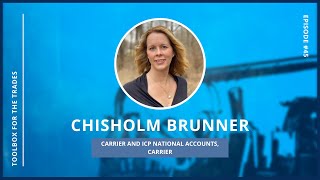
Chisholm Brunner spent decades in HVAC, from dealer roles at Allens and Hiller to Carrier, and argues that systems and procedures are what actually scale a trades business. She emphasizes the dispatcher's role, coaching technicians to present options instead of dictating fixes, and measuring what your marketing actually does.
A good dispatcher is hard to find, but if you put the systems and processes in order, you can build them. And if you have a good dispatcher, she knows or he knows their people, the technicians, they have to know the technicians, they have to know their, their level of experience, their attitudes, they have to know the customers, they. They hold that. First.
You are listening to Toolbox of the Trades, brought to you by ServiceTitan, a podcast for top service professionals where we interview leaders for their best tips and tricks of the trades. Learn how industry trailblazers stay ahead of the competition and how you, too, can be at the forefront of an industry. Let's jump in. Chisholm Bruner. Welcome to the Toolbox for the Trades podcast.
Hey, Jackie, it's great to be here.
I am so excited to have you on. I'm so excited for you to join our season three lineup. So you work for Carrier for their national accounts, which I'm so excited to hear about because I rarely get to have folks from the manufacturing side on the pod, and so I can't wait to dig into that. You are also a friend and someone who came highly recommended from Kathy Nielsen. So not to, not to freak you out, but she has a pretty big reputation here at Service Titan, so I have no, no doubt in my mind that you will not disappoint.
She does. And so there's a bit of a funny with that relationship because we met through Service Tide Surf sighting at Serrata beach and y' all had a Service Titan, had a workshop prior to the summer service roundtable. And so I was in that workshop and we were kind of looking at dispatching and that type of stuff. And I was listening to Kathy and I'm like, she knows her stuff. And I know that sounds so funny, but from one kindred spirit to another who has run dispatching and run offices and knowing how important that is, a lot of people teach sales and a lot of people, you know, teach operations. But when it comes to the real art of dispatching and using your software to make profits, there's not really a lot of us. And so that's actually how she and I met for the first time.
Oh, my gosh. I'm so happy that Service Titan helped facilitate that relationship. I'm going to have to share that with my events team. Oh, my gosh. That made me so happy. I didn't know that. And I can't wait to dig in with you on Art of Dispatching and Operations. Although, yes, Kathy is queen, but I love talking about it, too, because I agree with you. I think it is such an underrated part of the business operation. And we'll get into that a little bit, but I'm going to start this interview the way I start everything. Single one. How did you get into the trades?
So my excuse is I was born into it. And that's a true story. My mother met my stepfather when I was 2. She was working for electrical supply house in Muscle Shoals, Alabama, and they hit it off. One thing led to another, and we kind of tell this joke, although I'm not sure if it's true. Somebody said, don't lose your family and your business. And my parents transferred that into we're all going to work. I've been in the industry my entire life. I had a Barbie doll backpack, and summers were tough on working parents. And we were all there. And this is back in the day where you would actually have a graveyard of central units. And if you're in a bind, you went and pulled something off of them. That doesn't happen anymore, but 40 years ago, that's what you did. And so I was left in attendance one afternoon with a Barbie doll foot bag, a nut driver, some wire cutters. And I should have been harmless, but when my dad got back, he said it looked like a bomb went off. And so that kind of, I guess, started my love of the industry and being raised in it.
Oh, my gosh, that's so funny. I'm just like picturing you as a little blonde girl with your Barbie backpack and just with all of these parts just spread around you just like some dystopian nightmare.
Oh, they're awesome. They're shiny and pretty. And wiring diagrams were apparently my favorite, which was not necessarily a good thing, looking back. But, yeah, very, very cool.
So what kind of path did your career take? So I know that you've worked for some really impressive organizations in addition to Carrier. So from Barbies and playing with spare parts, where did you go from there? And how did you end up at Carrier?
So my story is, I guess, so strange. You can't make it up. Born into it. Loved, loved the business, loved the industry. And my dad did, you know, he felt like you had to do everything to understand what you were asking as a leader. He took that very, very seriously. And I really learned that from him is, you know, if you ask people to show up and work for you and they do their job, you've got to do your job and make sure that they have work and that they have systems and procedures. And so. And we did Everything as kids from cutting the grass and washing toilets to then you, then you move up and you get to be a parts runner. And then you move up and you get to be a helper and then eventually you get to be dispatcher. And then I think when I was about 17 or 18, he realized that I wasn't going to go away. I mean, was kind of cute, you know, until then. And then he told me, if you're going to stay in this business, you're going to have to get tougher skin. That's not exactly what he said, but I can't repeat what he said on here and you're going to have to make friends tomorrow than you. And he was right. That is, that is key to being successful maybe in any industry. But from there I went to college. I went to University of North Alabama and got a degree in marketing research. And because he said you had to have something to fall all back on in case this doesn't work out. And so I stayed in, in the business and became eventually the gm and just to do what everybody does in a family business, right, you work the business, you help the community. Then one day my dad went to a mixed group meeting in Kentucky and he came home and he said, I met this guy and he's really smart. And I went, oh. Didn't think much of it at the time, but later on down the road, he and I had a bit of a disagreement. And the way to win in the disagreement with my father was you had to find somebody that was either on his level as far as experience or an expert in said field to agree with you. So I thought, well, let's see how smart this guy is. Turns out he was very, very smart. And at the end of the day, he was. He was a carrier territory manager at the time and he was later my husband. So my dad was right, he was smart. I ran off with him. That brought me to Bowling Green, Kentucky. And I thought, this is gonna be so easy, right? I mean, I never really planned on leaving the family business. So I not. I had not done interviews. I. You never thought about any of that. And so when I got here, I'm thinking I've got a bachelor's degree in marketing research, I've got my state master's license and hpc. Been in the industry my whole life. We all know we have a shortage of people should have no problem finding, finding somewhere to work, right? Yeah, I could even make it past the front door of most places. Like they would take my resume. And I don't know what they thought. I don't know if it was. If it was because I was a woman or if it was because most dealers don't necessarily mean second owners because that's kind of what I was, you know, as my dad's gm. And it was, it was really frustrating. And I reached the point at eight weeks I hadn't found anything, hadn't been called back. I'm standing in a parking lot of an opportunity that's probably not going to happen. And I'm crying and I'm calling Charlie Greer and he answers. And I'm like, charlie, I'm gonna have to leave the industry. I'm gonna have to go sell cars. And he goes, just wait a minute. And he, I can hear him typing in the background. And then he goes, okay, look, there's this company, Hiller hit plumbing, heating, cooling. There's a job. Go apply. Okay? So that night I go apply. So I get up that morning, next morning, five o' clock in the morning to get my son on the bus and I've got an email and it has a personality profile at a technician test. So I take them five in the morning and about 9:30 I get a phone call and they want to know when I can be in Nashville. And I'm freaking out. I've, you know, been on a few interviews, but nothing, nothing really like this. And I don't know anything about negotiation or anything like that and don't know anything about Hiller. But I walk in, I interviewed with Jimmy and he asked me some questions and we talked about who we knew. And I grew up with Service Roundtable and Ron Smith's name came up and Ron had actually came to my dad's shop at one point and he came really close to dying on that event. But anyways, that's a whole nother story. He really improved our shop when he left. But by the time I got drove back home from Nashville, I got another phone call from Jimmy and I had a position and I was going to run the, the Bowling Green store. And so I did that for two years and then I went to get a little bit of continuing education. I hung out with my dad. He was going to a Service Roundtable event in Nashville and so I went to that and just expecting to beef up on my information a long time since I've been in an event because I hadn't been one since I'd been at Heller and I was watching their presentations and what they were doing in their classes. And then we went to the Jack Daniels Distillery And I was just watching everything, and it seemed like so much fun. I can do this. This really seems like fun. So I went over to Liz Patrick, and I was talking to her, which I'd known her because she did the rebates for Alan. And she said, you know, I think we're looking for a business advisor, so maybe you should go talk to David. Okay. So we get back on the bus. Go. Leaving the Jack Daniels Distillery, and I sat behind David Hymer. And I must have said something, right, Because I ended up with a job. Right. So you can't make this stuff up. Yeah. You sold yourself into a job on the way back from Jai Daniels, like, isn't gonna be better. And that was amazing. That was absolutely amazing. And did that for three years. And then from there, I was pretty active on LinkedIn. I still am. And my husband moved his career from being a TM to running a branch of CE and then on to the factory. So he was actually working at the factory, Carrier, when I was at Service Roundtable. And so I got this LinkedIn request from somebody way in upper management. And I was always careful with those type of requests because we did have other manufacturers as vendor partners to Service Roundtable. And I never wanted my husband to get a surprise phone call. You know, what's your wife doing promoting another manufacturer? And so I text my husband and he text me back, and he goes, yeah, is your resume ready to go? So somebody had found me on LinkedIn, and then they had tied me to my husband and gone to him before they made me an offer. And then that's how I ended up at Carrier.
I mean, just first off, has anyone ever told you that you're a wonderful storyteller?
I like to talk.
Because if not, I will be the one to tell you. But holy cow, Jimmy Hiller, which I think everyone in the industry knows, he's a behemoth. He's such a titan of the industry. From Hiller to SRT Service Roundtable, and then to Carrier. I mean, holy. Like, that's. That's an insane resume. That's an insane trajectory. And not to mention just the glossing over of you being in Bowling Green, Kentucky, and having this just stacked, born in the trades, built for the trades resume and not being able to get an opportunity. I. I don't know. That must have been very discouraging. I wonder if it was because you were a woman. I also wonder if it's because, you know, you were just so overqualified than maybe the other shops in that area.
You know. I'll never know, but.
Well, it doesn't matter. You opened your own shop from Hiller in that area. So you're good.
Yes, definitely.
So what were some of. These are three big logos, Right? Talk to me about the biggest thing you learned at each of them.
They were all stepping points. So. And you'll probably get tired of hearing this, but it's always systems and procedures. That's it. There's no secret. There's no silver bullet. Everybody gets excited about things, but that's really what it is. And I think that's what it was at Allen's. And we grew from reading the E. Myth and being involved in service roundtable and then on to Hiller, which was. Allen served a small community, and then Hiller, they're pretty much the whole state almost of Tennessee, and then location in Kentucky, Alabama. But it was still systems and procedures. Still the same school of thought. That was the same as I learned when I was a kid from srt. There's. There's. It doesn't really change. The scale just gets a lot bigger. And so from there, you know, again to srt, it's all the same. I think the biggest thing that I learned and the thing that I love the most about the industry and each change that I've made is that each of them have led to each other. What I learned at Allen's help me be successful at Hiller. You know, Hiller taught me the systems and procedures, but it also taught me plumbing, something I had not been exposed to at all. And that was. That was a learning curve. Yes, a lot of systems and procedures are the same, but plumbing and H Vac are not the same things. Not the same things. Okay. I mean, when you get that phone call and they're telling you that there is. That they've dropped the water heater through the ceiling. Now, in Alabama, we generally don't put water heaters in the attic there in the basement or somewhere like that. But Kentucky's a little different. Yeah. So they thought it was a good idea to put water over the ceiling. That's just not something you really have happen. In air conditioning. You might drop air handler, but generally you don't have water flooding something. Right now I got a phone call. I hadn't been in the position a couple months, and I got a phone call from Jimmy, and he goes, have you seen Facebook? And you know that's not good when you get that phone call. Right. You know, it's not good. And we had a little. Little hiccup where we didn't quite fill a pipe and we got to service Pro, got out there and got it taken care of. You know that that is something I enjoyed working at. All the companies I've worked for, they're not perfect, but they make it right. And so, yeah, there was a lot of learning that the plumbing side of business, which then allowed me to move to the SRT and be a lot more helpful to the contractors there and then again to carriers. I think each, each position has been a stepping stone of good procedures.
And I love that you said H Vac and plumbing isn't the same thing. I think a lot of people that have tried either H VAC shops trying to open a plumbing division or plumbing shops trying to open an H Vac division would all say the exact same thing to you. I think we tend, especially at ServiceTitan, we tend to clump them together because there are so many shops that specialize in both. But really it's very different. Similar systems and processes, but the actual work is very, very different.
Yes, yes. As far as the service titan aspect and the way your software and your programs work, they work fabulously for both traits and for electricians for that matter, I mean, you can really open into it, but they are a trade, they are craft and they're different.
Yeah, yeah. So you've worked almost every position in H Vac specifically. I didn't. I actually hadn't realized that obviously with Hillary, you had plumbing experience too. And we're going to get to your master's license in Alabama because I haven't spoken to a woman yet on this podcast who has her master's license. So I'm so excited. But given that you've worked at every level of the service company, what are the biggest things that owners need to.
Consider if they want to grow systems and processes? Get tough skin, people smarter than you and recruiting. I think that's something that we say we do. And no matter where I went at Service Roundtable or you know, before that, everybody's big thing was we don't have enough people. And that's true. We don't have enough people coming in. But I don't know that we're really inviting people in or being open minded to, you know, we're all on the technician side. We're all looking for that guy that's got 10 years experience and is 30 years old. Well, you know, those are hard to combine. You generally find out that yeah, they've got 10 years experience, three at however many companies, and they left for different reasons. So I think that that's going to be really important. And tracking people that I find a lot of owners, you know, some of them are really good at their P and L or that sort of thing, but they don't track the callbacks and they don't track their marketing money. They throw. They throw dollars, hands and fists out the door on marketing or. And they never pay attention to whether or not it got them anything.
Yeah, that's really interesting. I think marketing is actually one of the biggest things that owners struggle with, especially for the type of personality I see who tends to open these shops. Right. They tend to be serial entre entrepreneurs, big thinkers. But I think when it comes down to marketing, there's a level of, I want to say nuance, but that might not be what I want to say. But when you look at all the different marketing channels you can have, there has to be differences between every single one. And I think it's just a gigantic task for an owner to take on in addition to trying to grow a business. Right?
It is. And you also have to remember some owners are those that have the entrepreneurial seizure. And maybe they shouldn't be owners. I hate to say it that way, but the truth is most people don't go out of business that are plumbers or electricians or H Vac. They go out of business not because they can't fix their. Their craft, that they don't know that. They go out of business because they don't know how to run a business. They don't know how to do marketing. They don't know how to keep their books. They don't know how to handle all the government regulations. And a lot of times by the time they reach out for help, it's too late. And they hire people like them. And instead of hiring, people are different from them. And to your point about the marketing, your marketing is such a strange, strange thing because you'll have somebody that says, and the Yellow Pages may be dead by now, but, you know, I remember having a dealer that everybody would say, well, you know, Yellow Pages are dead. He's like, well, that, you know, I'm making bank. Well, that's, that's because of his little ecosystem he was in. But it was working for him and he needed to keep doing it. There was no need for him to jump to something else because that was working. And then I see other people that follow somebody else's lead and maybe invest in big billboards or something like that, and it doesn't work for them. So I think you have to take that with a grain of salt of just because it works in one place, it doesn't work for you. Try it and track it. You know, don't sign big deals unless you got a, you know, idea of where that's going to go. And if you track it and you're not getting results, stop.
I have a question for you about marketing later. But we're already here, so I want to hear your thoughts. I mean, just you have to track it and you have to work do what works for you. Just because it's working for someone in another state doesn't mean it's going to work for you. It sounds like you have to be really plugged into your customer and your community and know what they respond to. What else would you. If an owner was just coming up to you and saying, hey, how do I attract new customers and nurture my existing ones? What are some tips that you would offer them?
I always like to do the easiest low cost stuff first. That's just my opinion. And you need to be on the baseball field, on the little league field, in a community, whether it's habitats for humanity or your, whatever the local charity is, you need to be. And to your point, you need to know your community. What is your community like, look like? What is the demographics there? You know, we talk about marketing to people 20 years, women especially, 10 to 20 years younger, 20 to 30 pounds lighter. Right. That's what you want your person on your postcard to look like because you want them to look like, like them. Right. And then postcards are great. Those are a wonderful thing. And your maintenance agreements and asking for leads, you know, when you're in the house, as for the leads, you use the door hangers. Most of this stuff is, you know, old school, but it still works. Then you can graduate from there to see what's next. Does radio work for you or is there. For instance, you know, at Allen, Helen Keller festival was always a big deal because Tuscumbia is the home of Helen Keller. Hiller supports the Titans. They have their deal that they do at the ball games. Again, you can take that father into different areas depending on what works for you.
Yeah, it sounds like your biggest thing is you have to measure it and then if it stops, if it doesn't work for you, you got to stop doing it.
Yes, you have to do it and you have to measure it. And if you don't do those two things, you know, again, I've seen people try and you have to answer your phones. Okay, you can run all the marketing in the world, but in your life. But you know, I've seen it. Even calling for personal stuff. You know, I've called people and then all of a sudden I end up with a. One of the third party, you know, lead generators. Like I look the number up on, on the Internet and then I'm talking to Angie's List or Home Advisor or something like, I didn't call you. I was calling xyz. And then they transfer you to that, that xyz and you go to an answering machine. No, please do not invest in marketing until you've invested in an office staff. That, that is, that's a biggie.
Yeah, well, let's even just go into there. Like, let's talk about dispatching for profit and answering the phone. You said something so that just. It was in my ear for the whole weekend, I swear. After you and I talked, you said a good dispatcher can do incredible things for a business, whereas a bad one can sink a business. Can you please expand on that? Because I think that's fascinating.
So a good dispatcher is hard to find, but if you put the systems and processes in order, you can build them. And if you have a good dispatcher, she knows or he knows their people, the technicians, they have to know the technicians. They have to know their level of experience, their attitudes. They have to know the customers. They hold that first relationship. A lot of companies are big, the big guys. They have a customer service person that answers the phone and then they have a dispatcher. And those personalities can then be a little bit different. But if you've got one person that's trying to do it all, or two people are doing both, it's really important to realize that those people have to have a disposition to be happy people, but firm people, because your customers are generally calling you in emergency, right. They're going to be upset. And if that person that's answering the phone is not sympathetic, is not able to handle it, customer after customer. Because this is a tough job. You know, we know that our technicians are in a tough job when that attic, 200 degrees or they're crawling under the floor. You can see that and we all know it. But we often forget that our dispatchers and customer service folks are in the same amount of heat. Every customer's calling's mad, every technician is tired and they're stuck in the middle. So they really have to have that attitude to handle that. And then they're the ones making the decision because their job are to make sure that you, that your company Catches as many calls as possible and take care of the technicians and the team members so that they don't completely burn out. And that's a tough job. If you get somebody in that job that doesn't care, they will run off your customers and your technicians and they can make the technicians so upset that if you think about it, when a technician is getting a call, if that person that's giving them that call has a bad attitude or doesn't care or doesn't give them the proper information, well, they're going to get stressed and then they're going to pass that stress right on to the homeowner who's not going to buy as much stuff, you know, and they're going to forget to give the options that they need to get. Why? Because they're in a bad mood. Why? Because they just got off the phone with somebody that's an unhappy person. And a lot of that can be prevented. Like you should have a call script. When a customer calls your office, you should have a call script that says you usually have to listen to the problem, be sympathetic, but then you got to get back to, what is your address? Let me verify your telephone number, I need your email address. They have to check and go, okay, well, do they have a maintenance agreement? And this is a big one too because people will let those lapse or maybe it's just time to renew them. But those agreements kind of keep you locked in. They, the customer is not going to go through the phone book. Right? I have a maintenance agreement. I remember that nice guy, comes out every six months. I'm gonna call him and that she can, sure, he can do all that on the up front. Then when you dispatch my rules, you only get one call at a time. So you give them their call and you, and you let them know, hey, you know, this is a eight year old unit. Or the last time we were out there, this happened. You know, if you've got a software system, obviously a lot of those help you by having the technicians, they can read, right, but they're hot and they're tired. Maybe they read, maybe they don't. A good dispatcher will kind of help facilitate that. And they'll say, hey, remember, you know, Ms. Jones is up for her renewal. You know, offer it to her. Or the last time we were out there, the unit was low of refrigerant. We need to do a leak test. Those are just little pieces of information that a good dispatcher can offer that will raise your profits. It's kind of difficult because you Don't. As an owner, you won't see that on the P and L until that person disappears. And then you will see it loud and clear. Same thing as a bad dispatcher. You don't really notice that the guys aren't closing as many calls or they're trying to get off earlier or customers aren't booking calls. Do you track how many calls come in but don't get booked, don't get answered? Those are questions. And again, it depends on your scale. What can you invest in at the time? But everybody can invest in a script that says this is what you're supposed to do when you answer the phone. And when a guy comes off of a call, the question should be, do we have to go back? And if we do, what do we got to order? Did you order the PARS schedule to go back? If the answer is no, we don't have to go back. Well, then the next question is, how did you collect? And they need to be able to answer that question. And then from there, you know, you give them their next call. So they also don't get overwhelmed. It's a difficult job, but it's a key job that I think a lot of dealers, contractors, overlook.
I mean, you just said it in the. You don't realize a good dispatcher's left until after they do. And you don't realize you have a bad dispatcher until you really look at the calls that didn't book. You really have to dig in there. And I also. You said something that for the first time in my time doing this job at Servicetitan and talking to people, I never thought of it before, so I'll say it in case no one else did. But it sounds like the dispatcher really not only has to play therapists, put their therapist hat on for the customer, but also for the technician. And doing that type of mental, mental heavy lifting can be really exhausting. And it takes a very special type of person to do it. Would you agree with what I just said?
Oh, yes. Yes, you are. If you are a female, you are the work, wife, mother, whatever. And it is tough. The guys, your technicians are doing a lot of hard work. And an example of a situation that not everybody thinks about. But I had it. And it works both ways. With plumbing, it's a leaking water heater with air conditioning conditioning is a condenser blowing the breaker. These are in the industry calls that are generally going to result in a replacement of something. Those are kind of like red flags if your water heater is leaking or your Compressor's throwing a breaker. You're probably about to invest in a new system. Now that phone call comes in at 8 o', clock, 9 o' clock in the morning. You're going to have a fight on your hands because every technician wants to run it. Why? Because they know it's a big call. You know it's going to go to their numbers. If your company is tracking numbers, you should be tracking numbers. If you're not and they know they're going to be down for four hours, right? So they're not going to be driving all over town. They're going to go to the job and they're going to replace the water heater or they're going to be turning over a lead to a salesperson to close it. Or the, or if you have selling technicians, you're going to be selling the unit, right? So those are fantasy calls. At 9 o'clock in the morning, the same call comes in at 3:30 and it's a ghost town. They all disappear. Because guess what, it's gonna be a four hour call and they're gonna have to work over. And I actually had this, this one tech that was so mad at dispatch and he was like stomping his feet mad. And he said she just knew she was gonna ruin my day. She knew I had a date tonight. And it was just that moment of clarity. And I looked at him and I said, if we were so good so we could make the phone ring at 3:30 with a leaking water heater, don't you think we'd run three of those calls a day and go home? But we're not that good and you're not that special. Please go run the call. It's just human nature. It just is. And you have to deal with that. And then you have to come in the next morning and you have to smile and get over it and know that the guy didn't really mean it. Wasn't personal, but it's hard to take.
Yeah, man, you must have made a really good gm. Seriously, because if I could make the phone ring for a new water heater, you don't think I would do that three times a day? And then we all go home. Yeah, I mean, that's it, right? All right. Speaking of technicians, I want to talk about you getting your master's license in Alabama. What was that experience like?
That experience was, was both a hard, it was a knock to the ground and then a victory. The state of Alabama gives you 30 days. You have, you have to have a master's License in the state of Alabama to do air conditioning. Now, it's different in different states like the state of Kentucky, you have to have a master's license, but every man that is under you had to have a journeyman to ride by a cell or you have to have a helper. The laws are different with the state of Alabama. You have to have a master in place and then everybody else has to have their EPA cards. You have to have a journeyman for gas. But regardless of that, basically I decided to get my, my license because if anything happened to my dad, my mom would need a backup. Our company would need a license holder to take care of things. And the qualifications are two years, two years under a master or one year under a master. And the trade school, I had 15 years of W2s when I turned them in and they, they turned me down. They said I didn't qualify to set for the test. And it's kind of speculation if you want on, on why that was. And I got my letter that said, you know, you can't set for the test that you don't qualify. And I did what every good Alabama girl does. I went to the left, walked out of the shop door and went and sat by the side of the cornfield and cried. And then I dusted myself up and I went back in the shop and we did something about it. And if you have enough people write a letter that says you know what you're doing. I hate to say it, kind of like the gun permit. You got enough three people to say you're not crazy, they'll give you one, they'll let you set up for the test. And so I went to Alabama Power actually because it's fairly tough test. Most people actually don't pass it on the first try. It is open book and it's four hours. But you better know your stuff because you're not going to be able to read all those books. And I went to Alabama Power for prep course that is, that is also known as the Chilton Hilton. So should anybody listen to this and go to Alabama Power, know that there's this great Mexican joint there and they serve margaritas and fish bowls. However, the comics are sitting right down the street. So I suggest you take a cap. I didn't learn by experience. They, they literally tell you that the first day of class, do not go to the Mexican restaurant and leave if you have been drinking. Great class. So then I go to hunt school to take the test and I walk in and I'm expecting, you know, a Bunch of guys, because there's not that many women in the industry, right? And the room is full of young ladies. I'm thinking, wait a minute, where did all of you come from? But then I start asking questions and come to find out they're all there for their cosmetology test. And that was kind of a moment in my career, don't get me wrong. This pandemic has made me realize just how important my hairdresser is. I mean, she's essential, let me tell you. But as somebody that at that time was looking for technicians and other positions and not finding anybody, you kind of want to go, do you really want to do nails, or would you like to do something else that you don't have to go to college to do? And I think that. And that always kind of bothered me, and I think that's why I've kind of made it my point to reach out to young ladies and go, you know, this is an option. I know you're not thinking about us, you know, because when you're in school, you go to the career days, and we don't make the appearances we should. But regardless, that was a victory, too, is I'm sitting there, and there was three other guys that were there to take the test, and it was like a bad music video. You had all the computers, and the lady was watching us from, you know, behind a glass. And it was four hours, and people would. You know, they would take their test and they would leave, and you would. You would kind of hear people because you knew as soon as you hit that inner button, you knew if you passed or failed. And it was. It was really important, right? And so I'm sitting there and I'm checking everything, and I'm checking, and I don't even realize I'm so into it that I'm the last person in the room. And I've got my countdown, and I know I'm about out of time. I gotta push the button. As I took a deep breath and I push the button, and the screen pops up, and it says, you pass. And from behind me, the lady that is given the test jumped out of her seat, clapping and yelling. I mean, she. She didn't know me from Adam's house cat, but she was cheering for me because she knew, you know, and she told me. She said, I don't know, that I can't remember a woman taking this test. And she was. She was just really rooting for me. And it was that moment, like, okay, you know, I got this behind me. I'VE got this under my belt.
Oh my gosh, I absolutely love that. And also kudos to you for chatting with more young women. I've actually adopted saying this myself. And I know people who work at Service Titan, some who have kids who are teenagers, are saying that to their kids. Just so you know, these are really good careers and you can make very good money if you work hard and you know your stuff. So you got your master's license so that in case something happened to your dad, you could work at Allen. Everyone could work at Allen's under your master's license. Did you ever run calls as a technician?
I did. That was, that was kind of a short part of my life. I think one of my most memorable calls. And another thing that makes me does this call was a turning point for me of how important we are. You know, people, we don't like to talk about ourselves as an industry. You know, see, somebody says, oh, what do you do? I do air conditioning. Oh, okay, you do air conditioning. You know, somebody says, I'm a law. You're. Oh, wow, you're a lawyer. That's great. Well, okay. But, you know, we had, we used answering service and if the call came in after hours, it would go to the on call technician. If the customer called back, say in an hour and said, I hadn't heard from anybody, the call was coming to me, and then I had to make a decision on whether I was going to get a technician up or whether I was going to, you know, what I was going to do about it. Well, it's three o' clock in the morning, and much like it is, you know, every six years in the south, it had not. And the voice on the other end was a longtime customer, Mr. Young. He had recently lost his wife, he was definitely elderly, and he was also legally blind and he didn't have any family. Of course, I knew all this because he'd been a longtime customer. We've been to his house a ton of times. We had a relationship with our people. And so it's not like I could say, oh, go get a hotel room or go buy a heater at Walmart, right? He couldn't leave his house. And so I said, I'll be there in a minute. Well, I think he missed the I'll be there part because when I showed up at the door and he realized it was me, this look came on his face and it was just so sad and he was so upset that I was out in the cold. I think if he had known that I was Going to be the one to come. I think he would have froze. I mean, because he had this. And I learned this later, you know, as I drank hot chocolate on the couch after getting the heat back on. He just treated his wife like a queen. And he thought that all women should be taken care of and absolutely shouldn't be running around in coveralls and gloves at 3 o' clock in the morning in the snow. Right? And it was really cool. And it was really cool to. To be able to be there for him, to be able to take care of somebody. And there was a lot of, A lot of calls like that. And that really makes it rewarding. And it's not something that people, people think about when they think about the industry.
I love that. Thank you so much for sharing that story. It sounds like that man was really, really wonderful person and good on you for getting up at three in the morning and doing it. But it sounds like it was definitely worth it.
Oh, yes. Definitely worth it.
I love that. I love that so much. This has been on my mind lately, and I want to get your opinion. I know that technicians generally love fixing things. That's usually what they. Not all of them, but a good chunk of them get a lot of pride in. Right. How do you get techs to stop fixing things that shouldn't be fixed and actually start presenting estimates or options?
So this is, this is one of my favorites. Right? Because the first thing you hear as a sales coach, especially when talking to technicians, is, I'm not a salesman. That's first. That's their first objection. They'll tell you flat out, I'm not a salesman. I don't sell things. I fix things. Salespeople are crooks. So I usually like to leave that conversation with this. My dad was an air conditioning man. My husband is an air conditioning man, and I do air conditioning. And our favorite time, favorite time to fix our unit at home is at midnight in our underwear. But Ms. Jones can do that. So what she really needs you to do is she needs you to tell her everything that's wrong with her unit and let her decide. I know, I know. You wouldn't change the capacitor. I got that. I know you wouldn't because it's just a little swollen. It could last another six months, two years, who knows? But she doesn't want to be out there in her pink slippers trying to replace it. So just let her choose. I think they got to adopt that mindset first. I mean, I even had. And we got to teach them not to make judgment calls. I had one technician that he. I knew he was on a really, really old unit, and he comes running back in the shop, and he's going running out with vent pipe. And I'm like, whoa, whoa, whoa. Where. Where are you going with that? He said, well, the vent pipes rust out. I said, well, did you check the heat exchanger? Because there's a good chance it's a vent pipe thrust out, so it's heat exchanger. And that's dangerous. You know, that's something we got to take seriously. We got to check, because that's how you get carbon monoxide poisoning. And he looks at me and he's like, well, I don't think she's got the money. And I said, look, you need to offer it to her. If she didn't have the money, that's fine. And, you know, this is. This is why I was at, well, Hilary Allen's were the same on this. If there was a need, and it was a true need, we find a way to fill it. And I said, look, Mark, just. Just go. Just do what I ask you. Just do it. And she says she can't afford it. You let me know, and I'll see what I can do. She's like, okay, okay. So out the door, he goes, 45 minutes later, I get a call back, and he goes, she wants the top line unit. And she just went and pulled the money out of the back of her toilet to pay for it. So I think it's very important that we also get them out of the mindset. But, you know, before you say give options, you've got to get them out of the mindset of, yes, I know you wouldn't fix it, and I know you wouldn't invest in it, but don't judge what they. What they want and what they want to invest in. And then from there, you can go into how to present. And there's a lot of different ways on how to present. You know, if you. You use Joe Cunningham's principle of, hey, do you want me to make a list of everything that's wrong with your system, or do you want me to fix it when I find it? Well, now you've just gotten permission to make a list and present options. But if you just go down and look at the system and then you come back up, well, now you're a crook. The difference is one line. They asked for it or they didn't ask for it.
Yeah, that's really good. I like that a lot. And also the. Yeah, we love Fixing our own air conditioner. I will say, well, I don't have to worry about it because I rent, but when the day comes that I become a homeowner, you bet your bottom dollar that I do not want to have to call someone out over and over again to fix the same darn thing. So that's fantastic. We are just flying by time. And I really want to get to your time at srt. So talk to me about some of the things that you found dealers needed help with. And from there we'll go on and you can talk a little bit about what you do@ Carrier.
SRT is fabulous. The magic that is SRT is the bringing together of really great dealers that are wanting to grow great vendor partners and great coaches and already made great systems and procedures and key point indicators. And when you bring all that together, it just kind of makes magic. Again, the same, I'll say for the marketing question. It depends. Everybody's good at something, but not everybody can be good at everything. So somebody might be really great at the P and L, really bad at marketing, or really bad at management. Some guys just can't get out of the truck, right. And nobody can do it the way they can do it. And they built their self this great job because it all revolves around them. The technicians call them and ask them questions and they answer. But you know, if they die or they decide to sell something, well, they can't because it won't run without them. So again, back to systems and procedures. That that is the biggest thing that everybody needs. And it. And it may be systems and procedures and in your P and L. And there's great coaches for that. Or maybe you're dispatching or you're stocking. I mean, people don't realize how much inventory they have in their barn or how much a technician can squirrel in his truck. You do inventory on a truck and they love some electrical tape and still falls, let me tell you. And breakers. Breakers are important. Can't walk past a shelf with breakers on it without taking them to the truck.
Got it. Yeah, I mean, I definitely. I think that's the benefit of networking groups like SRT and the other ones that we've mentioned on this podcast is just that you come together, you chat with folks who have the similar goals as you, and you just exchange information. I'm just constantly blown away at how great the trades is at sharing information with one another. I'll just say that I said that recently on another podcast. I'll say it again, blows me away at how helpful Everyone is with one another.
And you had to be willing to be vulnerable. You have to be. If you're going to be successful in one of these groups, you've got to be vulnerable and say, I don't know, don't fudge your numbers. You didn't come to fudge. Nobody came to judge. Be honest. And somebody in the group has faced a challenge that you're facing, no matter what it is, and they know the answer. And they'll be like you said, they'll share, they'll help you, and they're there for you. And some of it's even funny, like the first time my son decided him and his little girlfriend are going to go to Panama City by theirselves when they're 18 years old. They're old enough, right? But I'm Mama Bear and you know, it's kind of tough. But the funny thing is that in my mind I was okay with it because I would knew that there was nowhere between Bowling Green, Kentucky and Panama City, Florida, that I didn't either have a family member or a contractor friend that I could have gotten to him within 30 minutes. You know, I'll pick up the phone and say, hey, my kids drained it. And they would have gone. You know that that's the other amazing thing about this industry and about the best practices groups because you, you have a community that is those very business and very personal.
I love that. That's real. I don't think many people can say that about the industry they work in. I just wanted to let that rest for a minute. That is quite a powerful thing you just said there. Let's talk about Carrier. What do you love about working with National Accounts at Carrier?
There's kind of a joke at Hiller about me and one other coworker that we bled blue. I was 15 years old when we got the Carrier dealership in our little town in Alabama. And that that sign still glows on a back road in Tuscumbia. It was a big deal. It's different maybe for me than other people because you're, as a dealer, you're putting your hopes and dreams and everything in this. Whether your kids go to college. How you, you service your community is extremely important. And so having that part of it. And then, you know, I did run off the carrier cam, right? So I found my, the love of my life through that in the industry. And that little blue oval is there and it's a world organization. So Allen served a little community and it does a beautiful job of doing that and supporting Its crew Tiller is a bigger community and more people that we support and more homeowners that they service. SRT is national for the US and Canada and there's members in Australia too. So then you've got this bigger community that you can influence, that you do your job right and the decisions you make, you take seriously. Because they're going to help another chisholm go to college or reach their dreams. And maybe that dream's not in air conditioning. Maybe they do want to be a lawyer. Right? And mom and dad can afford it because these people made the right moves. And then when you get to carrier, you've got a world organization and you just, you take that seriously. And our impact on what we do, I mean, our opticlean was rated one of the top 100 inventions of 2020. And it wasn't even thought about until April hit. And then we realized that our engineering team went, we need something. This is going to be a problem. And they did something about it. And so if we do our job right and we help our distributors and we help our dealers and they help their homeowners, you just, just got a really big impact to make a difference in the world. And maybe that sounds a little crazy, but I think it's important work.
Oh, no way. It's not crazy at all. I actually say that about my career at Service Titan. It's like before working at Service Titan, I worked for a couple other software companies. A handful of them don't exist anymore. Not to say they were bad companies, they were great. But Service Titan serves such a humongous need. I think we processed something like 11. We serviced 11 billion customers in the US and Canada last year. In 2020, through Service Titan, 11 billion homeowners used Service Titan through our customers. So that's a giant impact. So I'm totally on board with you on that. I think that's wonderful. And I love that you just mentioned the top invention of 2020. What was that called? One of the top inventions of 2020.
It's the OptiClean negative air machine.
Got it. And I will ask you this as a follow up. How should dealers weave in the value adds of their equipment in their customer messaging? I've seen a lot. I know marketing for a dealer obviously comes from like the dealer's message and who they are and the promises they make. But what suggestions would you give now, being on the manufacturing side of like, hey, here's some other ways that you can weave in carrier into your messaging with customers?
Yeah, I think when you're picking A manufacturer as a dealer, you have to. And it's going to be more critical now. I think now is the time to really start paying attention to what's going on because we've got some major regulations that are going to be happening in 2023. I don't know if you were with Service Site when we had R22 changeover, but that was a situation where we saw a lot of manufacturers move to be compliant, change their lines, get the process right to meet the regulations. And then we saw others that went looking for loopholes and didn't comply. And I think that is something that all the dealers should have their eyes on right now is who is going to lead the field on some of these decisions. If you're in California right now, we've got ultra low Knox. And again, some manufacturers chose to comply with the regulations and others just chose not to sell in those counties. I think that should speak volumes, right? As far as weaving it into your customer. You're the expert. As a dealer, you are the expert and you need to be the expert. That means you do need to know the equipment, learn about the features and benefits and learn about the features and benefits to yourself. Like for instance, our furnace. I know the gentleman that first onboarded me at Carrier had it. I mean, he was looking at me like my hair was on fire. And I do think sometimes my co workers look at me like that because I'm. I'm a dealer. That's where I come from, who I am. I'm not an engineer. Sometimes I like fall off the wagon. They'll talking about things and I'm either totally over my head, but I'm looking at this furnace and I'm like, well, we've got these knobs and just take the door off. You don't have to have your drill to do this. And they've got a safety switch that holds in really tight so that the door doesn't fall off. And they've got a blower wheel that you can just pull out. And he said, the guy's telling me all these other things and he's just grazing over those few things I mentioned. And I'm like, wait, wait, wait. You don't know what's cool about this because what's cool about this is this is what technicians do, okay? They go to the call, they're supposed to put their shoe covers on, right? You put your shoe covers on, you knock on the door, you take two steps back, you say, hi, Ms. Jones. You pet the dog. Ask to pet the dog first Pet the dog. Then you ask where the furnace is. They say, oh, yeah, it's in the basement. You go down the basement, you're supposed to have your tool bag and all your stuff with you. But you don't because they don't, because that's just the way it is. And they get down there and they need a drill. And so then they go back up the stairs, they say hi to Ms. Jones, they pet the dog, they call their girlfriend, they get their drill, they go back in. You just wasted 20 minutes, 20 minutes of call. You could be somewhere else, right? These little knobs make it so you can do it. Another thing that is fabulous for happening is you go and you work on a unit and you put the door back on, but they didn't put it on tight enough. And it doesn't come off immediately because that would be convenient. No, it comes off at 10 o' clock at night. And when it does, it's in the attic and it rattles off. And then the safety switch trips. And then you have what's called a callback, which you can't charge for on overtime. This fixes that problem. And then last but certainly not least, blower wheels need to be cleaned, and they are a pain in the butt. Plus, does the homeowner believe you that it needs to be cleaned? Maybe, maybe not. Pull it out. Go. Hey, Ms. Jones, do you want to be breathing this? She of course says no, because she doesn't. And the machine needs to be maintenance anyways. And then they just. They clean it right there and then shove it back in. If you've got a maintenance agreement, that's the reason that it includes that, well, then that's a value proposition that you're making to keep that maintenance agreement. If it doesn't include that that was just a chargeable call that the customer actually needed. So that furnace just made you money with three little extra or save you money with the features and benefits.
I mean, while I see why you work for carriers National Accounts Chisholm, that was wonderful. And I would definitely, definitely encourage everyone listening right now to think about what you just said and think about how new innovations from your manufacturer can make you more efficient and can make your customers happier. We're almost at. I think we just hit an hour mark. I have a couple more questions for you, but the main one is looking back on your career and the really wonderful way it's evolved, if you could do one thing different, what would it be?
I wouldn't.
I thought so. I thought that would be the answer.
No, I mean, I thought about that quite a bit because, you know, everybody says, well, you have regrets and you would make changes. But I think that, you know, wins are wins and everybody wants wins, but we learn from the failures. I think you really. That's. That's what leaves the heartburn and the fight and the, you know, go cry by the cornfield and then pick yourself up and say, I'm going to do it again. The uncomfortableness of, you know, even. Even going, you know, to carrier. I. I went in my first meeting and I realized in some. Some areas I was a little out of my league. And I had, you know, I was having to have a learning curve and I had to find the right mentors. I mean, I think that is something that I definitely want to. I want to communicate is. Is find your mentors. It was so easy for me because I had service round table, and I was. I'm dyslexic, so I see things backwards. And I'm a very strange little bird. And they tested me when I was in second grade. I got second grade and couldn't read. That's kind of impressive. At least I think it was. But it said you wouldn't graduate from high school, much less go to college. And I did. I did go to college, and I got my degree and I went as a lab rat. State of Alabama paid for it, so long as I kept up my grades. And they. They retested me to see how somebody like, would. Me, would. Would function. Wow. And that. That gave me the confidence and the ability and knowledge that if you need help, you just figure out what you need help with and then you go find out who knows what you don't know. But not everybody's like that. And. And I recently I read the Confidence Code, which is a book I really, really recommend, and it's really for women. I think that was the premises that was written on. But I think. I think it's important as a mother of a son for parents to read it, because there are times that my son would take risk. And I'm like, no, no, no, no, no, no. And I was a single mom for the first 16 years. So sometimes now, looking back, like, I really wish I had that book sooner because I probably would have made decisions a little different. And the same thing for our daughters. I think that we teach our daughters to be good. And if you go to school and you're good and you're quiet and you take notes and you make really good grades and what it's all about, and then the same token, the boys are out there, you know, throwing mud at each other in the playground. And that's okay because boys would be boys. Well, he's goofing off in class. Well, that's okay, because boys will be boys. But then when you get into the professional arena, you don't get credit for good grades anymore. You get credit for raising your hand. And that, I think is something that, that women don't do enough. And we should. And I think for the industry, we have to start recruiting more women and we have to get out there when they're younger and say, hey, you know what, we're a pretty cool place to be and we'd like to have you. I mean, never have I seen a situation with a dealer that if they had a lady that was truly interested in learning, that they wouldn't teach them. But they're not knocking on the doors and we're not going and looking for them.
Yeah, I said it. I've said this, I think before on the podcast. But in pop culture, what do we ever see women be Journalists? We see them be work. They work in marketing or pr. I'm a woman who works in marketing and it's just I feel like going into this industry, I never really thought of it, so I think that's really great. And also confidence code that is definitely going on my audible next. So thank you. Speaking of books, before we go, I have some rapid fire questions that I did not give to you beforehand, but they'll be easy, don't worry. But before we go into those, do you have any other books or podcasts that you'd like to recommend?
I'm going to have to start listening to more podcasts, apparently. I think I'm missing out on that wealth of knowledge. But yeah, for the industry, I think HPC spells Wealth by Ron Smith is just. Everybody should read that. That just required reading before you go into business. If you haven't read it. The E. Myth by Michael Garber, that made a lot of changes in my dad and I as far as we ran our business. And the newest went out by the Myth H Vac Contractor by Michael Gerber and Ken Goodrich. Just finished it and I've got a couple of others. Greg McAfee's got a book out and so does Chris Hunter and haven't read those yet. They're on Dead on Deck. I also think that you know how to Win Friends and influence People is an old one. And I was surprised when I went back and read it that that carrier is actually mentioned. In that book, he was hired to train at Carrier. Yeah. So I thought that was pretty cool. And then Lead the Field by Earl Nightingale. Selling in Tough Times by Tom Hopkins. It could go on and on, but the confidence code is definitely one. And it's by Kate and Kay and Clara Shipman. Kate and K is kind of hard to say, but that's their name.
Amazing. Thank you. All right, ready for some rapid fire questions? I promise they're quick. Don't think about them, just answer them. Ready?
Yeah, let's go. All right.
How do you take your coffee?
Black with cream.
Oh, me too. If you could have dinner with one person, dead or alive, who would it be?
Oh, Will's carrier is just now popping in my head. But you know, Albert Einstein would be cool too, I guess. That's not fair. There's too many. Too many that I would love to have dinner with.
I'll give you a second. Go for it.
Yeah, no, that's too hard for me to pick one.
I know, I know.
I would think, actually, now that I'm thinking about it, my grandparents.
Yeah.
I would like to talk one more time. Yeah, lovely.
What's the number one thing you're trying to learn more about right now?
Forecasting and figuring out how the industry is going to move has been a hot topic. Given everything that's coming up in terms.
Of air quality, in terms of climate, I imagine that is a hot topic right now for sure. If money weren't an object, so you had unlimited resources, what's the first thing you would do?
Well, go on vacation would be mine.
Yeah. Thank you for being honest. I have to say most of the answers I get to that are pretty admirable. But I forgot who said it. It might have been, shoot, I'm going to forget who said it, but it was a recent interview. They said I would never work again. And I'm like, thank you. Thank you for saying what I've been wanting people to say. But I will say a lot of people have said help out their family, become philanthropy. So all of those are valid choices.
I think that question is when you'd have to ask like three times to get an honest answer if you didn't get it on the first track. I like sales. Like, somebody says no at least four times before they say yes. And the first objection is always too expensive. But that's never the real reason.
Yeah, yeah. It's never the real reason. Well, think about it. You can tell me privately. The listeners will just have to guess. Final question is, what's the first thing.
And.
Oh, I'm sorry, what's the number one thing every contractor must do to run a successful business?
Systems and processes.
Yep. I'll have you know that actually today we are recording this. On February 6th, 18th, 2021, I did a systems and processes webinar with Kathy. So very serendipitous that you talked about systems and processes on today's podcast, Chisholm. It was a true delight chatting with you. You are an excellent storyteller. You gave some really great tips, tips and tricks and strategies and all that stuff. Thank you. Thank you so much for spending a little over an hour with me. I really appreciate your time.
Thank you for having me on. I gotta definitely get up with Kathy and thank her, you know, as we all have friends and mentors and allies and they're not all the same thing. You know, friends are your friends and they love you. Your mentors are usually somebody that gives you advice, has been places that that you haven't been. But your ally is somebody that will speak behind your back and put you into opportunities and there's not a lot of those. So I gotta give a shout out to Kathy for getting me on here and you for considering me. It's been a pleasure.
Thanks so much, Chesam. I appreciate it. We'll talk to you soon.
Thank you.
Service Titans Growth series, the only masterclass featuring turnkey advisors from industry experts, is now available on demand. Unlock critical lessons to accelerate growth like Mastering systems and processes with Al Levy. Leveraging open book management to motivate your team with Ellen Rohr and getting into the growth mindset with Keith Mercurio. Just go to servicetitan.com growth to access the original series for free. Again that service titan titan.com growth.
More from Bill



Capturing the 80%: How SmartAC’s Gen-2 Targets Non-Membership Homeowners | Podcast Ep. 296

Build better customer data with every booking in ServiceTitan | TAD Tune-Up Series

The Biggest Change for Roofers Coming From Other Roofing Software to #ServiceTitan?


