Learning from Others’ Successes: Study Your Craft | Podcast Ep. 57 | Toolbox for the Trades
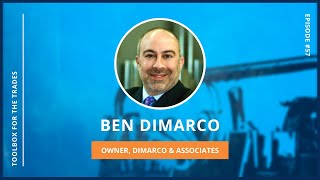
Ben DeMarco of DiMarco & Associates built a $4-4.5M HVAC business by applying commissioning practices from commercial work to residential jobs. He focuses on measuring system performance and fixing root causes rather than symptoms, which reduces energy waste and keeps customers long-term.
Ben DeMarco, owner of DiMarco & Associates. Welcome to the Toolbox for the Trades podcast.
Thank Jackie. How are you?
I'm doing great. I am so excited to chat with you. You are what is part of a club that is just constantly expanding. It is the Dave Rothacker from Go Time Success Group's referral club. Dave has given me some fantastic guests, and I'm so excited to chat with you and learn a little bit more about what you're doing at DeMarco & Associates. But I'm going to kick off this interview the way I do every single one, which is, tell me, how did you get into the trades?
Well, my dad was a contractor, so I kind of just got dragged into it as a kid, but I was pretty mechanically inclined. I had uncles that were in the business, too, and I used to hang out with them. And when I was real little, I do stuff like take my bike apart and try and make it. I'm probably a lot older than you, so I grew up in the Evel Knievel days, and everybody that grew up in the 70s was trying to modify their bicycle to act like Evil Knievel. So, yeah, I guess I was pretty mechanically inclined. I watched my dad in the business and other family members. So I, you know, I was working before I was 15, but it wasn't, you know, I just kind of got dragged into the shop on weekends to help with stuff and clean. I didn't get paid for it. I'd get a few bucks here and there for, I guess, ice cream or whatever. But I went to work full time when I was 15, and that was it. I, you know, I kind of enjoyed it because back then, you know, I was working with guys that were, you know, in some cases, only eight or 10 years older than me. So they were in their 20s. So they were kind of, you know, what you would think guys in their 20s are. But they were really good. I mean, they were very seasoned already. Guys that had come out of trade schools and again, maybe like me, were doing it from when they were 16 or 17. So, you know, it just kind of was a fit. And, you know, I was in the field for a long time and worked with some. I was fortunate that I was exposed to some really, really talented mechanics, installers, service technicians, what have you. So. And that's kind of how I. It's kind of how I got into it.
Got it. Well, I want to make a quick distinction. You said you joined. You started full time when you were 15, but you went to college, you Actually have quite a few. You have quite a few degrees, which is a little. A little unusual for the trade. So can you just tell me a little bit about that, please?
Yeah, so. So I. I have a business degree. I was going to be an accountant, and then halfway through I decided I didn't want to be an accountant. So I just ended up getting a management degree. My college thing was screwed up. I was a decent athlete in high school and I was supposed to go to West Point to wrestle. And then I got hurt my senior year, so I wasn't able to go through all that stuff. And I kind of got. Went off on it, just disappointed because I was hurt and I couldn't go and whatnot. So I wound up at a really good little school here in Cleveland, John Carroll University, private school. Got a great education, so. But yeah, I have a business degree. But my other degree is really in the school of hard knocks, coming up with, you know, with the guys that I came up with. So I was fortunate. I went to college with a lot of kids that had never worked before when we were in. They started maybe in college, but, you know, summer jobs and that's. Now a lot of kids I went to school with had already worked, but, you know, I felt like I was very, you know, work savvy. And we would talk about things in business classes that I already knew about because I was exposed to it, you know, job costing and, you know, basic accounting stuff that, you know, I already had exposure to, you know, project management. And so, you know, that was very helpful. So I think I was already ahead on a lot of things. Probably got the education that I needed in terms of, you know, some of the prim and proper ways to write. You know, I don't want to claim that I'm an excellent English student, but. So, yeah, so in a roundabout way, to answer your question, yeah, I went to school for business because I was. I thought I was going to be an accountant. I think that's kind of what my dad wanted me to do. And then I realized after that I couldn't just sit in front of a computer and do numbers all day. You know, I liked what I did. I liked working in construction. I really did when I was young. And it drove me. What drove me also, I don't have a degree in engineering. Right after I got out of college, just before I got married, I had so many engineers that we worked with engineering firms and thought, you know, I had spent a lot of time working with consulting engineers when we were on projects that many of them had encouraged me to go back to school. I was going to be a PE and then I just. It never materialized. But I have a love for engineering too. So even though I'm not a formally educated, you know, I haven't, I don't have a formal education engineering. I think I've spent a lot of time studying engineering with people within our industry. You know, there, there are some, there are some technicians I work with, guys that are, you know, older than me that I would put them up against any engineer any day of the week and they don't have any formal education in terms of knowledge of, of H Vac systems. That's just unbelievable. You know, guys that have been doing this for 30 and 40 years that, you know, I know a gentleman who. The guy's kind of like a savant. He would take equipment apart when he would get back to his shop and he study it, you know, like kind of reverse engineer things. And you could call, yeah, you could call this guy about anything. And he pretty much knows some, something pretty detailed about pretty, pretty much any piece of equipment that you would ever put your hands on. It's pretty amazing. But I was around a lot of guys like that, guys that were very, you know, took. You know, I know you and I chat just a little bit earlier about promoting. I know we could get into it in a bit. But promoting the trades as an honorable profession, it is just that, I mean, it takes to be really good. You need to spend a lot of time studying your craft and becoming very proficient. There are people that just clock in and clock out and you know, they are good at the basics, but they never really become, you know, an extraordinary professional because they don't study, you know, the background, not just the background of the mechanics, but the business and why we're where we are and where the industry's going. And. But there are some guys that are out there that are like that. And I was fortunate enough to be exposed to a lot of guys like that when I was younger. I use that as an example. Look, I'm 50 now, so this is year 36 for me. So it's kind of crazy to say that, but I'm making comparisons in people that we see today that have maybe even been in the business for 10 years versus people that I worked with 30 years ago. It's a, it's a different, it's just different today. And not that there are. Not that there are some superstars out there and some young up and comers, but I feel like, I feel like the trades as a whole had a, had a dip in probably the mid-90s through the mid 2000. Well, really up until probably maybe about five or eight years ago, where, where of late we're seeing people that maybe would have gone to college that see the trades as a, as a very honorable, you know, career path.
Yeah. I mean, that entire the 90s, the 2000s, the trades were not being promoted at all. I know I went to school during that time. And you just said a lot of things that I want to call out real quick. One is that you had the fortunate good luck to be exposed to people working within the trades who are very good at their craft and you were able to learn from them, which really I think goes into the importance of mentorship within the trades. And if you're an up, if you're an up and coming technician who's listening to this, think about, like, who are you learning from? Who are the folks that you're surrounding yourself with? Because that will really inform the knowledge that you get. One of the things I love about working with service titan is I'm in a room with people, or not a room, a zoom room with people who are so much smarter than me. And it's wonderful. And then the other thing I wanted to talk about, and I want to use this to really, to segue into the type of business that you run. I'm sure folks have already ascertained that you're not your standard residential service and replacement, which tends to be our bread and butter on the podcast as of, you know, historically. We're hoping to change that. But commercial engineers, when Dave first told me about you, he said that you ran your shop like an engineering firm. Like, like that's what it looks like from the inside out. And so I would love for you to kind of elaborate on the type of business DiMarco and Associates is. You know, what's your revenue? How many texts do you have? What's your specialty? What kind of work do you specialize in? And we'll take it from there.
So, yeah, so we're, we're, we're down a little bit this year. First quarter was a little, little lower than we expected, but so we'd probably be around somewhere between four and a half. Four and four and a half million this year. You know, I kind of, at the end of last year, I budgeted for five. I don't think we're going to be there. Some of that's due to new construction. And we're in this weird window right now where a Lot of. We do a lot of design build work, so we're working with general contractors or owners where we're part of the design process or design assist, I should say. But a lot of projects because of if you know where raw material prices are right now, if you've heard anything about like where lumber and copper and steel, it's. We've had a bunch of projects that have been put in park because of, you know, uncertainty in the, in the economy and so on and so forth. So that's just a little side note where we're a little down on that part of our business. But residential, which is typically only about maybe a third of our business, might be up a little bit. We saw it, it was, it was up last year because people were home, you know, working from home because of COVID So that was, you know, that was a pretty noticeable difference. And there was a lot of situations where people are just like, listen, you know, we get called out to look at a furnace and air replacement and they have a, they have a bonus room over the garage or we call it a bonus room. Right. Semi finished room, I don't know, family room, living room, extra bedroom. And they're like, hey, well, I said, you want to put a mini split in there? Yep. And just no questions. I mean, it was residential last summer, you know, because of the summer being hot here in Cleveland, I think probably hotter than it usually is. But because of people being home, they didn't want to be uncomfortable. So I guess discretionary spending, furnace, an air, if they need it, because they need it, they're going to spend on it. But extra stuff they were doing. So our residential picked up. But. So, but overall we're typically around, let's say two thirds of our businesses commercial industrial and about a third is residential. It's kind of how we've grown historically. So. And I guess the second part of your question with Dave mentioning we kind of look. I guess we kind of do. I worked for an engineering firm in a brief window after my dad had sold his business. I went to work for one of these firms that did building commissioning. It's just really just like a huge quality control process for construction, but was all commercial, industrial, institutional stuff. That was another little short year of time. And I still talk to some of those folks where I got exposure to. So back around 2000, just to interject this. So back around 2000, right around the time that my dad had sold his company, I went to work for this. I wasn't really fit. I really wasn't A fit for the corporate world of the group that bought us out. And I decided it was time to start looking at moving on my own. So I went to work for this consulting engineering firm that did what they call building commission. That's not all they did, but that was one of their strong suits. And as a matter of fact, Dave had connected me. Dave Rothker back then had connected me with a guy who he knew, this guy by the name of Howie McHugh, who is a guy's brilliant. This was kind of his bailiwig. And they were. He was from Boston, their company was all over the world, but he was actually doing work in Cleveland. Happened to make a connection with me, saw a fit, went to work for him for about a year. And then they wanted us to move to, like, Washington, D.C. at the time. And so it made changes, and I decided not to. I didn't want to do that. But anyway, at that same time, right around 2000, I had gone to National Comfort Institute for my first air balance class and got hooked on that right away. I mean, hooked. I could see the value in it beyond a shadow of a doubt. And so those two things, I think that's what was kind of unique, is right at that same time, the building commissioning mindset and the. And the air balance mindset kind of went hand in hand, and it just kind of snowballed from there. So, you know, in the big institutional world, the concept of building commitment. If you ever hear of the Navy commissioning a battleship, right? Or not battleship, carrier, whatever ships that they have now, right? They get an aircraft carrier from Northrop Grumman. Whoever builds the aircraft carrier takes five years to build the thing, and then the Navy takes it. And it takes them sometimes six months or a year to commission it. They run it through all of its paces. You know, they run the launch systems, they check out the electronics and all that, and then they bring it back and they say to the manufacturer, whoever that is, here's what's wrong. You gotta fix these things, right? Because they're not working within the tolerances or whatever. So that's what commissioning is. You talk to engineers that are guys that are in their 60s, 70s, and 80s, and they'll tell you that commissioning was embedded in their normal process as part of design years ago. And I got to experience some of that when I was young. We would see engineers come on jobs as kind of a. They were doing site visits to see how far things were, answer questions. They weren't there every day, but over the course of three months, they Might have been there three or four times. That's been eliminated. That's been squeezed out of construction today. It's been squeezed out. So quality control is, you know, we don't need the money for that. That'll be handled by the general contractor or the construction manager. It doesn't happen. And good engineers will tell you that. They'll tell you. We have a lot of engineers we work with right now that call us to say, we need you to come out look at a project, because we're getting complaints that our design is wrong and the systems aren't working right. And we say, okay, well, let's take a look at the blueprint. You know, what did you originally design and what are the startup reports and what are the balance reports? And they'll hire us to go out and walk the site and, you know, investigate things. And I'll tell you, the majority of them will go out on it. Stuff isn't done. It's not done, or it's not done right or it's not as they said it was. We find stuff not wired, not wired properly. It's, you know, dampers that are. I just. You, you name it, there's stuff. And I. I saw that when I worked for this. This big engineering firm. You go out to sites and everybody said they're done and they're not done, you know, or they're done. But construction is so complicated, you know, the bigger the job, just the more loose ends that there could be, you know, and good contractors minimize that, but the majority don't. And I don't think I'm saying anything that anybody that's been in the trades for a long time or works on big projects, they get it. You know that. They know that that's the case. So we blended all that. We blended all that into our residential. One thing I think that I saw that was a unique opportunity is we could blend that mentality of a quality control processor. Commissioning, if you want to call it, you'd say commissioning to residential people. They don't. They don't know what you're talking.
They don't know what they're talking about.
The process is. It's a quality control process to make sure that everything was installed and operates per specification. And that specification could just be the manufacturer's got, you know, installation instructions for a furnace, air conditioner, air handler, heat pump, rooftop unit, boiler, whatever, or an engineer that put drawings together and their sequence of operations, things like that, that you're supposed to be able to prove out that everything works correctly. We do it on as much as we possibly can. Not just jobs that we're installing, but, you know, service customers. We try and dig backwards into their systems. So, man, that was a really long winded. What?
No, no, no.
What is. But that's kind of what, you know, that's kind of what it's all about. I think our industry has. I mean, I've seen it way too much and really good contractors know this. I mean, there are really. I don't. I'm. You know, my opinion, it is about 10% of the contractors are really good. They are professionals. They go out and do this. I'd say another. I'd say another good chunk is trying to get there. They just don't either have the experience or don't know where to go to know what to. How to tie all these, you know, loose ends together. But there's guys that are good and then there's a lot of contractors that are bad. And the good ones are fighting the reputation that contractors as a whole are out to screw people. And that's not the case. The really good contractors are trying to bring the right solutions to customers, but a lot of them aren't. So it's crazy what I hear from customers. Sometimes new, what I call street leads, right? Just somebody that wasn't a customer or wasn't referred by an existing customer, ours, or somebody that doesn't know me or somebody in our company. And I go out there and I hear what people are being told and it's laughable. I don't even know where it comes from. You know, there's things that are being ignored either out of the contractor just doesn't know. And a lot of times that's the case where they don't care to tell the customer, so they're omitting important information to help the customer solve a problem.
You know, this is why I was really excited to talk to you, Ben, because I could tell just from that answer you have a passion for raising the bar of the trades as a whole, which I think is really fascinating. And again, I always say on this podcast, I'm a. I'm an observer and a studier of a student, I shall say, of running a trade business, I don't have experience doing it, so I love hearing this perspective. I just want to recap real quick because you gave a lot of information there when it comes to building commissioning. So taking a building and optimizing it so that it operates in the best way it can in terms of comfort. So heating, plumbing, electric, so on and so forth. You in your career have seen that building commissioning element get just put in the backside. And that's what you believe, makes you very different, is that you work with these engineers, you, you know, partner with them to make these buildings as efficient as possible. And you're also trying to bring that into the residential side of things because in a lot of ways too, you know, you can install a new unit in a home, but if your home is not optimized perfectly to complement that unit, you could actually be wasting a lot of money. And you use this term when we first spoke, which was the race against waste, which I thought was so fascinating and, and you also shared a stat, and I'm going to try and remember it, but correct me if I'm wrong, It's something like 55% of our energy gets wasted as homeowners, is that correct?
So the average system, and this is something that comes from National Comfort Institute, they'll tell you this, they've got data on hundreds of thousands of systems. The average system performance, system performance is like 55% of what it could be. So, and their focus is heavily on the ductwork. But it's not just the ductwork that's a large part. You know, so, quick example, you know, you have a, somebody thinks they need 100,000 BTU furnace and a 4 ton air conditioner for their house. If you put that in and attach it to a ductwork system that's completely messed up, and most are, you might actually only get two and a half tons of air conditioning and 60,000 BTUs out of the, out of the furnace. It's making it at the furnace or at the air conditioner, but it's not being delivered out to the house. So that rate, I say race against waste, it's just understanding how the whole system is supposed to work, not just the furnace. You know, too many, too many people in our industry are just quick to make a sale. Somebody's furnace died, somebody's air conditioner died, and we're here to jump in and sell you a new one. But sure, if you go through and ask a customer, do you have any concerns about air quality? Does anybody have allergies? I don't even have to ask. Besides someone's health issues, you know, asthma, whatever, I can just, I can walk in and I can see a system that's messed up. And I'll say, I'll bet you've got rooms upstairs on this end of the house that are hot in the summer and cold in the winter. You Know why? Because you can see either right at the furnace or as you walk through a basement, you can see the ductwork is a mess. It's not sealed properly, it's never been touched. So, you know, having that little discussion and letting somebody know that you can help that if you buy, you know, if you buy a gallon of milk, don't you want the whole gallon delivered to you? Right. Or do you only want to pay for. Do you want. Do you want to pay for a gallon and get a half a gallon? Right? That's the concept. If you're buying, if that's really what your house needs, why not at least appraise the customer of things that could be done to get the system to deliver its maximum. The thing to run at maximum efficiency instead of having choke. I tell people all the time, it's like if you have a sprinkler sprinkling your lawn, right? And you know, one of those fan sprinklers that goes back and forth, if you go over and you pinch the hose, what happens to the water? You just see it kind of drift down to nothing, right? It goes from. It's shooting 8ft in the air down to 2ft. It's basically the same thing. And it's not just the ductwork, it's the gas piping, it's the vent piping, it's the electrical. I mean, there's so much that people don't, you know, they. I keep going back to NCI and this other group that I. This commissioning group that I dealt with, but they're kind of the. They had a lot of really good concepts. I think we've taken that and expanded further with it. But their motto is, you know, you can't manage what you don't measure. Right. And our industry has, especially residentially, has become fix the box or replace the box. Right? The box meaning the furnace, the box meaning the air conditioner. Fix it or replace it, but don't look at all the other stuff.
So your, your mindset is more like, instead of fixing the box or replacing the box, like, see what, what, what's around the box, like, how is the box affecting the other things in its environment?
Absolutely. I mean, again, talk about how we look at things from an engineering perspective. When you go, you know, you can open up an installation instruction guide from any manufacturer today for a furnace or air conditioner, and it's 80 pages long. Half of that is disclaimers about how, you know, you don't do this, or this is a danger, don't do this. Or, you know, you'll kill yourself with an exploding furnace or whatever. But there's a lot of details in there. And if you just go through and follow those guidelines, it requires you to look at all the other stuff, right? And when you do that, it's. It's amazing what happens when you get everything dialed incorrectly. People are blown away. They're blown away. They're like. I had this room that we could never go in the cold weather because it was just so much colder, right? It was airflow, right? Or we've had issues where people have added on and they've added gas appliances to their house. They put a grill in and they tapped off the gas line five different times and they starved the unit. So when everything's running at one time, the furnace isn't firing properly. The guys would have known that if they did a combustion analysis or looked at the whole system. So you got to look at things holistically. That's really what it boils down to. And if you know anything about architectural design or engineering design, you don't have to be. You don't have to go deep into it. You just got to know that it's more than just the box, right? It's more than just. You could look at a circulating pump, right, For a boiler. It's the same thing. It's. What does the piping system look like? Is it too small? Is it too big? Just because that pump was in it, why did it fail in the first place? You know, maybe it failed because the piping system screwed up. But this is. This is something, though, that I will tell you is hard to do. You got to really study your craft. You got to learn these kind of design const. You know, you got to understand piping systems, duct systems, you know, ventilation, the whole nine yards. It's crazy. And I wanted indoor air quality. Stuff is sold that doesn't do anything or only does same thing. It's. It's marginally effective because they're not looking at all the other things that have an effect on it.
And I want to dive into that about the idea of mastering something or not, because it's another really great point you brought up in our original conversation. But before I do, you mentioned that you find in the residential space there's always pressure to do an install. And of course, because installs are the most lucrative tickets, they. They take, the technicians love doing them because they'll be on site for an hour, maybe they'll have like one or two jobs a day. Opposed to having to go to like five or six houses. But I want to call out that mastering this. Mastering this idea of commissioning enables contractors to identify more opportunities in the home and the more comfortable you make a customer. In your example of turning a cold room into now a habitable room between the months of November and March, you've just won that customer over for life. So you really. It's kind of like if your goal is to always. This is what I'm hearing from you, is if your goal is to just install, install, install, install, you're really leaving a lot of money on the table by not really learning about these processes and applying them to every customer.
You see, there's no question there's opportunities. There's so many opportunities beyond just putting in a unit for somebody. There's zoning, there's all the IQ products. There's air balancing. There's. There's, you know, supplemental stuff. We've, in the last couple of years, we've been pretty heavy even residentially, in these tankless boilers that can do domestic hot water and snow melt and radiant heat in people's homes. And, you know, up here, you know, in Cleveland, when it's crummy outside and 6 inches, 8 inches of snow and people are chiseling away ice, it's amazing how many more people have become open. The idea of putting at least their front porch and a little sidewalk area where they walk out all the time to put snow melt, you know, in the, you know, under the patio. So, I mean, there's cost. There's no question it's costly. But, you know, if you people are. Customers are not dumb, if you explain to them what there is available to help them with anything that they're looking to do, find most of them, you know, it's a matter of just, can they. Can they fit it in their budget? You know, and the other. Another point to your comment a minute ago. We want customers for life. I mean, we have customers that I've been doing work for, not just, you know, I've had DeMarco and Associates for 16 years, but going back prior to that, there were people that were connected with me that just wanted me to do their work, and I'm still doing work for them. It's from almost 30 years ago. So we kind of look. We kind of look at what we do as, you know, you having a doctor or an accountant or a dentist or, you know, a profession. Right. Who do you go to? You know, people know they can go to us for any heating or cooling problem for their domestic hot water, indoor Air quality or if they think it's even related to that. We do a lot of things where we sometimes bring in indoor air quality specialists that go beyond what we do if there's a mold problem, you know, in someone's house. And we're not specialized in mold, you know, mitigation or anything like that, but a lot of this stuff all ties together with building pressure, ventilation, you know, so on and so forth. So. And the other thing it's helped us do is connect to other professionals like architects, like other plumbing contractors, general contractors. They go, hey, you know what? We got this weird problem that we think might be related to something that the Marco Associates can help with, and they call us. So that's. That's good. I mean, we have. We have a few guys here that, besides myself, have become, you know, experts in this. This type of stuff. And so we're the first. We're the first group they call. And if it's something that we can't figure out, you know, let's say it's a roofing problem, right? But at least they're. They're calling us. There's mold growing in a building, and I mean, you know, it's crazy. We even have commercial clients that they have something that's minor, but it's an H vac problem. But there's also electrical roofing. They just say, hey, you run, you handle the whole thing, you know, and we'll bring every. You will bring everybody in under you. We've become pretty good at project management, but this is. This is. There. There are unbelievable opportunities outside of just selling somebody a new furnace or air conditioning unit. I mean, we almost consider that secondary to what we do.
That's awesome. That's very cool. I don't think I've ever spoken with someone on this podcast who's thought about overall system efficiency the way you have, and, you know, back to that, this concept of master it or don't. You are so already you have been into IAQ and other green initiatives even way before COVID You're a lead specialist. You focus on green buildings, national air balancing. What tips would you give for other contractors who are hearing you and saying, like, huh, maybe this is really an area that I want to explore or I want to delegate some of my technicians to learn more about so we can offer these new lines of services? Like, what would you give to folks that are listening right now and saying, huh, this is really interesting. I want to do this for my own business.
You got to take it in steps. You know, pick Pick one thing and start investigating it. You know, you could, you can use just say, air balancing as an example, right? There's, there's, there's, there's tentacles that come off of that in 20 different directions where you could start diving into air quality, whatever. But our industry is full of people that are really knowledgeable, you know, in a particular area. And if you start connecting with them, studying what they do, there's, you know, there's plenty of educational stuff that's out there. But even manufacturers, even manufacturers, if you really get with the manufacturer's reps and even start talking to some of the manufacturers, engineers and study and understand why their equipment's designed the way it is, you start, you know, look, maybe people might say you are a geek when it comes to this. I am. I have. You know, we're in the digital. We've been in the digital age for however long. But I was just walking through, we're doing some remodeling at our, at our buildings, and I have a couple tenants that are going to be moving out soon. So we're getting propped to take over, take some of that space back over. And I'm going through and I'm looking at all these bookshelves that have manuals from 25 years ago that I still have. And I know all this stuff is online now, but I'm still old school. I still like to sit down and look at it on paper. Everybody here yells at me because I probably produce more paper than everybody else combined. I'm constantly printing up blueprints, manufacturer specs, reviewing it. Put a pile of paper in front of our install group and say, okay, here's the project and here's all the supporting documentation. They're like, you can get this stuff offline. I said, I know, but I like to be able to mark it up, reference it, whatever. So there's mountains of information. There's a lot of resources to go to. There are industry ashrae, right? Rses, National Comfort Institute, there's, there's industry groups. ACA has a lot of great reference material. There's a lot of places that you could go. You just got to go do it, you know, and you got to become, you got to become interested in what you're doing. I don't know, I don't know how else to say it, you know, but my dad used to say, if you're going to do something, do it 100% or don't do it. And I tell you, when you get in a business, you know, as far as I've been in the industry, I see where failures are, and it's because guys were dabbling in something that they really didn't have a good understanding of. I'll give you an example. If guys that are sheet metal guys, right, they put in ductwork systems, furnace and air systems. That's it. They've never touched a boiler or a water heater ever. And then they get involved with a boiler job and they screw it up or they're trying to back out of. And the customer doesn't know. The customer said, goes, well, it says Joe's heating and air conditioning, right? Well, he should be able to put in a water heater or boil. They don't know that. The guy never had experience with that, you know, and then you have. And then you have same thing. You have boiler guys who never touched ductwork, and they can get through it, but they don't. It's not done right. They don't have enough experience to be proficient enough with it to make sure it's working semi okay. And the same thing goes with the different, you know, levels within the business. Residential guys that never touched big rooftops or, you know, big air handling or makeup air units probably shouldn't do that if they don't have some basic knowledge of what they're dealing with. So when I said, you know, the lot of these couple engineering firms in particular, we work with almost all the time, and this is where they'll say, hey, we need you to come out and look at this. They bid a job, and it's maybe out of town, and all we do is review some pictures on it. But we find out that a guy who was a residential contractor bid, because he was slow, bid on a job that required rooftops and a makeup air unit and tube heaters, and they didn't know what. They didn't know how to put them in. So, you know, then the engineer gets blamed because they say the design was wrong. It's not the design. It was. It was. Guys didn't put it in right, and it might look okay, right? Visually, it might look okay, but they don't realize that the piping's the wrong size. There's too many elbows. They don't write electrical to the unit. It's not vented properly. Controls aren't set up right. So we got a lot of. Well, you just got a lot of this going on in the industry, you know.
Well, you just brought up an interesting thing. So on this podcast, I've heard of a lot of commercial folks who go to Residential, especially when Covid hit where if they were servicing a lot of restaurants, a lot of public, I don't know, public areas, yeah, they switched to residential and that was a really easy switch. But it sounds like making the switch from residential to commercial is actually a little bit more nuanced and more difficult. What tips would you give to. To residential contractors who are listening now and say, like, well, yeah, I bid on jobs and I do this. Like, what kind of skill sets do you think technicians but also owner operators need to adopt in order to do well on these jobs, on these commercial jobs?
I just want to throw one little point in there. It is typically easier for commercial industrial guys to drop down into the residential arena because it's less complex stuff. But it doesn't always mean that they do it right because there's nuances in residential and there's also a little bit of the customer white glove service that you kind of need to deliver with. When you're on a big construction site, you got muddy boots, okay? And you have to cut a roof open. That's different than walking in to a million dollar house where they've got a $50,000 rug and they walk across because they didn't think, oh geez, we really need to take care of these little things like that. So I've seen that screwed up too. Good call out for residential guys to jump up into commercial stuff, they just, they got to be a little bit more aware of what they're stepping into. Are they dealing with controls? Are they dealing with, you know, is there structural things that they have to be. And it isn't so much on a new, it is on new construction. But in a retrofit application, you know, you got to pull a rooftop unit off. In a lot of cities now, you can't do that. When you want to take a permit out, they at least want a structural engineer to at least review the old unit versus the new unit to find out if the weights are different because there might have to be a structural change in the roof. We've been seeing that for the last four or five years. The cities have become more stringent on those kind of things. And if you go to do any kind of new, anything new, any alteration to a commercial building, you absolutely need engineer drawings from a professional engineer to submit to get your permit. If you can't do well, I don't know how every state is, but I know in Ohio that's what you have to do. I think most states are like that.
So it sounds like it's an Awareness. It sounds like an awareness. And also maybe a buddying up with your friendly local engineer or your design engineer.
Yeah, no, you know what? You're right. It could be that or it could be the manufacturer's reps. Right. Or the wholesaler that you're working with. There's guys that are familiar with this stuff, and if you're a residential contractor and you don't have experience with that, lean on those guys. They can help. You know, I don't necessarily know that they can help with everything, but they can at least set you up for. That's happened with us in the past. We delved into something that we were asked a bit on, and we didn't have a lot of experience with it. But, you know, part of my problem is I. I'm not afraid of anything. I'll dive into. They asked us to bid on a nuclear power plant. I probably would do that. You know, I'd find somebody. Somebody to partner with that has experience with it. And we go. We'd go, that's a stretch. But, you know, I didn't get into. I was exposed to a lot of stuff years ago, and I myself worked on a lot of this, so I'm not afraid of it. I don't necessarily have a full staff that knows how to do that stuff. So we are a little more cautious about what we dive into. We've got some senior guys that definitely could do it, but if the project is physically too large, we're not going to take it on because we just don't. We don't have the 20 some guys that we have in the field. We've got seven or eight that are seriously experienced senior guys that are there for all that leadership stuff and all that. But if we need 20 guys to do something, we're not going to, you know, we're not going to delve into it.
So I have another question about all of this, which. And I'm feeling like the theme of today's episode really is, you know, go out there, find as much information as you can so you can be the best contractor that you can be, and then implement. Implement that knowledge. So at the beginning of this season, I talked with Julian, who is the president and CEO of nexstar, and we talked a lot about obtaining knowledge, but how do you actually apply it in real life? So as someone who, you know, has your certified, your, I will say your firm, your shop, in its entirety, is really certified to do a lot of these really technical operations. How. What. What do you think is needed in order to, like, learn something. So let's take iaq, for example. All right, I've learned about iaq. I know what it. I know what it is. I know how it's supposed to operate in a building or in a home. How do you go from that step of learning to actual practical application?
So start with the manufacturers. You can learn a lot from the manufacturers about their products and how they're proper, you know, how they're supposed to be installed properly, how you design to put them in and how you put them in. The real key to all of this is understanding how things need to be tested to verify that they're performing properly. And that comes the stuff I talked about earlier with the knowledge about commissioning, air balancing, you know, how to. How to become certified, do combustion analysis, all these kind of things. You know, guys that are super savvy with refrigeration systems, and you got to know how to test things. And there's a. That. That is the key. So of late, I'll give you an example, this Covid, over the last 12 or 14 months, a big push has been out there for all these bipolar ionization units. That. And there's many, many manufacturers that are out there and a lot of great products. About six months ago, a nursing home group that is huge that was having us do work at probably 30 of their nursing homes in Ohio, they were buying direct from the manufacturer to have to purchase these bipolar ionization units. And then they were hiring us and paying us to install them. One of the things we found out, which we did not know, was there's actually an instrument to test how effective they can. You can test the level of ions that are being dumped into a space and find out if this unit is cycling properly, if it's producing what it's supposed to. It's interesting. I didn't know that the device even existed. They had found it, so our guys did some research on it. We ended up buying a couple of these instruments. And you see a difference now depending on how air handlers and duct systems are set up. When you put these in to find out if they're performing as you would, as you would hope, or as a manufacturer said. So I hope that answers your question, but you got to start with the manufacturer. You got to understand what they're. They're pretty sharp about what their products can do and how they should be applied. And then you got to know where those dots connect to the system and how you put it in. But if you can, then test it and verify that it's Working properly. You're, you're really, you're really hitting it out of the park, you know, can.
You elaborate a little bit more about the nursing home projects? I know that was quoted in a recent article you were featured in and ACHR and I would love to learn a little bit more about that project and why DeMarco and Associates was the right contractor to do that job.
Well, so this is another nursing home group that we. Well, there's two. Some of these groups are owned by these large organizations and you know, such and such health group and they have these 90 nursing homes and another one, but that's a second one where I did a podcast with the news a few months back and that subject came up. The. We, we started working for this group several years ago and just walked into a nightmare. Everything that was in there was, you know, when I say band aided, it was just band aided. And the facility people didn't understand why. You know, there was constant breakdowns and they would call and the previous service company would go out and they would just, they would take care of the problem right then and there. But they were out there, you know, a ton. So our, when we approach something like that, we say, look, we can start, we can keep putting band aids on this, or we can just take a pause and say we need to really understand why we're doing too much maintenance here or too many, too many reactive calls. Sure, we want to make the money doing service calls, but there's a, there's a bigger picture and that is what's, why is this, why is there so many problems? Because, Listen, when it's 97 degrees outside and you got your service techs running all over the city and the nursing home has so many underlying issues because the systems aren't working right and you get them back online and if something else fails, you can't get there fast enough. Right. So again, the concept of like retro commissioning is going back in after, you know, a building's been built and running for 20 years and you start going, wait a minute, why are we having these constant nuisance issues here? One of the, one of the places that was really in probably the worst shape, we cut. After we went in, we did some test work. We presented them a plan to proactively spend a little bit more capital to fix these larger problems. There were issues with carbon monoxide, combustion makeup, air depressurization in a building, just overall concerns about comfort. And they spent the money in steps. You know, we gave them a kind of a two year plan. They spent the money in steps. And after the first year, we cut down the nuisance issues, like by 80%. They were, they were gone because it was the same. You know, there was a root cause of the problem. Why, you know, why is there constantly a compressor tripping, not just maybe refrigerant in the circuit? Airflow problem, control issue, damper's not working. So that's actually what that. I think what you're referring to that I discussed with the guys in the news and they were like, wow. And I said, you know, we probably cut our own throat because we probably could have made more money with you guys by just leaving it and just coming out and band aiding it when you needed it. But that's not the right thing to do. The right thing to do is approach customer and say, listen, there's a larger problem here. You can continue to deal with it the way you're dealing with it. It's pure reactionary, which doesn't really benefit anybody. And sometimes they don't have it in their budget and that's the only way they can do it. So they spend $15,000 a year on reactionary maintenance calls. Or they say, we got to spend 50 grand in two pieces and clean up these problems. And then that $15,000 in reactionary, you know, band aids goes down to three or four grand. So that's, that's typically you also. We approach everything, you know, but that's.
Also, that's you getting a customer for life. So, you know, congratulations on that. I want to pivot real quick. We're. We've talking for over 50 minutes now, which is insane to me. But when we first chatted, you told me that you got your son and several of his friends to enroll in trade school. And you know, recruiting, retention, getting people interested in the trades is a huge topic among the service titan community. And I really want to hear how you pitch this to a bunch of young folks, a bunch of gen zers to get into the trades. How did that work?
So, yeah, my, my, my older son Frank is, is actually, he's going to same college that I went, but he's kind of in a similar boat that he started a little bit later. Started like 17, but. So he's kind of going through the same path that I did, but where he went to high school, it's in the same community that our business is here in Chagrin Falls, Ohio. Kenson High School. Great, great group of kids. There are a lot of kids that have gone to these local trade schools, and he has a group of Guys that he, he played football with, that. It's just a unique group. I've got seven of them right now that if they weren't enrolled in trade school, they are enrolled now and they've been working for us part time. And you know, with COVID a lot of kids that were going to go to college, they didn't want to deal with the remote college stuff. And he said, I can't. I'm not. I'm not good at that. So I'm just going to drop out. They came to work for us for six months and then boom, all of a sudden. So I think one just graduated from another trade school and a community that's just like two over from us. He's working for us. Another kid that's coming, that's going to go into trade school, and then these five college guys that are all, you know, in either associate's programs or, you know what, actually it's an associate's program that they're going to. So it's like a two year college for H vac. So this is so exciting for us because, you know, these are pretty high character kids that were college material that said, you know what, and their parents were highly encouraging. They encouraged them to really consider doing this. And it's great because, you know, when you get, you know, if we've got 20, I think 24 guys in the field, including all of those guys, when you, when you have only one or two of those young apprentices, they don't really have peers that they can, you know, when there's seven or eight of them, it's a, you know, they got other guys. Hey, what'd you do today? What I do. Just one funny story about this. So. So my son Frank was this gym that these guys go to, incidentally, these guys were all part of a state championship football team here. So it's. There's a little bit of uniqueness in that. They came out of a. These guys understand what discipline is, you know, and hard work, and they're solid kids. But Frank came home, this was about three weeks ago, and he said we were. They were working out at whatever this gym is. And Sam, one of the other young guys that's working for us, was talking to a girl, okay. And you know, and he was telling her what he did for the day. Yeah, we were tearing this unit out. And, you know, he's very proud of what he was doing. So to hear that, it tells you that guys, they're not just in. This is like, you know, they're just Looking to have a job. They're proud of what they're doing. And, you know, so you and I talked about it. I think it's so important, the mentorship, the promoting our industry. Our industry is very important. You know, people don't realize you're inside 90% of your life. Right. You're inside a building or your home. The comfort, the air quality, the energy efficiency to produce that, that's. You're swimming in air. And it's, it's, it's way more important than people give credit to, you know, so it's good to see a little bit of a. I don't know if you want to call it a renaissance back into people wanting to do this, but it's kind of what I see. It's pretty encouraging. It's a long road because there's a lot of training that has to go into this and a lot of time, but it's, it's fun to see these guys looking to the older guys and saying, I want to do that, you know, so.
Yeah, I also love that they just have that peer group. I'm finding that the more contractors I talk to who have more successful apprenticeship programs or, you know, Quick Start programs, they really try and make that community. There's someone at the shop that they can. There's several people at the shop that they can really connect with. And I think that's so, so important to the culture is establishing that mentorship, celebrating what they do. But congratulations on you. That's so cool.
Yeah. Well, it just. I don't. I guess we kind of fell into it, but we've recruited out of a lot of the trade schools for forever, but we just haven't been able to find guys that, you know, we've had a lot of them in here and a lot of them just didn't make it, you know, so this is a great. This is a different group. We're pretty fortunate. We're, and believe me, we're. We're. We're working with these guys to make sure that they, you know, stay with us.
So that's awesome. All right, I have a couple. We're wrapping up at an hour, Ben. And so I have a couple rapid fire questions I would love to hit you with. Thank you again for being so open and honest on today's conversation. I really enjoyed it. It was super illuminating for me, as I'm sure it was for our audience. So you ready for some rapid fire questions?
Sure.
All right. How do you take your coffee?
Black.
If you could have dinner with one person, dead or alive, who would it be?
Dan Gable.
Dan Gable.
One of the most accomplished wrestlers, wrestling coaches and Olympians in history.
Oh, my goodness. That's a first. What's. What, what's number one? What's the number one thing you're trying to learn more about right now?
Communicating with. Communicating with younger people.
If money weren't an object, so you had unlimited resources, what's the first thing you would do?
Probably a little bit of a lengthy vacation.
I hear that a lot.
I probably could use a couple months off.
Do you have any books you'd like to recommend to our listeners?
Stephen Covey, 7 Habits of Highly Effective People.
That's been recommended before. That's on my read list.
Yeah.
What's the number one thing every contractor must do to run a successful business?
Get up and grind every day and just look to people that are successful in the business and try and learn from them, you know?
Awesome. Ben demarco, thank you so much for joining the Toolbox for the Trades. I really enjoyed this chat.
Oh, me as well. Thank you so much.
More from Bill



Capturing the 80%: How SmartAC’s Gen-2 Targets Non-Membership Homeowners | Podcast Ep. 296

Build better customer data with every booking in ServiceTitan | TAD Tune-Up Series

The Biggest Change for Roofers Coming From Other Roofing Software to #ServiceTitan?


