Leveraging Predictive Analytics to Navigate Rapid Business Growth | | Podcast Ep 239
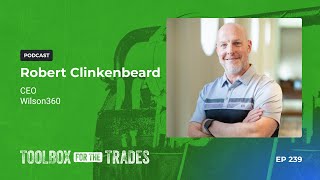
Robert Klingenbeard, CEO of Wilson360, explains how landscaping companies use predictive analytics to handle rapid growth. He covers AI applications like route optimization and crew efficiency, plus why hiring younger tech-savvy workers and developing leadership soft skills matter as much as the data itself.
Hello and welcome to Toolbox for the Trades. My name is Amanda Salvatore and today I am joined by Robert Klinkenbeard, CEO of Wilson360. Robert shares his insight on achieving rapid company growth and overcoming the inevitable challenges that arise. We also dive into how predictive analytics and AI can give your business a crucial edge. I hope you enjoyed this conversation as much as I did. Robert Klingenbeard, you are the CEO of Wilson 360 and host of the Commercial Landscaper podcast. And today we are going to be discussing navigating rapid business growth. Thank you so much for coming onto the podcast today.
No, good to see you, Amanda. I've admired your show for a long time, really excited to be on it finally. So really appreciate the opportunity. So thank you.
We appreciate you. Thank you so much. So, as you know, with Toolbox for the Trades, we always like to start with a little icebreaker and I know you have played semi pro rugby, you've done four Ironmans. So I would love to know what is the best piece of advice from a coach that you've received.
I think the biggest piece that I've talk about is, or I heard is, you know, communicate well, which is something we don't necessarily hear a lot in business. Lean on the support from your team, you know, other experts, coaches, mentors, you know, sometimes I think we feel as though we know everything and I think that's a detriment to growing a business. Whereas if you lean on, you know, experts and people around you and ask their advice, maybe not necessarily all of them are correct. But if you list you're hearing different opinions, then you'll learn from it. Improve your game, you improve how you do your different disciplines. Just being open to asking questions and then actually stopping talking and listening.
And now that you're coaching, I'm sure that's something that you implement as well. But before we get into that, I'd love to know how you found yourself in the industry.
Not bore you with all the details, but happened back in Scotland. Left high school, was looking for some type of summer job. There was a wholesale nursery that was looking for summer work that moved into working the retail side of things. I had a great, I've always had an interest in sports and I started to think how can I combine the interest in sports to be working outside. Ended up going to hort college in place. You know, the size of the company, they think that the immediate hire is an HR manager. An HR manager has typically been that person who's gone out and dealt with any applications coming in, I think that is, in most cases that is the wrong trait to have because they're more dealing with rules, following procedures, following some of the state regulations. Whereas I feel as though many companies are beginning now to move to a recruitment type role and it's more of a sales function. How can I find those people? Where are the places to go? How do I have those sales type conversations? How do I follow up with them within 2 hours, 4 hours, 12 hours? And then how do I bring them in the door? What are some of the packages I need to offer them, the benefits to bring them in the door. So I think that is probably a lot more crucial than hiring an HR person. You can, you can outsource that function, but have that sales recruiter type function.
I have to say I've been recruited from my previous jobs as well. That's happened to me before. So. So I hear you and I think it's a great idea. I know that you mentioned a little bit before about data. It's another way to look at your business in a holistic way. What is going on? A few months back you presented a webinar with Aspire on predictive analytics and AI, which honestly is a must watch. We will leave the link in our show notes, so please feel free to check that out. Is chock full of great advice for those who don't know what perspective analytics are. Can you explain what they are and how it helps when it comes to growth?
You know, we have so much data coming at us now. You know, it's coming from, you know, irrigation controllers, it's coming from great systems like Aspire, it's coming from GPS systems. And I think we're still trying to wrap our head around, you know, how do we analyze that data to be able to use that for whether it be future growth, whether it be becoming more efficient. But your predictive analysis is really, really just taking that data and looking for patterns, weather patterns, growth patterns with grass and plant material, how efficient crews are working out in the field, how can we reduce fuel usage? It's just a case of extracting the data and putting in the correct prompt.
It's incredible what we're able to do. I feel like just in a shoot, a few short years when someone is looking at this data, I suppose it does have to do with what, what are the goals that they're trying to accomplish? Is it routing? Is it, like you said, weather? But where would you suggest people start looking first? It can feel kind of overwhelming when you're, you're sifting through all this data. So where should owners look?
The biggest issue I hear from owners is around the people and the lack of talent. So if there's ways in which you can either not necessarily reduce your workforce, but if you maybe don't have to rush out and find replacements and you can use that data to become more of a efficient, slicker machine, I think you'll immediately start to see the paybacks not only in helping to eliminate that noise around finding good people and good talent, but also then the knock on effect. Nobody can complain about this is then you're going to start becoming more efficient. Maybe you'll be able to get more work done or you'll be able to get work done more efficiently. So that's going to help the bottom line. Yeah, data people, probably the biggest priority out there.
Let's talk about AI. It is the topic of the summer, if you will. It's the topic of the year really. What about the technology is most exciting to you when it comes to growing a business?
I mean, just these speeds of the information coming to you, the analysis of that data, I think a lot of people get worried about is it going to replace people? And I'm not necessarily sure I buy into that. I think with use of the data and AI, you're going to be able to speed up a lot of processes and you'll be able to consume and get more things done more efficiently, a lot more quicker. Definitely not scared of it. I think to be able to find those models that work best for your company and even double down into that. You know, one of the things I find when you talk about data, AI, productive predictive analysis, you know, when you look at what type of talent do we need to bring in the company, and I think this is another missing piece that people are not embracing, is that if we could find that younger workforce that is tech savvy, that could live on this data and produce all these great reports and then feed your operational team, I mean that's just going to be game changing right there. Again, don't rely on maybe traditional methods. Look at how can I bring in the right talent, maybe slightly different talent to help then feed my operational teams, my sales teams on how we can become more efficient, more effective and how we put ourselves out there.
I know that a lot of people are hesitant about AI. Like you had mentioned previously when you're consulting, what are other concerns that maybe some owners are having about using AI other than it replacing people?
I'm not sure the concerns just around where AI is going. I think a lot of people notes here don't realize how quickly it's coming. They're somewhat turning a blind eye to it because maybe they don't necessarily understand it and they don't know where to start. This train is quickly coming down the tunnel. My best recommendations is embrace it. Embrace it quickly and figure out how can I start adopting that into my company. We also D60, we have some data, has that AI IT expertise that can go into companies and do an analysis of where they currently stand. How can we automate things? How can we use AI to provide that better services in two ways. To either serve their clients better or to be able to speed up some of the internal functions they have, like sales, like customer retention, like operational needs, like routing or use of fertilizers and some of the other materials. But definitely embrace it. Don't run away from it.
Yeah, it's coming. It's coming for you for sure.
It's already here. It's already here. So quicker you jump on that train, the better.
I think it's great advice to suggest having someone on your team dedicated to understanding the functions of AI and what it can bring to the business and then showcasing that to the rest of the company. It may feel a little less overwhelming if you attack it in that way as opposed to just looking at it and not knowing exactly what to do and finding yourself a little overwhelmed. There's a lot to do with AI when it comes to the future and what we're excited for. So what are you looking forward to with this new technology?
Two things is, you know, a, how can I make my coaching firm more efficient and deliver more to my clients? How can we, you know, introduce, you know, chat bots or just better serve our customer? So that excites me. And then as we start doing some case studies with our clients and how we can improve what they're seeing out there in terms of AI, use of data, analyzing crews, even tying in things like robotics. And the information coming from those is using those case studies to then say, hey, this, this is what can be done. I think that's part of the challenge with owners is they don't, they don't know. So how can we showcase, here's some of the things that can be done with it. And then once you start seeing those results in black and white, then it's as you see it piques their interest. Maybe they start off with a small project, then that may turn into other projects, and now suddenly it's really ingrained in their company.
Yeah, there's so much to look forward to. There really is. And also seeing it in action demystifies it and makes it more approachable.
100%. And I see that all the time that people talk about social media, but I think some real hardcore key samples and how it could start affecting the business or the bottom line, then I think that's when people start to open their eyes. I think traditionally our business are generally known as speed, slow adopters and new technology or new trends. So I think the quicker the hue those key studies and that's, that's what I'm hoping to do to serve my clients.
I have to ask, when you are running your own landscaping business, what do you wish you got to use with AI?
I would have loved to be able to analyze our prospects, look at our target market and do some automation around that about that constant communication with them. I would have loved to have had more access to information about how to manage the crews, find out things like efficiency of equipment usage. You know, every truck loves to have all these different sets of equipment, whereas if we use some of that data available and using AI, that could maybe reduce some of our equipment purchases or assets. There's certainly a lot of quite a few. But I think on the sales function, that's probably where I would have started first. We didn't quite have the labor issues that a lot of companies are now facing. If we had that more of that usage and data availability for our sales side, I think that could have probably streamlined things a bit more.
I'm very excited to see in the next year or 2 where AI starts taking over this landscaping industry and really just helping push businesses forward so they can utilize these tools. I think it's a very cool opportunity and I'm so glad that we got to talk today a little bit about some of the functionality of AI data, as well as just tips and tricks for growth. But before we go, is there anything else that you wish we covered today?
I can't emphasize enough about how can you leverage your talent in your business. Find out where the strengths are, you know, look at things, tools like personality assessments to find some of the strengths and weaknesses. And then how can you take a step back as an owner, CEO, push them into that leadership position? You know, you mentioned a key thing earlier about soft skills. You know, soft skills is definitely a missing piece. A lot of people really struggle with or don't even address. You know, looking at soft skills. And then where, where are the ways in which I can develop my team to leverage technology AI predictive analysis. So it's not just completely reliant on me as a CEO or owner.
Robert, thank you so much for coming ontobox for the trades. This was a great conversation. Thank you so much.
Okay. Amanda, I love being on the show today. This is really special to me. So really, really appreciate and look forward to the further conversations with you.
More from Bill



Capturing the 80%: How SmartAC’s Gen-2 Targets Non-Membership Homeowners | Podcast Ep. 296

Build better customer data with every booking in ServiceTitan | TAD Tune-Up Series

The Biggest Change for Roofers Coming From Other Roofing Software to #ServiceTitan?


