Mastering Construction Workflows: From Job Level to Project Planning | Podcast Ep. 111
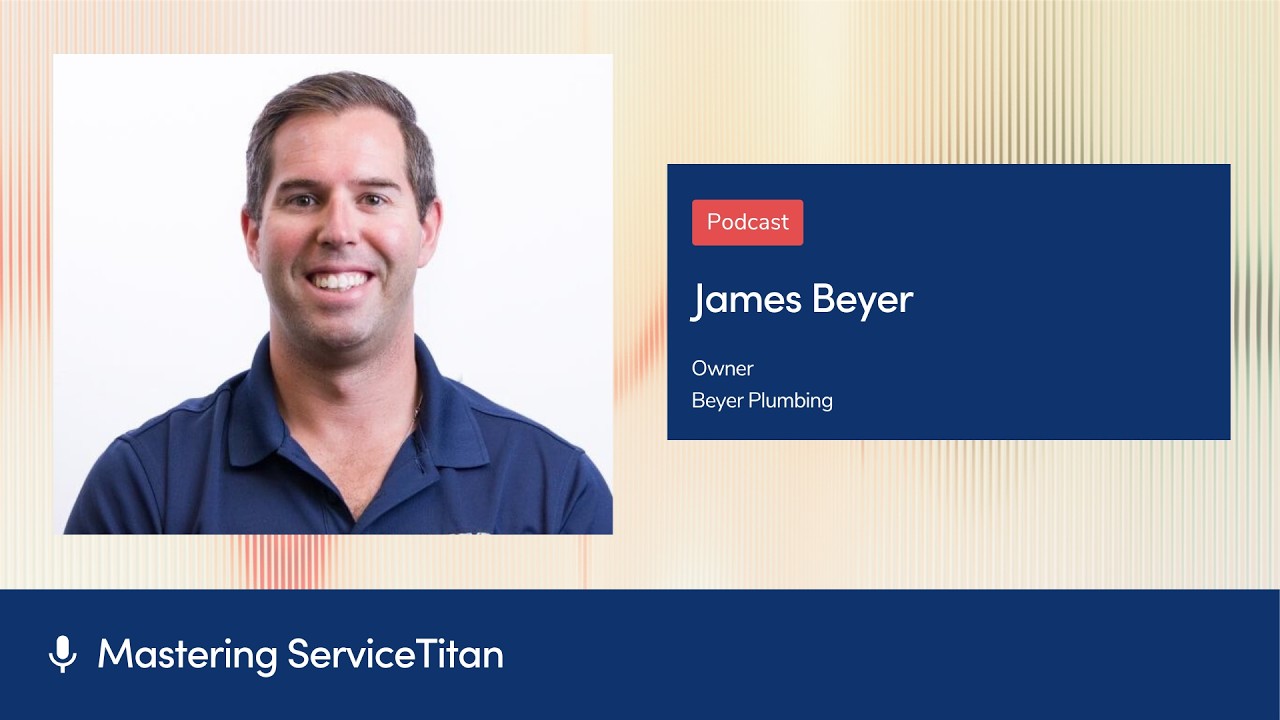
In this episode of the Mastering ServiceTitan podcast, host Josh Liu interviews James Byer, president of Byer Plumbing (now Byer Electrical), for the third time. James shares how his company migrated its entire operation to ServiceTitan, highlighting the impact of live margin reporting that lets managers drill down into cost overruns in real time. He explains the step‑by‑step “onion” approach to layering construction workflows: first assigning jobs to projects, then mapping jobs to cost codes and phases, and finally moving to a Gantt‑style project planning view that shows backlogs and resource allocation. The conversation covers the challenges of moving from disparate Excel/Smartsheet spreadsheets to a single platform, the importance of consistent terminology, and the need for patience and strong CSM support (especially with Will Manning). James also details the launch of a new electrical division, the hiring of the first apprentice, and the use of ServiceTitan’s MarketingPro for soft‑launch drip email campaigns, social media, and door‑hanger outreach. He describes cross‑trade automation that flags electrical work during plumbing jobs and vice‑versa, and how Zapier and ServiceTitan tags are used to automate task creation. AI tools, particularly ChatGPT, are credited with speeding up job‑type creation, price‑book setup, and documentation. Finally, James outlines his top priorities for the coming year: deeper automation and more sophisticated project‑planning capabilities, emphasizing continuous learning at Pantheon conferences.
Chapters
Being able to see our margins at a live level is huge for us, and being able to drill back and see what exactly caused something to fall over that edge, it's a great tool to see that. And so it's been eye-opening and it's been pretty exciting for all of us in our construction department.
Welcome to Mastering ServiceTitan, where you get expert advice from power users. I'm your host, Josh Liu. Today's episode is very special. We are kicking off Pantheon with our first guest, A return guest 3 times now on the podcast. We have James Byer, president at Byer. Welcome back to the podcast.
Thanks for having me again.
Last time we talked about you had just implemented construction. Yep. And so that's one topic I want to cover today is just to check in on how that's going. I know there's some name changes with features you just mentioned. Maybe we can start off there.
Yeah. So, uh, since we last talked, I think you got the brunt end of all of the, uh, you know, growing pains that we felt from moving everything over. But since then, we've done very good. We still have some little issues here and there, but construction has been fantastic inside Service Titan. You know, we're still having our little problems. You know, guys not, you know, clocking into the right job at the right time or not clocking out at the end of the day. So it's still like little, little tweaks here and there that we're trying to get through. But overall, it's been a really good experience. Again, can't harp enough on the reporting side of it. You know, every Every month we get to nail, you know, nail down all the extra costs that get put into that, into all of our projects. And so, uh, it's really great. You know, I, I talk about it a lot in that podcast, but being able to see our margins at a live level is huge for us and being able to drill back and see what exactly caused something to fall over that edge. Or maybe, you know, we didn't bill enough or whatever it is. It's a great tool to see that. And so it's been eye-opening. And it's been pretty exciting for all of us in our construction department. It's exciting for me, probably not for them when I come at them like at the end of the month and say, hey, what happened to this? You know, what happened to these projects? Literally sent that email this morning as we were here, but you know, we're still working. So it's still good.
It's good you have so much visibility and like more detailed visibility now. And actually before we get too deep, can you give people maybe a refresher on the business as a whole, all the different things that you guys do, just before we dive too deep into construction?
Yeah, for sure. So, Beyer Plumbing, uh, we've been around for over 36 years in the San Antonio, South Texas area, uh, but we have been focusing really 70— 60 to 70% of our revenue is commercial construction. And so, um, a big part of us has— was not in service titan until this year at January 1st. And so now our Our entire company is now in ServiceTitan. And so it was an exciting jump for us and it's been, you know, we've had our little things here and there, but it's been great. But yeah, commercial construction jumped in. Before that we had, it's, you know, the other 30 to 40% sometimes is the service side. So having commercial service and residential service, that's pretty much how Beyer Plumbing is. But yeah.
And we spoke at the beginning of the year when you just implemented construction. What are some of like the latest updates on the construction workflows that you guys are using now?
So I've told the guys, and I think I probably alluded that to our podcast, but it's like, it's like an onion, right? So ServiceTitan has so much stuff in it that you have to peel back slowly at a time. Otherwise you get overwhelmed. I mean, just walking around here or going to the different sessions, I get overwhelmed with all the things that I have to implement or look into. Uh, so like we slowly pull back layers here and there. Right now we're pulling back the layer to start layering on at the job level, how when you have jobs inside your projects. We can actually assign those to cost codes so that those labor costs and labor hours go to that particular phase or cost code that you've set up. So, which is a huge deal for us, is we can see efficiencies. So right now we're working on that layer. And so, uh, when I get back, the next layer we are pulling back is project planning. And so really kind of getting that full focus, uh, planning look at the job, you know, scheduling things out months at a, months at a time. Hopefully that they kind of stay in that realm, but just to kind of start getting an idea of, you know, what's going on, our backlog, what we have coming up. That's really important for us, uh, especially making sure that we have enough guys to actually do the work that we have sold. And so, um, being able to pull back those layers slowly at a time is big for us. So, okay. It's been good.
Can you walk us through what the current layer looks like before you got to the job level? Like maybe paint a picture of what the workflow looks like today. And so people who are listening can be like, okay, I'm almost there, or I'm already there. Maybe I can follow along.
Before we jump to this layer that we're pulling back, before that we were just kind of doing it as a higher level. So we're like making sure that everyone was assigned to the right project at the right time, making sure that they were clocking in and clocking out, learning that process on the new FMA app, just slowly over time, making sure that we don't overwhelm them all at the right time. Because I can go back and we can turn on 100 features right now. But I know that from my, all of my plumbers in the field, my apprentices to the office staff, they're not gonna like me very much. So we do it slowly over time. So.
Gotcha. Can you tell me a little bit about project planning? Like why are you guys looking at that as the next step?
Yeah, project plan from what I've seen in the past, I'm excited to see what the new updates are. So we'll get to see those updates tomorrow, I believe. And so I'm pretty pumped about that. But that gives you more of an overview glance of what's going on in the project. So I can start planning out things. So say for, oh, like I'm just gonna use plumbing terms, right? So in our underground rough-in, so all of our stuff underneath the flooring, we can start planning that out. It takes a couple weeks or sometimes it takes a month. So we can plan that out. After that, we wait a little bit, but then we have another top-out period where we're coming back, we're doing our venting, we're doing our water. So being able to plan it out kind of like in a Gantt chart view. Yeah. So that way we can kind of see it at a, the project at a full glance of how many months it's gonna take and then everything like that. So then we can start after that, we'll now be able to start bridging those gaps in between, making tasks, making sure our guys can, you know, log into those certain tasks and do that. And then that all ties back into actuals and budgets and making sure that everything flows together with there too. So it all ties together. It's just slow, like it's slowly over time. Building at a time. Coming back. Yeah.
Yeah. What is it with project planning that you hope to see or that you'd like to improve about your current process?
Right now we're kind of like all over the road. So right now I kind of have a special Excel, or it's a Smartsheet that we kind of pull together. And so that's the way that we show it currently. Ideally, no, that's not as fun because I have to do it in multiple places, right? So that whole point of ServiceTitan is that we get to one place And for everything. And so that is there. So, um, just kind of getting to that point of being able to have one platform to be able to do it all. And I don't have to pay for a Smartsheets or I don't have to pay for, you know, another, another product just to get the same view that I can have in ServiceTitan. So that's exciting for us. It's exciting for me. I think that's what I'm probably looking forward to. Yeah.
Is there any prep work you have to do to like make sure what you have right now in the Smartsheet makes it into the project planning module or feature? Any, any advice there?
Yeah. I mean, yeah, there's a lot of prep work. I feel like just making sure that we have all the same terminology or like having the same kind of, uh, what, like, I guess the same goals, right? What are we getting out of this? We want to make sure that that's, that's transparent across the board. Um, we want to make sure that we're all searching for the same thing. So kind of like that job setup, that project setup, um, everything in between, it's the same terminologies so that way. Yeah. It, it just comes second nature and it's easier for us.
Yeah. Do you have an example of like some of those terms? Maybe people can like copy you if they're gonna start doing this for the first time.
The way that we do our jobs and set 'em up is, uh, we create phases and then cost codes, cost types. And that's like the top level view, right? We wanna make sure that, that, that's accurate across the board. So for our phasing, whatever it is, that's the, for us it's the rough-in, it's the, it's the water, it's the vents, it's the top out, whatever is happening, gas. Med gas fixtures—that's my terminology—but all that kind of trickles down, and then your cost codes be like what's going on inside of those things, cost types, labor materials. So we want to make sure that everything flows together in a way that when I look at it, I can see exactly what is happening and what went wrong. Same as a project manager, and same as a construction manager, and then hopefully one day the same as like a. The foreman, like a technician type of situation where they'll be able to pull that project up on their, on their FMA. You know, in this top out we have 60 hours and we're already at 40. So, you know, I need to make sure that I can fit those 20 in. So all that kind of translates down. So making sure that as a whole, from the top level down, that we're using the same terminology, same, same ideas. And then it's kind of like making this whole thing transparent. I hope that made sense.
Yeah, yeah, that makes sense. Any advice for people who are maybe, you know, I think you were early on the construction workflows and I'm sure there's some people still waiting to like, maybe they're here at Pantheon, they're about to do it. Any advice for those folks that are jumping in?
I think my advice is always just to be patient. Be patient with yourself, be patient with your team, and be patient with ServiceTitan. You know, sometimes you'll run into a roadblock. You might, it might not work exactly like you want. But there are ways to make it work. It's just talking to the right people, reaching out to your CSM, reaching out to the your team that helped you implement it. Those are all important. So that's what again I can't harp enough about to Service Titan is that for me it's been great to go directly to the source and figure out hey this is my issue that I'm having. Can I can I get the support I need to make it work? I mean huge proponent of you know Will Manning. He's like The best man behind the scenes in my book. He's not really behind the scenes, but he's, he is awesome to like us. He helps so much. Any issue I run into, I'm like, hey, can, uh, can you help me with this reporting of how it pulls through? He's like, my team got you. So I mean, just using your, your like contacts, using ServiceTitan to its full max potential of using them. Like they're, they're there to help you. You're paying them to help you. Let them do it. Like
shout out to Will Manning, new friend of the podcast. That's gonna be awesome to see.
Yeah.
Should we talk a little bit about electrical?
Sure.
This is— you brought them all onto Service Time for the first time?
Yeah. Wow. So what we did this year, we're excited. We were excited to announce that we actually started a new, a new company, Bayer Electrical. And so it's kind of shifted how we brand ourselves. We're shifting more towards just using Bayer, whether that's using, you know, for Bayer Plumbing or Bayer Electrical. We have a couple more, you know, coming up in the works, you know, that just We want to be able to be that, that ecosystem for our customers to be able to, you know, they can come to one place. We're there to help them. Electrical was a fun, like a really exciting add for us. It was something that our customers have been asking us for and it naturally just kind of came, came up.
Like, did you always know that you wanted to get into an electrical business or?
No, usually plumbers and sparkies don't mix.
Oh really? Is that a thing? I didn't know that.
So, but it was something that's come up multiple times. And so from our commercial construction work, even into a commercial service, residential service, we're all touching electrical in some way. And so it was us always having to go get a subcontractor to do that work or having to, you know, find someone to do it. This naturally gave us a way to do that. It gave us a way for using our customer base and saying, hey, we now have this offering for you that you've been asking for. And it's going to make your life easier. So, and that's, that's our goal. You know, we have a great reputation with a lot of our customers. And so it's just another way for us to serve them in the way that they're needing. And so they get the same exact like quality that they would expect from us, you know, for the plumbing for 36 years. Now they get that from Bayer Electrical and Bayer whatever after the end of this unit. So we're very excited to, you know, kind of start rolling that out. But yeah, it's been a whole different world to jump into.
Yeah. First, congratulations. And then, wow, I have so many questions about this, but maybe from the start, how the heck do you go and just start an electrical business? Like, where do you find the people and how do you learn all of it?
So what's funny is I build custom homes on the side. It was a side project. It was a fun side hustle 'cause I didn't have anything else going on at the time. But I do it on the side for fun. And we were building a custom home last year And the guy that was actually the electrician, he was just talking to me and we had a great time. And I, so, you know, save costs, I was actually doing the electrical work with him. And so I was doing a couple little things here and there. So I got to know him and then just naturally came up and he was like, hey, have you ever thought about going in the electrical business? And I was like, what? You know, kind of, maybe. And so then we started talking more and so, and then we got to know each other and yeah, his core values and mine kind of aligned very easily. And so it was like at a point we were like, okay, well, I guess, you know, we're, we're gonna do this. Let, let's do this. And so, uh, we, it was like months in preparation of just kind of like sitting down and talking to him and how do we build this from scratch? Because like, it was like, okay, we're gonna, we're gonna take this and we're gonna build it from scratch to make sure that it meets all of our core values. It meets all of our quality control and expectations. It's gonna fit right into our buyer, our buyer world. And so that's what we did. And so just starting from scratch, learning and just learning from him. You know, he's a master electrician in Texas. And so just kind of learning his processes, how things work. And there's a lot of times that I'm like looking at the price book and I'm like, ah, I don't know what this is. Like, you mean this is all you, man? Yeah. Like, I'm a master plumber. I don't know what this is. So you can help me with this. So, wow. Yeah.
First of all, what a flex. Side quest, just build custom homes on the side and also just Diving in to help with electrical sounds kind of dangerous. I don't know; it seems scary to me.
Yeah.
So what does the electrical side of the business look like now? Like how many technicians do you have? What kind of work do they focus on?
Yeah. So we're we're still babies. So we have we have our one truck out there right now, and so we have we just hired our first apprentice to go along with him. So pretty pumped about it. The apprentice actually came from a high school down the street. He was a senior last year.
Wow.
My wife. Was working at that high school. She was an academic and career advisor, and so it was funny because he came to her and was like, "Hey, I want to be an electrician. Do you know want to be an electric? Do you know any electrical companies hiring?" In the back of her mind, she knew that what we were doing, and she was like, "I mean, I can help you find one." And so then she couldn't say that yet. She didn't. She couldn't say what we were doing. And then naturally, he went found another job, and then he found out about that we opened Byer Electrical. And so he came back and he was like, "Hey." Are y'all hiring still? We're like, absolutely. Come on. So he's a really good kid. So we're excited to have our first apprentice out there. So it's like we're still kind of building our way up. And it's been interesting to learn, like, from starting from scratch what to do and how to get a business to grow. Because, like, right away, those calls don't come in. How are you getting calls? And it's like relearning the whole system. It was like, we couldn't— I can't afford to go turn on all the advertising I do for Byer Plumbing because that would bankrupt my Byer Electric Gold. But it's like, How do we slowly build up to this and slowly get things going? It's, you know, starting from being able to do drip campaigns or just emails through ServiceTitan. And that was like step one. And so it was like social media posts. This is like step two. And so it's like slowly like baby steps of trying to figure it out. So launching a new side has been a very interesting experience. Some days, you know, we go without a call right now. So it's like, okay, what do we do to fill that time? Like trying to You know, work on those kind of workflows. Like we haven't had to deal with this in a while and very blessed that we don't have to deal with that on the plumbing side. But you know, like what do you do in those situations? Like, okay, so what do we do? We made door hangers. We're like, all right, we're going to go hang some, hang door hangers on people's houses. You know, taking a step back, things that you take for granted when you have a machine that's so well oiled and for 36 years has been building this huge customer base. So you really kind of focus in and be like, okay, well what's going to bring us What's gonna bring us those calls in for electrical and what's gonna bring us that ROI? And, um, and that's been a really cool experience to learn from.
Wow. That apprentice is getting like the best experience they can possibly have. Yeah. I think to learn, start from scratch like that in a business that's already really established, I'm sure a bunch of best practices will come over to the electrical side. I wanna zoom in a little bit on that first step you mentioned, uh, the drip campaign and like how that was the first step. What kind of Drift campaign did you set up for that?
So the first week that we launched, we only wanted it to be, we did a very soft launch. We like, we only wanted it to be for our members that we already had. And so we went through, we found our members, our residential members. So we built our audience in MarketingPro and then kind of hit them. And then we made a follow-up to follow up, I guess like 2 weeks later, you know, hit them again. And so what's really cool about MarketingPro also, great plug, here we go, is that you can see how many people have like, opened those emails, have clicked on it, have clicked through, clicked into your website, have booked. So like, it's been cool to see that, that huge, uh, that huge drip into there. So that's, it's been really neat to see too, because I mean, that's been really valuable for us. So,
and, uh, content-wise, was it just like, hey, Bioelectric is here now? Or like, what was the messaging behind the, the campaign? Do you remember?
We had some really fun ones for our social media, but the drip campaign was We're here to serve you more. It was like, you know, we're excited to announce, you know, a new member of the Byer family, which hindsight, we got a lot of calls thinking I was having another child. Not that exciting.
That's so funny.
So we had to put those rumors to bed because one of our, the social media posts that we did, one of them was like, we have a big announcement coming the next Monday. And so then when it came to the Monday, the announcement was the rumors are true. The Byer family is growing. My wife got a lot of calls. It was like, I didn't know you were having another child. We're like, well, we didn't either, but that's, that's news to us. So I had to clear that up a little bit. The social media one and that one kind of like they hit at the same time. And so that way we kind of like piggybacked on each other of those, um, like messagings of like, you know, that we're here to serve more. We're here to serve you more. Cause it's, that's what at the end of the day, it's, that's what makes it go around is how can we serve our customers? How can they call? You know, it's up to them to call us back. What can we do to prove ourselves valuable enough that they want to call us back? Um, and I think that's the most important part.
And then after that drip campaign and the social, did jobs just start coming in?
Sure.
Some jobs. Oh no.
Slow leak over time, right? It's a, it's a, it's a little learning curve. So like slowly we are getting ourselves out there. We also do commercial service. And so that's been a little bit of a help. So it's like, hey, um, we talked to our commercial service people and Can we get added into the portal as an approved user or approved vendor? And so, like learning doing that whole process and trying to get get in there to do that. So those have been good. So like commercial service, that work is there too. So that's a great great pull. Like it's a pull-through work for from our construction side or pull-through work from our commercial service side. Also, another great thing for the pull-through work is that whenever our guys go on a plumbing. you know, a plumbing call, um, at the end of that on our debrief, there's a spot now that says, is there anything that needs to be for electrical that needs to be looked at? And so now we have that set up. It creates an automation in the background and then it'll put us, you know, put that onto our electrical side so they can say, hey, dear so-and-so, I heard, you know, that our plumber was out. They mentioned something about, uh, that you're having issues with your electrical. You mind us coming out and checking it out? And so, I mean, just those little things, just that pass-through has been really cool. Likewise, when it's an electrical job, you know, we have that same kind of thing set up for plumbing. I'm excited to see how we evolve and how, you know, if, you know, we, if we add more trades and whatever, how everything kind of flows together because that's, I mean, we're there to serve the customers in any way that they, they need us to. And I'm excited for that for them.
So very cool. More layers, more onion layers, right? Uh, on the automation piece, is that like a task? Is that in task management or what kind of automation did you set up for that?
So right now we have it set up. It should have been, it's like a tag.
Uh,
and so it, it's, you have to, it kind of gets a little confusing.
Okay.
Which, um, I'm excited about our new automated features that we're going to be hearing about and little things about rumors about. Uh, but I'm excited to see that because like right now I have to use like a bridge with Zapier and, and everything that kind of runs through. Um, but you know, it's, it's supposed to create a, like a tag on the job so that way the job can be flagged by so-and-so and then, you know,
okay.
Ideally, I would love it to create that task to be pushed to the powers that be so that they can review it. Right. So that's my goal. Um, have a lot of conversations to kind of get to that goal when I'm here, but, uh, hopefully that happens.
Yeah, we manifested it. Fingers crossed tomorrow we're going to find out. We're going to figure out how to automate this. How about learning Service Titan? Like for this master electrician, the apprentice, are they both on Service Titan? And how did you get them all set up with it? Was it a lot to do or?
I mean, yeah. So like when the master electrician came over, he didn't— he's never used Service Titan before that. They were using paper. Yeah, it's crazy.
Wow.
So there's still those places there. There's a lot of places that use paper.
That's kind of crazy. Yeah.
Yeah. Because they don't know the good news. So it was a little bit of a learning curve. Um, he's very smart, so he was, he was ready to jump in. Um, he knows that it's like, it's his baby too. So he's like, he's, he was jumping all in and trying to figure out everything he could. Um, but we sat together and we built that whole site up together so that way, you know, he was involved from the very beginning of let's create, you know, how do we want it to look on invoices? How do we want the price book to look? You know, what inventory do we want to carry on our electrical trucks? Creating all of those little things, it took us time and like to make sure that it fit our quality, it fit our you know what we wanted to be. But he he learned his way up and still learning stuff. You know just the other day we were telling him was like oh yeah you also have to you know you have to like go and actually you know quality control your invoices. I know you're doing the invoices but you still got to go in and finish them out. And he's like oh it's just like little things that we forget. To preach back to him like, hey, you know, you still, we still gotta do these things and that we take for granted cuz it's just been going on and on and on forever.
So, wow.
We're still learning.
Yeah.
Together.
And so you had to set up the job types, all that kind of thing.
Was that all the job types?
Was that hard? Because I'm sure he knows all the different things. And then you probably know from your ServiceTitan experience, you don't wanna make too many job types. Yeah. But you don't want too few. How'd you manage, uh, your job type creation?
Well, you know, I have a really great assistant. Named ChatGPT.
Yeah.
So I feel like using AI has been a huge godsend because like before when we went to service side and when we just went into service time for plumbing, it took a lot of input and like you're having to sit there and type everything out into that Excel spreadsheet that is humongous and you need to do those things. Well, now with our friendly AI bots and everything that we have now around us, it makes it so much easier. It's like, hey Chat, what can you, can you do this for me? And like, it's been so helpful.
Okay.
To be able to say what we want, you know, what type of services we want. And then just being able to even spit out a like synopsis to be like, hey, I need to send a synopsis to our website design team. They need to put available services on our website. Hey, can you reference back to the job types that we created? Boom, done. Send it off. I don't have to redo it again. So it's like, it's been so nice. So very nice. So much faster than it was in 2019 when we went to ServiceTitan with plumbing. But we learned a lot and it's been really, really cool.
How about the price book side? Did the master electrician, did he have a price book that he wanted to just implement or did you have to make one from scratch?
So we started from scratch again. So it was like using his knowledge we pulled from the ServiceTitan cap, like the catalog. The Pricebook Pro catalog. So inside Pricebook Pro, you also get, you know, some pre-made catalog items that you can kind of pull from just to get you going. And then from there, you can add and delete whatever you want. So we kind of use that as a base. Like we have this massive spreadsheet that was like our launch spreadsheet. And so we have so many tabs. One of them was job types, right? And so it was just like putting it all in there and then him and I would be working on it and he's going through Uh, making sure the quality control and making sure the descriptions go with what it is, the job hours, the exact— the actual job hours, like how it's, how long it's actually gonna take. You, ServiceTitan seems to think that we're really fast. Not so fast. So like we're trying to change those hours out. Um, so just like little things like that has been really, uh, easy to do. And price book, it can be daunting and it's a huge task, but again, with the helpful AI. They made it a little faster.
I think maybe the first episode we did, we might have talked about Price Book and Price Book Pro, I think. So it's cool to see now, like maybe 2 years later now, that you— that's awesome. And so with Price Book Pro, it automatically, you could just add a new trade and just start there as like the base.
Yeah. So like you had to add it into your, the background of your system. You had to add that trade in, but then you can, you can get that, the Price Book catalog real fast.
Is that what Smart Start It's just like a few steps and it kind of gives you like 80% of what you need. Yes. Okay. Like the most common ones or something like that.
Wow. So it kind of gets you going and then you're like, and then it, it really does set you up for success to be able to kind of bridge off of that.
Okay.
And so
now how about any bumps in the road, mistakes, challenges, like bringing on a whole new trade? If you can go back and start over, like what advice would you have given yourself?
Ooh. Again, I think my thing is patience. I don't, I'm not a patient person, I guess.
And it's coming up multiple times.
You can probably ask my wife that. I'm, Not a patient person, but I think patience, I guess, in the fact that it, things will take longer than what you think. Um, just trying to get through the whole process of getting all it all set up, getting, uh, you know, just for somebody that came from outside of our world to understand our, our, you know, like processes and workflows. We hired him on well before, like months before we actually started running electrical calls because I wanted him to be immersed into our plumbing culture and to actually get to know how we work and our workflows and whether that's in the plumbing side of things or not. And so he was in, he was inside all of our meetings from our construction sales meetings, construction meetings, marketing, you know, whatever meetings that we were having, he was in all of them. So he was learning at that time like the whole culture, how we, how we function, you know, just little things here and there. And I think that, that takes time and I think he, it kind of helped our whole situation. And so it, It built his huge foundation for him to just kind of go and, and make it into this big thing. And so that, that was the goal. Just kind of have patience for yourself. You know, things don't automatically just happen. Things will take a little time, but that's okay. Like you want it to be good. You don't want to just throw slop out there and not be good. And it has to meet the quality of that your customers are used to.
Especially if you're putting your name behind it. Yeah. And it's gonna represent Buyer Now. Yeah. So yeah, that is so exciting. Uh, we are at Pantheon. Um, obviously if you can't tell from the background noise in our, in our audio, maybe Rob's done a great job and cleaned it all up, but But going into Pantheon this year, if there's like maybe your top 1, 2 things that you want to take away from this year going into next year, what would you say that is?
Well, now that I heard about automations, that's my top one. I think automations for me is a big deal. I'm excited. I'm always excited to hear about the new features that they kind of cook up secretly that nobody hears about. So I'm excited about the secrets. And then just kind of diving more into my project planning for my construction side. Being able to come to Pantheon and, you know, go to all the sessions as much as I can to kind of dig in a little deeper, it's huge for us because I go back and I'm able to implement a lot of things that I learn here. Even little things that, you know, we take for granted a lot of times that we just ignore. Little workflows that somebody, you know, having a conversation with a caller, you know, somebody else, you know, a competitor or whoever it may be, just little workflows here and there that we can implement easier. And we're like, oh, well, that makes more sense. Thank you for telling me that, you know? That speaks volumes. And I think coming to Pantheon, that's why you come. Like, you come for the networking, you come to talk to people, uh, you come to learn. You get a really cool party and you get all these cool things, uh, but that, for me, that's the most exciting part of it.
Awesome. Well, James, thank you so much for coming back on the podcast for a 3rd time. And, uh, if you aren't tired already of seeing your face all over Instagram, prepare for more clips to be coming out. So, uh, thank you so much for coming on the show again.
Yeah, of course. Anytime.
More from Bill





How a Commercial Contractor Runs Everything From $500 Service Calls to $1 Million Projects