Pantheon 2025: Find Your Most Profitable Path of Least Resistance | Podcast Ep. 246
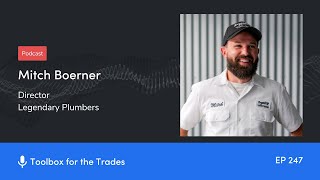
Mitch Burner built Legendary Plumbing from a garage in Melbourne in 2021 after switching from music and cooking to trades. He scaled by niching into residential repairs, raising prices for future growth, and using ServiceTitan software to handle dispatch and scheduling across multiple locations.
Questions this video answers
Around July 2021.
His brother, Jacko.
On track for AUD 6.5 million.
Grow to 20 branches in Victoria and AUD 25–50M (aspirational AUD 100M).
Dispatch Pro, Schedule Pro, Atlas, and Field Pro (hopes for Field Pro availability in Australia).
Hello, contractors, and welcome to Toolbox for the Trades. My name is Jackie Aubel and I am live here at pantheon 2025. You may hear a little bit of murmuring, a little bit of mumbling in the background, but that's because we are in the thick of it at Service Titan's Annual User Conference. But trust me, you are not going to want to miss today's episode. I hope you enjoy it as much as I did. Mitch Burner, you are the owner of Legendary Plumbing in Melbourne, Australia?
Yeah, thanks for having me, Jackie.
Oh, my goodness. Thank you so much for flying all the way out here so you and I could do an in person interview. We met, actually. When was it? April 2025.
April, back in Sydney.
Yeah, I know. And you have such a fun story. I cannot wait to get into it. We are joined live here at pantheon 2025. And I mean, this is your first Pantheon, right?
Second, actually.
Second. Okay. What do you think?
I think it's been fantastic. I mean, I just went to one of the Sessions with Frank DeMarco from Champions Group and I think Ken Haynes was supposed to be. They couldn't make it, like, be able to see these kind of names and it's kind of like almost like baseball cards here, you know, like growing up and in the last couple of years, watching all of these people who are running these amazing businesses and being able to come to a place where they're all here, you know, like all the celebrities are here, all the people that are. That are doing great work in our community and running these amazing businesses. It's great, great to be able to come to one place every year, even if it's a long flight to come out and see, you know, see all those people speak and soak in the knowledge. It's been. It's so good every year.
I am so, so happy to hear that. I'm so happy to hear that it is worth the trip. And I think the idea of baseball cards is so cool. I have thought that some of these, like, once you hit a certain amount and you should make a little baseball card, that's like, this is my annual revenue. This is the number of locations I do. This is.
That's kind of what it feels like, right?
And like trade them or something.
Yeah. I've had this card for years, you know, I've never seen him in the flesh. You know, like, it's kind of funny how it works that way, but like, you know, from Australia, America's a bit like that. It's a bit of a, like Celebrity who's who kind of thing. So. So coming over here and we don't have as many big players in our industry, so, like, coming over here and seeing them all in one place is. Is great. And being able to, you know, have them share their knowledge and it's, you know, it's really, really beneficial for us.
So it is awesome.
It's great to take home.
I am so excited to get into it because you have an interesting background and how you got into the trades. But before we get into that, I need to talk to you about a little bit of an icebreaker here. I want to give you an icebreaker. You just went on a bit of an American road trip. So you did Texas, you did Utah before coming to California for Pantheon this year. What was your most memorable thing that you encountered on your American road trip?
Most memorable. I mean, I went to. I've never been to an American barbecue place, you know, like, which. I know that sounds a bit strange, but, like. So we went to Terry Black's barbecue in Austin.
Oh, yeah.
And I've met. So I've never been. So, like, every version of a barbecue place for me has been like a faux barbecue place. Like, it's made to. It's like the Disneyland of barbecue in his home, back home. So to go somewhere like this seems authentic. It seems like it was awesome, like, fantastic food. And that city is, I don't know, it's full of energy, it's alive. It's. The culture's there. It's. I don't know. I thought it was fantastic.
I love Austin, and I've been twice. And the barbecue there is, yep, top notch.
I didn't make it to Franklin's. You know, the one with 6am like, sit there in the line, unfortunately.
I know. I think when I did go to Franklin's, it was worth it. So you'll have to put it on your list for next time. And I remember we did have to line up at like 9 or 10am it was. And then it's like, you know, it's not even noon yet, and you're looking at this giant plate of ribs. You're like, I guess I'm going to eat this now. Okay, let's see how the day goes.
But I love Austin, so definitely memorable. Yeah, Austin was fantastic.
Awesome. Let's get into the trades. Mitch, I want to hear how you got into the plumbing industry.
Going way back. I started out in the music industry. Family was always in the music industry. I traveled a lot, enjoyed that life, got an apprenticeship as A chef. So I went into the trades early, but a different trade. So went through the chef industry, cooked, had a great time, learned heaps about, you know, all organization and preparation and being ready for service and being ready for, you know, the heat of battle and kind of which came every day, which interestingly set me up for the trades in a really good way. Always learned about keeping my area clean and ready. And I left that industry, got poached by a company to do food costings. Because I was really good in the. In the numbers part.
Oh, yeah, and the inventory.
Yeah, and the inventory. So, you know, I got poached by a company that used to look after our food costings. And they called me out and said, look, can you. Could you come out and help us out with coming out and costing out restaurant menus and help people stay afloat, help people stay in business. So I went and did that, which again, covered a lot of the numbers side of things. So whether you're preparing a dish or you're preparing, you know, putting a quote together or estimate together for a hot water unit, they're not that much different. There's parts labor, you know, wastage. All those things exist. So I went into that industry for a couple of years. That was fantastic. When the pandemic came through, I. I was kind of just getting lost in this whole, you know, we can't communicate with people. We couldn't go to homes. If you recall, Melbourne was one of the worst in the world for lockdown. So we weren't allowed out of the house, we weren't allowed to go anywhere. So it was a very strict. Yeah, it was very strict place.
I know New Zealand was like. I actually have two friends who got stuck in New Zealand. They were American, they were there on vacation. And New Zealand was like, can just stay here. And they lived in New Zealand for a whole year because they just closed their borders. They're like, no one in, no one out.
Yeah.
I didn't realize that Melbourne also had a really.
We were one of the worst. Like, it was like, you couldn't leave, couldn't visit, couldn't see your family, couldn't go to funerals. It was quite. Yeah, quite strong. But anyway, I'd been speaking to my brother a lot and he's a plumber. He was just about going out on his own. And I said to him, have you ever thought like, you know, have you ever thought about growing this business? He went, no, no, I'm just, I'm on my own. I've just started. Just let Me do my thing. And I'm messing around online. I'm looking at YouTube, I'm looking at, you know, plumbing businesses. And then I came across this plumbing company called Plimlico Plumbers in, in the uk. This guy owns like the largest plumbing plumbing company in the you in the UK. And he had like 50% market share of London. It was amazing. It was like 150 million pound huge business.
Wow.
And I just didn't realize that that was the potential of the trades. And then I started down this rabbit hole and I found this company called Service Titan Company. Yeah, yeah, A little, little company. And I went, what are these? What are these guys doing? Well, they have a lot of content. I started watching the content and I started seeing like, Ken Goodrich and I started seeing all these people starting to pop out of the woodwork and like, the story started kind of piecing together. And I called my brother up and said, like, I know we're not supposed to hang out, you know, it's Covid like, but can we get together and have a look at this? And I started showing him some of the videos and we started talking. I said, did you know that you could do this in the trades? Have you ever seen this happen? And to our knowledge, that wasn't something that was happening back home. So we kind of sat down and discussed it and I said to him, what do you think if we did this? And he was still like, no, I don't want any employees. It's too hard.
Sure, sure, sure.
You know, I just, you know, he. And it was classic trades. Like, I've just bought 10 jumpers, man, with my logo on it. I just can't. I can't make that kind of move.
I can't do that loss. I can't take that loss.
I can't take that loss. I've just bought a box of sweatshirts. I just can't make that kind of move right now. Totally understand. And at the beginning it's tough. And I just kept prodding and poking and saying, like, come on, man, like, what do you reckon? And I think it got to one point where I just said to him, what about this? What about we start something and then you just run your thing and then we'll just run them like in parallel and like, if you get to a point where you feel, hey, you know, I'd rather go one way or the other, let's do that. And this is like, no harm, no foul. If you don't like it, we'll shut it down and we Started. We started out of like the home garage and I was answer. I was trying to like make the phones ring and answer the phones. And he was out doing the plumbing. We were kind of like doing little bits and pieces, odds and ends for people and friends and family. I think about two weeks in, he was like, yeah, I'm done with my own thing. Let's just do this. And we kind of, from, from then on, we forged that kind of alliance. And that was four years ago now and. And it's been just a steady growth. So I have no experience in the trades. I have nothing. You know, I had no connection back to the trades. Our stepfather's a plumber, but apart from that. And my brother's a plumber, but apart from that, there's no other, you know, it's all fresh to me and I'm brought a different perspective in which I think is. Has been part of our success together.
Yeah, for sure. And what's your brother's name, by the way?
Jacko.
Jacko. And are you. What's the birth order? Who's oldest?
I'm the oldest.
Okay. Yeah, typical older. Like, like, come on, let's do this. Is it just the two of you? Do you have any other siblings?
We, we have other siblings, but together in al.
In the business. Okay.
Yeah, it's just the two of us.
So when did the business actually start?
We started. It must have been, I think it was like July of 2021. Like we first kicked it off and that first year, it's like it was a long year of like cool. So we didn't and made it like 500 bucks this month and you know, we didn't pay ourselves. And it started literally like, you know, was like a, you know, Facebook thing. You know, it was like in the garage where we'd like roll up the roller door and there were two desks there covered with dust because like it wasn't properly sealed and sure, sure, he'd roll in the driveway and I'd be there like with one pack shelf and like I packed the orders and we had the suppliers trying to deliver to our house and oh my goodness was great. But like it was a really, it was really cool to, to start that way. And we started in our family home too. It was like our grandparents home. So it was like, it was a good, you know, place to start and so it was cool. It was really cool. It was really grassroots and it's been that way, you know, since the whole journey. Like we've literally grown like in stages and it's been very much grassroots, bootstrapped.
You know, tell me, what was the next stage after that? Like, when did you get to a point where you were like, okay, time to hire some more people, maybe time to get some new jumpers. Time to. I. Well, you've added since electrical and handyman services in addition to plumbing. So talk to me a little bit about how you. Because that's 2020. It's not that long ago.
No.
This podcast is older than your business.
There you go. There you go.
So talk to me about those stages. I want to hear how you guys progressed.
So I think the progressions have been really interesting. We've always thought about this as, like, as a, you know, swinging on the vine is kind of the best example. We've had to, like, we've always tried to get enough momentum that, like, before we grab the next vine and get to that next level, that we do have the momentum that, you know, we can grab it and make sure that we get to the next stage. So we've always looked at this thing, like, in. In kind of steps and set our goals that way. So, interestingly, the way that we grew this was from kind of, like, doing everything and then just trying to, like, niche down into those categories. So, like, when we first started, my brother was. You know, I think we were charging, like, 80 bucks an hour was nowhere near enough to make any money. You know, we were doing renovations, new builds, old builds, you know, like, kind of anything we could. Anything we could say yes to, we would. We would do. And I said that to him in the beginning, like, let's just open the phone lines. We'll say yes to everything, and let's just see what happens. We got burnt by builders, you know, like, all that sort of stuff. And really what we learned was, like, to really early, you know, find out where our numbers need to be. You know, get a book like Ellen's, like, where did the money go?
You know, so you were using, like, content that you were finding from all across the world about, like, how to get your books in order or how to set up foundations for growth, that kind of thing.
Correct. And I think the things that service titan puts out and people like Ellen put out really, you know, they can change your business dramatically. If you don't have those pillars right and have them set, it's really, really difficult. Like, we haven't found this business to be difficult. The most difficult thing is, like, swallowing the pill of, like, imagine if we had. Have done this earlier. You know, that's the hardest that's really been the hardest part about growing this business is looking back and wishing that we had have gotten stuff right earlier. That's not the worst thing that you could have happen in business, you know.
I mean, well, you started four years ago, which is not a long amount of time. So it sounds like the first year was you and your brother just kind of like getting your feet under you figuring things out, finding people like Ellen, trying to niche down. So when did you finally find your niche? And what is it? How would you describe it today?
So just going back on the first question too, which was like the employee thing. So that sort of happened eight months into the first year. We said, let's just get a second guy, you know, just to help out. Let's just make that happen.
As a technician.
As a technician. And I think that leads into the question that you're having that you had here, which was like, as we started to put people on, it was like one person, then two people, then three people. And as, as we started to add people, we started to realize what didn't work. And, and I think the real nuts and bolts of getting this business right is getting those procedures like our Levy would say, like getting your, your, your org chart and your processes in, in.
Yeah.
In position. If you do that, you find out what doesn't work very fast and you find out what's not scalable. So like pretty much we started removing anything that wasn't scalable. So if it, if it wasn't scalable, if we couldn't see this growing and couldn't see it being rolled out to, to, to many, then I, you know, we, we had to find a way to remove it. Like, even if it was profitable or it was bringing in money at the time, if it was not scalable, we removed it. So that's kind of how we, we found those niches, which was like, you know, we started doing the building work and then like, it's too complicated. We got to print out plans and then the builder would call us and say this is in the wrong spot or, or things we put stuff in the right spot. And they, they would want to argue back and forth about, you know, but we told you on site that it needed to be here or needed to be there. And we realized that, like, instead of fighting that it's just never going to go away. I don't believe so. It is not scalable to us. You know, I'm sure there are people that have scaled those kind of businesses, but to me, it's too complicated. And we've always wanted to take the path of, like, in a good way, the path of least resistance. The path that's like, let's make this fun and easy and really profitable by just removing the stuff that just is cumbersome. And if you're printing out giant plans and riding on them and you've got to explain that, and you've got to have eight managers above to make sure that it gets done right and quality control and like, it's really cumbersome. And I think that's how we've niched down. So we now do plumbing, electrical and handyman services, and they're very straightforward. Our plumbing is, you know, drain repairs, patching, and then basically repairing stuff. You know, replace your toilet, replace your, you know, shower spindles or whatever it might be. But like, very simple stuff we just don't get involved in. If someone wants to renovate, they want to move stuff around the house, we won't do it. If they want to put, you know, a new roof on, we won't do it. If you want a small repair or something like that, we will. Same with our handyman department. We're not going to build a new extension on your house. But if you want to patch a hole in the wall, great. No problems. Like, if you want to do something simple, sure. Because it's scalable, it's repeatable, it's teachable. These are things that we can, you know, that we can grow with.
That is so smart. That step that you're talking about right now, some owners took a decade to get to that. Yeah. And I think having those, I'm assuming. Let me know if I'm wrong, but I'm assuming having those systems and processes in place, like Al Levy teaches, enabled you to make those decisions really quickly about, oh, this work might be really profitable, but the time to actually get it done and all these back and forths. We don't want to screw with this because you were. It sounds like you were really figuring out what is the workflow that we want to be doing.
Yep, that's correct. And I'm going to probably mention Ellen many times during this year.
We love Ellen.
Ellen has been a. A huge resource. Although she's been a huge resource to us in not knowing her for a long time, like just watching her videos. And then fortunately, since that Sydney event, we've. I don't know, I've had countless zoom calls with her and she's gone through our books. And, you know, that woman has more.
Energy than my entire team combined. And this Ellen Rohr, who we both love very much. Shout out to you, Ellen.
Yeah, she's been fantastic. But I think one of the things that she said the whole way is, you know, like, with. Especially with accounting is like, is it right, you know, like, really pushing that? Like, is it right, though? Before you say, like, yeah, it's right. Like, but is it, you know, just continuing. I think, you know, in. We've done that with the things that are profitable. Like, so we'd go into a company and someone go, yeah, I make money out of new build. And you're like, but do you. You know, but do you really. And you also continue to press on it. And I think we've had those moments in our business, too, where we're like, well, we don't want to get rid of this because we make money out of. It's like, do we? Let's do we. Until we get, like, down to the. Like, do we really? I'm like, oh, actually, we don't.
Yeah.
And the amount of times that that happens, and I think that happens in a lot of trades because they're nervous about removing that revenue, perhaps.
Exactly. How can I say no to money? How can I say no? I'm an entrepreneur. I have a business to run. I got people to pay. It feels so stupid to say no to money that's coming to you. And it's hard. I have to imagine it's really hard. Did you have, like. Can you. Do you remember the first time you said no to a job because you had made this decision?
Yeah. Yeah, definitely. Cutting off some of the, like, renovation builders who we first had, because they were great. Because they. I'm not gonna say they're profitable. Like, the profit was so small, but it was. There was still there, but it allowed us, you know, and don't get me wrong, this is an interesting thing, because I don't know if I would necessarily change it if I had to go back, but, like, it helps you scale. So it's like getting on. Like, getting a customer that sends you consistent work helps you get three guys on. That helps you. Then, like, if you want to pivot to residential, you've got three guys, and then you can, like, slowly. But that's the vine thing. Right? It's like, let's build up the momentum and then swing and then let go of that vine. Right.
Well, I think another really important thing that you're talking about here is something that could have worked really well for your business. Your first, second year in business may not be the same when you're on your fifth season, six year of business. And I, we hear. I've heard a lot about that in this podcast, about making sure the right people are in the right seats type of thing. And as you. I've had owners come on the show who say, you know, as I hit certain revenue markers or, you know, big milestones, I realize the team that got me here isn't necessarily going to be the team that gets me to the next level. And I think auditing that and being conscientious of it is super important if you want to become an agile entrepreneur.
Yeah, it's definitely one of the hardest parts about being a business owner or director or CEO or whatever your position is. You're absolutely right. Not everybody who got you here will get you there. And that is a hard thing. And I appreciate, I hope that anybody listening to this that's been in that position with our company understands that it's not an easy decision to make. You loved all those people, but they just weren't in that part of their life or they just weren't ready or they just were never was just never in their ambition. And in fairness to them, too, the goalposts just change, you know, like, as you grow from, from, you know, year one to year four. Like, this is completely different, you know, like, and you can't expect everybody to come with you. And I think as long as everybody understands that, then it's okay. But you've got to be transparent with people that, like, this is where we're going and these are going to be what's required and do you want to come with us? And if they can't, if they don't want to or can't or don't have the desire to, then, yeah, you do need to make those tough calls. But that's just part of business ownership, you know, is making the tough calls to, to continue to. To grow and do the right thing for the business and everyone who's involved.
Yeah. So it's been four years now about. Right. You mentioned earlier, you know, it's kind of hard to swallow those pills now that you have the gift of hindsight. You know, hindsight is 20 20. When you look back on your early beginnings, and I would kind of argue.
It is still there in the early.
You're still in there. But the early, early beginnings. What do you wish you had done differently or what advice would you give other contractors who may be in a similar position to where you were in 2021?
I do give out this advice to other Small businesses that contact us regularly, it would be just get those numbers right, get those early numbers right. There's a bad saying. I don't know if I'm sure. It happens here in the States too, like at home, which is, I'm small, so I've got low overhead, so, you know, I can charge less. Like, that has to go. You know, that has to go.
Services.
You've got to make sure you're ready and you've got to make sure that you're like, you know, you price for where you're going to. Like, I don't. You don't want to be priced for where you're at. It's like, you know, dress for the job you want, not the job you have kind of thing. And I think the same is for pricing, like, and the same for most of the business. You really need to make sure that you are priced out for where you want to go. Like, make sure that you're priced for. When you do put two or three more guys on, you're there, you know, you don't want to be. I put two more, three. Two or three more guys on. Now I got to change my pricing again, like, make sure you understand it and go down that path that, you know, Ellen would teach, which is, is it right? Are you profitable? Can you make money out of this? You know, and so that in hindsight, I would have gone back and changed my pricing earlier because he would have had more capital, more capital earlier to go out and then do things, hire better people, you know, make sure things are right and look after our customers and our employees better. The first part was like a bit of a slog. And it was not. It's not that much fun when there's no capital.
Yeah. And also, I mean, it goes back to being the small guy thinking like, oh, I've got low overhead, I can keep my prices low. It's like the temptation of taking that job, even though you know it's know it's not a good fit for you. It's a temptation to keep your prices low because, well, I know that I'll be able to be competitive in that way. But then you're kind of biting off your nose, just bite your face kind of thing.
I think they go hand in hand. Like, get your. Get your numbers right and then do the numbers on the type of work you want to do. Make sure it is profitable so that you're not like, I'm at a profitable number and then I do the work and I don't still don't make money because that's still possible, right? You can still, you know, bid for jobs that just don't have any profit in them. So I would get those things right. And once you've got those right, you kind of can't go wrong. Like, you can. From then on, you can grow. But if you haven't got your numbers right, the amount of times, like just on a napkin, someone will tell me their number, I'm like, that's not. You can't make money out of that. And like, well, I do. It's like. But you don't. You can't and you don't. And they go, well, I am. And then three years later or two years later, they still got one guy. And it's like it, you know, and it's because there's no oxygen for the business to breathe. You know, the cash is oxygen. Like, it helps businesses breathe and helps them grow and it helps them, you know, move forward. So that would be my advice.
I think it's fantastic advice. This is your second pantheon, right? We're still at the top half of the second day, so you still got a little bit more time here. What have you seen so far that you're really excited about?
I was really interested in. We've been on the forefront of all the new Service Titan products, like the Pro products we're on. I think every Pro product that Service Titan has and Dispatch Pro has been amazing for us. And seeing the presentation yesterday with Atlas and Dispatch Pro working together to predict weather outcomes and change adaptive capacity, I think that's going to be. If you're not on that, I think that's going to be a really big one. Going to make a bet that that's going to be probably one of the biggest, you know, biggest benefits to us this year. Yeah, that computer paired with Schedule Pro is amazing. And hopefully Field Pro as well when that comes out in Australia would be amazing. So I think those are probably my big takeaways from the tech side of things. Yeah, yeah, I think it's been great.
I want to talk a little bit about the Australia market. So Service Titan covertly entered the Australian market a while ago. Maybe like two years ago at this point. Don't fact check me on that. I met you in April because I went to our Sydney event and it's really interesting to me because I felt like the contractors I met in Sydney were where some of servicing customers were when I first started in 2017. Like, I feel like the tech adoption in Australia is. Hasn't been as robust as it has been in the States. I feel like you're definitely an early adopter. Would you agree with that?
Oh, definitely, yeah.
So talk to me a little bit about what you see in the difference between the Australian market and the US market and what you would say to other Australian tradies out there who might be listening to this.
I think, I think you're absolutely right. And I didn't know that we're adverse to adoption, to tech, but what's interesting about Australia is we're somewhat adverse to scale. Like, I think it's interesting to see, like, for example, like, you know, you can see it, you can see it in the US Right? You guys have a lot of chains. Like, you have a lot of, a lot of businesses that grew, Right? So, yeah, whether it's a fast food franchise or whether it's a plumbing franchise, whatever it is, you're innovators and you're, you know, Americans are big on, on growth. Right. I don't know whether that's got to do with our population size, but we, you know, we're a relatively big population. We don't have a huge amount of scale. And I think that that is because of the tech. So I think this is, you know, an interesting segue into, like, I think what ServiceTitan brings to the table is the ability that it's not that we weren't on tech, but we just didn't have tech that allowed us to grow. And I think service titan for me, and the reason why I'd been sort of emailing and being like, please let me on the system, is there any way we can get on the system and sending service titan messages for two years, spamming, trying to get on the platform, was that I wanted to scale. And I could see that it was probably the only product that was going to allow us to scale in the way that we want to scale. And that I to some degree felt like business was a little bit, you know, it felt like pointless at some times when I was like, without this program we're doing, you know, we're doing. Because I can see it and, and I can see that in, in our country that, you know, there isn't a huge amount of companies that have scaled plumbing businesses like they exist. But there's not, it's not like there's hundreds of them.
I know.
And especially not to the size. You know, when we went to Utah, we went to any hour and like, you know, Utah has a population less than Melbourne, I think.
Yeah.
And, you know, these guys are at 150 million, which is like 220 million Australian dollars or something like that. And you know, There is no $220 million plumbing business in Melbourne. Like it does not exist. Like it is, it's not, it maybe 1/10 of that. Yeah, might exist. Like, so I want to see businesses grow to that and, and I think it's platforms like Service Titan that help them grow to that size, you know, and that, and I think that if more people take on the product in Australia and more people focus on building great business, which is the sentiment that I'm getting from the other business owners in Australia that I speak to, I think you're going to start to see scale happening, which I think would be really cool.
Yeah, I think there's. Australia is, has a ton of opportunity for the trades and I commend you for being really at the forefront here and just like bugging our team. Like, please, please, please. I know it was complex. Even though we both were both English speaking countries, economy's a little different, tax is a little different and that makes things a little bit more complicated. So you've really been at the forefront of making service types work for Australia. So on behalf of my entire company, I would like to say thank you.
That's all right. Well, you know, I think, I think we've just pleased that it came here, you know. Yeah, I'm, we're thrilled. Like, I know there's been some players like Scott and really pushed to get, you know, because there was, I remember emailing service time and going, no, sorry, we don't offer the service. And I think it was chat bot, to be honest with you.
Probably.
No, no, no, no. And then eventually, eventually I got like a ding and I was like, oh, hang on, what if somebody wrote back? And it was like, I think there's a guy in Sydney, let me find out. And like then nothing else happened after that. And I was like, okay, we've got a clue, we've got a clue. There's somebody has this program in Sydney, ended up finding out that it was Scott and ended up, you know, getting in touch with him on LinkedIn and, and somehow as soon as I contacted him, Doug called me and you know, we're on service time. So like, you know, things started moving really quickly. So it's great, those networks and those links, but I'm thrilled that the products out there in our country, I think it's going to be not only beneficial for the trade, but for my employees, my business, the legacy family, everything. I think, you know, we owe it to a platform that can deliver that scale.
I want to talk about where. Where you have your sight set next. I know you want to scale, but before we get to that, I would love to hear. Because you've just done a ton of work in the last four years, not a plumber came to the trades because you saw that there was a lot of opportunity. You've really been an advocate for the trades in the last four years. And in Australia, you've grown your company. Was there ever a point in these last four years where you were like, damn, I don't know if I could do this?
There was to some degree. I'm not someone that gives up. Like, so if I see. If I see that there's potential there. The only time I'm someone that gives up is like, if I. If I run the numbers and it's like, it's not gonna work. I'm also eat like, you know, they're like, done. I'm done. So it's over. Like, I'll walk away from it. Like, we've done businesses in the past where it's like, the numbers aren't right. Shut it down. Shut it down. And I walk off and close it away. Close it down. So I can see that there's potential here. You'd have to be blind just to not know that, you know, the trades has an immense amount of potential. So I've never. I haven't had that. The only times I get bogged down is sometimes I think when you're a small business, you take everything personally. So if you get, you know, sued by an employee or you get some sort of, like, workplace issue or something that you may or may not have any involvement with, you take it all very personally and like, you know, or an injury or anything like that, you know, to your employee or something like that, that's the times where I'm like, wanted to give up or, you know, you get that. You just get those customers that just make you want to close your business down. I've had a few of those. But apart from that, like, we've always remembered that after the worst times. And I think this is great advice to anyone that trades. If you think back to your last, worst time, there was always great time after that. And it's the same for our financials if we're ever going through a bad spot. And I go, oh, this is terrible. I always remember, like, what was the last most terrible time? And I go, what happened after that? Oh, it actually went really, really good. Actually. We had a great Run after that, it's like, okay, well that's probably what's coming after this. So like you have to stay positive and stay in that moment. Momentum and keep pushing forward.
I think, I think that's great. So for you it sounds like it was really just. No, I know this is going to work. I know that there's potential here. And historically I have bad days, but good days always follow them. So just focusing on that and it sounds like really reflecting on gratitude.
Yeah, you have to be eternally optimistic. Like in any kind of business, you have to be continuously optimistic, continuously looking for the positive side of things. Otherwise you might as well get a job like you want to run a trades business. You have to remain optimistic for your team, for your family, for your insanity.
If you can find a way to bottle that and sell that, then I'll let you know. Let me know. I'll be an early investor if the numbers are right. Fantastic. So tell me, what do you have your sights on for legendary, like in the next four years or the next year, whatever you want to say. What are you guys focusing on next?
Yep. So we're running a bit of a different model where we're really much turning into a hub and spoke business. We want to, you know, just very quick synopsis. We only service like I think it would be a 5 mile radius from where we are. So we are a tiny shop with a tiny, like a small crew. We, you know, we're on track for six and a half million. We do. We have a tiny little, you know, bda and the goal for us is to see if we can scale that out so that we can continue to have really small shops with great, you know, great crew, great culture manager and warehouse manager and see if we can grow to 20 branches in Victoria. We want to grow small branches that are like interlinked with each other. Something a little bit different. We want to, you know, try to give ownership to our inequity, to our employees who show leadership and want to run these branches. And, and for the next five year plan, we, you know, we want to grow past 25 to 50 million. You know, we'd love to grow $100 million business if we can. And you know, I'm sure that we can. We're just working out that model right now and I think that's the goal for the future is get these perfect little like McDonald's branches. Just enough crew that, you know, it's a good family, it doesn't get too big and see if we can manage those and pass those on to our employees so that they can have something to, you know, to own and to grow for themselves as well.
If I could bet on you, I would. I have no doubt, actually, that that's gonna happen. And I look forward to hearing the news when that does.
Thank you, Jackie.
Mitch, thank you so much for sharing your internal optimism, your insight, and your energy on today's show.
Thank you. Thank you.
Thanks for being on Toolbox for the trades. Thank you.
Thanks, Jackie.
More from Bill



Capturing the 80%: How SmartAC’s Gen-2 Targets Non-Membership Homeowners | Podcast Ep. 296

Build better customer data with every booking in ServiceTitan | TAD Tune-Up Series

The Biggest Change for Roofers Coming From Other Roofing Software to #ServiceTitan?


