Part One: A Chat With Ask This Old House Star Scott Caron | Podcast Ep. 145 | Toolbox for the Trades
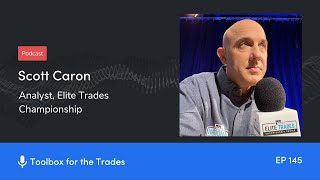
Scott Caron, star of Ask This Old House, talks about his path from childhood shop work through apprenticeships to starting his own electrical contracting business. He emphasizes mentorship built on punctuality, curiosity, and humility, and describes how he got involved with Ask This Old House and the Elite Trades Championship.
Scott Karan, thank you so much for joining me for Toolbox for the Trades. I am so excited to talk with you about your incredible trade background. Thanks again for joining me today in studio.
You're welcome. I'm excited as well.
So I'm going to kick off this interview in just a second, but before I do, I have to give you an icebreaker question. I would love to know, if you had to give a lecture on one thing right now, what would you talk about with that for an hour straight?
Without preparation, I can pretty much speak about anything for an hour. Maybe going into the three or four hours might be a little bit more challenging. So I learned very well and I listen very well and it's exciting to regurgitate that to somebody that wants to listen and I have an easy time doing it.
Nice. So if you had to choose a topic right now, what would you choose?
Somewhere between food. I eat vegan. So it's interesting to know where all that came from and maybe all the life lessons that I've learned, which sounds so big and huge and broad, but it really is everything we've learned over the years, just being able to decipher it. I'm 55 years old and to be able to say I've learned this because of this and share it with somebody is always interesting. So one of those two things.
Okay, you just gave me a great question. You just gave me a great question. I want to ask you. If you're 55, I'm 33. What advice would you have for me as a 33 year old?
So at 33 years old, I was all over the place. I was deep into my business. I was deep into trying to learn different things. I was focused on electrical up to that point. And I was looking to do other things, broaden my mind, getting into more of the construction, more of the H Vac, more of the plumbing, because it was just right there, it was accessible. And what I learned at 33 years old is, as I was becoming a father, is that I wanted to be able to teach more to my kids and people that were interested in the trade. So I would say you're a sponge. And the 30s are certainly for learning. The 40s are for applying and the 50s are for seeing the, what you've, what you've planted over the years grow, reaping the benefits.
Yeah, I love that. That's really cool what I've seen. I love asking people that type of question because I think it's just fascinating to hear people who come from different walks of life and how they did it. And you definitely did that. All right, so we already alluded to the fact that obviously, well, you're on this podcast, so obviously you come from the trades and you have a really interesting entertainment spin. So I want to ask you the question I always ask on this show, which is, how did you get into the trades?
I think it started through my dad, who surprisingly wasn't in the trades. My dad was just real handy. He had come down from Maine as a young 18 year old boy. Don't exactly know why, but he ended up in a hospital just doing laboratory stuff. And he was a lab technician. So he was real handy with home stuff. And I remember my first thing I remember was just observing my dad and being a great flashlight holder. So my, my talent was making sure the flashlight was exactly where he wanted it or where I thought he wanted it. And I always prided myself as a really young child to be that person. I wanted to. If he moved his hands, I would move around with it. So that was my first thing. And then as he was working in his home workshop, which a lot of people have and had had growing up in the 70s, I would be there watching him and once in a while he would let me do something that was, I thought was kind of cool. Whether it was holding the end of a piece of lumber coming off the saw or. I remember my first experience with a wire. We were fishing a wire from the first floor down to the basement of your house. Of my house when I was growing, yeah. We stayed in this. I was fortunate enough to stay in the same house in rural America, in a small town, Arlington, Massachusetts, for the first 20 years of my life. So that was great. And we expanded that house and remodeled it. And I did different projects with my dad. And I remember one, he said, just stick your hand in the ceiling as far up as you can, and I'm going to drop something down from the first floor and I need you to grab it and pull it out. And I remember just standing on a counter, sticking my arm up in the ceiling and just being like, this is just so cool. And he was stressed, I could tell just trying to get the wire down the wall. But that was kind of like how it all started. And then just doing different projects as I aged, and I could physically hold a hammer and screwdriver. We did some small projects like building sheds, fixing the boiler, anything toilet, plumbing, electrical. And then the excitement with electrical started when I was probably 10 years old.
Wait, so everything you just said was pre 10 years old because you actually said when I could hold a hammer.
Yes.
So, wow. You were just following dad around and helping him with your tiny hands wherever you could.
So I don't know if my hands were ever tiny. I'm a pretty. I'm 6 foot 2, my hands are big. I wear a double extra large glove. And it's really kind of pain in the neck, but it is what it is. The excitement about that was that I got to disassemble, which I find very interesting, and then reassemble and to know how things work. And that's kind of how my mind operates even today, to know how something is built and made. And that's kind of my creative mind that is always firing today.
Very cool. And I'm going to ask you to talk about one more thing because it always comes up on this show and I think a lot of people will resonate with it. You weren't the best high school student.
To ask. Well, even pre high school during. To ask a 8, 9, 10 year old boy with a lot of energy to sit in a chair and listen from a teacher going on for many hours was tough for me. Yeah. And my mom was. My mom and dad have both passed. But my mom had this great saying. She said, scott, you just don't apply yourself. And you're a great kid, you're smart, but you just don't apply yourself in school. And that's kind of how I carried my life until I realized that I just can't learn that way. For me, the interesting stuff was going out into the playground and seeing how things were. I'm not, I wasn't very athletic, but I could do anything. And going into the. Later on in junior high school getting experience with shops. So all of a sudden that word came into the education shop and we had them in the junior high school. So junior high for me was seventh and eighth grade. I think they call it middle school now. And that was so interesting. Like they said, okay, you're gonna go to academics and do this and then you get to do shop on, let's say it was Friday. And I just couldn't wait to do the shop. I would, you know, get through the psychology and the English and the math and it was just, of course, lunch was always good for me. But then it would get into the shop. And I remember being in metal shop, carpentry shop, there was an electrical shop, there was drafting shop. Like all these things that tied in together for me was really interesting because it was a place where I could express my creativeness and I'm not overly artistic and certainly over creative. That's just the way that my mind operated where I was able to absorb things. Certainly if I had to read something or understand how it was put together, I could apply that in a text format and absorb from a text format. But to actually learn was to be able to listen to a shop teacher teach you for a little bit and then let you touch the tools, let you touch the machines, let you do this. That really resonated with me.
Yeah. And we're going to talk about that and how that goes in with partnering with trade schools, which I know you're really passionate about now and also about when it comes to just training technicians in general. So you always had a, you always had a skill when it came to the trades. It's something you always really love to do. So tell me, how did you come to become a business owner? How did you become a business owner?
The interest in the trades wasn't really known. I just thought it was part of my, my life, part of my. What I, what I was. My, my father was handy, my grandfathers were handy. My, my mother could tackle stuff if she had to. I just thought it was just something that was there. Didn't really put much thought into it. During my. I started working at 14 and a half which I think most people did or do. I don't as soon as you could get your working papers, started working. But I started working like in the fast food industry. So that was like an attraction to for some reason. My first job was in a pizza place and it just that I called it like the three minutes to get to know somebody. Right. So you are at the register and you say hi, how can I help you? And they would order their pizza and they would tell you how they wanted it. And it was really interesting to have this line of people go through and you would meet them all day or during your shift and then you would give them their food. And it was a social environment so it was a nice way to take up space in between class meaning school. I would do it after school and I liked it a lot. So I would go from pizza and then I did fast food, like really fast food. Like the M word that I don't need at anymore. But I would go to the McDonald's obviously and then I would do coffee shops. So I did that my junior year in high school. That was kind of consumed my work and I enjoyed it. And then my junior year in high school is where everything kind of shifted. I went through My shops in a non trade high school. It was a public high school and they did have shops, but it wasn't so specific where you could just pick one shop. And then there was a huge shift. I went to the guidance department and I went in there, this is what was supposed to be done. And I said, I'm looking for a job, I want to shift out of this fast food industry. And my mother kind of told me this is what I have to do, I have to look for a job. What am I going to do after high school? I knew at that point I didn't want to go to college. I was having a hard time academically anyhow. I thought C's were okay and they just weren't. And I went to the guidance department, saw a little business card, I'll never forget, it was a little index card, not a business card, an index card on the wall. And it said, remember this was 1985. It said, electrician's helper, 550 an hour, bring your own tools. And I just said, sounds good, I like electricity. Certainly played with it enough. And I'm going to do it. So I called him up, he said, yep, you got to get to this place. And it was like three buses an hour away. And I said, okay, I'm going to do it. And I interviewed with this electrician and I sat down with him and I guess I sold myself because about two weeks later I get a call and I said, would you like to start? And I said, I'd love to. Okay, when are you available? I said, as soon as my junior year ends. And I started working right away. And it was tough just to get to, to get to where I was going. It was a. A few buses from my house, had to get up pretty early, 5:30 in the morning to get there by 7. And I did that all summer. And that is an entire podcast in itself. I will tell you right now. That was. I learned so much from those electricians that I worked with. And they also did carpentry, which was really cool. I had the pleasure of working with a. I think at the time he was 78 years old and he was an old Italian carpenter. And for some reason him and I got along and I would work electrical and then I got to work with him on Saturdays to do some carpentry stuff. So I really excelled then in the carpentry aspect of my life.
That's so cool. I think I told you my father's a carpenter by trade and he'll actually be picking me up from Newark Airport later. And I'm gonna get to see all the additions he's making on his new house. So, like you, I grew up in the trades.
Yes.
You know, I watched my dad build sheds. You know, he had a whole workroom. Like, I made this joke on the podcast before, whenever he would call up from the basement, like, hey, need your help? It's like, oh, like, I'm gonna be occupied for the next two or three hours. And one time one of his friends came in because I only have a sister. And his friend said, you're making your daughter do this. It's like, I have no one else. Who else is gonna do it? Exactly. And I have a very good friend as well. Her father was an electrician. She's like, yeah, I grew up doing this stuff, so I thought it was just a part of life. Like, yeah, I need to know how to, you know, use a hammer, how to use a screwdriver, how to do all this stuff. And I think people really take it for granted, and they don't necessarily think that it can be a career.
And you. You. So you understand what I was saying? I saw you nodding your head as I was saying. Well, I just assumed that that was part of me.
Yeah. Like cooking.
Sure. But I didn't. I didn't know it was a career opportunity at the time, which, if we want to speak about that. So you know how I got into the trade? I ended up working for that electrician, and he did carpentry. He was a general contractor electrician. I ended up working here, working for him for two and a half years.
Wow.
Had really, really good. I don't even know if this is a word. Mentorship.
Yeah, that's a word.
Extraordinary. I worked with a couple of really good electricians that showed me the right way. Like, they were second generation and even third generation electricians that knew this. This young boy, which I was 17 years old, is. Is a sponge. And if you can teach them the right way the first time, it'll stay with them forever. And I still. To my. To this day, I still remember that him showing me the right way to do something. And it always is in the back of my head, this is the right way. This is. This is not the only way. Because there are different ways to do things, but this is the right way. In other words, don't take shortcuts. Just do it the right way. Stick to the right way. And I just had the opportunity of meeting this person about a year and a half ago, and I hadn't seen him Basically, since I left, I left after two and a half years to start my own business, which we can get into later on. But he's had the opportunity of meeting him and we've both aged a little bit. But the dynamics is the same. He was the electrician that taught me how to do things correctly. And his lessons are in my brain. So going down that path for just one second. If I could leave anyone listening to this podcast with one thing that I've always taught the young kids and even the older people that have worked for me over the years, which is in excess of 60 people over the years of my 30 years, is that make sure you learn from a good company, from a good person, and when you do learn the right way, it's not the only way. And always be willing to grow that up a little bit. And what I mean by that is if you. I always tell the young kids when they come to work for me, you're going to get your license. You need to get your license. You need to get. Become a electrician, H vac tech, you need to get a plumber license. Whatever it is that you need to do, stay focused and make sure you latch on to the right people that really know what they're doing. Hang out with those people. Don't hang out with the fun people, the punks, the kids that go out drinking after work or partying. Stay with the people that really know what they're doing. If you can do that, you'll learn the right way. You'll learn quickly, you'll get your whatever it is you're going for and you'll learn the exact way, the exact formula to do anything. And that's so important because I've seen so many kids come through my shop that learned a certain way to do something and it's not correct or it's a shortcut, we call it in the trades, right? So they'll do it a shorter way to shave on time, but in the end, it's not the right way. It's gonna create a problem down the road for someone that uses this product. And it comes back, always just do things, do it right the first time, and you'll have a good reputation. It'll be satisfying.
I'm so happy you brought this up because so many of the business owners that come on the show talk about growing their own talent and the importance of having really solid training programs in place. They say a lot of the time, you know, I can't. I can't teach attitude. I can't teach some of the. Not technical skills but just like the soft skills. But I can teach technical skills and if I teach them technical skills, I'm going to teach them. Right. So we've got two sides of the coin here. We have the mentors and the mentees. So given that you're now in a mentor position in a lot of different ways, I keep teasing your entertainment career. I promise we're going to get there. What kind of qualities as a mentor now or looking to partner with younger folks? Like what do you look for when you're looking for a good candidate?
That's easy. So they have to show up on time. And the common thing that I've heard so many times is that if you're early, you're on time, if you're on time, you're late and if you're late, just forget about it. Okay? Because you've lost my interest. I love people that have ambition, but not too much ambition. Okay. So we all know the overzealous type that just. Yep. I just. This, this, this, this. They talk, they talk the talk but they really don't have the performance to show. But I love the interest. I love, I love the eyes of a 8 year old person that just has so much to learn and so much to ask. Or I've got four children, so I've seen going from zero, my oldest is 20 and I've seen what happens when you have a small baby to a one year old to a two year old to a three year old and they just, they're like sponges. And whether it's throwing a ball and you see their head go up and down or they want more or they want to put something together like a puzzle. So that interest, that ambition is great. And it's important. I can work with that. I can work with anyone that wants to learn that can just replicate what I'm showing them and retain it and that's that. You're absolutely right. That is a big part of it. And you sometimes cannot put that inside of a person. You cannot give them that, that taste of ambition and zest to learn something. It's just what they have.
So I think it's two qualities. I think it's curiosity and humility.
Yes, yes. And along with that, it's okay to make a mistake. If you repeat that mistake, it's not multiple times. Okay, but it's okay. I make errors as the boss. Is it really an error? Is it? I mean, you can say I planned it that way, but I'm not ashamed to say I make a mistake or if one of my employees or co workers or associates, however it is that we're in this world, I don't have that righteous attitude where I show up. I very frequently consider myself the boss. I think having I've had employees now. We have a small company, we're under 10 employees. We've always kind of been around that. I've had employees now for 12, 15, 16 years, that they're good people. And I like that. I like good people. I like people that I could have in any one of my customers homes without worrying about anything.
So, yeah, yeah, I really like that you said, I think it's okay to make mistakes because I think that's also really key. Because if you as the leader show that it's okay to make mistakes, then you make it okay for everyone else. I keep New Yorker talk with my hands. You make it okay for everyone else to not fess up, but to admit when they make a mistake and to learn to say it's okay to learn from it. And I think that's another quality that we talk about on this podcast all the time when it comes to training new technicians and bringing people up throughout the company.
Absolutely. Mistakes are absolutely imperative to make. I've made a lot of mistakes over the years and I like to talk things out with my employees and see what angle they're coming at and not just roll into a job site or roll into a pre job meeting and say, all right, this is what we're going to do. That's dictatorship. I mean, I don't want to be that person. So I say, what would you do? What do you think? This is what I'm thinking. What's the view on that? And I think they do like that.
I agree. Because that's the collaborative mindset when you give people a stake in the game, when you're not just telling them, hey, okay, we're going to do this, we're going to do that. When you're having them be a part of making those decisions, it gives them a sense of autonomy. It gives them a sense of kind of having a stake in the game. I think it's really important.
And that's whatever business model you're running, whether it's a podcast business or whether it's the president of the United States and every job in between, it's a matter of delegating to somebody something that to be able to do and perform and carry that out and then be able to watch them do it. And I love seeing the fruits of me showing Somebody how to do something. That's really a great thing for me is to show them something and see them repeat it and see them do good at it and then even see them improve what I've showed them to the next level.
Fantastic. All right, so you talked about Karen Electric. It's a small company, about 10 employees generally throughout its 30 years of operation. You also do something very non traditional on the trades. So tell me a bit about how your trade career dovetailed into a bit of an entertainment, not a bit of an entertainment career as well.
Well, I wished I could say that I was entertaining. I'm not quite sure, but it is. The. Certainly a different spin to being in the trades is to all of a sudden being filmed and being mic'd to be listened to and showing people how to do something, but in a best practices type of way, which is really the whole where it all stemmed from, certainly. So I said I was with an electrician for about two and a half years or so, went off on my own just because of the reasons that everybody does. Too busy doing too many side jobs in the evenings. This was in the early late 80s, early 90s, and I had this desire to want to go out there. Money wasn't such a driving force. It was more of freedom for me. It was being able to march to the beat of my own drum, but somewhat in a band of people. And that's really what the driving force was. And I loved being in my own truck. I loved. I still love tools, like a real lot. I love really good quality tools and I like working with people like other tradespeople, other people that are in this band of members to get a project accomplished. So being an electrician, being into carpentry, H Vac, and even observing plumbing, like I know a real lot of plumbers. So being able to see a project grow out of the ground and having part of that going into the end user, being able to use it, whether it's a house or a small business. That is what always drove me to keep me interested and keep me excited. And then New England. This area is home to a couple of really cool television shows. Now, when I was growing up, there was three television stations. Well, there was Channel 2, which was PBS, and then there was 4, 5 and 7, and a couple fuzzy ones later up on the dial, Channel two had the privilege of being able to air a couple of really cool shows. One of them was the Victory Garden, which was a gardening show. Another one was the French chef Julia Child. One of them was this old House. And another one was the New Yankee Workshop. And later on asked this old house. Those were all local shows by the same producer, this guy Russ Morash. Well, Russ Morash lives 10 minutes from my house. Not even I could walk there in 10 minutes, probably five minute drive. And it was just a real local kind of vibe going on. New England Boston especially, wasn't really known for its television production as much back then as it is now. So it was really cool how I could watch this television show that I knew was focused around the greater Boston area. And it was what this old House actually ended up being, which was called a home improvement show. And he kind of kicked off this whole craze. They've been around, I think, 43 years at this point. We're in 2023 right now, so I think 43. And that was really interesting to me. And then I started to see some of the projects that were local. In 1982, I remember I walked by one of them every day going to high school. That's so co. And it was a project that was under development. So I could see the production crew and the cameras and the celebrities and I mean, celebrities. I mean, we weren't really. They weren't celebrities. They were just tradespeople that shifted their skills to being in front of a camera and being miked and saying what we were doing. They were basically taking the cloak off of what was going down in the basement with all that banging. And then you hired a plumber, an electrician, or a carpenter. So I had this really close attachment to it and then always watched it. Always. Just learned so much from the television show because it was what I did every day. And then as DVRs came into play, I would record it and come home and watch them and watch all the series. And then one day they said, I always noticed they never had an electrician on the show. They never had, like a consistent electrician. So I always had these dreams in my head which I would just dreams of. Wouldn't that be really cool if I could be the electrician? But it was just something. It was just a thought passed in just through my head. Just like clouds in the sky, right? These kind of pass by. And then one day, I have an older sister, she was driving down to the Cape. She called me out of the blue and said, scott, they're looking for an electrician and a painter to add to their talent. That's what they were looking for. And I'm like, all right, well, that's kind of funny. I'll do My best. So I reached out to this client of mine, she was a writer, and I said, I need a letter of intent and I need a resume. Neither of which I knew of, but they sounded like that's what they were requesting. She wrote it up for me. I exchanged. I did a little barter work for her, did some electrical work, and she did these two letters for me. And I submitted them to ask this Old house. That was a series that came out of this old house, which was a kind of diy. We traveled around to different locations, knocked on their door and said, hi, I'm Scott Karen, and I'm here to hang a light fixture. I heard you need some help. And that was the whole premise of the show, which was pretty successful. I was in the ninth season at the time, so it was already had a good start and I never heard from them. And then one day I got a call from someone that said he was a producer and he'd like to meet with me on a couple of ideas that he might have. And did I have any jobs that would possibly make it into a film type of segment I could take him around. So I met him and first thing he does when I meet him in the middle of the street was a cold morning. I just said, hi, I'm Scott Karan. He just pulls out this little point and shoot video camera and he sticks it in my face and he says, so tell me why you wanted to be an electrician. And I just started talking and not.
Rattled at all, not rattled.
And I just said, why did you do that? So I just wanted to see how you were in front of a camera. I said, okay. So we went inside the home, checked out a couple of things. Nope, didn't work. Called me again a couple weeks later, went inside of another home, looked at a couple things. Nope, it didn't work. It just didn't work for the production. I didn't know what they were looking for and they were a little gun shy because I was a new person. And so then I showed him one thing and they gave me an opportunity and it started and they brought me into the studio, I think first, which is a barn kind of look. And they did like a studio segment with the host. And I don't really know what happened. It was all blur. It was crazy. And then I just worked doing this ask this old house kind of position on the side, whatever it took. I just put my company in the back burner and made it work. And I had some ambitious production teams to work with and they just Soaked everything up and I had a ball. Like, it was just great to all of a sudden. The show that I had watched for my whole life, I'm part of it now in a very small way. I mean, there was four or five other people. It was. They're just professionals. They're just the best of the best is landscaping, plumbing, general construction, general contractor. And then the host is just amazing. But it was great to work with them. And they showed me the basics of the camera portion of it and the audio portion of it. And I really didn't have any instruction. And I just did what I did and they filmed me.
Amazing.
So I did that for almost eight seasons. Really got comfortable. Had this awesome producer, this, this, this guy, Heath Rosella, who was just. He had the ability to pull everything out of me that, that could possibly be pulled out of me. And it was great. It was great.
That is so awesome. I like that you actually have the experience that you would be with maybe a homeowner or two who was a little camera shy, and then you had to pull it out of them. What were some of your tricks?
Well, so the first thing I would do is be myself. So when you have a camera that is eight inches away from your face and you know you miked and there, there was eight people that were counting on me. So I would show up to the show at 7 o' clock in the morning and they're all having their coffee and they're getting ready for the production. And you have lighting and camera and producer, director, and you have the homeowner and they're nervous and just try and be comfortable, be yourself. I'm really good with customers and people. I don't not trying to impress them. I'm just being myself. And if they had kids, that was always a. That was always great. I got to get down to their level and, you know, meet with the kids and certainly pets. I'm a big pet person. And as I traveled throughout the country meeting all these different people and seeing how they lived, it was just really great to see young people and older, but people that were buying homes and putting their name on the front lawn and saying, this is what my piece of America that I own. And I want to know what's going on with it. I want to know what's in the walls, what's in the basement, what's in the attic, and if there's anything they could do to help me, that would be great. And so they did. A lot of the times they would assist me in the electrical task That I was performing certainly under my eye watching them. But it was really entertaining to be able to see again going back to earlier, show them something and then have them apply it.
I want to put a pin in this for now because I think this is so critical. Like being able to show up authentically and then engaging the homeowner in the task. Right. On this podcast we talk so much about how the technician shows up in the home and, and why that's so crucial to the success of business. Because you're building trust with the homeowner. And I think based on your experience, you have some really cool ways of approaching this. But the thing I cannot stop thinking about is how you mentioned how you loved meeting people, being around people from an early age. Working at a pizza parlor, working at the M Word. And then now you've got yourself on Ask this Old House and you're traveling all over the country and you're getting to interact with people.
It. Yeah, it was, it was really, really cool to be part. Also remember I was running my own show, I was running my own business. Right.
Yeah.
So there was really outside of mentors cope like in business when, when you're the lead dog, the view doesn't really change. And to be able to work aside these brilliant people producing this show on kind of home improvement which was, which was my thing, I just, I love homes. Was really cool. And you know, just to touch on that, one of the things that attracted me to working in a lot of homes was I wanted to be able to improve my own home. And I thought to myself, well, if I can go into other people's homes, give them certain things that they're asking for, I'll always stay at the cutting edge what it is. And I, I have been in tens of thousands of homes in my life and been able to see how people I be. I've been able to see how people live and it's been really exciting to see. There's just so many different things they, they have. It's amazing.
I've seen the background of your home office and it is gorgeous.
Yeah. So I, I've been in the same house for 30 years. I bought it as a five year home and it's nothing special, it's nothing huge. It's just, it's. It's got all. I use it, I always kid around. I use it kind of as a template to try different things out.
Sure.
Change wires or I'll change heating system or air conditioning or I'll change plumbing. Like I use it as that Basis of changing things. It's kind of makes sometimes for a construction zone for longer than you would think. But it. It works out. And as the do it yourself or kind knows that's kind of what you have to deal with. You either hire someone and get it done right and quick, or you save a little bit of money and you do it yourself.
I have to say on this show there's always the echo of my father because again, I grew up on the trades and he listens to the show. So they. My parents re. They moved recently from a duplex or two family home in Queens, New York to now a house in rural Pennsylvania. And my dad has a barn for the first time, which is his like dream. And he's doing all these things. And I just have to laugh at the. It's sometimes a construction zone because I think one of the first things my mom said to him was I think it's so funny how you have finished this project and this project, but I have yet to have a washer dryer in this new home. And so I wonder if your wife and my mom could probably have a few after maybe a glass of wine could have. That's so that is commiserate with each other.
Anyone in the business or anyone that's working between. What I've learned over the many years that I've been doing this is you are sometimes speaking with the head of household, which could be the woman or the man or either way, there's two women and two men in different households. Whatever the case may be, there's always a head of household, right. And you're dealing with that person. And then there's always the person that doesn't have as much authority or care or whatever it ends up being. And dealing with that head of household for that particular project can be somewhat of a little psychological game. How do you say the right thing with upsetting the other person? And if there's only one person, it's a lot easier. But sometimes you're in between two people that don't see the same end result. And as a person in the trades, they don't teach you this in the trades is you need to have a little therapeutic background. I don't know. They should do counseling of some sort when you're in the trades. Certainly I've been in the middle of unhappy relationships where one person is not getting along with the other person, if you know what I mean. And I have had to be in that circumstance.
I've never actually thought almost 150 episodes. I've never thought of that. But that must happen all of the time.
It can be stressful. I've been involved with many tears. I've been involved with a lot of arguing. Uncomfortable arguing to the point where sometimes you need to leave the space. And again, it's one of those things that they don't teach you in the trades, is the dynamics of a family. Certainly children are involved, pets are involved, housekeepers, cleaning people, chefs. All the dynamics of dealing with that initial. Hi, I'm Scott. I'm here to do this. Oh, I'm just the nanny. Hold on a second. You don't know. Or, oh, I'm the mother. You just don't know who you. So you have to. They make that initial contact when you come up to somebody, figure out who they are, what kind of clout they have, and then from there, you're able to speak with them, manage them. Oh, God. It's just. There's so many things that you learn over the years, and that is the part of it that for me is still so interesting is all the stories and the backstories.
Oh, my goodness. I told you I got my master's in marriage and family therapy. Right.
So you would be great as. Hi, this is Jackie. She's just here shadowing me and anything. If she. If you see her kind of kick me or nudge me. I have to speak to her outside. Okay.
Yeah. You have your dispatcher put a little note like, bring the therapist for this one.
It's, you know, it's so important. That really is important. And a lot of these tradespeople get their support from whoever's at home. So we kind of go home and we might unload and say, well, I had this really difficult situation today where she just lost her husband and now she has to fix this. And then hopefully you get that support network somewhere else because it is needed and we have to absorb a lot. And sometimes if you're in the service business, sometimes you see six to eight people a day. And that transitioning and that downloading of all that information, you have to process it. And that in itself, aside from making sure that you figure out the problem, you do the job correctly, you get paid, you remember all your tools on the job, and then you drive home safely while getting and taking calls from friends and family. Then you have to go back to the office and you have to upload all that information to them because they want to make sure they're getting paid and all that stuff. It's a. It's a lot. However, I wouldn't trade it for anything.
Yeah, so interesting. All right, we're going to come up on the end of part one, but before we do, I would love for you to tell me about how you got into my world, the Service Titan world. You work with something called the Elite Trades Championship. Service Titan is a title sponsor of the H Vac National Championship. The Service Titan H Vac National Championship. We did it last year, we're doing it again this year in 2023. So tell us a bit about Ideal Elite Trades, how you got involved and what this whole thing is about.
How it happened was through Intersport, who is the global marketing leader in talent and trying to build brands. They're really good at what they do. They reached out to me and said, we need, we need. We need you. We need an electrician. We need somebody who has vast knowledge of the trades. You seem to be out in the forefront with this old house and we're gonna take upon that. They knew what they were doing. Would you be interested? I ignored them. Maybe two or three phone calls, I ignored them. I just. I was involved with this old house. It was winding down and I had been moving on. I wasn't. And then finally they got my attention, saying, would you like to be involved with this? Met with them. It started out as kind of. I would be on air with the 2000. So in 2016, Ideal Industries came up with the national championships for electricians. That's kind of how it all started. And then 16 turned into all of a sudden 2019ish. And they wanted somebody to be able to do analyst, to be an analyst for television and to be helpful with the technical advising, meaning the competitions. They wanted like a refresh with the competitions and they asked me to help them out. So I all of a sudden found myself in a booth speaking of the competition as it aired and was able to be the analyst with a co host who their talent was kind of calling the plays play by play. And then if something came up to a situation where it had to be analyzed or technical, I would just. We'd go back and forth in banter. And that happened for the electrical. And then two years ago, they asked me to design, create and do the same thing for H Vac. We had Service Titan, who was really interested in partnering with us to help the next level because we already had auto tech, we had electrical, and now we wanted H Vac. So at that point we needed to have a combined, I guess you could call it the Olympics of the trade. We couldn't use that terminology without it sounding sportsy. So we came up with brilliant maneuver. It's called the Elite Trades Championship Series, the etcs. And that encompasses at this point all three trades. The automotive, electrical and H Vac. And service titan was, was really helpful with bringing in different H vac vendors, suppliers and getting this whole thing really promoted. And it's been a great partnership with them because now we're in year two. So 2023 is year two. And aside from that, we've just built and added a another brick to it. It's the Plumbing Championship.
Nice.
So it's really exciting. And to have the Elite Trades Championship Series now, really, it's just, it's. It's been great. And my project that I live with yearly is to keep these competitions challenging, interesting and technically correct.
Awesome.
That's what I do.
Awesome. So I just want to say this is the first part of our interview. You've been so generous with your time and you're going to give me some more, which I'm so grateful for. But the Elite Trades Championship is going to be airing in December of 2023 starting December 8th, so every Friday on CBS Sports. So we will have that information in the show notes. So guys, please check it out. And Scott, I will see you back again for part two.
Sounds great. Looking forward to it. Thank you.
More from Bill



Capturing the 80%: How SmartAC’s Gen-2 Targets Non-Membership Homeowners | Podcast Ep. 296

Build better customer data with every booking in ServiceTitan | TAD Tune-Up Series

The Biggest Change for Roofers Coming From Other Roofing Software to #ServiceTitan?


