Part Two: A Chat With Ask This Old House Star Scott Caron | Podcast Ep. 146 | Toolbox for the Trades
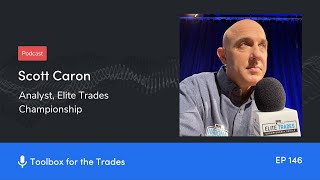
Scott Caron from Ask This Old House talks about running the Elite Trades Championship, an HVAC competition he designed and judges. He explains why fair rubrics matter in competitions, how flat-rate pricing works for contractors, and why the trades need more young people entering the field.
Scott Karan, welcome back to Toolbox for the Trades. It's almost like you never left.
It's great to be here.
In our last episode, we talked about how you got into the trades and how that eventually became you being a host of Ask this Old House, and then eventually now a host, and essentially it's an analyst, but more or less a commentator on the Elite Trades Championship hosted by Inner Sport. So I want to kind of get into your experience, which is very different than a lot of the guests I have on the show, and talk about how I think it bleeds into other themes in the trades in general. Does that sound good to you?
Yes. So to correct you, actually, please, please. I wasn't the host of Asses Old House. That title went to Kevin o'. Connor.
Okay?
Kevin is a fantastic host. He has a memory like a computer and he could just. He had an unbelievable uncanny ability to just listen and work with me and help me out. I was the electrician's expert. That's what my title was. So it was really. It was a new title and it was a great position to be in. But, yes, I was the electrical expert for that. And now with the Elite Trades Championship series and Intersport has brought me on to be the technical advisor and the analyst analyst for the trades for the show. So that's where we are today.
Very cool. And that's how I know you. Because Service Titan was the title sponsor for the H Vac National Championship last year, we're doing the same thing this year, which is one of the reasons we want you back. We want people tuning into this on CBS when it airs. And I'll give that information again at the end of the show. It's also going to be in the show. Notes. Talk to me a bit about designing the competitions for Elite Trades. Like, how do you even go about this monumental task? What does that look like?
When I was asked to do competitions, it was already kind of being done through the electrical competition with Ideal. They already had somebody that was doing a fantastic job, and he still is. Jeff Carter. He's the designer for the Ideal Championship, the electrical portion. Later on, I would help Jeff out with some of the things just to kind of change things up a little bit. But, yeah, they're still doing that. So they brought me in as the H Vac designer.
Yes, there we go.
So I have done so much with H Vac. Everything from conventional systems, which is where you have a furnace in a basement and blows warm air and cool air, to mini splits, which is different technology to all sorts of heat pumps and stuff like that. And indoor air quality is really big. Certainly coming out of a pandemic, it was really, really big. Whether it was UV lighting which would disinfect the air, scrub it, or whether it was just really nice, high quality filters. So Service titan came in and said, we really love this idea. We're going to go with it. They brought me in as the person who was going to design these competitions. And the target audience is the technician who puts their boots on every day, goes to work as a title of H Vac technician. And for those of you that are listening to this, that don't know H Vac and sometimes with an R at the end of it, stands for heating, ventilating and air conditioning. And the R is refrigeration, which is specifically to a commercial style where all you see your coolers and your refrigeration systems and the target audience that we have is the competitor who is made it into this field. And they want to compete for their share of a real lot of money. I don't know the details of the money. I forget. I think it's tens of thousands of dollars that this whole program really puts out there for prize. And they get the notoriety, they get the interest in all kinds of social media platforms that are out there and they get bragging rights. Our winner last year was Mac Schwartz. He was a Massachusetts native, which was really cool. I am also. And it's really kicked off in a great way. And the part that I do, which is designing these competitions has to be technically challenging and interesting for people to watch because that obviously is part of it. And third, it needs to be equally judged amongst competitors in a fair way so that there is no grounds for a kind of. Well, remember I had said that interpretation of a certain thing is based upon what you do things a certain way.
Doing things right.
Yeah. So the first podcast we spoke about was doing things right is not the only way. There's more than one way to do something well in this competition. What we've been doing for many years is making sure that we're judging everybody equally so that it's fair. Because when you talking about prizes, when you're talking about what this competition does and how much it can build somebody in a company, you need to be fair. So we have a judging rubric system which is really specific. And if it says, I need you to turn this screw one and a half times and you're going to get four points if you go two times, if you go one, you're going to get points deducted. That's how specific it is. So my. My kind of analytical side of me is really specific and talented enough to be able to say, we need to have a system that's going to be judged fairly amongst the competitors. It's got to be challenging and it has to be repeatable. The important part about designing these competitions is to make sure that they're all equal. So when the competition is actually done, everyone is competing on the same platform and fair. And we're able to judge it. And the judges that we have are great. They're technicians themselves, they're business owners. We have a couple of members of Service Titan, which is really cool because they're brilliant people and they know the trade, but they're all given a chart, a rubric that they have to check off. It's as simple as that. So there's no. There's no, like, oh, well, I really like the way this person is brazing this pipe joint. That's how I do it. So I'm going to give them a big ten on that particular score. It doesn't work like that. How it works is, did they braze it according to this picture that we're using as a reference? Yes. And that's how we kind of got to this whole system of being equal, fair, challenging, interesting and exciting. Right. It's at the end of this. This is to promote the trade, to promote what is brought these technicians to this level. And that's to keep everybody excited, interested in what we're doing.
I'm so happy you said Mac's name because he was a guest on this podcast I had him on right before, right after he won. So if anyone is interested in hearing from Mac who won the first Service Titan National H VAC Championship last year, I will link that episode in the show notes as well. But what you're. I'm really. As you were talking, I was really struck by the scope of what this challenge really is. Cause it's exactly what you said. I have to make sure everything is fair. I have to make sure it's technically challenging enough so that someone is actually deemed a champion when they win. And I have to make sure it's entertaining. And I think the entertaining part is very interesting. Now, I want to apply this to folks right now who are running their businesses and growing their own talent, which is what I spoke about a bit in our first part and which is a theme here on this show all the time, about growing talent from within. And I think entertaining and interesting is really Critical. Not all the time. Right. Because you can't make everything. It's hard. I'm sure it's hard to make certain components of the trade interesting, but I'm thinking about, like, capturing the attention of especially maybe young kids right out of high school and how maybe entertainment should be something folks think about as they're building up their training programs. Do you. Am I on the right track or you think that. Do you think I'm. Do you like what I'm throwing down?
Yes, I do. I appreciate it a lot. Certainly what we do every day is nothing that we ever think is entertaining.
Right?
We go to work, we troubleshoot, we deal with customers, we fix stuff. Right? We install stuff. We're in the trades. We're sitting on our cooler at lunch instead of a nice fancy restaurant or boardroom, whatever the case might be, this is what we do every day. And to all of a sudden have it be shown on television or to be spoken about in a podcast is, like, really cool, right? It's bringing some attention. Well, guess what, Jackie, we need that attention in this industry. We need as much attention as possible. Without that attention, there's going to be serious problems, and it's already amongst us. And it's basically the skills in the trade. It's really. We're not getting the skills taught to these kids. And the jobs are there, but there's no one to fill the jobs. And we hear that over and over and over again, and it's getting critical at this point. I said earlier in the podcast, prior one to this, that I'm 55 years old. I am the average age of an electrician. My body is. I'm fairly healthy. I take fairly good care of myself. But running up and down ladders, in attics, in basements, it's. It's. You feel it. You got to do your morning stretches. You have to certainly do other things to get around, whether it's braces, whether it's making sure you get the right footwear on, whatever the case may be.
Injections.
We're always in tune with our bodies. I'm not 17 years old. Right, Exactly. So. But we. We want the younger generation. Yes. When you're my age, we know a lot. We can fix things quickly because we've been there, we've done that, we know what the problem is. But we need more people in the trades. Because what's going to start happening, and it's already happening now, is not only can you not get things serviced or fixed or installed at your homes or your small business, but you're going to be unable to afford that. And the pricing is really going over the top because there's less people as a business owner that we can get. So, for instance, I told you we have under 10 employees. Well, I only have so many people that I can get to during the day. And in a lot of the trades, there are certain circumstances that are critical. We need to get lights, water, heat, air conditioning, certainly storage. We have to get all those things moving through, in and out of a house. Well, without this skilled labor out there to get those things working and operating correctly, we're stuck. And what I really love about what is happening with podcasts, with, with. With. With television programs, with competitions, with advertisement, is we're bringing attention to what really has to happen here, which is we need more people in the trades. Sure. You asked me in last podcast that we did together, was it an education thing, like what brought you into the trades? And I like to say, well, college wasn't for me. I don't want this to be about college or trade. Right. We don't want that.
Sure.
Certainly there's a third one, the sports. Right. That could just bring you right up the middle. So you're going to be a professional sports player. You're going to go to a trade, you're going to go to a college. What happens after college is it's. It's endless. Certainly with me, look at me. I went into the trades, but here I am doing different things. Right. I'm on a really teaching side of things, which is really exciting for me because I'm able to affect so many more people being into what I'm doing now than I was as an electrician that would train one or two or three apprentices. Now I'm able to affect so much more. Like this little ripple, this little raindrop in the middle of the lake has now spread to all the shorelines for me. And I'm able to touch a nation with my words and even further. Okay. And what I've seen happen now is that the trades are becoming really important, really critical to get more people involved with learning them, applying them, being good at it, making a career, because it is a great career. And when these people, when these young people or old, you don't have to be young to go into a trade. You don't have to be male, you don't have to be female, you don't have to be anything. You could have gone to college and then go into the trade. You could have been a hairstylist and wanted to go into the trades. It doesn't matter when you get into the trades. It's a great opportunity to really work, sweat, feel great, and you will always, always, I don't know where I heard this from, have food on the table.
Yeah, it's true.
You always be able to provide for your family because as long as you have your hands and your legs and your mind and you're able to do things, you always be able to do that trade going forward.
Yeah, I mean, well, we talked a bit about it before in the studio. I was talking with our wonderful team who is helping us record this today, about how one thing that Covid showed us is that there was this huge boom in the trades afterwards. So as service titan, as a tech company, we were scared, as were a lot of companies when that happened. But then quickly we realized, hey, all of our customers are essential workers. They're still working because people still need to get their toilets fixed. They still need to check their H Vac. Especially in climates like in the Southwest, like Arizona, New Mexico, Southern California, where it's super hot. We have to make sure that people are cool and comfortable. And so there really is this job security. And so I'm thinking about, you know, given your experience, I mean, you just said it really beautifully why we need to get more folks involved in the, in the trades. What would you say to a 20 year old person who is, you know, yeah, I've got like two years of college under my belt, it's fine. I don't really know what I want to do. I'm really good with my hands. I built this one thing one time, like if you saw someone that you think was humble and curious, like we mentioned in the first part, and you thought they would make a great trades person, what would you say to them to convince them to give it a try?
I think, I think, you know, my famous philosopher in life is Yoda. There is do or do not, there is no try. So I think that if you pick a route, stick to it and embrace yourself with everything that's going to come up. Because there are people you can speak to, there are things you can watch. Certainly the social media is huge, you can watch and learn, which I actually do a lot of. I don't watch normal television, I don't read books. I actually find myself watching and learning from documentaries, from influencers that are in the same industry as I am, or other industries that kind of circle around. That's kind of where I get my knowledge from, is from other people. I have a hard Time, as we spoke about in the last podcast with academics and books and reading and it's fine. But for me, I'm an audio kind of person. I like to listen. It works with me. I can listen to things in my headphones while I'm working or while I'm driving or whatever it is that just resonate with me. And I would say that, I would say that if you are interested in a trade or interested in doing something or shifting, listen, watch and learn. There's enough things out there where you can entertain your mind and trigger different things if you want to get into it. You don't, you don't have to jump off the cliff to know that you're going to fall for quite a while. You can literally just kind of put your toe into the puddle of life and see what happens. That's what I did. I wasn't sure that I wanted to do what I am doing now. Just kind of put my foot in a little bit and said, all right, this is really cool, I'm going to do this. And then all of a sudden you find yourself doing many other things that are lateral moves from what you're doing.
Yep.
Which is, I guess what your world is with service titan. They do electrical, plumbing, H Vac, H.
Vac, garage door pest.
And there's, there's so much that I could speak about with that type of business because when I wanted to grow, it was a pivotal point for me where I was a one man band and I, I was in the truck, I was doing everything and I'm like, gosh, this wasn't what I signed up for. I signed up to work. I signed up to, to do the work. And all this other, all this other stuff as we spoke about earlier, like being a therapist, being, well, all those.
Other things, you, not only are you doing the work, you're taking calls, you're invoicing customers, you're doing all the back end stuff. You're not just doing the actual technical work. And you're a therapist.
Yes. For your clients, so to speak, of that. That was a big point in my life where my company changed. It was 1999 that we were all worried about Y2K. And I met this. I have a really good friend of mine, he's a plumber. His name is Rich. And Rich came to me and said, scotty, why are you still working like in the field? Why are you doing this? Why don't you just, why don't you take, take the medicine? He used to call me kid. Why don't you take the medicine, kid. I'm like, what do you mean? He's like, you gotta advertise. You gotta wear a uniform. You gotta listen to these, these. These people that are speaking and preaching. They're out in California. I said, what are you talking about? So a couple of names came up. Frank Blau came up. This guy Maurice Mayo, this other company, nexstar, came up. Those were kind of, oh, advertising. You got to go big with advertising. This was in 1999. There wasn't. There wasn't a lot of social media stuff kicking around. And I'm like, there's no way. I mean, I'm doing my thing. I have one apprentice that I'm working with. I'm working for some builders, doing some service calls, doing this. It's working for me. He's like. And I remember him showing up to a. Showing up to my shop, and he had a beautiful uniform on with his name tag on it, and he was dressed with nice matching boots, and he had fancy logos on his truck. And he had a book. And he's like, this is what it's all about. This is the future. And I said, what is that? He's like, it's a flat rate pricing manual. And I said, what is it? And he opened the book and he's like, yep, see, we can change a water faucet for $696. I said, for a water faucet change out. And he said, yep, that's. That's what it is. It's called flat rate pricing. Menu pricing, he also called it. And I said, well, how does this work? And he explained to me all about it and how to do it, and I just kind of, you know, shooed him away. I'm like, that's all right. That's cool. But that's not me. I don't want to walk around in a uniform. I don't want to look good. I want to wear my whatever I want to wear and whatever I get up in the morning and throw on. So that went on for about a year. He did his thing, and I saw him making pretty good money. And I saw him working less in the field. I saw him adding another truck. I had him saw him adding another employee, and all of a sudden he's got four trucks running around and four employees. He's making really good money. So I'm like, hey, Rich, tell me about this flat rate pricing thing. Tell me about this menu pricing. And he said, I'll do better. I'll come over and help you. So we Sat up in one of my spare bedrooms at the time, it was really hot. We had an air conditioner in the window. And we sat down and we went through all the requirements to start my first electrical flat rate menu pricing book. And it was really old school. It was a matter of like we had 8,000 tasks. They were called tasks. Everything from changing out a switch to you could build different jobs, including rewiring a house or changing all devices in a house, whatever it was. And we just went old school and we just took them and crossed things out and added things. And it was, it was an overwhelming task because it was all manual. And then I shipped the whole thing out to California with all my red marks on it. And they printed out a skinny little book and sent it back to me. And that's how I rolled from then on, from 2000 on. And I'll never forget the feeling. I went out and bought three vans. I had all this advertisement at the time going out. And I'll never forget the feeling when I built these vans with my logo on the side of it. And I had that first electrician go out for that first call because it worked. The phone started ringing. It was just the craziest feeling. Like I remember the call it came in. It was, she's like, I need some stuff done. And I live in this street, in this town. I'm like, yep, I'll have an electrician. I had taken all the dispatching and marketing information from this company. I said, I'll have this person there. And he drove away. And I saw my name on the truck and I wasn't doing anything, I wasn't working. I was dispatching someone to that call. So that's how it all started. Yeah, it was really, it was an absolute crazy feeling. And then that card that kind of started the whole process of building a flat rate shop, building a menu pricing book that you could dispatch your technicians to a customer, homeowner, client, whatever you want to call them to their home. And you would simply charge by the job, not the hour. It was real simple. And we would meet with the homeowner at their door, introduce ourselves, put the shoe covers on even. We went as far as rolling out a mat at one point and just meeting with them and asking them what their needs were, letting them have a voice, letting them speak and say, I want this, how can you help me? And we would give them solutions to their problems. It was pretty easy. It was, okay, I have a light that doesn't work. What do you recommend? Well, we would start with a level one troubleshooting. And it's going to cost $289 and we cover this. They loved it because people love to know what they're going to spend before they spend it. So you give them an upfront price and they are comfortable with that. A lot of the times we would price out a whole job, whole day's worth of work, and they would just sign on the dotted line and leave us for the day. And they knew what they were spending and they knew what their result was going to be. And of course, with upfront pricing, you also get guaranteed performance. You very rarely, very, very rarely do you ever go over that, that cost. Because sometimes you can finish something quickly and make. Make a little bit higher profit, other times you can't and you make a lesser profit. But that confidence that the menu pricing and the flat rate pricing instills in you over the years works. It all works out. And then you write them up an invoice. This was back in the day, you would write them up an invoice and you would submit it to them by handing it to them, and they would give you a credit card or a check or cash, which is a word that isn't really used very much anymore, and then you would continue on to your next call. Now it's done on tablets where you have the ability to literally hold the tablet and do some checks and give it to the person, show them and say, is this what you were thinking of? And they're able to add and subtract from that tablet very easily, see what their price is going to be. They click yes, move on. And that makes it easier for a technician because we didn't sign up to be this clerk, to be this.
Exactly.
Person who's going to collect money to give pricing. We were good technicians. We, we have to focus on what we do, which is having solutions to their problems or giving them ideas to satisfy their creativity to their tab, their urge of being able to be creative or express themselves in their homes. People want to do that. Right. They want a new toilet, we can do that. We want a new light fixture, we can do that. And that's really what these companies like Service Titan that you're with is really good at doing, is having a solution for all those things that bog us down as technicians.
Yeah.
Right out there. Full disclosure, I have never used Service Titan. I don't. I know a little bit about Service Titan, but I know what they do they're really good at because I have many people in the trades that use their product. And it seems to me that if you are in that industry, then that's the product that you need is to be able to compile everything together, make it easy. And that's really great because what I had to when I was starting off in this business, I had to bring in four different people. I had for my QuickBooks was my accounting. I had a menu pricing person, I had a numbers person to figure out how much my break even cost was and how much I should be charging. And then I had a dispatch program. We had all these systems and not only do they have updates and changes, a lot of them don't speak the same language. Some of them you have to use on a PC, some of them are Mac compatible, some of them have apps, most of them don't. And that was what I found myself doing and I just completely lost it and I just said all right, this is crazy. And I've since kind of dialed it down, had to dial it down because of my involvement with the Elite Trades Championship Series and the focus on that I have with that. And we still use our menu pricing and we're able to still stay focused on flat rate pricing which has been, it's been very successful.
I'm so happy you said that and I'm really glad that you painted that picture of what kind of happened with Caron Electric as I. So yes, Service Titan does all the things that you said and I'll even do you one better. We now have. People are going to kill me if they listen to this because I can't remember the name of the feature. But we actually now connect directly to suppliers so we can do price adjustments as a material cost rise.
That's so big deal. Because what happened during the pandemic.
Yeah. That you couldn't get a like certain, certain.
Certainly there was a supply chain issue.
Oh yes I did.
That was a small portion of it.
Many talks on it.
What was really even bigger than that is the cost increase in products. So we have seen three and four times, maybe even five times increase in materials and the vendors would say it's based on the pandemic that we just experienced. And well guess what, the pandemic's over. As far as we know, prices still haven't come down. And to adjust all of our menu pricing and to go in there and adjust everything, it's technically really challenging. And if Service Titan has that feature where dynamic pricing.
Got it.
It's fantastic. Well, I'll give you an example. A 10 foot stick of PVC 2 inch PVC was somewhere around $2 for a 10 foot stick. It's now up to like $8 in 2 years.
Why?
I don't know. But a roll of wire, we use a lot of wire as an electrician and plumbers use copper. And we used to all base it on the cost of copper. Right. Plumbers use copper piping, electricians use copper wiring, H vac technicians use copper piping. It was always based on the cost of copper. Well, a roll of wire only 250ft pre pandemic was $45. I was paying $137. Less than a year later, it just. And to explain to clients, customers, builders, whoever you're working for, whatever you want to call them, was just like, I'm sorry, but it's gone up six times what we were paying for. To have that sort of what we call the dynamic pricing is fabulous because that was always my challenge. Like, like you have these pricing, you have this pricing in your book. At what point do you start losing money? Because I was.
Well, that's. Yeah, we talk about this all the time. It's like, how often do you have to maintain your price book? Not only. So people, I think sometimes get the. You're like, I built my price book. It's done. No, it's not.
Never.
It's never done. It's something you constantly have to do. So we have done some automation on it, which is fantastic. And I have a great episode with Laura Thornton about that a couple episodes back. But it's insane. It's insane. I mentioned my dad several times in this, in our two shows here, but you know, he got a house back in 2021 and he still liked the price of wood. He's like, I can't, I cannot get over how much it cost me to just get like a. I don't know if it's called like a block or a plank, whatever. Just like wood.
Sure.
It's insane.
Yeah, we saw, we saw plywood go from $35 a sheet to $110 a sheet. What a four by eight sheet of plywood. And having, having that happen in the background from a company like Service Titan that does that and is aware of that, that's helpful to be able to synchronize all those things that we just spoke about together and let us do our work. That, to me is a benefit in itself because, because we don't, we don't want to deal with all that background stuff. Like, I hate to say it, but it's not what we're wired to do.
Exactly.
I said to you, I have a problem with learning certain things. Right. And. And how the processes work and reading about things and figuring out stuff. I don't want to think about that. To have to give somebody a price to do something and know that the vetting, the background performance that has happened is happening automatically. And then to be able to do the work and focus on doing the work and having the next steps, whether it's billing or the next call coming over to you, it's really a cool thing. So it sounds like you got a good thing going on there.
I think we definitely do. It's actually the longest job I've had in my career. Believe it or not, it's the longest relationship I've ever had. I make the joke all the time. What I really like about this conversation right now, you know, the one thing I've learned about the trades since doing this podcast, since being a part of the service titan ecosystem, is that your options are kind of limitless. I think when it comes to being a contractor, you can grow. You know, you have the ingredients to grow. We have programs, we have companies like nexstar. We have stuff like flat rate pricing that allows you to lay the foundation to grow the business. Like you were doing with Karen Electric back in the aughts.
Yes.
And then you also have the option, though, to. Well, for you especially, you found this whole other outlet due to your, you know, the fact that you're a people person and you're able to really demystify things to homeowners. You were also able to scale back and identify what it is I actually want to do in this trade, because I know you spoke to me when we were talking off mic. I think when we first met that you're like, I just want to be like a niche company. I want to do. I want a small company. And I think that entrepreneurial frame should be positioned when we talk about the trades for kids.
Sure.
Like, if you're good with your hands, if you're interested in this trade, you can have a career where you become a master technician, where you are out there running service calls. Oh, you don't like people that much. Maybe you're going to be like a master installer or you'll become someone who's working more on the back end. Oh, you want to run your own business? Yeah, you can, you can. You have the tools to make it as expansive or as niche as you want it to be. And so I think that's really important. Something that folks should talk about as they're talking to the next generation about entering into this workforce.
And I do. I visit tech schools, Vogue schools a lot. Vocational schools. It stands for technical schools. Those are the full names. But I'll bring. I'll bring my crew, my guys to these schools and I'll say, hey, you're looking at this person. He's been doing this for how long? And I'll play fun games with them, and I'll pull out my cell phone and I'll say, you guys think this is for this, but it's actually one of your most important tools you can have in your toolbox is a cell phone. We're able to do everything today. And to get these kids attention, I'll say they all love money. A lot of them love money. Other people have different drives. But I'll say, this is an iPhone X. And I've got a new one every year since it's come out. And I have a new truck out in the parking lot, and I'm wearing nice pants and shirts, and I have really cool knives and firearms, and I get to drive a motorcycle because I own two. And I'll say these things to these kids and their jaws drop. And I said, you guys can do that too. You know, you just. The trades are great. They allow you to do all these things. I have children. I have different things.
The flat rate pricing, like being able to adjust your prices as materials rise to price yourself accordingly. And I know Frank Blough, who you mentioned before, was always about, you know, getting your pricing right.
Yes.
That makes sure you are compensated for your skill. Right. And that gives you a career where you can get these things, where you can live a life that you want.
It's. You know what it is, Jackie? It's the freedom. Freedom of not being able. Like we. Oh, God. Once I learned how much it actually cost to get a technician to your home in a truck that costs fully loaded, 70, $80,000. I was like, no, no, that's. That hourly rates not working. Or that flat rate price to install that is not working. That's not right. And then I soon adjusted it to what it actually was supposed to be according to how you build this price. And it was like, no problem. They would. People would still pay it. And there's a profit in there. Right. We all have to put our boots on in the morning and we have to make money. We're not doing this because we just love it. We're not doing this. Just we want to make money. That's. This is the trades. And to earn less than 25%. To do something, it's not worth it. And to earn greater than 25%, it's a badge of honor. It's like, yes, I really gave this person a price that they were happy with. They agreed to it and I'm gonna do my best at it. Yeah, and you're right. You're absolutely right to be able to give you the freedom to not have to focus on all this back end stuff, or back office stuff, whatever you just called it, and just do your job.
I would love to talk a bit about how you've been partnering with trade schools, because you mentioned that. And I've had several folks come on recently who've talked about how they are getting involved with their local trade schools. As you and I are talking now, I'm thinking it's not just a binary of you either go to trade school or you go to college. Certainly I think it's. You figure out, you know, what you're interested in and you follow it. Because if you're going to become a master and electrician or a master plumber, or if you're going to get involved in H Vac, you're still going to be learning.
You always will.
You're always going to be learning.
I'm still learning, yeah, same. I just. I am always learning. I love the passion for learning. And so in most of the trades, there's the apprentice, there's the journeyman, there's the masters. Right. And you would think that an apprentice is not as good as a master. I actually know apprentices that have stayed in that position their whole career. They just don't either test well. They don't want to do the testing, they don't want to do the additional schooling. I've known journeymen that are better than masters because they don't want to go to the business end of things. It doesn't really matter. So they say, like a master electrician or plumber is like a business license and then the journeyman is the working license.
Got it.
So I have both. I have the journeyman and master electricians. I'm also H Vac technician and I'm a builder. I do. I'm a licensed builder. I can build houses and small buildings. And when you get those different licenses, they don't really pigeonhole you into one certain part of the trade, but they allow you to go to the next level. So I. But as a. What's really funny is as a carpenter, if you consider yourself a master carpenter, it's not a license, but it's It's a skill level and that's, that's the one trade when you, when you are reach that level of being a master carpenter, that is strictly based on skill. I don't know where the line is, I'm not really sure. But when you, if you, if you can run that title on your shirt, it's pretty cool. Norm Abram from this old house, he, he, he is a true master carpenter and that was one of his titles and I always respected that about Norm is his skill level. I learned a lot from Norm. So getting back to what we were speaking of as far as going into the different routes. Yes, college is a route, trade school is a route. And just a formal, just a regular high school education or a ged, which is the equivalent. And picking that into the high school years, going to the vocational or the technical school, whatever you decide, decide you're going to call it, going to that trade. Junior year is big because if you could maintain a good academic level, we all speak about academics as being somewhat.
That you still need to know how to read, write and do read, write and do arithmetic.
Yes, that's still important. If you can maintain a good academic level, mid junior year, you're allowed to actually leave the school and go work for the trade that you're working in. And they call that co op.
Incredible.
And I do that a lot and I've done it a lot over the years where we get these kids, they come out into our shop and they work with us in an apprentice level and we show them the ropes, we're working with them in the field, whether it's a house or like construction, whatever it is. And they do that every other week. So the week that they're supposed to be with shop, they're actually coming over to us and they work with us and it's really cool because they, they're young, they're sponges, they're. They show us how to do a lot of things, whether it's a technical thing and some sort of technical thing on their phone or they, they keep us well, Doc. Well, they well versed on the new language. One of the kids said to me once, I love your whip. And I said to him, what's a whip? And he said, that's your car. I'm like, oh, okay, I didn't know that. Now I know. Now I call it my whip. So they teach you the modded. So it's a good balance.
Yeah, yeah, sure.
And then they come into it with eyes wide open and hopefully they'll learn and the then senior year, same routine. And then you get, if you, if you're lucky, you get to have them for the summer between junior and senior year. A lot of them are involved with sports, so it's hard sometimes. But then if you get to have them for that summer, then senior year, you speak to the teacher, were they able to go out again? Yep. And we have them again. And then the goal is to have them after they graduate high school, senior year. If they're working for the shop, working for you, that's great. One piece of advice I want to leave with you about this work co op. It's really important that these kids don't run around to different shops. It's not great on their resume. It's okay if you can do a little bit of research to make sure that the shop you're going to work for is a good shop. I hope they get as lucky as I did and find the right one, the right time, the first time. But going to different shops, it can be confusing because you're learning so many different techniques and so many it doesn't look great.
You can be learning shortcuts instead of the right way. Or you could have learned the right way and then someone teaches you, you a shortcut.
As we spoke prior, certainly doing that. So do your vetting, do your research. Don't just take the first job, interview them, ask them some questions.
Yeah.
How long have you been in business? How many people have you brought to take their test? What type of work do you do? I've had some pretty picky apprentices and it's been kind of impressive where they're almost like interviewing me. Don't be afraid to ask questions, be confident, have a good resume and look.
At somebody when you speak to them as they should. Because as we go back to the average age the electrician is 55. If you're someone thinking about entering the trades, you have the upper hand.
Yes.
We need bodies.
Yes.
So it's something for folks to. I mean, I would equate it almost to being a developer in San Francisco in the late 20s. 2000s.
Yes, absolutely. Not today.
Yeah, not today. But in the late 2000s, if you have a passion for this, you are an asset. And if you're a good learner and if you're a good worker.
I've interviewed a lot of kids and what I love is sitting up straight, good eye contact, a good firm handshake. These are big lifelong lessons. Good firm handshake, meeting somebody, picking a couple of things to speak about. But Letting them talk, too. Letting the owner talk. And God, you know, we all have these certain little nuggets in life that we like to do, whether it's food, video games, whatever it is. Don't be, don't be embarrassed. Motorcycles, whatever it is. Just be, be. Have those couple things that you carry with you and let them know that whoever it is that you're interviewing with, that you're not a dead ringer. There's going to be. They have to select you too. There's many options. Some people want to work in the trades. They want to be in a hospital or they want to be in a stadium, or they want to be at a school, in a university. Those are all great, great options. And there's so many room, so much room for growth and stability and security. My company, we're kind of like the Wild West. We're all over the place. We do a little bit H Vac, a little electrical, a little construction. We're involved in the elite Trades Championship series. My employees are actually shipping out the round two competition today. Like we just finished locking them in.
Congrats.
Yep. So there's.
I can't wait to see it.
80 competitors that are getting this service titan h vac championship boxes delivered to their door in the next week. And they have to compete to hopefully, maybe dethrone Max Schwartz as the first champion. We'll see what happens. And that it's been a long process, a big, big vetting, big vetting to make sure that they got through round one, which is an online exam that Nate put together. They're a great H VAC organization, and 80 of them got through round one. We had. Geez, we had thousands of competitors this year. It almost almost doubled. It might have even tripled from last year. So it keeps growing and we're really, really excited about the future with these, with these events and competition.
Yeah. And it is a really nice cash prize. I will say. I can't recall the exact amount, and I don't want to say something wrong, but it is very nice.
It's either 30 or 40,000 for first place.
Maybe, maybe 50. I don't know.
I don't write the checks. And I actually, I'm certainly not privy to any of that money, but it sounds really cool. Yeah, yeah. If that stuff was around. If that stuff was around. I had a lot of the producers that were doing the competition for Intersport. They would ask me, scott, how do you think you would do in this competition? You know, I've thought about it a few times. I'M not overly fast at what I do. I consider myself highly skilled, but I don't really know if I would do that. Well, I never thought of it, but every year I get asked while I'm watching the video feed in the studio, and the producer would just come up with this question. I don't really know. But the people that do compete, they're warriors. The people that win are unbelievably talented. And all the people that actually go for this and they try, I'm happy to see them. And every year it's going to be bigger. We have called it the Olympics of the trades. I just think that if we're able to get more attention and more people, kids, adults into the trades, which we will be able to, this is going to be successful. Then what's going to happen is so many people are going to shift over from what they're doing and say, I can do this or I can. I can. I can create this position. And I want, you know, I'm. I'm happy to be proud. Part of what's going on with this whole kind of push. So it's.
It's incredible. It's incredible. I can't wait for this year. And also, if anyone's interested, I mean, Mac gives a really great breakdown as to what it was like to do his job under all those lights. He's like, yeah, it gets a little squirrely there for a second because you get a bit. I mean, performance anxiety. Sure. You know what it's like? I bet it's like how, you know you can type on a computer no problem, but the minute someone's watching you, you're like. Like you're. You're like. You're single. Finger typing, that's.
My daughter calls it pick and poker.
Pick and poke.
Yeah, something like that. She says, dad, you picking poker? I said, yeah. Why? What do you do? And she says, oh, I type. Like, with this. I'm like, no, no. And that's going back to what I said. We didn't take typing courses. I didn't. I wasn't interested in that. I wanted to have the tools in my hand and I wanted to work and get to work and figure things out. And that's what these trades people are doing. They have the tools in their hand. And you'll see this with the production. And it happened to me with. When I was with this old house, they would always. The producer would always say, scott, you're really great once you get the tools in your hands. But when, when we're Got the camera on you and there's just speaking, there's just talking. You're a little squirrely, you're a little. You're a little nervous. But once those tools went in my hands and I would start to work, it was just. I could just breathe. And that's what you'll see in these competitions is that they might have some pre competition interviews or the post competition interviews or this, but once those guys are working, they just light up. It's just the personalities explode. It's really exciting. It's great to be there on the floor with these ladies and gentlemen. We've had great competitors from all over the country and it's just. It's so exciting. The energy is just crazy. And the joy of them winning is the old sports saying said it was the agony of defeat and it was just. You get tears.
Oh, I saw the photos from last year. Oh, my gosh. I mean, I'm. There's one photo we have of Mac just like, like total, like hands in the air. Just like.
Yeah, he was. Yeah. And I see that all. And I see these, these trades people that have done everything their whole lives this way. They didn't realize that it was worthy of being televised or any sort of incentive cash wise or other. Other than what they got paid as an hourly wage. And now what everyone, all of our sponsors are doing, including your company, Service Titan, is to showcase these competitors, showcase the trade. And it's just beginning. We're at elevator floor stop number one. I agree, and it's great to be in the middle of it.
CBS Sports airing in December. Every Friday. Starting Friday, December 8th, Elite Trades Championship series. Scott will be there as an analyst.
Yes.
It's gonna be great. You'll see some cool stuff from Service Titan. I cannot wait. I think this is gonna be awesome. Scott, thank you so much for donating so much of your morning to talk with me on Toolbox for the trades.
My pleasure. I appreciate you having great questions and pulling all the honesty out of me. And you know, you don't really speak about this very often, but it's great for everyone to learn what we have in our minds and to be able to share it with everyone. So I like what you're doing as well and I look forward to listening to your podcasts. Thank you. You have a few of them now, I guess.
Oh, my gosh. I think we came out with one. I'm gonna date when we recorded this, but yes, I think we released 139 this week.
Excellent.
Yeah. Three. Three years.
So you recommend going back to the beginning and listening to podcasts?
Well, I gave you some good ones. The Max Schwartz episode is fantastic. The episode that was released, we had a recent episode that was so good. It was about the neuroscience of branding with Ryan Shute was very good. I'd also recommend Laura Thornton talking about dynamic pricing. And we talk so much about folks who came to this career as a second career. Stephanie Postel. She was great. Because I always love to highlight women in the too we have that's one.
Of our big supporters is the H Vac women in the trades.
Oh, I love them. They're great. So yeah, you can start from the beginning or you can just like see some. I have one. The most popular episode is the day I almost quit the trades.
Yes.
With Ishmael Valdez from Next Gen. So check that out. We also have Ken Goodrich from Gettle.
Well, that was the most popular one until this.
Until this one. Until this one airs.
And when they see the the value of what their trade is worth and that they have an opportunity and maybe I gave them some clues and hints how they can win this competition, that's going to be a really exciting one.
So I agree. Thank you so much, Scott.
Thank you, Jack. I appreciate it being here.
More from Bill



Capturing the 80%: How SmartAC’s Gen-2 Targets Non-Membership Homeowners | Podcast Ep. 296

Build better customer data with every booking in ServiceTitan | TAD Tune-Up Series

The Biggest Change for Roofers Coming From Other Roofing Software to #ServiceTitan?


