Streamlining Your ServiceTitan Data | Podcast Ep. 33 | Mastering ServiceTitan
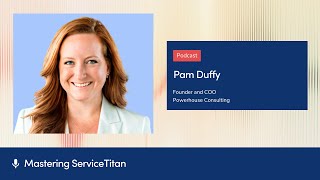
Pam Duffy Duke, COO of Powerhouse Consulting, walks through keeping ServiceTitan data clean: start with careful onboarding instead of dumping data, train multiple people to avoid relying on one expert, and run health assessments to catch lost revenue from unbooked estimates and duplicate customers. Set up monitoring reports for things that should be zero, like past-scheduled jobs, and use core features like Conditional Logic in Forms before buying add-ons.
Don't just dump your data in and then walk away. That is a surefire way to ensure that you're not starting on the right foot, that your data is already going to be in not the best place. So your reports are inaccurate from day one.
Welcome to Mastering Service Titan, where you get expert advice from power users. I'm your host, Josh Lu, and today I'm joined by Pam Duffy Duke, the COO at Powerhouse Consulting, and we are diving into the topic of how to keep your Service Titan data clean. And, Pam, welcome to the show.
Thank you so much for having me.
Of course. I'm so excited to dive into this topic. It's a big topic and maybe to start off, can you tell us about why it's so important to keep your data in Service Titan clean?
One of the things that people are most excited about in Servicetitan when they first come on board is the reporting and the metrics. The data that you can get out of Service Titan can really fuel your business decisions and help you get to where you're wanting to go faster. In our time at Powerhouse Consulting Group, helping contractors get the most out of Service Titan and help them optimize their account, what we've seen is people get so excited about that end data, and what is far less exciting is how that data actually gets in to your platform. So the workflows and the processes that you have to follow to keep that data really clean in order to get reports that are actually usable. So what ends up happening over time is you have all these amazing reports and data to look at, charts and graphs and dashboards, and yet none of that means anything at all because you haven't really kept good tabs on keeping that data input clean. So really, in order to get the magic out of Service Titan, you have to keep your data as clean as possible.
Yeah, it sounds like the foundation and is very critical. I'm curious, in your experience consulting, have you had any, like, nightmare situations or, like, horror stories where customers come to you and they're like, oh, my gosh, all of this data is wrong and it's been wrong for a long time that you can share?
Yeah, absolutely. So one of the services that we offer at Powerhouse is something that we call a health assessment. And without the contractors giving us any input at all, we'll dive into their Service Titan account and we can learn a lot about what is going on in any business's account just by perusing around it ourselves. And the data really tells a story, and sometimes the. The story that the data tells us is y' all don't have good workflows, like things aren't working. So, for example, we've seen millions of dollars left on the table in sold estimates, where estimates are sold, and then there's not a workflow to, you know, follow up and actually book those estimates. So one of the things that we'll uncover sometimes in health assessments is sometimes $200,000, sometimes, sometimes $500,000. But we've seen over a million dollars left on the table by contractors of really good work that they've actually sold. Their salespeople have sold it. Sometimes they've actually already paid out commissions on those sales, and yet they have not actually gone to do the job and captured that revenue. So that's a really common example. We also see a lot of contractors with duplicate jobs or duplicate customers on, on their accounts. And what ends up happening is a lot of chaos in the call center when a customer calls and the job gets booked on one customer location, and then the customer calls back in a different rep, books it on a different location, and it just causes a lot of internal chaos. So this system that you've purchased that's supposed to really help save you time ends up adding a lot of time. And it's, it's because of that, that upkeep that's not kept up with.
And it sounds like a couple of just simple, small data mistakes, but then it causes so much inefficiency. And I like that word chaos that you use. Oh my gosh, so scary. Maybe we start with brand new customers. Do you have any advice on getting set up on Service Titan and making sure you're in a good place at the beginning?
The first piece is don't just dump your data in and then walk away. That is a surefire way to ensure that you're not starting on the right foot, that your data is already going to be in not the best place. So your reports are inaccurate from day one. So when you're first getting started with Service Titan, really take the time to analyze your data. You know, define your business units in a really good way, define your job types and all of those kind of sales and estimates, workflows. Really make sure that you nail that in right at the beginning. That way you can ensure your data is clean from the start. Another really big mistake that we see new Service Titan users make is they kind of pick a subject matter expert on our on their team and they say, this person's going to be our service titan person. Yes, you do need a champion on your team. That's really going to help with that change management process. But if there's only one person on your team that knows Service titanwell, then everything else is going to fall apart as soon as you start adding in everybody else into the system. So you've got one person that's in the sandbox right before you go live. That's like practicing all these workflows and it's, everything's working great. But then once you throw in other technicians or other office employees, everything really starts to fall apart and it's really hard to recover. So we strongly recommend that you start early and often with training the team and getting them into that demo environment and really make sure that there's lots of people that, that know the system really well.
That makes a lot of sense during the setup process for new customers. I'm curious about this mindset of like, how do we adapt our workflows to fit into the software versus do we try to find workarounds in the software to fit our business? I'm hearing it's usually you save a lot of headaches if you just concede and let the software work the way it's supposed to. But what are your thoughts mindset wise and workflow wise, adjusting to make sure that data is clean.
Oh man, this is such an interesting topic and possibly a controversial one. Service Titan out of the Box is designed with basically one consistent workflow in mind. And that workflow works great for a lot of contractors out there. But there are also a lot of contractors that have their own mind about how they want to operate their business. And it's not necessarily in the same format. That service heightened core product is set up to serve those contractors. So we don't say workarounds, we say alternate workflows. Right. So there are ways to make sure that Service Titan is working for you. It's just that some of the materials that are out there are really designed for sort of this core setup and core workflow. But there's actually way more options available in Service Titan that a lot of people aren't familiar with. Because these are things you kind of learn over time and you pick up this experience over time and you start to know what is and isn't available. And then another limitation is you as a contractor only know your instance of Service Titan. Like you only know what's going on in your account. For example, you know, the folks that work on our team here at Powerhouse, you know, we work on hundreds of contractors accounts, so we see all sorts of different setups and workflows and we really see the power that's available in Service Titan and we're able to, you know, use that knowledge to guide any new customers into their new workflows, whether it be sort of the standard workflows or maybe alternate workflows.
Gotcha. Yeah, I know. There's so many different feature gates and customizations that people can build on top of their business within Service Titan. And so, yeah, no, no one customer instance will look like another.
And honestly, if you don't mind me saying, like, that's just a whole nother can of worms when it comes to like consistency, you know, and sort of this garbage in, garbage out scenario. Because all, all this comes back to too is everybody wants Service Titan to work better for them, right. It's like the whole impetus of your podcast, right? It's like we all want Service Titan to work better. And so it's really common. Like a very common thing that we see is sort of this shiny things syndrome where a contractor is just perusing maybe like the Service Titan masterminds Facebook group and they hear about this new feature gate that they didn't know existed before and they think, well, that's perfect for my business. Right. And so they think that this is going to be the band aid that solves all of their problems. Is if only I had known about this configuration. But honestly, like whether it's a configuration or it's some add on platform, like a lot of times the core product can do like everything that's needed and you might just not be knowledgeable about how to utilize that core product fully. Like you might only be using 20% of like the core product features. So adding on a feature gate or a configuration might not get you what you need. So it just opens up a whole new world of like, messiness. When I think about data, when we're starting to layer on all of these other, you know, tools or options into your workflows.
Yeah, and that kind of goes in with that theme of like the setup. Because when you want some new feature or some new pro product, you're at Pantheon. Oh my gosh, this is so exciting. There's a lot that comes with making sure that workflow and the data is going to be continuously put in in a clean way. Can you talk about how to maintain clean data? Like maybe someone does want to start a new workflow or turn on feature gate and you think you have it set up properly. How do you make sure you maintain that cleanliness over time?
So the first thing is, you know, knowing what has gone wrong in your data from, from the beginning. Right. So whenever you're doing anything in life, you're, you know, budgeting for a goal or you're trying to lose weight or whatever, there's a baseline. You know, you gotta have a before and an after. So understanding what the before is or like what what is today's scenario is really important. We sometimes see a lot of frustration from clients that we work with. Of I didn't realize it was this bad. I didn't realize our data was so off. I didn't realize that our team wasn't following this workflow and now they feel like out of control. Right. Really successful leaders are able to, to see that, acknowledge it and say, okay, how do we fix it? Let's move forward. So I think understanding where you're at today and understanding the root cause of the problem, that's always going to be step one. And doing so from a place of a team oriented and a growth oriented mindset, it's just business. So it happened. Let's move forward from there. Somebody in the company needs to take ownership of implementing that change or managing the change internally. That might be doing some regular audits that could be making sure that there's training happening on the team or retraining. Something that we offer at Powerhouse is documenting a fully customized workflow like a sop. Because another thing that happens, another common cause for bad data is people leaving company, which happens all the time, but they're leaving with that knowledge in their brain. So a documented workflow that you can hand to a new person that comes to your team and say, these are the exact steps that we at ABC Plumbing follow every single time we book a job. We do these steps every single time. It has to be this way. That is what's really going to drive consistency over time. And that can be shepherded by a change management leader, whether that's somebody in your company or, or outside your company, like somebody here at PCG for example, trying to take those snapshots, those like after snapshots. Right. Like, so we've implemented these change. What does it look like on the other side? Something that I think we talked about before, this was like that last 20% of change management of really making sure you get all the way through one change. We're going to make one change and go all the way through, including to the monitoring point. So the point where we fully implemented the change and like, let's just make sure that we've all really got it down. Another really common mistake. We see is that people stop at that maybe 50% point or 75% point in a change management process and then we lose that muscle memory section of really making sure we've locked in whatever that change in the process is going to be, whether it's, you know, hey, we're really going to make sure that every day we pull a report and we get this report to zero or hey, every month we're going to log into our membership billing and make sure there's no failed billing runs, that we follow up with all those customers every month. If we're not really making sure that we're following that to a T every month, it's going to go great for month one, it's going to go okay for month two, and then we're going to forget about the process in month three. So that last 20% of real follow through is so important and so many people again have that shiny thing syndrome of like, oh, well, we kind of halfway did this and now we gotta go fix this problem. So a commitment to the change is what is really important to making a difference.
This resonates a lot with me because like we said last time I think we talked, I was saying I'm one of those people who, I see the shiny thing, I'm, oh, I'm gonna go try that thing and then I get it to 80% and then I want to start something else. And it's really exciting to start something fresh and new. But sometimes that, that last 20% of grinding and committing to get it to across the finish line is a little tough for me. I'd love to put a pin in that last 20% for a second. The accountability and monitoring. Last time we talked you said some contractors are they move their membership billing to monthly. And can we just explore this example for a second of like, all right, let's say someone's got this idea, they want to move to monthly. What are the steps they should take to make sure that's set up properly and then all the way through to the monitoring and accountability at the end of the day.
So this is a change in workflow that a lot of businesses have made over the last two to three years. Is shifting from once a year billing for a comfort club membership to we're going to bill it on a subscription basis, you know, once a month, which that can be very lucrative and in the long term and is a great way of keeping your memberships over time. Let's say you've gone through that whole setup process and, and you've set it up correctly. There's so much more involved in memberships than just the setup. There's this whole piece of managing memberships that has to happen throughout the year. And it's why some larger contractors have a dedicated membership coordinator on their staff, is to keep up with what's going on with memberships. But specifically, one of the things that you should be looking at regularly is your billing runs for memberships. And are those billing runs happening successfully? One thing that comes up a lot is that people's credit cards change and it's, you know, it's not a big deal. You have to call them and get a new credit card. But if you're not checking those billing runs, then you, you might not catch that ever. And there's other reasons why, you know, membership billing doesn't work exactly the way that you think it is. Sometimes people go in and finagle the dates on the membership and so then that causes people to be ahead or behind on membership billing. There's a myriad of issues, but going into the accounting tab and looking at your membership billing runs and looking at them in detail can give you a lot of insight. We've had multiple contractors who have however many active members, but there's a lot of active members that are not paid up on their membership. And even we've seen contractors where they are doing the services, you know, these maintenance services that are included in these memberships, but the customer has not paid for the membership. So the onus is on you as a business to have that workflow in place of going in and checking the membership billing runs monthly and really making sure that everything has been captured correctly. And that's just, that's a great example of like finishing the cycle of, of a change.
Yeah. So let's say they set it up properly, they have their sop, they're going to do this thing monthly. How do you, as the business owner, make sure your teams have the accountability and follow through to continue this process versus, like, all right, I think they've got this and then you go back three months later and everything's messed up.
Yeah, I mean, this is totally a management issue. I think a lot of managers think I should just be able to teach my team how to do something or tell them how to do something and it should be done. But at the end of the day, you're a leader, which means you are accountable for what happens on your team. You have got to implement processes for yourself. To check back now, when I'm coaching new people that report to me the first week or two is extremely hands on. I am sitting with them side by side, step by step, every step of the way. And then, you know, you remove yourself a little further and you remove yourself a little further. But at no point do I completely eliminate the accountability piece of this. As a leader. Like you have to have some sort of check in system built in for your team. Service Titan makes this super easy. With their reports and those custom dashboards that you can make, it's super easy for you to check in on these types of things. One of the best pieces of advice that I've given to folks that are on Service Titan is to create reports that should have no data on it so that if that report is sent to you with a line item on it, you know something is up, right? So instead of developing a report that has a ton of data and your eyes kind of glaze over when you open it, try to build a report that there should be nothing on this, nothing should be on this. So if something pops up on this report, there's something going on.
Wow, that is genius. Do you have any examples of some reports that should have nothing on there? I know I'm putting you on the spot a little bit, but yeah, I'm curious if there.
Oh my gosh, there's a lot of reports that should have nothing on it. Like a really tough one to get to zero would be like the duplicate customers report or like the duplicate locations report. I mean those should be zero, but a lot of, a lot of people struggle with that. And some of that is just Google being, you know, difficult and you can't, you can't separate locations. So that sometimes happens. But like maintenance visits that need to be scheduled this week for example, or maintenance visits that should have happened last week, right? That should be, that should be like a zero sum report. There should be nothing on that report. If there is something on that report, like another workflow thing needs to happen. Meaning like maybe a date needs to be changed on the membership or we need to log a follow up or we need to call the customer. Like something needs to happen, but there should be nothing on that report. Or like the job scheduled in the past report, that should be zero, right? There should be nothing that's open that you know, has a date of in the past. So that should be zero as well.
Would you recommend a company have one person to like manage these zero reports and kind of report out to the, the department leads or whoever, like, hey, make sure this is zero or how would you implement something like this?
It really depends on the company. You know, every company is set up differently. I personally think that people need to take ownership of their own departments or their own groups. Right. So going back to this idea of like one having one person good at Service Titan versus having everybody good at it. Like the most all star teams, like the people we see on the Titan score leaderboard, everybody on those teams, they are all stars at, you know, working Service titan and working the system. So I would recommend that each person on the team kind of takes some ownership over whatever their report is. And then of course, you can build, let's say you're a senior leader, you know, you can build a dashboard of all of these people's reports to keep tabs on everybody. Right. So there's ways to do it. But I would definitely recommend that each person takes ownership of what, what they have in their department.
Yeah, that, that zero. I don't know what to call it. The zero reporter. What. What do you. Do you have a term for that?
I don't, but let me. Let me trademark that real quick.
I know. I was gonna say it's so good. That is such a good piece of advice. I haven't, I haven't heard that one before. But whatever that is, the. The should be zero report, it seems like it's a great form of accountability. Do you have any other advice about how to have accountability with these new workflows? Just to make sure everything stays clean?
I think the biggest advice is to not wait for a crisis to happen. Like, that's usually what kicks off a total workflow overhaul, is, oh, my gosh, how did we mess up big time. Like, I was on a call with a client. This was a couple of years ago, but I was on a call with them and I said, hey, this was a $25,000 job that we only, you know, we went out and discovered. Like, we did part of the work and we didn't have XYZ part. We were supposed to come back, we were supposed to go procure the part. We got the part. You know, you can track it all in service time. We got the part. Nobody ever went back, and we never captured that $25,000. And they were really unhappy. Of course, I'm just the messenger, but we can look and we can see the data doesn't lie. So that, of course, is what's going to kick off. Oh, my gosh. We have to change everything about everything. First of all, make sure you've got your own house in order. Service Titan is pretty clear on these foundational aspects of the software that should be really solid, for example, you should have a completely solid price book, like before you're working on anything else. Fancy workflows, you know, solid price book. So if you're having problems with your proposals or estimates or quoting that's, that's stemming from your price book. Like work on the price book even if there's a crisis elsewhere or like another, another place where there is a crisis that I would say would be like top priority would be anything to do with the accounting screen. You know, if you're not able to reconcile between what's going on in Service Titan and what's going on in your accounting software, like, that is a big problem that needs to be like number one on your list. So I think as a leader, taking yourself out of the day to day and really trying to think about your business strategically, what is the most important thing? If I can only spend my time working on one project, what is the most important project I can spend my, my time on and investing your time in that first before going into this like, alarmist firefighter mode that's so, so common for all of us, especially if you're stressed and, you know, short on time and all of that. So I think that's my, my biggest recommendation is to, to try to take yourself out of firefighting mode.
Yeah. And to be proactive. Such a good piece of advice. If someone's listening to this and they're like, oh, gosh, I have a hunch that my data is really messy in maybe some area like the memberships or my price book, God, what should they do next?
It can really help to get an outside perspective. So that is exactly what we do. At Powerhouse Consulting Group, we have, as I mentioned before, our health assessment process where we can review a customer's account and we don't always take a magnifying glass to it and say, wow, you're really sucking it up here. We try pretty hard to give a very even assessment of what is going on and give kudos where kudos are due. But we do want to highlight areas where, you know, the data might not be what you think it is. And at the end of the day, that's what's most important, is making sure you know your profitability, that you can count on that, that you can count on your job costing being correct so that you can go into meetings confident, knowing that the decisions you're making to move the company forward are, are correct. I think that if you have a hunch, I would definitely suggest getting another opinion because it's just, it's one of those things where you might be like blinded to it and, you know, you can't see the forest through the trees anymore. And you know, it's just, you know, you just need somebody else to take a look.
100%. Yeah, we all have blind spots. And that outside opinion can be super helpful when it comes to powerhouse consulting. Are there specific types of contractors that you love working with or some scenarios where you're like, oh my gosh, that's a piece of cake for us. Like we are experts here.
The great thing about our team is we're extremely well rounded team and we serve contractors of all sizes. Like if you're a Service Titan customer, we'll serve you. We love working with contractors that are, you know, let's say, you know, five techs to 20 techs. You know, that's a, that's a great size for us. We love that. We especially love working with, you know, family businesses, folks that are in it to keep the business going for years and years and years and not necessarily trying to just grow the business 20% over and over each year. But we also serve those customers too and we love working with those customers equally. We also love working with enterprise clients and that's really one of our bread and butter scenarios. So that really speaks to this sort of workflow development where we're taking a workflow and implementing it not across just one contractor or one home services business, but trying to take that same workflow and implement it across 10, 15, 20, 100. That is definitely something that we specialize in here at pcg, but we employ people from the trades that have experience all across those different size companies. So we, we love working with everybody and I think we're really excellent at all, all areas of Service Titan.
Do you have a recent favorite coaching moment with one of your contractors that you're working with or a cool breakthrough that you've had that comes to memory?
You know, a lot of people are talking about these sort of added tools that you can add on to Service Titan. So I heard on this podcast a few weeks ago about, you know, how you can use or leverage AI to really kind of supercharge your data or to gain analysis quickly, et cetera. But there's also these different softwares and tools out there that you can integrate with Service Titan and you're just kind of like adding more and more fuel to it, which can be really cool. But lately what, you know, some of the bigger aha moments have been for our clients is saying, hey, did you know that Service Titan actually does this as a part of its core product? Like, you are already paying for a tool that does this, so when you're purchasing these other products, you're actually duplicating your spending. It's like redundant spending. And, you know, in a world where the profit margins are one of the most important things, I really want to make sure that our clients are getting value out of the platforms that they're purchasing and out of these tools that they're purchasing. So I think that has been one of the biggest eye openers for the clients we've worked with recently is how can we strategically make sure that you're using the different tools and platforms that work for you while also maximizing your field service management platform Service Titan. There's just new features coming out all of the time, and so many times contractors miss them. Things that came out in a release, you know, a year and a half ago, some folks never implemented and don't even know existed. So that has been one of the biggest things that we've been trying to coach our clients on recently is let's evaluate what all you have and let's see if we can reduce any overspend so that you're still getting the value that you want out of your softwares, but not spending where you don't need to be spending.
Yeah, especially with that shiny object. Oh, my gosh. New pro product. Let me just jump in. Look at all this. It looks amazing. But hey, let's make sure you're maximizing core for. So, like you said, whatever you're already paying for before you start trying to put it into like, sixth gear or whatever and. And take off. I like this message a lot. And, and it's a big reason why we have the podcast is cause, yeah, there's just so much stuff in Service 9 that people don't know about. So, yeah, I love.
It's wildly underutilized, you know, like, I just, I feel like they're so. There's so much that's underutilized. Just like a quick example, I'm sure y' all have talked about this on your podcast, but Conditional Logic Informs is. Is such a great feature. And every time I log into a client Service Titan account and they've got, you know, 20 forms on every job, I just think, oh my gosh, you would benefit so much from adding Conditional Logic in forms. And it, it's. We actually just did this for a client this week and really changed the game because now their technicians only have one form to Fill out. They don't have to expend that extra mental energy on like, you know, which of these reports is the one or oh, I'm just going to fill in every question with like a B dash, no blah, blah, blah, you know, so anyway, I just. There's features that people don't know exist that can be utilized and can really like supercharge and streamline your operations. But you've got to know what all exists first, right?
Yeah. And you guys have that benefit of that bird's eye view through so many different customers that you can know exactly. Hey, you guys should definitely use this. It came out like, I think conditional logic came out like what, four years ago or something like that. It blows my mind that, I mean, I understand we're just putting out so much stuff, but it's a good point to maximize what exists. We do have an episode on forms and conditional logic with Sina. I think it came out maybe a couple weeks ago, but if people scroll through the catalog of episodes, they should find that there if they want to dive in any other low hanging fruit features that people are like, oh my gosh, how do you not know this doesn't exist?
I think the SMS automations is another one that people don't know exists as a part of the core functionality of Service Titan that you should absolutely be taking advantage of the appointment reminders and recurring service reminders, things like that. That's something that a lot of people just don't have set up. That can be a huge differentiator and like a way to really lock in business. Especially right now, you know, we're seeing a lot of contractors that, you know, haven't necessarily started the year off as strong as they possibly could. And like one of the best things you can do is really just dive into your memberships. I know we talked so much about memberships, but that is just, that is a great thing to do. And more and more customers don't want to pick up the phone and talk to you. So the more that you can take advantage of texting, especially the automated texting, the better. And I think this came up in the Service Titan Marketing Pro Facebook group. One of the things that you kind of have to learn or work with an outside third party on is how to really utilize those in the best way so that you're not bombing your entire membership database with a text message all on one day, but you can, you know, drip it over time. So that is just a very underutilized feature that I think could be really powerful to generate revenue like today.
Beautiful. What? So many good nuggets here. I like how we ended with just a couple features that people can go implement new shiny things, but you enabled them with the process and framework of how to actually implement and then have the accountability to follow through on those. So thank you so much for coming on today. And yeah, I really appreciate you sharing your wisdom with us.
Thanks so much, Josh. It was great. I hope to do it again sometime.
More from Bill



Capturing the 80%: How SmartAC’s Gen-2 Targets Non-Membership Homeowners | Podcast Ep. 296

Build better customer data with every booking in ServiceTitan | TAD Tune-Up Series

The Biggest Change for Roofers Coming From Other Roofing Software to #ServiceTitan?


