Think Like a Marketer, Hire Like a Pro: How to Fix Your Workforce Funnel
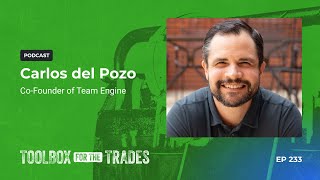
Carlos Del Pozo of Team Engine explains why trades and field-work businesses struggle to hire and keep workers. The problem isn't too few applicants but slow follow-up, sloppy screening, and weak onboarding. Texting candidates fast, automating the process, and writing job descriptions like marketing copy make the biggest difference.
Hello and welcome to Toolbox for the Trades. My name is Amanda Salvatore, and today I spoke with Carlos Del Pozo, the co founder at Team Engine. We discussed the recruiting challenges facing the industry and more importantly, how to transform them into powerful competitive advantages. Carlos also shared his perspective on what defines great leadership and how a simple shift in your hiring mindset can make all the difference. I hope you enjoy this conversation as much as I did. Carlos Del Pozo, you are the co founder at Team Engine, and today we are going to be discussing how to turn recruiting challenges into your competitive advantage. Thank you so much for coming on Toolbox for the Trades.
Thanks, Amanda. I'm excited to be here.
I'm excited to talk about this. Recruiting and retention are always on top of mind for our listeners, so I know they're going to get a lot of value out of this conversation. But first and foremost, we always like to start with a little icebreaker here. So what's a movie, book, or song that has had a significant impact on your life?
I actually am going to come with a TV show, and that TV show is Band of Brothers was pretty formative for me. I ended up actually being an infantry officer in the army, and I actually ended up in the 101st Airborne Division, which is the unit that the story sort of follows. And it was formative for me both in giving me an exposure to just the military, but then also there's a lot of leader personalities and profiles that the story covers. And that was also pretty instructive for me from a leadership perspective.
Did you watch that show first before you went into the military, or was that. Did it inspire that or did it come after that experience?
It was beforehand, and I've watched it since then. I did ROTC in college before I actually commissioned and became an officer. And we even used it occasionally as like a training tool, you know, like the way that when you're in high school, the substitute teacher comes in and rolls out the, you know, the VHS tape and puts it on. There's a little bit of that element to it, but with a little bit more discussion and actual engagement on the topic. It was just a really good educational content, both in, you know, what good leadership looks like and then also what, you know, not so good leadership looks like. It shows you different flavors of good and different flavors of bad, which was. Was useful learning.
Well, we're going to kind of dive into leadership as well today, but first and foremost, I'd love to find out how you found yourself in this industry.
I grew up in a small Family business. Both my parents were entrepreneurs, both my grandfathers were entrepreneurs. I had a lot of exposure to construction and landscaping and the trades growing up. I went, went to college. I was an rotc, graduated, became an army officer, then went to business school. And coming out of business school, I was really interested in getting into small business entrepreneurship. And I decided to pursue that from a little bit of a different lens. I decided to do that by going out and looking to acquire and operate an existing company myself and how to focus on companies that had field workforces, companies where the workforce and the operations felt familiar to my experience as an infantry officer. I just thought that I would have a little bit of an advantage going into that kind of a context based on my background. In the course of looking at those businesses and talking to those business owners came across, you know, a relatively universal theme, which was surprising to me, and that was so many of those businesses were not constrained from a growth perspective from leads or sales or demand. They were really constrained from a supply perspective in many cases, and from a labor supply perspective, they had a lot of trouble finding people, keeping them, getting them to be effective and productive. And so they couldn't grow as quickly as they could otherwise purely because they didn't have the people to do the work. And so that was sort of the insight that spurred us, myself and my co founders, to start Team Engine.
So for those who don't know what is Team Engine, I know you went into a little bit of how it came about, but I'd love to hear your mission.
Team Engine helps companies, primarily with field workforces, recruit, retain, and engage their workforces. So we're very active in the trades. We're very active in construction, landscaping, basically. These are companies that have unique workforce dynamics that we, we find, are pretty underserved from, you know, traditional technology solutions, especially in the HR space. And so that's really our niche and where we focus.
So when you started Team Engine, you saw these gaps in HR software. So what were some of the specific frustrations you saw owners dealing with that really highlighted the need for Team Engine.
In terms of the impact of what they were seeing on the labor supply and their frustration? You know, they were leaving revenue on the table was the thing. At the end of the day, they had projects that they couldn't fulfill that were in front of them. You know, they had to turn down opportunities because they just didn't have, you know, the people to work those opportunities. And it even extends so far as, you know, not having the confidence to sell work because you're not sure if you can scale your capacity to meet the work that you've sold. So there's a lot of kind of downstream impacts where it's manifest, where it actually shows up for businesses. It can show up in a lot of different ways, and for a lot of businesses, it shows up in multiple places. The funny thing is a lot of what I heard people talking about was they were talking about not having enough applicants for their jobs. So a lot of people, basically, if you think about recruiting and hiring as similar to sales and marketing, but just with a different instate, you know, they were basically complaining about not having enough leads for employees, which I think is the case for many businesses. But when we dug in, what we actually saw was there was a lot of what was happening after they got leads and applicants was where the challenge actually existed. So they were getting applicants but not following up quickly enough with them, not screening them effectively. So they were having great applicants just, you know, kind of die on the vine, if you will. Or they would actually hire those folks but then not do anything to retain or set them up for success and so they would leave. So the focus that we found in the market was really on what I would describe as like the top of the funnel, so just like getting the applicants, but where we saw a lot of the actual issues and a lot of the opportunity for impact was downstream of that.
So you were saying how through the process, often you're able to get these applicants, but maybe there's this bottleneck issue. We're losing them through the process. What are some of those hiccups in that process that you found? Where. Where are we losing people?
The biggest one is right up there near the top. It's after folks are getting those applicants, they're just not getting back to them fast enough. What I mentioned earlier about thinking about recruiting and hiring as similar to sales and marketing. If you're good at sales and marketing and you put a lot of emphasis on your sales team following up quickly, you know, having a really high speed to lead, you should be just applying all those same, you know, frameworks to recruiting. But we so often see companies where they don't. And I. And I think it stems. There's a mentality that we do run into occasionally, which I think is it's fading out. It's not as common today, but it still is around. And it's a mentality where employers think about applicants and potential employees as being lucky to have a job. I go back to an experience that I had when I was starting this Company, actually, I reached out to a pretty successful operator of a company in the trades which is trying to, you know, learn from their experience. I asked them, you know, what do you do that makes folks want to work for your company? And his response sort of took me aback. His response was, I pay people. It was nothing else to it. It's just like I give them a job. I think that mindset is fairly common. And so if you take that mindset and you think about the bottleneck that we just discussed, which is getting an applicant and then getting in touch with them and moving them to the next step, if you think that this person is lucky to even, you know, consider or have you consider them for an opportunity at your company, it probably makes sense that you would, you know, have them wait around for days. But it doesn't make sense if you are considering the fact that they have a lot of other options. If you're not first, in many cases you're going to be last.
I think it's about shifting that mindset. I know that when we're talking about the generations, very often it is a bit of an old school mindset that just happy to have a job, but in reality we really need to think about who we're employing and that it's a this two way street. So how does team engine help with this labor issue and turn it into a competitive advantage?
Going back to this one stage that we just talked about, you know, getting an applicant and transforming them into not just a resume, but like a person actually walking through the door, that is a task that is pretty tedious, pretty manual. You have to go through a lot of resumes, you have to do a lot of screening. Everybody in your team has a different way of looking at them. You know, some people are looking for this, some people, you know, check to see if the person's within a reasonable, you know, distance of the job because they know that they sometimes get applicants from outside of their area. And then once you've gone through all that, you then need to get in touch with them. And a lot of people today are picking up the phone, trying to call somebody from a number that the applicant doesn't recognize. Sending an email to an applicant that doesn't consistently, you know, use email is not consistently in front of a desk. So just like there's a real big like ship's passing in the night thing going on between applicants and employers. We find. And so part of what we do is we give you the best practice for like how to actually be effective throughout all these Stages, but in particular for this stage. You know, one example is you find that that first engagement, that first touch point between an employer and an applicant is most effective when it happens over a text message. And the reason is because phone is, you know, very effective when you get somebody on the phone. But it's so unlikely to get somebody on the phone when one of those numbers is unfamiliar to the other. Text kind of like solves that. Text is something that's front and center for really everybody, regardless of their device. And so it announces your intention, announces who you are and it sets the stage for you to be able to get that phone call to get them through the door. Because this is such a time sensitive stage and so much of this is time sensitive. You know, time to fill is a core metric that is really important that people drive down so that they have focus on the rules they need to fill. It just makes a ton of sense for automation to be doing this because you're kind of doing it the same way every time. So to make sure that it's fast, to make sure it's consistent, it's happening according to the playbook that you want to be implemented in your business. Software is like a really good alternative to having a person go through all that pain and frustration. To be fair, in many cases they just don't because it is so frustrating. And software can actually make that happen the way that you want it to and make it effective. And so that in that stage, that's just one example of where that sort of dynamic exists. We sort of added value in a similar way throughout the hiring process, onboarding process and with engaging employees post hire as well.
I have to ask, what's some of your best advice when it comes to recruiting? I know you mentioned about this, this sense of getting on those leads and really and utilizing your time and making sure you don't have people waiting on you. But what are other pieces of advice?
Be thoughtful about your job descriptions. And again, I'm going to be going back to this theme. Hopefully. You know, people come out of this with one thing. It's, you know, recruiting is sales and marketing. Thinking about your job description from a lens of marketing your jobs and your companies. What we often see is that those job descriptions tend to look more like internal sort of requirements and compliance documents because that often is what they are. People often create those internally and then they just copy paste those onto indeed or another platform. But that is not the right angle for you to be taking with your audience, which is prospective applicants, a job description that is internally focused leads with requirements and reasons why somebody would not be a fit. Something that is more marketing oriented leads with all the reasons that they would while also making sure that they have the information they need to self select as to whether it's a good fit for them. So just thinking from the top of the funnel, job descriptions are just such a huge opportunity for so many companies just to be more competitive. If they can just take the structure of their job description, which probably has the benefits at the bottom, and then flip it, that change in itself will take you from a C minus to a B plus. But that's probably the starting point. Beyond that, I think that companies also just from a high level have a big opportunity to think about employer branding and make that a priority for these companies. Your people are your brand. So if you think about it actually employer branding, anything that's going to influence who you employ and how they represent your company is really your company brand. So I recommend that companies think about employer branding as a component of just their brand and their marketing overall. And then the last thing and maybe I'll mention is, is and there's just, there's a ton. But this is like maybe the, the another one of these like low hanging fruits that I see is so many companies hire somebody and then they sort of like you know, claim mission accomplished and, and say the job is done. So they think about hiring and recruiting as this like linear experience where they should be thinking about it as, as really a cycle. The result of that is that so many companies hire somebody, lose them, go back and try to hire somebody again and they just kind of get worn down because it's so defeating to put so much into hiring and then have somebody leave. And we see this a lot. They sort of end up putting less into hiring as a result of. So it becomes a self fulfilling cycle. Generally thinking about, you know, recruiting from a marketing lens and then making sure that you have a strong onboarding and ramp up plan and playbook for your new hires. Those are probably the biggest low hanging fruit.
I know you kind of touched on this at the end, but I would love to talk about retention because this is such an issue. So once you've hired someone, you know, your job isn't over. What should owners consider after they are done with the hiring process? What, what should they be considering?
Just like they've constructed a funnel hopefully for their recruiting and definitely for their leads, they should be thinking about what the funnel looks like post hire as well. We basically recommend that folks sit down and come up With a playbook of what the ideal experience for a new hire looks like in the first 30, 60, 90 days. If everybody had the same experience, had the same interactions with leadership with the team, you know, the same points of time in those 30, 60, 90 days, and they could just like make that consistent, what would that be? And so it should probably be things like collecting feedback from a new hire about their onboarding experience whenever that ends. Making sure that every new hire, at a certain point I would typically recommend 30 days, is ask for a referral. Making sure that those folks are given a ton of information and that their supervisors are reminded as well as anybody in HR is reminded about their eligibility for benefits and making sure that they get enrolled and then, you know, checking in at month two, et cetera. If you want to get really creative and be really on top of it, you can make sure that, you know, you're recording a welcome video from the owner. And making sure every new hire gets that on their second day, you can be sending them links to get enrolled in all the software and resources that they're going to need is just making sure that everybody is getting the experience, getting the information, getting enabled for success the right way, versus just sort of having them show up and hope that the right things happen. And to build that playbook and make sure that you have an opinion about what that is, is not very hard. That takes five minutes. Where it's hard is making it happen. But it's a really great start to just like, you know, figure out what it looks like.
This is about really making sure that your new employee has all of their resources available to them, which is also going to show them your appreciation as well for them coming on to these projects. Right. We talked about building this playbook and executing this playbook, which often comes down to leadership, being able to execute. So I'd kind of like to talk about your leadership style. You, you talked about seeing some good leadership styles, some bad leadership styles, and your experience in the military. So what would you say to those who are interested in maybe upping their game with their leadership?
It's really important to both model what right looks like, but then also be ready to empower the folks that work for you. And that's part of what this playbook is about. You know, I think a lot of owners, they have that kind of stuff, like in their head. A lot of leaders know what riot looks like. They may have an expectation of their team that they haven't stated, or if they have stated that they've stated it once. They haven't transformed it into like an artifact. That is something that people can utilize to understand what the leadership's intent is, what they can and cannot do to achieve that and what success looks like. And so having this playbook, for example, for retention, it shows that you have a priority around this. It shows you what success looks like. And then it's not a bad idea to have there be some responsibility that is yours as a leader in it. You know, like if you want to be recording that video or, or having a one on one or you know, me and GRE with every, you know, new hire, it's up to you that everybody sort of has a different style. But that's probably what I would recommend is, is making sure that you are signaling that it is important and that people should be taking it seriously. By yourself, being involved and taking it seriously while also being clear about your expectations are so that people can make it happen in your absence.
So Carlos, looking towards the future of recruitment and retention, what do you think that looks like? What are you getting excited about?
You know, I think it's. We're in a really interesting place where we do have a labor shortage. There are fewer and fewer folks in the workforce every year, every decade. It makes me really happy when I see people investing in, you know, workforce development programs, apprenticeship programs, in house, you know, training and education programs. I think all those are the right things. What's really interesting to me is that we're in this moment of scarcity when it comes to people who do their jobs, just as AI is just showing us more and more about what it can do. The thing that's interesting to me is that I think for a long time so many people assumed that the roles that would be automated would be the ones like the ones that our customers are hiring for. What we're seeing is actually it's like quite the opposite so far is that it's really a lot of desk jobs that are being the ones that are being disrupted or changed by AI. And so thinking about recruiting and retention, particularly in like the space of the trades, I think there's this really interesting sort of thing happening in parallel where on one side I see a ton of potential for AI to really enable the most forward leaning organizations to out compete even more than they are already for the talent that exists and the folks that they need. So much of the stuff that we've talked about where automation can provide a strong solution, AI can just go even further. And so that's something that I am excited about. But at the Same time, what does that look like for those roles themselves? How does AI actually change the role of an H VAC technician? And I think a lot of really smart people are working on that and trying to figure it out. But the one thing that we're not really seeing today is robots doing that kind of work. So how does it evolve that role? The thing that I would assume is that it would just make people so much more capable of being generalists. You potentially need fewer folks because you need less specific skill in any individual hire. Because more people. Yeah, people can just do more things because they have the information they need and the guidance that they need to do it without having to get the actual classroom training. That sort of dichotomy, I guess, is. Is an interesting one to pay attention to, where I think that recruiting and hr, that sort of function, is really going to be highly enabled by AI, by everything that I see and everything that I, you know, that we're working on. I'm excited to see, you know, how that translates, if at all, over to, you know, the, the professions and the roles themselves that our customers are hiring for.
If people are interested, who are listening to get in touch with you, how would they go about doing that?
Any of this is interesting to you? I'd really recommend you check out our website and particularly our resources section. Our website is TeamEngine IO. We have a lot of job templates and different resources that are free on there. So I'd really recommend going in and checking those out. My email is carlosamengine IO and you can also find me on LinkedIn.
Carlos, thank you so much. Before we go, is there anything else that you wish we covered today?
I just really want to encourage folks to be thinking about their own processes, how they're hiring. Are they really, you know, trying to be competitive? Are they really trying to stand out and provide a great applicant experience while also providing a great experience for their employees and their hiring managers who are involved? If not, there's a lot that you can do, starting with the stuff that we've talked about, but there is an opportunity to actually meet the challenge of finding the people they need.
Incredible. Thank you so much for coming onto the podcast today.
Thanks, Amanda.
More from Bill



Capturing the 80%: How SmartAC’s Gen-2 Targets Non-Membership Homeowners | Podcast Ep. 296

Build better customer data with every booking in ServiceTitan | TAD Tune-Up Series

The Biggest Change for Roofers Coming From Other Roofing Software to #ServiceTitan?


