Tips for the Trades from a Tech Detective | Podcast Ep. 85 | Toolbox for the Trades
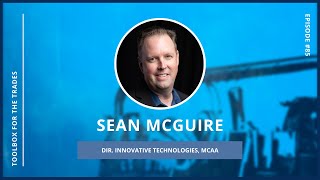
Sean McGuire, Director of Innovative Technologies at the Mechanical Contractors Association of America, explains how contractors can adopt new tech without getting lost. He recommends assigning a champion for software changes, oversizing systems for growth, and using service software to cut paper and speed up billing.
Hello contractors, and welcome to the Toolbox for the Trades, the show where we share the top tricks, tips and tactics from service professionals worldwide. Today I am talking with Sean McGuire, the Director of Innovative Technologies at MCAA. Sean is basically a tech detective for the Trades. He finds the latest and greatest technology and learns how it can be applied to the trades. During today's talk, he shared his top technology tips for contractors and shared his predictions for future Trends. Enjoy. Sean McGuire, you are the director of Innovative Technologies at the Mechanical Contractors association of America, AKA mcaa. Thank you so much for being a guest on Toolbox for the Trades.
Hey, happy to be here.
Really excited to talk to you, about to talk to you today. But we're going to start off this conversation we do with basically every single podcast, which is how did you get into the trades?
Well, to be clear, I'm one of those guys who kind of avoided it mostly. In fact, I don't really consider myself in the trades. I'm an association geek who has just basically served for the firm members for so many years that I've been able to get a lot of good exposure to understand the problems and the operations of most of our contractors over the last 22 years or so that I've been working with the, the MEP trades.
That's awesome. I like that you say that you're not in the trades. You're like an association geek. I kind of feel the same way, but instead of association geek, I'm a podcast geek. So like I'm trades. I'm like next to the trades, I'm like standing right next to them. So you're in good company here. Before we go any further, I'm really excited to talk about your role and really dive into some of these top technology trends and the trades before we even go there. Tell me about, you know, what is MCAA for anyone who is not familiar with the organization?
Well, MCA is a trade association. We represent right around 2,700 union affiliated mechanical plumbing and service contractors. So our service side, you know, you'll get essentially both mechanical and plumbing service. We're trying to kind of get the message out there. Obviously, if you are involved as a, as a, mostly a construction contractor, a nice way to kind of diversify your business is to make sure you have a service component to it. So it's funny, we have kind of a wide range of members across the country. We have people who are service only, we have people who are construction only, and we have a nice kind of Venn diagram of people who are kind of both. But we're always trying to get that middle area as big as possible because we think it's a great way to kind of smooth out the ebbs and flows of the business cycle.
Got it. So you love adding service divisions to traditional construction and commercial businesses, right?
We've been doing a lot of that, a lot of education on that for, like, oh, man, ever since I've been involved. But we've really actually been doing a lot more of an increase on the plumbing side. For some reason, you know, plumbing contractors a little more hesitant to have a service division than some of the mechanical contractors are, for some reason, but they're overcoming it because they see that it's a great way to. To kind of make. Make wider margins and really kind of improve their business operabilities.
That's awesome. We definitely should talk sidebar a bit about adding a service division if we get through all the technology stuff, if we do. And also, I imagine that plumbers are probably more hesitant because they're like, I just don't want people screaming at me on the phone that their toilets overflowing every day. I just don't want to deal with that. But why would someone join mcaa? What would be the benefit for them?
Well, the biggest member benefit is the education. There's a lot that we do throughout the year. We're actually about. Well, I have no idea when this is going to actually drop, but I leave for our annual convention next week, which will be mid March, and there we'll have 2,100 attendees there from all across the segment. I'm actually just glad the fact that we're doing this in person again. We had our MEP Innovations conference this last January, which wasn't just MCA and MSCA members. We partnered this year with Nika and Smackness, so we had full MEP trades all there at the same time. But the education is kind of where we really drive a lot of our value. You know, it's hard enough to be a contractor, but when you're part of an association and you can pull information, you know, and shorten the learning curves on a lot of these. A lot of these tough areas of operations, even beyond software and technology, it makes a huge difference if you can try to avoid some of the landmines that people have stepped on over the years, we're happy to have more and better contractors out there to make the environment a little bit better.
That's exactly why I have this podcast. A Rising Tide Lifts All Boats. It's a phrase we've used constantly throughout this show, I 100% agree with you. Networking is so, so beneficial in the trades because it's such a tired and true business model. And if you can surround yourself with people that have been there already, you can really avoid those landmines, which is exactly what you said. So I would love to know, how does your role as the Director of Innovative Technologies fit into this company's mission?
Well, that's a very good question. It kind of changes all the time. That's actually one of the most beautiful parts of my job and why I enjoy it as much as it does. Because technology is a pretty broad term. There's a lot of things that can kind of fall in that realm. But you know, the reality it is, reality of it is anything that's kind of having to do with software, hardware, new things that are hitting the industry that our members need to be aware of. I needed to kind of get my arms around it and try to understand what the applications are, maybe how our contractors are already using this and if it's something that is kind of out there and ready to go, why we try to get that information out as much as possible. If there's a way that our members can be more productive, increase their profitability, we want them to know about it. We're not shy about talking about products, we're not shy about talking solutions. What we need though, is to see some of the real world case studies of how people are using that software, not just some of the speak that we get from the never ending salesmen that come in there all the time. They can promise great things. Until we've actually seen contractors using it and doing these things and realizing the gains, then we're a little bit more hesitant to kind of get the news out there. But my job is to at least take a first pass at it and see what the kind of ramifications are, how it can be used and how our contractors can benefit from it.
I love that. So you essentially have your own workshop, more or less bringing back the geek. The geek you called yourself. And you're just playing with all of these new tools, software, hardware that are coming into the trades and saying to your members, hey, I tested this, this is the real deal. You should really check it out.
Well, yeah, that's kind of where the whole, I'm not an actual fitter, I'm not an actual plumber, There's a limit to what I can do. Luckily, I work with a great set of committees. What I tend to do is try to find some of these new and emerging companies out there. And as I find them or as I find new software, new features, I of even existing companies, I usually like to say like, okay, I know somebody who's using this already. Let me see if they tested out this new feature, what their feedback is from it. Or I see a new kind of, let's say 3D scanner. And I know a couple companies that do a lot of 3D scanning that I try to work with them and say like, hey, have you seen this? Have you tested it out? And a lot of times I'm the go between the companies to try and help them get some perspective and test cases, even in some of the really small startups. But in most cases I'm just pulling to see who's using what and how it can be kind of used more broadly by more contractors out there.
So you're a technology detective?
I'm a tech detective but I'm rarely the one who's actually implementing it. So there's some things that I can do. But like I said, I mean I can fix this thing, but I'm not going to be able to run pipe. It's just as simple as that.
You know, it's good for us to know our strengths and our weaknesses.
I know my limitations really right up I got a wide area of knowledge. But it's kind of shallow. It's kind of shallow.
That's what I say. You know, we're approaching on 100 episodes of Toolbox for the trades. I've now talked to dozens and dozens of contractors who own and run businesses. And I'm like, I could be dangerous like in a consulting role, but no way could I do this myself. I love that. And that's such a cool job that you have. And I don't think I really grasp that when we first spoke and I think that's, that's just really awesome. Before we get into some of the common themes that you have observed in your role, can you tell me a little bit about the breakdown of the MCA members? Like they tend to be bigger sized businesses, smaller sized businesses all around the place. Because I know you mentioned like small enterprises and large enterprises. So just like to like learn a little bit more about maybe the ideal size of a member, if that exists.
You know, it's funny because there's not necessarily an ideal size member. We have, we have all ranges. We'll have small shops that might have four or five people and maybe one service truck or something like that. And then we'll have 100 service truck, mega service contractors. That are always in the road or people who are doing facility maintenance that are a quarter billion dollars worth of work across the country. That's all ranges and sizes at least. Especially you get a wider variance on the service side, I think, than the construction side. But what I can say is our members typically don't do as much residential, they do much more commercial. They do some residential, but not typically. The residential construction side that they do tends to be more multi story apartment buildings or condos and that kind of thing. But mostly we're talking about commercial industrial type of contractors. A lot of public work, a lot of private work as well. But it tends to be larger projects that they tend to work on, especially as they work around the country and mostly using their union affiliated status to get some of these different jobs.
Got it. Thanks for explaining that. So talk to me a little bit about some of the common themes that you see between contractors and technology that you've observed in your career. Because I'm from the tech side, obviously you are on the contractor side. And I would love to see, you know, common trends that you see or common. Common themes. Common. You know what I'm saying?
Like the pit of despair that most people have when they thought they fixed it and they haven't. I'll tell you what, we did an award this year focusing on innovation that we gave away at the MEP Innovation Conference. We called it the MEP Innovator of Award a Year. And we're like, well, we don't want to be like everybody else, we want to do this a little bit different. So we made the award a Lego. It was a Thanos's glove from Marvel, but a LEGO version of it. And then we had one of our affiliates who is really big into metal forging. He made a three ring knuckle duster that said control, alt, delete that we put on top of the glove. And we thought that symbolized innovation perfectly. Because you have to be a tinkerer, you have to be one of those guys who's creative with Legos and stuff like that, really wants to kind of build and solve and do all this stuff. But so much frustration comes from hitting the wall too many times. And you have to hit control, alt, delete, restart everything. And sometimes it means you're kind of, you've done, you've taken things like 70 or 80% and realize that it's never going to go 100 and you got to put it away to the side and give up and you've got to find the next problem and Try and fix it. I'd say the kind of if you're looking for common themes, it's really not only the ability to tinker, but it's also the grit and the determination to not just find the problems, but solve them. And continually looking back to see, how did I do that, right? Could I have done it better? Is there a better solution out there? Just because something is fixed doesn't mean it can't be better. That's what I'd say is the common theme, along the lines of a lot of the innovators that I'm seeing these days that are dealing with construction technology.
That's awesome. That's such a cool award. I would love a picture of it if you have it. Maybe we can put it on the website that this episode will be hosted on. And I really just love the idea of never settling for one solution. Always looking to see what's new on the horizon, what are some new ways that I can optimize that I can streamline. And I love that. And I love that you award that within the organization.
I don't know if we're going to do the same thing next year because that thing fell apart about a billion times because it was made of Legos. We should have crazy glued the thing. But yeah, it was, it was cool. Once we got all together, hopefully it got there in one piece.
To all the, all the winners learning for next time. So obviously this, this podcast is hosted by Service Titan. Service Titan creates this podcast. I'm an employee of Service Titan. Software comes into this space of technology. And what I've seen in my time at Service Titan, I've been there for about four and a half years now, is that a lot of the times we interact with contractors who have been running their, their business a certain way, and there's sometimes some reluctance to change. And I was wondering if you could speak to that Given position at MCA and working with contractors to adopt new technology, what do you say to people who are maybe like reluctant to change?
You know, change is definitely hard. The problem is there are certain levels of pain that people are willing to deal with. And when you start getting into service software or even like ERP software, that's sometimes the hardest because of the people who are, who are having to go through this change. So when you get to something that really requires the C suite and above to interact with it, you want to make sure that everything is going to work as seamlessly as possible in the transition and find the right answer and solution. But it takes it across the organization's determination to kind of see through it and when it comes to success with takes a couple real good approaches. Number one, you've got to have someone banging the drum and leading the charge. And that doesn't necessarily have to be your CEO or C suite, but you've got to get, you know, a C suite behind you. Somebody from above saying like, we're going to do this no matter what. Now that we've made this decision, we know it's going to be a tough road to plow. We're still going to do it. But it's one of those things where it takes a lot to get past people's mentality because people get comfortable and they hate trying to relearn how to do the same thing a different way. I think of it a lot of ways, like learning a second language. You're trying to say the same thing in a different language. You've got to rethink how you're saying it in a totally different way of doing things. So if they think like, I already know English, what do I need to know French for? It's like, well, you know, if you're going to do anything in France, you got to learn how to speak French. Think about it that way. But it does take some determination. But there's so few ways to conquer some of those really big challenges. Especially when it takes everybody in your organization doing it with training, follow up feedback and try and modify it to fit your organization as it can. The easiest things to do are the quick, hey, look, there's a new app that does this. It does one thing great. Those are easy to implement, especially if you can show people how it makes a big difference right away. But the more overall and encompassing it is of your operations, the harder it is to get through it. But it's worth it in the end.
Got it. So what advice would you give to folks who are looking for a software like service titan to run their business? What should they be looking for? I love the tip of having someone being the banging of the drum. That is something I say all the time. What are some other things they should think about if they are looking to implement a tool like ours?
You know how hard like a changeover these processes can be, especially when you're starting to talk. Anything that ties into accounting or anything like that, any of these, anything that goes that in depth to your operations. I almost say oversize it because if you're expecting to be like, say you go from a five service truck shop and you're expending to 10. You need something that can handle more and more of your operations, to digitally track and manage everything, then you need to go to that. But what I would almost say is don't buy the thing. That's right size for a 10 truck organization. Think about where you're going to be in five years. Think about where you're going to be in 10 years. And yes, it might be expensive to oversize it now, but you avoid having to go through the same process in five and 10 years, especially when you can kind of grow into it and know that it can handle much, much more. And maybe you're adding a module down the road or something like that, but you know the you're gonna get. If it's such a hard experience to do the first time, you're not gonna wanna do it in five years. You're gonna get immediate pushback from everybody who's there and say, like, nah, we just did this. We don't want. We're fine where we are, we don't do this. But it's going to stifle your growth as a company if you can't basically get up to the place where you're able to handle more and more information, more and more manpower, more and more data, more and more billing, all that stuff. So oversize it almost at the front end thinking about where you're going to be in five and 10 years as opposed to finding the solution for right now.
That's a great piece of advice. So talking about the recent innovations that you've tinkered with, that you've evaluated, what are you most excited about?
Oh, man, I still think that there's a really good place in the market for augmented reality. I just still haven't seen anybody throw their shoulder into it. Trimble's doing a pretty good job trying to connect some things, but there's still the issue of just kind of aligning models in real space. And it takes a lot more precision than some of these devices can quite do right now. But I love the idea of eventually being able to throw on something like a Microsoft HoloLens, go into a building and say, like, it'll basically direct you to the unit you need to service. And as you're on there, you can pull up the manual, the service manual, and you can pull up the notes from what you've done, or you can see a video about how to make the actual change or download the thing in its face, or it can guide you through like, hey, this is the thing you need to. This is the valve you need to open that kind of stuff. I'd love to see it because I've seen, you know, I'd say big, big kind of operations like elevator repair companies. You know, when there's only two or three types of elevators out there, it's easy for, for them to basically get put a manual to service or the whole part of that, that elevator. But you're talking about thousands of different kinds of mechanical units that our contractors have to fix and maintain and replace. It's almost an impossible task to create something that broad or that deep in terms of developing all the different service operations for them. But I do like that. I like how machine learning is really kind of influencing the market right now. And AI is part of it, but machine learning is a little bit different. But I like how you're starting to be able to set things up so that you can reduce redundant operations or even just pull different things from like say a service ticket and auto populate things that could come in you might need for billing or for materials or ordering or whatever. I like how they're starting to get more. They're starting to be simpler and easier to use types of properties out there that can do some of these things.
That's awesome. I kind of always geek out whenever I think about augmented reality and just be able to see all of those items as you're dealing with the unit in real time and just increasing efficiency, increasing information. What was the name of the company you said that's doing? That's. That seems to be doing a pretty good job with it?
Trimble. Trimble has a construction variant called the XR10 and it is basically a construction rated helmet with the hololens visor embedded in it. So it is kind of meant for the industry. I would just love to see a lot more software developers kind of attack it. For the construction industry, it doesn't just have to use Trimble software, it can use anything. So I'd love to see some developers try to come up with something that can be of service for construction. But again, it all gets down to precision. Like if you're installing anything, it needs to be precise, down to a quarter of an inch. If you're servicing something. On the other hand though, you can, you know, you just need to see where the thing is, identify what it is, and it doesn't have to be as precise just to kind of show you the directions on how to service it. It can be a totally different use case for it.
That's really cool. So I know we're kind of going into like pie in the sky. It's the year, you know, 3,000 kind of, kind of look at least it kind of sounds like that when we talk about it. What do you think the big innovation is going to be for the trades? You know, we saw a lot of. We were seeing a lot of stuff. At least I am with IoT really sophisticated systems for the home. Do you think there's anything on the horizon that's going to hit and make a really big difference?
I think IoT is going to keep getting bigger and bigger. I mean, it's kind of hard to say it's going to be the next big thing because it's already there. But I think that there's going to be easier and easier ways. The price is going to go down to have systems that can monitor things. But everybody, I mean, I've seen valve manufacturers basically come up with ways to monitor water usage. I've seen all sorts of air conditioning systems and chillers that can be connected so you can get an idea on at least some of the operational side of it. They don't really want to give you shut off or any kind of. They don't want to be able to kind of have this anything be controlled remote. But at least you can see ways to monitor it. And I think that's going to be the first step is to kind of collect the data. The next step is once you've actually collected this big pool of data, you need to do something with it. So I'd say once you can get into any kind of machine learning or anything that can crunch on this data and pull out some common themes from it or anything that you can use to help develop your operations or just make everything a little bit more efficient. That's going to be one of those things that, that could really I see, be the nearest next big thing, especially on the service side because I think you'll get clip on things all the time for power. You can check the power usage and stuff like that. But it'd be interesting to see also if you could monitor, see like hey, the belt timing is off on this or anything like that. You want to get a full diagnostics and if you're a service contractor and you can analyze these things and you have software that can crush data and say like, hey, based on the data we have here, it sounds like this thing is probably getting service in about two weeks because the motor unit's overheating and it needs a new, you know, fan belt or something like that. Anyways, I'm using bad examples. Because as you can see, I don't actually work in the trades. I just, I work alongside the trades. But anyways, you can see how there's a lot of opportunity out there where you can use the monitoring assistance to drive service operations and improve efficiencies. And it's a heck of a lot easier to maintain things and replace them. But it can also give you maybe a heads up on saying like, hey, look, this is running like it's still four years old. It should be able to go another eight to ten years right now. But we're going to keep an eye on it and we're going to give an update every month to say like, hey, it's still in a okay shape. You don't need to do anything about this.
One, I think your examples were great. At least they fooled me. Two, I so love that you're talking about machine learning because we're going to have an episode this season on how service Titan is actually using machine learning, which is really cool. I'm totally nerding out on it, so you're giving us a great setup. But what I really want to pull out of there is that predictive learning. So using that data to really predict, hey, we've seen, you know, we install these units and we found that after two, three years, this one thing always tends to go wrong. Maybe in the future we can be able to run all of our data through machine learning and say we, we're probably going to need a service unit at least, you know, I don't know, 100 units in this time frame. So that can potentially give contractors the tools they need to plan accordingly and be more agile with their processes. I think there's so much opportunity there.
Yeah, I agree. And if you have a even larger access to a data pool and you can synthesize a lot of the data, I mean, you can really start finding common things so that when someone's pulling up any kind of information on any kind of service you're doing, you can say like, okay, this is a carrier unit, very reliable. You know, it's going to be good for the next like 10 years, just fine, based on our predictive analytics for this unit. But here are the top three things that usually need to be maintained. So here's the three things you might want to check. Like, anything like that I think would be incredibly valuable to a service contractor and they can show their value to the owner that way by saying, look, we think this is fine. There's only a few things we want to check that tendon need service. We want to make sure we're in front of this so we're not having to, to hit you at the worst time possible. So we're going to come in on off hours. We're going to do this when it's, when the system's down or something like that. We can schedule these things so that we're not interrupting your actual business when, when you're trying to be up and.
Running or designing service memberships to make sure that you know, you're visiting at times or you know, checking up on items that you know have, can potentially have issues. Really smart.
Exactly.
Anyway, I think we're, you and I are just like going down this rabbit hole right now and I'm loving it, but I want to make sure we're providing some value to the audience. I just thought of this. So sorry if this is a little catches you off guard. Looking at the today's contractor and for the reference, a lot of service time customers tend to be service service focused. Although we have, we do have some construction and commercial customers as well. When we talk about technology as a whole, what should shops have, let's say at the bare minimum to be competitive and what should they have to like to stay competitive? Do you kind of see what I'm saying? Like what's like the baseline and where should they really be looking if they want to keep up in this market that keeps getting more and more influenced by technology?
Okay. For service contractors, I'd say, you know, number one, you've got to be on some type of service software. I've seen people, it's funny when everybody hit Covid and they realized how to go paperless. I saw a lot of contractors take creative use of software that probably wasn't meant for service and they, because whatever software they were trying to use was flexible enough, they kind of back ended into something that kind of works. The problem is it's that that really should only be like a. That should be. That's, that's not, that's a band aid. That's not actually fixing the problem. You need to be able to tie everything in. You don't want to make, you know, two or three times the extra work basically or even create basically digital paper. That's almost worse. Like taking a picture of a ticket and sending it in just means that you have something else to kind of keep track of and log. You want to be able to be able to pull the data from the work you're doing and be able to integrate in there. Because ideally you know, the first things you want to do is streamline, you know, collections and payroll. And if you're going through as a service contractor, you want to turn that over as fast as possible. So as soon as you're done with the job, you want the contact on site to sign off on it. You want to be able to turn around the invoice or get a credit card paid right there on the spot. Because reducing that cycle time, I mean, it's just more cash on hand and makes you in such better shape as a business. So that's the number one thing. Plus it really kind of increases your payroll, your operations on the payroll side, you know, and it's not necessarily kind of getting rid of people. It's refocusing them on something they might be able to do outside of just like yelling at the guy, where's your service tickets on Friday? Because I need to get these. These. These orders out. I need to get everybody paid. If you can streamline that, it means that it's. It's funny. Like, there's, there's. There used to be always, like, one person in every shop that was on the. In the accounting side who would just be the. Had to be the mean person, had to yell at people for getting all the service tickets in. And it was crazy. It was one of those things that was kind of synonymous around every single contractor. It's like, oh, yeah, that's Ted in our shop, or, oh, yeah, that's Alice. Every week Alice yells at us because I haven't got all my stuff in. That kind of goes away. Once you have digital operations, once you have a digital system that goes away because you're finishing that ticket, you're putting it in, you're uploading it, it's in the operations. And once you kind of get that in there, the faster. You can kind of not just get, yeah, some of the operation stuff out, but it can also get billing and everything. It can go through your whole thing, and you can obviously get to the next ticket faster, but you can use that information. So you can say, like, okay, this is how fast we're doing this type of service. Therefore I can start making my estimates a little bit tighter. When we're doing things, if we're for bidding anything out on, you know, kind of a bigger service ticket or anything like that, we know this is what it's going to cost. You know, it's. It's just a little bit easier to get a feel for your operations and then being able to take it to the next level where you're actually scraping some of that data and using it for other purposes. One of the more interesting things I've seen is scraping the, you know, the service ticket that came in for the consumed, things that were used in the, in the actual service, and automatically trying to backfill that from the, from, you know, a supplier. So, like, oh, I used, you know, you know, six feet of copper, too much copper. So I need to get that, like, replaced. And it'll do that. It'll order it, and it'll get ready for loading on that truck next time that the person comes back in the shop to reload supply. So it's already kind of geared for them to do it. These are the kind of things you can get that you'll never get if you're just kind of using a backend program. You'll also never get to really kind of dive in to see, you know, how profitable each service tech is, how profitable each truck is, different lines of business. It takes so much more effort and double entry to drive any kind of real key indicators out of your operations, unless you're taking it through a system that can really kind of maintain and get you the information and data you need.
Nice, beautiful answer. And also nice soft plug for Service Titan, which I try not to do on this, I try not to do on the podcast. But, you know, we are Service titan sponsored podcast. So I enjoy asking expertise like you those types of questions. So I would love to know your most memorable experience working with an MCAA member. Do you have any, you know, stories of a contractor who was able to change their business by adapting or adopting new technology?
I mean, I'm not going to name names, but we had. You know, it's funny, like, I've worked at MCA for 22 years now, and I remember one of our more active members had said, my business model is relationships. I'm all about relationships. I don't need to get into all this technology or fabrication or service. As long as I got a good relationship with these five owners and these 10 GCs, I'm in good shape and I'll be fine. And then they started getting more and more active, and next thing you know, they realize, well, maybe I can be more profitable, more productive, safer if I have a fab shop. Okay? So they open up a small fab shop and they're like, well, maybe I need to. If I'm going to really fabricate anything, I really need to start using BIM and VDC tools. So they started doing BIM and VDC tools. Next thing you know, their margins are, you know, every single time they implement another kind of technology or new type of operations, their margins are widening and widening and widening. And it's giving themselves a little bit more of a buffer. They took on a service division, they took on a plumbing division, and within a period of 10 years, the same business basically had a 5x transition because they were willing to kind of get past that mentality of, I'll be fine in my niche, I'm good. And they said, well, wait, why are we doing this the same way over and over again? Why are we settling for this mediocrity? Why don't we try to make this thing bigger? How can we get bigger? What are the methods? What are the tools? Who do I need to know that has done these things that can help guide me through this? And it's great to see somebody go from a small to medium to a medium to large contractor and really put their foot down everything because it's an incredible transition. It gives them so much more opportunity to do things that they would never have thought they could do before.
I love that. So it's kind of, instead of looking at, I'm sure there's folks listening right now who are like, man, Sean and Jackie just talked about stuff that I've never even heard of or I vaguely heard of, and I just feel overwhelmed. It sounds like this contractor gave the example of really just broke it down like step by step by step. It was like little baby steps that just eventually got them now to where they are today. Would you agree with that?
Yeah, and I'd say anything that you can do that's going to make marginal improvements to your productivity, you've got to be able to stack those up. I mean, they might seem like a little win, but if you can build on top of that, you start easing your kind of your gap. And look, it's a low margin business now. Service contractors have slightly higher margins, but it's still a low margin business business. And it doesn't take too many bad jobs to kind of put you under. And so any kind of, any way you can kind of really prevent yourself from having like, you need that gap there to make sure that you can still be profitable on most of these jobs. And it's the only way to kind of build up any kind of success is to try and give yourself a bigger and bigger buffer. And when projects go great, they go great. And even when they don't go so great, you're still not turning in too many things in the red or you don't take too much of a hit on it. You're still getting through it because some of the technology saved you from making those really big mistakes. Communicating to the field, saying oh no, no, no, that doesn't go there. Like, oh, anything you can do to kind of prevent any mistakes in the field, the better off you're going to be. And you have to have that digital communication these days in order to do that.
I love that. So what are some of the best resources a contractor can leverage to make sure they're on top of upcoming technology trends?
I mean, obviously you can call me, but that's not for everybody out there. I'm only talking to members typically. I'd say the things that I typically do. We have a couple meetings, but they're really for members only. Throughout the year we've got obviously the MEP Innovation Conference which is focusing on mostly construction technology, but for all three trades. But we're also looking to start up selling for service technology because I think it's needed and it's, and it's so distinct. You know, when we do some of these big technology conferences, too much of the focus is on BIM and VDC and most service contractors just don't have the need to work with it. You just don't have to draw up anything in three dimensions for slinger servicing. You tend to just fix it and get it back on the road or maintain and operate it and that's all you need. Some medium sized projects might call for where you can. If you can fabricate it from the field, that's great. And there are starting to be some really big service options out there for people to do that. But by and large the stuff that they need to understand is more on the service software and maybe some of the things that can kind of help you do a better job of organizing your manpower, training them. Because it does take a little bit more training to be a service contractor. You tend to have to do, have to facilitate more of that in house yourself. Obviously we've got affiliated unions that are helping out with our manpower needs, but there's still just to keep on top of every single new piece of equipment coming down the line. You're having to do some of that training yourself. So that's kind of one of those things that it takes to keep going in and over and over again.
Got it. So you have an upcoming service technology conference. Can you tell us a little bit about that?
You know, I'd like to say that it was right around the corner. It's one of those things that we had a transition with our leadership for our service division, we had a lady named Barb Dolem, who had been running it for the last 30 some years. She just retired after last MSCA service conference. And we have a new lady who's come on board named Teresa Pezzi, who is excellent. But in that transition, we have to kind of figure out how we're doing things. So we're trying to develop it, we're trying to get it out maybe late this summer, but it's probably going to be essentially a virtual conference. The only reason being is we tried to do something in person. And in person for service contractors is very tough. And when we were kind of forced to do more virtual conferences over the dark days of COVID we actually found a really good amount of service contractors who are able to kind of be active, who had never been active before. Because the commitment is just hour two or maybe a half day's worth of education at the desk. It doesn't mean two days of travel or three days of travel, hotel, airfare, all the rest of the stuff that kind of goes into it. If it's just logging in, gutting your machine, focusing on these things, participating in education and getting out of it, I feel like there's a lot of education ideas we can convey to them. So that's what we're going to be focusing on this fall. We're going to try and set this up. And a lot of solutions really are just kind of not only overcoming the digitization or the rapid digitization in some cases, for contractors who had to come to grips with the realities of a pandemic quickly, but it's also going to cover some of the solutions and ways that you can kind of get past that. I feel like service software is kind of the first step, almost like BIM is to most of the construction technology software. You've got to start with the service software and see kind of how you can integrate with that and build off on that and see how you can really leverage it as much as you can to do some kind of cool and nifty things outside of it.
Awesome. Should we geek out about anything else? Before I move on to some of my closing questions, I want to give you the opportunity to geek out on something you want to geek out on.
I tell you what, I love some of the sensor technology. I'm going to tell you. You want a tangent? I'm going to go down a really quick tangent. I love some of the service technology, especially on plumbing. One of our contractors was installing some new flush sensors on the toilets for restrooms. And they also had the flow sensors on the valves for the, the hand washing station. And one of the things they realized is the flush sensor was not matching up to the flow sensor. Like there wasn't the same amount of flushes, the same amount of people using the hand wash stations, which especially these days, you want to be, you shouldn't just be these days all the time, you should be more cognizant of. So to remedy the situation, this was for their own in house operations, they started posting weekly percentage chart like 75% hand washes to flushes. Guys, we can do better, right? And you know, just as a way to kind of encourage them as, as is a good way of saying it to, to increase the amount of, of hand washing after times. And you know, there's a whole bunch of arguments afterwards. They're like, well, who's to say that I, I, it was a single flush. It was, there's a lot that went into it. It's like just wash your hands twice. Then I would make the numbers line up as best you can, but wash your hands, guys. That's all I can say. Wash your hands. You can tell now. But I think that if you can get shamed into washing your hands more in any way, shape or form, I'm all for it. I think it's necessary.
Plumbing technology shaming us into washing our hands. That will be the tagline for the episode.
Whatever needs to happen to get it done right. That's all I can say.
I love that. Thank you for telling that story, Sean. So if you could go back in time and give yourself one piece of career advice, what would it be?
Oh, I'd say try out a lot of things. And I'm not talking about different jobs and stuff like that. I'm just saying like hobbies. It's amazing how often you find how a solution that you've come up with in a hobby can kind of get you to rethink the way that you're addressing a problem you have currently. But it's one of those things where I think the broader that people have their outside interests, the more creative way that they're going to come up with solving, you know, whatever the problem at hand that day might be. That's all I can say. I wish I'd done more things earlier and I wish I had more time to do things now. I think my two kids kind of take away some of that time. But you know, who knows? Maybe my learning how to play Lacrosse so I can help teach my daughter how to play. Lacrosse is going to come in handy one of these days. But until that happens, I don't know how it's going to work out.
I have high hopes for it. I have high hopes for that and ambitions. So if you had to choose a song to be the soundtrack of your life, what would it be?
This is a bad choice because I'm just listening to it a lot. First of all, I hear nothing but encanto from my kids all day, so it's not. We don't talk about Bruno. I don't know. I'd say soundtrack my life, man. I wish you'd prepped me with this question that time. I could have put some really deep thought into it. I just like the bass line from Seven Nation army more than anything else. You give me some White Stripes. I don't care about the. The lyrics, but give me just the bass line from Seven Nation Army. Just have that be my walk around music all day long.
That is an excellent choice to come up with on the spot. I love that for you, Sean. And also, I have to say, I did an episode yesterday with three sisters who run a service company, and they picked encanto as their song. They picked the family Madrid.
I hear too much. I know way, way too much about Bruno. I don't want to know about Bruno.
You don't want to talk about Bruno. I get it.
I don't want to talk about him. No, no, no.
Sean, this was such a fun conversation. Thank you for joining me on Droolbox for the trades.
Happy to do it.
More from Bill



Capturing the 80%: How SmartAC’s Gen-2 Targets Non-Membership Homeowners | Podcast Ep. 296

Build better customer data with every booking in ServiceTitan | TAD Tune-Up Series

The Biggest Change for Roofers Coming From Other Roofing Software to #ServiceTitan?


