When a Teacher Brings her A-Game to HVAC | Podcast Ep. 122 | Toolbox for the Trades
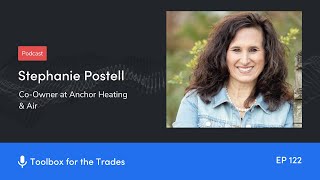
Stephanie Postel went from teaching to co-owning Anchor Heating and Air in Charleston with her husband David. They started with $2,000, hit $1.5M revenue in 2022, and are on pace for $4-5M in 2023. She credits her teaching background for how she trains technicians and builds culture.
Questions this video answers
$2,000 (from their own bank account).
$1.5 million.
Between $4 million and $5 million.
Four to five calls per day.
Approximately 10–15 five-star reviews per week; about 155 five-star reviews at 15 months.
Stephanie Postel, you are the co owner of Anchor Heating and Air of Charleston, South Carolina. I am so excited to talk to you today. Welcome to Toolbox for the Trades.
Oh, I'm so excited to be here. Jackie.
You and I, we've crossed paths quite a bit. You're a service titan customer and we've been around each other. I know you're involved in Lady Titans as well, and I've just always wanted to talk to you. So I'm so happy that we're finally making space for it on season eight of Toolbox for the Trades. We're, which is insane to me. We're going to start off this podcast the way we do every single one, which is. Tell me, how did you get into the trades?
Well, I, I, I kind of feel like I fell into the trades, which I feel like a lot of people say sometimes. I actually had owned my own business and I had sold my business and became a personal trainer for a short period of time. I had lost lots of weight and, and really just loved personal training. And I think the, the coaching thing has always kind of been in my blood. And so I was doing personal training and I actually was training H Vac owner and his wife. And we were just having a real casual conversation while I was making him do some squats. And he said, I was talking at the time I enjoyed being a personal trainer, but really was thinking about kind of what my next career move was and was considering going back for my mba. And he offered me a job. He said, you know, let's talk. What if I offered you a job? And I literally said, what is H Vac? Because I really didn't have any idea. And so we actually went out to lunch and he told me about it. And then I was like, you know, I just, I don't, I'm not sure that that's for me. And luckily he asked again and so that was, that was it. I was in. And probably about a month or two after that conversation, I started with his company really doing marketing and what we called at the time was business development. So he had just, this was 2012, so he had just bought several companies that he put together and was, and had joined Best practices group nextar. And he brought me in to implement nextstar in his companies or in his now one company. And so I came in and started from the first day training service technicians and you know, then it's just been off to the races since then.
So that's wonderful. And I have to tell you, I went to the gym this morning, and I was doing a hip thrust with the weighted hip thrusts, and I did it. And then a woman came up after me and she's like, excuse me, can you please tell me how you did that? I'm trying to figure it out. And I was like, of course I will. I will tell you. So I love female trainers. I think that's awesome. I also love how you just jumped right into H Vac. Like, what is H Vac? It's like, funny you ask. You see those metal things on the ceiling? It's like, yes, I've never thought of those before.
Right, that's it.
But. But honestly, the job that really, it ended up that he was offering to me fit really well into what I had done before. One, I'd run my own business.
And.
And honestly, my very first job out of college, I was a teacher, kindergarten and first grade. And so not that at all. You know, that doesn't have anything to do with the. With the. The audience at all, but it definitely does, just with the training aspect, the teaching aspect. And that's just something that has just always been in me. And so I was able to take what I knew from teaching and really put that into working with the service technicians to begin with, because the, really, the point of that, to begin on that job was training them in customer service. And how do you talk to people and how do you communicate better procedures and rules, and everybody can use a little bit more of that.
So I know why you and I get along so well now. It's because, like me, you also have had many careers in your. In your past, as do I. And thank you for bringing up the kindergarten teacher thing, because when we first spoke about you coming on the show, you told me that that everything you did to help grow your business now anchor heating and air, you learned from being a kindergarten teacher. So tell me more about that. Tell me about how you mapped the skills you used as a kindergarten teacher to the skills you had to teach technicians and get familiar with the trades.
Yeah, well, I think that for. Especially where my forte is. David and I have grown a couple of companies from zero.
David's your husband and co owner.
David is my husband. He's really the. The technical superstar. It's. It's me and him power, power team. Definitely not all me. I just get to sell the great things that he does. So. But I think it was. It's really about. In growing a company. One, if you. If you don't have great procedures and policies from the beginning, then you're really not building on a great foundation. And the one thing I think that people will know, or maybe they don't know, when your children go to school for the first week or two, when they're in kindergarten or first grade, they really don't learn how to read and write or do anything the first couple of weeks because they don't know how to walk down the hall or sit quietly to listen to the teacher tell them anything. And so, truly, it is about teaching them those procedures. How do we walk down the hall? How do we sit next to people?
Right.
Crisscross applesauce, hands in your lap. Because you're used to living in your family. You're used to living with people that don't care if you fall on them or touch them or hug them. And then now you're in a group of 25 people that you have to learn their different personalities and how to get along with them. And. And so, honestly, it's a real great microcosm of our companies.
Right.
Because we have to learn how to get along with different people. We have to learn how to follow the rules. We have to be creative and contribute to a group. And so I think it's a really great analogy, to be honest. And I think there's some things that we do really well in our companies, and sometimes we don't do as well. And if we remember back to. As the leader, being the teacher, and when you're the teacher in your company, I think that you can really set yourself up for success a lot better than if you just kind of let everything, everything go. So procedures are the number one thing, I would say, in starting our company. And that's just like being in kindergarten.
Yeah. And also when you kind of go in with the teacher metaphor a little bit, too, teachers are encouraging kids to take chances, to become autonomous, to gain confidence in their skills. And that's exactly what you have to do for your service technicians, as you're treating them to deliver a higher level of service, potentially training them how to be selling technicians. Those are all things that you have to do as a teacher. And you have to instill confidence. You have to kind of gently hold them and then let them kind of fly off, fly out of the nest when you feel like it's appropriate. It's like kind of two different styles. Right. Because it's like, definitely.
But no. Yeah. I mean, I think that's the thing, though, as a teacher that we, you know, as a teacher, I was taught, you know, when kids come in the classroom, you have to assess each One of them and their strengths.
Right.
Some people learn by hearing, Some people learn by doing. Some people learn by actually, you know, putting their hands on whatever you're doing and then. And learning that way. So we do that. We should be doing that same thing within our companies. And when we do that for each person, whether it's a technician or whether it's a csr, then we do better by them by helping make sure that they're in the right seat. And also it helps us learn how to work with them on a different level.
Right.
How do you like to be treated? What are the kinds of things that are your things that you'd like to do? What don't you like to do? And I think then we can craft jobs within our companies where we are getting the best out of all of the people that are working with us. So that definitely goes back to my training, for sure. I would say to the other parts is you always have to have a plan, and when you start a company. So many times we get into having our companies and we didn't really know that that's what was going to happen. Right? We. Maybe you're a technician in a truck and you're like, I'm done. I'm starting my own company. And Monday, like, I'm quitting today and I'm starting Monday. And there's nothing wrong with that.
Right.
You're taking a risk, and there's a lot to be said for that. But then you get there on Monday and you're like, wow, there's a lot more that goes into this than I thought about. So I think kind of backing up and having a plan, even if you are thinking about starting your company, write out a business plan, write out what you're going to do. How. How is that going to look, you know, dream big? Because I think then you're able to say, I've been at this company and I like this, and I was at this company and I didn't like that. And so then you're really creating the dream and the vision that you have for the company so that when you bring in other people, you're able to tell them what that dream is so that they can, you know, have become part of that dream.
Exactly. I'm so happy you brought it back to that, back to writing that out. And what's really interesting is. So you and David, you mentioned, have now worked at several trade businesses throughout the years, but Anchor is now your first one, and you guys are very much in the early years. So you did 1.5 million in 2022 and you're pacing between 4 million and 5 million for 2023. So what advice do you have out there for folks like the gentleman in the truck who you just referenced, who are also early on in their business or just getting started?
Well, I think again, you know, if I'm going to continue to use that analogy, I think the big thing is, you know, make friends with lots of people and that might mean suppliers, vendors. Again, back to that plan. You know, we have cultivated lots of relationships over the years, so when we were going to start our company, we knew the suppliers that we wanted to go with, the ones that we knew were going to support us. There's a lot more that goes on that you don't know about when you're not the owner. So ask. And I would also say too, make connections with people either locally and people across the country. I know a lot of our Facebook groups and stuff are really great about that. But I say again, just like being in school, make friends, find your tribe and ask lots of questions because there are people that have already done this that they've already made the mistake. So just go and say, hey, what would you have done differently? And that certainly can help. There's no question about that. You know, I have some, some really awesome men and women around me that I've been able to go to. I joined, we joined a best practices group. So I get to go to that meeting every week. Um, and I'm in a group where I am definitely the smallest company because I want to be around who's doing it bigger and better than me.
Right.
So if you're the biggest person in the room or the smartest person in the room, you need to move to a new room. And so that's, that's always been a great philosophy for us, is that we want to see what everybody else is doing. Go visit other shops and if you can do that pre opening your business, wow, you will definitely keep that notebook and write down all those ideas because there is nothing wrong with doing research and development and robbing and duplicating.
Right.
Because you're going to put your own spin on it anyway.
Exactly.
So that's definitely a big thing. Again, I would go back to planning. I would also go back to making sure that you are pricing yourself appropriately. One thing that I know has served us well is that when we, we knew the standard that we were already going to set.
Right?
Because we know what we expect and where we've been. So when we started, we are we had priced ourselves to be in competition with the biggest people in our area because we knew that we could reach that level of service. And so while we didn't have all that overhead to begin with, one day we would.
Right?
And so we priced ourselves to be able to grow when we needed to grow and not to say, okay, well, now I have three trucks, so I'm going to up my prices.
Right.
Affordable and really cheap is never going to be in my, in my words when I talk about my company. Right.
Think that's so great. I'm so happy you brought that up because I would assume that a technician who quit on Friday plans to start his own business on Monday. And I should say him or her, their go to strategy was, well, I'm gonna be the lowest, lowest price on the block right now. I'm just gonna, that's how I'm gonna get customers. I'm gonna be the cheapest option. And while that may get give you some short term success, in the long term, it's really shooting yourself in the foot. So I love that you, even though you're still in the early points of anchor, you're like, no, we're not doing that. We are not cheap. We are not affordable. So have you heard, have you gotten any pushback from mentors or any people that have given you the side eye when you share that with them?
No, because that's the advice I got.
Right?
I mean, that's the whole thing. Dress for the job we want, not the job you have. And so for us, that was super important because now already, you know where we are. We have the other part of our mindset in growing this company was we are going to have the best of everything. Meaning we have service tightening, we have really great branding from the beginning. We have very experienced technicians. We have people in our office that have lots of experience because the fewer mistakes, the fewer the callbacks, the happier your customers are, the more efficient you can be.
Right?
So if you come out of the gate and you're like, well, you know, there's lots to be said for apprentices in our group and I'm not at all saying that we shouldn't have that. But for us, as a new company, I don't have the time or the bandwidth at the beginning in order to have lots of mistakes, so that down the road I'll be able to have more apprentices because I've done it right from the beginning. And later on it'll give me the opportunity to train more people in the industry. But right now, I need to be out there. I need to do not as many calls in a day because we only run four to five calls a day. I mean, that's again our philosophy. But I need people that are able to convert on those calls that know the level of service that we need to provide and that way we keep people happy. You know, we bring in probably between 10 and 15, five star reviews a week. That's big for a small company. I think we're almost at 155 star reviews and we're 15 months in.
Right.
So. And they're beginning to really roll in as like literally I think we had 10 last week. So. So that's big for us because that brings us up in Google that makes our marketing, you know, our marketing spend come down because we're, we're moving to the top. I think the other thing too, when I say make friends is vendors and finding people. You know, we have an awesome website, we have somebody that really knows what they're doing. There's some other softwares that are plugins that we're able to use that are making things more efficient. So. But all of that's kind of cultivated over seeing what other people are doing and then taking that in and making that work for Anchor.
Yeah. And not to mention the experience you and David have from previous companies working here. I know when you first talked to me about your, your beginnings in the trades, I was just thinking about how, what a perfect role setting up nextar at a business so nexstar, which is one of the best, best, best practices groups out there. You were as a newbie to the trades or following their systems and processes and having your company follow those. So you were really getting a masterclass right at the beginning. And it sounds like throughout your career you and David have just watched what other people have done, made friends, made those connections and now you're ready to launch Anchor. I would love.
That's right.
I would love to talk a little bit more about this like day one kind of stuff because I talk to so many people on the show as you know, who are they're, they're further along in the business sometimes it's a family business. It's been around for decades sometimes even if, you know, with ishmael, I mean, NextGen's only been around for, I don't know how long it's been around, maybe like a decade or something. But he's so far removed from like day one.
Yeah.
Would you mind sharing with me a little bit more about, you know, startup costs and what it took for you and Dave to really start anchor?
Yeah, well, I mean, you know, honestly the first day we started with $2,000 out of our own bank account and we went and bought the first unit and we did the first job and then we took that money and we put it back in and we went along and did the next one. So, but I think also just again relying on those suppliers and things around you, the tools that they have, you know, we use Johnstone, they have a really great app for replenishment, you know, and so what you don't think about when you're starting is you're like, oh, I'm not going to automate, I'm not going to use all these things because it's easier just to make a list of what I've used run by Johnstone, pick it up and then I'll take that stuff. Well, they have a great app, so talk to them. They, they don't, they don't care if you have one truck or you have 10 trucks they want you to use online, right? And you can go right in and you can select the tools or the, the parts that you need. And when you show up at the supply house, it's sitting there waiting on you. And not to mention you get a little bit of a discount from doing that.
Right.
So that's a quick efficiency that you can pick up because you're not sitting at the parts house and if you're new and you're only one truck, you can't be at the parts house all day, right? You need to, you know, get in there, pick up your stuff and get on to the next place. So I think that's. Those are little things. Find out what automations there are within some of the softwares that might be able to help you. You know, we were a little bit different where we had Service Titan from the beginning. I had a long history with Service Titan from the other businesses that I was in, but ultimately I knew that was the best place for us and it gave us the ability to do more with less people. So, you know, again, that's something to consider when you're putting your budget together. But there are some other great ones out there that you can get started with, but it needs to be in your budget to grow to what you know you're going to need. And again, I think the other part sometimes that we forget about is that we try to do things without someone in the office or someone dedicated to answering the phone. And that's a huge thing because that's really the first impression of your company. So sometimes it's six, eight months, maybe longer, before you're like, well, I think I'll hire someone to work in the office. Put it in your plan early because you are. You're beginning that foundation of what people think of you, how easily it is, how easy it is for them to get in touch with you. And I think earlier the better, we might find that you are way more efficient because you're not ordering parts, you're not answering the phone, you're not coordinating all of that. What if you had somebody that did all of that for you and you can do twice as many jobs? Those are little things that I think that comes from experience and from hearing someone else say, if I had it to do it over again, here's how I would do it. So that's a big thing.
I'm so glad you said that. And as you were saying that, I wrote down my notebook. Planning for success. You're creating a plan that the business is going to succeed. And I was just thinking, we've talked a lot about mindset on this show. Not in recent episodes, but my episode with Keith Mercurio was very focused on mindset.
Oh, yes.
And I think about. I think about. Thank you. I think about how planning for success is just so key, because if you're making a plan and you're assuming that your business is going to do well, how that would just improve your overall vibe. Especially in those early days when I'm sure a lot of people are facing imposter syndrome, Especially if it's a technician trying to run a business like, I know how to do H vac, I don't know how to write a business plan. So planning for success and getting that mindset in, I think could really make a big difference just to the owner.
Well, sure. And I mean, I think that all goes to. Again, you know, deciding from the first day that you. You're going to have a uniform.
Right.
And then somebody might say, well, I. I'd have to order 12 shirts, so I'm not going to do that.
Right.
Okay. I don't care. It doesn't have to have your name on it, though. That should be in the plan. But always show up with purple shirts and gray pants.
Right.
So you're just setting what the expectation is, because part of it is a customer's impression of you. One that answering the phone. And how does that get answered? It always gets answered the same way. It's a beautiful day in Anchor heating and air. How can we help you? Right and so you start that early, but then when you show up at the house, you always show up the same way we always show up. We decided it's purple shirts and gray pants.
Right.
And so again, you can do that early. And then when you get. Because you're charging what you need to charge to grow your business, then you can order 12 shirts. And then they always have your name on them.
Right.
So those are little things that I would say sometimes people try to piecemeal it together and. And I'm sorry, in our. The way our society is, they're immediately making judgments based on your appearance from the beginning.
Right.
And so when somebody feels confident that I know the guy in the purple shirt in this truck is always anchor heating and air, you feel better. And then you're more apt to believe they're licensed, they're bonded, they're insured. And let's go back to that. Let's have all of that when we're getting started, right. In our companies to protect ourselves and our customers. But again, I think customers believe, well, it's okay that I'm going to pay this much because I know what I'm getting again, I'm getting somebody that's dressed appropriately that's, you know, speaking to me about what my repair might be. They're not coming and giving me a bill after they've done the repair. I always get the price up front. And to me, that again, goes back to procedures. How are you going to do it in your company? Because after you've already hired three people, it's really hard to go back and say, well, wait a minute, we're not all doing it our own way. We're doing it the anchor way. If we start that way from the beginning, it's much easier to really gain traction a lot faster.
I'm having a thought right now, and I'm wondering if there is a new business owner out there who has as much confidence in her decisions as you do, which I think.
Well, I would say that's come with a little bit experience. You know, I think the thing is, sometimes another one of my. My tips is be stubborn. And that can be good and that can be bad. But part of it is David and I have a real understanding with each other, is that we're going to be decisive, because sometimes you get that analysis paralysis and you don't make a decision. So we've decided we're going to make decisions and we're going to be stubborn about it, and we're just going to go forward with it. And sometimes I think you might have to come back. And also, here's another tip. Be able to say you're sorry, right? Because we might make a decision and come back a year from now or six months from now, depending on what the decision is, and go, man, that was stupid. But here we are, right? So we made some of those decisions pre anchor we might not have been as diligent in protecting ourselves or, you know, asking the right questions. But, you know, I think what we have known all along is that we know the level of so service that we require. And so we knew that if we could create a company that could provide that level of service, there's no reason why we wouldn't be successful. The other thing is we love. We love each other, so we work really well together. We're really good at staying in our own lanes. That's step for married business owners. So I'm really good at running the business. David is really great at install service and the technical side and he's a teacher at heart. His mission is really to bring people into our industry and it gives me a lot of confidence when I'm leading our company to know that I have this amazing product, service, everything to sell. Like I have that confidence because I know reap said here's our level of service and I know every time we go out we have brought people on our team that believe in that vision as well. So. So yeah, you just reminded me of.
What my parents ran a business back in the 90s and my mom was my dad's CSR and she said that I had faith in your father and that's why I was able to sell the business and moving away from my sentimental moment right now. And your love for your husband, I think if we pull that away from marital partnerships, how do you instill faith in your CSRs about the services that they're selling? How do you make sure that they know that they are offering the best possible service in the area? Because I think that would make such a difference. I've not so much in the trades because as we famously know on this podcast, I've never worked in an H vac shop in my life. I just have had the privilege of speaking to folks like you who have created incredible businesses. But I'm thinking back to my experience in tech and I've worked for a lot of different tech companies and how you never really were given that message. I've always been in marketing for the most part, but it's like never really shown that value. Service titan obviously excluded from that scenario. So, like, I think it's just so important for that value to be communicated on every level so your employees can know what it is they're selling and have confidence that they're offering the best service imaginable to the people on the other side of the phone.
Yeah, I think the biggest thing one is that, you know, our CSRs know what the technicians are doing in the field. So part of that is through our onboarding and them spending time with the technicians in the field. And that goes both ways.
Right.
So that my technicians understand what goes into getting them to every call. I think it's all about culture, too, and just, you know, a true vision of why we're doing what we're doing, and that when we. When we win as a group, we're all going to win individually as well. I think that my office manager and csr, they know that they are empowered to do the right thing for the customer. So, you know, if we make mistakes, we own it. That's back to, you know, be. Be very willing to say you're sorry. The customer is not always right, but sometimes the fight's not worth it, and I'd rather take care of them. And they are definitely very empowered to do that, because at the end of the day, I mean, we're going to win some and we're going to lose some, and ultimately we fall somewhere in the middle. Right. And so if they can do the right thing. And the other thing is, I tell them to make that decision and then ask me later.
Right.
Because in that moment, I may not be available. I'll back you up. And I think when we set those standards, then they can feel confident that what they do is maybe they make the wrong decision. But that's all right. We'll fix it on the next one.
Right.
I mean, it's. It's not. It's a conversation and it's a communication. I feel like the same way about the technicians as well. I'd rather you do what you think should be done in the moment and then be. Be willing for me to say, well, it's not exactly how I would have done it, but that's okay. The. The ultimate, how it turned out is great, and that's good, and so maybe we can learn from that. Or, you know, maybe that's a problem that I didn't know about. So now we brought that to the forefront. We can fix that. But this is a team, so. And it's not, you know, I always hate to say employees, because I really don't feel that way. We're. We're working on a team together. So like I said, when. When they're successful, I'm successful, anchor successful, we're going to take care of everybody.
Stephanie, I want to take this conversation in so many different directions, but I'm hearing my producer's voice in my head, which is encouraging me to keep the episodes around 30 minutes, which we have gone over. So I want to ask you a couple last minute questions, but I just wanted to wrap this whole lovely interview in a bow. You know, relationships seem to really just be the foundation of how you and David run the business, how you see yourself as a woman in the trades. And what's so funny is you're actually a member of Torch Network, which is one of service titans groups here. And maybe you can tell the folks a little bit about Torch just for those who may be interested and are like, what the hell is Torch Network? How can I join?
Yeah, well, I mean, definitely. Great to be in Torch one. I think the. The biggest thing is just learning from everybody else and seeing what best practices are out there, right? And being. Being willing to share what you have and then being, you know, able to get the good ideas that other people have. Then there's also some nice things in there where you kind of get to see what's happening with Service Titan and what might be on the horizon for that too. But I think, you know, just realizing that we have such power in our technology at our fingertips. There's so much with Service Titan, right? We all say it all the time. Like, I've been, I've been with Service Train, I think, since 2015, and like every day we learn something new that we can use to our advantage or learn or things are changing and we can't know it all. I don't care if you do have somebody on your staff that is doing, you know, helping you with Service Titan or whatever. I'm a smaller company. I don't have that. But when you have these resources around you, it's like so easy. Somebody's like, oh, we do it this way or we use tags that way or we use this that way. And I'm like, dang, that's a really good idea. You know, and I'm like my office manager, like, hey, we should do this. So I think the. The networking is definitely is a huge thing. You know, one thing I do want to get in Jackie, you know, for sure. As I think as business owners, relationships are huge. I think whether it's husband and wife or the people that work with you? You know, again, I go back to the kindergarten thing. We have to make sure that we are, you know, I say take a nap, eat a snack, you know, whatever, take a field trip. I don't. Those little things, because whether it's us as the owners or it is our people, they need breaks, too. And so we just have to be good at really realizing that and figuring out what they want. And it's not always about more money. Let's be honest. Everybody could use more of that. And there's no question. But sometimes there's other perks and things where we see that mental health is huge and we want to make sure that we're taking care of everybody. We give people their birthdays off. We don't let them work on their birthday. That's a. That's a big thing. Like, I don't want to be here on my birthday. I know you don't want to be here on your birthday, so, you know, enjoy that. And I think, you know, always saying thank you to your staff and recognizing what they're doing and they appreciate you having a plan. People like structure, so get that plan and then you can work through all of that. And I think a lot of times it keeps the things that we don't like to deal with, the confrontation, all of that. It keeps a lot of that down because it's up to us as the leaders to show them what the vision is and to help them accomplish what, what they're trying to do as well. They want to be part of something bigger. Most people do. But you need to be the leader in order to show them what that looks like.
You know who else likes structure? Kindergarteners.
They love it. They need it.
I also love structure. I 100% agree with that, Stephanie. This has been. I cannot tell you how many other things I want to talk to you about. So you're going to have to come back. What is happening? What is on the horizon for anchor? What are you and David really excited about for the coming year?
Well, you know, one thing is we're jumping off on this. We're going to private label our equipment, so we're going to have the captain series of our, our new equipment. And, you know, we're just getting, getting ready for a big summer. We know that we've done a lot of stuff throughout the community. We planted lots of seeds and they're starting to grow. So, you know, and I think the other thing is when we have that really great summer, we are really looking forward to how we can give back. And so we've kind of designated December as being able to. To make all that come together. So our staff is really into that as well. And so I'm really excited to see. See all the cool things that we're going to do at the end of the year where we can bless the people in our community that. That have really, you know, make Charleston and in our community what it is.
Amazing. All right, I'm testing out of some new questions this season because, you know, we did soundtrack of your life for the last, I want to say, like, 30 episodes or so. So I would love to ask you, what is the best and worst piece of advice you ever got?
The best piece of advice, I would say I. I'm. Well, I kind of already shared it, but the. The high. The dress for the job you want, not the job you have.
Right.
So standards are big with me. That's just, you know, something that I've kind of. I think people like to know what to expect. I do. So. So that's a big one. You know, you're always looking for. For what is next. And I think when you can do that, you can be successful for sure. Worst piece of advice? Go get your haircut before a big event.
All right, what happened?
Don't ever do that.
Don't ever do that. Which Was it a very big event? Was it like.
Well, it was the day before I started high school. It was terrible. Like, now, like, it never works out, right?
It never works. All right, good. We got it. Stephanie Postel of Anchor, thank you so much for joining me. This was really great. And I know that the folks who listen who are early on in their business, are appreciating your candor and your vulnerability. I look forward to having you on the podcast again. Thank you so much.
Yeah. Well, Jackie, I've been wanting to be. Meet you and be on this podcast since. Since the pandemic. I've been fangirling since then. So this totally is just like a day that I'm going to work off and remember forever.
So that means a lot to me. Thanks so much, Stephanie.
More from Bill



Capturing the 80%: How SmartAC’s Gen-2 Targets Non-Membership Homeowners | Podcast Ep. 296

Build better customer data with every booking in ServiceTitan | TAD Tune-Up Series

The Biggest Change for Roofers Coming From Other Roofing Software to #ServiceTitan?


