Winning isn’t Everything, It’s the Only Thing | Podcast Ep. 113 | Toolbox for the Trades
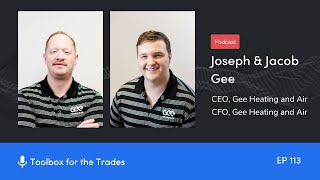
Jacob and Joseph G scaled their North Atlanta HVAC business from $4M to $11M in one year by moving from paper processes to CRM systems, building repeatable checklists, and holding staff accountable to high standards. They aim for $25M next year and $50M in five years.
Jacob and Joseph G, welcome to the podcast.
Thanks for having us.
Yeah, thanks for having us.
I am so excited to talk with both of you. You are the owners of G Heating and Air. You guys have grown from 4 million to 11 million in just one year, which is insane. I've got a lot to talk to you guys about. But before we even get started with that, I want to kick off this podcast the way I do every single one, which is how. How did you get into the trades? And before you both speak next, if you could just say who's who so our audience can follow along. Who's not watching the video, but who is listening on the podcast? So how did you guys get into the trades?
Go ahead and take it. Yeah.
So, well, I mean, it's kind of been a family trade. My grandfather, gosh, he's been doing it since the 50s, basically since Air conditioning was invented. And then my dad followed in his steps and. And worked with my grandfather, and then. So it's kind of always been a family trade. But then actually when I got. I wasn't planning on being a part of the trade until after I went to college and I went to business school and I was working for a marketing firm coming out of college, and that's when my brother decided to. To join with my dad and. And help him with. With the. With the company. Company. And so then I later on, about a year later, Joe. Joe approached me about, hey, when we team up and take dad's business and. And, you know, help him out and all this stuff. So that's kind of how I got back into it. But really, I've been, since I was little, getting in the van with my dad, going from call to call, working on units in heat of summer, no air conditioning in the van. So. Been doing this for. For a long, long time. It's been in our blood. So this is Jacob, by the way. I don't know, introduce myself.
Yeah. And anybody listening? We're brothers, so of course. I'm Joseph, CEO at G Heating and Air. I like, like Jake. I mean, it's been in our blood. We've been around for a long time. Our. Our grandfather started it all, and they get my dad into it. And I always tell people my dad tried to keep us as far away as possible from it. You know, he. He'd always say, I didn't work as hard all these years for all that time to get you all right back into it. But here we are. My story is a little unique. I went to college. I actually got into Law school, and I was going to be a lawyer. And I actually, I didn't like it. I was kind of miserable. And I remember talking to my dad. My dad was like, hey, once you come work for me, can't really pay you a lot, but, you know, be something to. Until you figure out what you want to do. I was also getting married that same, like, in six months, too. So it was kind of crazy. But then I think my dad did it as the intention of making me go back to school and want to do something else, and then realized that there was a business here, there was something here that you can make money off of, and started working in the vehicle. My dad. It was. At the time, it was just my dad, my grandpa, and a gray 1995 Astro van. We maybe did a quarter of a million dollars, maybe half a million dollars in business at the most. I was running the calls on a yellow pad, sitting in the driver's seat in the back seat, had a little change out crew and started learning how to sell. And then in 2018, a couple. Fast forward a couple. We hired our first employee, like 2014. We grew to like six employees, like 2018. And then we were in 2020, I think we had like 12 guys. And then, you know, now we're. We are now. So that's kind of how we got to where we are right now and how I got into it.
That's awesome. So the company didn't actually start growing until you came aboard, Joseph?
Yeah, kind of thinking how to answer that one. Probably have to pause here. So it did start growing. It had been around for a long time. I mean, you know, my dad's business had been around for a long time. So, I mean, I'm like everybody else, you know, dad grew up in this. He did really well. He was into new construction and other stuff before. And, you know, what happened in 2008 with all that, like, everybody knows, and just, you know, took a dive from there, and then he just kind of let the guys go and just kind of went down to service and what he knew. And I'll be honest with you, I think when we first came on, I was just kind of into it, just to. It was like a stepping stone, you know, I didn't think I was going to stay here. And I think I was just really more just like, hey, if I can just, you know, I remember telling my dad, hey, man, if I could. If I could just make like, you know, a living doing this, you know, just trying to make a living, kind of making it A almost like a hobby. It was just a job. I never at that time, didn't see it becoming a business like it is now. And until I think, really until I brought you on and then we started talking about it and you were just kind of like, man, there's something here. And we started realizing that a lot of people need H Vac and we've made a lot of mistakes along the way and we'll get into those during this podcast.
Totally. And by me saying the company didn't really grow until you came on, Joseph, that's in no way to say anything bad about your father or your grandfather and how they ran the business before, but it's just interesting how your dad was very intentional about keeping you two as far away from the business as humanly possible, possible. And now you're both running it and you're running it incredibly well. Like you went from 4 to 11 million in one year. You guys actually joined me for a webinar in summer of 2022 to talk about your first million dollar month. So you guys have done a ton of business, made a lot of mistakes, but also have made some really good decisions. So I would love to know what changed and how did you both navigate it.
Yeah, so, you know, one of the things kind of going back to where we kind of came into the business, our dad and grandfather was definitely a new construction. They basically back then that's all you did was, you know, you go around and you get with general contractors and you just build houses and install systems. Well, whenever the housing market crashed, a lot of companies, including my dad's business, didn't really know how to make the transition to not having that many, many homes to be able to continue new construction. There still was out there, but not as much as, you know, the work was plenty and they just needed more and more H Vac guys to do it. So the margin started getting decreased. And this is a very same story. A lot of people here and a lot of people didn't know how to transition to being a service or replacement in that kind of business after the recession happened. So coming into it, whenever Joe took over, little things like my dad didn't know how to take credit cards or you know, know how to like, you know, as far as he had paper notepads, that was basically everything was written down on. So when we came in, you know, we decided, hey, let's get organized, let's. I think the first system that Joe kind of incorporated was like a Google. When I, when I came in, he was Running off of a Google, like, you know, sheet that he basically updated the calls that came in. But it was still.
I laugh about it now. I don't even know how we.
And, you know, he had. Where basically he did have the iPads for. For the. For the soul tech we had. And that was still running calls too. And so they had iPads, and so Joe would update it on the Google sheet and email it out to them, and that's how they got their calls for the day. And so just something small as that. And then had like a payment software on the iPad that you'd take payments on. You know, so very basic, but it still was able to. Instead of having to bill out all of our stuff, you know, via mail, sending, you know, mail out to customers, you know, they were able to invoice immediately and then start kind of, okay, hey, we can actually get a little bit of cash flow in instead of having to constantly, you know, before this, we were having to, like, borrow money just to, like, pay for our distributor bills and stuff like that. So when you're trying to get that churn of, okay, now we're starting to get a little bit cash flow positive. We're not profitable yet, but getting. Getting that cash flow positive. And that's where Joe did a great job of getting it to that point. And then, so then when we were able to hire me on, we were able to kind of come together and say, all right, let's. Let's invest in, you know, finding a legitimate CRM. Let's, let's. Let's start looking into finding, like, a phone system. And those, those things started kind of going together and simple little things like that, because my dad already did. I mean, he's been doing this for. Well, this year. We're 34 years old of a company, and my dad's been doing it since.
Oh, yeah, for like, 50 years.
Yeah, so he's been there for 50 years. So, I mean, it's a huge customer base that has a lot of his customers and stuff like that. And it just wasn't, you know, well organized. And that was, you know, dad's an amazing technician. He's an amazing person. But as far as when it came to building systems and stuff like that, that was kind of where we kind of came in, and that was our strong point. So we just started kind of implementing systems. It took a little while for us to find a. The right systems to put in place. We knew we needed systems. We just didn't know what the systems look like. And then we Started looking at, you know, hey, let's look at hiring the right people. And so we went through how many people we've. Especially during that time, we were going through, you know, hundreds of people just trying to find, you know, quality people that were, you know, trustworthy, that we wanted people in homes that could pass a background check. So going from literally, my dad, my brother, me, and one tech and one install crew, you know, having to go through trying to scale up, finding the right people. You just don't want to throw anybody into a home because that's your reputation, your name on their shirt. So it's a huge, huge thing. So just kind of slowly turning that. And that's where the tide started turning. And then we made some really key hires. And people are always going to be your number one asset. I mean, people are. You can say, oh, the right marketing channel, the right this or that. Hiring the right person can take your company to a whole nother. But, you know, there's. You have systems like that, but people are very, very important in finding the right kind of people, too. So what, you want to add anything on as far as. Into that kind of recipe?
Yeah. So just real quick, I think, like, you hit it right on the head. The head on the nail is just, you know, we had systems, but we didn't have systems, if that makes sense.
The right systems.
Yeah.
When do you. When. When Jacob said a legitimate CRM. I'm picturing you in the back with, like, a Rube Goldberg machine where, like, a ping pong ball hits, like, a piece of tape, and then like, something adds a cell to a spreadsheet, like a pigeon flies with a letter to attack or something like that.
It's hard. It's hard, too, because I think a lot of times we look on, like, Facebook groups or we'll look on, like, podcasts. We're like, man, wow, they just got it all together. They're really lucky. Or they. They must have always been like that, you know, like, you look at, like, what Tommy Mello's done, and you look at these, I mean, other Ish. Any of these guys, and you're like, oh, man. But then you realize they weren't always like that. And so, like, anybody that's listening, like, yeah, we didn't hit 12 million or whatever just like that or what? What we look like what we do now? It was years of yellow pads, white boards, white vehicles. Just every. Every system was built out of necessity. We were like, okay, we've got this. And I think the best way I can Explain running this and growing this. And I think anybody out there that's listening will understand this. Building a small business is like building a rocket ship as it's taking off. So, like, I mean, really. And it's like, you're like, okay, I got this one thing done, and you realize that you're still missing half the other side, and there's holes everywhere, and you're just trying to go from one.
Burn up in the atmosphere, basically.
Atmosphere and everything. So, you know, anybody listening? Like, man, we. We were right there, like, dealing with distributors and not knowing who to. Who to go to, not having a CRM, not not knowing how to price things. And it was like cash in cash right back out. Why am I not making money? Trying to. We. We didn't know how to hire people or keep. Not just hire people, how to keep them and how to make them produce. We didn't know how to hold people accountable. None of that. So we. We've. We've made. Like I said, we made a lot of mistakes along the way. So I can. I can tell you about 10,000 things not to do.
I'm so happy you brought up Ish and Tommy, because one of the reasons I wanted you on this podcast, besides the fact that I genuinely enjoy both of you, is, Joseph, you gave me that fantastic idea about interviewing Ishmael and saying. Asking or not just Ishmael, but people like him and saying, you know, tell us about the day you quit. And actually, my very first episode of tell us about the day you quit or the day I almost quit with Ish will debut right. Not right before, but a few episodes before this one. So I want to thank you on air officially for giving me that idea. And I would encourage any listeners here who, when they heard you talk about, you know, kind of that social media highlight reel that a lot of contractors are exposed to, and they're like, how the heck are these guys doing it? Go check out Ish's episode because he is the first one to tell you he had no idea what he was doing. And I love your guys's vulnerability, too. Now, you mentioned two key things in your answers. Systems and people. You know, people are your biggest resources. And I know that, Jacob, one thing that you guys really struggled with was not only finding the right people in your area. And you guys are in Georgia, right?
Correct.
And at the Atlanta area.
Atlanta.
But it's north.
It's north Atlanta, but it's basically Atlanta.
Okay, cool. Just wanted to give everyone an idea of where you were geographically, so, you know, Difficult to find people. But then you also came into this issue where as you guys are growing, you're realizing the people that got you to 1, 2, 3 million aren't the people that are going to get you to where you want to go. And I know your goal for next year is 25 million. So tell me about how you made that tough decision to let people go as you grow.
That's. That's hard. It's hard. That's the. That's the toughest thing. You know, like I tell. I was telling somebody the other day, I was having a meeting with him, I said, I. I wish that I could be the. Everybody's best friend, you know? And I. I told her, I said, I said, do you like working here? And she said, yes. And she said, I said, do you feel that you have a direction? You have a purpose, you have, you know, my standard, you know, my expectation? And she said, absolutely. I said, do you feel that you're compensated well? Do you feel like we're screwing you in any way? Do you feel like you're. She goes, oh, wow. No. She's like, you pay me, you know, really, really well. I said, do you like to keep getting that paycheck? And she was like, yeah. And I told her, I said, too many people like you depend on me to have that paycheck and have this company running for me to be everybody's best friend. Too many families. Too many families depend on these doors to be open for us to have loose standards and to allow things and just to be buddy buddy with everybody. That doesn't mean you can't have a good culture. And that doesn't mean you can't be.
Have fun.
Have fun and be a hype guy and get people motivated. I'm not talking about that. You got to do those things. Things. But there has to be a standard. But we did realize, and it sucks because we talked about this, and I think what happens is you have people who. They'll get you to 5 or 10 million, and they're kind of like, man, why do we need to get any bigger? You know, I'm making more money I've ever made in my life. And, you know, like, man, just. Let's just keep doing that every year, man. This is. We're. We're making plenty. We're fine. Everything's great, you know, because they came from. There's a girl that's been with us since we were like 2 or 3 million, like, maybe even 1 million. And what, she's seen it change, right? And she's like, oh, my gosh, you know, like, I mean, she's. She's fully on board, but she's kind of like, wow, I can't even think about getting double this size. We were already, you know, quadruple what we've been. And sometimes you get guys that are just completely okay with that. And when you have people who are completely okay with just being. Once you get there, just kind of getting there, they're not going to be the ones that's going to get you to 25 to 50. And then also, too, I think some people just get burned out. Growing from 4 million to 12 million in a year or whatever. It's very easy to get burned out and to be pushed and just say, hey, you know what? I could probably go work somewhere else and just kind of ride it, ride it out. Or maybe this isn't for me. So you kind of have to sometimes bring people in that are fresh, that are like, hey, you're at 12. Let's go to 25. Or you have the guys who, you know, that, you know, maybe. And. But the best thing that you can do, though, is to keep those people motivated. And the best way to do it is they don't really care if we grow to 25 million if they don't, if their paychecks don't grow. And that's the truth, right? So you kind of have to. I think a lot of times we'll share vision of where we want to go. It's like, oh, you know, we want to. We want to be 25 million, and we want to have this and this. And they're kind of like, okay, But I mean, let's be honest. We're human beings, you know. Sure, you have to provide for yourself. I mean, things cost, you know, everybody. I tell everybody people have dreams, right? But dreams cost money. So, you know, you gotta. You gotta connect your vision to how it affects them and how they can grow and not just, you know, but financially. It's like, hey, if we get here, you know, I tell guys all the time, I'm like, you know, does anybody want to make more money next year? And they're like, yeah. I was like, okay, because that cost us making more money than we made this year. And they're like, yep, okay, good point. You know, so that kind of helped. But getting rid of those guys is tough. And I've learned that this is hard. You. You can't really manage people. Because when I say people don't change, I mean, you know, addicts and different stuff can change. Of course people can change. But someone who's a left side of the brain person isn't just going to wake up one day and be a right sided brain person because you want them to be. And somebody who's a visual person is not just all of a sudden going to. You know, people don't think like me, people don't think like my brother. We're completely different in the way we act and talk and think people are who they are. So all you can do is manage the system. You can design a system and you can manage it and hold people accountable to it and say, hey, look, this is the result I need and let me figure out how to, or however your brain works to help you understand. That's where we got to get to and let's design it to get here. But here's my standard and I need you to perform. But I think you can lead people, you can inspire people, you can motivate people and you can push people. And so some people, they just don't have it. And you got to be okay with that.
You know, one of my favorite sayings is, I think it's Nick Saban who says it is passion looks like anger to the unmotivated. Um, and that's one of those, those things where we have a lot of passion here. Um, we're not mad at anybody. There's no one, you know, there's no one that I'm like, they, they're a terrible person. It's, you know, you, we try to motivate, we try to push and we try to all this stuff. There's some people who feel like that's anger towards them. Like, oh, you're personally, you're, you're, you're, you're single me out, you're, you're pointing me out and all this stuff. And I was like, no, man, I believe you can do better than this. I know that you can. I know that you can provide more money for your family than you've ever done before. I know that you can achieve more than you can ever achieve. And it's when they get, they start kind of getting disgruntled because you want, you see so much more for them than they see for themselves. And that's very tough to see because you're like, you know, I can see this, I can see, I can paint this picture for you, you know, like the same way that me and you know, Joe and we, we said we and Joe would, Joe had the vision of like, hey, we're gonna have, you know, 60 employees. We're gonna go to, you know, $25 million and all the stuff on the board. Back when we were at 1 million, sitting in the ranky dank little shop and just. We had. Literally. We had rats running through our attic. I mean, just, I mean, count as.
Did those count as employees?
Yeah, those were our first. Yeah.
I mean, we had. We had one time where we. I mean, this kind of gross, but, like, they basically had problems up there where they had died. And then we had. We had stunk, and then we had flies that were flying everywhere. It's. Honestly, we could write a book about it. It's. How much of a horrific experience was in that first shot. But anyways, and so. But Joe's sitting up there un. You know, unfathom. You know, just like, he's got a whiteboard. His whole room is full of whiteboards. And then he's just mapping out this company from, like, that point. And of course, we looked nothing like, exactly that. But I. You know, at the time, I was like, this is impossible. Like, I'm gonna try to support my brother's dream, and I'm gonna try to, you know, build the systems with them and all this stuff.
And.
And I was like, but it's like this. You know, this is gonna be crazy. And seeing that kind of come true. But I forgot what I was going.
I started telling everybody. I went around and I started. I literally just started saying every person. I said, yeah. 50 million in five years.
If you don't believe that, get out.
No, I really do.
Yeah, well, I mean, that's what kind of mentality we try to get. I mean, in the back of my head, I kept saying, like, we're never getting 50 million. But when Joe, like, he basically is like, well, I want to find the people who believe that we can do this, that believe that is the mission.
Not. We're not.
Our mission is not 5 million at this time. We're a million dollars.
I didn't want people to say, okay, yeah. And I was like, all right, I see who you are. I wanted the guys that go, hell, yeah, let's do it. Yeah. And that's literally the people that, you know, have. That are in my core group that are still here. The ones are like.
I remember the first time.
All right, let's do it.
I remember the first time Joe gave this, like, really, like, intense speech to the guys. We had, like. It was like six of us in this room. So, I mean, just. You gotta understand the picture. We got rats running through our ceiling. We got six guys sitting in this office. And Joe comes in. He was like, we're going to $50 million in five years. And he was just like, this is what it's going to be. And all this stuff, like, Joe's getting this hot, you know, rally up speech. And then afterwards, I like, kind of sidebar with him. I was like, joe, what? I was like, 50 million. This first time I heard the 50 million figure, because at first we were talking about 25 million. That was like, our original goal, you know, And. And he said. He's like, I'm here. You're like, well, our first. You're like. You're like, wow. He's like, I mean, we might be able to. But I. I just wanted to see if they would. You know, they're gonna. If they're gonna budget that well, you know, they can leave, you know. And so me and him were just like, yeah, that's crazy to even suggest 50 million.
So I thought 50 million sounded better. I was like, I'm gonna find out what they think about that. Because, you know, Michael Eisner was the CEO of Disney, and he came in one day and he said he wanted to build a hotel the size that looked just like Mickey Mouse. That was literally like a standing Mickey Mouse. And turns out he never intentionally meant to do that. He just wanted to find out who was willing to step up and say, okay, we can do it, and let's. Let's start doing it. And he kept those people, and they. They got promotions and moved up. Wow. Really happened. And so I was like, all right, well, fine. 50 million in five years. Find out who literally is going to be who. Who's a dreamer with me.
Yeah.
And, yeah, that's what we did.
But Jacob, even though Jacob wasn't necessarily. Well, it sounds like you were dreaming out loud, but internally, you were skeptic.
Jake's a realist.
I'm more. Yeah, more realist where I'm like. I'm sitting here thinking. Like, I'm looking at it, because I was. I was also came in. I did the financials, and, you know, I kind of did all that. It's much. I'm not accountant, so. But I was doing the financials for the company, and I'm just sitting there, I'm looking. I'm like, you know, man, we're. We're barely. We're, you know, we're considering not, like, taking paychecks this week. Like, you're over here talking about 50 million and stuff like that. Like, you Know, just a different world. But my brother did have the vision. He saw it. And that's where we kind of started saying, okay, let's build a team that believes that. And there's some key guys that are.
You know, the biggest argument between me and my brother over the years has been I'm the guy that's like, let's go higher five. Like, I was like, let's go get it. Let's just do it. Let's just. I was like, why can't we move our marketing budget to 28? Why has it got to be at 8%? Like, that's why. Just go do it. I was like, get every billboard around here. And Jake's like, okay, that costs money. So let me go try to.
Let me call the banks and see.
If they'll loan this company.
You know what? You know what I'm picturing? You know that Internet image of that dog in the kitchen sipping coffee with the fire all around him. And the caption that just says, this is fine. Like, I'm picturing that as like, the inside of your head, Jacob.
That's how I am. Yeah, that's how.
That's how the. That's how the office. I mean, honestly, that meme is the best picture for how that entire office set up. Just disgusting. It was. It was a building that our. Our grandfather and dad owned for years. Years.
So it's free. I mean, we just weren't paying rent. It was a free.
We couldn't pay rent. I mean, literally. So we. This was all. Once we finally saved up enough money, we finally start. We got our first little suite in a little shopping center thing. And that's where we set up shop. We had two little offices.
650 square feet.
Yeah, 650. But that was, to us, was better than what we were coming from. The other one, our. Even our cable provider or for Internet basically came out because we kept having it go down over and over and over. And they finally were like, look, this. This is so. This area is so bad that we even charter doesn't even want to, like, really be out here. So you're lucky to get the service we're giving you. I mean, he literally said that to us. And I was like, okay, I guess I'll stop calling.
So.
All right. Oh, my goodness. I mean, I. You said so many great things, Joseph, about being mindful about folks capacity and burnout. You also said some great things about how being the owner, which I've heard time and time again. So many people depend on the paychecks. That this company generates. I cannot just keep you around because I'm a nice guy. And then this other level lever of. I love what you brought in with Michael Eisner about. I just want to see who shares this vision with me. And when I give them an insane project, instead of saying, no, we can't do that, they say, okay, let's get started. So I think those are all really great leadership things to keep in mind for folks who are listening and are building their own business. I want to move away from people right now because I know I could talk to you guys about this for, like, five hours because this is one of my favorite topics too. But I really want to get into systems because I know that was a place where you guys were just, like, in over your head. You're like, how do we even get this started? So how are you implementing systems today to keep the business scalable?
It's every day, we. Literally. One thing that me and my brother do is like, did you implement a new system today? I mean that. I know that sounds a lot of people talk and a lot of people say things like that. But, like, we really. We really do, like, every problem that we hit every day. Because here's the thing is, like, I remember I was talking like Travis Smith of a sky heating and air. And I remember I told him, I was like, yeah, man, we're going to like 10 million next year. He's like, all right, hold on, cowboy. He's like, you're going to be in that next. Just. Just trust me. And I didn't know what he was talking about until we got there. And, you know, every day, you know, as a. As an entrepreneur, as a business owner, as an H VAC home service provider, like I said, it's the rocket ship taking off. So we are constantly, you know, we used to. I used to. I'll put this on me problems. I would. I'd start, you know, panicking and I'd point fingers and I yelled at people. I was like, why can't they just think like me and just fix this? And, well, obviously, it's the person. This person is the problem, and he's. He needs to go because blah, blah, not realizing that he didn't have a system. There was not a process. There was nothing that I can grade him against. There was nothing there. So every day now, everything that we literally. We had a meeting this morning with some key leadership guys, and we don't leave those meetings. We. We literally have everybody on checklist. Everybody in my entire company has A checklist that turned in by five o' clock they had with a to do list of everything they're supposed to do that day. And they're not allowed to go home until all those things are done. Their reports are sent to me by 5 o' clock with all their. How many calls did you. And we do outbounding call logs, the booked appointments, everything. Everything has to be a system. You can't. And I. People think, oh, okay, yeah, no, I'm serious. Like when you leave your vehicle, when you go on vacation and you turn your vehicle in back into us, there is a system of checking that system finding what's on there and making sure everything is, is signed off for is a warranty return system where we bring back warranty parts. There's a, you know, every day, any problem that we hit. So currently today, when we have our all hands meeting, which is our support staff, we don't like calling people managers because managers just sound like this big. Yeah. And it's, it's just like people hate managers and that's the reason people quit jobs. You know, they hate managers.
Sure.
But you're like a support staff. Like when you're like, hey, and, and we write that because we tell them we literally had a meeting last week. And I was like, that's our number one job, is to support the field guys. Because if we don't have field guys, we don't have calls. We don't have calls. We don't have turnovers. We don't have turnovers. We don't have leads. We don't have leads. We don't have sales. And everybody in this building depends on that. So your job is to support them and just help them. So in the support meeting we were talking about how it's just, you know, any. We go through, everybody has to go through the meeting. Every, every division has to report first two questions on everybody's thing. It says, do you have a problem with anybody? And what problems do you have in your department?
Do you have a problem with anyone? Because I'll fix it for you.
No, it really literally says speak now. I forever hold your peace. Because if you don't bring it up, we can't fix it. We don't know what's going on. So it's really cool to see our all hands meeting is just this big. Like it's not a, not a call. They sit in a circle. They don't. It's not a classroom, it's in a circle. And they don't like call each other out they're just kind of like, hey, man, we're not doing this right. And this is this and this. And it's an accountability thing. And then we get into. They know that it says right here, what is your. Before they can leave and they have to turn these notes and everything, they have to write out an action plan. Every problem that's brought up has to have an action plan before we leave that day.
Nothing is more annoying than people who bring up problems but don't bring up solutions.
Anybody can bring up problems. You know, I tell people the reason you're sitting in these chairs is because you're not those people. Your problem solvers. That's the number one thing that you do. That's all we do all day. We just solve problems. That's it. And if you think about it, having a plan of action, because a lot of people will. A lot of people can and complain, but nobody comes up with a solution like, okay, we know that's happening. What are we going to do to prevent it? And so they come up with a plan of action that goes into, like an implementation thing. We start figuring out what's working, and then we create a system and then it goes into, like, we literally, we have Google forms where everything is into a system and they have to have a checklist and everything has a process. And even our warehouse has everything labeled with signs that says, put here and set this here and do this here and every. Every vehicle, everything's labeled. Even. We don't even allow them to put their tools where they want to. They don't allow. They're not allowed to hang their gauges where they want to. They're not allowed to put their cones where they want to. Everything is labeled and they have picture books that show them where everything's supposed to go. So that's kind of how we're doing things. Yeah.
And I think one of the things that you were saying, you said, like, our job is as. As support staff is to be problem solvers. Well, the biggest thing about systems that I think a lot of people don't really grasp it, like, you know, the smaller, smart. We didn't until about a year ago or two years ago when we first started putting systems in was, yeah, we're problem solvers. But the question is, are you solving the problem today? Are you solving the problem for. For the.
You're preventing it from happening.
Are you preventing it from happening? Are you, you know, something that addresses it every single day? That's a system. When you're just problem solving that Day.
That's a band.
You go around, you're like, that's a Band Aid bandit. But you're running yourself crazy, and you want to quit your job. Like, we. Plenty of times we wanted to quit because we're like, look, we're doing everybody's job. We're.
We're having to fix everybody's problems.
We're having to do all this stuff. You get so stressed, and you just want to, like, throw something and. But when you start realizing, hey, let's. Okay, today, yeah, the problem is not gonna be fixed today, but let's fix and figure out and sit down and build that system that allows this to be addressed every single day by whoever. If it's an employee or if it's a system, like, you know, service titan that can automate something or whatever it is, but then we can make the system where it then all of a sudden starts driving itself. And that's a beautiful place to get.
To, like, in our all hands. Like, we'll talk about that, and people will come up, you know, and ever. People know that they can come up with ideas, and we're like, okay, that's great for today. Yeah, but what's going to happen when you're not here? Yeah, what's your plan? So if you go. So you can never go on vacation, you can never take a day off, so what are you going to do? So there has to be a system, and you got to teach somebody. So we've been teaching people how to think. We're trying to empower them to make decisions and go, what? A lot of times they'll ask us questions. And this is. This is a great tool. Guys, if you're listening to this, if you take anything from me, whenever you get asked a question about something, just ask them what would be like, well, what would you do if I wasn't here? What would you do? Well, I mean, because it's empowering, right? If I asked Jackie, I said, jackie, you know, you bring this problem up to me. I said, well, Jackie, what do you think? What would you do if I wasn't here?
You want my opinion? You want my opinion, too?
Of course.
I would happily do it.
I want to know where your head's at. Because you know my standard, you know, my expectation. So how does that fall into what we're trying to do? Our mission, our accomplishment, you know, our vision?
It's almost like a little check in to the Michael Eisner stuff. Like, are you still thinking about growing US $50 million instead of. And I just Want to say real quick, those Band Aid solutions, oh, my God, they are so tempting. They're so tempting. Nothing feels better than fixing something right away.
We do it all the time.
Yeah, yeah, yeah. Nothing feels better than that. But to your point, not only is that going to burn out your employees, it's also going to keep you guys as the bottleneck that can't get stuff done when you need to get done. But I love what you were saying, Joseph, about empowering someone and asking them what they have.
A lot of contractors struggle with that because the reason they get so burned out and you see them on the groups are like, I just feel like I'm having to do everything. And you can ask. I guarantee you could ask any small business contractor. And one of their biggest things is they feel like they're still having to put out all the fires and they're having to deal with all the. The angry customers and they're having to deal with all this stuff. And yeah, you know, until you can grow, you know, there's. We got people in place to take care of that stuff now. But one of the problems is the reason you feel like that is because you're like, well, I hire the. Tell me this ain't true. There's people. You already heard it a thousand times. You hire these people to do this stuff, and then they don't do what you think they should be doing or doing enough. Or they're just like. Then you. You're like. You're afraid to hire somebody because, like, well, I'm just gonna have to do more work because I'm just have to do their work. And contractors sit there at night going, God, I'm doing everybody else's. I'm paying him this big salary for.
Him not to do.
Not to do anything, whatever. But the truth is, you didn't teach him. Give him a checklist, create a system. Cause him to teach them how to think outside when you like. You know, it's a beautiful thing, like, to see this company run even while we're not here, you know, just to kind of brag. I'm going to brag on my team real quick. I really want to brag.
Brag away.
Me and my brother were able to. So for my mom's birthday, she. She rented a cabin up in the woods, and it had no service. Like, it was. It was awful to go up to. She had this whole thing. She was going to go on a Friday, and we were like, oh, my God, it's middle. Middle of summer, middle of the summer. And they're asking us to go away for a weekend. Away from our phones, away from our Thursday. Thursday to Sunday, Thursday to Sunday. Not only did our company survive, it thrived. It was one of our record breaking weekends. We sold like Almost, I think 19 units in one day. We sold like we were. It was just. They were just pumping. And that's a credit to my, to my team. And was everything perfect? No, we came back and there was, there was things that we. Blah, blah, blah. But since then we've worked on those things. But, man, they're. They're just a team. And when you teach people to think and not just say, here, do this. You know, Jackie, you ever had somebody just tell you, like, here, do this. And you're kind of like, okay, you know, and then you're like, kind of, sure, sure. And you'll do it like, one time maybe. But once you get. Jake taught me this. He said you got to give them the why behind the what and when you get them to connect to the vision and the reason of why we're doing this, and you, and you package it, they're just like, oh, oh, yeah, yeah, I want to. I want it. And again, the people who want to get us to the next level are like, got it. Okay. Yeah, I got to make sure this is done every single time. And that. That's a long answer for what you asked. But, yeah, that's. That's what.
I love your long. I love your long answers, and I want to call out that one. I love it. Whenever people brag on their team, on the show, I think it's fantastic. So thank you for doing that. And I love that you said, you know, we did great, but we also, we got back, we noticed some stuff and we tweaked it, and now we're even better and more prepared for next time. One thing that you guys mentioned the last time we spoke is that you guys don't have a slow season at ge. You have a manageable season. So I would love to talk about how you've reframed this very scary time that a lot of contractors, you know, talk about.
Yeah, I mean, it's one thing about H Vac in general that I had to really kind of learn coming into this was the seasonality of the business as much as you, you know, a lot of people, they'll live and die by this too, is, you know, got to understand that we are, this industry is weather enhanced, not, you know, weather. What's the saying?
Whether not weather dependent. We're weather.
Exactly. So Basically, to really grasp that, you have to understand, like, you got to change your mentality. So, like in the summer and like the cold winters, you know, wherever we're at in the country, in Georgia, we have really hot summers that last for six months, you know, basically from April all the way to probably September, you know, September anyway, so you have these long summers, but there definitely is those dead, you know, end of September, October and November, where in our winters aren't that harsh. I mean, we get, we get some little freezing temps here and there. But is understanding that a lot of times these companies will like, kind of like, okay, we took our, our big summer and kind of coast into those, those dips. Well, we were like, no, we're not going to settle for anything less of expectation than we do after the summer. So. But we just got to change our mentality of how we, how we do that. And so that's where we got to get creative with like, our marketing and how our, our, our specials and all that kind of stuff and just changing the culture because a lot of times the way the culture was beforehand and kind of our entire area was, oh, you're going into maintenance season. And so maintenance season was kind of like, you know, just basically just enough to give a few hours to the text or, you know, it's just busy work.
Everybody around here just does busy work.
Well, and you're like, I hope I had enough money from the summer to build a, to pay the guys, because if, you know, if you don't keep them busy, they're going to leave you and, and all stuff. And it's a very tough, tough part of this business is because you don't want to lose good talent. I mean, you're like, hey, these guys are killer techs or killer installers. But I know business during these slower times. So that's why we had to change our entire culture switch. And so we've, we've made some serious leaps and bounds as far as not just seeing. We see every single time we're in a person's home, first off, we're thankful to that person for even allowing us in their home. I mean, that's not a given. So just be able to earn that trust every time. So just be thankful. Walk into the home and be thankful like, hey, thank you for even letting me into your home, Mr. Smith. I just, first, I'm thankful for that. So you build that relationship with the customer. You're, you're, you know, we preach that like, hey, just build relationships with these people. And, and then we, we have a strong process where we go through the full system and, you know, we have these turnovers and, and we, we really embrace the maintenance as an opportunity. So it's not just a going into work. It's not busy work. It's not, hey, let's. How fast can I get into this? We're, we encourage our guys to spend an hour and a half in these homes and to really a focus on what the customer's needs are. Because he. A lot of times you'll sit there and they'll start telling you, like, yeah, I don't really. I don't really like how this part of my house is this or that. And you say, okay, Mr. Smith, I got some solutions we'd like to go over with them. And so we just kind of. We switched our mentality. You know, summer, it's very like, you know, when you get in the home, it's 100 degrees in there. I need to get this person's AC back on or, you know, look at solutions for them. It's very direct. You know, they want you to basically figure out how to get them cooling as fast as possible. But switching that culture shift of, this isn't just busy work. This is opportunities that we're going to sit here and listen to these customers and take their concerns for real. So just switching that whole mentality and then also our support staff. A lot of times what happens is, wow, we worked really hard this summer. Let's take a. Let's take some time, you know, to kind of almost kind of kick back and chill.
Because most companies just kick it and chill and, yeah, coast until the end of the year. Yeah. And you start.
And, you know, that's one of the things we kind of saw early on we had to fix was a lot of people were like, man, we worked.
So hard this summer.
Like, you know, can we not just kind of chill until it gets busy again, you know, and stuff like this? And it's like, yeah, we can. We can kind of, but we got to change our mentality. And that's where we're like, hey, we've got to hustle. You know, we got to continue providing for these families. We got every. We can't just let, you know, installers stay without, you know, without work for, you know, these people are trusting us, so we've got to figure out how to do this. And so we got our whole support staff, you know, hidden. You know, we go through multiple call lists, we go through multiple, you know, just different things, strategies we have. And we're just, we stay that, that consistency and consistency is one of those things that me and my brother have just really started learning. That's where you want to build your business to is consistency. Because you know things that are going to keep you, you don't want these big swings and demand and all stuff. You want to try to stay as consistent as possible and build people and systems on consistency. The same amount of calls. We only want to put like three calls on a tech. You know, sometimes when it gets a little bit colder, hot out it might feel before but you want to keep things consistent and you know, so that, that's a huge kind of thing to unfold is how important just keeping systems and, and expectations and if you have a meeting, don't, don't stop doing meetings in the summer and then pick them back up in the slow time. Do the same thing, same, same exact system every single day or creatures.
I mean we're creatures.
So yeah, it takes you, it throws you off your whole, your whole game.
So you got, and you gotta understand how these guys operate. And so as, as an entrepreneur, as a, as your owner, I mean, would you like to come into an environment that is just, you know, like, like you just, you never know if you're going to have work or you never know if you're going to have this and that and this and that. And don't, don't, don't get me wrong, we've canceled meetings for things and moved them around, had to reset. Emergencies happen. But we try our, I mean we try to be as consistent as possible. That they know what they're expecting, they know what they're getting. That has helped tremendously. But with the manageable season, calling it opportunities, not thinking about maintenances. You know, like if you got somebody in your company that says, hey, give the maintenance to the young guys, you need to let that guy go fast. He needs to go fast. You need to get rid of that guy. I'm talking about before he finishes that sentence. Go ahead and have him his termination papers to him.
Yeah.
Because that guy is not going to build your company. He's not going to get you where you want to go.
He, he sees it as a, he.
Sees it as a waste of time. He sees it as like all these little maintenance things or whatever. And if you, if you got guys who don't want to do your expectations or don't want to do your process, don't settle. Don't settle. Let them go.
Wow.
Then go. I had a very, very tough. Jake was in at the end of the meeting. I had one of my texts in here the other day, and we had an accountability meeting. You know, he was slacking, you know, calling out and all this kind of stuff. And, you know, it's not. I have to hold it. I have to hold everyone accountable. It's tough. I tell people all the time in my meetings, this is the toughest H VAC company to work for in the state of Georgia. We will make it. It's harder for work here. Our standard is higher. We are. You're monitored. You. Everything is KPI. We have accountability. We have it on the screens. It is tough, but we're going to find out who wants to be here, who wants to. And we, we ask everybody. I think if you remember in the, the webinar, do you remember what my question is? I ask all my interview, all my interviews.
I remember. It's a spicy question. Can you remind me?
Yeah, it's. Do you think you're a winner? And I always, that I always ask people, do you think you're a winner? Then why do you think you're a winner? Because that's all I want. I just want people who. I want winners, you know, and, and take another quote. You know, mediocre people can't stand high achievers, and high achievers can't stand mediocre people. And they don't mix.
True.
It's like oil and water, because one's going to weigh the other down and make that whatever. And the achievers are like, hey, get out of this way. And the, you know, the people who barely get by. So the manageable season only you got to have people who are bought into the vision. You got to have winners. You got to have the achievers who say, no, I'm not going to let this be manageable. I'm not going to let this be slow season. You got to have the call center that's taking every call and not let people cancel or reschedule or that are like, nope, we're going to put as many calls on this board as possible. You got to have. It takes a whole team. You got to have the coordinator saying, no, we're going to get every install in today, tomorrow. Because, you know, it's easy to say, oh, well, we'll just get to you next week or whatever. No, everybody's got to be rowing just as fast. And that's how you kind of make it. But if you, you got to change the mindset of these are opportunities. And once you change that, that every house is an opportunity, your Your slow season really does change because a lot of companies take all the money. Like he was saying in the summer that you make. And I know what you guys are thinking as entrepreneurs, as whatever is. I'm hoping that I make enough money to just ride out until next summer. I'm gonna coast it and pay my guys. I got enough stored up. I'm just gonna put it in the storage. I'm gonna put it in this. This piggy bank and store it. That is not the way to live as an H VAC owner. You're gonna eat all your profits. But the point of a business is to put as much cash in your pocket as you can y cash out. You should be rewarding your employees and yourself and. And spending that money on things, you know, to have nice. What facilities and stuff and better insurance plans. Not storing it up, hoping that you make it out for six months. And we did that. It. It changed. It was scary as hell, but it has. It's just. It was the same thing as like, we're gonna be a 50 million in five years. I still say that all the time. I go around 50 million in five years. I find out who's going to go with me.
So I hope to get. I get the opportunity to do an interview with you again when you guys do hit 50 million in five years maybe. And oh, my goodness, guys, this has been a lovely interview, just like I knew it would be. I've. You've got so many hot takes, but so many hot, thoughtful takes. Like, very thoughtful takes. And I just. I've learned a ton from you guys. So thank you again. I'm going to close up this interview with my favorite question, and you're allowed to have two answers because there's two of you. If you had to choose a song to be the soundtrack of your life, what would it be?
Oh, I want to dance with somebody. Whitney Houston.
Oh, my God. Amazing, amazing answer. Joseph. Gotta follow that up. Jacob, are you ready?
Go ahead. Oh, man. You can't tell me you ain't been or a party or a wedding and that song comes off and not everybody have a good time.
Yeah, I gotta go. I gotta go with my. You know, I hope.
Play that funky music. No, no.
This song will live on forever. And that's, you know, Country Rose by John Denver.
I mean, beautiful, beautiful, beautiful song. Jacob and Joseph G. Thank you so much for joining Toolbox for the trades. I loved talking with both of you, and I hope to have you back when you guys hit 50 million.
More from Bill



Capturing the 80%: How SmartAC’s Gen-2 Targets Non-Membership Homeowners | Podcast Ep. 296

Build better customer data with every booking in ServiceTitan | TAD Tune-Up Series

The Biggest Change for Roofers Coming From Other Roofing Software to #ServiceTitan?


