#21: Designer Fund's Ben Blumenfeld on how designers can become successful founders
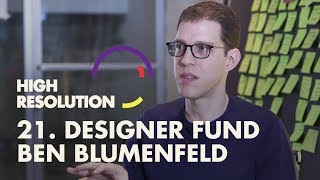
In this episode of High Resolution, hosts Bobby Ghoshal and Jared Arandu interview Ben Blumenfeld, co‑director of Designer Fund, about why and how designers can become effective founders. Blumenfeld argues that a design mindset—curiosity, problem‑seeking, research, and the ability to frame problems—translates into strong founder qualities. He outlines the strengths designers bring (research‑first approach, ability to reframe problems, design‑driven product differentiation) and the Achilles’ heels they must overcome (lack of business‑model, market sizing, financial, legal, and people‑management skills). The conversation covers practical habits for cultivating a learning mindset, the importance of teaming with domain experts, and how to measure and communicate design impact through metrics like NPS and engagement. Blumenfeld shares experiences from his time at Facebook (executive coaching, internal communication design, data‑driven storytelling) and from running Designer Fund (investment criteria, patterns in successful portfolio companies, how to evaluate pitches). He also discusses resources for designers without access to executive coaches (books, peer groups, mentorship circles) and speculates on emerging design roles (designer‑founder, DEO, inclusive design education). Throughout, the tone is conversational, enthusiastic, and supportive, with occasional critical reflections on common designer blind spots.
Chapters
Hey, welcome to High Resolution. My name is Bobby Ghoshal.
And I'm Jared Arandu.
Every single week, we sit down with a master of the design industry. Today we've got someone pretty tall, pretty great, pretty cool. Who is it?
That's Ben Blumentheld. He's the co director here at Designer Fund. He's going to tell us how a designer can develop a learning mindset, how any designer can actually make for an effective founder, and what he would look for if you were to pitch him your idea right now.
If we start a company right now, would that make us designer founders?
Yes, it would.
Would we pitch Ben?
We would definitely pitch Ben.
Why are we doing the show? Let's go start a foundation. Let's go start a company.
Well, right after this.
Right after this. We'll be right back.
Thanks to Squarespace for their support. Whether you need a domain, a a website or an online store, make your next move with Squarespace. Visit squarespace.com and enter the code highresolution. One word for 10% off your first purchase. Ben, thanks for joining us.
Thank you for having me. I'm excited.
So am I. First question, what's one thing about design that's clear to you that you don't think is clear to other designers?
So I think this is something that's becoming more clear over time. But one thing that we've been champion championing that we want to see more designers internalize, is that actually designers can make great founders. And so I think as designers start leveling up and broadening their skill sets, they can apply a design mindset to running a company and building an organization. And I think often designers see design as this craft based thing, so it's like visual design or building a product. And a lot of designers still don't see designing an organization as a design problem. But over time, our hope is that we see more of that happening and more designers choosing to take that path and lead a company.
You've obviously you're putting your money where your mouth is. You've started a fund called the Designer Fund and very aptly named. So interesting you had this hypothesis that designers could make some great founders.
Right.
What are the characteristics that you pinpointed in designers that made them so good as founders?
Right. So I think, you know, design in general is a lot of designers have a natural curiosity and a learning. And so one thing that makes a lot of great founders is this trying to apply great design to a space that maybe hasn't had great design. And so designers bring that Curiosity to new spaces. And so we've seen that time and again where a designer says, okay, well I don't know much about the space, but instead of just coming at it full steam, they'll start with the research phase and, and look at the space and understand it. They'll team up with domain experts and kind of try to understand that. And frankly, that's what we did with Designer Fund before we started. We actually interviewed like 50 other VCs and said, what do you know now that you didn't know when you started? And it gave us a really good sense of that landscape. So that when we did start Designer Fund, we actually had all this wealth of information on which to build upon.
What were some of those things?
So one of the things that people told us was like how much of a hits based. This is something we heard time and again. How much of a hits based business this is, meaning it's usually like one or two companies that will return your fund many time over. And without those, if you had a fund of 30 companies and let's say you had a Twitter or a Facebook or a Google or an Apple in that fund, if you remove that one company, the returns on that fund look pretty standard with that one company, all of a sudden the fund becomes like this amazing fund. And so it is this exponential curve. And one of the things we heard from investors time and again is that over the long run they're reminded when they start looking at the data, when they enter it. Everyone's really optimistic that all these companies are going to succeed and be great. But the reality is you have these huge outliers that are kind of like these fun makers. That's like one example of something we learned early on.
So coming back to the designer founder, right?
Yeah.
There seems to be a set of skills that they just encompass by being a designer that might set themselves up for a good CEO or founder.
Right.
But what is something that might be an Achilles heel for a designer founder if they aren't careful?
So one thing that we've seen for designers that become CEOs, there's a lot of non design work to be done. So yes, if you bring a design mindset to the role of CEO or to the role of founder, there are a lot of advantages to that. Right? Designing an organization, designing teams, designing business models. However, if you're a formally trained designer and you came through design school and your teaching is about craft and your teaching is about product design, whatever that is, you probably didn't get a lot of like business Model training or you didn't get a lot of training around, like, you know, sizing up a market or even just like, you know, there's a lot of, like, dealing with spreadsheets and accounting. We've even seen things like, you know, the first time a designer needs to fire an employee, it's like, wait, I've never done this before. Like, how do I, you know, what's the, what do I deal with in terms of, like, the legal ramifications? Do it on a Tuesday or Friday. Some of these things, they're very tactical. But as a founder, you learn along the way. And there's a lot of non design things that designers need to learn as founders and as CEOs.
Actually, earlier you said one of the things that designer founders have is they don't just jump to the solutions. The really good ones. Start with trying to understand the problem, which tends to be, by the way, I've found one of the hardest parts of the design process is identifying a problem worth giving a crap about.
Right.
But I also find that another possible Achilles heel of most of the design industry, in my experience, is that most people actually don't do research. Most designers are so excited because they're so good at just creating stuff that they just kind of jump into the creation process. What would you tell those people about what they're missing out on without doing their homework first?
I mean, the importance of that is so huge. So one of the things we used to talk about at Facebook is there's a lot of people who say design is problem solving. And one of the things I used to say is before you do problem solving, you should do problem seeking, meaning, understand the landscape, the problem space, so that when someone comes to you and says, we need a redesign of this product and it should maybe work this way, you should be asking clarifying questions like, how do you know this? Why aren't people using the thing that you feel like it needs to be redesigned? And so really great designers will often ask these, like, clarifying questions and they'll try and reframe a problem. And even as a young designer, you know, I used to do this all the time. Like, even when I did, like, graphic design, someone would. Someone could come to you and say, like, hey, you know, our menu needs to be redesigned. Why? Well, because people come into the restaurant, they're not ordering the expensive food. Okay, well, why do you think it's a menu issue versus a food issue or a space issue or restaurant design issue? So you can kind of expand the problem space and all of a sudden, the set of solutions becomes real broad. So you could do it in graphic design even as a young designer, but obviously as a designer CEO, you're constantly having to do that.
Do you think designers are naturally. Do they have the natural inclination to gravitate toward meaty problems like, say, policy, advocacy, healthcare, education, that sort of thing?
I'm curious.
I mean, you're looking at all these companies.
Yeah, yeah. So I don't know that it's a natural. I don't think it's like a natural thing or an unnatural thing. Yeah, sure. But I do think one of the issues when we started Designer Fund, and one of the things that we saw was designers didn't team up with domain experts and didn't know a lot of domain experts, and they didn't know a lot of great business people, and they didn't know a lot of great engineers. We tend to be a very insular community. So if you go to design schools, like, a bunch of designers hanging out and they're drawing cool things and designing things in isolation a little bit, and now you're starting to have a sense of, oh, actually, it would be amazing if Omada Health is a great example where you had the people who started Omada Health actually spent a year at IDEO looking at healthcare and becoming kind of domain experts in that field. And so more and more, we want to see designers team up with domain experts to understand what are the issues in these various fields. And by the way, they're hairy, right? Like, they're difficult, they're complex, and they deserve that. Time for you to understand kind of what the issues are, and better results happen when you do that, as opposed to, like, I think as designers, designers and engineers in the Valley kind of have a little bit of hubris, right? Like, I saw recently in the election, a lot of people, like, we got to do something. Let's just, like, build some software, let's build some apps. Let's like, you know, we'll take Trump down. Yeah, yeah. Apps will solve this. We've built apps before, and, you know, my first inclination is like, whoa, whoa, whoa, whoa. Like, this, like, big event happened. Let's try to understand why, like, take a moment. Like, yes, we all want to act, and there are things that we can do to act, but, like, take a moment. Do you know anyone in government? Do you know anyone at the aclu? Go talk to the aclu, understand, like, what. What. What's going on there. Go talk, you know, to different politicians and try to understand those issues. And Then start, you know, start building something. So I do think, like we tend to think we can just throw, throw apps at the problem or throw a design at the problem, when really sometimes we can do with more stepping back and understanding a space.
So outside of taking a step back and problem finding, what are some other roles or responsibilities you see designers overlooking today that might be costing them credibility?
Costing credibility. Like internally at designers, internally at their.
Own company and just within the industry.
One of the big difficulties, I think designers, and it's not an easy solve, but you know, engineering, it's very easy to have engineering show up in the metrics, right? So a lot of companies in the valley, they use metrics like engagement or growth. And those are very easy to show. Like, hey, we made something faster, more people use it. So that was like a good, you know, we did good here with design, sometimes its second and third order effects. I'll give you a good example. At Facebook on the communication design team, a lot of our products that were meant to delight and inspire and make people kind of feel good about using Facebook, you don't necessarily see that in the usage right away. And so if that is the space, if that's the only data that you're looking at, it's very easy to come with a conclusion that says, okay, well like this isn't moving the needle. And like, forget it. Eventually we said, well, wait a second, let's start measuring Net promoter score. And that actually, you know, Net promoter score is the question, would you recommend Facebook to like a family member or friend? And it turns out that over, over time those things that the communication design team was focused on, things like, you know, hey, a year ago today, like this happened, or you know, it's Mother's Day today, like reach out to your mom, those kind of things that were more touchy feely, those were the things that really moved the needle on nps. And so sometimes it's understanding like what metrics are we trying to move and making sure that you're actually like monitoring those things. So that's one way to do it. But sometimes you really need someone to buy into, buy into design and believe that it's important because it might not show up in those metrics. And I'll give you another Facebook example. We built what we called the Analog Research Lab, which was a lab that creates a bunch of posters and beautiful designed posters, ephemera, whatever for Facebook. And it became a real amplifier of Zuck's message to the company. And so how do you measure that? Like, how do you measure the fact that, like, Zuck goes and says something, and then all of a sudden, you know, a couple days later, it's. It's reflected all over the space. It's kind of hard. You can kind of start seeing people. You know, we started seeing people like we put a what would you do if you weren't afraid? Poster. And then a couple days later, all of a sudden, people started saying. They put sticky notes and say, oh, I would do this or I would switch teams. And some people are like, I would leave here. And we're like, oh, dang. Okay, it's starting to get real. And then some of them got really real and intense, right? And so you knew that it was resonating and it was an amplifier of what Mark wanted to do. And so over time, he really started leaning into that. He's like, he'd pull in Ben Barry, who was the designer, and him and Everett Caddickback, he'd pull them in and say, look, I need your help here. So when you start seeing the CEO kind of pull you into things, that's another good sign that it's working and that it's valuable. But it might not show up in these quantitative metrics. Maybe down the line it'll show up in glassdoor ratings or employee retention. But you have to believe that that'll happen because you might not see it in the short term.
Of all the people watching this right now, I'm going to guess there may be 100 or so aspiring designer founders. Right? What would you just. What would you tell them to start doing right now? What would you tell them to stop doing?
Oh, okay. So if you're thinking about becoming a designer, you're aspiring.
Yeah, exactly. Like, you've got. You feel like you've got, like, the sensibilities of being a designer founder, you're willing to take some risk. What should I start doing? What should I stop doing?
So one thing. Start building up your. Your sphere of skill sets beyond design. That it's almost like building a company is a problem space. So it's like if you're going to go into healthcare, you kind of want to know about all healthcare things. If you're going to go into company building, you want to start knowing about what it takes to build a company. So be real about what are the things. We recently had a session. We did a. A summit for design leaders called Source. And at Source, we partnered with Foundation Capital, who's been like a great supporter of ours, and Steve Asala, who is one of the original designers, turned Investors in the Valley who's been one of our biggest champions. And we ran a session on future founders. And one of the things we did in that session, we said, okay, what are all the things you need to know to be a founder? Or what are all the things that a company does? And so people are like HR, legal, accounting, all these things, and there's like 35 of them. And I started looking around the room, and when I looked at the 35 things, I was like, okay, we're all designers here. There's probably three or four that we're really, really excited about. Like, things that we know and we can do well and we can apply everything that we know to. There's probably another like seven or eight that we don't quite know, but we can apply design to do better, right? So marketing, for example, if you approach marketing with a design lens and a problem solving lens, there's some interesting things you could do with marketing that are both quantitative and qualitative and that could produce great outcomes. But with legal, maybe that's like, as a designer founder, I'm not touching legal. You know, I'm going to know a little bit about it, but that's about it. I know enough that it's important, but that's it. And so it's important one, to understand all the things, right? Like what are all the components that a company has? What are all the things that are in your wheelhouse? What are all the things that are not in your wheelhouse yet that you want to grow in? So it's books, it's meeting with people, it's growing your network. And then what are the 10 to 15 areas where it's like, I'm not touching that. So my co founder being a designer co founder doesn't mean you have to be a designer CEO, right? And so you can be a designer founder and focus on product and focus on, you know, design. Design and have a co founder who's really excited about the business aspect and the organizational aspect. But make sure that that person's there. And then if there's a. If there are other components of that business that need to be figured out, make sure you have people who are excited about building those components. So that's what I would say to start doing the thing, to stop doing maybe. I think, you know, one of the things, you know, if there's an Achilles heel for designer founders, it's maybe like they go too deep into design and kind of narrow, narrow their focus. And so as designers, you know, we love the blank sheet of paper. And I love the quiet and kind of like that time and space and. And I think as a founder, you realize very quickly, like, I don't have that. You're not going to have a lot of that. And so it's starting to get comfortable with moving to the 30,000 foot view. Then maybe there's some times where you're moving, pushing pixels and kind of giving that detail feedback, but you got to be zooming in and out constantly. And so I would say start or stop if you're going to be moving into a founder space. Like, hey, get comfortable with that, with that motion, I guess.
So we've spoken about going wide and understanding the space that you're trying to enter if you are becoming a founder and then knowing where to go deep. Right?
Yeah.
Focusing on the going wide now and like entering an industry that you might not be familiar with, say healthcare policy, whatever it is. Right. You know, one theme that emerged in our conversation so far is having a learning mindset, essentially.
Right.
Like you have to be. You have to be curious and you have to find people who know your space better than you and learn from them. Right. But there seems to be a tendency for designers not to do that. We already spoke about, we like execution and the research phase doesn't always seem as sexy. But what are things that a designer who aspires to be a founder can do today to kind of hack that learning mindset, essentially? Learning how to learn.
You got enough. You know, there are certain people that you know that are like, naturally curious. Right. And you know, I have a friend who basically like, we'll go to, if we're at a party and there's like a table with some books on it, like, it could be just like raging party, people hanging out, whatever. And all of a sudden you find him in the corner and he's like reading through some book on some topic. He's like, oh, it's really interesting. Like you guys should come like, you know, and, you know, or like walking around a city and you just see, you know, there's so many, so many times we're just walking through a city and you just take everything as, okay, someone's thought this through, or you don't even question why things are the way they are. But then certain people are like, well, why did the bike lane? Why was it here? And then it zigzagged and then why isn't it protected? What tools is our city? We don't use Photoshop to design cities. Like, how many designers know the tools that people who build cities do use. And so if you're a designer that's naturally curious, you start going down that rabbit hole. And I think a lot of designers tend to stay in the problem space that they're interested in, and they don't necessarily go deeper into these other spaces. And so I guess your question was.
Like, what is developing a learning mindset?
How do you develop that? I think start questioning those things. Start questioning why are things designed the way they are? When you walk onto an airplane, how was this designed? What tools did people use to build this? Look around cities, look around. In the political landscape right now, you can look at probably each individual decision and make a case for why it was done that way. But how did we get here, right? Like, what's the system that's been set up, that's. That has created that complexity? And so I, it's almost like a questioning mindset. I. When I was like 17, 18, one of the things I got really into is this idea of lucid dreaming. You guys know about lucid dreaming? So it's the idea that you can like wake up in your dream, right? And so many times you'll have a dream and in that, in your dream, you're like, oh, how did I not know it was a dream? It was like so obvious it was a dream. And but like, to learn to wake up in your dream, you actually need in your real life to question reality constantly. So the trick is like, you're always like, if anything weird happens, you're like, wait, am I dreaming? Is this a dream? And you're questioning it and you teach yourself to do that, like over time you start questioning things. So then in your dream you mimic that behavior. And all of a sudden you're like, oh, yeah. One of the things is like a digital clock. You can look at a digital clock and It'll say like 6:04. And you look away and you look back. And then in a dream it'll say like, 7:14. Like, oh, there it is, I'm dreaming, right? And it's because you taught yourself that learned behavior. And so I think, you know, the hack, if you will, is basically like, be curious and like kind of just, you know, question those things around you. And I, I don't know, there's, there's like, you know, much more of a hack than that. Like, you basically just need to say, hey, this is important. Doing this will actually yield a bunch of insights and especially go deeper in areas tangent like design is about like taking something from X and applying it to Y. So if you're just in front of your screen and designing in Sketch or Photoshop, like, you're not going to be able to make these connections. And some of the best, like, design insights I've had have been, you know, like, learning how, like, agriculture is done or learning how, like, you know, like, a city is designed or it's not even. They don't even call it design. Like, you know, how a city is, like, built. You will. Or made. And so those are the. And then I pull them back into the space here.
So not just questioning the space you're in, also looking to others and seeing if there are lessons you can pull.
Yeah. I mean, what are the things that you're interested in and, like, go, you know, let's say, like, you're into music. Actually, it's like, a lot of designers I meet, they're like, yeah, I'm really into music. And then when you start digging deeper, it turns out they're actually, like, a lot of designers make their own music, and they start, like, experimenting with a tool set. Not all of them, but the ones that tend to be, like, really? Really. I mean, they are. When you see that experimentation, you see that they bring that into their design landscape. So it's like, what are the things that you're into? And, like, you know, like, right now I'm, like, into my garden. Like, the trees and the plants, and I could have just been like, okay, I'll just put one here, one here, and here. But now I'm like, learning, like, oh, you could put a plant here, and that'll bring a bee, and that'll pollinate this plant. Like, oh, that's interesting. Okay, well, what if I, you know, so, like, I'm just going down the rabbit hole. My wife's like, oh, my God. Here's like, this is your thing now. Now you're, like, going down the rabbit hole. Yeah. And every, like, six to nine months, I'll have something like that that I'll just, like, you know, fall into. And I think it's just really interesting. Then you pull those. There's always learnings that I pull in, and I'll bring him into the. Like.
When you were at Facebook, you had an executive coach, from what I understand.
Yeah.
So first of all, what do you speak to an executive coach about? Are they basically a therapist with, like, a fancy name?
You know, it depends. They can be. Yeah, sure. Yeah. And it's. You know, there are things that. With an executive coach, I mean, it's a lot of leadership skills. It's a lot of interpersonal skills.
They teach you how to be a better leader and how to connect with people.
I'll give you a great example. So around my fifth year at Facebook, so the company had grown from there was a couple hundred when I joined to like 1,000 or 1,100 at that point. And I'd been there five years. I had like three roles and I found there was a two or three month window where I was just like, I'm going out and trying to champion design and I'm frustrated that this thing's not moving fast enough. It's like, hey, back in the day I used to be able to just like launch a product and now I gotta go talk to legal and I gotta go talk to like, the team in Germany to make sure, like, it translates. It's like, you know, you're just like, ah, this is like, yeah, maybe I should just leave. So you start like in the back of your head. You're like, maybe I should just leave. Right? And so one of the things that my executive coach talked to me about, you know, so when I come into a session, and by the way, she was. It was. She never came in. It was always. I'd put headphones on. So actually her voice was almost like in my head and it was really unique. I still to this day don't know, like, the physical manifestation of this like, sentient being. You know, she had this like, great voice. She's like, hello, man. Like, how are things? And I'm like, I'm having one of those weeks again where I'm like, you know, maybe I should leave. And she goes, are you going to retire there? And I'm like, what? And she goes, are you going to retire at Facebook? I said, no, I'm not going to retire here. I'm starting like, what, 65 years old and still like Facebook? Yeah. Working on building apps and news. I was like, I don't think it'll probably be a totally different thing. But I said, realistically, yeah, I'm probably not going to retire here. And she goes, okay, well then if is not the right question. The right question is when will you know it's time to leave? Oh, man. Like, she just, you know, like with that one thing, it was like, whoop, like flipped. And I go, okay. And she's like, so let's start thinking about what are the conditions under which you know, that it's time to leave. And so I put together these, like seven conditions that if they were true, if like six of seven were true, I would know that the time had come. And so that, by the way, that's a great. I mean, she pulled like a design move, right? It's a reframing of the problem, asking the right questions. So sometimes. And I'm not gonna go to my manager usually and say, look, I'm leaving or it's time, you know, like, I'm not feeling like I want to be here anymore. You can do that. But, like, you know, sometimes you want someone who's out of your workspace. So an executive coach can be that person where you're. They have no skin in the game in terms of like, the intra company politics. And so they can be really good at helping you walk through those problems. And by the way, some of them who. If a lot of people in your company are dealing with that person, like, you know, it's like, I don't think I'm good enough to be a manager here. And she goes, you know what? Like, almost everyone at your company feels this way. And you're like, oh. Because she has that, you know, she has those interactions. She's like, everyone thinks that. I'm like, really? Everyone seems to be like, crushing it. And she's like, nope. All of you, like, all of you think you don't belong. All of you think you're not good enough. All of you think you're not smart enough. She's like, so. But you all are so, like, you know, like, so they also have that kind of point of view, which is really nice. So those are some of the things that I worked with Exec coach. And it's really Val. It could be really expensive. So, like, it's tough. But if there are more and more coaching resources that are more affordable these days. And so I definitely recommend it if you're starting to become more of a. And the other thing we want to see is we only got them as managers, which I understand why to only give it to managers. But there are many leaders who are not managers who are dealing with a lot of these same things. And so we want to see more companies provide that to people across the board.
So the reality is most of the people watching this don't have access to executive coaches. Right. And probably won't for a while. But I imagine there are some resources that they can tap into, whether it's books, podcasts, movies, whatever it is that can help them at least capture 80% of the value and help them move forward in their career.
Right.
What are some of those things?
So there's a couple. So I'll talk about books, and then I'll talk about some things where you can lean on peers or friends. So two books that I highly recommend. One is a book called Conscious Business, which seems like a cheesy title and seems like a very businessy book, but actually was one of the books that was introduced. I think Cheryl introduced it into the Facebook culture. And since then, it's become like. It's like the first thing I do when someone joined the company. I would have one on ones, and we'd go through chapter by chapter in this book. And it gives you things like concepts like unconditional responsibilities. One of these concepts where you're always looking at what's something that I could have done here to have come up with a better outcome. So you'll hear people say, like, oh, sorry, I was late for a meeting. Traffic was bad. Well, you didn't like what? Traffic was bad. Yeah, traffic can be bad. And so what you could have done was leave earlier. Right? And so someone who has kind of unconditional responsibility would say, hey, sorry, I'm late. I did not leave early enough. Or, you know, you'll often hear in companies like, hey, sorry, I'm late. I was in a meeting with, like, some executive, and that's why I'm late to your meeting. 10 minutes. So what are they actually saying is I actually value their time over your time. That's why I'm 10 minutes late to you. But if you're unconditionally responsible, you would say, you would actually own that and say, look, I was in a meeting with some whatever, like Mark, Cheryl, whoever, and that's why I'm late. And so also, by the way, if you're in that meeting and you know that that's what you're going to say when the meeting time is supposed to end, you would turn to that person and say, look, I have someone waiting for me in another meeting. I want to make sure I'm there on time. I'm gonna have to leave right now. And you have that control, right? So that's like one concept. And when an entire company has that, all of a sudden the interactions become much people are owning the things that they do, so it becomes really, really valuable. So that's a great one to go through. And then there's another, really. And maybe it's popular, but maybe people don't know about it. It's called first break all the rules, which is another what great managers do. And so if you're at all interested in becoming a manager, it's a Great management book. So those are two books in terms of ways to get some of the kind of like that feedback. So one of the things I did early on in my career is or early on in my Facebook career because I realized there were things I could not talk to my co workers about. So I found four or five friends of mine who work at similar stages in their career at different companies. One guy was at Google, another at Apple and I said, let's get together every five to six weeks and talk about things that are happening at work that we don't have. Co workers are not going to want to talk about this because maybe you're thinking about leaving Apple or Google or maybe so managers so you're not talking to your coworkers about it. At the same time, your friends probably have too much skin in the game. So if you say like I'm frustrated with my manager and I don't quite know how to relate to that, and your friends might just be like, look, maybe they're more careful to make sure that you personally are going to do okay and they're not going to push you in terms of developing your career. And so these were people that were friends but they were taking the role of almost like a career counselor in that, in that council, that five, six person council. And we met every five to six weeks and we'd go into those, those, those gatherings with everyone would say like, here's some things that are on my mind right now. And you, you'd send them ahead of time, a day or two so everyone could kind of consider them. And that by the way, and that those, those were so valuable and so helpful to understand how other companies were dealing with it and how other people in my kind of similar level were also like frustrated about similar things or actually some things that I was just frustrated with that they didn't have. And so that was enlightening too. I thought, oh, probably all startups are like this. Well, no, actually only yours. Oh crap. Okay, well I need to think about how I do better there. So that's another way, tactical way that you can. And it's fun too, but it's getting together in a different context. So that's another thing. And by the way, you can even do it with one person. Find someone who's kind of appear, but maybe a little bit of, you know, maybe they have a few years on you and say, I would love to meet with you every like four to six weeks and I don't want to like shoot the shit or I don't you know, I don't want to just like what? I want to actually get down and talk to you about things that are happening at work or things that I'm thinking about with my career and get your kind of like unfiltered feedback on that.
Thanks again to Squarespace for supporting the show. Squarespace is the all in one platform to get a domain, create a website, or build an online store. They make it simple to manage your online store and inventory, process orders, print packaging slips, and customize emails. Squarespace has powerful marketing tools. They ensure that search engines can find your store online, provide real time analytics to help you gain customer insights, and let you connect with your customers on Facebook, Twitter, and more. If you've been thinking about starting your own online store, visit squarespace.com and enter the offer code. Highresolution. That's one word to get 10% off your first purchase. Make your next move with Squarespace. We'd also like to thank our friends at InVision for their support. Envision is the world's leading product design platform, powering the future of digital design through their understanding of the importance of collaboration. They're used by some of the most innovative companies in the world, like Facebook, Capital One, Netflix, and Airbnb. I work with remote teams all the time and I found that keeping a healthy dialogue is really important. Without it, building strong work relationships gets a lot harder and that leads to poor collaboration. I've also found that prototypes are a great way for me to show my full vision for a design, and this helps cut down a lot of back and forth. InVision makes all of this really easy. You can rapidly prototype your designs and collaborate across every stage of your project, taking your ideas from concept to code. It simplifies virtually every aspect of the design workflow and makes collaboration a core part of the process for everyone from project managers to designers, developers and writers. Teams that build digital products are at a serious advantage when they use InVision's suite of prototyping and collaboration tools. It's the best way to get everyone on board. Visit envisionapp.com highresolution for three months free.
Okay, so you're a partner at Designer Fund. Before we start talking about, like, how stuff works here and what kind of companies you look for and whatnot, I was actually still curious whether. Cause you guys are four years old. Yeah, right. Is Designer Fund still an experiment? Like, are you guys resolved on designers making great founders or is this still an open question?
It's still open. Designer Fund, I think will. Well, maybe Experiment is going Too far. But I think we always want to be assessing our assumptions constantly. And by the way, I think great design is that you want to be constantly saying, is what I took to be true six months ago, still true. And in venture, by the way, things, one of the things we are learning is that things are changing very fast, constantly. This isn't graphic design. This is, it's like, hey, in December things were like this, now it's March and actually different dynamics are taking hold and there's different players and it's a constant change. And so we want to be testing everything constantly. That said, the idea that the fundamental core principle that the next generation of great companies are going to have great tech business and design I think is absolutely holding true and will continue to hold true. Yeah. So there's kind of that true north that totally is, is, is validated now with data, is validated with experience. And we continue to like march towards that. The ways that we do it is going to be constantly like, we're always trying. We just had the summit for 200 people. For us, we've always taken a very intimate, deep, authentic method to events. And again, Steve at foundation was like challenging us. Hey, could you bring that authenticity to scale? And so this was a 200 person event and you can definitely see how a 200 person event would all of a sudden lose that. But we kind of brought the designer fund depth and intimacy and vulnerability and openness. And the feedback so far has been like, you guys did do it. And so that was an experiment and it worked and we're going to probably continue to do that. Yeah.
Have you found any parts of your assumptions around designer founders proven wrong in.
The past four years? Not proven wrong, but one of the things we talked about earlier was the idea that there are, you know, the vast majority of the people we invest in are designer founders. There's another segment of founder which are people that say, I value design, look at my track record, you can see that. And they want to bring in design early, but they're not necessarily designers. And those kinds of founders actually are really compelling as a partner. And we've done it now twice recently. And in both cases, like the first thing that we did, it's like, okay, how do we bring in design in a big way and early on? So it's like connecting them with freelance designers, connecting them with agencies starting to work on the brand and the voice. And within months we were able to, with the first company we brought in a designer, redid their brands. They're reworking on the product. And so those types of founders, I think, you know, for us, as we go deeper in this, I think will be part of that ecosystem and an important part, because I do think that designers need to be more inclusive. We need to say, like, it's not. Well, you didn't go to design school, so you're not a real designer. It's like, no, they're. They're valuing design, they're investing in design, they're bringing a designer mindset. And so, yeah, that is, that is also design. And we need to be like, bringing.
That into the fold just to have a little bit of fun. I mean, you were early enough at Facebook, right? I want to test the waters on how Designer Fund defines designers. Okay, you worked with Mark Zuckerberg. Would you have invested in Mark Zuckerberg through Designer Fund? Is he a designer founder by your definition?
Yeah, I would say so. Mark is someone. Would I have invested in 2004 Mark? I don't know. That's a good question. I invested with my life in 2006, Mark. Right. And the thing that Mark had by the time, even by the time I joined is he absolutely valued design. And by the way, he got better and better and better at it as time went on. But Aaron Sittig, who was the first designer. So that's one signal we look at like, as Designer Fund, we look at like, how early did you bring design in? And Aaron Sittig was one of the first hires at Facebook. And Aaron did a great job of kind of partnering with Mark and showing him the value of design. And so by the time I came, he was bought in. Like, he would sit. I mean, he literally sat designers in front of his desk so that he. Design is very visual, right? Coding is lines. You can't quite see what coders are doing. Design's very visual. We had these big 30 inch monitors and he could just kind of peer down and see what was going on. And he'd walk by and just be like, so what's going on? Why are you doing this? And so it was very clear that he was valuing it and believed it to be a very important and a key part of building Facebook early on. So, yeah, I would say, well, I would hope I invested with my life and time. And so, yeah, I would hope the next person like Mark that comes around Designer Fund that we would invest in them.
You better hope that.
Yeah, yeah, yeah. That would be amazing. It's a hit space business, right?
Exactly. So you've had the opportunity to invest in many companies Many companies in the Bay Area surrounding. In the design space.
Right.
Have you noticed any patterns on how the best companies approach designing their business?
The best companies, how do they approach design?
The best companies you've invested in approach designing their business.
Yeah, well, so one is the ones that we invest in at least invest in it, right. And so we're already kind of filtering for that. But actually there are a lot of companies that don't have that. And so you can see the impact of design early on. I was telling you guys, even in a company that's in the healthcare space, and they invested a ton in design early on. When it was two people, they invested in design. And that creates the trust. And for a lot of people it's like, well, you don't need to invest design when it's just the two of you. Just try to get customers. And the founder said, well, no, actually design is going to be the way we do that. It's not going to be through ads or it's not going to be through some of these other methods, but actually by creating a product that people trust and want to use in design is like a key way to do that. And so just fundamentally, those companies are investing in design early on as opposed to thinking about bringing it on later, you know, when they're like 80, 100, 200 people in terms of how they do it. I think you do see, you know, one danger is like going too deep into that craft mentality early on. And I think the companies that do design best early on understand the iteration and that there's a speed element that you need in design early on and not to be too precious with it. So, like, yeah, quality is important. Craft is important. Product, you know, building a great product is important. At the same time, like, you cannot be going off for three, four months off in your own world without testing your assumptions, without putting lo fi prototypes in front of people. You just don't have that luxury. Like, time is not on your side. So at the early stage, the best way to do design is really, you know, you almost need to be comfortable. There's a famous saying where it's like, if you feel really good about the thing you're putting out, you've waited too long, right? You should always feel like it's not quite there. It's not like, I didn't quite get it. And that means, like, you put it out into the world.
I think that's the Reid Hoffman thing, right?
Like, yeah, yeah, Never, never feel like you're like, ah, okay, like it's like perfect.
So yeah, so I'm a designer.
Yeah, Right.
This is a scenario. I am a designer, but this is a scenario.
Hypothetical.
Yeah, I'm a designer and I have a startup. Right. And I want to pitch you. I want your money.
Yeah.
Your designer, all the buddies, all your money.
You want it all.
What would you be looking for in me and my pitch? In the first meeting.
We have a very, you know, I think like in terms of what we look for, it's, it's not super. There are things that we've innovated on and then there's things that designer fund that we say we don't need to innovate on these things. And in terms of like what we look for, I would say like we look for what most VCs look for. But the thing that we add on top to it is is design going to have a fun, make a fundamental difference in the outcome of this company that can they actually win with design? And so we look at things like, is the market massive? Right. Like a lot of times. And by the way, like designers, I don't know if maybe it's because we only look at designers, but there are definitely designers who kind of go into these niche areas and it's an interesting space and you can probably do, you know, create some business around it. But for venture you need kind of big outcomes. And so without a big market, like you're just not going to get there. You know, we liken it to like a wave, a big market. It's like you can have like a beautiful surfboard and you can be super talented and if there's no wave, you're just going to sit on the water and the market is that way.
That's a great analogy.
Right? And so big market, mission driven team. Like there's like a founder problem fit, right? So if you're gonna like look at creative tools, you, I'm like, okay, well that's like this guy's just been using creative tools like forever. If you came to me and you said, hey, I'm gonna change the way like glasses are manufactured. Like, well, you've never, you've never dealt with, you've never even looked at you. You don't even wear glasses. Like, why are you doing this? Why are you, why is this important to you? And so we look at someone who comes to us and says, Max Ventil, who started alt school, he's one of the most phenomenal founders and he came, he goes. The past 10 years have led me here. I've been explicitly Developing my knowledge and skill set for a decade so that I could take the swing with old school. Right. I mean that when someone comes to you with that, then, okay, like, this is a serious person who's like, they're not just like, yeah, we're going to try this and then we'll pivot to this other thing. It's like, no, this is what I want to do. I know the space like the back of my hand. I know the people I want around it. I have the skill sets to make it happen. And that, like, I mean, that speaks volumes. So that's another, you know, founder problem. Fit, market traction. Often when we invest, there's some sort of traction happening and then we look at the product. Right. So by being product designers, we can actually assess is this way better than what's happening, what's available? Right. So Remix is a company that was started by two designers and two engineers out of Code for America. And they built a new way to design public transit. And what people were using before that was a bunch of big maps and Sharpie, like anytime software is going to replace pen and paper and is making a not 20% improvement, but a 3,000% improvement. Meaning, like, for a Remix, they overlay data on top of you can draw as if you're drawing on Google Maps. They overlay data. So, you know, like, if you move this bus route from here to here, here are like the different demographics you're serving. Here's like, how many more people you need to drive the buses. Here's what you need to pay them. Here's what all that data is available, like instantly. And so stuff that used to take them months is now done in hours. That's thousands of percent different. Right. So those kinds of differences for us are really, really compelling versus the like, yeah, we do it like 6% better than what's out there. Well, okay, so, yeah, fundamentally, market team traction, a lot of the things that a lot of the VCs look at, but we also look at, is design going to be a big difference maker for them?
Well, listen, before we go to community questions here, just no one's watching. So who's your favorite company that you've invested in?
Yeah, I don't know if I have a.
Everyone's got a favorite. No one wants to talk about their favorite.
I don't have any. No. So many of them are great. But I would say the ones that are truly, there's some where they're bringing design to these really underserved spaces. So Remix is that Omada Health, which you used to work at. It's like, the better Omada does, the more lives are saved.
Yeah.
And that alignment of company mission and good in society. And by the way. And they're bringing design to a space that doesn't have it, and they're bringing that ideo DNA to it. And they're great people and they value design and, and, and, and, and so there's definitely, like, you know, a few months after the Omada investment, you know, our portfolio, our kind of model basically said about 30 companies. And I just thought, man, if we had like, 30 of those, you know, 30, just people winning. Yeah, yeah. You know, it just feels great to be able to help bring those companies success. And that was, you know, that was really like why we, why we started the whole thing was because we wanted to have, like, a broader impact. All right?
So we reached out to our community and we asked them what's burning up in their minds, and they gave us five questions that we want to go through with you. Okay, so every guest is going to answer these. So you're not alone.
Okay.
But you need to be the best. That's the pressure. I'm kidding. I'm kidding, I'm kidding. Okay, so the first question, how should designers explain the role of design to people in their business?
How should designers explain the role of design in their business? What we want to see is design. I think a lot of people will look at design and say it's kind of that visual layer and it's going to make things look, look better. What we want to see is designers explain the strategic importance and the ability of design to move, really, key fundamental metrics for a business. And you can show that, like, you know, you can show that in key metrics like engagement and growth. And design can move a needle like that, like engineering does. And so designers shouldn't shy away from that. But it does mean that as a designer, you need to start understanding the data of the things that, you know, like when you design something, there's some effect, and you need to understand, like, that data effect. And so you need to start working with that. So, yeah, designers need to be leaning into that, and then they can showcase it.
The second question is around team organization, right? So looking into these investments you've made in the design teams that have been built there, have you seen any patterns on how they're organized that tend to lead to good outcomes?
The design team, specifically, how the design team is organized, I would say one of the. Maybe one of the fundamental principles is that in A physical space or in terms of how the team is organized. See, I'm asking.
On an org chart.
On an org chart, yeah. Yeah. So I don't think how you're organized in an org chart is actually super problematic because you can. For example, at Facebook, we reported in through product. The communication design team reported in through product. And so it would have been easy for us to say, well, we only do comm design as it relates to two products. But actually what we did do is we said, well, actually, communication design is going to have to serve much more broadly the entire company. So even though we reported in through product, we started meeting with other parts of the company and say, what would you do with great design resources, whether it be HR or legal or sales? And it illuminated all these. Again, like, it illuminated this huge problem sphere. And so where you are situated, design in the org chart, it can box you in. So we could have easily done that. And the perception can be that, oh, well, calm design at Facebook should only serve product. And so those are the perceptions that you're working within. But as a design leader on a team. And if you're thinking about, okay, given where we're situated, what does that say about how the other teams perceive us? What does that say about how the CEO is going to interact with us? What does that say about the type of work that's expected out of us? So you need to know those constraints. But then, given those constraints, how does our team impact the company? And you should not let where you sit in the org dictate that.
The next question is, if you're the only designer in a company, how do you convince the leaders in that company of the value of design?
Well, hopefully, if you're a designer fund company, you don't have to, because the designer is. They're sitting on the executive team and they brought you in because they value design. And I kind of say it jokingly, but frankly, that is the world that we want to see because we've seen so many these examples of, hey, I'm a designer, I'm on my own. No one on the executive values design. How do I change? How do I change that? And part of me, when I heard those stories, I said, like, you're a great designer. You shouldn't be spending half your time trying to convince folks of the value. It's like, absolutely, go work at, like, the, like the growing number of companies who say, we value design. We're just going to give you that Runway. We know the impact it can have. Like, go be a great Designer, Come be a great designer here. So that's like, you know, one mantra. But if you are like, for whatever reason I'm in a company, people don't value it. What can I do? So you gotta almost like demonstrate the value through execution. So it's not being frustrated. They don't get it. So basically, design education, one of the things I used to do at Facebook, every couple weeks I would do a design course, like a two hour course on basic design to engineers so that they understood. It's like, oh, wow, like, this is the way design works. And this is why designers asking me these questions, oh, wow, that's really interesting. So all of a sudden now engineers had like a fundamental, like a little bit more overlap in terms of language and you should be doing it with like anytime I interacted with Mark and he was just like, well, blue is bad. Can you make it purple? It's easy to be like, well, he never said that. It was more like, hey, purple's bad, make it blue, make it blue. Yeah. And you know, it's easy to be like, well, it's a CEO. I should just, okay, I'll make it blue. But I actually took all those interactions. It's like every interaction I have with this person is an opportunity to teach them about design. So it's like, hey, by the way, you know, blue actually has a certain connotation and actually we use blue everywhere. And so like when we make this blue, it says like it's just going to fade into the background. We use green actually, all of a sudden this thing's going to pop more. And by the way, we're going to see it in the metrics or I actually already tried it and actually grain works way better. Do you still want it blue? Right?
That's the best.
Yeah, we've already tested it. And so use all the interactions instead of being frustrated. People don't get design. Say, okay, people don't get design. That is a way for you to teach and educate as an opportunity and teach people about design. So that's like one way demonstrate its value over and over. So I think like it's easy for designers to like, do design, go on to the next thing. Do design, go on to the next thing. Eventually I got to the point internally where I said, what if I treated our team as a company, right? So inside Facebook, the stuff that the comm design team did, how would I market that? The same way a company would market to an audience. So I said, okay, well, I'm gonna start a newsletter internal where it's like all the highlights of what the team did over the past, like, month. And I would show the metrics, and here's the work we did. And so I was treating it as, you know, almost like its own internal. Yeah. Like a company. And using all the things I learned to bring Facebook to the world, to bring communication design to the company. And all of a sudden, that mindset really allowed us to educate people on the value of it. And you started seeing more people like, hey, can you do this for us? Hey, can we work with you? And it's like, we don't have time, but we can connect you to freelancers, we connect you to agencies. All of a sudden, the amount of love and respect for design and desire to work with design grew and grew and grew. So that's another thing you can do. That's awesome.
The next question is, how should designers measure and present the results of their work at a business?
How should they measure? One is make sure you do measure it, you know, so a lot of designers just don't. So at least you're already, like, starting with the. With the assumption that they should. Which is good. Yeah, I would say, you know, there's like, simple depending on if you're at a young startup, like, Start learning Google Analytics, Start learning. There's a lot of really simple analytics tools that people can start using so that they can say, okay, well, this thing was poorly designed. A lot of times it's easy to just be like, well, look, it's so much better. Isn't it clear that it's so much better? But it's another case to say, this looks way better. And by the way, more people sign up through this page now. Oh, and by the way, fewer people drop off at this point in the flow. And so having the data informed approach is really valuable. So I would say, like, start learning some of those tools. If you're at a company that's big enough and you have data analysts, go befriend those people. I basically became like, buddy buddies with all those people. And even sometimes I'd be like, hey, I know you're not on my project, but I need this data or that data. And even better, it's like, hey, can you show me how I would pull this information so I don't even need to rely on you. Just show me how to do it once and don't be scared of that. Right? Yeah, it's SQL and all that. But as a designer, if you're taking a learning mindset, start adding that skill set to Your repertoire and you become so powerful. Yeah.
One of my favorite is like Rochelle King at Spotify. She leads design and insights there and she literally calls data people data friends.
I love that they have a T shirt. It's.
Yeah, they have a T shirt. Our data friends.
Right.
So completely.
And you can serve them too. You can be like, hey, I'll redesign the dashboard or I'll, you know, I'll help you succeed if you help give where you can. Absolutely.
Okay, we're at the last question. All right.
Okay.
Feeling good?
Yeah. Excellent.
So as the purpose of design continues to evolve, what are some roles or methodologies that you think might emerge over the next five years?
Roles for designers.
Roles for designers. Roles in design, actually. Interesting, right? Maybe not. I mean, let's go a little bit broader. Roles in design, not necessarily for designers as the way we think of designers today.
Right. So definitely the designer founder is obviously like one role that we think will continue and we hope that continues to emerge. You know, you'll start seeing more and more designer. You know, I think like you guys introduced me to like the DEO, which I got. You know, again, like VPs of design are really rare these days, but starting to become more common. The. Yeah, yeah. So I guess like the designer executive officer. I mean, I do think, you know, when you start actually looking back in history, we just read a book called Let My people go Surfing by the founder of Patagonia and you read his story and you're like, he was a designer founder. Like he absolutely, like, you know, he started by designing climbing equipment and building and manufacturing, making it. And so he maybe doesn't say that he's a designer, but all the activities and everything he did and everything he like considered and quality and care and he's a designer. Yeah. And so I think that we are going to see this like much more inclusive view of design where design, you know, design is now being taught in a bunch of business schools which it's like a dual double edged sword. But you will see people who are more maybe like business oriented or analytical starting to come into design and bringing that kind of not a like, you know, not the crafty viewpoint of like capital D design, but more of like an entrepreneurial mentality, entrepreneurial background or a business background into the design sphere. That I think is going to be really interesting. And it's easy for us. And I know I had this too. It's easy as designers to be like, they're not, they're not real. They don't get it. They're not part of the tribe. But I actually think it's really important that we do try to bring them in and try to learn from those people and try to be more inclusive. I mean, really, the world that we want is not one where design is still held by a few, but like, I think all designers would, you know, if I said, hey, design's gonna be taught in elementary school, you would all want that. Well, what would that mean? It mean like all of a sudden design is like English or like math or like science. Like it can become a thing that everyone is taught. And in that world, all of a sudden, yeah, it's like good design is like de facto. That's the world, like we all want to move towards and live in. Right. So I think we need to be more inclusive if we want to move into that world.
That's a good positive note to end on.
Thank you so much. Absolutely. Thanks, guys.
Hey, you made it to the end. Congratulations. Thanks for watching the episode. I really, really hope you liked it. If you did like it, please leave us a review on the itunes store. And by the way, if you have any questions that came up because of the content that we covered with our guests, go on YouTube, go on Twitter. You can tweet us, you can leave us a comment. We'll get back to you, we'll help you as much as possible. Hirespodcast, that's the screen name or the handle for Twitter, for Instagram, for Facebook. Find us, talk to us. We want to converse with you. We're not going to leave here, by the way, without also thanking our friends at Searle Video. They've been an amazing partner on this entire project. So Searle Video is a creative studio based out of Portland, Oregon. They've helped creative communities tell stories for over 10 years. They've done advertisements, behind the scenes footage and documentaries for companies like Google, Slack, Xoxo Festival, Adobe, Intel. They're incredible. They've traveled with us through the entire country documenting these stories with our guests. That's incredible. Thank you so much, Searle. Listen, if you're a startup looking to elevate your product, if you're a big company looking to humanize your brand, if you're someone in the creative community who just wants to tell a story, you've got to check out the team at SearleVideo.com S E A R L E Video.com Check out our friends at Searle. Thank you so much, guys. You guys have been incredible on this project.
More from Ben
Early Facebook Employee: How Getting Criticized by Zuckerberg Shaped His Career
Ben Blumenrose - How designers can be successful startup founders (Dive Club Ep. 71)

131 Designer Fund: The First Design Centric VC Firm | Ben Blumenrose, Co-Founder & Managing Partner