The Hustle Stage - Interview with Ben Blumenfeld of Designer Fund
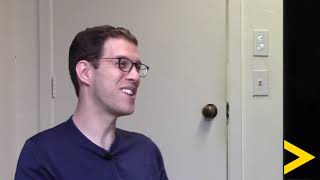
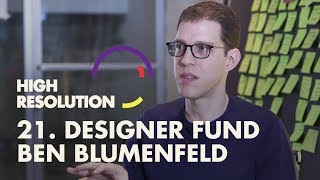
Ben Blumenfeld of Designer Fund talks about design's role in startups and why designers should found companies. He spent time at Facebook and now invests in design-driven founders, arguing that design thinking matters as much as engineering in building products.
Today's guest is Ben Blumenfeld, and he runs the designer fund.
That's right.
You know, before we get started with questions about the designer fund and what you invest in, tell us a little bit about yourself. What's your background?
I have a design background, so study design at ucla. Had all the different kinds of design jobs that a designer can have. I worked at an agency straight out of school, worked in house at cvs. I designed all the websites for TV shows, which is really fun. And then actually started a company with a friend that was an agency that developed our own products and services. That company was Magento Commerce.
Oh, okay.
But in 2007, my formidable design experience was joining a then smallish startup, Facebook.
Oh, yeah, That's a real small one.
Well, you know, it wasn't that big. Yeah. When I joined, as I think about 150 people.
Oh, wow. Okay.
Yeah.
So you moved up from LA to take that opportunity.
That's right.
Okay.
Yeah. And then that kind of opened my eyes to, like, startups and design, the power of design at startups. And all of a sudden, yeah, it was, you know, as Facebook did. Well, I was also, like, frustrated by the fact that I. I had to almost discover it on my own. And why didn't they tell us about this in design schools, that you could go work at a startup and affect the world in this massive way. And so the more kind of, the better it did, the more frustrated I got by that fact. To the point where after about five, six years into Facebook, when a lot of startups were asking me about at that point, like, how do I do design well? And seeing them struggle to do design well even though they wanted to do design well, I thought, man, maybe there's a way for me to affect the startup ecosystem at a broader level outside of Facebook. But, yeah, I thought I would, like, stay at Facebook for, like, decades.
Oh, wow.
Yeah, yeah. In like, 0809. It was amazing.
So actually, tell us a little bit more about that. When you first got to Facebook, what was it like? And then what was it like when you left about five or six years later?
It was an amazing experience. I mean, so, you know, I think I was the fifth designer. Fifth or sixth designer. There's 25, 30 engineers. Everyone's in a room, everyone's cranking, and you're seeing millions of people use the thing that you're building, and it's just growing and growing. And it just felt like we were having this amazingly positive impact on the world and a growing impact every day. And the people were amazing. And, you know, last night had a conversation with some people, they were talking about, like, work life balance. And they're like, you guys didn't have work life balance at Facebook early on. And, you know, we just didn't think about it that way. It was just like, it was so fun and we were all in. And so it was work and life together. And, yeah, it was just an amazing experience. And I think I went through so many different. You know, the company in 07 was not the same company in 09 was not the same company in 2011, 2012. So you really had to adapt. You really had to change the way you work within the company, change your expectations. You know, like, when I first started, I could have a frustrating product experience on Facebook in the morning design and code it that morning, get approval like around lunchtime, and then ship it around two or three. You can't do that when you're at hundreds of millions or billion plus scale. There's just too many dependencies, too many things going on. So I love that way of working. And as it got bigger and bigger, that was harder and harder to do. So that's one example of a difference from when I joined, when I left.
And what about growth? So you were one of the first designers there.
Yeah.
You probably had a lot of autonomy and you were shipping. And then what did that look like over the years? Did you end up hiring more designers for your team or did you manage to also still be able to actually do design? What did that look like, the company?
So I joined as a product designer and we had amazingly talented, great product designers. And about a year and a half into it, we realized we had this whole void on the marketing and communication side. And we all sat in a room and said, okay, well, how do we address this void? And everyone's like, well, I just studied computer science. I don't know anything about, you know, when you looked at the makeup of the design team, people studied film, people studied computer science, people studied hci. And it was like, oh, I was the only designer that had any sort of, like, formal design background. And they're like, ben, why don't you kind of take this team on? It'll last. It'll be a few months, and then, you know, we'll hire people for that team. So that few months ended up being about three years of building a communication and marketing design team that built all the, like, visual design, brand storytelling, and so that, you know, my first year and a half there was product design, building all sorts of different products and services. Years, you know, one and a half to like four and a half, five was managing this, this communication design team of bringing filmmakers, photographers, brand storytellers, visual. I mean it was a night, it was an amazingly talented team.
And then you left and you started this fund right afterwards, right?
Yeah, I mean it wasn't like that simple. But basically, I mean with everyone coming to, with so many startups coming to me, asking me how do we do design? Well, one of the things I did was start, I started asking a lot of designers that I knew what's happening here? Why are all these founders like struggling to do design? Why aren't they pairing up with designers to start companies? What's the problem here? And what we found was so many founders that value design just didn't know designers to start companies, designers that wanted to start companies didn't know anything about venture or who to go to or they didn't know business people. I mean it was just like, you know, the design community tends to be very insular. And so we said, okay, well let's start an organization that's just going to help. So we rallied, you know, about three dozen design leaders in the valley. We said, we're going to be this organization. If you need help, we're here to help. And within months the demand for that was like 20 to 50x what we could have ever imagined. And so, and a few of us like really took it on as this kind of like mission where like we need to help here. So we started working nights and weekends to do this. And Enrique Allen, who, you know, through 500 Startups, was one of those design, was one of those design leaders. And you know, we were just like, what are we doing? We're kind of like working two full time jobs and we think to do this well, someone needs to take us on full time. And so there was kind of that, you could call it an aha moment, you could call it an oh shit moment. But it was that moment where it was, it's either us or someone else. So what do you think? And I, you know, so that happened.
While you were still at Facebook, still.
At Facebook and kind of, you know. Yeah, look, leaving Facebook is not an easy thing. You know, it's like there's a lot of ego there. It's, there's a lot of. Yeah, I mean there's just like all your friends are there, all your whole world.
The food is gone.
The food is. I mean, yeah, we joke when you leave Facebook, it's cold outside the castle, you know, you don't have that like, groundswell of support and all sorts of things. So it's not an easy thing to do. And it took a few months of kind of contemplating thinking about it. But designer funds I think is kind of this next phase of my career.
And so when you left, was this a fund right out the gates or were you, you were helping startups with this community?
At first we were, we were. It's almost like we took a design driven approach. We said, look, let's figure out like, what's the need here? And that quickly became very obvious that the need was way bigger than we thought.
And what was that specifically?
It was like, help startups do design well early and then when you unpacked it. So then there's all these kind of like, well, what does that mean? It means all sorts of things, right? It means like helping designers become more entrepreneurial. It means founders understand how to use design and the value of means helping companies that are scaling scale their design teams and their design leaders. So it starts as you start unpacking it, you realize like, wow, this is a huge, huge need. And frankly like, the more we're in it, the more we realize it's just, it's so much, you know, it's this massive thing. So we're kind of trying to rally as many folks around the table. So you really have to like educate more people about design. You really want more people. You know, kind of takes a village to do this. And so once we did that, then the first year was modeling. It's like, do we want to be VCs? Do we like this? You know, so we actually kind of just modeled the things that we wanted to do. So we were investing our own money and seeing if we enjoyed that process, the diligence process, the meeting, entrepreneurial process.
Did you start by angel investing or did you. You did.
Okay. That's right.
Okay.
And then over time you decided and.
Then we realized, look, there's a real big need here. Let's raise a fund. And you know, we. The other thing with a fund that I think a lot of people don't realize, when you like, it's like, oh, I want to become an investor. There's a difference between being an angel investor and having a fund. A fund is a 10 year commitment. This is, this is a big deal. So, you know, it's putting together like Enrique and I kind of like, how do we like to work together? What? You know, bringing all the edge cases, everything else. But yeah, we did that. And then we basically Said, and then, yeah, we went out to raise that fund. The first step was to get all those designers that were really excited about Designer Fund to come on board. And then after we had that community, then we went out to more institutional investors and said, look, here's what we've done. Here's our background. We're two people from design meeting, a very big need here. And a lot of people kind of saw two people that weren't MBAs and were a little bit befuddled. But for a lot of people, they got it instantly. They understood the value design. They knew that there are no other investors that could fulfill this need. They'd seen it. And so There are some LPs who you just had that first meeting, and they're just like, I'm in. Yes, I get it.
So you raised this fund?
Yes.
Actually, I think for our viewers, it might be interesting to tell us a little bit about how long did it take you to raise that fund?
I think the first fund was a little over a year. Yeah, it takes. I mean, it takes a long time. It takes time.
It does.
And I would say even, you know, that, you know, that's like the actual fundraising. But then you take all the prep. I mean, it could be a year and a half when you're thinking about all the, you know, how do we want to structure this? Who else do we want around the table? Like, who do we want to reach out to?
And so, yeah, that's amazing. Amazing, actually. And that's kind of what I wanted to highlight. Putting together your own fund is a startup in itself, and amazing. So you started investing in companies then what kinds of companies were you investing in? Like, right out of the gates.
Yeah. So for us, what we really wanted to focus on were areas that have not had a lot of design love. Okay, so what are spaces where design just hasn't been there? And you think design can have this massive delta in terms of outcome, and so that's not consumer. So I think a lot of people think designer fund. Oh, this guy, like, you know, came out of Facebook, etc. They're probably just doing a bunch of consumer stuff. And the reality for us is we like things that generate revenue early on. We like spaces where you're replacing, like pen and paper or spreadsheets.
Okay.
And so, yeah, those tend to be financial services, business tools, health care, education. We've done design and development tools. So those are the kinds of spaces that we really like to focus on.
Okay, got it.
And is that your continued thesis?
Yeah, I mean, we we don't, I think, fun too. We're actually kind of trying to go even deeper in spaces that we've noticed that we've really gravitated towards, like healthcare, I'm going much deeper on it. Financial services, we're going much deeper on it. That doesn't mean that an amazing founder will come to us with an idea in agriculture or an idea in direct to consumer something, and we're going to say no off the bat. We'll still look at some of those things, but we want to be getting to the point where we can be a lot more proactive and have that conviction because of that domain expertise that we built over time.
Does a founder need to be a designer in order to pitch you?
No. So that was something that actually early on, the first year and a half, two years, we basically said, how do we ensure that design is built in is baked into this company from the get go? And the best way to do that is if the founder is a designer. So that was kind of our approach was the best way to get design early is let's make sure the founder is a designer. Now, what happened in around the second year, some founders were coming to us saying, look, I'm not a designer. I really value design. I really want to bring it in. Can you help me do that? And our hesitation was, well, we could, but it'd be a lot of work. And how does that scale? And so we kind of shied away from it. But I think the first really big tackle of it was a friend of mine, Roddy, who started a company called Hustle. Hustle Fun. So it's called Hustle. Roddy's an engineer. I worked with him a ton at Facebook. I know he loves design. He's like, design is going to need to be world class, just like our engineering here at this company. Ben helped me do this and I was like, well, you're not a designer. And he's like, I know, but. But, like, I'm gonna invest in it. I said, you know what, let's give that a go. And it is more work because, right. It's like their first designer. We have all these resources of how to hire a designer, but when Radi brings someone in, he's like, I don't know how to assess this person's answers. It's like, oh, yeah. So designer fund that needs to interview every designer candidate for that first hire.
Okay.
So that's like one example where you just realize without a designer founder, there's just. There's more to do. But Our value out there is even greater. Right. So it's finding that balance. And you want to make sure. You really want to make sure. Because a lot of founders come to us, and once you dig in, you realize they just want you to do design for them. So they're like, oh, I really value design. It's like, oh, what does your space look like? Ah, it looks like crap. Okay, like, what does your set look like? Oh, it looks like crap. How's the product? It's not good. Why have you taken no steps to manifest this love of design? It's like, well, hasn't been a priority. It's like, well, you know, so the founders that we really love, who are not designers, they've shown, they've demonstrated either by bringing on freelancers or through other means. They're kind of like care and love of design.
So that's what you want to see ultimately, regardless of your background.
That's right. And so we're much more open now to founders that value design. They want to build it in, and we're going to be their partner to help them do it. And our whole thing is to help you build that in house. So we don't want to be your design agency. We can connect. We have a lot of relationships with great agencies, a lot of relationships with great freelancers who can come in and pitch in. But we're not going to be your design agency.
How do you get conviction in a team? Like, where would you say you play in this early stage investing space?
So I was thinking about conviction. So I actually got together yesterday with a group of investors and a rabbi.
Okay.
And we were talking about this idea of, like, faith.
Okay.
And her, the rabbi, you know, she said, you know, in any kind of like, in anything that you have to like, start or create, there's an element of faith there. Someone's going to, like, do what they say they'll do that it's going to turn out okay. And so investors, I think we have this idea that we try to be. We try to have all the data, we try to be. Have all the control. Control as much as possible. De risk, Right? We want to de risk everything. And so you take. So how do we de risk it? We have domain expertise in the space. We diligence the team, we diligence the market, we diligence all these things. And then the things that don't quite, you know, hit 10 out of 10, you kind of fill in with your, like, faith bucket, right? So it's like, oh, they're like the team's 8 out of 10. But I believe that we'll be able to get someone who will fill in for this, like, need that they have or. The market right now is not that big, but I believe they can. I believe they can grow the market. I have faith they can grow the market. So I was thinking about this walking over here. I was like, you know, it's conviction is kind of like domain expertise plus diligence plus fave, okay?
More from Ben
Early Facebook Employee: How Getting Criticized by Zuckerberg Shaped His Career
Ben Blumenrose - How designers can be successful startup founders (Dive Club Ep. 71)
131 Designer Fund: The First Design Centric VC Firm | Ben Blumenrose, Co-Founder & Managing Partner
#21: Designer Fund's Ben Blumenfeld on how designers can become successful founders