Early Facebook Employee: How Getting Criticized by Zuckerberg Shaped His Career
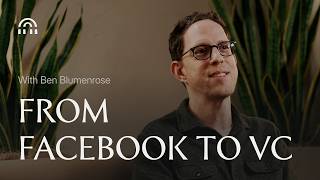
Ben Blumenrose, Facebook's fifth designer, learned to earn Mark Zuckerberg's trust before making changes. Moving the "add friend" button grew signups 3%, and a hidden onboarding tour was completed by 90% of users who started it. He later founded Designer Fund, betting that design and engineering together drive success.
Chapters
Zuck at that time he had his desk in the corner, he had the designers in front of him so he could just peek out and he could see the stuff you were working on. It was like fucking wild. And so I start doing stuff, I'm doing like 3D graphics and glossy this and it looked like, it almost looked like Apple. And I'm so excited to show it to him. And then like a few days in, he sits down, he sits down next to me and he looks at what I'm doing and he looks at me and he goes, you know, you can't just come, come in here and shit on our style.
Ben Blumenrose was at Facebook in the beginning and was vital to shaping how the world connects today. Then he walked away to back a thesis the Valley dismissed design led companies. Today he's built Designer Fund into validation of that bet backing Stripe, Figma, Notion and Linear before the world caught on. Today he's revealing what he saw in them that everyone else missed. Super excited to have Ben Blumenrose here. He, he was an early designer at Facebook joining in 2007 and he's the founder and managing partner of Designer Fund, one of the first, if not the first design focused VC fund, which apparently in retrospect was not a good idea to many people. But it's obviously perfect timing for a fund like this. It's great to have you here.
Oh, thanks. Excited to be here.
So I want to start off with your time at Facebook because I know you have so many good stories. I read that you were really focused on user education for new products and I'm curious, some might say the need for user education is a bug because the product should be so intuitive that people just figure it out. So I'm curious, in your perspective, where do you decide this is intuitive enough that the rest we can take over with tool tips and guides?
Yeah. So I think it depends on the scale of the product that you're working at. But we got to, I remember we had a point of view that users should not need any user education. It should be so intuitive. Someone should just be able to land there and just go. But we started getting to a certain scale where for me it became obvious that you want some sort of hand holding for some people. And by the way, some people might want it at some point in the day and later on in the day they might go to the site and not need it at that point and just like depending on mood and where they were at in the day. So we got to the point where we had hundreds of millions of users, and the idea that you could build a product that for hundreds of millions of people would just be intuitive to me seemed crazy. So one of the things I fought for was at least doing some sort of hand holding and orienting when we would launch new products. And I remember. Yeah. So we had the timeline, the new timeline for profiles. And the thinking was, let's make it super intuitive. I said, look, let me and a team build a little bit of user education. And Mark was kind of adamant that, like, no one would use, that no one would care. And also, even people who would want some user education, they wouldn't actually finish. We basically wanted to build a little bit of a tour, and in the end, we sort of, like, did it under the radar and tested it, and it turned out that 50% of users wanted that tour, and almost 90% of the people who started finished the whole thing. Orientation. And you and I talked about it. It's kind of like a hotel room, right? You get to the hotel room and they tell you you might be tired that day, and they just say, okay. You just might say, look, I'm fine. Let me just go to bed. Which is okay. But sometimes you want to know, how does the handle in the shower work? Where's the gym? Is there something at the hotel that I should know about? Is there something going on tonight that I should know about? Right. Just a few basic questions to get you oriented. It doesn't mean that you're like, that the hotel was poorly designed. Right. It just means that someone wants a little bit of a way to, like, orient and get settled. Yeah.
It's so funny that I end up working. We're focusing a lot on the onboarding right now as well.
Yeah. Well, look, step one is at least, like, watch people. One of the things that we used to do is we used to do user research on new user onboarding at Facebook. And just to see, like, what was the aha moment where someone would actually, like, kind of find the things they were looking for or whatever. And we'd watch the screen, and we did this hundreds of times. And at one point, I said, can we not watch the screen? And can we watch their face? And all of a sudden, you basically, there was, you know, we'd ask you, what city did you live in? What school did you go to? Where do you live now? All this stuff. Right. And then we'd start showing you people from your life. And if you watch people's face, the second we showed you a grid of faces of people you hadn't seen in decades. Tears, smiles. That was the moment, like, the second you did that, they were hooked. They were just like, I want to find these people and come contact these people. But you wouldn't see that by looking at the screen. It's only by looking at.
It's a hidden piece of data.
Yeah. And so, again, new user onboarding don't just look at what's happening on the screen. Also, you need to look at what's happening with the person. And so what we ended up doing was how do we get to that moment where we show the person, the people as soon as possible? Because that's the moment that they can actually, like, you know, that basically, like, sealed it for them. And then the other thing I would say is have people sign up for your product, like, your employees, have them go through it daily. Like, we basically got to a point at Facebook where Facebook employees were so steeped in it, they had no idea that when someone could join and they would just see, like, a blank feed that was happening to, like, thousands of people a day. But because we were just like, already on Facebook for years, we never experienced that. So there was a product, a PM at Facebook, who basically made it his mission. He would sign up every day, record it, and send it out to everyone, then do it again and again and again. He's like, it's still shit. It's still shit. It's still shit. Fix it. You know? But he was just, like, relentless. You gotta bang the drum until, like, people internally got it.
Want to go deeper? Talk to Ben's DigitalMind on Delphi AI BenBlumenRose link in the description.
Yeah.
And so him saying, it's still shit. It's still shit. This leads into my next question on does he stop because of data or because it feels good? And there's a story where a designer at Facebook moved the add friend button because he thought it would look better. And it actually.
It's not just look. I mean, he actually thought, like, that's where all the buttons are and it should go where all the buttons go.
Yeah. So it was maybe intuitive, but it led to a 3% drop in friendship and apparently ahead of growth. Not friendship in general, in friendship at Facebook.
That was Facebook. That led to that 3% growth, the platform itself.
And so the head of growth got super angry. And I'm curious how you think about intuitive. What looks good and following the metrics.
I think the thing that happens too much is that designers are just not aware of these metrics, of the things that are critical to the business. And so an example like that, where you move the button to where all the other buttons are, right? It's like, okay, that seems fine. And I remember the head of growth, Basically, it was like, okay, do you understand what 3% compounding means? I don't remember, by the way. I don't remember if it was exactly 3%. It was enough that it was, like, significant, Right. To a designer, it's like, well, that doesn't sound like that much. And he basically said, okay, doesn't sound like that much. Let's do this. Go to Mark and tell him that by the end of this year, instead of 850 million users, we'll have 600, and then see if he likes that button placement. Right now, all of a sudden, it's like, well, wait a second. What do you mean? Because 3% compounded daily, that's what the trajectory difference looks like, right? And what does that mean in terms of revenue for the company? And you, as a designer, you have to know that that's what you're impacting. If you don't, you just look like an idiot. And probably rightfully so. So I think designers, at the very least, need to understand the metrics that we're impacting and have a sense of when we make a decision that maybe is at the very least neutral, or maybe even if it, like, briefly makes the metric go down, you better be able to answer for why what you're doing is worth that hit. Because if not, it just makes designers look like all we care about is aesthetics and not the final outcome.
Just be impact driven.
Yeah.
You talked about how at a certain point, there wasn't really clarity on when to bring an idea to Mark. It wasn't really, like, structured process for new ideas. And so I'm curious, what made you feel like you needed to create a structure? And did you come up with when to say no list to new ideas?
You know, I would say we actually didn't do a great job here. And I think. And this is actually like a learning that I. We tried to do something at Facebook, and I don't think we ever really got to it, but it's something that I tell our companies to try to do, which is, do you have a sense of how products go out the door here? So if I had to articulate the process at Facebook, it would have been like this. First, someone from somewhere at the company sees that there's an issue and does something about it. Prototype, design, whatever. Then they go and run around and tell people that this is a thing they want to build and see if they can get people excited about it. Then once enough people get excited about it and they start to build, then either go to, like, Mark Zuckerberg or at the time, Chris Cox, who was head of product, and try to get them excited about it. If they're not excited about it, then try to do an end around and not tell them about what they're doing for the rest of the time. Then if Zuck tells them to stop, then go into a room for three weeks and try to do it undercover and get it out the door so that the data will then make it like that. Zuck has to say, yeah, there's so many permutations that we had depending on people's feelings, emotions, what was happening that week? It was a cluster. It just made it a little bit of wild west to get stuff out the door. I think some of that is fine, but I also think it is really important to have, and ideally you have some sort of visual artifact that says, all things being equal, here's the process that we like to follow here. You know, two weeks of user. Like, even just the idea that we do user research, you know, we'd often get to a month or two into a product process and someone would ask, how do we know this is a problem? Yeah, it's like, oh, because, you know, well, don't you see that? Isn't that your experience every day? It's like, no, I don't experience that. Did you pull data? Well, no, the data team was, like, super busy. So how do you know? Well, I just thought we all agreed that this was an issue, you know, and all of a sudden you realize you totally skipped the part where it was like, do we actually know that this is an issue for not just for people at the company, but for everyone using the product. So there's all that kind of stuff where it's the checklist, right? Like, what are we doing, in what order and who do we bring in, when. When to bring in the CEO, and when does that person get the sign off? So that we know how do things go out the door? And when things are deviating from it, you can actually say, look, you already approved this thing. Why are we now having this conversation again? And there might be valid reasons, because all of a sudden the legal team in Germany says, hey, the laws have changed, and so we got to rethink this whole thing. And that's fine, but at least we know where we're deviating from the standard protocol. And it could be lightweight, but I think it at least creates some sort of framework and a plan for the team that they can understand. Like, if I do this stuff, this is how these things go out the door. Yeah.
Before we move on from Facebook, one more craziest story with Mark Zuckerberg.
So I came from the agency world, and I was. Because I think Soleil was on here before, right? So the designers at Facebook, I would say, when I joined as the fifth designer, and none of them look like designers to me in terms of just like, went to design school, like, you know, went through that rigmarole. Like, it's like they had backgrounds in film and HCI or engineering. They all actually look more like engineers than designers to me. I was like, wait, you guys can code and see. Where's the designer here? I came in and I was just like. And I don't know if you're probably not old enough because you're like four at this time, but the site looked almost like a wireframe. It was undesigned. And I came from the agency world, where it's just everything was glossy and beautiful and whatever. So first project I get in and I'm just like, I. I am going to blow the doors off this aesthetic. I'm going to make this look 100 times better than what it looks like right now. And Zuck, at that time, he had his desk in the corner and you would design on 30 inch monitors. And he had the designers in front of him so he could just peek out and he could see the stuff you were working on. It was like, fucking wild. Which is why so many of us would find nooks and crannies to escape. And so I start doing stuff. I'm doing like 3D graphics and glossy. This, like, stuff that actually probably right now would be really cool. And it looked like. It almost looked like Apple, right? And I'm so excited to show it to him, and I'm trying to, like, hide it, whatever. And then like a few days in, he sits down. He sits down next to me and he looks at what I'm doing and he looks at me and he goes, you know, you can't just come in here and shit on our style. I was like, dang. I was like, what do you mean? Like, what did you hire me for if not to come in here and push the thing? And he said, come in and understand why we. We do the things that we do and then earn the trust and then move the needle. And it was, you know, as a young, I was, you know, at the time, I was like, what is this? What's this guy's deal? Like, what the fuck? Like, you know, like. But later I found out that actually, as an example, speed was, like, critical to Facebook's success. So much so that they literally tested. This is an example of, like a designer not knowing metrics. We actually fake throttled certain users to see what it would do to their usage. So you would be in San Francisco on high speed, and we would throttle you 10, 20, 30% in speed just to see the impact of your usage on the site. And it would drop you. You would use it less if it was slower. And so the site was actually designed like the wireframe Y. It was an aesthetic thing too, but it was also, like, happened to be just the fastest way to get a site to load because it was, like, very few graphics needed. And that was a big part of why it won.
It's a good segue to learning more about how you think about design. And at Facebook, you had to design for the individual, but you also had to design for the system. And you've talked about the difference between human centered design and humanity centered design. And so I'm curious if you have an example of something that looks good for the individual. Maybe a design decision, but maybe doesn't really work. When you zoom out and think of a network or a system at whole.
Yeah, I think we need to, you know, it's not that human versus it should only be humanity and not human. Or ideally, these things go hand in hand. But I think too often people basically say, let's give people what they want versus let's give people what they need or help them understand what they might want. And so the newsfeed is sort of a good example of this. And we're always, you know, I still say we, but like, we're always, like, tweaking that algorithm. But the way I kind of describe some of the way it works is imagine you came over for dinner and I said, hey, I have, you know, whatever salmon and like, roasted broccoli or like, I can just give you, like, a scoop of ice cream. And you're like, really? For dinner? It's like, yeah, if you want. And you're like, I'll have a scoop of ice cream. That's kind of crazy. Next time you come over, I'm going to remember, oh, you know, he was really into ice cream. So you come over and instead of salmon and broccoli, I'm going to say, I have one scoop of ice cream or three scoops, which One do you want? And you're like, ah, three scoops. Great. And then the third time you come over for dinner, it's gonna be ice cream sundae or three scoops, and you go for ice cream sundae. And now you're like, dude, I'm going to Ben's. Every time you know what he gives for dinner? Fucking ice cream sundaes. And so the news feed is, like, often that way, where it's like, we basically give you the thing that you want to see more of, but it might not be the thing that is, like, nourishing to you. Right. But, like, we always took the point of view of, well, we shouldn't be in the business of, like, dictating what's good for a person. Okay. And the thing that we never got to. So I have a good friend who started this, like, leadership academy program in Israel. Thousands of thousands of young Israelis now go through this thing. And when I was. I was in Israel many years ago, and basically I was sitting in the desert with him. And earlier that day, I got an email that said that Facebook had just surpassed television in time spent. And I told him this, and his head exploded. He was just like, that can't be. That just cannot be. And I'm like, I'm telling you, I know the numbers. I know the number of people use, and I know how much time they spend on it. Like, it's true. And he said, how many people are responsible for what goes in there? I was like, you could probably fit them in a little room. There's like 15 of them. Yeah. And he's like, how old are they all? I was like, probably most of them in their twenties. Most of them are guys, and most of them have a similar background. And he said, who are the historians, sociologists, ethnographers around Mark to help him understand what does it take to build a good and just society? I was like, what are you even talking about? Like, what are you talking about for real? Like, I was like, do you know how these companies work? A council of elders? Like, what are you talking about? I was like, there's no one like that. You know, he might have mentors, but, like, it's not like those people are sitting in a room helping us understand, hey, historically, when power was put into these people's hands, or when this kind of information was disseminated, or the printing all this other stuff, there were. Look, we were smart and curious people. So, like, we. Some people went and sought that out, but, man, we could have been. It's like, it's the same thing. Like a designer who doesn't know the data of the thing that he's impacting. It's the same thing. It's like you have to have a much more holistic view of, like, the history that you're. That you live in. Right. And understand the impact that you have. And those people need to be in the room. And I remember when the first kid passed away who had a Facebook account and was like, what do we do with a Facebook account of a person that passed away? And it's like, we'll take it down. That person didn't want. Like, that person probably doesn't want his account still alive when they're dead. Right? And it's like, we don't know. Maybe they do, maybe they don't. We actually never asked. And then we started to notice. So we. There were some accounts that we just kept up, and we started to notice. A week or two in after someone dies, people would continue to post on their wall to manage grief. You're like, well, that's kind of crazy. What are they doing? Why are they doing that? Well, it's like, that's what people. When they go to graves, that's what they do. It's like, oh, well, that's kind of interesting. Should we be in the grief business? Well, now that's like, part of humanity. And like, yeah, maybe these things actually should live on in perpetuity. Right. And so we started letting people keep them up, and then we'd see a year. You'd see these spikes in on someone's profile a year after, and it was all their friends, hey, it's been a year. Still miss you. That I was like, really? You know, it's just like, oh, my God. And over time, as Facebook got to be being used by older people and all this stuff, death became a very common thing on the platform, and we had to design around that. And now it's like, I think we even. Now Facebook will ask you, what do you want to happen after you die with your profile? So what do you want to happen as an individual? Is an important question. Now, another question is how healthy is it for your friends and family to have this thing that exists past your death? Right.
Good or bad for them?
Yeah, yeah. And by the way, religion deals with this a lot, and religion does take a very strong point of view around what to do and what not to do. So as an example, like, in Judaism, we basically say, we don't want you to visit the grave. I think for the first month. Well, why it's like we want you to. So you have your period of grieving, it's seven days. Are you situated? And then you have to get on with your life. Like living is about living. And the religion takes a very strong point of view around that. Well, like a lot of tech companies and tech products are like, we don't want to dictate that. Like, you know, it's like at least have a point of view around, you know, what is like a healthy process through this and maybe let people kind of navigate some changes. But we do know that probably holding on to someone for years or decades after they've gone is probably not super healthy. There's some point where you have to kind of go through some process. So these are the kinds of things I think companies need to be asking more. And AI, oh my God, there's so much of that stuff. It just needs to be part of the conversation.
AI has kind of commoditize, just like MVPs spinning up the average of designs. So I'm curious, where do you think the edge for designers today? Where does it lie and what do you see your 100x AI first designers doing that make them ahead of all the rest.
Yeah. So I would say we're in a very like shifting sands moment with like product building and design and all that stuff. I think one of the themes around this is AI versus craft. And basically what's the impact of AI to building good products? And to me, I think the way I want to see this evolve and the way I think a lot of designers are using it is basically like AI is the enabler, is the supercharger, but is not the replacement for good high quality output. So I actually think like the best use cases I've seen is AI actually letting you get to higher quality craft and higher quality output where you're like, well, that doesn't make sense because it sucks at design. So even for like a relatively small feature, you can ask, what have we done here that has worked and has an nylon? What are other companies doing like this and why? Where does it fail? Okay, great. Now go through my product as a 18 year old and tell me what you notice. Go through my product as a 40 year old, tell me what you notice. Go through it as a 75 year old who's not. Tell me what you notice and synthesize that. And all that happened. And these are things. It was not even tenable to think this way five years ago. Now it's just like, you know, it's almost like imagine you have endless resources. What's the information you would take in before you start your work? Then once you start the work it's like, well, how much time do I have? A week? Okay, I'll try one or two ideas and maybe three. And the best of those three ideas should be good enough. Well, maybe there's like a hundred ideas I could try just quickly. But then you as a designer is like, okay, of those hundred or twenty or whatever it is like this idea seems to work really well. The way you know is because again, you're putting these AI agents or some other methodology through these things. That plus your taste gives you a much better place to start doing like the craft work.
It allows you to do fewer reps to get to the local or global maximum.
Yeah. Yes. Though I would say like in some ways it's like there are reps that happened before. So it's like you probably have to do fewer high fidelity reps that take a long time, but you can do dozens of low quality reps to get there. So I don't think it's like we really need to understand there's different parts of the process and AI is going to let you supercharge different parts of that process, but it doesn't mean that you have to AI assize the whole thing. And now it's like the end product looks like something that an AI machine spit out. Because at least right now in terms of a final output, it's just still not that good as far as design engineering is quite good, but design wise, it doesn't hold water to really good designers yet.
Do you see that on that final mile? Like the finesse, the interactions or is it more in the UX and being data driven?
Look, design is this thing that you can apply to so many lenses. So I'll give you a great example. So when I joined Facebook as a product designer, one of the first things I did was I was like, how does this company even work? Like what's going, who's making decisions and why? And the company I think was about 150, 160. So I was like, I want to have an image in my head of this company and who, what are we doing right and who and who's like kind of holding the strings? So I ended up setting up meetings with every org and I was just like, look, I'm a designer here. Forget what you know about designers. That if I could design for your team and I met with head of legal, head of hr, head of customer support, what would you do with that? And almost universally, all of them were just like, I never even thought about it. I never. I can't even imagine having a designer. So I don't even know what I would do with that, with that resource, right? And so one of the things that happened out of that process was like, customer support. We had 50 customer support reps that were all 21 to 24, all graduates of Stanford, Harvard and MIT. And they were the judge, jury, and executioner on Facebook. And the stuff that they were being put in charge of to decide is insane, right? You're talking about someone saying, hey, my friend is threatening to murder this. This guy on campus. You need to do something about it. And they need to know to escalate that to police, right? Or like, there's just so many things that were, like, societal that these people were. This wasn't like, I'm returning a set of pair of Nikes. Like, this was like real fucking things. And dealing with all those things at scale was hard as all hell. And so I went and I talked to you a little bit. I went and I sat down and I just said, let me spend a day to understand what's going on with customer support. And I sit down and they basically all had these common responses that they were told. Like, when someone's locked out of their account, use this common response, right? And I'm sitting down with the first person and he says, okay, here is a common response. I'm supposed to reply to. It's not that good. Not a good response. Here's what I do. And he pulls up this, like, the sticky notes app. And he had all his common responses in a sticky notes app. And he was using that. I was like, oh, well, that's interesting. This guy's gone rogue. But, like, you know, he seems to know what he's talking about. Then I went to number two. I watch her, and she's like, okay, this person, they want to report something. There's a common response for this. I don't use the common response. I was like, you don't? She's like, no, no, no, they're not that good. Here's what I do. She pulls up a Microsoft Word document. She has all hers in a Microsoft. I'm like, well, ok, that's two people out of two that have gone rogue. That's interesting. And then I go to the third person and same fucking thing. He opens a dock and he's like. I was like, everyone's gone rogue. This whole fucking place is rogue. And no one knows. And by the way, all These kids, and I call them kids because they were in their 20s, all of them were using these tiny monitors and, and they were flipping back and forth between tabs to do all sorts of research and blah, blah, blah. And when you looked at the managers had these 30 inch screens and they were doing similar work but on 30 inch screens with way faster because they were able to do side by side research. I was like, this tool stinks. Everyone in this fucking room should get 30 inch screens tomorrow. And basically in a month and a half, me and two engineers rewrote the whole system. That and literally overnight we took the 50 people, we cut them off and put them on this new tool. And overnight their ability was 100% increase. So instead of supporting 100,000 users per person, it went to 200,000. So it was literally like you hired overnight 50 new reps that were expensive and now boom, they're there. And by the way, guess What? All the 50 now are enjoying their job, are collaborating because they were able to write customer responses that they could share best practices. So the system got better and better instead of people hiding their customer responses in a corner. And that was all because a designer just said, I want to see what the hell's going on in this little part of the org. And so when you think about the impact of design in a company, you start thinking about applying this to every part of an organization. And that's what it means to be like design driven, design led as an org. So for me as an investor, like that's what I want to see. I want to see our companies not just doing it in a product or brand, but basically bringing a design process to everything. And when you do that, it just supercharges. So there's so many areas where design is just going to be like a big needle mover that most companies don't look at it and the ones that do are just going to like outperform, I think. Yeah.
Didn't even think about design for sales. So to talk about designer fund, you told me this, but I'd love to go deeper into. You were starting the first ever design focused fund. And why did people not. What was people's reactions to that and what gave you the conviction that this would be something that feels obvious now, but in 2014 maybe it wasn't so obvious.
So there's a confluence of things. One is the success of Facebook. Basically all of a sudden, if you were like a lead of some sort, especially a designer engineering lead, all of a sudden you started getting emails from people Outside of the company. And I was getting a lot of like, hey, can you help us with design? And it's like, well, tell me, like, what do you need help with? And it'd be like a company that's three years old, raised tens of millions of dollars, and they're like, here's the product. And you're just like, it's criminal. Who let you build with 27 engineers and a part time designer, you know, from Eastern Europe, and expecting that that would work, like, this is crazy. And so I just got so many of those kind of things that it made me wonder, like, why is this happening? And so then I went and I followed you just like a user researcher. Let's follow the tracks, right? So it's like, well, who's investing in all these people? And I started interviewing all these investors, and they were like older, usually white, usually dudes from engineering or finance. And to me, it was so obvious when I was at Facebook, I was just like, it's so clear that when you marry good design and product and good engineering, that's like the winning formula, right? And you started like, the more I talked to other investors, design was like this total afterthought. I was just like, how do so many investors, like, not get it? So that was one, two was like the importance of getting it became bigger and bigger because it wasn't just like, oh, okay, they're just designing social networks. Who cares? We have a good one. That doesn't matter then. But it was like healthcare software, education software. It's like, you know, we were software, we were turning everything into software. And I'm just like, I'm starting to think, like, we're building a whole city and architects are nowhere to be found. This city's gonna be shit. You know, you talk about humanity centered design, like, this is not good. So I started getting more and more concerned about just that as a thing. And then the other thing that was happening was I started to see my peers who were designers who were starting companies, really struggle to get anyone to believe in them. So, like, Joe and Brian who started Airbnb, they are RISD designers. And early on they would stop by Facebook and be like, here's what we're doing. But like, investors don't get it. And we're just like, how do they not get it? It's just so much better.
So it's 2026. We have agents that are using interfaces for you. We have personalized software. What is Designer Fund excited about in 2026?
Yeah. So for us, I Think it's, where are these, like, hairy problems? And more and more. So I think it's like software and the physical world where AI is going to be an enabler for better products and services. And we think there's like a 10 or 100x product design improvement for it. I'll give you a couple examples. So we're investors and some of the stuff that we do is people just. It's not like we do do some of the sexier stuff, but there are things where 99 out of 100 investors look at it and they're just like, what that? So I'll give you an example. Headache clinic. So we have a company called Maven, and if anyone knows if either you suffer from migraines or anyone you know that suffers from migraines, it's like an incredibly debilitating thing to suffer from. There are so few experts who can help with this thing. So the wait times are like nine to 12 months long. And then when you finally get to see a headache expert, it's like, let's try this, let's try this. It takes months and months and months until you find something that sort of works, right? And so these guys were like, felt the problem firsthand, either them or family members. And they basically created this experience where it's like, we make headache practitioner, like headache experts, way more accessible. Once you get seen by someone, which is in days instead of months or years, the experience after the fact is AI drips. The more that people get treated by them, the more data they have, the better it is. So they're going to slowly start outperforming. Already seen this. Outperforming the original data, the original or the experts that are now at Stanford or whatever. And you should see like the feedback they get. It's just like, I mean, yeah, it's like they're changed, like people's like, lives. They're just like, I can finally function again. You guys listened. It does tend to. It's like 80 to 90% is more of their customers are women. And the feedback is like, do you know how often I go to a doctor? And they're like, are you stressed? Or like, maybe it's your period or maybe, you know, it's still to this day, right? And they're like, no, we're going to actually, like, listen to, like, what you're, what you're feeling, why you're feeling that thing. And here. And based on the hundreds of people that we have already seen, here's the medication to try, here's the Data input. They can get data input way better and faster than, like, these traditional clinics who are going to see you three weeks after the fact, right? And it's messy and it's atoms and it's emotional. And that's where it's like, to me, is like, you build a better product and service there and people are gonna flock and they're gonna tell a hundred people. And that's what's happening right now. Everyone that's been treated by maven is telling dozens of people, like, I found this. Like, I can't believe it's real. I can't believe it's actually right. And it's like, open AI is not gonna do this shit. Like, it's way too fucking messy and crazy, right? So OpenAI can enable some of this stuff, but when you actually need the medicine, when you actually need someone who's. You need to feel supported, you actually need the treatments physically, right? So that's the stuff for us. We get really excited where there's a lot of user experience around it. A big, meaty product. I love when someone tells me, even with AI, this is going to take like two years. I'm like, yes. Yeah, yeah. Because the things where it's like, hey, in two months, we now have like, millions of dollars and hundreds of thousands to use them. I'm like, you can lose them that fast then. And another company can build this just as fast. So I want things that take forever to build. I love that.
And what's one question do you wish you were asked more?
What's something about our product that should be improved? So I think I'm going to ask you that after this, but I was talking to this guy and then it turned out he was like the guy that started Substack. And the second he started and then his second question to me after, I was like, oh, yeah? He's like, what would you improve about it? I was like, how much time do you have? He's like, I'm all ears. But it's like, it takes a humility. Substack is big and plenty of people use it and they're doing a lot of things right. And his second question is, how could we be improving the product? And, man, I wish more of our founders and designers and just seek out, you know, just seek, seek back, feedback. It's. It's uncomfortable. Who wants to hear? Especially if you're doing well, I don't want to hear someone be like, well, this thing, like, doesn't work so well, or, you know, it's the last thing you maybe want to hear. But I think the more that you can ask that, the more you can understand ways to improve it. And I just wish more people would just like bite the bullet and just have that be a muscle they flex.
Thank you so much. This was awesome. So many good stories. I feel like I need more access to you. Thanks for tuning in for personalized advice from Ben. Head to Delphi aibenblumenrose and ask his digital mind.
More from Ben
Ben Blumenrose - How designers can be successful startup founders (Dive Club Ep. 71)
131 Designer Fund: The First Design Centric VC Firm | Ben Blumenrose, Co-Founder & Managing Partner
#21: Designer Fund's Ben Blumenfeld on how designers can become successful founders