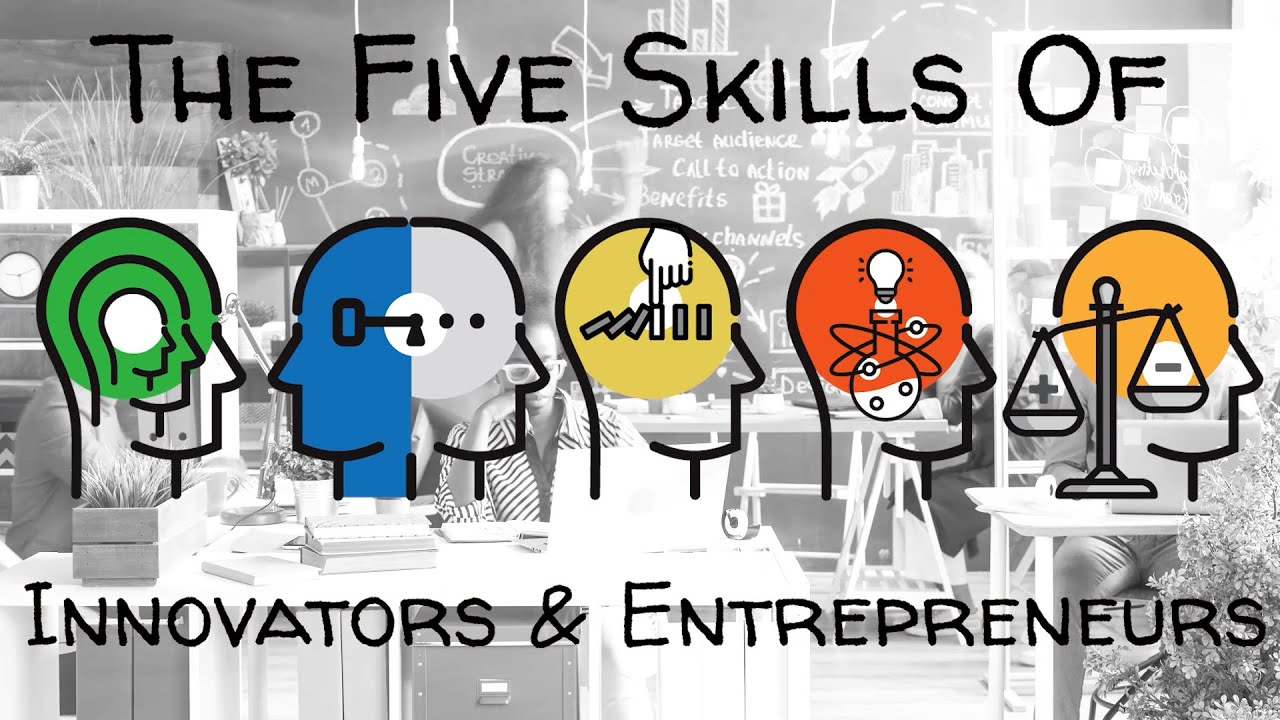
In this monologue, the speaker outlines five core competencies that underpin successful innovation and entrepreneurship. The first skill, empathetic perspective, enables individuals to understand how others think and feel across macro and micro contexts, allowing them to anticipate needs and reactions. The second, uncovering demand, stresses that demand resides in people’s lives, not in products, and innovators must start by observing real-life problems before designing solutions. The third, causal structures, refers to building mental models that reveal underlying patterns and relationships in the world, moving beyond personal viewpoints to multiple perspectives. The fourth, prototyping to learn, emphasizes hypothesis‑driven testing to surface unknowns; building better products is about discovering what is unknown rather than refining known features. The final skill, identifying and managing trade‑offs, draws on Jason Fried’s principle of preferring a “kick‑ass half” over a “half‑ass whole,” recognizing that product requirements often form an impossible unicorn and that strategic compromises are essential. The speaker reflects on how mastering these interdependent skills transformed their own ability to innovate.
Chapters
5 different skills. One is empathetic perspective. Another one is called uncovering demand. Third one is causal structures. The fourth one is prototyping to learn. And the fifth one is basically identifying and managing trade-offs. People who have empathetic perspective can see through space and time. They, they can literally look backwards, they can look forwards, they can see at a very macro level, they can see— they can jump down to a very micro level. And so these people are seen as very quick thinkers, but they're really not. They're really just able to understand how a other people think and feel. Uncovering demand. Really good innovators and entrepreneurs actually understand they don't create demand. Demand exists inside of people, not in our product. What's going on in people's lives, and how do we fit into theirs? And so part of it is starting with the person, not with the product. Number 3, causal structures. So this one was actually hard for me to figure out, because it was like everybody has a certain way they see the world work, but it turns out that anybody who's really good at innovation has at least a mental model of how things work. And that this kind of like highlights the thing, and this is, to be honest, it almost highlights like my career, which is I was so worried about events and patterns that I didn't actually have a way to see underlying structures. But ultimately, the 4 mentors taught me all these mental models so I could see how the world worked, not from my perspective but from multiple perspectives. Prototyping to learn. Oh, we actually test to prove what we know. Hypothesis testing. And in Japan, they would say, like, we test because we don't know. And so a lot of the work that I think is important is actually understanding what are the unknowns that we have in front of us, and that if you're really innovating, you have a lot of unknowns. So building better product isn't about knowns. It's actually about unknowns. Making trade-offs. I was told to optimize, make it to be the best it can be on all dimensions. And we talk about these requirements of everything it has to be. But ultimately, Jason Fried, who's the one who said it, is you're better off with a kick-ass half than a half-ass whole. I can't do it all. I feel like when you look at a set of product requirements, it's a freaking unicorn. Like, we got— it's got to do it all, and it's got to do it all in this time and this cost. And you start to realize, like, well, what's going to give? It's not easy. But without the other— without prototyping to learn, without causal structures, without knowing demand, without understanding empathetic perspective, I actually can't do this. So the reason why it was hard for me to take was this whole aspect of, like, I had to learn all these other skills to get there.