Hiring Your Next Job: Rethinking Career Moves with Michael B. Horn & Bob Moesta
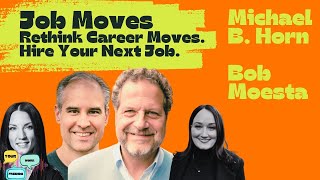
Transcript of a 2025 podcast episode featuring Michael B. Horn and Bob Moesta (guests) with hosts Mel Plett and Francesca Renieri discussing the book "Job Moves." The conversation reframes job search as "hiring your next job," emphasizes self-knowledge (energy drivers/drains), networks, negotiating fit over features, and introduces four "quests" that drive job changes (get out, take the next step, regain alignment, regain control). It also covers employer/employee dynamics, the shortcomings of job descriptions, and practical steps (nine-step journey, experiences vs. features) for making better career moves.
Just because you're good at it doesn't mean you like to do it. Part of it is being able to actually know who you are and know what you're good at.
I almost wore that same lipstick today. That would have been hilarious.
Sometimes you just need like a, just.
A boost, you know? So really, it looks really beautiful.
Thank you. Honestly, there's just so much schmutz going on in the world right now. Like the news cycle. I cannot, I cannot, I. I can't.
Keep up with this news cycle. Listen, we had a, we had a.
Pretty kick ass conversation last week.
This has been one of my most favorite discussions in a long, long time. I mean, I love all our guests, but this has just been a really. It was just a rad conversation.
Yeah, I thought so too. We talked to Michael B. Horn and Bob Moesta.
Yeah. Michael Horn is the co founder of the Clayton Christensen Institute and he teaches at Harvard Graduate School of Education. And Bob is the founder of Rewired Group and also an adjunct lecturer at the Kellogg School of Management for Northwestern University and also a fellow of the Cleaton Christensen Institute and just all around amazing human beings. To talk to us about their new book, Job Moves.
Job Moves.
As someone who has been deeply involved with talent acquisition and now I do career coaching for individuals, I just think the tool that they've pulled together on their website and understanding the quest that you're on, which by the way, we all have four quests that we typically are on to decide what our next move is going to be. Highly recommend reading the book just to.
Understand that this book honestly is giving people permission to hire their next job. We are all in that position. This is not where you're at the mercy of employers. This is really permission and an amazing opportunity. And honestly, the data to tell you, no, what you really need to do is be honest with yourself about what you want, what your strengths are, and then go out there and hire your next job. This conversation was so fun for me just because a, they're just so well researched, great conversationalist, and honestly gave a lot of really great tips on how do you really think about hiring your next job?
Yeah. If you want to feel empowered with your career and the decisions you're making around your career, this is the book to read and this is the episode to listen to. So with that, here's Michael and Bob. All right, Michael and Bob, let's just get to the point real quick. What's the biggest myth that folks tell themselves about their career growth or progress?
The one that surprised me the most was how much they thought they got lucky to get their next job. And when you, when you really kind of unpacked everything they said and how they did it, luck is more the fact that they were prepared and, and the opportunity appeared and they were able to actually seize it. And so I wouldn't call that luck, but they wouldn't assign any kind of causation to it. And what we found was that there are very simple things that actually have to happen to you to make you ready for the next job. And then all of a sudden you only see them when these other things happen to you. And so that's one of them.
Bob, you stole mine. I was going to say the exact same thing. So I agree. The only other thing I might add is I think people discount the role that their network plays for them when they're looking for a job. They think it's a very solo. Like I applied online to, you know, hundreds of jobs these days. Increasingly AI supported me and they don't realize the importance of their network as part of that process that Bob alluded to coming in, making them aware of opportunities, helping them get the job, being the trusted broker. Right. So that I will trust and actually hire you. Most jobs are filled by someone that you know in network. They're not filled by anonymous random things. So. So that's the second one I might add is people discount the role of their network around them.
I'm going to add a third. The third thing to me was money. Money is a means to an end. So money turns out to be about respect or money turns out to be, I have to provide for my family more. Like there's like five or six different definitions of why people want more money, not one. And you start to realize like people are mixing them all up and they're just using that lever of here, let me offer you more money. And it's, it's not just more money that makes job the work satisfying.
I love to hear you say that because I just had a conversation with a friend who was feeling so down on themselves because they hadn't reached what they felt was success in terms of salary. And she's worked with incredible people, incredible organizations, but somehow that was the sole thing telling her, or at least her own narrative that she has not been successful because of that one element. So it's good to remember that doesn't define your true success well, but the.
Fact is it's a met is one of the wrong metrics, but it's a metric of how what Success or progress feels like for them. And so when you start to put that there and you don't have the why of like, really what I want is respect. And ultimately there's other ways to get respect. And so this is why, for example, sometimes a position change will actually help people feel that progress. And without a salary increase, there's many variables here at play. And ultimately it was very fascinating because we did almost like the exit interview, but the real exit interviews, we did over a thousand of them and it was so fun to hear the stories and what had to happen to them to make them ready to look. And then ultimately how they found it was kind of what the book is all about.
Yeah, I love it. What gets in the way of true progress? How do we remove it?
Part of it is, I mean, starting with that, we don't actually know what progress looks like for us. Right. So we'll tell ourselves these storylines. Money is a great example. I want more money, you know, and once you want more money, you want more and more. Like there's no limit to that. Right. Without understanding underneath causality of what's actually driving me to say these are the things that are not good enough in my current role, these are the priorities that I really want to get in my next role. And so not really understanding what progress looks like for you, I think is actually a big thing that gets in the way of progress. And then the second one that's maybe sort of goes in concert with that is I don't actually know how to make the trade offs for that next role to get the progress that I really desire. And you know, the thinking behind that is a fewfold. One, there's no perfect job on every dimension. Every job is going to have some suck in it. It's going to have some things that I don't love about it. But what are the things that I'm going to consciously choose not settle for, but say, like, hey, I'm going to take the lower salary so that I get the basically non existent commute, I get to have the title, I get to be around my kids. Whatever the set of things are, we could drill down deeper into all of those. But how do I make those trade offs? Most people I think don't know how to make those. And as a result they get caught up in roles that sound good in paper. They're quick returns to ego, but they're not actually helping them make that progress.
Yeah, I believe it. I, I think I've, I've definitely found myself in that position. Right. And Then when you don't measure the trade offs and what's really important to you, you find yourself in the same position just two years later. Like, here I am again.
The yellow brick road was supposed to lead somewhere, but somehow I just looped back and we're right where we started.
I have, I have one more to add on this. I think one of the other things is, is people don't have a realistic or real understanding of what they're good at, what they suck at, what gives them energy, what they don't really know who they are and how they're driven. They haven't taken the time to study themselves. And so that's part of this, is having people reflect back and find those moments where they got energy and find out those moments where the energy got sucked out of them. And just because you're good at it doesn't mean you like to do it. And so part of it is being able to actually know who you are and know what you're good at. But I always think for me, the thing to learn most is what do you suck at? And how do you actually realize, like, you don't need to get better at that. You need to find a teammate who's actually loves to do the stuff you suck at. Yeah.
And actually, Mel, just stay on that for a moment because Bob put me on the hot seat in the last week or two on this where, where he was like saying, but you're so I stopped wanting to manage people when my twin girls were born in 2014. And Bob was like, but you're really good at managing. Like, that was something that was like a superpower of yours. And I'm like, it's the last thing I freaking want to do. And. Right. And he was basically like, right. Because just because you're good at it, the context changed, doesn't mean you get energy from it anymore. You did.
Right.
But here's the thing, it goes back to your friend who was like telling themselves the narrative of like, I need to make this much money or whatever it is. We often say, like, oh, successes, then I'm going to be a manager and I'm going to have this big team and I'm going to measure based on the direct reports and their direct reports and et cetera, et cetera. And like, maybe that isn't what gives you energy at this stage, even if it is something that you could do. But we don't pay attention to the context and those signals about ourselves.
Yeah, just because you can doesn't mean you should always Right, Right. Just a good rule of thumb. And your. Our priorities and our values change over time. So that's constantly. Like you have your twins and so that's right. Things change. Okay. Something I loved. I'm going to pivot really quick. Something I really loved in the book because as a career coach myself and for former recruiter, I always tell people you're interviewing your employer just as much as they're interviewing you as a reminder. And what I really loved was you only you both said it is critical to hire your next job. Why Tell our folks why?
So, so this is one of the things that, that we flipped the lens on and we used a, a theory that I built with Craig Clay Christensen called jobs to be done. And the whole premise is people don't buy products. They hire them to make progress in their life. And so part of this was to realize like, at some point in time when you, when you talk to, you know, people around hiring, you start to realize like, it's actually the lens is flipped. And the fact is we, as an employer, you think you hire somebody, but the fact is everybody's an at will employee, or most of them are at will employees and they choose to come to you or not. And so it's actually they're hiring you more than their than. Than the employer is hiring the employee. And so you start to realize when that's the case, you actually need to study the employees and say, why? What causes them to say, today's the day I'm going to leave? And what causes you to say, today's the day I'm going to move to this thing? And it's all actually done in the head. It's all done in the brain. And so you start to realize it's all these different things you tell yourself and how you think about it. And so I think to me that's a, that's really the big flip is instead of trying to actually hire better, it's really ultimately we're trying to get employees to hire better because once you find the place that's the right place, it's not work anymore. Yeah, right.
Yeah. I was, I was thinking, Mel, when you, when, when you said that like, of, of how you're coaching people to interview just as much as they're being interviewed, I. That, that really changes the agency. It really changes like the equation. And I think it goes back to what Bob said in the beginning around luck is the reason people don't do it is they like, they think that I'm going to cross my fingers and just hope that this works out and I'll be lucky enough to be the one chosen for this job. And they're not thinking about what their priorities are. What does progress mean for me? And that I get to choose. Is this the job I'm going to do in exchange for the benefits around, and not just around money, vacation, et cetera, but also the work I get to do on a daily basis and who I interact with and so forth.
Yeah. I was equating it to being an adult and realizing you still have free will to make choices like, I want a piece of cake, so I'm gonna go have one for dinner. And you sometimes forget in all of the everyday schmutz of life, like, oh, I do have agency and free will in these choices. So, yeah.
Or the social contagion. Right. Of like, we tell ourselves these narratives of how we think we want to be for others and how we think we're supposed to show up as opposed to, well, what do you want?
Right.
And how do we understand that?
The other thing to me is the fact is that when you study kind of the employer side of this and you learn about the job description, you realize that the job description is just made up. It's just made up. And so everybody's trying to morph themselves to fit this unrealistic ideal situation of, like, make the people fit the job, when the reality is what we should be doing is actually shaping the work that to fit the people. Because when you actually do that intentionally, you start to realize, like, okay, I suck at these three things. So. And it's part of my job, so how do I actually figure out how to get rid of that and do more of the stuff I'm really good at and find somebody to do the stuff that I suck at?
Yeah.
And so it's this notion of, like, at some point, you know, if you really study how people make job descriptions, it's either they copy it, they do chat, GPT. They then take all the things that they don't want to do and add it to the list. And it's just a wish list of, oh, I wish I could find somebody who could do all this stuff for me. And it's just. And so as an employee, you don't realize that that's actually all made up and very negotiable in some cases on certain dimensions.
I want to back up what you're saying, because having led a lot of talent organizations, I can tell you that most people don't even know what they're hiring for or what they want people to really do. And the idea of opening up the opportunity to have that conversation and figure out how could this fit together, I think is really on the table because it is shocking how many hiring managers, and honestly, how many, like, talent organizations don't really know what they want their people to do.
By the way, that the notion of a hiring manager, I got confused by the whole process because I'm thinking, well, the hiring manager is the person inside the hr. Like, no, no, that's the person who's actually they're going to work for. I'm like, yeah, but who teaches them to write a job description? Nobody.
Nobody. Nobody.
It's compliance, cut and paste.
Half the time. You're not even trained to be a manager. You're trained to be a leader, but nobody has. Nobody teaches management skills anymore. Right. Well, you're just left out on that.
And this is why the job description has been so enduring. Right. It's really a legal document to give me justification for my hiring and firing down the road as well. More than to your point, Francesca, like an actual set of, what's this person going to do? How do I want them to contribute? What's the outcomes? Right. What's, what's, what's the work?
Yeah, we need, we need a whole revamp on the job description.
Michael and I are going down that road. It's like we wrote this primarily for employees to be. To empower employees to. Because a billion people a year switch jobs, and most of them don't actually switch jobs in a positive way. And so part of it is, how do we actually help them make better decisions so they can actually feel like they've made progress in their career. But along the way, we've realized, like, there's so much about the employer around kind of, how do you manage? How do you do performance reviews? How do you think about fit? How do you actually rethink the hiring process and all those kinds of things? And it's, it's really helping us kind of rethink a different way of, kind of seeing it from, from, from that perspective.
We love to see it in the book. You touched on the great talent shortage and what's happening by 20, that it could, could exceed 85 million people. And we hear stories from folks all the time how they're applying to a thousand jobs and they have no luck or they've been out of work for a year. Right. But when you, when you hear this one story, there's this massive talent shortage, and then you hear this other narrative that Nobody can. Like, they just can. These two things are conflicting. Right. So I'm hoping I can do some myth busting with you both here. Do employees actually hold the cards?
So I think it's interesting, and let's just like go deeper in the paradox, because the other piece of this is if you looked at the job market, you'd be like, it's actually really healthy. We're what economists consider full employment. And people are coming off long term unemployment and coming into the job market, et cetera, et cetera, et cetera. And yet it's taking longer and longer to hire. There's articles like in the Wall street journal, even Harvard MBAs can't find jobs. And so there's all this anxiety on all sides of the market. And I think what's happening is that there's a lot of paralysis because of that lack of clarity that we were just talking about of what do I really want? How would I know someone can actually do the things that I want them to do? And do they really know what they want to do and the trade offs they're willing to make to go get it? So there's like a lot of lack of clarity on all sides. Might there be a skills gap that's contributing? Absolutely. But might it also be that we just don't have clarity about what work looks like and should be and so forth? I think also the case. And in terms of this talent shortage, look, all these are projections based off of a lot of macro stuff. So I think, believe it as far as you know, you can throw a piece of paper. But I think the bottom line is that we know that there's a lot of change in skills. AI is certainly changing the job market. The baby boomers are leaving. Millennials are starting to retire. There are lower birth rates of people coming up underneath. And so that's sort of the dynamic in which you have this maelstrom we just described. But from my perspective, employees do carry a lot more cards than they realize or would be employees. But it's not through this anonymous online posting, pray for quote, unquote luck. Right approach. It's instead getting clarity about myself. What are my priorities, what's the work I want to do? And looking for fit rather than just hoping someone hires me. And me being able to go to the employer and be like, this is what I can do. This is what I suck at. This is how I can help you and have that conversation. Because I think it's a very different dialogue when you're coming in with your cards. So Speak face up that way.
This market has been automating the insanity because at some point it starts at what I call there's three layers of language. There's a pablum layer of language where we can. Hey, how was your day? Oh, it was great. Right? But it really wasn't great. Or if it was great, what made it be great? Right. And you start to realize that you have to get down from the pablum level to the fantasy level, past the fancy level, down to the causal level. Like, what caused it to be a great day. Right. And so part of it is what they did is they literally are taking everybody's resume, they're filtering it in certain ways. They're basically doing all these words. And like, I was trying, I tried to be on a public board and one of the things that they said is I had to have the word business leader in my CV like four to eight times or I wouldn't even get past the filters. I'm like, what, what's that? Like, how does that work? I'm an engineer and I was taught to simplify and then automate. And so part of this is what we're trying to do is like, how do we get this down to what is a good job look like for me as an employee? What's the work that I need to get done that helps me as the corporation? And how do we actually. It's fit. It's just like product market fit, but it's employee employer fit. And so it's this notion of being able to do that. And I think, like, like you said, if we stay at the pablum level, it's going to look like employment's going to get bigger and bigger and bigger. Because, you know when your answer to the question is, what's your greatest weakness? Oh, I work too hard. That's just not like, come on, go deeper than that. Like, everybody, everybody sucks at something and you have to be able to actually be very articulated. What we found from the book is that when people can talk about, look, I love to do these things, I get energy from doing this. And, oh, by the way, I can do these things, but they really suck the energy out of me. It allows people to actually be humble and become real, which the pieces of paper don't do.
If we can just stay on it for one second, right? Essentially, the employers we've already established are looking for unicorns, like these huge job descriptions with all these skills and whatever else. So the individuals on paper are then constructing themselves to look like superheroes. Which the employers don't believe. And so if you come in there with an articulate conversation around, this is where I get energy. This is what I'm awesome at. This sucks my energy. This is what I suck at, et cetera, et cetera. You're being honest. And now we can talk about fit. And. And you go from one of a thousand applications to one of three or four people who actually are going to fill what I need to make progress on the employer side. But it's because we've broken out of this game of, like, unicorns and superheroes that we all know is a lie.
Oh, agreed. It sounds like you have another book in your back pocket with the clarity shortage going on on both sides. So the unicorns, as a former recruiter. Oh, yeah. Working with folks wanting the unicorn.
I think the other part is it's what the resume has, is what you did, it's not what you do. And just because you did it means you don't like to do. And so, again, it's this lack of clarity around what do you want to be doing and what are you actually good at and what gives you energy?
Like this massive search for honesty on both sides. I feel like if the job market was dating, this would just be like, you know what I say, you know, it's like, this is how you get into a meaningful relationship with your book, for sure. I do want to talk about leaving jobs, because, Bob, as you mentioned, a million people change jobs every year. That's 30% of the workforce, which I think most people don't think that many people change jobs, but they do. And the reasons why you outlined in the book, you talk about four quests. What are those reasons why people leave?
First, as a sort of prelude, we found 30 forces that are pushing and pulling people to say, today's the day, I might want to switch. And when certain combinations of them come together, they overwhelm the anxieties and the habits that are sort of holding us in place. And so the four quests for progress are essentially looking at the clusters or closest to each other, if you will, that comprise a quest, or what Bob earlier would have called a job to be done. And so the first one we saw is what we call get out. So these are people. I don't like the way I'm being managed. This is a job to nowhere. The company's going nowhere fast. So stuff like that. It's a lot of push, right? And they're like, I got to get out and fast. On the flip side of that, there's what we call the take the next steppers, if you will. And these are people like, hey, career, personal, whatever, life, milestones, hitting. I'm ready to take that next step in my career. It feels almost like the logical next thing I would do. This is the closest to the career ladder, although it's not synonymous with it. And sort of it feels like I'm going to build on what gives me energy, I'm going to build on my current capabilities. And let's keep on margin. Those are sort of the two poles, if you will. And then we have folks that say, I want to regain alignment. And so these are people who say, I actually like how I'm energized at the moment, but I don't like what they're asking me in terms of my capabilities to do or I feel fundamentally disrespected on the what I do. And so these are people that I want to regain alignment in terms of the skills, assets that I get to use on the job. And then on the other side of it is the regain control folks. And they're basically saying, I actually in this case like what I get to do, but I don't like how it engages my energy or my time and things like that. I feel fundamentally out of whack. This might be the work life balance folks, as an example. This might be people that say I'm being micromanaged. This might be people saying, God, they're telling me, I, I, I, I have to come into the office five days a week when I know I do the job well, you know, when I get to work two days at home or what the heck's going on here. So these are the folks that are looking to regain control. And basically these are four quests. They're not absolute, as you probably saw when to take the quiz. It gives you sort of a most likely fit right score for each of them, but it helps you understand what's progress for me right now. And I'll give you a classic example. If you're like, regain control and you're just going to march up the totem pole and take the next logical job right on the mythical career ladder in your current employer, that's probably going to be a fundamental mismatch for the things that you're actually looking for. And so you really want to understand what's driving me, what's causing me to say today's the day and then start to use that as a sorting mechanism.
Yeah, the assessment is really powerful and I consider myself someone that is savvy when it comes to my career or even knowing myself, I feel like I try to be very introspective. And I will tell you, when I read the book, I realized that I haven't been as introspective as I could have throughout my career. I was just like, go to whatever was paying more or the next step up. It was one of those two things. That's how I made my choices, even though it wasn't necessarily the work I liked to do or even putting myself in a healthier situation. And I'm wondering, flipping this from an employer perspective, why should employers care about the four quests?
The reason is twofold, is like, at some point the current employees are going to want to make progress. And if you don't have opportunities that actually match the quests of where they want to go, the reality is, is that they're going to have to go somewhere else. And so that's the first aspect here, is that when we talk about trying to have company loyalty, it really is. It's not company loyalty like, like brand loyalty. This is literally like, I'm willing to stay because you're actually looking out for me. Most people, they end up having to take a job because there's a vacancy in the job. And the fact is, it's not part of their career path. And they end up having to slot in because, oh, we have this opportunity for you. But it's not with any respect to who they are necessarily or what they want to do. It's so we can actually keep the business going. So I think part of that is one. I think the second part is that to realize these quests, you can actually recruit completely differently. Go find people who are actually wanting to get out because at some point in time, right now when we put a job out there, we're only looking for the people who've already raised their hand. But I know that he's got these pushes I can attract and say, hey, don't want to be micromanaged anymore. Want to actually have a place where you can do these kinds of things? Come, come talk to us.
My favorite recent example of a recruiter doing this really well was on LinkedIn this week, where in response to Zuckerberg's recent interview with Joe Rogan, interview called out, hey, if you don't want to work for a guy like that in an aggressive environment, come work for us. And it was flooded with comments. So I just think it's interesting for companies, you know, they'll win if they get ahead of it.
And that's the thing is, but I think the employers have to realize they have to talk about what's the work you want me to do, Is it.
The work you want them to do? And is it also kind of tapping into that emotional need around what they need to see. In the quest, for example, you mentioned, like if you don't want to be micromanaged, but is it tapping into that quest language?
Yes. And it's using that language we talk about there's things that push you to leave and there's things that pull you to the new job and it's ultimately the trade offs you make that actually make it happen. For example, who's thinking about leaving? We talk to people who really left their job and went somewhere else. And so there's a big difference between wanting to do it and doing it. And so ultimately there's a certain amount of energy that has to be part of it and we have to understand both sides of that.
I think it's a really cool hack also. Right. If you're a marketer or if you're trying to attract and understanding who you're trying to attract, the pushes and pulls that cause people to leave, this is ultimately like their language, lived experience. This is like actually what's happening to them. It's not invented from what we would call the supply side. The company is imagining why someone might want to come to them. This is the real energy that causes someone to say, today's the day. And you get to use that to get the people that are right for your role. And by the way, you get to continue to use that information on the day to day. Because here's the third thing I would say we know that roughly two thirds, depending on the survey of workers, are completely disengaged. Call it quietly quitting, whatever you want to do from their current role. That's not an employee I want to be hiring on my team. That's not someone I want. I want someone who's engaged, hard charging, right, doing a great job. So how do I make sure I understand the forces acting on them right now so I can better engage the people that I actually want to keep on my team?
I work mostly in the startup world and so I have some people have taken this and they've taken the pushes which are, you know, do you feel micromanaged? Are you pushed across your abilities? Are you bored? Do you not know where to go next? Like there's a list of 13 kind of things that have to happen and if any four of them happen, that's when you start to get activated. But they're using that as part of the sit down and the quarterly review to say, are any of these things happening? If they are, let's talk about them. Because if there's no push, there's no way they're going to start thinking about anything else. And so part of it is to realize the, the pushes are the things that actually create the space in the brain for you to kind of go like, all right, I got to look somewhere else. So there's these little things, but it. Those little things then cumulate into two things and then three things and then four things is where you go, all right, it's time for me to look.
Yeah, I think organizationally doing those kinds of audits as a team or even as an org, I'm thinking for my own work and doing like culture strategy, looking at those things and seeing is this true in our organization? Is this the type of culture we have? And then we can get into the marketing exercise of saying this, if you want this, this is where you can come in terms of us. So that's awesome. Want to go back to the employee side? Because in the book you also talk about things like progress versus progression. And I'm curious if you can talk through that.
So progression, right? Is that career ladder, the supply side, right. We have our org charts. You come in as an entry level worker, probably an individual contributor. We imagine that you start to move up, you become manager, director, right? On and on and on. And it's sort of that climbing of the career ladder, the next step. We just keep in on this progression. It's the thing that drives, frankly, Mel, like your friend who's like, I had to be making this amount of money, right, because that's progression. Whereas progress is all the things we've been talking around, these quests and what is driving your energy and getting more of that in the next role in the current context you're in and so forth. And those things sometimes line up progression as an organization or employer would think about it and progress as an individual. But our research suggests that at least 75% of the time they're not lining up, that there's actually divergence between the two.
That's huge.
I think the other part though is that as you start to think about it is when you get to progress, most people feel like they have two lives. I have a work life and I have a home life. The reality is we have one life, we don't have two. And the fact is we have to learn how to merge the two and the reason why somebody might be great for the position, but something happens at home, got to take care of the parents, have babies, whatever it is. The fact is life changes. And then all of a sudden what you want to make progress on before is very different than now. And nobody takes into account that we have one life and we have a whole bunch of things we have to move. And ultimately how do we make the trade offs between them?
My belief on this, right, is that organizations, a lot of our thinking around management and hierarchy and organizational structure, they were built up well over four decades ago, frankly, you know, 1940s and so forth. And at that time, we thought of these spheres as very separate. You jumped on your career track, you stayed there and that was it. And then you had your life and that was going on. I don't think that was ever really true to Bob's point. But now individuals are living increasingly in a way that shows just how much of a lie that is and how interdependent our careers and the rest of our lives are. And it's one of the reasons Bob will tell someone when he's coaching them. He's like, look, you don't have to get it all in the job. You can have a side hustle and then you can volunteer here and then make sure you're doing this there. And together you get the things that are most important to you. But you look holistically and organizations need to sort of recognize that that's true for their employees. They can put their head in the sand and pretend it's not. But that doesn't mean the individuals aren't going to live their lives that way.
This might be an obvious question, but why don't you think people have done this type of introspection before? Like, why?
It's hard, it's hard, it's hard. I mean, one of the things is we wrote the book, we have nine steps. Like, and if you do all nine steps, you're going to be like, amazing. But the reality is not everybody's going to do every step. And, but there are three or four of these steps are really, really essential. For example, energy drivers and energy drains. You need to start to pay attention to. Where are those moments where you walk into a situation and you get energy? That's a thing you need to actually pay attention to. And the fact is most people don't pay attention to that or they know it, but they don't account for it and they don't actually think about like, what is it about this situation that Gives me energy. Is it the people? Is it the topic? Is it the pressure? There's variables in that situation that does that. And so it's making people way more mindful about where do they get their energy from and where does their energy go when it gets sucked out.
I. Yeah, yeah, I agree with that. The biggest question we often get when we show the pushes and polls to audiences, they say like money's not on that list.
Yeah.
Or like the surface level thing. And I think the, the thing is like we've been telling ourselves a story. Bob would call it at the pablum level. I would call it, you know, we're not yet at causality. Right. And so what I think this book and the research frankly does is we drilled down into real root causes and then we gave language to that causality that hopefully makes it. I don't want to say it's easy. It's not. But easier so that more people can start to identify what really is driving me at this point in time.
I know we can't cover the full nine step journey and I think folks absolutely need to read your books. But one, one of the pieces of the journey that stood out to me was the experiences, not features. Part of that.
Yeah, absolutely. I mean features, writer, the things like the money, the vacation, the title, all those sort of surface level or pablum level that were talking about before. Experiences are what do I actually do on a day to day basis in the role, the doing. Right. And as Bob would push us, what will you do as opposed to what have you done and, and what is this going to look like and how is it going to integrate with the rest of your life on a day to day basis? The analogy we use in the book is thinking about real estate listings where they tout lots of features. Natural light, granite countertops. Bob's built homes so he can, he could talk more about this. And the reality is they all start to blend into each other. And it's not until you actually think about how am I actually going to live in this space, what are the experiences that I want that then features actually start to take on meaning around how will it or won't it work with my life? Right. In my case, any house I live in, I need a quiet space where I can do my work, where the kids are not going to interfere and run around as they come home from school and the like that all of a sudden gives definition to what is a good or bad choice for me, not whether there's natural light and granite countertops.
In the abstract, the reason why I love the house one is you can look at a listing but you don't know what it's like to live in that house until you go there. Oh. And so part of it is this reality is like where's the grocery store and who are the neighbors and where's school? And you start to realize at some point they tell you all about the house but you don't even get a feel for like how to live in it. And so it's this notion of well, well, we'll get you a virtual tour. That's not the thing, man.
No, right. My mother in law right now is looking downsizing and she sent us a place that she clearly had never been to. And I was like, oh boy, that's a busy intersection. There's no way that's going to work. But she had to go, she went and she emailed me and she's like, wow, that's a busy intersection. No place, no way that's going to work. And I'm like, yep, there's an airport.
Near the thigh or church bell goes off everywhere.
It's like a Burger King on one side and a McDonald's drive through on the other side.
And I was like, I, I, I.
I already know the answer to this question, but go for it.
But part of it is they have to experience it.
No, the experience is right. And her imagining, oh wow, what's my day to day going to look like against that? There's nothing that replaces that.
Yeah, yeah, gotta do your homework. Gotta do your homework. For sure. I wanna flip over to where work is going because I mean I'm excited to be alive right now, but there's just a ton of shit happening either politically with AI, yada yada, where work going in the next two to five years, especially as it relates to job movement.
Look, obviously the velocity is high right now and the anxiety around it I think is higher. I think the reality is AI at the moment is more of an efficiency innovation. It's sort of automating and allowing us to do what we already did a little bit better. I think the evidence is suggesting it actually helps those who are lowest performers be better. I do think the reality is it's taking out a lot of entry level work right away. A lot of employers, the jobs that they had open as entry level roles, they're taking them off the table. And so that's I think where it's maybe making the biggest immediate impact because they can imagine how AI allows that next person on the Rung to quickly use that tool to do it and then actually become more productive for people starting their careers or switching industries or whatnot. Getting experiences in when you're out of before the job market, in schooling, internships, entrepreneurially side hustles, whatever it is, is going to become more and more important to show you know what to do and you can actually do the work. I think the bigger term transformations that people love to sort of dream and speculate about, my own belief is that that's not going to come until new business models and organizations are built around these technologies sort of organically. And it goes to how every technology has made its biggest impact. Whether it's electricity, where people realized, oh, we can distribute, we don't have to put everything around the water mill anymore and things like that. And we can do factories differently or I mean even frankly digital advertising, when it's sort of a P and G brand that wants everyone to come in the store because of the way they've thought about consumer packaged goods versus a startup that's thinking much more targeted. Performance based advertising technologies I think are most transformational when business models are actually built around them as an enabler as opposed to trying to cram it into the existing models. Yeah, I think we're a few years away from that still.
Yeah, we're just starting to see people think about like AI first organizations.
Exactly.
Yeah. I look back to history on this. When I was early in the workforce, I worked at Ford and they had something called the typing pool. This was just a bunch of people who wrote, who typed and they had carbon paper. The whole, you guys have no idea that this existed. But the big thing was like what is word processing processing going to do to the typing pool? And. And you started to realize that somebody built, everybody was against it because the typing pool is going to go away. Where are they going to work? Well, it turns out those people could actually write copy and they could do all these other things and do a much higher level things. And so, you know, channeling clay here, Clay would say, like what we want to do is have people work at the top of their profession. And the work that sucks is the work that we want AI to be doing for us. The thing is, is we need, we will still think more than AI, but AI can actually provide us the input to actually help us think. I think that what's going to happen is it's going to force people to kind of again. You know, my children asked me when they were young, like what's going to happen to all the cab drivers, when we have self driving cars, they're going to figure out something else to do. They don't, they don't get to retire and they don't get to move out of that thing and they'll always be somebody who wants to actually have a human in the cab. But the reality is it's changing the market and basically being able to say like, but how do we get humans as a whole to basically step up to the next level because we got some technology that can take care of things at the lowest level that we don't need to worry about. I'm very bullish on where it's going to go. The question is, do people really want to work differently and think better and harder?
I think that's the thing because it's like when you think about we can do this higher level thinking, this higher work as well, that does take work because it's breaking out of what we've been doing. I mean we're talking about knowing thyself in this whole conversation and then it's like how do you get to that higher level? But I think we'll get there. We have gotten there before, we'll get there, it's just the next.
And there'll be dislocation right as we go through it. Like there's going to be a whole bunch of people in the moment that it's stressful and they're going to have to work through it and we'll figure it out. But I think over time, Bob's right. That's the direction it goes. And the pathway at the moment frankly is those people who help people make progress on that journey, they're going to become employers of choice as well.
And my mind, yeah, absolutely, absolutely anything you would recommend employees do now, I.
I think having a clear sense of your strengths, but maybe equally what you're not strong at and you don't want to do and what you are going to choose to sort of say I'm going to suck at so that you know what to build on and you know what to let others do or let AI do for you or whatever it might be, I think is a really important step. And then the second one comes from the book. It's this career balance sheet idea. This, this is where I think this idea is powerful is understanding the useful life of your current assets and where and how am I going to have to invest to make them still relevant in the future and have some sense of are those trade offs that I want to make in terms of my time and money to keep those things current, or are there other things I want to invest in?
The thing to me is the energy drivers and energy drains. Like, the fact is, just being able to know what are the things that have to come together to enable you to have energy is when I'm coaching people, what I'm doing is I'm like, I want you to go through the next week and just start to write down when it happens, because I don't think people are actually aware of it. And then start to. Then parameterize it to understand, like, what's going on. Well, oh, I get to learn a lot of new things. Okay. Or. Or it's. I get to organize things. Like, my wife is in finance. And the thing is, is my wife loves to balance. Like, when it balances, it's like a hit of stuff, serotonin. Like, oh, my God, I just. Like, that balance is perfect. I'm like, yeah, I. I get nothing from that. But she gets a lot. And it's knowing where it comes from, but then all the conversely knowing when the energy gets pulled out of you, because a lot of times you're so caught up emotionally that, like, it's almost like you need to step back from yourself and look at the situation. Go like, why is this basically draining all my energy? What's going on here? And it's like, it's people, it's. It's situations, it's time of day. It's like a whole bunch of things. And start to see those patterns. I think that's, to me, the biggest advice I'd give people.
And by the way, I don't want this to be said the wrong way, but I think it's actually the easiest step you can reflect on in the book in many ways, because as Bob said, it's not something that I have to, like, lock myself into a closet and think three hours. It's literally, I'm living life. When am I in flow? When did that suck? Okay, Start to notice the patterns. Start to interrogate it.
Right.
I'm just. But keep a sticky. Right. And. And start noticing and unpacking them.
Yeah, I did it on my cell phone. It's kind of like keeping a food diary. It's not. And it's, you know, you just get it in the habit. It's an excellent exercise.
And the cool thing is you don't have to then figure out how big was that portion and how do I measure it? Because that's the part about the food diary I could never figure out.
We, like to do rapid round because we want to know you as human beings, aside from just your work and your book. Does that sound okay?
Yep.
Let's do it.
All right. What music are you listening to right now?
I am eclectic on music tastes, but so I've been really into the Merrily We Roll along soundtrack, though the last week and a half, I have not been able to get it out of my head. We saw it on Broadway a few months ago at this point, I guess, and it all of a sudden came back into my subconscious. So been really enjoying that.
So I'm listening to mostly. I don't know what. I don't know the kind of music, but it's basically Bobby Alua and Matt Duncan. It's a little bit of reggae, a little bit of beach vibe, little bit of background beat, but it's just. It's one of those things where, because I'm adhd, like, I like to have the same music play over and over and over again. And so it's one of those things I'm deep down into that one where it's like, I probably listen to the Same playlist now 50 times, so that's where I'm at.
Nothing wrong with that.
Just.
It just makes it lighter. It's light and airy. That's all I can tell you.
And does it make you feel warm, even though it's 5 degrees?
It reminds me of going to Mexico, is what it does. And it's like, okay, here we go.
Yeah. Love it. Okay. What are you. What are you reading right now?
I'm currently reading a draft of my father's book that he thinks he's writing for publication. Well, based on what I'm reading. So you're getting the feedback before I'm giving it to him, so maybe I should just leave it there.
But does he know our podcast, he's.
Got some more work to do if he thinks it's ready for prime time.
Okay. How about you, Bob?
So for me, I'm listening to. I have a couple books I was listening to. One is. One is called Radical Humility. Okay. And it's very interesting. I would say I learned my humility from the best, who was Clay Christensen. But ultimately, I didn't understand kind of like, the components of how it works and what it is. And the reality is, it's very interesting to kind of see how this person has basically broken it down and figured it out. The other book I'm reading is Fingerprints of the Gods. I'm very deep into basically electromagnetic waves and basically geometry and how the two work together. And so it's just this notion of A lot of things in ancient history take into account the. This notion of geometry and frequencies and just. I don't know why I'm down there, but it's very fun. Very fun for me.
You know, in. In Chichen, it's so. Or if you clap, it makes the sound of the bird in Mexico. Like the. Is that related to.
The notion is. Is that frequency? Like everything has a frequency and everything actually generates a frequency. And when you start to see natural harmonics happen, it's kind of when you get those moments where you get energy, it's related back to energy drivers and drains. But it really is this notion of like, where does that emotion come from and how do you actually get it? And it comes from, I believe, electromagnetic waves and basically geometry.
Oh, how cool.
So it's very deep, very deep down the rabbit hole. Sorry.
No, don't apologize. I'm. I would. I have a million more questions, but, yeah, who do you. Who do you both really admire?
Am I allowed to say Bob?
Yeah.
I feel like Bob is someone who has superpowers, who sees around corners before things happen because of his superpowers and knew we would be friends and colleagues and get to collaborate with each other well before I understood this fact. And the reality is, it's like it's come together because he understands causality in a way that I'm constantly aspiring and learning from. So I'll say you, Bob.
Thank you. I'm sorry, but I'm not going to say you.
No, I have a feeling I know who you're going to.
Yeah. I have to say my wife. I most admire my wife. So I'm a neurodivergent person. I've had three close head brain injuries, I can't read, I can't write. I've done seven startups, I've worked on 3,500 products. I've had four children in five years. But my wife is the one who holds it all together. And that is just one of those things where I'm working on a book now around relationships and finding your life partner. And one of the things you realize is I thought when I got married, I could not possibly love my wife anymore. And I realized it was actually the lowest point of how much I love my wife. And it's just grown so much that we've been married 35 years, and it's just one of those things where we've been able to kind of just move. And it's one of those things where we're opposites. And so this aspect of, like, for most practical purposes, people who are opposites don't get along well, or there's. There's always friction, but we know how to actually dance together very well. And so it's, it's, it's just. It's just a joy to spend time with her and be with her.
Oh, someone cutting onions in here?
Yeah. I'm like, oh, shit, I'm getting teared up.
That's right. I knew he was going to pull at the heartstrings. You did.
Very true.
All right, last question. What's one piece of advice you want everyone to know? And it could be related to the book or just something personal that you want to share.
I will tell you that I think that people should be much more cognizant, explicit, intentional about the progress they're trying to make in their life. Every time you buy something, every time you change something, it always has an intention. And the more you can actually become intentional about it, the one is, the less change you'll make and the more meaningful changes you'll make. And so this is just one example in your career, but like finding your life partner, buying a new pair of socks, like, I know it sounds crazy, but the fact is all of them have that same thing of like, do I really need a new pair of socks? And why do I need a new pair of socks? And how are these socks better than the socks I had before? And so. So being intentional about the changes and the purchases you make is probably one of the most satisfying things you can do because it allows you to actually be explicit about the progress you make and take control of your life.
Far be it for me to try to build on that, because I've tried to take. No, I've tried to take this into my own life. As Bob knows, with every decision I make now, I'll say something totally different, which is a motto that I always live by, which is Hakuna Matata from Lion King. But no worries. I think we overstress and have a lot of anxiety that are about things that we can't control. And we should focus much more on the things that we can and worry less about the details and keep the big picture in mind.
I love it. This episode was produced, edited in all things by us, myself, Mel Plett and Francesca Renieri. Our music is by Pink Zebra. And if you loved this conversation and you want to contribute your thoughts with us, please do. You can visit us@yourworkfriends.com, but you can also join us over on LinkedIn. We have a LinkedIn community page and we have the TikToks and Instagram. So please join us in the socials. And if you like this and you've benefited from this episode and you think someone else can benefit from this episode, please rate and subscribe. We'd really appreciate it. That helps keep us going.
Take care, friends.
Bye, friends.
More from Bobby
You Don’t Find Your Dream Job — You Design It | Bob Moesta, Co-Author of Job Moves

How to find work you love | Bob Moesta (Jobs-to-be-Done co-creator, author of "Job Moves”)
The Knowns and Unknowns of Building Products (featuring Jason Fried and Bob Moesta)
Learning to Build - The five bedrock skills of product managers and innovators by Bob Moesta