Bob Moesta - Learning to Build (Live)
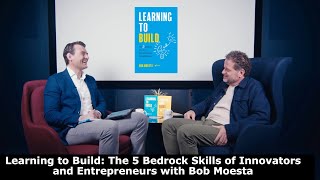
Bob Moesta discusses the five bedrock skills for innovators from his book Learning to Build, drawing on mentorship from W. Edwards Deming and Genichi Taguchi. He walks through frameworks like control vs noise factors, red-line and green-line development, and the difference between supply-side and demand-side innovation, with examples from Ford and Toyota.
Perhaps you're an innovator, a corporate innovator who feels that they have unlimited budget, unlimited resources, but are not making any progress. Perhaps you're a CEO or a chef or a head of a nursing project and you don't feel that you have full control over the outputs of your team. Perhaps you're an SME owner who feels that they're stuck and stagnating with their revenue stream when. When inflation is rising. Or most importantly, perhaps you're an R and D. Inflation is rising. Or most importantly, perhaps you're an R and D or a startup entrepreneur and you feel that you keep iterating but you're not making progress. If that's the case, you are in huge luck today because we are joined by the world's best to get you unstuck and to help you make progress. And he's shared in this amazing book that we're going to discuss today. And you'll notice I have two copies. One of them is for you. Just sign up to the innovationshow IO newsletter and you'll be in with a chance to win a copy of Learning to Build. We are joined in this magnificent cinema in the Greenway in iconic offices in Dublin, Stevens Green. And we're joined by the brilliant Bob Mester.
Thank you.
Great to have you with us, man.
Thank you for having me. I'm excited to be here. Like, we've been talking back and forth over the pond and to come over and be part of a conference and then basically do this. We got a whole, whole afternoon to do this.
It's awesome. And we're gonna go for lunch, we're gonna go to a Japanese restaurant. You'll find out why that's important as well in a little while. But it's so good. And the last time we spoke was for the Clayton Christensen tribute series and Bob now has joined with us here. Ironically, when we're recording this, Bob's episode is just going to air this week. This week, yeah. So we could have done it in person then, but we're going to focus today on this. But Bob does want to say something about his great friend Clay. Let's get started. Because I thought I gave a little teaser to our audience about who this is for, but I actually thought about asking that in a different way, learn from you. Which is what job does this book do for people?
So that's actually how I start all my books, is what are the struggling moments people have and what are the things that I can provide as a solution to help them make progress? Right. And so part of this is really, you know, I started out as a dyslexic, illiterate 18 year old who basically was told to be a baggage handler at the airport. And I found basically four mentors who poured their knowledge into me to enable me to innovate on over 3500 different products and services across the board. Every. And so it's really meant to write it to a younger version of myself. So in it I talk about young Bob and enlightened Bob. Right. And it's that aspect of like how I used to think and how I think now that I'm on the other side. And so it's almost kind of, you know, to my children, but to people who are innovators that are, that don't have all the experience that I have. And my mentors are passed. And so I have also this responsibility to kind of pass it on. So it's, it's, it really was a book of passion for me and it was very, very like a level of responsibility and at the same time just fun to recall all these stories and share my. What we were talking about.
I loved when you were talking about. So there's this Matrix moment.
Yeah, yeah, yeah, yeah.
So take the pill and. But the pill really was your introduction to these mentors as well.
Exactly.
Maybe we'll give that because that gives great context to where you are and how you got there as well.
So I love the movie the Matrix. And one of the things I realized is like, there's moments in your life where you take something and you can't unsee it. And so what I do in the first part of the book, I just say, like, look, you just need to be ready because at some point I'm going to introduce you to things that you can't unsee. And so the reality is that that's really the intent, is that these tools, once you learn them and these skills, you develop them, you just get so much better at it. But you can't see, like when somebody asks you a question like, do you like this? You're going to go like, well, that depends on context. That depends on where I am. It depends on what I'm comparing it to. And so you start to realize that simple questions you can't answer anymore.
There was an episode of this series about Einstein and Einstein has this moment where he's kind of staring at the window and the teacher kind of goes, oh, young Mr. Einstein, so smart there. Have you got the answer? And there's this like crazy equation for the board. And he goes, oh, yes, he goes, but you're doing it wrong. And he gets up and he tells the teacher, and the teacher ridicules. And then as a result. And I thought about, that's exactly what happened to you, where she catapults moments as well.
Exactly, exactly. So one of the things that I Learned very early, 19 years old, was design of experiments from Dr. Genichi Taguchi, who's one of my mentors. And he taught me how to frame systems in a way to literally not know much about it, but to how to empirically learn as opposed to theoretically learn. And so when we got to. In school, we had this notion of building a catapult, and we had to actually understand the right setups to basically get a ball three meters away and get it in the cup in a consistent way. And Taguchi taught me a way in which to say, you don't need to know how it all works, but here's a series of experiments to run to do that. And out of it, I end up, instead of changing one factor at a time, I change a bunch of factors at a time using something called an orthogonal array. And ultimately I come up with an answer. And my professor says, no, no, no, you did it all wrong. And I'm like, yeah, but this is what I learned on my internship, and this is how I've been solving these problems. And he's like, you're supposed to fix everything and only change one thing. It was. And he ended up giving me a D, though I did not actually have the answer he had, but mine was more consistent. And it was one of those things that. That was the moment where I realized, like, my professors are smart, but at some point, like, the real world has so much more to offer than just academia. For me.
For me, we'll come back to that. Because my learning was, you like Edison, the way Edison was like, he'd only change one thing, and he was meticulous about change one thing, see the effect. And you debunk that.
That's a natural way for us to learn how to build something, is fix everything and change one thing at a time. But it's almost like this notion of being able to a networked society. It's like we can, if we change a bunch of things, and we can see how it works, we can use Math2D to connect the dots. And so it's way more powerful. And I don't have to do a thousand experiments. I can actually do very small sets of experiments which allow me to be faster and More efficient.
I was thinking about that and I'm jumping ahead now because I want to come back to 1985 when Bob was in that internship, because it was a game changer.
Oh, yeah. It was, as my mom would say is like, I thought I was lucky. My mom reminded me I was not lucky. It was like I had to go get and work to get that internship.
Yeah. Amazing. But you made me jump to here because you were saying about, like, so if I'm a systems thinker and I go, here's loads of different things that I can do. And then I was thinking about, well, imagine in the world of chat GPT10.
Yes.
That I can actually input that into a system that understands the systems. That's the way I think that's going to be an unbelievable.
So I really think that Chat GPT is going to be one of those things that help us prototype to learn. Like, most people are looking for the answer, but what I do is I use Chat GPT to say, here, give me three different answers and let me compare and contrast them so I can actually learn what's the real essence of how this thing works and ultimately what's missing. I think this year will be kind of the year where we switch from knowledge to asking better questions. I think schools are going to start to have to change from being like, how do you memorize stuff? To how do you ask better questions of the world to basically get better information? And so I think it's a really interesting kind of time and age for us as we start to see these breakthroughs.
I agree with you. There's this artist that I love. His name is Oliver Arnold, amazing artist, and he played here in Dublin in the concert hall. And he has the. He hacked. You know, he's your skill. You have. He's a hacker and he took. He's classical pianist, took a piano and then he got a friend who was a software engineer to hack a machine that was built for Synth in the 80s.
Yeah, yeah, yeah, yeah.
And what he did was he connected it to two other pianos and what he programmed it to do was go play when I play this note. So if I play an A, the natural progression is a G minor or something. I don't know. But he's like, do something that a human who was trained in classical piano would not do.
Yeah, yeah.
And he says it just brings him in these different pathways. And I was like, oh, that is what AI does.
So that's where I'm a big jazz fan. And so Thelonious Monk is the Same way like his music was, but he had it, like, hardwired to him. But that's where I think we're going to start to see these anomalies. And anomalies are going to become more and more important. Like, Clay taught me that anomalies, basically, in anomalies of the present is the DNA of the future. And that, to me, is just such a big, big notion of. Most people take anomalies and try to rationalize them out or throw them away. And I feel like anomalies are those little things that just like. They're like the seeds that will turn into the next oak tree.
Yeah. And you got to be listening for them.
You got to be listening. You've got to be sensitized to them. You've got to be able to appreciate them, and you have to realize that there's a lot of different perspectives you have to take on them.
Yeah. And one of those perspectives was 1985. So that's.
Yeah, that's great. So 1985. So I. I was a freshman in college, a Christmas party of some sort, and I sat down next to this old man, and I thought it was this my friend's grandfather. I'd never met them before. So I sat down and started talking to him and. And I asked him 52 questions in 22 minutes because he reminded me. And he just looked at me and said, turns out it was Dr. Deming. And he just looked at me and said, boy, you are a curious kid, aren't you? I'm like, sure. I had no idea. I was going to Japan and working for Ford. And I was an intern that they taught a lot of the Japanese methods of the Toyota production system, too. And. And I met Dr. Taguchi there. And then I met Dr. Willie Moore, who basically, I was more or less on the front lines to help them go from 72 months of development time to 36 months. And it was just amazing frontline. Fun stuff.
Brilliant stuff. So let's share one of those with our audience, because the first year experience was the paint. The paint wouldn't stick. It was like an orange peel.
It was a problem. It was on the Lincoln Continental, which they don't make anymore. And it was the Wixom plant, which is close to my house or around my house, and they had a problem where they had almost $150 million of annual rework, but they sprayed the car. It would get, you know, either drips on it because it'd be too thick a paint, or it would be orange peel where it's like, it's pitting. And so you'd have to buff it all out and have to repaint it and that kind of stuff. I'm an electrical engineer, so I know nothing about that. And so I go into a room, and Doc's grandfather, I'd never met them before, so I sat down and started talking to him, and I asked him 52 questions. Taguchi teach me these methods to listen for what he calls control factors. What are the factors that you can change that will affect the performance of the paint? And so there's all these PhDs of robots and electrical engineers, and the paint people are all in there. And I'm literally in the back Corner Just listening, Dr. Taguchi sitting next to me. And we start to. And we start to pull out these factors of what we can change. And long story short is we end up creating this designed experiment that we ran on the weekend that was a very, very complicated part. So it had flat surfaces and vertical surfaces, very similar to a car. But we just did it like a set of runs and change, like the speed of the paint and the. The temperature of the paint and the. The. There was a charge between the. The paint and the. And the. And the substrate you're painting. And so you change whether it's positive or negative, and you'd change the voltage rate and all these different things. And because I didn't know, I literally was just like, let's just try. And everybody else had a theory of why everything worked. But once we put it together, I was able to kind of help reduce the. Get more. Ultimately, it was getting more even paint thickness, no matter what the surface. And ultimately we're able to get the. Reduce the 150,000 or 150 million down to about 20 million. And it was. I was an intern, and so I became like a hero. Like, everybody doubted it. And when I presented my findings, they all said, like, that's not going to work. And then it worked. And then Dr. Tuji looked at me, was like, this is how new theories are developed. Because all of a sudden, once it worked, all the scientists and engineers started to go like, oh, well, why would that work? Oh, this makes more sense. And they'd have a new theory. But you can't actually discover new theories without creating new phenomenon. And so that's really what I learned is experimentation is at the core of really being an innovator and not being afraid to fail, but being more excited to learn.
Yeah, I love that example. And you mentioned there more because she was a massive influence for You. And what I loved about this was, like, so I'm going to ask our audience. Imagine there's a very political meeting happening, and it's, like, about a project that's been failing over and over and over. And somebody invites the intern.
Yeah, yeah, yeah.
And then when everybody's asked who's responsible for this, the intern puts his hand up. And it was a game changer for you and for William.
That's right. So my very first. It was like my first week at Ford, right? And she's like, okay, we're gonna go into a meeting here. And just don't, don't, you know, don't say anything. It's like. And this was like a project that I was responsible. I wasn't an intern at that point. I was actually an employee. But the aspect of this problem was happening. And Willie just said, like, I want you to go in and take responsibility. And I'm like, but I didn't do it. Like, I don't know what to do. And she said, like, look, here's the thing is, once they give you response, once you take responsibility and people are willing to give it to you, now you have the power to solve it. And so that, to me, was the most impressive thing of when I'm sitting in a room, it's like my second week at Ford, and I'm like, you know, this is my responsibility. You know, here's what I think we should do. Here's why it hasn't been done in the past. And the executive kind of looked at me and just said, wait a second. I know this is your second day. How is this your responsibility? And eventually said, fine. You go solve it. And then everybody around me basically started to say, fine. It's up to the kid. And to be honest, it was great, and it was very useful and very empowering. And so you start to realize that when people are in trouble, there's always a vacuum where people can walk into it and take power or take on the responsibility, if you will. And then ultimately, if you have the methods to solve it, is actually easy. But a lot of times it's aligning people.
So it can feel like in those moments that you're a scapegoat.
Yes.
But actually, it's a huge opportunity.
It's the paradox. You think you're going to get in trouble, and it's actually. You're actually getting the ability to be Super Superman.
Superwoman. And actually, there was another thing. So I share that. The reason that really resonated with me when I retired from rugby. My first job was head of a digital for a major media company. And it was really because nobody wanted to do it.
That's right. That's right.
So everybody stepped back and I was left forward, kind of going. And they're going, you own it, kids.
Yeah. So this is interesting. So I've been studying leadership for a long time, and most people who are leaders, they don't prepare to be a leader. They just end up being like, think of Churchill. Churchill, like, at some point stepped into the role. And so part of this is to actually understand, like, most. Most leaders become leaders because nobody else is willing to step up. Right. And to be honest, it's one of the reasons why I wrote the book is because all four of my mentors are passed. And I feel like they were always in the forefront, but now that they're gone, I feel like, oh, I have that responsibility now to lead and to basically share and to tell these kinds of stories.
Yeah, and you do it brilliantly. And Bob has more books on the way as well. Maybe we'll nod to those at the end of the show. There was a killer line by Taguchi, and Bob calls Taguchi the Dalai Lama of innovation. But I wanted to share this line. So he said, looking at and focusing on problems is the wrong view of the world. All problems are really problems about the variation of function focus on what it's supposed to do, not what it's not supposed to do. There are infinite problems and only finite functions. There's a. There's a lot in that. It's. It seems simple, but it's.
It's. I'll say that when I first heard it, it took me probably 10 years to really decipher all that. But the long and short of that is nine times out of ten, when you focus on problems, you get rid of the problem and you solve another problem or you create another problem. Right. And Dr. Taguchi, we used to call that whack a mole, right? Oh, we're just playing whack a mole. Like. Like. No, we have to focus on the function. And so if we can actually. So think of the paint problem, right? If the paint is too thick, it runs. If the paint is too thin, it gets orange peel. How do I reduce the variation of that if I get. Because what we would do is we'd solve one problem of runs, and then we'd have orange peel, and then we solve orange peel, and then it have runs, and you realize you have to reduce the variation of the product and the thickness. And ultimately, once you can focus on the function. It actually makes it way easier to solve everything the problem is. The variation is always usually very small.
I mentioned earlier on about the whole idea of my understanding was like Edison was the best of them all and he was very meticulous in solve one problem, did it work? What was the output of that problem? And you're like, no, no, no, no. That's the old way of thinking.
I don't think of it as the old way. I think of like it's context. The context Edison was in. He used some great methods to do that, but he didn't have math, he didn't have computation, he didn't have Excel, he didn't have. So to me, as innovations come to fruition for everybody else, it allows us to develop new methods to do that. And so I feel like if.
Solve one problem, did it work? What was the output of that problem?
Edison would have had that ability, he would have figured that out, but he just didn't have access to that stuff. I mean, one of the things about coming here to Ireland, you start to realize like, we're just at the book of Kells, right? And you realize like, you know, a thousand years ago, the only way to get a book was to have it copied by a monk, right? And then it wasn't until you could actually then get the printing press. And now all of a sudden it's to the point where we can write and we don't even need paper anymore. And so you start to realize that people innovate the best they can in the context they're in. And to realize that as your context changes, you need to be thinking about what you need to do differently from the past and not say that it's wrong. Like, I don't believe what. So Clay taught me very, very clearly that, you know, there is no really in that case, wrong. It's more like they did the best they can and we can do better with the tools they had. And so it's context that's really important to realize that there isn't good and bad. It's more like that's the best they had at this point in time. But now we have these other things. What can we change?
A great point. And that goes to what you were saying about education. So if the tools now are like ChatGPT, that's like Google on serious.
Exactly, exactly.
So the question becomes important.
Think about how hard it is to frame a question. There's and, and you think about there's levels of question and there's easy Questions like, how are you today? What's the weather? Like there's obvious. But then when you start to think about, like, what should we build next? Those are really complicated, hard questions. And the harder and deeper questions require more and more input. And so to be honest, it's one of those things where I feel like we're going to get past a lot of the superficial stuff and now get down to the meaty stuff. And at the same time, like, I think people are saying, like, they're going to lose their jobs, right, because of ChatGPT copywriters and different people like that. But the reality is what it's going to do is it's going to force us to go higher into our abilities of the higher end of the market and let the low end of the market take care of this part so we can move up. So it's actually a really good sign of progress.
I'd love to share some of the concepts of the book before we get into the five skills that Bob shares. The the idea of control factors versus noise factors. And I'm gonna share up on the screen here a brilliant diagram. There's a lot in it.
So most people would say they understand systems thinking, right? Inputs, we got some system, we get some output, right? But for me, and between Taguchi and Deming and everybody else, it became bigger than that. And most people think of systems as like almost like the physical, the engine or the transmission or things like that. But in software, the system is very, very modular. There's many of them. And so how do you actually think about them? The other part was to not confuse the output with the outcome, right? Meaning. So, for example, I've recently lost a lot of weight. And when you start to think about that as a system losing weight, the output in the metric is my weight, 212 pounds at the time, right. But at the same, when I started, I was 280 pounds, 285 pounds. And what you start to realize is, like, most people, like, I knew I needed to lose weight. I know that I was, I had bad habits. But it wasn't until I changed the outcome, which is I want to go ski with my kids and I want to be able. And I'm missing out because I'm so heavy. And that, that's the thing that actually drove me to actually lose the weight, not the fact that I'm measuring the weight. And so at some point in time I've lost that. I've lost that as a metric. And I measure my sleep, I have a continuous Glucose meter. I've done all these different things. And so that system then talks to what is the inputs, the control factors, what do I eat, what do I exercise, how do I sleep? So I end up creating these metrics that are lead metrics that tell me that I'm way better than the lag metric of weight, because ultimately I just want to be able to ski down the hill without stopping. But there's these other things in here called noise factors, things that affect my system, my weight system that I can't control. I call one of them alcohol. I love alcohol. I like to drink. I don't like to drink too much, but a glass of wine is good, but I want to. And what happens is when I drink alcohol, it actually affects my sleep, which is part of my system. And so at some point I have to figure out how to compensate or make myself robust to it. So I've learned how to walk after I have two beers, be able to do these different things to help me and my system be robust to the fact that I'm still wanting to have a glass of wine or a beer or a Guinness. I had three Guinness yesterday, but I walked 15,000 steps. It was amazing.
You won't need to eat after the Guinness.
No, no, no, that's right, that's right, that's right.
I love that. Actually, it's so funny because I hadn't thought about it that way. And for me, one of the. My moment of that. Of my losing weight moment was not losing weight, but actually seeing that we're going to live longer.
Yes.
So every. Every year I think we live longer, we add on two years of life. You know, when it comes to the science.
Yes.
And my moment with that was like going, I had a brilliant guest on the show, Dr. Daniel Ammon. He's a brain specialist.
Yeah.
Great guy. And he said. He was telling me about concussions because I got concussed a lot as a rugby player. And he said. He actually gave me this ultimatum, was brilliant. He goes, do you want to be a burden to your children?
Yes.
When you're.
Exactly.
And I was like going, wow. And that was my.
That's the outcome. That's like being able to see. See the outcome where versus is like, you know, you know, I might not. I might have a little brain fog. I might have a little. But. But what's the outcome that's going to happen to this? And so it's. It's the notion of taking the systems and putting them in their context, and that's how they Add value. The other part about control factors. So there's control factors, which are things that I can control diet, exercise, sleep, etc. And then there's noise factors, things I can't control or that I choose not to choose not to control. Right? And so part of this though, is to realize that for me, the other part about this is it helped you actually understand boundaries. Like when you start to talk about a system, a technical system like an engine and a transmission, the transmission actually has to think of the engine as a noise factor. It has to work within these realms of horsepower and torque and these other things. But at the same time, if I have to wait for the transmission to be done, then the fact is, then the development is going to actually take 72 months. But what we learned how to do is do these things in parallel. And once we could actually develop the engine and transmission in parallel and then basically figure out how to connect them at the end, as opposed to waiting till the engine was done and then developing the transmission. And it made just all the difference in the world. So this whole framework of how Taguchi thought about systems is so, so important about helping us organize the work. Right? And so that's really where I think to be able to do work in parallel.
There's a key thing I'm going to show on the screen here. So Red Line versus Green Line development. Absolutely love this. And I was trying. I was trying to figure out, did. Was that the language of the company you were working with at the time?
So, no, I end up kind of shorthanding it to red line green light, because I'd use a red marker to grow, to draw one line and I could do the other line. But it was this notion of, like, what happens is we started to realize that, like, they kept talking about our mentality was different between. So at the time, what we're doing is we were studying the Toyota production system. And Toyota and Ford had a very unique relationship because after World War II, Ford helped. Toyota framework of how Taguchi thought about systems is so, so important about helping us organize the work. Right? And so that's really where I think to be able to do work in parallel.
There's a key thing I'm going to show on the screen here. So Red Line versus Green line development. Absolutely.
Rebuild its plants in Japan, very similar to what we have at the Rouge plant in Detroit. And so we had this ability to kind of collaborate on stuff we did in the past. And so when we went there, the thing that they kept talking about is like, you're waiting for problems and we're trying to actually discover problems before they happen. And we could not wrap our heads around that until we actually started to look at. Show me the design changes of the vehicle as it relates to the time towards launch. And we have this notion that you get closer and closer to launch. For us, we would literally make it work and then all of a sudden it would be like, well, it works. And then we'd put it together and then it wouldn't work. And so we were waiting for all these problems to happen. And so what we realized is the cost of a change was so expensive later in the process that Toyota was developing it in 36 months so they could develop two cars for every one we could do.
But they all love this. And I was trying to figure out, was that the language of the company you were working with at the time?
So, no, I end up kind of short handing it to red line green, because I'd use a red marker to grow, to draw one line and I had a green line do the other line. But. But it was this notion of, like, what happens is we started to realize that, like, they kept talking about our mentality was different between. So at the time, what was it? What we're doing is we were studying the Toyota production system and also were so much cheaper than how they did it because they made the product fail way earlier in the process by accident. Toyota and Ford had a very unique relationship because after World War II, Ford helped Toyota rebuild its plants in Japan, very similar to what we have at the Rouge plant in Detroit. And so we had this ability to kind of collaborate on stuff we did in the past and doing designed experiments. And so it's this notion of to truly be proactive, you have to actually cause problems and cause failure as opposed to wait for it to happen.
You're going to think I'm sadistic here. My son, they got this amazing LEGO kit, right. For. For Christmas a few years ago. Yeah, yeah. And I, I could see. So he had this thing like, oh, I don't need to look at the instructions.
Yeah, yeah.
And I saw he put a piece in wrong.
Yeah.
And I could foresee the red line. This is going to be disastrous for later on. And I let him make the mistake.
Yeah.
And I was like kind of going, I have to let him know you need to look at the instructions.
So this is why, by the way, that's what I think a good parent does. A good parent doesn't step in. Right. Because every time you step in and prevent A problem. They. You actually rob them of a learning experience big time. And so part of it is, is to say, I'd rather have my child learn to put the wrong LEGO piece in the wrong point in time there, because 20 years from now, it's going to be something actually way more important.
IKEA furniture.
Exactly, exactly. Exactly.
Because it was. I did it myself.
Exactly. Well, he had to take it all apart, like, oh, I've done that. Right. But. But that's, that's part of the point of this, is where, like, I always. I always laugh when people use the quote, fail early and fail often. Right. But if you actually talk to. So when we went to. When we went there, the thing that they kept talking about is like, you know, we're. You're waiting for problems and we're trying to actually discover problems before they happen. And we could not wrap our heads around that until we actually started to look at. Show me the design changes of the vehicle as it relates to the time towards launch. And we have this notion is that you get closer and closer to launch. For us, we would literally make it work. And then all of a sudden it would be like, well, it works. And then we put it together and then it wouldn't work. And so we were waiting for all these problems to happen. And innovators or entrepreneurs, they never think of it as failing. They always think it was like, boy, you failed at this, you failed at that. I realized that most of the time, people who are studying innovators, it's like, so what we realize is the cost of a change in was so expensive later in the process that Toyota was developing it in 36 months, so they could develop two cars for every one we could do. But they also were so much cheaper in how they did it because they made the product fail way earlier in the process by actually doing designed experiments. And so it's this notion of to truly be proactive, you have to actually cause problems and cause failure as opposed to wait for it to happen.
You're going to think I'm sadistic here. My son, they got this amazing LEGO kit right, for Christmas a few years ago. And I could see. So he had this thing like, oh, I don't need to look at the instructions.
Yeah, yeah.
And I saw he put a piece in wrong.
Yeah.
And I could foresee the red line. This is gonna be disastrous for later on. And I let him make the mistake.
Yeah.
And I was like, kind of going, I have to let him know you need to look at the instructions.
So this is why, by the way? That's what I think a good parent does. A good parent doesn't step in. Right. Because every time you step in and prevent a problem, they. You actually rob them of a learning experience, big time. And so part of it is to say, I'd rather have my child learn to put the wrong Lego piece in the wrong point in time. Studying animals in a zoo, like, they're not in it. So they don't know what you're feeling. They don't know what you know. They don't. And they realize, like, you're like, oh, my God. Okay, I just learned that. And they're looking like, oh, you failed. Oh, you failed. So it's this notion of most entrepreneurs never fail. They just learn. Yeah, right.
I was thinking about this, like, I was taking it out of the context. And this is the lovely thing about your. Your relationship with Clay.
Yeah.
Is that you learned that the theory is a lens, and actually your framework is a lens for me. And I was thinking about innovators and corporate innovators. And what a corporate innovator will do is, is try and build something knowing that it's almost like the sands of time are ticking. And it's like kind of going, oh, I got. I got permission. I gotta go and do it now. And you go back to Gucci, and what your experience was was that everybody's in their swim lane of, you know, I'm in production and I'm in sales and stuff, and you gotta get them all together in the same pool and.
Build alignment, and then.
And then actually think green line about it. Think about the system, and who do I need to talk to? Who. Starting from right to left instead of left to right, as you tell. And maybe you'll unpack that for audience. But that is so important. And we don't do that as innovators. We try and kind of go, go, go, go.
But I blame that back on education, because I think education rewards the answer and the solution. And nine times out of ten, when you're creating, there is none. And so most. Most people think innovation starts with, oh, I've got this technology, or I've got this answer. Who wants it? And what I've learned is that's the actually wrong way for me to go about it. I actually start with. With, where are the struggling moments in people's lives? What are the things where they want to make progress and they can't? And then how do I actually go find technology to fit into those moments? And so it's ultimately the struggling Moment is the seed for all innovation. And if we don't actually focus on that, trying to, like, I can invent a new technology and try to bring it to market, but then I gotta go find 8 of the 8 billion people in the world who want it. But if I actually. I'm there because 20 years from now, it's gonna be something. Something actually way more important.
IKEA furniture.
Exactly. Exactly. Exactly.
Because it was. I did it myself.
Exactly. Well, he had to take it all apart. Like, oh, I've done that. Right. But that's part of the point of this is where, like, I always laugh when people use the quote, fail early and fail often. Right. But if you actually talk to people who have this problem, I can actually see how many people have that problem. I don't have to go find them. They're already there. Right. And it's so much easier to innovate that way. And so for me, it's always about. And most people who are satisfied can't see the next solution. Right? So what happens is they end up, you know, at some point, we end up innovating, going, like. And I'll show it to you and go, oh, my God, that's cool. Cool is like the kiss of death, because that means you don't even know how to articulate how we'd use it. Right. And so ultimately, I want. I want people to realize, like, struggling moments, and I've been studying them for 40 years. It is probably the most powerful thing I've ever, ever uncovered. And it's just so rewarding. And, you know, I'll say for me.
Unprofitable for the company. Yeah, yeah.
Oh, yeah, yeah. I think it's a win. It's progress. It's all three. The other part is a corporate innovator. One of the hardest parts to admit is when we plan a project, we're actually the stupidest we can be. And we have what we call a set of imagined tasks that we actually kind of. Here, we have to do this. We have to do this. But two weeks into the project, you discover a whole bunch of new set of tasks and you start to realize, like, that project, which I thought was only 100 things, is now 200 things. And all of a sudden, I have fixed time and money, and what do I do? And so it's the aspect of realizing that real creation is about guessing. It's about actually learning how, like, being able to uncover the unknowns and actually answering the unknowns. It's way more about that. And. And so Taguchi would talk about the job of an engineer is to actually generate technical information as quickly as reproducible technical information. And so ultimately, how do I answer the unknown? So when we frame a development project, I don't talk about the project management side of it. I talk about what are the big unknowns we have to answer this week. And as we eliminate the unknowns, all of a sudden the execution becomes easy.
But isn't it one of the problems that, you know, it's the bias for action that we have? It was like, yes, by doing stuff, I'm making progress, and I'm showing to them, whoever, that they might be in charge of you. Yes, that. Look, I've done this and this and this. You're kind of going, yeah, but you haven't met that meaty problem that you know is coming.
That's right. That's what. Well, but you make promises too. Like, this product will generate, you know, 200 million in sales, and here's where it's going to do it. And the reality is, like, we just don't know those things. And so we're making promises we can't keep, which creates regrets. The other part is to realize, like, at some point, fixed time is way more than fixed budget. Meaning if we fix the budget, we typically will vary the time and vary kind of the scope. But I like to work under the premise of fixed time, variable scope. Like, let the team decide the things they can do within that fixed amount of time to make them innovators or entrepreneurs. They never think of it as failing. They always think of, like, boy, you failed at this. You failed at that. I realized that most of the time, people who are studying innovators, it's like studying animals in a zoo. Like, they're not in it. So they don't know what you're feeling. They don't know what you know, and they realize, like, you're like, oh, my God, okay, I just learned that. And they're looking at going like, oh, you failed. Oh, you failed. So it's this notion of most entrepreneurs never fail. They just learn. Yeah, right.
I was thinking about this, like, I was taking it out of the context. And this is the lovely thing about your. Your relationship with Clay, is that you learned that the theory is a lens, and actually your framework is a lens for me. And I was thinking about innovators and corporate innovators. And what a corporate innovator will do is try and build something knowing that it's almost like the sands of time are ticking. And it's like kind of going, oh, I got permission. I gotta go and do it now. And you go back to Gucci and what your experience was that everybody's in their swim lane of, you know, I'm in production and I'm in sales and stuff. And you've got to get them all together in the same pool and build alignment and then actually think green line about it.
Most progress. And that works just phenomenally.
And that word progress that Bob uses. So Bob was one of the chief architects of the jobs to be done theory. And we've covered recently with Think about the system and who do I need to talk to who starting from right to left instead of left to right, as you tell. And maybe you'll unpack that for audience. But that is so important. And we don't do that as innovators. We try and kind of go, go, go, go.
So this. But I blame that back on education, because I think education rewards the answer.
Patty hall and Karen Dillon and Clay. The book Competing against Look. And that's how the book opens. This is a book about progress, and it catches people off guard a little. What this is about innovation. But that's actually part of your definition.
That's in the solution. And nine times out of ten, when you're creating, there is none. And so most people think innovation starts with, oh, I've got this technology, or I've got this answer. Who wants it? Exactly. Exactly.
There's a great line I have to share here. And it's again in Bob's new book, Learning to Build. It's the myth about failure and innovation.
And this I've learned is that's the actually wrong way for me to go about it. I actually start with, where are the struggling moments in people's lives? What are the things where they want to make progress and they can't? And then how do I actually go find technology?
This is something that I've fallen for myself and I need to share for our audience. There's a mantra in the world of.
Innovation to fit into those moments. And so it's ultimately the struggling moment is the seed for all innovation.
Innovation that says if you're not failing, then you're not innovating. But failure by itself is not a rite of passage to becoming an innovator. It's learning that comes from failing that makes someone an innovator. And this is just articulating what you said there. If I leave a failure on the table without uncovering why we don't actually.
Focus on that, trying to, like, I can invent a new technology and try to bring it to market. But then I got to go find 8 of the 8 billion people in the world who want it. But if I actually talk to people who have this problem, I can actually see how many people have that problem. I don't have to go find them. They're already there. Right. It's so much easier to innovate that way. And so for me, it's always about. And most people who are satisfied can't see the next solution, right? So what happens is they end up, you know, at some point, we end up innovating, going like, and I'll show it to you. And you go, oh, my God, that's cool. Cool is like the kiss of death, because that means you don't even know how to articulate how we use it, right? And so ultimately, I want. I want people to realize, like, struggling moments. And I've been studying them for 40 years. It is probably the most powerful thing I've ever, ever uncovered. And it's just so rewarding. And, you know, I'll say for me.
Unprofitable for the company.
Yeah, yeah. Oh, yeah, yeah. I think. I think it's a win. It's progress. It's all three. The other part is a corporate innovator. One of the hardest parts to admit is when we plan a project, we're actually the stupidest we can be. And we have what we call a set of imagined tasks that we actually kind of, you know, here we have to do this. We have to do this. But two weeks into the project, you discover a whole bunch of new set of tasks, and you start to realize, like, that project, which I thought was only 100 things, is now 200 things. And all of a sudden I have fixed time and money, and what do I do? And so it's the aspect of realizing that real creation is about guessing. It's about actually learning how, like being able to uncover the unknowns and actually answering the unknowns. It's way more about that. And so Taguchi would talk about the job of an engineer is to actually generate technical information as quickly as reproducible technical information. And so ultimately, how do I answer the unknown? So when we frame a development project, I don't talk about the project management side of it. I talk about what are the big unknowns we have to answer this week. And as we, as we eliminate the unknowns, all of a sudden the execution becomes easy.
But isn't one of the problems that, you know, it's the bias for action that we have is like, yes, by doing stuff, I'm making progress. And I'm showing to them, whoever, that they might be in charge of you, that, look, I've done this and this, this. You're kind of going, yeah, but you haven't met that meaty problem that you know is coming.
That's right. That's what. Well, but you make promises too. Like, this product will generate, you know, 200 million in sales. And, and here's where it's going to do it. And the reality is, like, we just don't know those things. And so we're making promises we can't keep, which creates regret. The other part is to realize, like, at some point, fixed time is way more than fixed budget. Meaning if we fix the budget, we typically will vary the time and vary kind of the scope. But I like to work under the premise of fixed time, variable scope. Let the team decide the things they can do within that fixed amount of time to make the most progress. And that works just phenomenally.
And that word progress that Bob uses. So Bob was one of the chief architects of the jobs to be done theory. And we've covered recently with Taddy hall and Karen Dillon and Clay, the book Competing Against Look. And that's how the book opens. This is a book about progress and it catches people off guard a little bit. What this is about innovation. But that's actually.
That's right.
You're part of your definition.
That's exactly, exactly.
There's a great line I have to share here, and it's again in Bob's new book, Learning to Build. It's the myth about failure and innovation. And this, this is something that I've fallen for myself and I need to share for our audience. There's a mantra in the world of innovation that says if you're not failing, then you're not innovating. But failure by itself is not a rite of passage to becoming an innovator. It's learning that comes from failing that makes someone an innovator. And this is just articulating what, what you said there. If I leave a failure on the table without uncovering why, then it's a waste. Making failure useful is the hard part of innovation. In your experience, you say great innovators are obsessed with understanding why their system failed because they see it as an opportunity to learn. I love that.
That's right. That's right. They're learners at heart and they're, they're curious at heart. Like, everybody say, like, well, what's curiosity? It's just, to me, it's that fact, that patch of like, I need to know, I want to, like, there's like things like my family is. They know me obviously very well. But one of those things when I get curious, they kind of know, like, okay, let Dan just go, because he's going to go way down the rabbit hole. Down the rabbit hole. And I love the rabbit hole.
Matrix pill.
Yeah, that's right. A little bit of Alice in Wonderland, a little bit of Matrix, and we're having fun.
But that, that actually speaks to something really important. You mentioned that there's a book you're writing at the moment. And when you mentioned that to me and then I read this line, I was like going and going. If you're an innovator at heart and you're stuck in a corporate role and you're not feeling like you're making progress, it's toxic. It doesn't feel right for people.
Well, I think the thing is the word you stuck in a corporate role, right? Because I think part of it is to innovate. You actually have to be outside the box. And corporations are really built around scale and structure. And so you're almost the anomaly inside the organization. And if you cave to that structure too much, you end up just having incremental innovation as opposed to disruptive innovation. And so part of this is realizing, like your role to do that is really to push the boundaries and to understand how far is too far.
And actually, one of the things we're going to go into the five skills now, and I actually think one of the most important skills if you're a corporate innovator is empathy. Because you can be a little bit like, they're dinosaurs. They don't get it. We're not moving fast enough. And you might be right, but until you unpack how they see the world, you can't even get them on your team.
That's right.
And empathetic perspective is the skill you call out and it's so important.
So this is one of those things where it took me a long time to learn, but to realize, like, so the way, the way I was taught was to come up with an idea and then convince everybody else that my idea was the right answer. And again, being dyslexic, not being the relatively smart in terms of academic smart, like, I could never do that. And so what I would always do is I would actually try to get everywhere everybody was coming from and then find what everybody was struggling with and then build alignment around that. And you start to realize that empathetic Perspective is seeing things from other people's perspective without your judgment on it. And so can I see it as like if you're making dinner, like can I see it from my kids perspective of what will they eat and not eat? Not what I would eat or do I want them to eat. It's what would they eat or not eat. And so part of this is truly being aware of kind of where is the VP of engineering come from, where is the VP of manufacturing coming from, where's the VP of accounting or account finance coming from and understanding what does product. Because one wants to spend as least amount of money as possible, one wants the best performance and one wants it the easiest to make. And you start to realize like how do we actually align it from that perspective or at least realize the trade offs we have to make so we can do the best, make the best decision.
Yeah, it's such an important skill, not just in the respect of being an innovator, an entrepreneur or a creator, but actually as a husband or father or friends or, or a son or a donor. It's so important. But you mentioned there, there's four forces influencing progress. And I wanted to do here was ask our audience to think about anywhere they're stuck. So maybe a CEO or a corporate innovator, or even if you're a startup founder and you're not making progress. Bob asked these questions. Are you experiencing or do you understand the push of the situation, the magnetism of the new solution, the anxiety of the new solution, which is huge in.
Corporate change, it actually creates friction to the change. Right.
And then the last one is the habit of the present. Understanding those four skills in corporate change initiatives or in any kind of trying to get people to adopt a new idea is core.
Exactly. And so part of this is actually it's not just the progress, but there has to be a struggle. And that struggle creates the push. Like if you're not struggling and I tell you about my product, you can't, you don't have a place for it to sit. Right. So Clay has a great phrase. He says, you know, questions create spaces in the brain for solutions to fall into. And the struggling moment is that it's that drill that carves out a space for you to go, like, yeah, you know what, I do need a better way to do this. And then you can start to see things. Right. But without a push, there's actually no way to actually, for you to actually figure out how to change. And change is hard. Right. So part of this is also when I see the push. And I realize I need to do something different. Picking what to change to is equally as hard. And so part of is understanding what are the things that are pulling you towards one solution or another. So I consider those two things the fuel of change. But then the second part of it is the friction of change, which is if those two things help me make change, there's two other forces. The anxiety of the new. Like, well, what do I do with the old one? How much training do I need? Like, all these questions come up and that creates the friction that keeps people from changing. And then there's the habit of the present, which is the things they love about the current solution that keep them from changing. And so you have to actually frame the. So I think of it as framing, as the systems wrapped around people of why they change. And once you understand that, you start to realize that like most people, like the thing I learned in business school was the way to get people or to sell more is just create more features, which is more pull. But. But you start to realize when I create too much pull and too many features, I create anxiety because they don't need it all.
We were talking about DaVinci.
Exactly, exactly. So they keep adding features and then you can't use it. It's like, oh, I need something simpler. And so it's all these things where you start to realize one of the ways in which to actually get people to help make them make progress faster is to reduce the friction as opposed to creating more magnetism.
You've teed us up nicely for Jason Fried's line.
Yeah, well, you're better off with a kick ass half than a half asshole. Right? It's just a great. It's a great way to think about it. And you start to realize that some of the best products in the world had very poor quality on certain dimensions. Think of the first iPhone it had. You know, it was a phone, it was Internet, it was a music player and a pda. Right. But it had no text. The very first version had no text. It came in a software update later, but they decided to launch it without it. Most people are trying to wait to make it perfect before it gets there, but if you have the kick ass half, there's no reason to wait. The battery life, by the way, sucked.
Yeah, it was a terrible phone as a phone connection was.
The connections were. The antenna side was. But it's still because it was a sense of progress on so many other dimensions that they actually bypassed some of the things that they didn't like. And, oh, by the way, they were fast enough on the iteration side to actually make up for those. And let's be clear, the first camera was horrible. I mean, but it was better than no camera. And eventually, now the phone is almost all about the camera, or more about the camera than it was 10 years ago or 15 years ago.
You've teed us up nicely as well for the next one, which is uncovering demand. And I thought I'd ask our audience here as well to think about, what do you think the difference is between a Snickers and a Milky Way? Because Bob will teach you about uncovering demand with that answer.
Yeah, so what's so interesting is there's something called the supply side of the world and the demand side of the world. And when the supply side of the world is. Is where we sit as builders and manufacturers and companies and businesses, and we bring our things to the demand side, and consumers and businesses pull those things into their lives. And so from. From the supply side of the world, Snickers and Milky Way are both in the candy aisle. They're both made with the same, you know, almost the same chocolate they have, same caramel. They have same. Different. Different elements to it. But what happens is when you move to the demand side of the world and ask, when, who, when, where and why, you start to realize that Snickers does not compete with Milky Way at all. Right? You start to realize in the moments where you have Snickers, it's like, I missed a meal. My stomach is growling. I have a lot to still do. I don't want to spoil my next meal. It's like it's a replacement for food, right? Versus a Milky Way is usually happens after a bad emotional experience. Experience. Bad or good, it could be a celebration. It's usually eaten alone. They're usually hidden. People don't want them to do it, but it makes them feel good. And so you start to realize that Snickers competes with an apple and a sandwich and Red Bull and coffee, where Milky Way competes with a glass of wine and a run and a brownie. And you start to realize they're just completely different competitive sets. And so what we mean by uncovering demand is most people think the product cost causes demand. And what I would say is the struggling moment causes demand. And that ultimately there are opportunities for you to see the struggling moments. And that at some point, we need to uncover where the struggling moments are, because that's where demand is irrelevant, whether there's a product or not. Solving that problem.
What I Loved. About that story that Bob shares in the book, the Snickers vs. Milky Way, was that if you're thinking about it as a whole, as an organization, understanding what problem it solves.
Yes.
Or the struggling moment actually helps your marketing.
Exactly right. So in Milky Way, since they did the Betty White commercial, which was a bunch of guys playing flag football and somebody like, you know, like they had Betty White out on the field as well, and then they peel it open and they give it to Betty, they give it to Betty White and turn back into a regular person. So the interesting part about the commercial was it wasn't about making somebody great. It was just getting them back to themselves. Right. And so it's this notion of like, like get back to being you and move on. And it's. And it's. It. I mean, it was an amazing commercial. And they've done, they've done, done more and more of them. And it's humorous, but it allows you to remember the moments when you're supposed to eat a Snickers.
One of the core messages Bob talks about, and this is often not. You don't think about this if you're a builder or a creator, an entrepreneur.
Yeah.
Is that okay, I need to building something new. But what does. And this kind of goes to that moment of, you know, the habit of the present pulling away from your current solution is I need to fire something before I hire something new. And I'm going to share on the screen here. Supply side versus demand side innovation.
So to be honest, this is one of the biggest separations that helped me with my mindset around creating. Because the greatest lie I was told as an engineer, and I feel like we train engineers to be arrogant and confident in their scientific approach to things. Right. But the lie that I was told was build it and they will come. And to be honest, in my very early part of my career, I did that and it didn't work. And ultimately what I realized is that I can build it, but it's so hard to find other people to buy it and to add value to it. And though I might buy, think I understand what they say, nine times out of 10, I didn't even understood what they say said. So the demand side is to realize the mechanism of how people actually think about and pull products into their lives is completely different about how we actually sell and market and build product. And so you have to actually treat them as two different systems of how does it get pulled into the people's lives and then ultimately, how do we actually define fit between the demand side and the supply side. And so part of it is most people start with the supply side and then they try to then find people on the demand side. And what I say is this is my right to left thinking where I start over here on the demand side and then figure out how to get to the other side and be able to figure out what are the products to do it. And this is how you end up with a product that's not over engineered. It's a kick ass half because most of the time you just keep adding features until you think you are good enough. And the reality is that they already know what good enough is. You're just not asking.
Brilliant. Yeah. And it goes to the idea of going to Clay's work. Clayton Christensen. Overshoot.
Yes.
Or sustaining innovation.
Exactly, exactly. And so part of this is to realize that again I try to start all innovation projects and all entrepreneurial. So like I advise like techstars, like which is a incubator for basically a whole bunch of different startups, been doing it for almost 10 years now. And part of it is, is they all have an idea and I basically I let them explain their idea and then I said, all right, now let's go to the demand side. And I forced them to go talk to people who are in the struggling moment and had tried to solve their struggling moment with some set of products that are not theirs but would be surrogates for theirs. So they can actually understand how to build it and it helps them dramatically kind of reshape what they're going to build and almost think about the phases of product as opposed to like, oh, I got to make it this big. It's like no, let's make it this big and just get it started. And it allows to build traction faster.
Kick ass half.
Again, kick ass half. It's a dramatic phrase, but it's actually more real than you want to give it credit to.
Yeah. And it's definitely worked for Jason Fried.
Yes, for sure.
So causal structures is our next skill. And this also goes. This reminded me of the work on Clayton Christians as well as causality. The. But you, you actually explain it brilliantly with an old Taguchi story of the Japanese story of the wind.
Yes.
And that actually made really sense. Maybe that's so.
So one of the things is that that. So it actually starts with Deming. Because Deming. Deming would say things to the effect of don't ever confuse correlation with causation.
Let's just share how he was deaf and he used to share you thought he was giving up.
Oh, my gosh. So he was 85. I was like 18, 19 years old. And he would scream at me. And I didn't realize he needed hearing aids. And so I thought the man hated me. And he was constantly yelling at me and to this thing. That's how I remember having these quotes is because, like, don't forget, I'm like, okay, your brain. I'm literally like, I don't know what's going on here. And then like, you know, 20 years later, I'm like, oh, yeah, I remember that experience. And so it's this whole notion of that causation versus correlation. And then when I met Clay, Clay had the actual very similar kind of underpinning. And it's interesting because lots of times, again, math people will end up correlating things and then they'll actually try to turn the theory into causation. But causation is the only way to build good theory. And so you have to actually run experiments to discover and most new phenomenon and new causation has to be seen. It very rarely can it be done in theory first. And so this is why I consider myself an empirical thinker, meaning I wait for the data. So like, when I do jobs to be done research, for example, I usually don't go in with the hypotheses. I actually go in with no hypotheses to say, like, I don't know the answer. And so I'm going to learn. And so coming out of it, I can frame hypotheses. So I'm actually. My lens is not about proving what I think I know. It's more about gathering everything I see and synthesizing it into the two or three different theories or causations of what causes people to buy a new thing.
Yeah, because you don't fall for the confirmation bias. Also, the world might have changed in the period from. If you knew something before. Yes, the world's changed. I mentioned there the story, the Taguchi story of the wind.
But the wind story is that Taguchi would say, shared something to the effect of, like he says, for almost 500.
Years, then it's a waste. Making failure useful is the hard part of innovation. In your experience, you said they wouldn't.
Cut down trees because they thought that trees caused the wind. Right. And eventually because at some point they'd feel wind and the trees would move. And so at some point they thought one was doing the other and says at some point in time. Until you can define causation, the fact is you're limited in your belief. And so they didn't cut down trees. They had very, you know, it was very much different time. And once they realized that it wasn't the case that they could do different things with it. But it's that aspect of correlation with the wind and the trees, but not knowing what is causing what.
We have to share this because I loved when. So a lot of companies use Bob as an advisor for maybe unseen crises in the Future or Gulf War 9, 11 Covid. And they call Bob the fortune teller.
In some cases the cleaner sometimes too.
But yeah, the wolf fiction.
That's right.
So. But there's a reason why. And this goes to your idea of the dominoes.
Yes.
Thinking in dominoes and systems, etc. So maybe we'll share.
So here's the thing is this gets back to the concept of random. You know, when people like I hear the word random and the thing that comes to my head is lazy. Because what happens is when we say something is random, we're not willing to look for the causation. And so all that does is then, to be honest, it robs us of time because then if it's random, we just wait for it to happen again. And so part of it is it's the causation piece that then causes us to think about what it is. And sometimes we can't know. And so we can call it random. But the fact is I feel like too many people have like almost like in a sales process, they think about, well, this person, you know, I have 100 leads that converts to, you know, 20 calls that converts to six proposals that converts to. And they think about that as well. That's the causation. No, that's because you don't know what causes people to go of the hundred to get to the one. You don't know how it works. But to be honest, I've gone to like from 100 leads to 40 leads and closing 30 leads because you understand causation. And so part of this is to realize like when we start to think about things in probability theory, it forces us just to wait for things to happen. And so I don't particularly like the notion of randomness or because everything is caused. It's just we're not smart enough to know.
Yeah. I thought about how in that moment, like, so, for example, some companies who had experienced maybe a crisis, like, I'll give you a good example. So Kodak versus Fujifilm. The Silver crisis.
Yeah, yeah.
And when this happened, they got a glimpse of their possible future Being a digital future. And Kodak kind of got on. Phew, that's over.
Yeah.
And Fujifilm, we need to totally redesign the entire organization. That's kind of what you're doing.
That's exactly right. And understanding what caused, like, at the time, what was interesting, it gets back to the S curve. Right. That digital was actually inferior to film for a long time. And so because of speeds and because of sensors and all the iPhone. Exactly. And so at some point in time, you have to realize that Kodak made all this money in chemistry. They didn't actually make any very little money in the. In the camera business. It was all about the film. And to be honest, they set it up so basically they would make all the money on the chemistry. So when they got that, the digital piece in front of them, they're like, but how are we going to make money? Because they never made money in the camera, where Fuji actually made money in the camera business. And so it was one of those things where they were able to see kind of where it was going to go. And that's where you have to start to really understand both the struggling moment and the underserved, to Clay's point of, you know, the people who want a camera but can't have one. Right. How do we get to that market? Because that's actually where it's a bigger market and they're less stringent. And so scale comes from the low end of the market as opposed to the high end of the market, like da Vinci, if you will.
Yeah. And you were saying this in the book as well, that, like, you want to capture a moment, your graduation of your daughter. And you're like kind of going, I need to buy myself a camera. And then you're like kind of going, oh, my God. And then you're kind of going, that's where Apple solves the problem.
That's right. Well, so I had kids all played ice hockey. And so ice hockey is actually really hard to photograph. And you can't have just a snap and shoot. You have to get a big camera. But then I had to learn all this language. I didn't want to learn it. I just wanted to take a picture of my kid. And so you start to realize that, like, if I had my iPhone today, back when my kids played hockey, I would never have had to go down that path. And that's what they didn't understand in that the camera market is off almost 85 or almost 90% in units in 10 years, primarily because of the iPhone and the Samsung and All the phone technology and to be honest, the onboard processing is kind of amazing.
Yeah. There was, when my son was born, my first son, there was a product called Flip.
Do you remember Flip Camera?
It was great because I got loads of photos of my son. And then the answer, Android and the iPhone came out. You're kind of going, don't need this anymore. And it just disappeared.
Exactly, exactly.
There's the flip.
I have a couple of those.
I actually have one.
My attic is full of all these old innovations that I worked at. I was like, how to clean them out. The other day there was a Flip.
Up there and I think somebody acquired it and just killed it as a project.
Yeah. So Oculus was not Oculus. There was another one that was basically did a camera that could do infinite like F stops. And so it would be one of these things. And it was acquired by Google and they just kind of wrapped it into the Samsung phone.
Yeah.
So lots of cool stuff.
But the next one is. And I, I was going somewhere with the camera stuff. So we had Steve Sasson on the phone on the show who created the Kodak camera. You know, he's a 20 something year old, you know, amazing story. But there's. He showed us the, the voice, like you can see it. It's like he hacked this together.
Yeah, yeah.
And he went around the organization, he's like kind of going to marketing to sales, etc. And that kind of how long, how much did this cost to create? And it costs something like three grand or something. And he's like kind of going, yeah, but you know, Moore's law and prices are coming down. And everybody shut him down. But I mentioned him because of the next skill, which is prototyping to learn, because that creating something is better than having it in your head or point slide.
That's right.
Well created the Kodak camera. You know, he's a 20 something year old. Amazing stuff.
And so I'm learning that prototyping is this aspect of how do we learn and how do I cause things to fail and how do I actually realize that? So the big difference, again, it goes back to. As an engineer, I was taught to only prototype to verify. So here's my theory, here's my set of prototypes. Prove it. Right. But when you get to the point of like, I don't know, how do I prototype that way? And ultimately what we learned, for example in Japan is like, we're actually going to run a set of experiments that I don't know the outcomes. So I have this page in One of my notebooks for, from when I was in Japan and it says in the west we test to prove our hypotheses of how smart we are or aren't. And in Japan is we test because we don't know. And it's like, I think part of being an innovator and an entrepreneur is you actually have to realize you don't know. What's interesting is the paradox there is that investors want you to be very confident, but at the same time, the more you can actually appreciate you don't know things, the faster you're going to get better products to market. And so it's this notion of like, you know, you have to have the face that you know, but behind the doors you have to go like, I really don't know. But how do I learn? How do I learn fast?
So that's a, that's a nice one to tee us up. And you kind of. We've touched on this several times with the Jason Fried quote. But also you were saying about the apple and kind of going, just get it to market.
Yep.
Because this next skill is making trade offs. And this is difficult if you're a perfectionist. This is really.
So I think that's actually the one thing is again, as an engineer, I was taught to be a perfectionist and it had to be perfect. And the reality is, what you start to realize is I can't do anything perfect. I'm limited in time, I'm limited in scope, I'm limited in money. And so ultimately, how do I identify and manage trade offs? And what's so interesting is when you really look at successful innovators again, the outsiders look at it and go, oh, you're compromising. And it's like, no, I'm choosing to do. That's very intentional. I'm choosing to do this and let this go because I can get it to market faster or I'm choosing to do this and not that. And so it's this aspect of realizing I don't have to do it all and I have a way in which to make sure I understand what not to do. And that like, I think Steve Jobs said it best. Like, you know, innovation is actually more about saying no than yes. But it's like, what do we say yes to? And that's the whole aspect of identifying and managing trade offs. And really good innovators have that empathetic perspective. They have this notion of uncovering demand. They know how to actually see causal structures, they know how to prototype, to learn, and they know how to manage trade offs. And what's interesting is very few people have all five of those traits. But when you study teams, the team has somebody has all. Like that set of trust traits is covered across the board by really successful teams of all five of those skills.
And most importantly, like you saw in Japan, they have the culture then to allow those people to speak up and make trade offs.
Exactly. And call stuff out. Exactly. Well, and what's interesting is I believe they had that in the 60s, 70s and 80s. I think they've actually lost some of that capability because I think they're looking for hierarchy of who has the answer. And it's usually the most senior person in the room who would say, like I said, I don't have the answer. But you know what? I wish I could hear everybody's input before I had to give the answer.
Yeah, it's interesting. So much humility involved. There are personal skills.
I think that's the greatest gift I got from Clay was humility to realize, like, I'm like, I didn't admit I was dyslexic or I didn't tell other people I was dyslexic till I was 35. And I struggled so hard with it and I tried to hide it for so long. And the moment that I kind of said, nope, okay, let me tell you what's going on. I said like, I can't read and I can't write. And they're like, oh, that makes a lot of sense. Oh, how can I help? I'm like, holy moly. Why did I not ask, like, earlier? But the, but the real is the humility of not knowing is actually a gift. It's a gift to realize, like, even if I did it last week, it's like, I'm not sure it's the same. How do I actually. How do I actually figure it out? And so being very efficient about designing experiments and prototyping to learn and all that kinds of helps immensely.
You mentioned the Steve Jobs quote about saying no. Focus is about saying no. And when I heard that quote, I thought about a. In the context he method. But also in. If you have, if you. I'll use your language here. If I'm designing from left to right.
Yes.
So from the future back to today, if I'm thinking about the output and working back to the inputs, I'll say.
The outcomes, you want to see the outcomes. And then get to the. What are the outputs I need to give to the consumer so they can get to that outcome.
Yeah. So the outcome. The outcome Thinking. And then I was thinking about, well, one of those things is when I need to say no to certain things because of the idea of the time box or time wall.
That's right.
And this links to clay as well. And I love this context because unfortunately, you lost your mom.
I was 25. Yeah.
Yeah. And you told us this during the clay tribute, that, that gave you a new lens through which to look at life.
Yes.
And you gave yourself a very strict time box.
Right. As of today, 1731 days left.
Yeah.
And so it's one of those things where it sounds like it's so funny. So everybody thinks it's such so morbid to think about your death day. Right. What I've realized is that that for people who have had a near death experience or some kind of mortality experience, they value time so much that I just. I was jealous. Right. It was like I wanted, like I wanted to value time and I, as much as I could see the output of trying to value time, I had to create the outcome that would actually make me feel it. So I took my mom's birthday and her death day, added it to my birthday, and that's what the 1731 days left is. And it's like I'm going to. If I'm going to die, it's like I want to say, like, I'm going to die on that day, but it forced me to get rid of like all the, you know, basically the people I want to spend time with. Like you. Like, I'm making time to spend time with people. I'm very intentional about where I want to spend my time now. I make sure that I try to see my children as often as I can. Because when you start to do this and you do the math, the simple math of the five years, five years, and I see my kids once a quarter, that means I'll see my kids maybe 20 times in my life. Like, that's. And that's what the 1731 days left is. And it's like I'm gonna. If I'm gonna die, it's like I want to say, like, I'm gonna die on that day, but it forced me to get rid of like all the, you know, basically the people I wanna spend time with. Like you. Like, I'm making time to spend time with people. I'm very intentional about where I wanna spend my time now. I make sure that I try to see my children as often as I can. Because when you start to do this and you do the math, the simple math of the Five years. Five years. And I see my kids once a quarter. That means I'll see my kids maybe 20 times in my life. Like, that's just not acceptable. And now if I die earlier, that, like, I've done. I've been packing everything in. So, like, these books would have never come if I hadn't created that death day. At the same time, the fact if. If I. If I live one day longer than that, it's bonus. So now I. So every way I look at it, I have positive energy wrapped around picking that death day, which is such a negative thing. But it enables me to have such great behavior. Behavior or better behavior for myself as opposed to, oh, I'll do that when I retire. I'll do that, you know, when I'm 80. We don't know when we're gonna go. We don't have a choice. I don't think.
Beautiful. I. I thought it reminded me of actually Clayton Christensen and the book how will you measure your life?
Yeah.
Because one of the things he said, and I learned this from doing that series, was when he found out that he. Because he'd had all these terrible illnesses.
Yeah, yeah.
And he's like, on, now I can finally teach people, how will you measure life? And use all the theories about your life so you can have a better life.
That's right.
And that's what you're.
And so I'm a student of that. And so my whole thing is I've changed my metric from how much do I have in my bank account? What, what? To basically how many people can I help in my life before I die? And that's why I've gotten to the point where, you know, a dyslexic, illiterate person writing a book sounds a little bit strange, but, like, I found a company called Scribe Media who literally help me just talk my books through, think them through. We think through the job, the struggling moments, the jobs, what progress. Each chapter is a system. We literally use the entire book, just not acceptable. And now if I die earlier that, like, I've done, I've been all the skills to write the book. And so it's. It's that aspect of being able to kind of do it. And so I'm just keep writing, like. And so as soon as I sell enough of one book, I then have enough to start the next book. And so. So I'm just constantly doing, you know, so I've got like three more books already kind of coming. Coming through the hopper. It's just one of those things where Once. Once you got it. Once you got it.
Formula.
Yeah, it's a formula. Well, like, so one is demand side sales 201, which is. There are people using it. But Demand side sales is like, I want to know applications. So I've partnered with a couple of guys from auto books who've literally implemented everything that I've been teaching around it. And so we're gonna write demand size sales 201, and it's really going from 0 to 1 in revenue. The revenue playbook. And then I got another book on prototyping to learn because, like, it's just blown up. Like, there's so many people who want to know about it that I've started a class on it. I've started some different things. Yeah, yeah. But all these different. But. But it's kind of like people will say they're interested in it. I'll say, why? And they'll say, here's the struggling moment. As soon as I see the struggling moment, like, okay, I got enough content, let's go with it. So that's kind of where we're going.
It's awesome. I'm. And for people who want to find you, Bob, where's the next place?
So I've got a podcast called the Circuit Breaker. I don't know if you've been listening to that, but that's fun. It's me and my business partner of 20 years kind of riffing around certain topics and certain different things. And it's about kind of taking a minute to reset and recharge and go a little deep. Right. And then Amazon is the book, basically the books I have. Learning to build, Choosing College.
Michael Horn.
Yeah, with Michael Horn, big shout out to him. Demand side Sales. And then I've got a book called Hire your next job. And we've been studying people for the last six years around what causes people to say, today's the day to leave one company to go to another. And we're writing it. I'm writing with Michael Horn again. And then Ethan Bernstein. So. And Catherine and so Katherine Thompson from my office or for my group. And so we're kind of pulling that. All that research together and wrapping it up. It should be out in 2024.
Well, it's been an absolute pleasure. And I mentioned that time. Well, because I know how you invest your time is really important and I'm very, very grateful for now. And hopefully we'll spend more time again together in the future. Author of Learning to Build the five bedrock skills of innovators and Entrepreneurs. Bob, Mesta thanks for joining us.
Thank you. Thanks for having me.
More from Bobby
You Don’t Find Your Dream Job — You Design It | Bob Moesta, Co-Author of Job Moves

How to find work you love | Bob Moesta (Jobs-to-be-Done co-creator, author of "Job Moves”)
Hiring Your Next Job: Rethinking Career Moves with Michael B. Horn & Bob Moesta
The Knowns and Unknowns of Building Products (featuring Jason Fried and Bob Moesta)
Learning to Build - The five bedrock skills of product managers and innovators by Bob Moesta