Crisis to Crushin' it - WMA Takeover
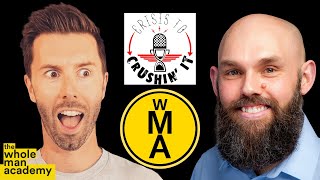
This transcript is a single-episode podcast interview (April 2020) where host Joel interviews Anthony Astbury, CEO/co-founder of the Whole Man Academy. Anthony recounts a 20-year City trading/broking career, a personal breakdown/mindset shift, and his move into coaching men on mindset and lifestyle. The conversation covers COVID-19 lockdown context, the WMA mission (events, podcast, courses), barriers men face (emotional suppression, career comfort, family pressures), and practical steps for change (podcasts, goal-setting, side-hustles).
Okay, so today on the show I have Anthony ashby. He's the CEO and co founder of the Whole Man Academy. In 2016, Anthony left a 20 year career working as a trader and broker in the City of London to go off in search of a life with more fulfillment and impact. The journey of self improvement and personal discovery led him to specialise in coaching men to master their mindset at work and play and live an outstanding lifestyle. In 2018, he co founded the Whole Man Academy alongside BBC news editor Matthew Shaw. The Wholeman Academy is a fresh new initiative designed to get men talking. It's like a living, breathing magazine for men. It was set up to help men do life better and get their priorities sorted. In April 2020, the WMAE welcomed style icon David Gandhi, one of the most influential men on the planet, as its first global ambassador. Homeland Academy connects with men through live and online events, a popular weekly podcast, weekly newsletters, social media and online courses. Anthony is also the host of the Whole Man Academy podcast, a series of interviews with inspiring men and women from all walks of life. Stories and strategies empower listeners to go through the stresses of modern life and better men. With a great team around him, Anthony is intent on growing the Whole Man Academy to reach more men, more resilient, confident, life better. Anthony, welcome to the show.
Thank you very much, Joel. Lovely introduction.
It is indeed. I tell you, this is a 10 in there I want to dive into straight away, Anthony, but we won't do that straight off. I want to say to you, first of all, what's going on in the world right now, in your world?
Good question. Yeah, I guess like for a lot of the people, the world has been flipped upside down for us and what we thought was the normal life has halted for the moment. So I am up in the Cotswolds. I'm very lucky to have moved out of London a couple of years ago. And it means that we've got a fairly decent sized garden and considering we've got two little kids who have got a lot of energy, it's a priceless thing to have a bit of space around you. And living in the country actually means that not a lot has changed because it was quiet anyway. So you don't notice a lot of difference in that the cars are slightly less going past, but still it's very quiet. So it's just a case of riding this out until we can actually pop our heads, you know, out of the, out of the hole and carry on with normal life.
Absolutely, I hear you there. I mean, a Garden is a saviour. We're lucky enough we were in mental and we've got a garden of sorts. So I can't imagine what it'd be like to be in a flat that would not be good right now.
I think that's the, that's the thing is, you know, it's hard enough for people that are lucky to have a garden and some outside space and probably like yourself, I know enough people that are living in, you know, either cities or for us, especially London, who have living in. Even if you've got a lovely apartment or if it's a flat, you know, if you've got no outside space, you're. You're forced to take your one form of exercise a day, which is great. But just being able to open the doors and get outside for a while is for all of us, for our physical and mental health is very important at the moment.
Absolutely, absolutely. Yeah. Well, I know that's two of the things I struggled with most in my life, is my mental health. And that was one of the instrumental parts of it, was getting outside, getting that movement going. Okay, let's dig a little bit into this bio because you've got me intrigued. So, trader broker, how did you end up on that path?
Good question. I had zero plan of what I was going to do with my life, which I think is something that I maybe could have benefited from. And I ended up working in the City just because, especially for one of the biggest kind of commodity trading companies in the world, because I just wanted a job in London and I started there as a little pup, as a desk junior with absolutely no idea what I was doing. On my first day at work, I turned up and didn't even know the name of the person that was employing me. So that was a positive start. Thankfully, I actually started learning something and that led me through a couple of really big companies and ended up working primarily for a company called gfi, which was based in the City, in Liverpool street, and working as a broker there on a carbon emissions market. I also moved to fuel oil broking and then shipping or lpg, shipping, derivatives. So it was a real mixture. And I don't always pretend I knew exactly what I was doing, but I was a good people person.
I think that's a key part of any personal communication is being able to be good with people. Going back to something you said there, you said you had no goals or no sight of where you wanted to go. When you think back, why do you think there was a lack of goal around where you wanted to go that young age. I'm guessing you're talking 16, 17.
Yeah. I mean, I did my A levels and I thought I wanted to go to university, only really, because that's called procrastination for a lot of people. And you don't know what you want to do. So your natural progression is to go to uni. But actually I wanted to study radio, film, television. I knew there was one thing I wanted to do, but that didn't happen and I went straight to work up in London. But I just don't think at school we weren't taught that you had a very brief back then, whether it's changed now, but a brief bit of careers guidance advice, which was absolutely rubbish. And you were just let out into the big wide world. So at no point did anybody ever say, you know, what are you interested in? What would you like to do? And there's always that question of, you know, if you had your time again, certainly wouldn't have gone and done what I did. Much as you know, it brought me to where I'm now. I think I would have actually got into some kind of like sports journalism or something that I actually found fairly interesting.
When you did it, it just brought something back to mind. Then when I was. I think it was 14 or 15, they had counsellors come into the school, like career counselors, and they had like this. I think it must have been like, there's a sheet of paper with a 10 of boxes on it. Sorry, Anthony. That won't wasteful.
It might be for me.
Okay.
Let's remind people that we've adapted because we're both recording our podcast from home. Yeah. And these things happen. And the other day I was recording one and our neighbor is next door and, you know, they decided they were doing some chainsawing. And I'm just sitting there and like, what can you do? You know, so you just smile and carry on.
Yeah, that's a good point, actually. Yeah. Yeah. And a house full of kids as well. Yeah. I've had to put my boy to turn his volume down because he's. He's on the Xbox. He's getting all like flustered and stuff.
You know, I was gonna say, how do you turn the child's volume down?
Threaten the ticket off him. So that's.
That was the option. You can make a lot of money if you can work out how to turn a child's body down at the moment.
Indeed. Okay, I digress. Let's go back. So when I was in school, we had These forms we had to fill in and we had to, you know, like the lottery ticket and you've got to rub it, that is strong enough to process when you put it through the machine. And that's what we had to fill in is like, I know thousands of questions. Felt like thousands. Did you have anything like that or did you have somebody come in and sit down with you?
Yeah, we did. It's. We didn't have any scratch and sniff stuff like you did, but we, I remember we took some, some kind of, you know, mind mapping course, a bit like a disc profiling for kids or something. And I'm sure I've actually still got it, you know, one of those boxes where you've got stuff you think is useful, even though you just keep it locked in the garage. And I'm sure with that it was, you know, it was very much, you like talking and you like communicating and you like being creative. You know, my strong points weren't maths and science. I, you know, science is very boring to me, which is comedy, that I went into the financial markets when I had no interest in maths.
Okay, that's cool. So with that in mind, now, do you have anything in place for. I know you've got your children. I don't know how old they are.
Yeah, I mean, that's, that's an important question. And I was speaking on podcast the other day to a, to a chap who's a real entrepreneurial mastermind, as we dubbed him. And he spoke and I spoke about. Both of us have got children under, I mean, mine are only three and seven months, so we've got quite a few years to plan ahead. But, you know, from a young age, it's helping a child maybe understand their relationship with money and the relationship with your, let's call it your dad going to work. You know, not saying I've got to go to work. It's like, hey, I'm going to work. I'm going to do some really cool stuff. So they grow up wanting to do work now. It doesn't mean they have to work for someone else. But, you know, we think it's important to educate your child as you come up. And for us, I mean, my partner's into nutrition. I mean, she's a nutritionist, but she's into the kind of the proper depths of nutrition and how it can impact you from a young age. But also about personal development. And, you know, we do feel that. Let's say for myself, I didn't read a personal development book like A Tony Robbins or Brian Tracy's goals until I was like 35. I mean, you know, there's at least 15 or 20 years that I could be doing some cool shit, but I didn't because I was unenlightened. So maybe as they get older, just encouraging them to just read things that aren't the norm for kids growing up.
I like that frame that you said about angle of the work which is going to bring me on to another point that I want to touch on later on. So something else you mentioned in your, in your, the bio was the fact that, you know, this whole man academy came about through a desire to reach men and for them to become more resilient, more confident so they can do much better. From what I'm seeing, this is much needed. From my own perspective, I can certainly relate to the non resilience and the lack of confidence. Where do you think that is? Where do you think that comes from for men? And why do you think there's such a need for this right now?
Yeah, I think that there's, there's different schools of thought here, but for me, I can only ever talk about for me personally and all the guys that we talk with through the whole man academy and of course a lot of it comes from as we're growing up. I mean, it sounds boring to go to it, but you know, we're told to man up and you know, not big boys don't cry, etc. Etc. And it's funny because you're trying to find a balance there between, you know, there's the possibility that as we're growing up, when things aren't going right for us or when you're having a challenging time, keeping it locked up, you know, isn't going to be helpful. Now that's not to say that, you know, you need to be posting on social media every time you've had a bad day and being upset by it. If you want to, great. But it's about knowing that actually it's okay to not have a great day. And what we're trying to do is help a guy understand that, especially as you grow up. I'll give you a good example. When we ran one of our first events we had in London, we had maybe 25 guys in the room and the age spread was from a guy who was 18 right up to a guy who was in his 60s. And towards the end we said, would anybody just like to, you know, comment on how the day has gone and the 18 year old stood up, which is quite brave. Him, I thought. And he said, it's good to know that you older guys have problems too, because I thought it was just us, you know, like people my age and the guy who was 60 lent over. And he said, listen, I'm old enough to be your granddad and I'm still having challenges, but the more I'm okay with, you know, admitting that things aren't always perfect is my path to actually being a bit more fulfilled.
Slice. I think that's so true. I mean, I try and be open with my. Well, all of my children, really, not just my son, but I want my son, in particular, my other son, to understand I go through stuff not for him to be like the bouncing board, but for him to see. Actually dad's processing now right now, or obviously struggling or whatever, because I didn't see that with my dad. My dad's old school. Shove it deep down inside, into that black hole, and he'd keep it there.
And isn't that a generational thing?
Absolutely, I think so.
I mean, going through the war, I mean, not that, you know, my dad. I don't know how old your. Your dad, let's say so my dad being in his 60s, but obviously he didn't go through the war. But for their fathers that were dealing with, you know, some. Some really tough times, there was no, oh, let's, let's have a chat about it and share our stuff on our Instagram stories. You know, it was just shut up and get on with it. But unfortunately, you know, for a lot of people, ultimately that doesn't help long term.
I mean, I did it for so long and eventually that manifested in, like, breakdown of sorts for me and physical illness because I was. I was trying to be. I always look at. I still emulate my father now. There's aspects of him I want to be like, the biggest one I struggle with is this being able to just that, you know, suck it up, Mana and get on with it. I can. I can do that. But sometimes you need to process the bits that. The feelings that come out on the way. You need to allow yourself to have those feelings so you can move the next part, which is a little bit easier once you haven't, you know, suppressed those feelings. I know for me, when I was in work, in my job, my previous role, there was strong characters in the room and I had to suppress who I was because I didn't want to be the person shaking the room. I didn't want to upset the boat, all those sorts of things, you know, and it wasn't until I actually got to bed. The cluster migraines that manifested from. For me, that's what they manifested as.
Yeah.
Went away. I actually needed to deal with that confrontation and just dissipated. It's crazy to think if you suppress an emotion, it can have a physical.
Outcome, but as you say, bottling it up and at some point it will.
Overflow or explode or explode, and that's the way it stops. So I was going, I mean, this is why this, your bio resonates so much with me, you know, because I was that person. I went to work smiling and then come home fuming.
Yeah.
Like I bottled it all after the day, you know, I was a nice, happy guy in work, got on with everybody, like, you know, same people, person listen to other people's problems. Wasn't content in my role. And then I would literally choke them. When I was a toad, he was shouting stupid stuff, triggering you. So you're reacting to the kids. Yeah, but no, that took a lot of long process. And it wasn't until eventually I looked and I thought, I'm gonna lose my wife and I'm gonna lose my kids. Something needs to change. So this leads to another question I want to ask you. So you obviously reached a point in your life where you decided, actually, I'm done with this. Need something else. You would become a weird of fulfillment. How did, how did that manifest? The bit before you asked yourself, what else can I do? How did that look for you?
Yeah, I mean, I'd spent say nigh on 20 years in the city, and probably about, let's say, 80% of it I'd really enjoyed, but it wasn't quite. It was quite a toxic environment. And, you know, you were. You were judged on how much money you made. I mean, that's the nature of the job. Guess what? You're there to make money. But I just found that after a while, firstly, you were such a roller coaster. It'd be like being a footballer in the fact that you could have a terrible game, but if you scored a goal in the last minute, then suddenly you were the hero. But if that little instance didn't happen and you lost, then you go home and you're depressed, but you're pissed off and people are wanting answers. And using that sport analogy is the same as the financial side. And you could be just a split second, or you're not even in control of making money because it might be your client saying to you, look, I need to do this deal. And he told you he wants to buy or sell Something, you know, who wants to sell it. So you speak to him and I mean literally a 30 second conversation. Yep, that's done. And you might make 10, 20 grand. Now on that day you're king of the world and you've got, you know, you're all very happy and everything's good and you're, you're cock of the hoop, but the next day that same deal is out there and your client gives that to your competitor who happens to be one of your friends or something as well. So that day you're all moaning each other on the desk because you've just missed out on 10 or 20 or 30 or 50 grand and they've got it. So Monday you were, you were a hero and on Tuesday you were zero. Then Wednesday you were here. So you can see the pattern and you know, then you'd have the long hours as well. I mean I got up at half past five every morning, got into your desk where you were in by 6:45 in London and you people thought, oh, you must finish it like early afternoon. And you're like, no, no, you'd finish it the earliest was 5 o', clock, but several nights sometimes. Then you'd go out with clients and it'd be up to you to entertain and pay for them. Stay out all night until three in the morning and then get back up half past five and go back to work and carry on again. So it was, yeah, it was, it was good and for a while but like anything, you know, like any, any relationship or a career, at some point you can, your priorities change. And I just got to that stage here I was like, you know what, the market I was working was starting to disintegrate and by that I mean computers were taking over. So you know, the computer could do it quicker than you, more efficiently, cheaper, you know, etc. Etc. All the benefits and we weren't really needed. And I could see this even two years before I actually left that desk. But I wasn't really sure what I wanted to do. And it was around that time the realization that I would come home and be pissed off. Which is very unlike me.
Coming home to family then or their fiance just.
Yeah, just to Emma, who's my fiance. And it all kind of, it's not, not meant to sound dramatic but again, I've always hopefully prided myself on being a fairly level headed and a kind and a friendly person. But I remember coming home at one point and Emma said, I mean Emma worked in the same industry but she was home before me. At that point. And she said, you know, how was your day? I walked in and I was like, you say I was so stressed after having that kind of environment all the time, where that day you probably completely. You'd made nothing, and then your competitors had. But I came home and actually said to her, like, I'll fucking tell you when I've had a good day. And then I, like, went upstairs and found myself, like, bursting into tears. And you're like, what am I doing? Like, that's never. I'm a mildly emotional person, but I never felt like that. And it was not. I don't mean to say that I was having a breakdown. It was just like an instant reaction where you think, God, I. Like, this can't be good for you. And it was around that time that I'd started to think, okay, well, what else can I. What else can I do? Which is tough because you're earning pretty good money where you know, where you were. And I'd always thought that if I got to six figures in earnings, that everything would be great. And then when I got to that, you just needed more. No.
Yeah. I'm with you. Okay.
There's never gonna be enough.
No. Do you think. Do you think you were at the. Irrespective of the lifestyle it was giving you? Do you think you were in a place of comfort in yourself, like, inside?
No. It was that realization that. I mean, it's funny, at that time, I started listening to podcasts, and I've said before, podcasts saved my life. Now it sounds. Again. Sounds dramatic, but it was again, Emma said to me, oh, you know, you ought to listen to podcasts. I was like, I'm not listening to podcasts. I'm too busy, you know, don't be silly. And guess what? You know, turns out that females are right sometimes. And which she'd be pleased to hear, I admit. But, yeah, I mean, I literally started listening to certainly one or two podcasts. And actually I'm now friends with the guy who's based out in. I think he's in the States, actually. He's always moving around. But that got me into listening to things about Tony Robbins and then going to Tony Robbins events and from there, one other podcast being London Real. And, you know, I started developing my. My own skills as a person and understand more about postal development. And that's what took me on that journey to the Tony Robbins event in Miami and Tenerife and here and there.
That must be a bit of a ball of move to actually make that transition. What sort of steps did you put in place to navigate or make that a little bit easier for yourself or was it just a piece of undone?
No, you're right. I mean, I spoke on the on podcast from the chap in South Africa yesterday about this. The importance of understanding. Firstly, it depends because everybody's different. You know, I was firstly lucky that I had a fair amount of money in my bank account. So you can be a lot more blase about things if you want. Secondly, I managed to get made redundant, which of course is one of those very useful things when you get another X amount of money deposited into your bank account. So for me, I was able to literally take six months of work with zero income and you know, carry on kind of learning and working out what, what I was actually going to do. But of course, you know, for people that don't have that luxury, it's important, I think, to, let's call it a side hustle. If you want to make a change. If you hate your job so much you need to leave, then, you know, and it's going to affect you so badly you think your brain's going to explode, then probably you should have a word with your boss immediately. But if you can say, do you know what, I don't like doing this, but it's okay, but I want to do something different, that's the time to think, right? It's hard work, but guess what? I'll work during the day on what I'm doing and in the evenings and weekends I'll work on what I really want to do to do until I can make that transition.
That's cool because I was reading something the other day and I can't remember what book it was. It was the book he was saying about that working on your passion eventually, like say like your eight hour work day and your two hour passion eventually, then that sort of transitions across where you then 8 hours passion, 2 hours work or whatever, you know, whatever that may be. So yeah, I just think I got many people, I know people that can be in jobs sometimes and there's that need, there's a need to go to work, pay the mortgage, pay the bills.
Yeah.
And I think for me, the shift didn't come until I was able to say, I'm not happy. What can I do about it? And that sentence alone is what provided is what kicked it all off. And for me, I'm the same. It was podcasts. Yes, that's what started me on podcasts, which led the books, masterminds and all sorts of different things. So I feel you on that.
And it's a free resource as well. You know, if you think even with books, I mean, generally, if you really want a book, you can, you know, you can find it. But I mean, a podcast is so easily accessible. And I always say, now, either pick a podcast or pick a person and follow them and consume everything that they suggest. Don't jump from one to the next to the next to the next, because it's like doing courses. You know, you'll do six different courses and spend money and time and effort, but you're kind of procrastinating, actually pulling the trigger and doing something that you need to do. So it's, you know, I mean, Tony Robbins is a great example. If you said, now, if you took a guy that didn't know what he wanted to do, and irrespective of whether he's got money in the account or not, if you said to me, joe, what. Let's look at this as a long game. For six months, I'm going to consume all the content that he has, you know, is free online. You don't even need to go to his actual events, which are expensive, and then see where you are in six months time. You'll be a totally different person if you implement 10% of what you would learn. But often people read it. Read that book or podcast as entertainment. Wow, that was great. Anyway, back to my life.
People can tend to use like motivational to send me the GM up for the now without realizing that if they fail to address their current state, the way they feel right now, meaningfully address it so that they are then able to change the way they feel, do something about it if you're happy, you know, remember it, harness it and then use as a resource. All these, all these different things are things that you can learn and utilize as you as you go on, as you as you well know. So yeah, I mean, I think, Dan, most people won't.
And you know why? Because it's hard work.
I think it's making the time. When I think back to my journey, it was all revolving on telly. Chilling. I mean it was just, it was purposeless.
Yeah.
I don't know about you on your journey, have you when purpose kicks in and you realize, actually I'm not messing about, I've got to do this. Like I had a wobble. Must have been a couple of weeks ago. I felt like I just wanted to put my. As if I was a Dan, Dan Pina. My wife's got him on all the time. At the moment. And he gives this analogy of like a turtle in a shell. And the only time he makes progress is when he sticks his head out. Yeah, I had a wobble where I thought, you know, I just want to put my head back in that shell. Something in me was like, you do that? Yeah, you're going backwards. What are you doing? Then it was a case of, okay, I owning it, Jocko Willink. And then just thinking, I can't be that person anymore. I've got to own what I want to go. I think a lot of people can sometimes get waylaid. So what have you seen? I mean, you coach, you coach men. What's your take on men? When they come to you? Do you find they're of a certain level or do you find it of a certain mindset when they come to you?
I think you've summed it up nicely. A lot of people, especially guys, I mean, again, we can, we can talk about the male, female kind of split and how it works, but generally we're, you know, for the whole man academy, the clue is in the name. We're focusing on the men. And for a lot of them, once you kind of got into a career, you start to get comfortable, which is fine. I mean, it's brilliant. If you can, if you can get into a career and you're, you enjoy it and you're comfortable for the rest of your life, then that's quite frankly the golden, the golden egg. It's often for guys when they get to that, either, you know, a 10 year career or that kind of age where maybe kids have left home or something's changing, where you start to get a bit, a bit bored and you think there must be. It sounds corny but, you know, there must be more to life than this. And I know enough guys still work in the city, maybe sitting at the same desk they've been at for 5, 10, 15, 20 years, who haven't liked it for 5, 10, 15,20 years. But as you said, what else do you do? It's difficult. And here's the other thing. If you're a single man, it's easier because no one else is counting on you but you go home to your wife and your children. Especially if your wife has got the kids at private school and is driving a Mercedes and you know, has got a nice house. Now that you know, it can, it can. It doesn't have to be those silly trappings, but you see my point there. You go home to her and say, darling, I'm feeling unfulfilled I think I'm going to jack in my job that, you know, I earn 100 to 200 whatever thousand a year and I'm going to pursue my passion and you see how that goes down. So it is tough for guys and what you need there is to be fully in tune with your family and understand that maybe if you, if you leave, if you're going down that route where you're leaving your job and the money's going to change from a six figure salary, you know, maybe down to 25,000 for a while, whatever it is, that it's going to be tough for one and you know, you have to make some sacrifices.
Is there any part of that story that you implemented?
Yeah, definitely. I mean, again, going back to, we used to spend a lot of, I say a lot of money. You know, we'd go to, we went to Miami on holiday and you'd spend like 10 grand on a holiday for like six days out there. And you know, we had nice cars and I, not long before I left the city, I walked into BMW showroom and bought a brand new BMW Z4 convertible and you know, drove it around and then after a while realized that it gave me more stress because wherever you left it, you were worried about it and you know, it's not a Ferrari. But for me it was a, it was an expensive car. So we cut back on all that stuff and I was very lucky that my partner was very supportive and we knew that sometimes you got to go backwards to go forwards.
That has been a key part for me too in my own journey. Not so much the Z4, more of Galaxy Ford. But yeah, I needed to make that shift. I was lost, bored and a ton of other things which manifested in different ways where I needed to. Once I got onto that growth mindset and just realizing things didn't have to stay the way they were. I'm more curious about, okay, what else can I change? What else can I do? And then like you said about having a supportive wife, that transition for me from my previous role to my current role required a drop in money. And I had to sit everybody down and tell them it required a drop in money. There might be some hardships. The odd thing is a lot of people, when I left that role, they were all like, oh, we're doing, you know, it's this and it's that and da da, da. I'm just like, yeah, I'll go for you and see what happens.
And it's the best thing I've ever.
Done is what it Made me do. I'm very, very conscious where my money was going. Going back to what you said originally, which is teaching your kids about money, I think this is the most important lesson they'll ever have, is being intentional with it. And going back to what you just said about a couple of minutes ago, you just said about trappings. This is something we're discussing with our children. I want them to be away. They can do anything they want. But for them to go and buy the latest car, a new house just off the back, put himself in a position where they need them to go to a job, it doesn't terrify me, but it sets me to think they could be in a position that I was in.
Yeah.
You know, so you're early doors with your children, you think he said, like growth mindset and stuff. Do you think you'll put something in place to navigate that? Or have you already had the conversation with your wife about jobs versus pursuing passion and stuff?
Yeah. I mean, if we're talking about the bringing up of the kids and how we would navigate it for them, I think firstly, it's about understanding that most children are brought up to be an employee and which can be great again for some people, if you want to just carry on in your job and it's really, it's fantastic. If you can work for a great company and get well paid and you love it, then that's fantastic. Some people get to that stage where I remember, I think I was say, maybe 35 and I needed wanting to take some time off on holiday and of course I had to ask permission because. And understandably so you work on a desk of people and if you can't, you can't all be off at the same time. And it might sound pathetic, but I remember saying, can I have, you know, whatever time off? And they said no, because, you know, that person, that person's off. I was like, I'm 35 years old and I'm half, you know, and I've. And I've got a Z4 and I've got this, this, this and this and what have you. And I earn this money and I have to ask permission if I can go on holiday. Like, that doesn't sit well with me. And it never really had before. But that was one of those little moments. You're like, hold on a minute. My friends that own their companies or work for themselves, they don't do that. Now, working for yourself can be really challenging, especially when you start out and some people aren't cut out for it. And they should stay in employment. You know, you get good benefits. The money goes in your account. Some days you can sit and do nothing all day relatively. And, you know, if you're off sick, you're still going to get paid for it. But understanding when our children grow up that you haven't got to be an employee and that maybe you could start trying to sell your own little business. And of course, for you and I, we're not 20 years old anymore, so we didn't have the ability to use YouTube or eBay or all these different things to become a little mini entrepreneur. Whereas by the time my kids are 15, we'll be what, 20, 35 by then? I mean, God knows where we'll be with 5G will have probably killed us all by then and fried us anyway. But that's another story. But, you know, how about saying, look, you know, we wanted to try something, try and create some revenue and do some good, and if it doesn't work out, we'll try something else.
So, yeah, I think it's a difficult thing to navigate. You're right. I get Some people are cut out for employment. Do you think there's. And these are like, Imagine somebody that's listening to this now, and they're like, you know, but I got commitments and I've got this and I've got. How would you help them make that decision between, like, should I. Do I stay put? Do I, you know, dip my toe in it? What do I do? What would you say?
Firstly, that's into two.
What's the word I'm looking for?
Let's say two folders. One is the person that knows what they want to do, and one is the person that doesn't know what they want to do. If you know what you want to do, go and sniff out and investigate what are the good and the bad things about that new career? Because often people see, I start my business, it'll be great. I can work for myself. And you're like, okay, well, you, you don't become, you know, you're now your accountant, your marketing, your it. You're, you know, all the different things. It's. It's difficult. So go and find out whatever that career is or business that you think you want to go into, and maybe for as long as you can bear it, go and find someone. That's where you want to be, shadow them, ask to be mentored by them, work for them on the weekends and see what it's really all about. Because the most, the worst thing I think is if you leave your job and then you go to do something else and realize the grass isn't greener, if you're someone that doesn't know what you want to do, it's important to. I think most people deep down would know what they want to do. Maybe it's. You take the things that you're interested in, the things you talk most about with your friends, the things that wouldn't seem like work if you were staying up late to deal with them. And there's always something around that that you can find that is the. It hasn't got to be your passion, but something you're at least interested in. But if you don't know what you want to do, then at some point you've got to do something. So you can either stay where you are, which is fine, but if it gets too painful to do that, then do something. And be prepared that if you do it and it doesn't work, you're going to expand your network, you're going to learn a lot. And maybe whilst you're doing that, something else will become clear to you. Yeah.
And that leads right into the growth mindset aspect. Do you think you went through life with a growth mindset or a fixed one or do you think there was an inflection point?
I went through life with various mindsets. One was girls. And then. And then when. Maybe when I got to 35. Well, the girls and football.
Yes.
And there's nothing wrong with that and stick with what you're good at. But around that mid-30s, again, I just had my. I don't know, I just, I just. Maybe I became enlightened or what? Maybe I grew up a little bit.
Yeah, that's. Yeah, that's something else as well. It's. They took me back and saying that because there was. When I first sat down to see the person that helped me on my journey, he asked me what was I proud of. And I couldn't tell him when I was 41 years old and then asked me something about what was I happy about. I couldn't tell him everything he asked me. Everything he asked me. I wasn't able to verbalize, which concerned me to a degree, you know. Yeah. A growing up path seemed to kick in for me when I was able to understand where I was, who I was, what I enjoyed. Therefore, it meant I could put some of the other more childish aspects of myself to one side and say, actually that's not really serving me right now.
Yeah.
Leading me where I want to go.
I think on our Pre questions you asked about maybe it was about a book that I, you know, might either recommend. And it's interesting, I mean I get asked that question quite a bit and there's obviously loads of great books but someone says, you know, if you just had to pick one, it depends on who you are and what your circumstances are. But it's interesting the book by Brian Tracy called Goals, which, you know, I think it's pretty self explanatory. It's so funny because just like you said when you got asked those questions when I bought that book and the simplest things you should be able to report about yourself, you know, you know yourself, no one else knows like you. And if someone's like, you know what your goals to not even be able to think beyond. I want to go on holiday in July and you know, not maybe get a nicer car or something like that. Interesting that as yourself like I found I couldn't honestly sit there and put many goals down.
It was a struggle. Yeah, it was an absolute struggle. And we had some. A lot of the questions he asked me what NLP based anyway. But it was like being able to put that into a positive context. Told this before on you. He asked me what do I want? And I told him 20 minutes everything I didn't want.
Yeah.
So he asked me again. He said what? He said, you just said everything in the negative. Explained what he meant. He said, well, tell me what you want then. Positive, positive. And I slipped back into I don't want this and I don't want to be doing that. I don't want to be doing this. And he let me run for another five minutes but he's doing it again.
And you're like, get going, going.
Unbelievable. I was like, oh, how the hell do you get to 41 years old and somebody asks you what do you want? You don't know.
Yeah, you know you don't want. You know what you don't want, but you don't know what you do want.
Yeah. It's like that just cooks my head, you know. Cooks my head. The fact I got to 41 and I had no awareness. Yeah, it just blows my mind. But going back to Goals, so something we're struggling with at the moment. And I had massive clarity last night after reflecting on my day was. So a friend recommended to me something called 75 Hard Years there.
No.
So Andy Frazella, MF CEO project. He's a good podcast, quite street talking, loads of swearing. So if you use a fragile dog, don't listen to it.
Yeah.
This thing about 75 and it's about creating habits and then 75 hard and then three big things you want to achieve the next day, which leads into the goal setting, he was saying. So I set my goals in order of my values. So I thought I'll go. Health is my first, family is second, business is third. So my health was up first thing, meditate, affirmations. And then I just, I went on a bike ride this morning. That's my health. Then happy days. And I'm going to chuck another weight session later on today. Family skipped family, went straight to business because I knew straight away what I had to do was my London real stuff and some other bits and bobs. I went back to family. I thought, bloody hell, I've been so frustrated lately with this current environment we're in. I'm home. I'm still plodding, knocking stuff out for the podcast and what have you. Mrs. Is working on her business. We're working on a group venture as well together, me and the wife. I'm seeing my kids gaming, doing their thing, which is fine, but it's not the lifestyle I envisage for us. Yeah. Do you know what I mean? It's like I want us. I know we can't at the moment. I envisage to be like climbing, surfing, going on a picnic time, going for a nice walk, just go. Being down the beach, just being together. And I realized then quite start me, I've got no family goals like being there or being present. It's not specific enough. Do you set goals around family and stuff like that or how do you manage it?
I'll tell you what's, what's funny about that. Most people don't because they wouldn't see the value in it. And we don't as a family only because our little ones are so tiny that they, you know, one of them's too busy wiping food around his face to do anything else. But I have personally and it's funny. Talk about goals. Three years ago I'd. I looked back at what I'd written three years ago and it's surprising sometimes then how you've realized things you had on that list you've done without celebrating. And it's those little things for us actually you just hit on it. Working from home at the moment is. Challenge is great and it's not great. You know, there's, there's of course, like, you know, water can tell you, water can kill you, but you need it to survive. Working from home is brilliant. You don't have to commute and you can go and see the family. But you know, last night when I'm on a live call and my little boy happens to come in the room after he's at his bath, you know, I didn't care. But you could be on something really important and it could create stress for you. But for me it was about saying, right, well, with family goals, even in the short term, do I block out one? I'm trying to maintain the normal working hours and let's say 8 till 5 with some time for lunch. But how do I block out some time that I actually spend with the family so that it's not just all work and not just spending time with them, but trying to do something that's slightly different to normal. So most people wouldn't bother with family goals because they're quite hard to set. Like they don't just, you know, in your career, it's easy, isn't it? I want to earn this much. I want to get this promotion, I want to launch this product, I want this many followers, blah, blah, blah. Talk to me about family goals. I want to. And it suddenly comes down to time or destination. You know, I want to go on holiday with them or I want to spend X amount with them. But that's the book. Goals can be applied not just to you, but you know, a lot of it can be applied to your, as you say, your family as well. But most people wouldn't bother to do it anyway.
So we block off Sunday, Sunday mornings until about 3 o' clock and Wednesdays all day. The intention of just being present, not working on business and stuff, but then even putting on the context of the week, that's only two out of seven days. So therefore in my head I'm like, I'm not prioritizing my family in the way that I prioritize my health because my health is a daily thing, you know, as is my business. So yeah, it's something I'm going to continue to play with. You're right, it does come down to the time. Then I was like, is it the amount of time I'm available for them or is it the amount of quality time I interact with them? Yeah, because I got different scenarios. I got my seven year old, he can stick me for so long just playing games or doing jigsaws, but he likes his own space. I think he's on the spectrum with regards to ADHD and stuff.
But Joel, it comes down to also your own situation. Let's say that you have a thriving business and it's kind of taking care of itself. And you check in and out and you do a couple of hours a day, which I know people that obviously have that. And it's. And it's nice. You can then say, well, my priority is my health and my family. But if you're someone that, you know, is struggling to pay the bills because business isn't going very well, but you're having some lovely time playing Lego with the boys, you need to check your priorities because, you know, if. If you want to continue to pay the bills, then playing Lego with the boys ain't gonna cut it. So, you know, it always comes down to what is your personal situation. You know, I've got friends that own businesses that play golf twice a week because they can afford to do that, and that's good for their health and, you know, maybe their partner. But if they're busy, I know in an instant, if their business was in trouble, that will have to take a backseat for a while. And you, you know, health needs to be maintained and family needs to be maintained. But sometimes, sometimes one's up, sometimes one's down.
Yeah, I read that someone else as well, they talk about, like, a seasonality to life where, you know, there's those different seasons, and I've sort of been a play in that now there's times when I can spend more time and everyone's in the right frame of mind because teenagers are not always in the frame of mind to spend time with you.
Yes.
And they like their own space as well. So I'm not doing pinch on their life or try and restrict their own personal sense of being, you know, by putting my expectations what family life looks like. Yeah, I'm very much aware of that. So, yeah, that's something I play with at the mom.
And it's interesting. Is it? Because who's to say, you know, just because that's your. Your vision of what the perfect family life is. I mean, this is the challenge with having, you know, friends that have got teenagers is that they're. They're, you know, they're adults now, and their version of a perfect life isn't what yours is. And, and, you know, rightly or wrongly, most of us, you try and, you know, push your children into living what you consider the perfect life because your values, which is perfectly natural. But, yeah, you get to that stage. That's where the resistance happens between teenagers when you're saying, well, this is what we're going to do and we're going to spend family time together and they're like, I don't want to do family time, I just want to play on my PlayStation or what have you. But this is why this conversation is good, because it's a good example of. With the whole Man Academy. When we first started out, it was mildly dubbed as just mental health for men, which, which I understand why it was, because we probably used that as part of our tagline, but we realized that mental health is just a spoke on a wheel of life for a man. And your health and your business and your career and your relationships and your sex life and your fitness, which is different to health, are all very important. And sometimes one is up, one is down, but if you let one of them fall off completely, if you say, oh, I've got great mental health and I'm really fit, but my business is fucked and I've got no money, well, you know, maybe that doesn't matter to some people, but suddenly the alarm bells are ringing. Or if you say, I've got an amazing business, I earn loads of money, my mental health is great and my sex life is great and what have you, but my health is terrible and, you know, I'm now in hospital with stress and what have you. Guess what? We need to address that. And that's where we see it's, it's, it's. Each little segment of that is like a slice of man piece, for want of a better phrase.
I like that.
They're all just, they're all just as important. Sometimes some are up and sometimes some are down.
Yeah, yeah. This is why, like I said, I connected you with you at a very early point because I resonated so much with what you're doing. So, yeah, I just, I want to be respectful of your time as well. So I think we'll wrap him up there, aren't we? Thank you for your, your candor. Thank you for your perspectives and thank you for initiating the whole Man Academy, because I think, you know, there's a lot of men out there that are going to need this and I might be more than willing to share your message and engage as you go forward. So thank you very much.
I appreciate it. And thank you for inviting me on. It's always pleasure to talk man stuff and without a filter.
Thank you, Andy.










