EP025 - How to Live with Grief - Paul McGregor
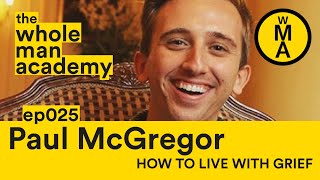
This is a full transcript of EP025 - How to Live with Grief (recorded around May 2020), a conversational podcast episode hosted by Anthony Astbury with Paul McGregor, a mental-health speaker, advocate and author. The episode interleaves practical pandemic-era wellbeing advice (working from home, preserving routines, using commute time for self-care) with Paul’s personal narratives: his father’s suicide when Paul was a teenager and a later traumatic workplace accident that left his brother in a coma and influenced Paul’s career shift toward mental-health advocacy. Paul describes reducing stigma by sharing stories, normalizing men’s mental-health conversations ("ask, listen, signpost"), workplace solutions (Everymind at Work digital platform), and using social media (notably TikTok) to reach younger audiences. Recurring themes: gratitude, perspective, vulnerability as strength, downsizing material pressures, and workplace/school interventions to raise baseline wellbeing.
Questions this video answers
Around May 2020.
Everymind at Work (everymindatwork.com).
About 30,000 followers and roughly 1 million views within three months.
So this is the whole Man Academy podcast. I am Anthony Asprey. My guest today is Paul McGregor, who I'm pleased to say is a friend of mine as well. Paul is a mental health speaker, advocate, and author, amongst other things. Paul is on a mission to normalize mental health conversations, which I think is so important. One thing that Paul does so well is do that through social media so well. Paul spoke also at two of our whole Mountain Academy events, which is a fine effort. And the big thing, I think, for Paul is helping those that are suffering, maybe in silence. So, Paul, welcome to the whole Man Academy.
Thank you, man. How are you?
I'm good. We're flying through the podcast and we're trying to get a real mixture of guys like yourself who, you know, on the outside maybe are a normal guy, but on the underneath, they've got a huge kind of amount of tips, knowledge and things that we can pass on to the people listening. First question we always go with is, how are you? And where are you? And at the moment, that's one of those questions that a lot of people are answering with the same question. But it's always good to see what. What gets on earth.
I'm. Well, I felt a bit tired this morning. I woke up feeling. I said to my wife, I was like, well, you know, when you just feel it in your face, I feel tired, but I feel good now. I think the coffee helps. And I know it looks like I've been kidnapped, but, you know, I'm just at home in the lounge and kid, kids and family are in the other room.
I guess there's less kidnapping round at the moment. But, I mean, that's another podcast. But like you said, we spoke briefly off camera about the joys of trying to work from home. And, you know, you and I both work from home more than most people, so maybe we're kind of a little more attuned to what you need to be and what have you. But how's it been for you? Just you often are in London speaking at companies and at events and et cetera. So how's it been for you in the last. What is it now, six weeks of just being pretty much at home the whole time?
Yeah, I've learned a lot. I mean, again, I've worked from home on and off for the last 10, 11 years. And you go like that, right? Like, sometimes you're super productive, sometimes you're not. But prior to this, you know, I was. We had a little office based in London, just on Mortimer street, near Oxford street. And I was working maybe four days a week up in London to commuting quite a lot and this has made me realize that I was going so fast. Busy, busy, busy, busy. And actually it's been quite nice to chill a little bit. But just quickly in terms of this, I'm not worried about working from home because I'm quite competitive and if people are out there hustling and busting and working in an office and getting stuff done, working from home makes me feel a little bit lazy sometimes. I should be out there doing that. So if we're all at home, we're all kind of on the same level field. I've actually enjoyed it and funnily enough, I'm actually almost in a way feeling a little bit of anxiety around going back because. Because you're now in that comfort zone blanket again. Right where I quite enjoy working from home now. And we'll see how it goes.
You make a good point there. I mean, we had Mark Bailey, who's the psychotherapist on probably, I mean, just around the time we went into lockdown and spoke about the effects, not just of whatever's going on with the virus, but actually the effects for some people of going out afterwards. And one of the guys I think we spoke to said it was kind of similar to, you know, that feeling when you've been, when you were young and you'd been off for your six week summer holiday and then you were going to go back and it's, you're only going back to. So what was normal, but it's been such a big break from it that you kind of forgotten what the normal was.
Yeah, exactly. I think that's going to be a big problem and even obviously I'm doing a lot of work for, you know, mental health in the workplace and you know, we're kind of working with companies on that now because they almost expect when everything goes back to normal that, you know, the lights are going to go on, everyone's going to come back to their desk and everything's going to be fine. But actually, you know, we kind of say it's very similar to if you have had like a free week holiday and then you go back to work on that Monday morning. Like the lack of motivation, the lack of drive you question in your life because you want to be sitting on the beach, you know, all of that will kind of play in. And I think this period has been, people have been questioning a lot. They've been questioning their lifestyles, their careers, you know, what they were doing prior to this. So it's definitely going to be an adjustment for a lot of people, for sure.
Yeah. No, I totally agree. It's such a big adjustment. And like you said, questioning. I think for a lot of people it's going to be questioning, do they actually need to be in the office? You know, do they need to be commuting? We trying to think what podcast it was. I listened to where one of the guys said, and it's funny, sometimes you can listen to stuff a while ago and it might seem ridiculous, but everything's changed now and you have to reconsider some of the things you dismissed. And one of the things was about, you know, in the future, these high rise office buildings, for example, in Canary Wharf, will actually just be used for the homeless because you won't need all of that and getting all these people together. And it's certainly something that, again, it's easy to dismiss it, but it's easy to dismiss a lot of things that are now becoming norm that six months ago you'd have laughed if someone said it.
Exactly. And like, what I like about this period, and I was about to put a video out as well about lessons I've learned and the innovation that we're actually seeing during this period as well, that doesn't take away from sort of the tragic stuff that's happening out there. But, you know, I'm looking at myself as a consumer. And last Thursday, there's a little local bakery and you could order brownies and they deliver. And this local bakery they sell, they sold out about 120 boxes of brownies, £18 a pop in, I think it was 90 seconds. Just like the local area. It's like the buzz on social media is real. They did the most amazing brownies. And I was saying to my wife, I was saying, you know, I, I can imagine myself on a Saturday afternoon sitting there thinking, I want to order some cake and being able to do that from like a local bakery. Now, it sounds silly, but I would never have thought of that prior to this. And I think, as you're saying, there's going to be so many people that have proved they can work from home, they're not going to go back to the office five days a week. They're going to challenge it. They're going to say, well, I've shown you I can work from home. Can I work from home one, two days a week? So people will have to adapt prior to this as well.
Well, that's a, that's a good point. And I think we know Today we've not got three hours to spend together. And I always say the greatest thing for me with the podcast is having really interesting people on, is that actually you could go for three hours and still cover some great topics. But I know we'll try and rattle through them. But take me back just quickly to. For the people that don't know, you know, we. We got introduced through our whole Mountain Academy initiative and you came to one of our first events at Soho House and we also then invited you to speak when we did our kind of launch party for the initiative at Geese and Hawks. And talk me through what that was like, because although it was a. Obviously you do longer speeches, but it was only a kind of a couple of minute speech which was. It's hard to condense what message into that. But I recall us standing on that balcony looking down with Jeremy vine and Gabby Roslin and the BBC presenters and people from banking and sport and media and all this stuff. Take me back to what that was like for you and also why you thankfully got involved with the whole Man Academy.
Yeah, so, you know, I remember that it was a funny sort of presentation. I've never done it that way because obviously, you know, I talk now very openly about mental health and losing my dad to suicide. The story about that, you know, in terms of the fact that my dad was someone who had no signs of mental illness was very kind of achieved a lot in terms of work, you know, friends, family, physical health, everything like tick, tick, tick, tick, tick, tick. No signs of any kind of mental illness. And then very quickly had a breakdown and attempted suicide sort of a week later found himself. Then after that attempt, being sectioned, spending time in a mental health unit, really being exposed, I was 18 at that time, to mental illness. Like psychiatric ward was the only thing that I saw in a Hollywood movie, you know, and, you know, now being there, seeing my dad in this environment was a. Was a tough, tough experience. And then obviously, sadly, you know, losing him when I was 18 to suicide, and just my story is always like, don't. I didn't talk about it for a long time. I was nearly 19, so 19, 20, 21, you know, young guy from sort of Essex. At that age, when you're 18, 19, you think you're an adult, you think you're a man. Suicide comes with a lot of different challenges as well. You know, do I grieve? I was angry, you know, was that my dad's decision? So should I be upset or should I just move on? So all of that kind of Those confusing questions I had to answer personally was something I had to do. And very thankfully, I did find some help. Free therapy and reading and, you know, all of that kind of, you know, got me to a place where sort of seven, eight years later, I thought to myself, I want to. I want to share this story to. To try and help people like my dad. So, yeah, when you guys asked me to share that story, and you're like, you've got four minutes, and I'm like, how do I get that across in four? I've just done that in 30 seconds. I'm probably getting better at it.
Yeah, we should record this.
Yeah, so, yeah, just play that. Just play that. You have to book me to do a speech now. But, yeah, it was. It was a great experience. And, you know, I loved. I love. It sounds funny, but, you know, I say I love telling a story. Sometimes I tell the story and I cry my eyes out, like on. On in front of people. Not like blubbing, but just, you know, tears come out. And then sometimes I can just tell it and, you know, it doesn't. Sometimes I tell it and I feel happy, like, because I feel like I'm sharing that message and I'm helping people. So, like, it depends. But on that day, I think I just. I remember looking down and it's funny because I know you've just had him on the podcast, Danny Crates, right? Yeah.
Yeah, I spoke to him yesterday. Yeah.
So all of those people there, like you said, there was people that I'd recognize from TV or whatever, looked down and I saw Danny Crates, and that threw me. The reason why it threw me is because my dad. My dad ran for the same running club that he did Farrokh. And I remember my dad spoke a lot about Danny Crates, and I think they ran together a little bit. I don't think my. I don't think Danny remembered my dad, but I remember Danny came and gave me a medal when I was at school because I did. I won, like, the county championships. And it was so funny because I do a talk, but when I see someone that my dad knew, it just threw me and it kind of put me in a much different head space. So, yeah, it was. Like I said, I share the story to try and help people that are suffering in silence, to try and help people talk about mental health. And as you are probably aware with the work that you're doing, when people share their story, it's amazing what that vulnerability does. It kind of gets people to maybe talk back, to share what they're Going through. And it's that kind of ripple effect. If I can do that and get one person to share, that person can get another person to share and so on. It's like that's where the normalizing of mental health conversation kicks in.
It is a. You said that, but it's like a ripple effect, isn't it? As you say, normalizing it. And I think that's one of the biggest challenges for mental health as a whole is normalizing it. And it's interesting actually, you said about that. I very briefly spoke on a podcast that the guy hosts out from California the other night. And one of the things he asked me was about being a strong man. And I said, listen, being a strong man as we know it doesn't mean you hold everything in. Actually, if you want to be, in my view, a strong man going forward for longevity, it's actually allowing yourself to release that pressure valve of stuff that builds up and talk to someone. And as you said, even with you telling your dad's story, imagine if you didn't and you were still just trying to go through your life now with that bottled up inside you that ultimately, as you're saying, normalizing it helps if you talk about it, it helps you just take a deep breath and often it feels a relief.
Yeah. And like you said, it's. There's this old condition in that if we talk about our emotions, it makes us weak. And I remember vividly I did, I did a talk for. It was a charity dinner and there's about 150 people there and a lot of the guys there were like bald headed, tattooed big guys. And I rock up on stage and automatically a bit of fear creeps in. Like I'll see in a couple of them on a table, like, these guys are going to heckle me, tell me to get off, whatever. But luckily the charity was, you know, a family charity. They'd lost their daughter to suicide and everyone was there for that reason. And I remember coming off and a couple of the guys approached me and they were like, you've got the biggest balls I've ever seen. They were like, I don't know how you do that. And it was actually really refreshing to me to kind of see these big guys that I stereotypically will say, oh, they're strong and they're going to judge me because I'm there talking about my emotions, turn around and say, wow, like, you know, that's strong that you can get up and talk about your feelings. So yeah, I think the modern day man is Changing, I don't think, you know, for me it's not about telling my, telling me, telling people how I'm feeling and trying to play victim. I did that for a period of time in my life, like being that victim and that get me in a very negative space, like, why has this happened to me? You know, I don't deserve this, my family doesn't deserve this. And that for me isn't a very good place to be in. But actually for now, it's like embracing vulnerability, knowing it's okay to talk about it, but at the same time kind of owning it and trying to move forward with it as well, which I think is more masculine and as you say, bottling up and not dealing with that.
Yeah, nice. Hopefully we're, I know you're primarily working on that and hopefully we as a collective unit are getting there. And you know, we with the whole man academy is not just about mental health. It's about helping men do life better. And mental health is a part of, you know, a part of the makeup of us. And that's why we try and have our events at really interesting and cool places so that it's not, you know, it's not something that's, let's call it a self help group. It's more like a cool event to go to where you're going to learn some good stuff. One of the questions we ask often, I guess at the, towards the end of the podcast, but I'd ask you now is about is there a point where you've had a light bulb moment that you've kind of had that realization of something that you felt was enlightened you, whether that be around your, you know, with what happened with your dad or those years ago and you after X amount of years wanting to kind of talk about it.
Sounds bad, but every, every traumatic moment in my life has been the biggest lesson. Right. And they say kind of adversity leads to resilience. I believe that at the time. You don't believe that. Losing my dad to suicide at that time. If you would have told me this is going to be a great lesson for you.
It's what you want to hear.
Yeah, I wouldn't have appreciated that. But looking back on it, it's a huge lesson. But for me, you know, I'm not as vocal about this. But the biggest lesson recently has been with my brother. My brother was involved in an accident at work, so I got married in Italy. So we went out to Italy for a week. I got married. My brother was my best man, he's two years older than me. We've always been close. He was a surveyor, all of this. And you know, we landed on the Saturday and then on the Tuesday he went to work. My mum got a phone call and said he'd been involved in an accident where, you know, some steel had fallen from a hoist landed on his head and, you know, they called an air ambulance, air ambulance come picked him up. Long story short, we went to the, to the hospital expecting a concussion. My mom had an overnight bag because my brother was still conscious when, when they called my mum and got called into like a side room and got told it was the worst skull fracture they'd ever seen. He's now in a coma. Like it's touch and go. And you know, long story short, you know, my brother spent a month in a coma. He spent over 11 and a half months in hospital going from, you know, very close to dying, to not being able to see for four months, to not being able to eat, not being able to do anything. And that was when I made the decision to switch full time into mental health. Because at that time I'd learned so much and luckily, kind of looking at it now, my brother still has, you know, my mum's his full time carer now, but mentally my brother's fine. Like, he's got the same shit sense of humor, you know, he's the same brother. Like he remembers, he remembers everything. To lighten the mood, A funny story just quickly was prior to that, we went on my stag do. So he and my two friends and all my friends, they kidnapped me and we went to Krakow for three days. And on the first day we were in a certain bar and one of my friends decided to punch a hole in the wall. And we got locked in and all of us got pepper sprayed, right? So there's this story about how we all got pepper sprayed and I'll never wish it on anyone. I thought it was just foam. I thought it was a foam party. And all of a sudden you can't see for a couple of hours. And when my brother started to first speak, um, I remember saying to him, steve, Steve, like, do you remember what happened in Krakow? Like, and his second word was pepper. So it was amazing how, like, you know, the brain is so. The brain is so scary how. Yeah, you know, like he could remember even though he couldn't vocalize it, but he like slowly said pepper. And I was, it made me cry because I was like, wow, he's still in there.
You just said something really Important, which I know. I think when either Danny spoke about his. His issue yesterday or what happened with him losing his arm, but I think it was also Chevy Ruff who said, you know, especially for paramedics and people, it's so important to maintain a level of humor in these dark times, because it helps to just in a bit, like, talk about it, alleviate some of the pressure.
Yeah. And there's so many. And my brother as well. Like, that's what got him through. It's like, even the first time my brother laughed, like, we all got emotional because, you know, he was just so, like, just. It was just a zombie in a way. And the first time he laughed was because an old guy opposite him, they were like, you need to go to the toilet. And he said, I can't go to the toilet. My asshole suits. My brother just. My brother just started laughing, and my mom couldn't believe it. But, yeah, like you say, you have to. You have to have a bit of humor to get through it. But the lesson that I learned there was just how I learned it with my dad. But it was again, a punch in the face that life was all okay and you're existing and everything's kind of ticking along, and then that happens, and it reminds you that this can happen. So many things I've learned from that just quickly is number one, like how grateful I have to be. And my brother even talks about it now how, you know, how, you know, in a way, not saying it was a positive for him, but, like, prior to this, he wasn't very happy in his job. You know, he was, you know, doing things that, like, you know, he said. He says he wasn't that happy. He was just existing. Whereas this, in a way, has taken a lot from him, but it's given him purpose to. He does physio every day. He's got this motivation to try and walk, to try and get better. Like, perspective, I think, is so important as well. Again, it's like a terrible situation. But when I put it into perspective, we didn't lose him. Like, he's still alive. It could have been a lot worse. You know, they told us it would have been a lot worse. And he is that miracle in a way. And also as well, just the biggest lesson that I learned is when that happened, I had a house that I was renting. I had a car on finance. I was in debt, I was running a business I was trying to make from the outside looking in, my life looked amazing. I just got married in a villa in Italy. And all of this was going on. And I remember when it first happened and I sat there on my own in this house that we were renting, five bedroom house, and I cried. And I said to myself, if that happened to me, I leave my family in a lot of mess. And I was honest with my wife. It's hard as a man to say, like, you know, even though I'm making good money, like, we're spending way too much because we're trying to, trying to keep up this lifestyle that makes us look good. And we stopped and we went and lived with my mother in law and father in law for 10 months with zero rent so we could get out of that. And then we bought a, you know, a little house and honestly, you know, stripping all of that kind of materialistic items away, not needing that to make me happy was a massive, massive lesson, like huge for me.
I think that's, you know, we're always. What I love about the podcast is you never know what's going to come up. And you know, we might say that we're going to be talking about mental health, but that's one of the things that could be obviously affecting people's mental health is the pressure of trying to keep up with your friends, your family, people you don't even know, people on Instagram who you never will know or, and even if you think you know them, you have no idea. And I think so many, especially if it's guys listening, need to hopefully feel better about the fact that, you know, sometimes as you say, stripping, we're not saying about you have to go and live in the woods and, you know, not having a toilet roll, there's none around anyway. But it's about sometimes, yeah, you go back to the basics and you see joy and pleasure in the basic things that maybe you've, you know, thought were just not so important.
Yeah. And it was like I could never, I could never do mental health, you know, talks or whatever full time because my expenses were here. Right. So how am I going to make a business that's like here, but actually now, you know, our expenses are pretty minimal. I can do more of what I enjoy. I do more of what I love. Yeah. And it's, for me, it was, I think a lot of it is ego, a lot of it's insecurity, A lot of it was me feeling like I was doing well. But actually I was trying to show, I was trying to show off. I was worried what people thought of me. So I think it's that. And, and to be honest with you like. I've done a lot of research into it as well, with my dad. They call it social perfectionism. You know, social perfectionism. And a lot of people talk about those that they've lost to suicide and how they had this. They had this. Or a week prior to their suicide, they'd got engaged, they'd got married, they bought a house, whatever it was. And there's a guy called Rory o' Connor at Glasgow University. You know, remember the. My Media Awards that we. Yes, that's Rory. He talks a lot about social perfectionism. And I look at my dad and I think everyone called my dad perfect. Like, your dad's perfect. Like, he's so perfect. And almost, in a way, I think that social perfectionism is our way of showing people that we're doing well, because internally is telling a completely different story and we're scared that people are gonna see that.
Is that a mask?
Does that make sense? Exactly. It's a complete mask. And I think that's what I was doing is, nice house, nice car. Paul's doing well, Paul's happy, Paul's, you know, this. So it's masking, like, how I was actually feeling at that time as well.
Again, I think we could do an hour just on that topic. And quite frankly, you could have a calling show, because I think so many people would resonate with that feeling of thinking, you've got to have all these shiny things. I know very much a lot of your. What's the word? Kind of your business now is going into companies to talk. And not just companies, but maybe schools as well, but organizations to talk about either mental health or things you can do and kind of reducing the stigma around it. What are you seeing with companies? What do they want you to go in and talk about?
So a lot of them are actually quite open to just people coming in now and sharing from personal experience. I think every organization is different, but especially a lot of the maybe bigger organizations are actually saying, look, come in, just share your story and give us some sort of strategy on how we, as a company and employees can help support each other. I think a lot of it always boils down to how do I support others as well, which is just natural as human beings. I think there was a. I was reading something the other day about how we struggle to take our own medication. But we're very good at telling people to take their medication. So I think it's always, how do I support someone? How do I know the signs to spot? But, yeah, in terms of that, I always go in with very much sharing my story, but then trying to give them some value. This is what I've learned from it. Like in terms of supporting others. I kind of always break it down to like ask, listen, signpost. You know, we don't have to be a qualified therapist to help someone with their mental health. But at the same time, if we are listening to someone, I don't feel like we have to cure their problems. You know, it's very much the analogy that I use is if someone's broken their leg, you go up to them, you ask them if they're okay, you call an ambulance, you get them in the ambulance and then you check up on them later and make sure they're okay. You don't ignore them because you're scared of what's going to happen. And at the same time you don't start operating on their broken leg. Right. You're not qualified to do that. So we very much with mental health, it's very more complex, but it's like ask, you know, ask them if they're okay, ask twice. Because normally the first time they're not going to say anything. Listen 100% listening. Try and like listen to them and then signpost. Like, don't feel like you have to be the expert. There's other people out there that you can signpost them to. So a lot of the talks come down to that. You know, how do we support ourselves, but also how do we support others? But also a lot of the work that I'm now doing is obviously we've just launched everymind at work, which is a digital platform. So the aim of that is it's an application that we provide to companies, they provide to their employees and it gives them that mental health support in their pocket whenever they need it. But what's key with that is Even though it's 100% anonymous, so we can't say Anthony is looking at content around depression. What we can do is we can say as a kind of company wide, you know, if we look at your company, we're actually seeing that, you know, sleep is a problem. Lots of people are looking at content around sleep, Lots of people are looking.
For support around it.
So we can feed that back to the company, the hr, and then they can kind of make a strategy of that. So maybe they could get a workshop about sleep. So.
Yeah, because without the data and the statistics, you're guessing. Yeah, exactly. That it's just licking your finger and sticking it in the air.
Yeah, exactly. So that's kind of, that's the aim for us. But it's very much the same company, schools, society in general. Like the mission is still just trying to normalize it. If you walk in, I remember like your line of work, if you walked into your workplace, I'm sure you in that environment wouldn't feel confident to be like guys, I'm really struggling today. Yeah. So it's trying to normalize that and I'm also very aware that that's not going to happen within the next year. It's not going to happen probably within the next three, four, five years. You're looking at maybe 10, I don't know, 10, 15. Because a lot of it's going to be that next generation that's maybe been conditioned differently as well.
Yeah, well you touched on a good point there about let's take us into a workplace situation and let's say one of the businesses in the city or you know, in London or it doesn't matter what city but where you might have a huge amount of workers. And if we're just talking about the guys singers, we're talking about the whole man academy. I know generally when I was in those companies maybe there was a helpline which you got given on your welcome booklet or something which you probably got emailed on a PDF so you just got rid of it. And actually I don't think, and I've spoken to friends about, I don't think that anybody many people felt comfortable calling a helpline. Whereas actually the anonymity and ease of use of picking up your phone in an app of course is that you know you can do it quietly whenever you want to and no one knows. And actually maybe that app can give you much more than a single phone call, if you know what I mean.
Yeah, exactly. And also what we try to do as well is very much similar to you is it's not. You don't log into the app and it's very like dull looking, it's dark, it's depressing, you've got people with their heads in their hands. It's more, it's more general well being, you know, there's lots of sort of people smiling, there's lots of nice colors, it's very nice looking interface and I wanted to focus on that the because I think what you guys are doing is amazing. I've told you that from day one because if you try and get guys to an event to talk about mental health, it's not happening. You're going to get some. But they're the guys that are probably already Talking about it. Right. Like I might, I don't know, actually.
No, but you're right. You'll end up getting a lot of us that are interested in it to come along.
Exactly.
And you're like, in a way, that's not who our target audience is to try and as you say, normalize it. But actually our kind of, let's call him wellness coach, John Downs, who does, will be doing some of stuff. His line is raising the baseline of well being.
Yeah, exactly.
You know, and that's, as you said with the app, it's not about taking some, that's, you know, mentally ill. Because that is. And we should obviously say here, I don't know about you, but I'm certainly not qualified in. And I'm never pretending I'm qualified to be a mental health expert in that respect. We just know hopefully a lot about it and we're. What we're doing is the more you discuss it, the more open it becomes and as you say, normalizing it. But yeah, it's raising the baseline of well being.
Exactly. And there's also massive still blurred line confusion around mental health. Mental illness. Right. It's like even I do sometimes when we talk about mental health, everyone still is expecting us to talk generally about mental illness, which a lot of people obviously do. But let's be honest, when you talk about physical health, you're talking about fitness, you know, working out, you know, all of that, you know, more positive side of it. So I think we're slowly getting there. But whenever we say mental health, we're just expecting mental illness, but mental health, you know, as you said, a big part of me improving my mental health early on was dressing better. It was kind of like, you know, taking a bit of pride in my appearance. And even though it didn't cure the deep, you know, traumatic stuff that I was dealing with, it helped, you know, exercise helps, all of that, helps general well being. So we definitely need to shift away from like, as soon as we mention mental health, it's all mental illness, you know, because everyone has mental health. It's just something that we should be able to talk about more.
Paul, is that, I mean, you've hit something so big there that we are, we have the internal wranglings. Not, I don't mean between the team, but because we want to get it right. And you know, part of it is about reframing it to. I mean, I always use that example. If I went back to my desk when I worked in the city and you might have hundreds of guys there and you stood up and said, hey guys, who wants to come to a mental health event this weekend? No one, no one at all. And including me. I'd have said there's nothing wrong with me. Why would I? But saying we're having events where we're going to help you do life better by, as you said, sleep, fitness style, grooming, sex, career, relationships, all these things actually, you know, as we know, I mean, Matt and I spoke about yesterday, it's all encompassing in what we're trying to achieve.
Yeah. And also like you said, you know, getting the guys in for a different reason and then talking about mental health is, I think is important. Like the charity Calm. I do a lot of work with them. They do amazing stuff because they embed mental health into football, they embed mental health into, you know, gigs, they embed mental health into comedy, like stand up comedian shows. And I think that's the great way of doing it because now you've got your target audience of guys watching a stand up, you know, a stand up show and now you're embedding mental health into that. You know, that's, that's where I think at the current stage we're at. So, yeah, I think you're doing great stuff.
We're all hopefully saying, moving in the right direction. I know, as always try and do a bit of light research on the people I'm speaking to just to, just to talk about the current situation as well with the coronavirus. And I know you'd written a really good piece about some, I think, five steps that things you could do. One of them was, you know, do some simple exercise, try and mirror your work routine. Not using the Internet too much, but use it in a good way. I mean, hence why we probably wouldn't be doing a podcast if we didn't have Zoom now. And also the important ones, actually I've thought about using your usual commute time to do something that's, that's for you. So is it meditate, journal, read, spend time with family instead of just adding on an extra hour either side to do more work.
Yeah. How would you research?
Thanks, I've been up all night doing that. But they're all really good points. But I just wondered how you, if you could talk people who often say, oh yeah, I know about the fitness and what have you. But as you said, just that thing of the commute because everybody can do the rest of it. But the commute for me was the bit that's really changed at the moment. I used to do an hour to work an hour home. But now if you didn't have that, as you said, what are the things you would suggest you could do?
Yeah, it's like you say, normally we're going to fill that with more work, but I think it's just, I always say your morning routine's extremely important. So just before you, before and especially now you're working from home, it's very easy, you know, to just open up the laptop and crack on, utilize that, that morning commute time to, you know, do whatever works for you. Again, it's so individual. But it could be exercise, it could be, you know, meditation, it could be journaling, could be reading, whatever it is, spend some time with the family. So that's what I am trying to do. But also if I'm honest, like, you know, I'm putting that advice out and I'm sure you're the same. It's like a lot of it does come back to just doing your best as well. I think. You know, this morning I woke up, kids woke me up actually at 7, got showered, then I went to our little local bakery and I got some fresh bread. So just getting out and stuff like that and then come home and then started work. I'm not like meditating, I'm not reading, I'm not doing all of that. But just doing something before work still help me. But yeah, I think like just, just doing some form of self care because otherwise we're gonna burn out. And I think we were talking about this prior to recording the episode. Like we're both working quite a lot. So you know, I need to switch off laptop shot, do something for me to make me feel a little bit better. Because actually what we need to realize, and I've learned this with time, is working more doesn't mean that you're doing more, you know, it doesn't mean you're having more output. And at the same time working more today and it's the weekend tomorrow doesn't mean that I'm going to have huge high productivity tomorrow. Whereas in fact, if I probably did like a solid 8 to 4, 8 to 5 day switched off, completely spent a bit of self care time, that next day, my productivity is going to be higher, which means I'm going to get more output done across the two days. So I think it's that shift because if you've got so much on, you think I need to do so much work. But actually that can make you feel burnt out, it can make you feel tired, it can make you feel sluggish. So it does actually impact productivity, you know, longer term as well.
It's an important point to think about because it's very easy for people at the moment to, you know, just work, work, work if hopefully if they've got work to do. I think also on the flip side, you've got the people who, you know, I've got friends who. And family members who have been furloughed, so therefore they haven't got any work to do. Which is funny because a lot of us who are really busy would love a few days where you've got nothing to do. And maybe actually the people who have got nothing to do would love a few days where you could actually say, you know, it keeps you sharp. I was up, I was here by 6:00 this morning researching this guy called Paul McGregor and making sure I'd got the relevant stuff. But if not, I'd have probably loafed around a bit, you know, in my pajamas having coffee, which is nice to do.
That kind of research sends you back to sleep as well.
Yeah, I've got detailed files on the guy. But let's. Again, I know we've only got probably got 10 minutes left in this, but just quickly talking about social media. You work a lot on, I mean, a lot of your business is social media. And again, he's normalizing what's going on with, you know, people and talking about it and how's that working for you at the moment and how do you think that is going to develop in the next year or two with everything moving so fast?
Yeah, really good. Again, like, you know, my old business was in the fashion industry. I had an online retail store. I started that when I was 19 and then online magazine and really utilized sort of from 19 to, I don't know, probably in 19 to like 23, 24, like always about social media, online marketing, digital marketing. Then I started to lecture at the London College of Fashion when I was 21, teaching social media and digital marketing. Social media has been something that I've just dived into, you know, since, since I was 19. So I was working with clients. I felt like I had a good skill set with social media and then when it come round to obviously talking about mental health, I thought, actually, you know, I'm in a position here that I know social media and I've now got a message. I feel comfortable to share that message if I can interlink the two and we'll see what happens. And if I'm honest, there's been no secret strategy. It's More about showing up as consistently as I possibly can, giving value away for free videos, podcasts, images, you know, everything across. Across all of the platforms I can. And with time, like you have slow, slow, slow, slow, kind of increased awareness. And then that has led. I've never, ever tried to monetize that. But that has then led to companies saying, hey, can you come to a talk? Can you come do this? Can you come do that? And I've just never stopped, and I won't ever stop. And the reason why I won't ever stop is because this. This is something that I love doing. It's like content that's meaningful. If you told me to show up every day for the last three years and talk about gardening, I would have quit, you know, a month before because there was no money coming in quick enough. So for me, social media has a. Has a lot of bad press around mental health. And it's true, but at the same time, the impact that social media can have on people is phenomenal. You know, I think to myself, before social media, the only way that I can get my story out is, like, to be able to get into a newspaper or get on.
On the big media, get on the big media.
And that was very controlled. So, I mean, one thing that's been kind of reflected BY that is TikTok. And I know you. I think you guys jumped on TikTok, and, you know, I signed up to TikTok, didn't really do much with it, and then saw a guy who was sharing mental health videos and thought, I'll do that. And honestly, you know, in terms of numbers, like, you know, I'm very. My marketing brain will, like, fixate on analytics, but I try and shift away from that. But in terms of those analytics, I went From, I think, zero to, I think I'm about like 30,000 followers, like a million views on TikTok within, like, three months. That's never happened on any other platform. But one of the. One of the things that really strikes me of TikTok is who am I influencing? And I'm influencing, like, the next generation, the younger generation. And, like, some of the messages I get, it's like, it gives me goosebumps now. Like, just, oh, you know, they message me and say, like, I've been watching your videos for the last four weeks and I'd stop me from harming myself. It stopped me from. From doing this. And, like, that is, like, such a huge reminder of, like, that's why I show up every day. So I think social media, as I Said it has a bad rap. But, like, if you've got a story to share, if you've got a message, just get it out there. And you know equally as well, like, don't worry about the bad comments I've had. Like, I mean, people have said, your dad, your dad ended his life because of you. You know, you know, your dad, your dad didn't find Jesus, which is why he ended, like all of these.
Yeah, yeah.
And it's like some of them are horrible, but I've learned with time that resilience of like, almost in a way, I love the praise, but I'm trying to sort of shut off from that in a way. So it keeps me going, keeps me grounded, but also very shut off from, like, the negativity. Because that's just social media in general.
Yeah, I mean, that's. We could do another hour on social media because we could go down the route of TikTok, which I've introduced a few friends to, and to our numbers. Paul Ramos, who's our friend, who's a wildlife vet, he did his. He was out in the bushfires and he put one on of a little baby koala that had lost her mum with a. With a toy koala and it had 10 and a half, 10 and a half million views and just ridiculous. But what I love about TikTok, I mean, we only. We put stuff on it just so we claimed our whole man academy. And, you know, I do all of our social media, so I really don't have time to do a lot of. But of course, you're right, that is primarily the younger generation and if they're growing up seeing that this kind of thing is normal, just to. Just to talk about it, or just. What's the word? Just to educate yourself on your own brain and your wellness, then that can only be good for the future.
And I think with social media as well, and I'm the same, I'll compare results to other people and I'm sure you do the same. I'm sure everyone does the same, but actually I constantly remind myself, why am I doing this? And the reason why I'm doing it is to try and help one person. Now, If I share 10 posts, and out of those 10 posts I help one person, is that mission accomplished? Yeah, it is. So there's also as well, like, if we look at likes, let's say I put a post on Instagram today, gets five likes, I'm like, it's not. Hasn't done very well, but out of those five likes, you've probably maybe still reached like 50, you know, maybe 100 people.
Yeah.
So even if someone's not liking on it, even if someone's not engaging on it, what I'm actually finding is people are still being influenced. Even if they're not engaging, they're still being influenced. And like I said, I speak to a lot of influencers. And chatting to a guy yesterday, he's got sort of 2 or 3 million subscribers on YouTube and he was like, he felt like giving up, you know, so many times because he was making videos for like nine years. He's felt like giving up so many times. But slowly, slowly, slowly it starts to mount up and mount up and mount up. And now he's obviously at a level that, you know, he's just crushing it now. Imagine that question of like, imagine that day he gave up. Like you just. I'm not going to share anything anymore.
Well, that, that for you, I mean, like us all, you know, it's like saying if you carry on doing what you're doing and then we see you in three years time or five years time, either some people give up when you can understand it sometimes because of, you know, maybe it's the monetary thing or it's just time. But also it's about a lot of the successful people you see. You know, you only see them now because they're successful, but you didn't see them back when they had 10 followers and 4 likes or 0 likes and they were in their bedroom doing videos. And now they haven't got these cool big studios and stuff just like us in our bedrooms. But yeah, I mean, that's, that's the thing, isn't it? It's saying, you know, sometimes it can come so close to giving up. I mean, on life as well as on your big project. And often, you know, maybe if you just spent some time, you know, something, you need someone else to take a bird's eye view of it with you and say, look, let's, let's not concentrate on the result today. Let's concentrate on it going.
Exactly. Which is why, like what you're doing, what I'm doing, what other people are doing now, it's, it has to be meaningful because I look at that as you. I say, like, this is going to take 10 years. So am I willing to keep doing this for next 10 years? Like 100%. So you have to have that meaning. Carry on. Otherwise you're just gonna give up.
Yeah, it will get, it'll get tiring in the late nights and the early Mornings will, you know, for me it's, I don't feel like it's working. I, you know, I've been up till midnight some nights this week on either podcasts in other countries or working, but I don't be like, I've got work. I'm like, I can't wait to get back into it again. And that's, that's, I think that's the important thing for a lot of the guys that are working in our sector, in our space is that it's, you know, you know, hopefully you're doing some good now. I know you've got to probably jump on another call in a bit. Just a couple of quick fire questions for you. Could you tell us one or two of your heroes growing up? And it hasn't got to be to do with anything with mental health. It could be, you know, Ian Rush for all I care.
Oh, Ian Rush. Steven Gerrard. I was going to say Michael Owen, but that just disintegrated as I got older. So I'd say Steven Gerrard and I'll say my dad, actually, I'll say my dad because I did look up to him a lot. His work ethic, everything was on point. And my mom, 100% like those. My mum and my dad combined. Like, I'm very grateful of how I was parented. 100%.
Yeah, no, that's a good one. And I agree on Steven Gerrard. I'm obviously a touch older than you, but still, you know, John Barnes. Steven Gerrard types as us Liverpool supporters are well up there. And one thing was just one very quick bit of advice for guys to do life better.
Do life better. Perspective to advice, but perspective and gratitude. Like just, just as you, as we've kind of alluded to a little bit here, you know, we've got so much to be grateful for. And I still wake up sometimes and I'm in a mood, I mean, like, oh, sluggish. And all it takes is me to say, you know, why am I feeling this way? I've got this, I've got that, I've got this, I've got that. And then very quickly you're out of that headspace and you're feeling better. So, yeah, gratitude and perspective, excellent.
That's one of the shortest but, but best answers we've had because it's something that people can go away and either, you know, apply or investigate. What does that mean?
It takes practice. It takes practice like, you know, it takes so much to do it all the time. But now I am in that kind of constant state where even this, like, you can feel yourself in this situation be like, oh, this is. This is a terrible situation. But actually, when I look at the bigger picture, you know, I'm very, very lucky, you know, like, you know, there's so much to be. To be. To be grateful.
Yeah. Find things in life that you're grateful for. And I would say if you're completely stuck for something, be grateful for. Be grateful that the sun came up this morning, because if it doesn't, we're really in trouble. Paul, also, how can people get hold of, if they want to either, you know, catch you for more of your social media or maybe get you involved with doing something for their company and modeling as well? Modeling, obviously.
Yeah. Social media. If you search for P. McGregor comm. Or just search for Paul McGregor, you should find it. The other way is just drop me an email.
Paul McGregor.com Paul McGregor.com and then also.
The company is everymindatwork.com so if you want to check out the app, any of the kind of workplace mental health stuff we're doing, that's there.
Brilliant. We'll put all that in the show notes. Well, firstly, Paul, very quickly, thanks for spending the time this morning. I know you're busy doing stuff, and we hope to do a couple of live podcasts at some point and some of those with a bit of a panel action. And I mean, I'm making that up as I go along because I just think it'd be good fun. So hopefully we'll get you back on for one of those at some point.
Let's do it. And I'll have to get you guys on. We'll have to do the other way around. I'll interview you as well.
Yeah, gladly, gladly. That'd be great. And also to acknowledge you for the work you're doing, because as we know, as we always try and say, we're trying to find people that have got an interesting story, golden nuggets, but also that are trying to help men do life better and do some good in the world.
Yeah, straight back at you. I think, as I've said, I stand by what you guys are doing. I think it's the right way of doing it. And as you've kind of alluded to as well, if you just keep doing this for the next couple of years, I'm sure it will help a lot of people as well.
Perfect. Lovely. Paul. Enjoy your day and we will speak to you very soon.










