EP034 - Courage is not the absence of fear - James Elliott | WHOLE MAN ACADEMY
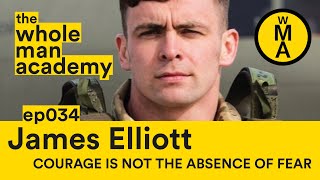
James Elliott, a former British Army airborne soldier, explains how courage means acting despite fear, not without it. He shares his own mental health struggles around 2015 and now coaches others using the GROW model, breathing techniques, and mindfulness to build resilience through sleep, exercise, and routine.
So this is the whole Man Academy podcast. It's about helping guys do life better. My guest today is James Elliott. Amongst other things, James is a military mental resilience coach. The other cool things is he's going to talk about two Guinness World Records. He's got a popular IGTV channel. He's also a dad. James, welcome to the whole Man Academy podcast.
Thank you very much for having me. Thank you.
It's a pleasure. As soon as we said about podcasts, I wrote a long list of people that we wanted on it. And you were on that list immediately after watching your IGTVs.
Yeah. I've been so lucky in some of the guests that I've approached and have said yes or have approached me for highlights. For me, probably Lauren Rolls, who I've worked with quite a bit now. She's just unbelievable to have on. She's the Paralympic athlete, world champion rower, just again, one of those amazing people. And having, like I said, worked with Lauren, one of the amazing things about her and the rest of the team, the pineapple growing team, is there that kind of infectious optimism. So when you're around people like that, just all of them, like a room full of extreme high achievers, like, it occurred to me when I was setting up my little laptop that I was in a room full of the world's best. Like, how many times in your life will you ever have that opportunity to say, I'm sat in a room not with just the world best, but the world best group of them? Yeah, these are. All of them have got gold medals in some aspect of sport. So that was amazing. So she's always great to talk to. Amazing. Dean Stott was really good. So ex special boat service guy who cycled from the most southern point in Argentina to the most northern point in the Americas in like 99 days.
As you do.
As you do. I'm not going to say navy are crap with a map, but that is proper lost. If you are cycling that distance, you are properly lost. And he'll fill me in for that. And yeah, and so then we. And like, he's got this amazing story that he basically got a phone call from like Prince Harry, like four days from the end, saying, oh, can you come to my wedding? He's like, I want this. I'm on my bike. And like, by the time he finishes, it's like two days to get. And he's. He had to like get measured for a tuft, like before he got on the plane. And his wife's then in the UK getting A tux for him. Like lands, sleeps, gets in a tux, goes to the wedding. So, like, you know, he was great, great to have on. Eddie Cohen was pretty, pretty cool. He's ex, so 19, which is armed response police officer. He now owns a very successful BJJ gym where he trains with UFC fighters. So he does a lot of that high performance coaching stuff as well. So that was really, really interesting. Yeah, like some great, great people. I've got some, some really exciting ones coming up. We've got Matt Jas, so the Exeter Chiefs winger and now Robbie coach. I've got him coming on. I've got Rebecca Mason tonight from Hunted. Do you remember Hunted?
Yeah.
We go chasing celebrities down.
Love that program.
Yeah, yeah, so she's on it, she's on it tonight. So, yeah, I've done loads of like, really, really exciting and I've got like so many. I've got some professional boxer lined up that I know people are going to love.
Well, that's, that's what I love about how easy it is now to connect with people around the world. And you know, like it or not, with what lockdown has given a lot of people is the chance to realize that, you know, you, you haven't got to be constricted by your, your area. I mean, for us doing podcasts, you can have guys in California on. And as you know, it hasn't got to be a big, a big production because you can just jump on Instagram bang, and you're. And you're on.
Yeah. And that's what I do. I put it on Instagram live so that it, so that there's no editing of it, there's no trimming of the fat. It's, it's. This is what happened. We had this conversation and if it goes. And I do find myself trying to like push it back in it in a certain direction and you know, trying to then recover it. So.
Yeah.
Yeah, it is interesting. So when it's live, if it goes real.
Yeah, we're the same. I'm very much. I'm not, you know, apart from the, the beginning, the end, just very trimming it the rest of it. Unless someone needed to like go off to go to loo, I'm like, I'm sorry, but it's staying in. So that's. It's real life. Well, first question is for those that, including me, really, I have a rough understanding, but can you explain what an airborne soldier is and like your background from that?
Okay, cool. So I joined the army in 2006 and I went to a regiment called 7 Power RHA and 7 Power RHA provide close gunnery support and specifically the troop that I was in, provide close gunnery support to the three Power Battle Group. So effectively guns and aircraft and, and missiles and rockets all get sort of would be called on a battlefield or all sort of come under that umbrella of gunnery. And so, yeah, so my job was I was attached to three Power Battle Group, to the three Power Sea company where I was embedded as what's called a fire support team, where our job would be to call those assets. So that job for me was from 2006 to 2016, which covered that sort of heroic period, the Afghanistan period. And then from there I was really, really lucky. I'd had like a rough few, like, you know, a bit of a tough time of it from sort of 2015 to end of 2016 where you know, I had real issues with my mental health, had real issues with stuff going on at home, the falling, absolute falling apart my marriage and then got really fighting to sort of see my daughter going in and out of court, going through that really painful journey and having like battles with my own mental health from childhood trauma from trauma from, you know, I've been standing the stress of my marriage falling apart and then, yeah, 2016. So I've been sort of partially sort of removed from work really because I was no use to man or beast. And I began strength conditioning training at a national league rugby team at Colchester and wound up actually coaching loads of lads and coaching them and I was a physical training instructor. So I was taking them through. You know, there's guys now who play for exit, chiefs who play who just gone to corners, pirates who I was teaching deadlifting to and now they're professional rugby players. So like the standard and the keenness and the ability of these guys was just again infectious. They were brilliant. They were so exciting to be around. And then we went from there. The RAF turned around to 16 Aerosop again and said we can no longer man or your parachute. You know, we're sorry, sorry Paris, but that's it, you know, we can't keep or the amount of instructors that you need for parachuting. And so 16 Air Assault Brigade turn around and said, tough. Like we are going to pick guys from all over the various para airborne units and then we're going to send them down. And I was picked. So eight of us went down and we became the first ever army parachute jumping instructors which was so cool. Like we became tactical parachute instructors at Bryce Norton and there was eight of Us and we went down and it was intense, course, but there was like. Then we were like parachuting during. In the morning and like, you know, and playing rugby all afternoon. It was, it was, it was fantastic. So I went from sort of this, from the free power battle group in a fire support team, then went to Bryce Norton to go to tactical parachute instructor. And then around sort of the end of 2017, I was realizing this amazing effect that was having on the young lads and how coaching them and mentoring them and how actually you could step away from that instructor role and actually doing a lot about performance optimization with breathing techniques, understanding what fear was, emotional control, positive imagery.
Yeah.
And all these brilliant effects you could have on them. Young lads who've never been on an aircraft before. And then the first time they're on an aircraft, they've got me like throwing them out a bit like that, you know, that's a bad day in the office. Yeah, that's scary. And I mean, I get it, I've been there. And. And so I actually started doing. And so I sort of got more involved in mental health stuff and then. And then, yeah, I did Samaritan's courses, including like grief management and counseling and conversations with vulnerable people, Suicide awareness, did more and more on that front. And then I wound up writing an email to the army headquarters and saying, listen, listening news. I think, I think we're doing this mental health thing wrong. I think that. I think it should be lads looking after lads. I think it should be. We should be teaching each other, should be peer to peer support and you have to excuse me. And it is something that has. I'm gonna have to get a grip of. But I say lads and I mean everybody. It's a terrible mannerism of mine because it's 16 hour assault brigade. I think there's about five girls that I'd ever seen in there. So we don't. So everything is always lads and gents and I know I'm stepping outside of that world now, so apologies to anybody, please. But by lads, I mean everyone and I mean no disrespect. So, yeah, we had, we should be looking after each other better. And they went, I said, we should be teaching the skills of mental resiliency and well being. And they went, you got a point there. Airborne, come on then. And so I went from there. And then there's this sort of combat role, fall screw parachuting instructor, maroon beret in army hq, like hasn't got a clue. And it's sort of thrown into this mix And I was teamed up with this very, very senior guy and told his mentor was in his training program, what do you think? And sort of, I mean he was brilliant and we went through fair phases of it and he was really, you know, all over the delivery of it and then wound up delivering this, me and him together to the commander of the field army and the chief of general staff. So like you know, the most senior people in the army and I went this is fantastic. This now goes everywhere. And by everywhere like I was delivering everywhere, you know, all around the country. I went to Estonia to deliver to the troops there, you know, like I was to put everywhere to coach resiliency. So I had like a day long package with coaching and I have loads of people approach me afterwards and do individual one on one stuff with them. And yeah, and I really sort of cut my teeth and I did all of these qualifications. So I did, you know my, I did my level three in sports psychology, my level five coaching and mentoring. I did all of my mental health awareness, military mental health awareness and yeah, got all this got you know, fully coiled up and done and I mean even now I'm nearing the end of my advanced psychology course and so I've been you know getting hammered with it and it's been brilliant but in January of this year for a whole multitude of reasons but I, you know I said this has been probably one of the most amazing experiences of my life and incredible to have worked with so many like genuinely outstanding young soldiers and to meet so many brilliant people. But it is time in theory I've got another 10 years left in the military and I need to progress as a person and in my life and actually I'm not entirely sure that that within the army is that place. So thank you so much and I will never ever and one of the things that I say before anyone who's, who's ex military comes on my insta live is I will not have anything negative said about the army on that or military in general but the army because it is for me it is an absolutely outstanding institution. And yeah, and so I said thank you very much, thank you very much for your time but some for me to go and, and sort of here I am. Yeah on my way out.
And that's the thing for when you say about you won't have anything bad said about military. I always wonder for unless you've been in it and can understand what it's like, I guess it is always hard to actually comment on it. And it also takes me back to, you know, ultimately the military, obviously, depending on what, what role you're in, but often it could be that you give your life for the military and, you know, to state the obvious, the ultimate sacrifice. And for you, when you were going into military, how would you, how would you feel about that, you know, if you're in that situation?
I think there was a point when I was 18 years old, when you're writing your will. Yeah. That's kind of, that's kind of a moment where you. But you're also filled with this self confidence and this self belief. There's this huge self efficacy and, you know, every regiment is extremely proud of who and what they are and as they should be. And you've almost got this sense of invincibility about you, you know, where. I mean, I remember my first time ever of like, you know, once I was sort of in the army of being injured and it's sort of like being like coming down, back down to earth with a bump. Like, I didn't know. It was almost like, I can't be injured and sort of going to Afghanistan. I guess it's something that's in the back of your mind and it is. And like, it be like, it always confuses me when people talk about Afghanistan, they don't talk about how scary it was. It was, it was scary, right? Like, I don't want to die. And lads were like, we're all the same. And people who say that they're not, I'm just, I'm just so aware that they're not telling the truth because I was there.
Yeah.
And that's like, you can be scared and still do. The thing that doesn't, like, courage is not the absence of fear. Right. Courage is saying that there is fear and you were shitting it, but you went and you did it anyway. Like, when we talk about the D Day landings, you think those guys weren't scared? You think those guys weren't throwing up into their helmets? Think those guys weren't wetting their pants? Yeah, of course, they were absolutely horrendous. But they had it about them to say, we're going to do this anyway. And that's, that's what courage is. If you're in Afghanistan and those things are going on around you and you are not scared. You're either an idiot or a genuine psychopath. But actually, as much as people like to think, oh, psycho, as you look at studies, it's less than like, 1%. So, no, the chances are that they're not. And they were Absolutely shitting it. Or they were just too stupid to understand what was going on around them. So I never buy that when people say they weren't scared or whatever, but there is a very interesting psychological effect that happens when, you know, often here, when you often hear people talk about being in a contact with the enemy. They say, it's like my training took over well, and then they sort of come back to reality. Well, actually, fascinatingly, that is. That is exactly what's happened. So what's happened is, there you are, you're on patrol, you're in a vehicle, you're on a patrol, and a bullet goes off over the top of your head. Now, what happens then is to the amygdala, the fear part of the brain goes, oh, my God. Fear, like that, right? So the limbic system, and it activates something called the hypothalamus, which ties into the bottom of the cortex. The bottom of the brain, sorry, and at the very top of the spine, and that instigates instantly your sympathetic nervous system. So we have this huge rush of adrenaline gas tightening up of the body, gritting of teeth. So there's this huge moment of panic. And then the amygdala turns to the perietal part of the brain, which is sort of cognitive memory. Towards the back of the brain it goes, what do we do? Because we always turn sort of learned experiences to tell us what we need to do next and try and reference it to what we know. So we turn to this learned experience, this knowledge, this memory part of the brain. What do we do? And it goes, safety catch, change lever side, cop the weapon, do what your training has told you to do. Because the only previous experience we've had to this has been, you know, in the, in the, in the mountains of Brecon or in the marshy fields of Otterburn, or just in the horrendousness of souls. We play. That's all that we know. So we go like that. What do we do when you go safety catching of a psychotic weapon? Go for your micromanship principles, do this, do that. And that takes your fear part talking directly to your cognitive, your cognitive memory part and actually the prefrontal cortex, which are reasoning and our logic and our here in the present moment right now, that's almost got nothing to do with it. This conversation is being had at the back of our brain and when there's nothing going on almost in the prefrontal cortex, just, you know, a little bit of activation of motor neurons. But aside from that, like, it's not that doesn't have control at the moment.
Have you switched on to. Is that. That you kind of switched on to auto.
Exactly that. So it is that, like autopilot mode. So then once the threat is gone and the amygdala can sort of calm down to this fear center, can calm down, and it relinquishes control of the hypothalamus, then we then begin to calm down, begin to regulate our heart rate, regulate our breathing. Our pupils no longer dilate, come more focused, and then we let that breathe. And then people go, what just happened?
What just happened?
What was that? And yeah, it's because that control is taken away from that reasoning and that logic and goes to that. What is my learned behavior? Like, what do I know? How do I survive this? What do I do to survive? So it is. It is incredible. And that is what happens. That's how by. In the British army, when you talk about, you know, you march it up and down drill squares, or you back out on exercise and you're out on exercise again, you're out on exercise again. It is to embed those behaviors in that perietal part of your brain. So when soldiers going, I've absolutely had enough of this training, that's when you should do it one more time, just to make sure it's embedded in that, so that when the moment comes, they don't have to. They don't have to consciously register what it is they need to do. They're capable of doing it, much like athletes.
Yeah.
So I'm working a lot with athletes at the moment, from rugby players to Paralympians, and it's the same thing. Like, they get drilled and drilled and drilled and drilled and drilled. So what they have to do isn't even secondary nature. It's primary nature. Like, that is what they look to do. They don't have an incident and then look to do it. They look to do that first before any incident, for anything. They're looking for their fins, they're looking for their boat, they're looking for their. Their breathing. They're looking for what they need to do to succeed. And that. That's. I mean, it's exactly the same process when that. When that start line, when that boom happens. You think of it as. Remember the movie man on Fire? Yeah, man on Fire. When. When he. When he's. When he's standing there and he's. And he's firing the pistol off and the little girl's getting in and he's trying to get it so that it's that instant reaction because she hears that and actually her fear goes, what do we do? And it turns his parents. And this is all. I mean we flip between departments at like 0.013 of a second. So it flits from this fear to this, the gunshot to the cognitive memory. So she is literally hitting that water before that sound wave is even traveled out of the arena. Boom. It hits her ear, she reacts. Boom. She's straight into it. And that's what he's trying to achieve. And that's exactly the same in the military. That's exactly the same with all athletes.
It is fascinating. The more I learn about it, the more I know how much I don't know. And you're trying to kind of just get, get a grasp on the. Even the basics to start with and then go deeper on each. And I was just wondering, with yourself, with. For someone watching or listening. And primarily it's guys. I think 75% of the people watching are the guys who are interested in doing life better. If you were doing kind of personal coaching with a guy, where would you start with him? Trying to help him be or become more resilient in life?
So firstly, I start with growth with the grow model. So I think it's really, really important that before we go into the smart principles and we get into the real weeds of what it means to be able to set goals and decide where it is we want to go with our lives, we need to grow, which is goals. And then, ah. And I spend the majority of my time on our. Which is reality. What is the reality of your situation? Like who are you really? Because it's so easy to have these dreams, but that's not the reality of your situation. And let's actually embrace that reality. Let's look at our shortcomings. Positive psychology. There is absolutely a place, and I teach a lot of positive psychology. There's absolutely a place for positive psychology, but there's also a place for catastrophic reality. Like what is the score here? Because once we know what the score is, once we've got a start point, once we've got a base level, we can build on that, we can push further. And this great place to launch from. You can't launch from a lie. Okay? You are not the best in the world at this. You are not the funniest guy, the best looking guy. You are not the best boxer, the best sprinter, the best computer designer. I don't know, whatever it is, you are not the best in the world at that. Okay? So let's bring it down to reality. Where are we? Okay, cool. Because when we know where we are, we can do our own iw so what are our obstacles? What's going to get in? What's going to get in the way? How do we work on that? And then w. And actually, that grow model is very, very difficult for a lot of people because actually looking inwardly and embracing us for our faults is very, very difficult. And it's. And that's, you know, that's a bit of pill. Like, I'm sure you seem like you've got your stuff together, like you have to look inwardly every now and then. Inwardly looking in that. In that very, very ugly mirror is a very, very difficult thing to do. But we all have to do it. There's things that I'm. I'm really, really bad at. You know, I get. I get. I get so wound up. For example, I get really wound up when I have to repeat myself sort of more than two times to somebody. Like, and why is that? And then I sort of. I then have to look in with you and have to go, well, actually, you know, an element of that is because of childhood trauma. And then am I then utilizing. I'm getting angry. So I'm choosing to get angry because it's easier for me to get angry than it is for me to look inward and say, say that's your inner child's lack of love and nurturing. And that's why you're now getting frustrated with this person, because somebody got frustrated with you, and you're just using that. You're just using that as an excuse to get angry with that person. So actually look inwardly, and it's difficult and it's ugly and it's painful to do. But, yeah, yeah, absolutely. So I start with a grow, and once I've sort of got a person to a point where we know where they are, we've identified their goals. Okay, cool. Right. Well, let's talk about how we're going to get there. Because for me, goal setting is the ultimate part of psychology. Right? That's me, like everything else, really. And there'll be, like, psychologists now, like, spitting out their herbal teas everywhere. But, like, for me, goal setting is the integral part of psychology. Okay? We are human beings. We absolutely desire purpose. And if our why is strong enough, if what we want to do is strong enough, everything else becomes irrelevant. So that purpose and designing that purpose and understanding how we're going to get to that purpose is absolutely key. Now, there are several beautiful theories why this is why this is okay. So from a neuroscience perspective, we actually get a huge rush of dopamine in anticipation of reward than we do from the actual reward. So working towards that gold medal gives us far more of a greater dopamine release than actually receiving the medal ever will. So there's far more in the process of achievement than there is in the actual achievement. In fact, if you've achieved and you've grown and you've learned and you've developed, you would have had a huge amount of dopamine release to the point where at the end, it doesn't really matter if you pass or fail. Now, obviously, I don't teach that, like, we're all here to win. Right. But actually, by the time you get to the end, because you've put so much into the process, because you're there to win, you put so much into that process that, I mean, I know. I know if I've been successful, have I. Have I made that person more mentally resilient? Yes, absolutely. Because we decided we were going to win. And even if they don't win, they have learned so much. And actually, that process, then. Because it doesn't matter if you win or lose, add to the beauty of losing, because you learn more if you can fully commit to when you get to the end result. Actually, it's about this journey. It's not about the fact that I lost, because actually, what did I learn?
What.
What has. I had a great character arc. Look at it like Game of Thrones in the end, the Game of Thrones, the Hound dies, right? Spoiler alert. Sorry, everybody. But, like, we still love him as a character, right? Because his character arc. Yeah, because we admittedly, he never really was a bad guy, but we perceived him as a bad guy, Right? And actually, they got to grow, and he sort of fell in love in it in a very sort of paternal way with Arya Stark. And he became, like, a proper good guy, like, by the end of it. And even though he dies at the end, his is still a great character. Like, that whole series was all about character arcs. Okay. Same as. Same as Tyrion. Tyrion Lannister. What a great character arc he had. It's about the process. Although he won at the end, so I'll focus on the Hound. But, like, the Hound obviously died at the end, but. But, like, it's about that journey, right? It's about that process, and it's the same for everybody. It's about, are you growing and are you developing? So. So what I do is we go through the grow, and then we Identify where that person, what they want to do, why they come to me and. Okay, cool. And remember like we talked about earlier on, that a person might come to me and say they want to change. But. But that doesn't mean that they actually want to change. They just might want to hear my opinion come out of that. Sorry, their opinion come out of my mouth. So actually someone comes to me, have to sort of get them to look inwardly and just get them to understand that this is not like I'm not going to agree with you on a vast majority of things, but it's not about my agreement, it's about engagement. So let's talk about, let's look at your situation and how can you improve as a sportsman, as an athlete, as an individual, what is it you want to do? And then, yeah, so then we've identified that and then we start working on those goals and throughout on that journey is then when I teach more about the resiliency and I teach more about the well being. So whether or not I'm talking about emotional control, I'm talking about the role of the amygdala, the limbic system, hypothalamic domination, and I'm talking about the role of the prefrontal cortex and the VMPFC and the dlpfc. I'm talking about all these functions of the brain or whether or not I'm talking about positive imagery and let's start visualizing our success and let's start visualizing where we want to go and how we're going to make that happen, or whether or not talking about mindfulness and talk about breathing techniques to keep them in the present moment, to focus on what's going on right now, or whether or not I'm just simply talking to them about what is the next goal, what is the next step, how can we just keep moving? Okay, that goal seems quite far away. Let's break that down into even smaller steps. Okay. What time are you getting up in the morning? What time is your first cup of coffee? What time are you going to the loo? What time are you drinking? Like as mad as it seems.
Chunk it down, break it.
That's how small I will go. You know, I will break it down into minutes of the morning, particularly on competition days. Let's break it down to minutes. Let's get that going. Let's get that minute going. Let's push forward with that. And that's what I do. So I very much take a holistic approach to my teaching of mental resiliency and well being. In which I bring it in the life and I bring it into them. And let's talk about steps forward. And it's always about steps forward.
You said something there which I think is kind of all encompassing, looking at everything under the umbrella of your, you know, your health, you know, it's your fitness, it's your mindset. And I know you mentioned something about kind of mindfulness and meditation and I know I've been guilty of it in the past, prior to me becoming mildly enlightened and actually maybe growing up a bit of being like, fuck that. I'm not, I'm not interested in meditation and I'm not lighting candles and incense and actually I've become to realize how you've got to find what works for you. But it does work. I just wonder your thoughts on how it works for you.
So I was in exactly the same boat as you, right. And what I'm going to do is when we finish, I'm giving the details this guy called Pat Burgess, who is just unbelievable. Guy's just got an MBE because he's brought mindfulness into the British Army. So British guys, we won't talk about emotions, we won't talk about feelings. Now he's got groups of blokes like sitting there meditating. Guy's incredible. Like, just again, like, I'm so lucky to have so many like infectious people in my life with this infectious optimism. He has definitely got that. And yeah, and he's, he's brilliant. So anyway, he sort of, he gave me more of a push towards mindfulness. So I sat about nearly two years ago now and I sat and I watched one of his talks and we're not doing enough about mindfulness and mental resiliency. And you run a course on like the Defense Learning Environment, which is like an online course, and recommended all these books and I started reading all these books and doing his online courses and I was like, oh my God. Like, this is, this is definitely really interesting. You know, I definitely started practicing it more and it sort of reminded me of when I was boxing. We used to do this thing called the bubble of success, right. So you just get in the ring and you walk around the ring and then, and then you eventually you're told to stand still and close your eyes and then conscious your. And then concentrate your conscious mind solely on your breathing. Just breathing like nothing else you think about anything else. We're not getting angry, we're not getting wind up. We're just bringing it back to breathing. Okay? And then once you like for two Minutes, concentrated on the breathing. We're then going to do the bubble, and you're inside this bubble. And inside this bubble, you are undefeatable. Like, you are the king. You are that. You own this space, and everything within this space belongs to you. And so if anything, like, an opponent steps into your bubble, but there's no way that he can beat you, you can't be beaten because that is your bubble. And whether that's in the office or whether that's a book or whether that's a test or whether that's your driving test, yeah, you are in. And whatever is inside of this bubble belongs to you because that is your bubble. And your bubble is your arms, arm span. And so you're inside the ring and you're breathing. And now you're in your bubble right now. Open your eyes, keep that bubble, walk around, own the space of this ring, because tomorrow you are in here and you are fighting. And. And so when I was doing all this mindfulness stuff because of Pat giving me a nudge toward it, I realized shit. Like, I've been doing this bubble of success thing for so long, and this is just a bastardized version of mindfulness. So now I've started using it and. Yeah. And incredible. And so, yeah, I was of that opinion. I imagined that mindfulness was going to mean I had to put on a pair of gymshark shorts and light some incense candles, sit in a lot of this position and talk about spirituality. Yeah, exactly. But that's not what it means at all. So it's been. It's been a really interesting journey with mindfulness. And, yeah, I've definitely really, really enjoyed it. I'm a big advocate of it now. And I'll get my words up. I'm a big advocate of it now. Like, I really love it.
I think that's important because to start the obvious, you're, you know, a guy who's, you know, live the life and is a soldier and is strong and physically strong and mentally strong and being able to say, you know what, I'm going to apportion some of my day, or it doesn't necessarily have to be every day to some of mindfulness and meditation, I think helps other people to go, all right, well, maybe I'll give that a go.
Yeah. Well, there's a really fascinating study done into mindfulness because I always deal in tangible results. That's why, you know, I often sort of slate spirituality in a way, and people have a faith, and I have a faith. I was raised as a Roman Catholic But I'm a big fan of tangible results. So we're talking about mindfulness. Like, is it a little bit wafty or is there actually something to it? And so they had the Dalai Lama in for a series of tests, and what they found is that through continued practicing of mindfulness, that there was an increase in neuroplasticity. So neuroplasticity is the brain's ability to sort of rewire itself to sort of. It's how we rethink. So neuroplasticity can be created in a series of environments. Okay, so, for example, cognitive dissonance, if you disagree with yourself. So if you're. I don't know, it's how we learn everything. Okay, so like kids, we create cognitive dissonance with kids all the time, right? Georgie, don't touch that. It's hot. She tries to touch it. She gets a smack on the back of the hand when she. It's free. Or she touches it and she burns her hand. Right? So she is now disagreeing with her own behavior. She's like, I shouldn't have touched that. It's really hot. That really hurts. Therefore, cognitive dissonance happens a bit in neuroplasticity, so that she now knows that that new pattern is there in her brain. It looks like a little lightning bolt pattern happening in her brain. So next time she sees a hot kettle, she now knows, don't touch that. That's gonna hurt.
Yeah.
So actually, through mindfulness meditation, they found there was a massive increase in neuroplasticity, which meant. Which meant we could actually learn to manage. Manage the emotions, manage stress, manage external stimuli, stress as well. Far better. So something that stresses you out, your mindfulness has been going. You've got that neuroplasticity. Actually, that's not a. That's. That's not. That's not a showstopper for you anymore. You can work your way around it. You can. You can use your cognitive. Cognitive thought to work your way around it. And actually, that. That comes from mindfulness. That comes from the Dalai Lama, and that comes from a huge amount of practice of mindfulness. So there's absolutely tangible results. And we're talking about changing the way that the brain operates. We're talking about taking power away from the amygdala, from this emotional center and giving it to your prefrontal cortex, giving it to your reasoning and your logic, and that's what we're talking about. So it is absolutely essential that people begin to get mindfulness training and they train themselves and the beauty of it is that it's not like a complicated lesson to get. It's, it's very simple practice. It's actually just repetition, repetition, repetition of it. And definitely now, like I'm saying, and I'm thinking I need to do more of it. Yeah, I need to do more of it now, like I'm preaching to everybody, like, do your mindfulness and thinking. It's been nearly a week since I've actually sat and I've properly, properly meditated. So yeah, I'm absolutely going to do it.
Yeah, No, I think that's echoes what a lot of kind of, you know, we speak to different people. I'm very much about having a good morning routine to get your, get your day going, you know, if that. I was in the gym by half past five this morning to make sure I've done something. Even if it's only 20 minutes, it's still something.
Sorry.
All right. It's probably for me and one of the, when you talk about kind of the physicality of things, one of the questions we had when we asked people if they want to ask you anything on here was about sas, who dares wins. And I know a lot of that. You know, I find it so interesting watching that because you're trying to listen to the guys who are imparting their knowledge on what they've learned in Forces onto normal people, as it were. I just wanted for yourself, what do you watch the show and if so, kind of watch what do you think of it?
So I've watched the show. Do you know, it's great telly. Like that, that is the whole point of it is great telly. Is that what happens on Special Forces selection? Like. No, it's a week of filming and the selection process is just over six months long. So like. And you know, like, I don't ever remember any of the staff clapping. Like, well done. Because I did like I jumped off a 10 meter diving board. Like no one was clapping. Definitely as well. Well, obviously I didn't pass my section, but, but the staff, the staff never once shouted at me. They never once shouted at anybody. That's so, so that's like a takeaway from the thing as well. That's always, it's always, it's just strange to see them shout for me because they were just so calm and collected. They just go, right, your next tasking is to do this. When people go, stuff I can't. They go, okay, mate, not to worry, just take your kit off and we've got some brew kit over there, there's nice hot coffee. I think there's some pasta and meatballs in that container over there. And then you're all there, like, looking at him. Like, what? Hang on. Pasta and meatballs. Is it so. Yeah, it's interesting. It's great telly. And actually, I think they make some really, really interesting and exciting and points. It's like a lot of reality tv. It's about holding a mirror up, I think, to society. So it's taken quite a rigorous sort of selection of these guys to get them in. Obviously, you can tell that a lot of TV executives are sat around a table looking at their photos, you know, like, very X Factory.
Right. Who are the characters?
Yeah, who are the characters?
Yeah.
What's the backstory?
Who's gonna unravel?
Who's gonna unravel, but in a safe way, you know, because, you know, we talk about stress, allostasis. Allostatic overload. We don't want to overload. We don't want to cause trauma to these people, but we want to push them to a point where they've become a little bit vulnerable. Yeah. And. And. And so it makes. It makes good telly. It does make good telly, for sure. And I like. I like the message of it. The message of it is always. It's always retribution. There's always. You know, everyone's story is about achieving and making something a little bit more of themselves because of past trauma, past experience, whatever that they feel has got in the way. So it's about. It's almost like in that sort of week, you get to see a mini little character arc. A friend of mine was on it, Mike Mazey, who I didn't become friends with till after the show. And, like, he's got a great story, and, like, he's a really interesting guy. And so it is a great show. It's a great bit of telly. And I think that particularly some of the instructors and some of the people that come off the back of that show are great advocates for what they do.
Yeah, it's one of those programs where, you know, I love the outdoors and I love obstacle course racing and, you know, doing all this stuff. And I was at the end of each episode, say to Emma, I'd like to go on that. And she's like, why don't you enter? And I'm like, got stuff on. So I think I'd be too old now. Now I'm nearly. I'll be 42 in two weeks. And I realized usually they're always kind of, you know, that's. That's the usually the oldest person on.
There or something like that guy on there. And his sort of video went viral and he was on there because his son was killed in a blue and blue accident in. And so I think everyone sort of knows of that video. Yeah, the guy's quite an old man. And they say, like, what are you doing here? And in a way, it's his. It was his grieving process still, wasn't it? Go through there to hold the same sort of socks as some would have held or to do the same sort of things that some would have had to have done. So it's definitely a. I mean, it's brilliant for that, for character art, for retribution, for grief, for, you know, and you see some real beautiful examples of humanity on it as a show.
No, it's. Yeah, it's certainly one of those that I know. You know, the guys that obviously are in it are now become kind of celebrities on Instagram and they're writing books and doing tours and stuff. So certainly at some point they're on. On our list of people that we think would be great to come on here and, you know, just impart some. We always call it kind of. What's the word? Like, skills to navigate life and, you know, to state the obvious. All you guys have needed to have a different level of resilience. Probably to most of us that our resilience is that your train is late and you're not going to be upset by it or something like that in the morning.
See, one of the main things that I like with my clients and stuff, and we talk about trauma and we talk about. And I wouldn't say that I'm casual, but I'm very open. I'm very honest with people that I work with. They know, you know, as much about my past as they need to. And, you know, and they'll say, how come I draw? You know, I feel that I don't want to talk about my trauma with someone like you, Jim, because I don't want it to. And this is always sort of in the first thing because I make sure I get this point across very early doors. But, you know, I don't want to talk about it in front of you because I feel a bit embarrassed. Like my trauma compare. But so here's the analogy that I use that a person can drown in a paddling pool or person can drown in an ocean. The size of the body of water is irrelevant. What matters is the fact that somebody is drowning. Here's the thing, because you shouldn't, you can't really jump in, particularly if someone's drowning in an ocean, you can't jump in and save that person. You have to teach them how to swim. So actually, this is again, a beautiful analogy for mental health, is that it's irrelevant if it's. You're getting stressed and you get trauma, you're getting angry because your train is late, but if you're getting stressed, you're getting angry because you've had some hideous childhood abuse. What matters is that you are struggling. And the only way that you can really help somebody truly, is by teaching them, because you yourself have had to swim at some point because you yourself have been drowning and somebody's got in and taught you how to swim. So when these people are struggling, like, it works because you've been there and you can get in the water with them and teach them how to swim and teach them how to. Because they can't keep relying on you to jump in and save them every time. They're just going to drag you down. You have to teach people how to swim and how they can have the tool set, how they can have the skill set to learn to swim and keep themselves afloat. That's the key. So I would always say never, ever. My main points, and when we talk about one of the issues in modern mental health is the fact that a lot of people fancy themselves as experts or leads or whatever on the situation. But I always think that you should never compare your trauma to anybody else's, because everything is subjective and everything is perspective. And that is one of the issues that can arise from. If you're going to do the. Very much the bullets and biceps thing is it can actually prevent people from wanting to come forward and talk about their issues and talk about their problems, because they think, I can't talk to that guy about my stress because my car keeps breaking down or my train is late or relationship issues because, like, they're so superhuman that they can't relate to me and I can't relate to them. I'm just going to embarrass myself. And actually, that's when we talk about breaking that stigma about mental health. I think that is a massive issue in the breaking of that stigma is the fact that people don't want to come forward, not because they want to be perceived as weak, but because they perceive everyone else as being so strong and so invulnerable and so superhuman. And actually we need to break that barrier down and whilst get everyone to talk about it and step away from this notion that someone else's trauma is more serious than someone else's trauma. Therefore, that person is somehow more masculine or somehow more powerful and actually somehow more important and need saving first. You're drowning. You're drowning.
That's a really good point. Because in the last week we ran because it was Men's Health Week, and I said the important thing to remember there was that it was Men's Health Week, not mental Health week. So we asked guys to talk about their health. So again, it could be talk about their fitness, their sleep, have they had an operation or a disease or something that they've had to kind of fight. And it was just interesting having a real mixture of guys all talking about what's been important to them and as you say, remembering that each one of those has faced challenges. But at the time, it was very important to that guy. So you can't say, oh, well, actually, I had more trauma than you. Thanks very much. It's not a Top Trump's game. And that leads me on to one of the things I read was don't fear age, fear mediocrity, fear laziness. And I thought that was great because no one wants to get well, as far as I'm concerned. I don't think anybody wants to get to the end of their life and say, how was it? And you say, I was mediocre.
Yeah.
And I just wanted. For yourself, like, if. If at the moment someone said, you know, how are you avoiding having a mediocre life and where do you want it to go? What would your answer be to that?
I'm never. I never stop learning. I can never stop reading, never stop growing, never stop identifying your next step. I completely agree. Don't fear age, fear mediocrity. And you're only as young as a person that you feel. And I think that. I think I'm in the prime of my life right now. So I'm very healthy, I'm very fit, I'm very strong. I'm learning all the time. And actually, I want to maintain this level of learning because it excites me.
Yeah.
What's going to happen with my life? Because keep learning. Not only because when you learn, you achieve. And if you achieve, then you become more likely to re. Achieve and you can get momentum in your life. But also, learning and reading means you're encouraging that neuroplasticity in your brain again. And if you're exercising, you're allowing blood flow to the oxygen. Oxygen to flow into the brain. So Again, you're encouraging that neuroplasticity. So your brain is constantly staying young, staying very moldable, which is brilliant. And just that life is for living. And this conversation, because in the army, particularly like old age is something that seems to happen a lot younger in the army. So you are considered an old man in the army once you get to like your mid-30s. But I would say that actually you're not an old man until you're in your 70s, really. So I would say from 0 to 18 you're a child. From 18 to sort of early 30s you're a young man. And from sort of early 30s to 70s you are a man. And then sort of 70s onwards you are becoming an older man. So actually like, why are we not. We get. Keep going, like, keep grafting every day, Keep learning, keep reading, keep exercising, keep sleeping, keep drinking your water, eating your healthy foods. Do things for love, do things for enjoyment, do things for pleasure. Go on that day, Go to that restaurant, go to that place that you've never been before. Take that person that you love with them. Take your children, take your wife, take your friends. Tell these people that you love them. Spend the time with the people that you love. Be encouraging and be loving of other people. The most important thing you can be is nurture it. Nurture everybody around you. Become that person who is known for nurturing. Allow your inner child to speak like, don't suppress that inner person who you are. Like, be that inner person. Be excited to meet people. Be excited by new things. Be excited. A negative person has a problem for every solution. Don't be that person. Be excited. Be brilliant. Be fantastic. Be fun. Be caring. Be nurturing. Be loving. Offer yourself to people. Learn to say yes far more than you say no. Sleep well. Make sure you get into a clean made bed every night. And if you're not getting into a clean made bed, make sure it's a sleeping bag and you are somewhere outside enjoying yourself. Have these adventures in your life because. Because you don't want to sit there. I explain to people and I'm not a massive fan of motivating people because I think it's your responsibility to motivate yourself. And actually, if you rely on me to provide you with inspiration and motivation, the moment that I am gone, the moment that that stimuli is gone, so does the motivation. So actually people need to motivate themselves. I'm a big fan of very intrinsically motivated people, which is.
Why is that Jocko Willink like extreme ownership?
Yeah, yeah. I just think that. I think the issue is that I create. Can you run a risk of creating independency?
Yeah.
So I don't want people to create. I want people to be able to do it. I'm almost like the anti coach because I coach people where they don't need me anymore. That's what I want to do. That's what I aim to do. So that's. I don't. I'm not. I'm not a herbalife product. I'm not creating a dependency on me. But you have to keep taking me, otherwise you're going to lose everything that you've got. I'm not that. I'm an educator. So here's all my mentoring. Here's everything that I know. Like, use me as a buffet and just pick up what you need and let's go. And so I want to keep people excited. I'll keep them happy and keep them young. And I always say to people that. Imagine that when you. That you are. You are on your deathbed, okay? You're one of the few fortunate people who gets that opportunity. And they're laid in bed and they are surrounded by the ghosts of the dreams that they gave up on. And you have to explain to each one of those dreams why it is you gave up on them. And look them in the eye and explain why you didn't learn the guitar. Explain to them why is you didn't ask that girl on a date. Explain to them why you didn't. That thing that you were so super talented at that you never pursued. Why, like, you have to now explain to each one of these ghosts. You have to. You have to say that to them. And actually that, like, how does that make you feel? And they said, well, you know, I'd be devoted. I said, well, you can. You can avoid that devastating feeling. You don't have to be an old ill person laid in your bed upset. Because you've got to explain to these dreams. Because the whole idea is that you have no ghosts around your bed. And so actually, you're laid in your bed. You look around and there's no ghost. There's just family and friends and loved ones and great experiences. And that's the idea, right?
Yeah, I totally agree. I think it's, you know, from doing either life coaching or even just when you're talking to people saying, you know, what do you want to be remembered for? And for me, it was actually about what do I do each day for fun? Because that's really one, you know, I enjoy it. Fun. And when I left the City. It's because I wasn't having a any fun anymore. And be around people, as you say, that are ticking those boxes, I think is so important. And you covered so much as you say about when you're coaching someone and you're so right when you say, look, here's everything that I know, but you can't expect someone to implement it all at once because they'll probably have a meltdown because their brain. But I can't take it. But as you say, you say look at your sleep, look at your fitness, look at your resilience, look at this, look at all the different things. Yeah. Hence why we could probably do an even longer podcast just on each of those things. Well, I'm aware of your time, but we had a couple of, couple of questions we didn't even get on to. Talk about Eddie Cohn and gut feelings and what have you. But perhaps we'll do another, another one at another time. One question was, what's the most fun thing you've ever done?
Being a parachute instructor for a couple of years. Like it was like one of those weird things where even at the time I knew it was brilliant. So like obviously there's, there's, there's, there's the inevitability of crapness that can come with military life. Someone at some point has to do guard. Someone at some point has to have like some, someone in senior to you has to have a what we'll call a senior moment over boots and berets and iron shirts. But, but, but, but, but, but look at the big picture here. Like there were young lads, 18, 19, 20, 22 year old lads, never been on board aircraft before. And I was then training them and then awarding them their power wings at the end, which is the start of a very fantastic career and something that very few people would have got. And, and it meant so much to so many people. You know, there are guys there who's brothers were Paras, dads were Paras, granddads were Paras, uncles, Paras, whatever. Like a real family.
Generations.
Yeah. Going to parrots, going to free paragraphs in the same company that their brother's in and their dad was in or their dad's a sergeant major of or whatever and just how much that means to them. And it was just, it was so brilliant. At the same time I was playing my rugby and I did my world record and I was playing guitar and I was jamming in a blues band and I was singing, I was pumping iron twice a day and I was parachuting. And just, you know, like living a good life. Oh, my God. Like, as far as experiences go, it was absolutely fantastic and I met some really, really remarkable people and I got to do some really remarkable things and it was genuinely just fantastic. I was, I went in there yesterday, just some boring admin stuff. I was on my way out with door and it was just so nice. We walked in the hangar and there were guys like Jimbo from across, you know, the thing. Jimmy, how you doing, mate? And I was like. And one of the questions asked me, you know, do you miss it here? Yeah, yeah. Do you know what? Yeah, I do.
The camaraderie and the camaraderie, you know.
And I really missed the camaraderie back in Colchester, back with the brigade when I left there and I came to work with the RAF at Boris Norton and I was very sort of, oh, dear, like, how is this going to be? You know, they're going to like us because, you know, army and their RAF or whatever. But I couldn't have been more wrong. It was absolutely fantastic. And so that, to answer that question, the most fun I had was a couple of years worth of most fun up Bryce Norton. It was just fantastic.
You painted a good picture there. I was already. Imagine that, you know, doing the gymming and hanging around with your mates and doing, you know, fun stuff is priceless.
You pump iron, you do your fasted cardio or whatever and we go in and they go, oh, lads, there's a jump on around lunchtime. Do you fancy getting on it, like? Yeah. The aircraft would pick you up from outside the hangar, take off, you literally. It's a five minute flight to the. I think, actually, I think it's 12 minutes. 12 minute flight to the drop zone. Door gets open, out you get. The plane's got ruggedized landing platforms. You can just land back on the dz. You get back on the plane and it flies you back to the hangar. You get out and you're like, sweet, yeah, we're doing shoulders later on. Yes. You're in an hour tanking a can of Monster and a baguette and then just, do you know what I mean? Like, absolute madness. So, yeah, like, that does make me.
Laugh because I think we've all got, you know those times in your life where you've got, you know, whatever was important to you at that time is you're ticking all the boxes. Which actually was one of the other questions. What are you afraid of? And for me, one of my questions would be jumping out of a plane. I Just, I'd love to do it, but, you know, I'm like, I might die. I know the chances are, but what are you afraid of?
16 Air Assault Brigade is the ultimate proof that when your mum says, oh, if he jumped off a bridge, would you join him? The answer is yes. You jump because your mates jump. Like, you see, when you see, like, Steve Niango, who you were in basic training with, get out that door, you think, I'll never hear the end of it if I don't, like, see, you know, I've got to now. And then next thing you know, like, I'm an instructor. It's got. It's gone on too long, you know. I thought I felt a bit like Melania Trump, like she was an innocent gold digger. Now she's like, now she's the first lady of America. Like, I was just a bloke copying my mates and now I'm an instructor of power. And I'm like, still don't really like it, you know.
Yeah.
So, yeah, what am I scared of? Well, I'm a father, so I guess I'm scared of anything. I'm scared of my daughter inheriting traits of me that I'm not proud of. I'm scared of that I'm going to leave any kind of trauma that I might have already said something off the cuff that from her perspective that maybe she wasn't listening to properly, it's gone in. It's gone in and it's been internalized and I've hurt her and I would never want to hurt her. So as a father, I think that I'm most scared of not being a good father.
Yeah, it's a great answer. Yeah, I totally get that one having two little boys, you know, one is three. And you know the old saying, you know, show me a boy until he's seven and I'll show you the man. And, you know, we're very conscious of. Sometimes I say stuff and I'm like, I'm telling him what I want him to be. Yeah, you, you love football, don't you? And it was like, who says he likes football? I'm like, well, I want him to like football and he needs to support Liverpool. He's like, no, they bought him a Spurs shirt, which I accidentally threw in the recycling bin. But that's another story.
Yeah, yeah, yeah, yeah. No, yeah. So, yeah, there was talk of football and I had to. I mean, I'm obviously like, football's the wrong shape ball for me. Like, I'm a folk, aren't I? And Yeah.
And, yeah, I'm rubbish at chasing eggs.
Yeah. And I've got nowhere near the finesse to be a footballer. And Georgie was. Oh, there's a football team at school. And I. Oh, that's wrong.
Knot in your stomach. The other one was, I always like this question, what would you like to be remembered for?
Do you know what? Because this is always a very interesting question and it's because it's kind of loaded, because if you say something really virtuous and loving here, actually that's a sign that you're none of those things. So if you say, I want to be a member for being a good guy, actually, like the pathway to many great evils has been paved with good intentions. And so when people want to be remembered for something good, often they're actually the bad people. So I think what I'd like to be remembered for is being so painfully unique.
Good answer.
Yeah. That people will say, there was one Jim, there was one Jimmy Elliot. And there's. You can't recreate that. That I was an individual. And it's not that I have some. Some genetic. Because, you know, through studies in conformity, we find that non conformity is a form of conformity. And actually people who don't conform is only about like 12% of the population have a streak in them that absolutely will not conform. It's not that. It's just that I want to be remembered for. For being unique. Being very, very unique.
That's a very good answer. And the last question, you always say, if you could give one tip to guys to help them do life better, it can be on, you know, anything that you know. What would you say?
Look inwardly before you speak. Outwardly assess yourself. Why are you saying, why are you doing the things you do? Why are you comparing towards other people? Yeah, what is that insecurity? What is that reasoning for that behavior? What is that attitude? Behavior, belief. Where does it originate from? Is that yours? Someone else condition you to think that and say that? Who are you really and why are you doing those things? Look inwardly before you speak outwardly.
Yeah, no, that's great. Especially when we're very much trying to encourage people to look at how they're labeling themselves, which is dangerous, I think, especially at the moment when you've got Black Lives Matter and well, he's white and I'm black and he said this and I said this and you're like, what about if we just said we're all human beings and see how we get on with that one?
Yeah, yeah, yeah. I mean, it's just such a outrageously complicated situation. And, and I think a really great way to explain to me was I said, I've never had white privilege. Like, I don't get it. I've never had white privilege. And, you know, my bala. They're going to go to jail and all the trauma that came with that and, you know, Afghanistan and what. And whatever. Like, where's my, you know, when I'm from the military, where it's, it's tangible results, where everything is standardized, you either pass or you don't. Like, there's no discrimination there. Like, you can run 10 miles in an hour, 55 in full care, or you can't. Like, that's not, that's not slower or faster. Time dependent upon collisex race, creed on PE company, the parachute selection course. So how can that, you know, be a thing? And the answer is that it was explained to me by one of the lads in the regiment. You've got a million and one things to worry about, Jim, but the color of your skin isn't one.
Mm.
And he said, even, you know, a guy, a colored guy or a person of color, however they choose to identify themselves, they might only have 10 problems, but one of those will always be the color of their skin. That's very interesting way of looking at it. So I think the people just again, need to assess themselves, you know, look inwardly before you speak outwardly.
Yeah.
Why do I, you know, why do I think, well, that's not fair. Because of this, that the other. And actually, like, let's not take my own insecurity of my own upbringing, insecurity of my own past in mind, lack of privilege. I'm not going to project that and say, well, all lives matter. Yes, all lives matter. But this is the greater issue that's currently at hand. So as a society and as a culture, we've got a long way to go and we've got great upheaval coming. I think the most important thing is to allow people to speak and to the basic levels of respect. Regardless of their opinion, regardless of their perspective, let them speak and begin the process of re education. I hate, I hate the statement, educate yourself. Go educate yourself. No, educate us. Educate me. Like, what do I need to know? Like, I'm here to learn. I'm here. I respect your opinion. Like, tell me. Don't say educate yourself. You educate me. Like, you're the teacher, you're the master, you're the mentor at this. Like, you, you tell, what do I need to learn? What Do I need to do? Where do I need to go? What books do I need to read? Who do I need to listen to? What podcasts do I need to watch? Who should I be following? Who should I be listening to? How can I better understand this situation? Let's say educate yourself. Because the issue is that ignorant people don't educate themselves. Ignorant people look for opinions and validate their own. Like people who lack self awareness will just look for something and look for other things that will validate their bias. Oh, I don't like people because of the color of their skin. Well, educate yourself. Yeah, well, I'm going to watch American history accent, you know, Idiots.
Yeah.
Absolute idiots.
It's like another podcast in itself is. I mean, we've spoken about labeling at one of several of our whole Mountain Academy events. Even with the experiment with kids with, you know, you brown eyed or you blue eyed and therefore if you're brown eyed, you're cleverer.
Yeah.
Wow. I watched that. I thought I knew something about it until I actually watched the experiment and again, you know, say mind blown. But yeah, it's especially at the moment where there's so much labeling and how dangerous labeling is and how when you label someone they're lacked like how they've been labeled. Yeah.
Have you stumbled across it? I imagine that because it's so well known, but the Stanford Prison experiment.
Yeah. So I haven't. It's another one of those things I know with Scott, who's one of our team is much better at his. He can quote facts, dates and fully understandings of it. Was. I kind of brush on things to get a brief understanding, but I had.
To do an assignment on it a couple of months ago. Really fascinating. So yeah, Stanford Prison experiment. And have a look at Milgram's experiments on obedience where they've got like 100 guys in and they sat them down and said, right, you're gonna, we're gonna see. You can do an investigation into pain assisted learning. Every time a guy sits on the opposite side of a screen, gets a question wrong, he's given an electric shock and then turn that dial up.
Nice.
Went all the way up to 450 volts. Now the guy on the other side of the screen was an actor. The guy who sat there was just a normal guy, but in the room with him was one of the experimenters who wore a white lab coat and had Yale written on his top underneath. And he basically encouraged. And they found that when they did the experiment, they went into Yale University, they asked him, you Know, how many people do you think went up to 450 volts? People said, oh, maybe three or four. And out of the hundred, it was 80 odd. And 450 is enough to kill a man. And actually they got the actor on the other side of the screen to, like, beg for his life, to say he had a heart condition, to scream and cry and beg and beg and beg, and they just wouldn't. And they were like, no. And looking at the guy in the lab coat, and the lab coat was like, go on, give him another one. Do it. And they go, yeah, I'm buzzing him.
Is that because. Is that. My brain's trying to work on this, but is that because they're allowing themselves to push responsibility onto someone else?
Yeah. So that's buffer. So buffer. So they feel like they're not going to be held accountable for their actions as something else. So we find that a lot. It's called deindividualization as well. So, like, if you want to deindividualize yourself, like in the Stanford Prison Experiment or like in all riots, people behave in a way that they would never behave because they feel that they're part of a group, and therefore they can get away with it.
And they can put a mask on.
Cover it up with a mask. Big, big sunglasses, cover your face. So you de. Individualize yourselves and then dehumanize the people who you're trying to act up against. So you say, cool. And obviously, I absolutely no way agree with this whatsoever, but if you were to call police pigs, like, dehumanize them. Right. But when. What's her name? She's awful. Katie Hopkins, when she labeled immigrants as cockroaches, you dehumanize them. That is absolutely a precursor to violence. And, you know, like, all the really derogatory terms that people of color have been labeled with for our history, that you dehumanize them. And then if you have that buffer and that deindividualization where people feel like they can get away with behavior and that they're not going to be held accountable for their actions, like, that is. That's how you create evil. Like, you know, the most obvious example of that is in Nazi Germany when they, you know, they dehumanize the Jews and then they took away responsibility to the. From the guards. And then actually, like, how many of the people then stood up in the. On their trial, in the famous trial and said, I was just following orders.
Yeah, yeah, that's why we could do another. I sense this won't be our Last podcast together, mate.
No, every podcast I've gone, they've gone, we need you back. I want to talk about emotional tagging. I want to talk about positive effects of this. I want to talk about. I want to talk about obedience. I want to talk about conformity. I want to talk about, like, what do you know? So, yeah, I'm happy to come back. Of course I am.
That's always the joy. I know what did. It's probably our longest podcast we did, which is two and a half hours with a guy called Chevy Ruff, who is a really cool dude. And I remember it's one of those where as you go through, you might have some questions, but you end up with more questions at the end than you started with, which is a good sign.
Yeah, yeah, yeah, exactly that. But, yeah, it has been fantastic. Thank you very much for having me.
It's an absolute pleasure. Yeah, certainly the, you know, we're always trying to say with the whole man academy, it's about helping guys do life better and taking kind of nuggets away and, you know, giving them the skills to navigate what is a challenging environment at the moment. So, no, it's much appreciated. And if the guys wanted to, or anybody's listening or watching, wanting to kind of get hold of you, should they head to your Instagram first as your first port of call?
Yeah, head to my Instagram, James Elliott, official. Just head to me on there. I'm sure that you'll be able to find me easy enough.
Perfect. Now there's lots of thought provoking videos on which they can, they can work their way through, but perfect. James, we'll just acknowledge for you also for the work you're doing because again, you yourself are trying to help people do life better, which again, it allies with exactly what we're after. And hopefully we'll speak to you again soon.
Yeah, brilliant. Thank you very much for having me, mate. I really appreciate it.
Thank you, mate.










