EP044 - Man Down - Jamie Clements
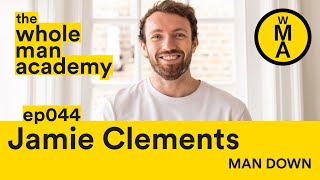
Jamie Clements, 26, founded Man Down to discuss mental health and vulnerability after a close friend's suicide. He's had anxiety and panic attacks since 15, shifted his podcast audience to 52% men in 20 episodes, and trained as a breathwork coach to help others process trauma.
Well, I'll take a quick pause. So this is the whole Man Academy podcast. My guest today is Jamie Clements. We first met via Instagram, which is seems to be where I pick up all the men these days, which sounds odd, but it's true. The reason being Jamie's started a new podcast called man down, which is sharing stories from inspirational people, encouraging open and vulnerable communication and promoting authenticity and positive masculinity. So he's right up our street of talking to all about what it is to be a man and all that goes with living, living the life at the moment. So Jamie, first of all, how are you? Where are you, sir?
I'm very well, thank you. Yeah, I'm really, really well. I am overlooking Spitalfields Market, so about as central as you could be when it comes to living in London, which has its perks, but also I'm craving the countryside more and more and quite jealous of you up in the, up in the Cotswold. So. No, but all really well, thank you, mate.
So that's a good point. I mean we can, as we're recording this, you know, today and in the news has come out saying that there's no more gatherings of six or over, which from the tidal wave of dissent on that I can sense that most people aren't particularly happy with. So how was it for you? Were you in lockdown in London and at a single place there?
So I had a bit of an interesting experience. I landed, I got the last flight out of Sri Lanka that was coming back to London and landed the day before we went into proper lockdown here. And so I was in London for a day and then I escaped down to my mum's place down in Surrey and I was there for a couple of months and then came back up to London at the back end of May and I've been here ever since, basically.
So you're desperate to get, get away or get, get to some open space, big time.
I think I've just, I've found myself really more than ever craving nature and it's. Yeah, I think it's a massive part of just general sort of well being and feeling a little bit less.
Sort.
Of vigilant hyper vigilance and anxious that comes with living in a big city.
Yeah, A great example that a guy we were talking to who knows a lot about Wi Fi and to state the obvious, he said, you know, if you go into any building London or I mean my parents in law live in north London and if you go to log on to Wi Fi, you'll have you know, there's about 70 Wi Fi codes that you could join. And he kind of said, you know, if people think that that isn't affecting you as much as anything else. But when you come out to the countryside and you know, you get hopefully clean air part from when they're spraying pesticides everywhere. But you know, clean air, fresh air, a bit of sunshine and a bit of nature around you, it can make a big difference. So does that, does that mean that you've experienced that when you were younger and then you come to work in the city?
So I born and raised down in Surrey, so it's sort of, it's not too far away from, from the city. I. Yeah, my parents both live in relatively green parts of Surrey, so I think I was quite lucky to have, you know, enough outside space. I wasn't someone who was born and raised in London. So, yeah, I've been living in London now for best part of five years. So, yeah, getting, getting on towards feeling like it's been long enough, especially with the last six months we've gone through.
Especially with the winter coming up as well. Well, let's talk about the podcast. I mean, I could ask lots of deep and meaningful questions, but why the podcast? Why did you start it?
Yeah, it's really good question. The slightly shorter version, we were just having a laugh about how long we could talk about pretty much everything, but I don't know how short this short version is going to be, but we'll see.
I'm here, I'm waiting.
So I struggle with my own mental health issues to differing degrees and severities. From the age of about 15 to 25 and about two years ago was probably the worst it's ever been. And actually that was a real trigger point for me to get more help than I'd been getting before. It kind of got to a point where actually it was affecting my day to day life quite significantly. So I was struggling really badly with panic attacks and anxiety as kind of the primary issues. And then over the course of the last two years, 18 months to two years, made some fantastic positive progress, some really good steps in the right direction of work through a lot of that stuff. And having always had an interest in how the brain worked, how the mind worked, mental health in general, I then started to get a much better understanding of how my own mind worked, but also just a real passion for the topic. And then in May of last year, I very sadly lost a friend from school to suicide. It was George. It was, yeah, that was George So someone I'd known for the best part of 15 years. 10, 15 years. And it was complete, as with a lot of these stories, these tragic stories that we hear, complete shock to everyone. And that for me, having done a bit of work on my own stuff, I'd never. I'd kind of gotten to terms with talking to my mum, my therapist, my girlfriend at the time, like, I was chatting to them about it. And that kind of openness was starting to come. But I'd never in a million years dreamed about talking to my, you know, 20 closest guy friends from school about it. And all of a sudden, you know, George passed away. And it was almost this kind of forced vulnerability. I remember being at the pub two days after everything happened, and people were obviously processing and dealing with it in their own ways, but it was such a raw, open environment with so much emotion going on, obviously. And I just had absolutely no problem sharing my stuff. And I just felt that through sharing my stuff, well, to twofold, really, I didn't want anyone in my friendship group, immediate friendship group, who were there right then to ever feel like they couldn't share their stuff. So it was to be like, we never want to be in this situation again. So I'm going to take this on and just make sure that people know that I'm going through this stuff. So if they're going through their own stuff, then we can talk about it. And secondly, on a more personal level, I realized in that moment that I was scared. I never wanted to be in a position where I was suicidal. And so if I didn't start properly addressing what was going on with my own stuff, then that could be an eventuality, that could be a possibility. So that was like a really big turning point for me. And I've talked to a lot of people about trying and being able to take positives out of what are, you know, truly awful situations. And I just felt from then on that not only did I want to talk more to my friends about my stuff, but I also felt compelled to talk publicly and openly with other people about it and realized that a lot of what I'd been struggling through, I would never pin it all on sort of masculinity, toxic masculinity and being a man. Like, there are other things at play, but there are a lot of elements of how. I realized there are a lot of elements of how I was raised and how men are raised and how boys are raised. That meant I was just sort of living a facade and being pretty inauthentic, but not Even realizing it, just doing it, because I thought I was doing. I was ticking boxes, essentially, rather than living true to who I actually was. And through that process met a lot of amazing, interesting, vulnerable, authentic men, which to me was like, fuck, they exist. They exist. And realized that one of the ways I wanted to contribute or felt I could contribute, would be to talk to some of these guys and get their stories out there. Because I'm sure there are other people sitting back thinking, love to, you know, be more open or figure out who I really am, but I don't feel like I can as a man today. So just being able to share those stories, normalize those conversations, and just encourage, you know, as you said in the intro, encourage that kind of vulnerability and authenticity as much as possible. So not the shortest short version, but that's a bit of an overview.
I'll tell you what I mean. There's a lot to get into there, and I think that's one of the big problems, apart from the fact that I've got a cough, is the rise of, you know, from the guys that I've spoken to and, you know, not everything we do with the whole man Academy. We spoke just before record. This is about mental health, necessarily. It's about sleep, it's about career, it's about performance, fitness, health, all the different things that go along with it. But the danger is when people maybe would hear you talk about that. I think it's trying to help them understand. We're not saying that guys every day should be, you know, wailing on the street corner, telling everybody their woes. It's about saying, if you're feeling, you know, pressure in life, please go and speak to someone. Because otherwise it can build up where, you know, the pressure builds up, and then an event happens where either you. For most people, it's, you know, it's drinking or it's fighting or it's abusing a partner. And I don't mean necessarily physically, but just, you know, just being a bit of a twat to someone. And it's about saying, you know what? I did it myself when I was in the city. If you'd have turned around to some of your colleagues and said, I just feel so stressed today because, you know, we've lost this huge deal, or your friend who's your competitor has made loads more money than you, people be like, shut the fuck up. But when you did actually speak to people about it, someone would say, yeah, I have those issues as well. So for you with your podcast, I mean, how many episodes you up to.
Now, 20 this Sunday.
Right. And I always think for you, and probably, like myself, you're learning from the people as well as putting the content out there, which I think is one of the, you know, one of the important things that I've learned from, you know, all the big podcasts that I listen to. But here's the thing. We spoke again just before we press record about being authentic and on your podcast, and you mentioned about your dad giving you some podcast advice, which I've kind of had as well. So tell me if you don't mind a quick one about that.
Yeah, so my dad and I have a good relationship. We've never really spoken at length about my mental health struggles, but he messaged me pretty out of the blue on Saturday saying that he'd finally, finally got around to listening to an episode and that his first comment was that, I swear, too much. Other than that, the feedback was pretty good, but I just found it pretty funny to. Yeah, to get that. Yeah, it's a very parental response. But, yeah, we were. We were having a laugh about that.
It's. It's. I said it makes me laugh because, you know, my dad, who I love dearly and we have a great relationship, but he said the same. And my answer to anybody that says about it is no, I swear in life. So if I'm going to do podcasts and filter what I say, then that's not being particularly authentic. But I just wonder for you, what's. What's the feedback been like? Because I see, you know, you've interviewed people like Martin, who's the other guy you interviewed? Who, sorry, Marvin, who's the other guy? I'm trying to think, but, you know, a good mixture of guys. And what's the feedback been for you on kind of, you know, interviewing the guys and putting the content out there?
It's been amazing. I think when I started it, it was a. And, you know, still to a certain extent to this day, it's, you know, it's a passion project. It's. It's a thing I really wanted to do personally. And if it could benefit people, then brilliant. If it can benefit one person, that's a win for me. And I launched it and it just took off more than I could have imagined. You know, I'm no Joe Rogan yet, but it really. The feedback was incredible. And, you know, within the first couple of weeks, I launched three episodes right at the beginning. And, yeah, the messages from people I haven't spoken to for years, guys that I know by proxy, yeah, it's been brilliant. I think you're right. Like, the range of people that I've been able to speak to, I'm so, so grateful for. And the lovely thing about this community is that every single person I've spoken to has introduced me to another person to speak to. Like, I don't know if you know, Johnny Benjamin. So Johnny's a incredible guy as a first and foremost, but also really, really prominent mental health campaigner. And he is one of the busiest people I know. And two days after we recorded, he sent me A list of 11 names, phone numbers and email addresses of people that he thought I should speak to for the podcast. And that is just incredible. But one thing I think probably worth touching on with something we touched on just before we came on as well, is that male engagement with mental health and well being and that wider sphere of sort of well being is traditionally pretty poor.
Yeah.
And so I've tried to keep a really close eye on the gender split of my listenership. And for the first, I reckon the first two months, it was probably 65% female.
Wow.
And as a podcast that I was, you know, I want everyone to listen to it because I think the messages and the value for both. Both genders, all genders are really important. But, you know, for me it was about reaching men and getting them to hear these conversations. And we're now finally at a. I think, last time I checked with 52% men. So we've just tipped that balance. But interestingly enough, when I publish stuff on Instagram, when I create content around the episodes, the messages and the comments and the sort of interaction with that content tends to be female.
Yeah.
Which doesn't bother me too much because I know what the listenership stats are. But I do think there's a little bit of a case of maybe guys are interacting and engaging with this on their own time, in their own space, which I think is actually a really healthy way of processing that as a first step.
Yeah.
But I would love more guys to be engaging openly and proactively and loudly with some of this content.
It certainly takes time. I know analytics are great because at least you can really drill down. I think 27% of our listeners are female. And it's always been around that. It kind of started off as 20 and has gone up to 27%, but I don't know what I am or I'm not doing to. I wouldn't know what to do either way to push the balance if you wanted to. I don't really care who listens to it. But yeah, it's funny that, you know, a lot of the women who are listening, it's because, to state the obvious, they've got a man in their life or men in their lives who they want to understand more. And I would say good luck with that because most of us don't understand ourselves, let alone anything else. But one thing I know about the podcast is when we were, and we will do events again, but when we were doing events in London, and I've said before, and I said it to you earlier, the hardest thing was actually getting bums on seats because guys were, I think reluctant, maybe a, because we didn't have some marketing team doing. It was just me writing stuff on Instagram and you know, my 20 year career as a broker and a trader doesn't give me the expert skills in marketing. But that was one of our biggest challenges, is actually getting guys to come along. And then they'd come along, be like, hey, this is really good, when's the next one? But at least with the podcast they can consume it in their own time. You know, it doesn't matter if they're on the train, on the toilet, in bed, flying, whatever. And excuse me, the reach that we've seen, I think it's like 27 and 27 different countries that people have listened in. So launching the podcast was always the plan. It took a while because these things you can't just necessarily do overnight and get them right. But that's the great thing is you can have someone in South Africa who is listening to it, you know, whilst they're on the way to work. That might take one, let's call it golden nugget out of what you're talking about. And if that helps them, you're like that, that's a win. And let me tell you also I looked up, I know we, you know, I knew we'd touch on the exciting subject of suicide, which is always a good family favorite. But I was looking up early and there was a report in I think the Metro at the start of this month and it said statisticians said high rates of suicide among middle aged men might because economic hardship, isolation, alcoholism and men in this category may be less likely to seek help. I don't think any of those are a surprise. My question at the moment, my worry, I should say with what's happening in the world, but let's talk about the guys in the UK is you're going to see a tidal wave of unemployment coming soon and I'd like to Cast a really positive light on this. But unfortunately, let's not sugarcoat things. And you're talking when furlough ends. The difference between a professional man who's never been unemployed but now is ending furlough and might face economic hardship and the isolation of. To state the obvious, people have been in their houses working from home. Now, that might have some benefits, like you don't have to commute. But I don't know about you, but I enjoy getting around a big group of guys and talking a load of bollocks. So those are two of the big things. The economic hardship, which I can see coming, and isolation, which I can see coming again, that I think have a big effect. So how about yourself? What's your thoughts on kind of those two points?
Yeah, it's interesting as well with the stats that came out the other day that are based on the latest suicide figures for the England and Wales, which is that male suicide while suicide figures, but specifically male suicide figures are a 20 year high, which I chatted to a lot of people about this. And we're all like a lot of people in this space and everyone's just like, what the fuck do we do now? Because the conversations are happening. Or maybe we're in this weird echo chamber where we think the conversations are happening, but it feels like the conversations moved on a lot. And I was talking to. Great. It's the last episode. The podcast guy called Josh Connolly, who's resilience coach and all around, sort of guru on this stuff. And I think there's a few different things at play. I think for a lot of us this period and things like work and friends and sort of surface level things that we identify with, the things that make up our identity, you know, if we play football or if we go down the pub with our mates, all of these little bits and pieces that make up the ego, sort of the ego level of the mind have been taken away. And that's why I think people have struggled in the first place. And I do think that's why a lot of people, but men specifically, get themselves into trouble because that's what they formed their identity out of. And as soon as that's stripped away, they're confronted by their. Their other thoughts, darker thoughts that who they actually are. And if you've spent kind of in the way that I described, spent your life, you know, maybe longer than the 10 years that I did, ticking boxes against what you think you should be doing, you're sort of left in this middle ground of nothingness where you don't know what you are, but you also don't know how to express your emotions because you've never been taught how to do that. So you're sort of this. I always talk about the gray man. You just get left in this sort of middle ground of non feeling and numbness. And I think the other side of it as well is that a lot of men won't identify as having a mental health problem. And so if you find yourself feeling isolated or feeling low and you know you've lost your job and all of these things are adding up, you just think that you just end up thinking if you don't have kind of that level of self awareness, that you are a failure as a, as a man. And it's these notions of traditional masculinity around, you know, providing for the family, being a good father, looking, caring for your children, being a good husband, being strong, being stoic. And as soon as you're not doing that, you feel like suddenly a waste of, a waste of space. Yeah, what, what am I if I'm not these things? Well, actually you're a, you're a person in your own right. You're not just those things. So I think that's where we get. People are getting into trouble because not only do they sort of lose their identity when they lose these things, but they also are just normal guys. And they see these stats around, you know, one in four people struggling with mental health issues and think, oh, but that's not me. I'm just having a tough month. And then it just compounds and compounds and compounds until they feel like they've got nothing left to live for. And it feels like the only option, which obviously it isn't. So it's, as you said, these are particularly tough times. Like the stats have obviously shown year on year, like things are not getting better on the suicide stats. But these times are going to be particularly testing. So I think there's a lot of work to be done and more conversations to be had about how we can get men to get rid of this concept of stoicism as a strength and sort of that unwavering lack of vulnerability that seems to be a real problem.
Well, I'll give you a great example of how confusing it is to be a man at the moment and understanding, you know, I'm 42, but it doesn't matter whether you're 20 or 30. And it's funny, I'll be honest here, in my 20s and 30s, it's like an, it's like, and I say fashionable What I mean is, it doesn't make it good or bad, but no one was ever talking about what it's like to be a man. When I was in my 20s and 30s, quite frankly, I was too busy partying and earning money and enjoying myself. But, you know, it's good that the conversation moved on to it. I'll read you a tweet from the United nations, from the un And I had to double check when I saw this because I was like, what? What have they got to do it? So they put out the other day. The COVID 19 pandemic is demonstrating what we all know. Millennia of patriarchy have resulted in a male dominated world with a male dominated culture which damages everyone, women, men, girls and boys. I was like, wow, that's the U.N. yeah.
Interesting.
And it's interesting when you, when you listen to the language because they don't say, well, if you listen to it. They said the COVID 19 pandemic is demonstrating what we all know. So they're not suggesting it, they're telling you it's a fact because you know it already, but we're going to tell you. And I was like, so resulted in a male dominated world with male dominated culture which damages everyone. I mean, so, you know, okay, interesting. And I just thought was amazing how, you know, a guy, especially young guy that's making his way in the world, reads that at the moment and you're like, so whether he likes it or not, he's been labeled as he's damaging everyone, women, men, girls and boys. Like, double thumbs up. Cheers for that one.
Yeah, I think it's extremely poorly worded. I wouldn't say I fundamentally disagree with the sentiment. I just think it's so, so badly put. I think I've chatted to a bunch of people about, I guess, this misunderstanding of gender and for want of a better word, like energy and the fact. I had a really interesting conversation with a guy called Harry Liddell, who's a genius about masculine and feminine energy and how it's something we all have to, we all have that and we swing between them and we express different levels of each depending on, you know, past trauma and life experiences and all of this stuff. And yeah, that statement there, I think perfectly exemplifies the misunderstanding. And the fact is saying it's a, it's a male problem, like you as a gender are the problem, not this idea. And masculine sort of toxically masculine, patriarchal, patriarchal stereotype that we actually are starting to understand is really damaging to men because so many Men are taking their own lives and so many men are struggling. But yeah, I think you have to be so careful with statements like that because as you rightly said, as a young guy who's battling with his identity or battling his own mental health issues, you just start to feel like you're the problem.
Yeah.
And you already feel like you're the problem. So if you're then being told by the fucking U.N. definitely the problem, then it's official. Yeah, it's official. Like, what am I gonna do about it? I can't change it because I am a man. You sort of. They're saying this is the only version of men that men can be and you're all screwing us over. So I think, yeah, I thought it was really helpful.
I might be talking about this in the, in the weekly E. Letter on Friday. I'll give you a clue, because I just think it's amazing when, you know, I say companies, but organizations like that can come out and make statements that aren't going to help the average man who's maybe struggling at the moment with all the issues. So what about yourself? What do you do for fun?
What do I do for fun? Talk about my emotions. I said with a slight pinch of salt. I've gotten to a point where sort of personal development, if you want to call it that, is enjoyable. But I. What do I do for fun? It's always when you get asked this question that you draw a blank. But I am very fun. I. I guess probably the best way to explain what I do for fun is that I, as I described, had that 10 year period of severe anxiety and depression and didn't really have an identity and didn't really have any energy. And then about 18 months ago, sort of found a new lease of life and a new understanding of what I liked and what I was passionate about. And so the last couple of years have been quite interesting in terms of actually figuring out what I do do for fun. So a lot of, you know, what I do now I have, I work full time, but then I have a business that I run with a couple of friends on the side, which is very much a commercial project, but is a lot of fun. And then I'm also training to be a breathwork coach. So that for me is again, like a real passion project and something that's really helped me with my own mental health and it's something that I now feel like I want to share with other people. So a lot of kind of that stuff might not be what other people consider fun. But for me, that is passion for me.
So you've got to find. I was going to say, you've got to find your thing. And I had a good conversation with someone today whose husband works really long hours, but she said he love, you know, he loves his job. And I said, that's one of the most important things, because if you're working long hours and something you love, it's not really work, but if you're in a job that you can't stand, you know, if you're, if you're doing it because, understand you've got mouths to feed or, you know, you've got to put, you know, money in the bank, that's great, but hopefully you'll have a plan of something else you're going to do. But you said the word kind of passion there. Often you get asked is, you know, how do I follow my passion? I don't know what it is. And you're like, well, most people know what it is, but they just don't know how to monetize it. If that's, if that's. That weren't to do. So how about yourself with, you know, with the different kind of career paths with breathwork? What led you into that? Why is that important to you?
So I fell into it pretty much by accident. I was a member at a gym, which is another thing that I do for fun sport and exercise is a massive one for me, always has been. So I was a member a sort of gym slash fitness studio when I used to live in Fulham and became quite, quite pally with the guy who ran it and the head trainer. And he said, oh, you're coming to this class on Wednesday morning. Why don't you stay for the one after it's breath work? I was like, nah, don't even know what it is. I've got a job. See you later. And then I had a free morning one morning I was like, oh, I'll stay and check out. And it's a guy called Richie Bostock. Who? The breath guy on Instagram. He's kind of a bit of a. An icon in this space. And yeah, it was just I'd been getting into mindfulness and meditation and trying to sort of dip my toe in that world for quite a while and just hadn't found anything that stuck for me. And all of a sudden, there I was actually doing something myself, like actively breathing in a certain way. And it was creating all of this stuff that was going on and was like, okay, I can. I can buy into this. And then Carried on doing it and doing it and doing it, and then ended up at a men's event in November, right at the start of November last year. And it was a combination of like Wim Hof ice baths and breathing and chanting. And then guy called Ben Bidwell, the Naked professor, he did a talk, amazing talk about his own story and masculinity and vulnerability and all of the stuff that we've kind of touched on. And then we finished with a. I think was an hour and a half of breathwork with Richie. And I think it's something to do with that day and the way it was set up and the energy that was created and the fact it was 120 guys in one space sharing a lot of quite intimate stuff. But I just had the most intense sort of profound, deep breathwork session. You know, there were tears. I said to Richie the day after, you know, I felt like genuine joy, genuine bliss that I'd never felt before.
So how did you. For the guys that won't know what that's like, and I do because I've been part of some of these things. But how can you describe when you say there was tears? How can you describe the feeling of when you got to that stage where you're like, holy shit, like there's tears rolling down my cheeks?
Yeah, I guess, you know, having now done a lot of my own learning around breath work, there's a few, few things at play, but essentially quite a big part of it. Having come to it as a skeptic, sort of the science and the right brain stuff was quite important to me rather than the spirituality elements which are equally as important. But basically, to try and put it simply, the. There's a part of the brain called the default mode network, which is like our monkey mind. The chatter, the internal chatter. And when we do the specific type of breath work, the study suggests that that part of the brain starts to down regulate and the level of activity in that part of the brain starts to diminish. And that allows other things to start coming up. So emotions, physical sensations, anything like that. And so it's. And I think this is what I want to bring when I start teaching sort of more full time is that I know it sounds a bit mental and I don't like to throw that word around too often, but I know it sounds a bit out there, but just try it. Because I was completely skeptical of it and I just. There are so many things. There's another, I guess, another bit of theory around it. That is, as men and as People in general, we repress and suppress a lot of emotions and emotions are energy in motion. And so if you're pushing that down, that energy's getting into the body. And you talked earlier about how things can come out for men in terms of, you know, drinking or abuse or fighting anger. That's what happens when you push down emotions and don't process them and express them properly. So they get. That energy gets stuck in the body and it manifests and comes back up as other stuff. Mental health problems, physical pain, anger, drinking, whatever it might be. When we do the certain type of breath work, that energy can start to move around. And so I was just lying there, we're about 45 minutes in, sort of losing concept of where I was and then just Richie did an amazing sort of visualization and guiding through it and I ended up, you know, having hallucinations is definitely the wrong word, but sort of images of my mum, my sister and all of these different things and it just created a. The whole environment was very emotional and very open anyway and so it just sort of all came, all came out and then that for me was like the turning point where I was like, okay, this is the real deal. I want to share this with other people. So accessible. We all have, we all breathe all the time. And yeah, I just wanted to be able to share it with other people. So I went, I mentioned at the start of the show I was in Sri Lanka just before lockdown and I was there for a couple of weeks. The first week I was sort of intensive breathwork retreat which again was so eye opening but also pretty mind blowing. So yeah, as you can probably tell by the way I talk about it, it's meant a lot to me and has done a great deal for me. So for anyone curious, definitely, definitely check it out.
I was just thinking, it's funny because probably five years ago if you'd have asked me if I was interested in this kind of stuff, I'd have said no. But as you said, you always say to people, just try it, just, just go along and you know what it's like a lot of things, maybe it won't be for you, but I know just the same as people going to yoga or going to anything else that's, that's kind of in the wellness sector and it's personal development in a way as well. You never know what's going to come up. I know you mentioned kind of personal development. Have you gone into personal development recently? And if so, who, who do you.
Kind of follow and really Good question. I'd say it's been sort of brewing over the last two to three years and this year especially has been like, it's been a big focus for me. I started like. The first person I came across was Tim Ferriss and I read Tribe of Mentors and Tools of Titans back to back. They're massive books. I read them back to back in a couple of weeks. And that for me I was. It was the first time I'd felt sort of inspired or really inspired by other people. Yeah. And yeah, then from, from then and more recently it's just that for me, I guess we talk about Instagram quite a bit, but definitely changed my feed and like flipped my feed to be very much like personal development, inspirational, educational, excellent. Which has been, you know, as someone who's on their phone too much, I'm quite open about that. I'd rather I was injecting goodness into my eyeballs than kind of crap. Yeah, crap or shoes or whatever. God, who. There's almost too many. I think Ben Bidwell, who I mentioned, the Naked professor, has always, ever since that event, kind of been someone that I've been grateful enough and lucky enough to have a few personal conversations with him. And there's a lot. He's a bit older than I am. Hope he doesn't mind me saying that.
How old are you, Jamie?
I'm 26.
Still a puppy.
And so I saw a lot of myself in him and yeah, just able to learn so much from him. I mentioned Richie Bostock as well, the breath guy. He's not only an amazing breath teacher, but also just a really wise individual. And then more recently, Josh Connolly as well. As far as, I guess just he says it how it is and he doesn't really care what people think, but more often than not he just nails it. And yeah, like even something as simple as when we were talking on the podcast, he really reframed and redefined resilience as a term for me and sort of called it out as this new way of telling people to toughen up and push their emotions down. Like just be resilient. And it actually sounds really positive. Like resilience carries quite a lot of positivity with it, but it's actually turned into a bit of a sort of Pollyanna ish toxic positivity that's getting pushed a lot. So I think those, those three guys are probably sort of my go tos as far as like people, my direct sort of reach.
Well, that's, that's the great thing now for you and any guys listening? I would say 10 years ago, five years ago, before the kind of the rise of Instagram and also maybe YouTube. But you had podcasts were around. But now I would say pick between one and a couple of people that are where you want to be or are teaching something you want to teach and kind of consume all they do instead of doing that scattergun approach of, you know, there's buying 50 books from all the personal development people. You know, just. Even if you just buy one and consume everything they've done, then you know you're going to learn something. And actually the other important point is implementing it. I mean there's so many people that you call it shelf development that people will buy books. I've been guilty of it in the past, you know, buy these personal development books and then you don't get time to reading them. Yeah. So yeah, it's always one of those things of saying like use, you know, pick a couple of guys and kind of go, go deep on what they're teaching for sure what their lessons are.
Yeah. And I've always, I've tried as well to try and like you said, find people that really resonate with me but also try and keep it quite varied. So I get the other side of the coin. Like I think it's very, it's quite easy to fall into your little echo chamber. But it's funny you brought up books. I'm still in this terrible habit. I haven't kicked it yet. I'll finish one book and then I'll buy three. And I've had to stop myself from buying books because I just have. I've got enough that I need to get through. But just as you were chatting there as well, someone that kind of kicked off that self growth personal development journey for me was Joe Dispenza as well. And yeah, sort of his, I guess, right brain scientific approach to slightly more spiritual topics like manifestation and how you can actually manufacture what you want your life to look like. That for me made a. Made a big difference probably at the start of this year.
Yeah. And you can have a calling, insight or realization and you only need one sometimes. And that can be the, the big thing that kind of sparks a change in you. I know for me I started going to the Tony Robbins events. I went to them in London, Miami, Tenerife and racing car going past. But what that did was start to make me question not just what I was doing then, but what do you want to do in the future. And if you want to start making Changes. It doesn't mean you have to walk out of your job now, but what can you start to put in place now that can affect what do you want the life to look like two or three years from time? So that question to you, what would you like? Let's fast forward not 10 years, but let's say three years. What would you like your life to look like at that point?
It's a great question. It's one I try not to ask myself too often because it can be quite daunting. I think it shouldn't be, but it can be. And I try and plan in relatively short time frames because stuff I know from personal experience, how quickly things can change, as I'm sure a lot of other people do. But I'd say three years time I'd like to have sold. Have sold sesame, which is the business I run with my friends. Yeah, be in a position to sell that. And then I'd love to be doing, I guess, this kind of work full time. So whether that is trying or in the very early stages of trying to get into sort of more presenting, podcast obviously is a big part of that. But yeah, presenting. And then also I guess on the flip side, breathwork is going to become a big part of my life. And yeah, just teaching that and sharing that with more people. I think breathworks at an amazing point right now that yoga was probably at 15 years ago. And we're right on the precipice of this coming into the mainstream. So I'd love to be at the forefront of that. And I don't know if they sound in my head, breath work in the mental health work that I do are so intertwined. And for me, I talk a lot about sort of this need for a holistic approach to mental health. And the conversations around mental health and how we treat them and how we understand them need a more holistic approach that include things like medication and therapy and CBT when required. But also look at how we can change our lives, change our environments to change, work through that. And I guess I don't think I've ever said this on record, but my big goal, my big picture goal is to change the way we understand and treat mental health. That's. That's the one liner.
That's a good one. And I think as you were saying, I could, I was fitting in the niche of the podcast and the breath work. As you know, it's not like saying I'm interested in mental health podcast and I like potato peeling. You're like, I can't see a link there. But the breath work, I know from one of the events I first went to and they spoke about breathwork, how to calm your mind. And that was very much about to study, obviously, how you're breathing to start with, and then working backwards from there. So I certainly think it's one of those. It ties in perfectly.
Well.
We're going to let you go in a minute. I know you've got a date tonight. What would you like to tell us about the date?
I'll let you know how it goes. I think that's. I'll leave it at that. We're going.
Is it first date, second date?
It's a first date, first date. So, yeah, I'm gonna need this full hour to get. To get myself cleaned up and get myself ready.
Show you what you need to.
She's lovely. And we shall see what happens.
Where are you gonna go?
We're going to a little rooftop bar not far. Hope the weather holds up. That's the plan, anyway. Rooftop bar in Shoreditch.
Lovely.
I won't say the name because I don't want, you know, all of your. Your followers tracking me down.
Yeah, you have thousands of people en masse. Well, you can only have six, otherwise they will get arrested anyway.
Exactly.
Well, I'll let you go because it's time to go to do some manscaping. But I, firstly, I acknowledge you for the work you're doing with the podcast because I think, to state the obvious, you're in the similar field to me, and it's important to be talking about these issues. And the more you normalize it, hopefully the bigger impact you can have on the man on the street. And also to thank you for your time. I know you're busy and we'll be releasing this on Friday, so we'll welcome the comments and suggestions.
Can't wait. Thank you so much for having me, mate.
Brilliant. All right, mate, I'll catch you soon, Jamie.
Catch you soon. Cheers.










