EP048 - Flex your mind muscle - Patrick Claudino
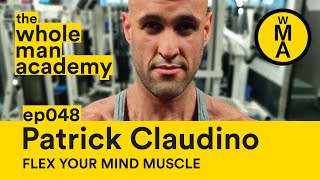
Patrick Claudino, a London bodybuilder and IT manager, talks through nine years of competing, from bulking and cutting phases to contest prep where he drops to 2,800 calories and 5-6% body fat. He shares how gym closures hit him mentally, why home training helped, and practical tips for beginners: get coaching, nail the fundamentals, find your people.
Questions this video answers
181 cm (6 ft); 93 kg (current, not in contest condition).
Started July 2011 at age 25; nine years of continuous training (as of the interview).
Around 5–6% body fat at peak (by end of show).
About 2,800 kcal in the last two weeks before a show (reported for his last show).
Last competed in up-to-80 kg class; short-term goal is to compete up to-85 kg.
So this is the whole Man Academy podcast. I'm Anthony Asprey. My guest today is Patrick Claudino. I've just checked. I get his surname pronounced correctly. Patrick is from London. He's been a bodybuilder for nine years. We've got a lot to cover. He's won bodybuilding competitions. He also has a proper job as well.
That's it.
And he's lived a life of adventure. So we're going to jump into all. Patrick, how are you? Where are you, sir?
Doing good, doing good. It's a good day. So the gyms are still open here in London, so hopefully this stays like this as much as I can still keep training. That's what matters. So it's all been well.
Yeah. And how's it been for you? I mean, we've got various topics to cover, but with the gyms, I mean, I've been following all this closely because it's, it's, you know, the collective health of the nation is diminishing before our very eyes if we're not very careful. How's it been for you with. With lockdown and being able to train?
Well, it was actually really harsh because when everything happened, they just close everything out of nowhere. And I didn't have any place to train. Even the parks around here, from my place, they put those bands just closing. So I literally had nowhere to train. So I had to do my thing from home. I have those bike chains that. They are super heavy that I use to lock my bike whenever I go away. So I kind of use them as dumbbells to get something done from home. It wasn't really feeling quite the same because I usually have the mindset either I do something correctly or I don't do it. So I was doing for a few weeks, didn't really feel that I was doing much, so I gave up after a few weeks. And that definitely affected my mental. I was kind of feeling like I wasn't really doing much from my day and from my life in general. You kind of start to feel like you're losing your purpose and the way you do. So it was really harsh at first. And luckily after three months, I was able to find a place that I could work out. Was basically, my friend has some dumbbells at his place and by that time it was okay to go to that. To his place. They were implementing the bubbles, the support bubbles thing. So I went to his place. I was able to get the dumbbells in there, just get some workout done. And it' amazing how much Of a difference that made to my mood and to my life. Even my work, yeah, even my work started to become more productive once I was able to go there and have like a one hour session and come back here. So it definitely makes a big difference.
That's such an important point. I mean there's different, different ways we could go with that because, you know, a lot of people I knew that struggled, you know, had their routine normally of getting to the gym, you know, before or after work or at lunchtime, doesn't really matter, but it formed part of routine and it meant they got to release frustration. You know, we know there's. What did someone said, you know, the endorphins that it helps. I nearly said dolphins then, but it's endorphins. And for all of us, me included, you know, part of, part of working out and not just doing bodyweight stuff, but doing weights and, you know, heavy kettlebells was, was part of your makeup. So to have that taken away from a lot of people was tough.
Yeah, no, it was definitely harsh. And the thing that I always tell people is that you don't have to be a bodybuilder to go to the gym. You can go for different reasons, to feel good, to change your physique or just to do some kind of sports or even to see some different people in your daily life. So having that taken out from you. Out of nowhere, government comes and say, okay, from tomorrow on, you cannot exercise anymore. That was a hit for everyone, myself included. So I'm really glad that we were able to get where we got right now. And you've been seeing what happened in Liverpool that they were able to reverse a decision from the government. Yeah, so that was amazing.
Well, Patrick, could you. For the, for the, for the people that are listening, predominantly men, but as we say, 28% of our listeners are female, which is welcome, ladies, is. Can you explain to the people that haven't seen that what, you know, the basics of what happened? Because it was. Incredible story.
Yeah, absolutely. Okay, so everyone remembers what happened in March. So government said, okay, from tomorrow on, all genes in the UK have to close. So everyone closed. We were falling over my guidelines and they reopened after a while after they said it was safe to do so. So everything was fine. Everyone went back and recently we had the second lockdown that happened in the north of England. So government said that teams in Liverpool, they should be closing again, but most people were unhappy with that. So one of the gyms in there, I think it's the people's Gym the name, there's a lad called Nick. So he recorded some stories on his Instagram saying that he would refuse to close the gym for the reasons that it helps people with their mental health. They would be willing to pay fines or anything. Which eventually happened. The police was there, they had to close after a few days. But they left a message saying that they refused to close and they encouraged people to to do the same because it was good for their mental health. And they even set up a GoFundMe page. The initial value they were expecting for the GoFundMe was 10k and they reached more than 40k of donations, people, power. Yes, it was amazing. So that thing got so much visibility that it went to BBC, it went to Sky News, it went to Liverpool mayor who actually was also against the closure of teams. Eventually they even wrote a letter to Boris explaining what was was happening and they were able to reward decision. So from this Saturday, gyms should be reopened in the Liverpool area. So everyone was super happy on that. And I think it's a win for everyone because we do have numbers that gyms have like a minimal, almost nothing rate of infections. And so there was no really reasons for closing the gyms in there. So. Yeah, so that's what happened. Yeah, it was a really good thing.
That's fantastic. And I know I was following him, one of the guys we interviewed on our whole Man Academy podcast, James Elliott, who's the military resilience coach, he interviewed Nick on his Instagram stories a few days ago and I messaged him to say good work because that's the. Like it or not, with social media, it does give you. Until they delete all your social media, it does gives you power to reach a lot of people very quickly and do it live. So it was a great story and that's the important bit for anybody listening. If you haven't been exercising, I think you should start and if you have been and it got taken away from you, adapt and find something that you can do. I can say that up in my ivory tower because I'm in my. We've got a home gym here which is huge. So I'm really lucky. But if I didn't have this, it would have done my head in. So I urge people to stick with it, um, until the government will tell you that you can only go out for one hour like it is in Australia. Then. Then you'll see some real interesting times.
Yeah, there is just one thing. There is the thing that dumbbells, they were super expensive during the lockdown yeah. So you remember, you were seeing the marketplace, the price just soared. So it was literally impossible for people to purchase them, either because they were unavailable or you would just find doubles anywhere. So that's actually another reason why people were so much fighting for having the gyms reopen that again. Because no one wants to go for that again.
Yes. Yeah, I mean that I was recommending to a few people, even if you just buy, sell an 8 or 10 kilogram kettlebell and a couple of dumbbells like you can, you can get a decent workout going on. And people are saying, I'm trying to, but I can't, you know, everywhere is sold out. So, yes, supply and demand. Well, let's jump into the bodybuilding.
Yes.
Where did it start for you? Because, you know, I can see from your Instagram page, which you'll obviously put on the, you know, you've got an incredible physique, but tell us about your. I know you said your measurements, that's going to sound a bit weird, but how tall you are, how much you weigh currently, for people to understand the difference between, you know, the Dorian Yates type bodybuilder and the guys that are working at different weight levels. Coming down.
All right, So I am 181cm or 6ft, as you. You would say. I am 93kg at the moment. So at this moment I'm not really aiming for any competition. So I'm just trying to stay lean and just keep the condition that I have. Because usually in bodybuilding we have two different phases. We have the bulking phase, where you're trying to put up some size. You need a little bit more. It's usually done during winter. And there's the cutting phase, when you do, when you're cutting there. So I've been training for nine years. I started in July of 2011. I was 25 at the time. I'm 34 at the moment. And this is actually something that I wanted to do since a very young age. So I always wanted to go to the gym, change my physique. I really liked the idea and I tried to go to the gym for the first time and I was 18, so I was really excited. But I didn't really go much far on that because, you know, I was young, I didn't really have much knowledge of what I was doing. So I basically just went to the gym. Didn't look about anything, like no diet, nothing. Just went there, lift weights and came back home. Yeah.
Start somewhere.
Yeah, absolutely. And I didn't see one result. So I said to myself, okay, so that's not working. I have to put an action plan because I'm just wasting my time here. So I stopped and I said, okay, so when I'm ready, I'm going to come back and then I'm going to do the things the right way. So when I was 25, I was already done with college. I had a good position at work so I could afford, you know, everything that I needed for, for food because actually eating clean is quite expensive.
Expensive, yeah.
Yeah. So when I was 25, I was ready for that. So I started reading books. I joined the local gym that I had back home. I hired someone to help me out with my diet to hire pt. So I tried to make the thing the right way and I never stopped ever since been training nine years nonstop. The only time that I actually stopped was during the lockdown for obvious reasons. But it's been a nine years journey and it's an ever ending journey. There's always something you can learn. Yeah.
Do you ever get tired of going to the gym? I only, I asked that when we speak to David Gandhi, you know, our global ambassador, and obviously he had an incredible or still has got an incredible physique, but I know he said, you know, the time off for lockdown, it actually was nice to him to like have a foot enforced break from the gym because he was away from there and there wasn't any chance of going. But. Do you ever get tired from going to the gym?
Well, let's say that I get tired physically of going there sometimes, especially when I'm getting near to the show. When you're feeling depleted, you're feeling so tired that all you want to do is just stay at home at the couch and doing nothing. So yeah, during those times it happens, it could be like, okay, I don't feel like training. But there's the mental part, there's the part that when you go there, you know that you did something and you always feel great when you leave the gym, when you, you finish the session, there's all the endorphin that is going on in your body. It just feels great. And that kind of feeling, I always have that. So I never really get tired of that. I just have days that I feel a little bit less motivated on going there. But I still have that little bit inside of me that says, no, you have to go, you have to get it done.
So what do you use if you did wake up in a day and you're like, you know what, you know, It's I'm a 7 out of 10 on motivation instead of a 10. Do you use music? Do you have things stuck on the fridge to tell you stop being a lazy sod? What do you do?
Well, I usually just lower my head and I say, okay, I'll do it. It doesn't matter what I'm thinking. So I just put some music. As you said, I've been doing this for so long that it's already part of my routine. So I know that the end of the day, I close the laptop, I have to get changed, go to the gym and get it done. And I know that if I'm not going, there's something going on. So it might be, I don't know, maybe I have a long day of work that I have to finish something. So I have that in my mind already. And I try to remember the reason why I started as well. So that's one of the big topics. The very first day that I started the GYM Back in 2011, in July, I still remember the clear reasons why I'm joining and the things that I would do to get where I am at the moment. So back then, I didn't have an idea about how I would look today. I just knew that I would get there someday. And I had this maybe thoughts about how I would look like. But, you know, I had the passion inside me, and I have that. And when I feel bad on those days, I just start to look back and say, okay. So I remember back today I was really excited to join the gym now. So why I'm not going today, you know, that helps me to keep focus and get where I need to go.
I guess we all need that, you know, whatever works for you to push you. I was going to ask you, so what made you first want to go to the gym and not just go to get fit? Because that's quite boring, to be honest, you know, is to actually start adding some muscle and changing your body shape.
Yeah. Well, I was really, really skinny back the days. And I remember even my parents were telling me, oh, there's something wrong with you. I'm like, really? I don't see anything wrong. Yeah. And I really wanted to change my physique. And because I was living in Brazil back in the days, people care a lot about their physiques over there. So I used to see most of my friends in great shape. And I would look at myself and say, like, no, I have to do something on that, that I can just be here. Like, yeah. And I, like, always like sports in General I used to do running before starting the gym, so I was like, okay, I like sports. This is something that I want to do. So. So let's, let's get started. Let's see where it goes. And it worked great. It's. It went to the point that I enjoyed since day one. I felt like wrecked on my first week of the gym. Like, happens to everyone the first week. You feel like, yeah, you went on a fight, but if it felt great, it felt so good after that that I was like, that's what I want to do. I always say that whenever you find your true passion, something that makes you feel realized, it makes you feel fulfilled. That's all you need. You don't need motivation, you don't need anything. You know that, that drives you, and that's going to make you get to the point that you want.
No, that's a really good point. And I think many of the. Of the guys that we've had on the, on the whole Man Academy podcast, we're coming up to what this is episode 48. So racing up to 50. But, you know, a lot of the guys, even if I've spoke to them off camera, just like, you know what? I fucking love what I do. Therefore, it's not work. And even if you're there till, you know, or you're getting up early and staying up late, you know, I agree with the gym. I used to go every. Either every morning or every night before or after work, and at weekends. And I most the time, unless I was very hungover, I really, I enjoyed it. So it's. I think that's the important thing for people to take away. If you can find something you enjoy and you're passionate about, then you'll never do a day's work in your life.
That's the part of being sustainable. It has to be something that you enjoy doing. And about sports in general, it doesn't need to be the gym specifically. So if you like classes, if you like running, if you like parkour, or if you like just exercise in the park, that's all that matters. As long as you find something that you really enjoy doing, you're never going to have trouble of doing that. It's like kind of doing the work that you love. Once you find the kind of work that you love doing, you're not going to be working anymore.
Yeah, no, and that is. That is great. Well, let's talk about. I mean, I call this your side adventure because you've actually got a real job as well. So my question Was how have you balanced the training that you have to do to get in the shape that you are to win, you know, to win trophies? How have you managed to balance your work life with your gym life?
Yeah, well, that comes with experience, so. I currently work at a software company. I'm an account manager. I've been working in the IT area for maybe nine years around that. So more or less like around the time that I started working out. So before, when I was still young at the gym, let's say, I always thought that I had to do extremes. I always thought that I had, for example, oh, I cannot miss this session for no matter what, otherwise I'm going to lose my gains. And then within years, I started to see that things don't work like this. You can be flexible at some points and you can make some adjustments here and there. So things work like out. The same thing goes with a diet plan. For example, you hear people say, oh, you have to eat every three hours, otherwise you're gonna lose your gains. Or if you don't drink your protein as soon as you finish your session, like in half an hour, you're gonna lose. And things don't really work like that. So you can be flexible here and there. You can adjust with your daily life and it works out with your professional daily life as well. Yeah, and it is so easy nowadays to get food that is ready to eat. Like they have frozen food, they have frozen chicken breasts. So you don't really have to spend so much time cooking or preparing on that. So having a little bit of logistics on that, just preparing your day and preparing how things are going to go over the next days as well, that's sufficient to have results without having to affect your professional life as well. Because everyone has a job, everyone needs to work. And we can't just put the gym ahead of four. It doesn't work. Yes.
Yeah, if only they just pay you to work out, that would be nice, I guess. I guess that that just comes to the guys that are kind of being sponsored at a high level, I suppose. And everybody else is. Is trying to juggle the two.
Yes. We call that the elite athletes. So they pretty much just do that. Some people, they do coaching, some people do some other things. But usually those athletes, they work directly with that. But that's a very small population of athletes. So most people are not like that. So the majority of athletes, they have regular jobs, they have responsibilities, they have families. There's still able to conciliate with that. I would say the hardest period goes when you're getting closer to a competition. So when you're, let's say two months before the competition, around one month, that's where it starts to get real, as we say, because it gets really harsh. Every session feels like a struggle. So when you see a bodybuilder showing the pictures on Instagram, you think like, whoa, that's amazing. It looks really cool for the inside. It's a big fight. Like he's fighting with himself. Yeah, he's fighting with himself too. Yeah, yeah, just. Just to stay there and. Yeah.
Well, I was going to ask you about the two. The two phases if we, if we moonwalk back to the bulking phase.
Yeah.
And I, I laugh because I often had different mates who would. Would say, I'm going to gym and I'm. I'm bulking at the moment. You were like, no, you're just eating while I'm getting fat. You know, that you're missing out the other part. But so for you, bulking, for the people listening, you know, is obviously you're consuming more calories and pretty much anything you get your hands on whilst you're basically damaging your muscles, tearing your muscles so they replenish, recover, grow bigger. So you get bigger as a guy.
Yeah, you have to get. The principle for hypertrophy is that you have to lift heavy weights. So every time that you lift heavy weights, you're going to damage the muscle and the muscle is going to recover and it's going to grow bigger for the next time. So we have to go heavier and heavier. The goal of bulking is eating more calories, so you have more energy, you feel more disposition for training. So when you get to the gym, you feel like, oh, I feel amazing today. I'm going to smash the weights, I'm going to put my loud music and I'm going to train as heavy as I can. So that's the goal. So for that reason, it's not really a nice idea just to eat whatever you want because you're going to get fat in the process and that fat's just going to stay there. It's not going to go away. So you're going to have to do something later on so it's easier to at least try to keep an eye on your diet and not go too crazy and make sure that you're okay with that.
What's that? Well, just on that. That's the term, the difference between, like a dirty bulk, where people are just eating any old shit, which I always think, you know, I had a Heated discussion with someone once who said, it doesn't matter. You know, let's say a guy wants to consume 4,000 calories, for example, it doesn't matter where he gets them from. And I said, I think that's rubbish. Because if you've got two twins and one of them is eating a healthy diet with, with high calories and the other one's eating a load of crap and pizza and McDonald's, then ultimately you might be eating the same calories, but they're not going to have the same nutritional value.
Yes, that's absolutely correct. So you probably heard that sentence before. If it fits your macros. I don't fully agree with that because you might feel macros. But what about your, your micros? Every food has the nutrients, so proteins are not the same. So it's not the same if you eat vegetable protein. And if you eat protein for meat, for example, body absorbs that in different ways. So that's why we have types of foods that are better than others. And the same way goes with carbs as well. So we have better carbs, we have complex carbs, we have simple carbs. So sometimes it's not really a good idea just to eat whatever you want. I would probably opt for getting food that are clean and you can have some things here and there. You don't have to be super strict to just say like, okay, I'm not gonna have any kind of junk food or anything like that. But trying to be consistent at least during the week and trying to get the foods that are good for you. There's a lot of different options. You don't have to starve when you're cutting. You don't have to eat a lot of junk food when you're bulking. You just have to find a diet that works for you. But in general, yes, there are the better foods for that.
Interesting. And what about the usual one of trying to find the right protein shake? If you're consuming protein shakes, that works for you. Because I know some, you know, some have a lack of or some make people bloated, some are full of sugar, some are full of chemicals, some are, you know, the protein is the, you know, more plant based. So have you. I went on a real journey to find what worked for me. And also some are really bloody expensive. So how's it work for you with what you do, don't take and what you've tried before?
Yeah, that was actually one of the very first things I started researching when I started training when I had like one or Two years of training. I remember back the days they were releasing some studies, they were researching the brands around there to make sure that the nutrition facts that they had in there, they were the same from the kind of products that you got. So some of them were fine, some of them had a little bit more sugar, some of them had less. But the rule of thumb for me is just find a brand that has a good reputation. It's really easy to do a quick Google search and see if that brand is good or not. I know there has been a lot of discussions on that, but lately you don't really see brands that are that bad because there's Internet nowadays, people just tell what's going on with the brands.
Yeah.
So find a brand that works for you. Usually the supplement websites, they have samples so you can just try and see and get a flavor that works for you. And above everything, don't think as protein shakes as something that is just going to give you like magically results, because it won't. It is just a convenience that you have a powder protein instead of having chicken, for example, so it's not going to really make a big difference, but it has its perks. Like it's really good with oats, for example. You're not going to get the same with chicken. So you can put it here and there. So you see that's the thing. Don't think that protein is magic.
That's, that's a really good point. We should have entitled the podcast Protein isn't Magic, you know, the shakes. Because I think back, I've got several friends, but one I remember who I worked with in the city and quite frankly he was about three stone overweight and one day he turned up with a load of maxi muscle products. And I said, what are you doing with that? And he said I'm getting on the protein so I'm going to start going to the gym. I said, well, why don't you just try not eating so much and going to the gym to start with? And he was like, no, no, no. But a lot of times he was eating the maxi muscle bars and what have you, but he wasn't going to the gym. So he's probably just eating another, you know, thousand calories a day. You have to exercise as well.
Yeah, and that's a great point. So protein has calories as well. So at the end of the day you have your daily caloric consumption. So if you're eating a lot of protein, you're going to go over your calories that you're supposed to eat during the day. And those calories, they have to go somewhere. They're just not going to go away. So. That's a great point.
It's another one that you see. You know, it's. I appreciate when people get all excited about this stuff and they buy all the.
All the.
All the kit and then you're like, unfortunately, at some point you have to do some, you know, some weights as well. Well, let's. Let's move on to the cutting phase. So.
Yes.
How long, in fact, rolling back, how long would you spend on the bulking phase for a competition and then how far out would you start? The cutting phase?
Yes. I usually focus on the bulking phase when it gets cold because it doesn't look like. But when you're super shredded, when you're lean, you actually feel colder than other people when in a really cold day. And I remember when I was prepping for one of my shows in 2018, the show was in November, so by the end of October was really cold. And I remember I was freezing. I had like two or three jackets. I was freezing. And everyone was like, what's wrong with you? I'm like, I'm just freezing here because I was shred to the bone. So I had no fat to hit me up.
What body fat percentage would you been roughly?
I would say probably like five or six around that. Yeah, that's by the end of the show. So I tried to keep around 10, which is an acceptable value. So that looks good enough I can see on my picture. So that is fine.
Incredible.
Oh, thank you. Yeah, so it can be done. So, yeah, so I do the bokeh when it's cold, and then I start coding when it starts to get warm again. So I would say probably around March or April. There are shows all over the year, but usually I like to compete around September or October. So if I start curving around March or April, that gives me enough time for that so I don't have to rush things up. And it's all about perception as well. So I take pictures once a week. Of course, I take my Instagram pictures. Yeah, exactly. But the progress pictures that I share to my coach, I take them every week. As soon as I wake up on Fridays, I take my pictures, like, front, back, sideways. I sent my coach for evaluation. I use those pictures as a progress. So we decided together, okay, so we are doing okay or we are not doing okay. And that gives us a timeline so we can work on the days before the show. And I usually opt for competing once A year. Because I'm not a pro, I don't exactly make money from that. That's also another topic for discussion, that bodybuilders don't really win prize money from competition unless you are a.
We can talk about whatever you want.
You can jump into that if you want. Yeah, yeah. So I compete once a year because I don't really get money from that. It's more like a personal achievement than anything else. So I leave the shows for usually August or September. That gives me enough time to prepare. And another thing is that as we spoke before, the final weeks are really, really harsh. It really demands a lot for you, like, physically and mentally more than anything else. You. You just feel, like, miserable.
So tell us about it when you start. So if you'd start, let's say you're competing on the 1st of September, how far out from that would you start cutting?
Okay, so if I'm competing by the end of September, I would probably start cutting by April. Yeah. Again, it depends on how I look. Like if I see that my body fat is under control, I could probably start a little bit later than that. But that gives us enough time to do changes and to see how things are going. So that will be probably around April. The last weeks are really, really harsh. So during those weeks, one thing that I do and usually works for me is that I get some weeks off from work, usually like two weeks. So I don't really have to worry about not having enough focus or not feeling like working on that day. Because as I said, you can't really put the gym in front of your work, of your professional life. As much as it's something that I love to do, it doesn't work like that. So.
Yeah. Gotta pay the bills.
Exactly. Yeah. That's the point. Yeah. So those two weeks, they were great. It gives me time to focus, to prepare mentally. And then once the show is over, I'm ready to go back to work.
And what's it like changing the diet because you've obviously gone from. Or changing what you're fueling yourself with because you're going from pretty much. You say eating, I don't mean whatever you want, but eating a large volume of calories to then trying to bring it down. So what's it like mentally to kind of go into the next phase, the cutting phase?
Yeah. Well, for me, it's actually harsh because I am hungry 247 at any phase, to be very honest. Like, I'm the kind of guy that I go to sleep thinking about breakfast already. I Know when I had my food already for the day, I can't just go to the freezer and get a bite. No. I have to stick to what I got. So I'm usually hungry on that. So I usually start to feel really hungry during those periods. I don't exactly have cravings for junk food because junk food is also something like a separate topic, like craves and all of that. I just. I just have cravings of having more food, of having, like a large portion or even, like rice, something like that. So when it gets closer to the show, this starts to get a little bit harder and you just start thinking about food the whole time and just feel like, oh, I wish I had, like, some. Some good meals. We should have, like, I don't know, maybe some pizzas, something like that. So I would say probably that's the hardest part when you.
No alcohol.
Nope, no alcohol. I used to drink before. I love beer. I really like it. But it doesn't really work. Work with my lifestyle. If you want to drink, you can still make some adjustments here and there that are options of drinking that are not really going to affect your physique that badly. Because, you know, drinks have calories as well, so you have to take that in mind. But I don't really feel that it belongs to my lifestyle. So for my own opinion, I don't really drink. But I have nothing against people who drink and train because after all, it's all about your mental health. If you feel okay, if you're enjoying the lifestyle that you're having, and if you can still manage to put a few drinks here and there, that's fine.
Yeah, I guess trying to think where it was. I read once, and it might be total, total bollocks, but it was about. If you. If you're about to do a show, if you had red wine, it helps your veins show through.
Yes. Because it's alcohol. So alcohol takes off the water. So the less water you have in there, so the more your veins. I'm gonna show you in your physique. Yes. So actually, bodybuilders have different ways of doing that when they're on the backstage. So some people just eat junk food, some people drink wine, some people drink vodka or something like that. So, yeah, it doesn't mean you're gonna be drinking the whole bottle. No, by no means. And it doesn't mean you're gonna eat a whole pizza, but you eat tiny bits because that's gonna suck the water and it's gonna make your veins pop up and make you get there. So. But. But it takes time to, to reach that state. Yeah. It's not something like, oh, this weekend I'm just gonna drink a wine. I'm gonna look shredded.
Yeah. I have some mulled wine and a toffee apple. I'll tell you why I asked that. I laugh because many years ago, I did a modeling thing for Cosmopolitan magazine in London and it was, it was with your shirt off with it with another group of guys for, for, you know, Jupe, the. The men's underwear and what have you.
Yeah, that's amazing.
And I'd read in like Men's Health or somewhere that, you know, just beforehand. So I remember that the girl that come along to support me just before we went out on kind of stage, I said, come here, come here. She said, what? I said, go and get me a glass of red wine. And she was like, what? I said, just get me a glass of red wine. And she was like, what kind do you want? I said, it doesn't matter. I don't care what year it is, just go get one. So I remember she came back with a large glass of red wine. And the other guys looked at me like I was nuts. And I was like. And I drunk it it down. But I hadn't drunk for a while, so I felt drunk, to be honest. Slightly counterproductive when you fall over on stage, but yeah, it's interesting to think how many years ago I'd read about that. So now let's get into the last two weeks of. Prior to the show where it gets painful and it's surely, are you still training hard and eating little? And if so, what are you eating?
Yes, I am still training. Normally over those last two weeks, I am eating less and less. I would probably say that the diet change, they really take place two days before the competition, which is the prep. So at this stage, sometimes you just cut the carbs or sometimes you just eat carbs to carb up so your body can have enough carbs to store it. So it's going to make you look better after. But yeah, you still keep training over those last two weeks. Some people, they have troubles on that. So for some people, it's really hard to even wake up and go to the gym. So that's where I say that it really becomes real. So that's really when the magic happens. Because at that stage, nothing else matters. It's just you, your music, your coffee and the gym.
Yeah.
Yes. It's really harsh. Yeah.
So there's a couple of questions there. First One was I remember hearing about when you get to such low body fat that actually you have fat on the soles of your. On the bottom of your feet, and therefore it actually hurts to walk when you get to such a low level of body fat. I just wondered if you've ever had that or you've read about it.
The thing is that everything hurts when you get to that stage.
So it doesn't matter what it is.
It doesn't really matter. It's kind of hard to track what's going on on that stage. But you are prone to more injuries when you're super shredded, when you have no body fat on you. And as a matter of fact, you actually have to go lower on your weights. So you're not going to be lifting the same weights for bench press, for squats, for anything. You're actually going to be going, like, probably less than half of your usual weights.
Wow. Okay.
Yeah. Which is hard for some people because some people are really proud of the weights that they do. Yeah, that's completely fine. It's all about going to the gym, have your achievements. Doesn't matter if it's about weights, about your physique, it's what makes you get there.
Yeah.
So, yeah. So when you see that your weights are going down and everything hurts and you're not recovering, so that is really harsh.
Yeah. It probably is a good sign that, you know, you're. You're getting ready, but. And then what are you actually eating in those last couple of weeks? You know, is it. Is it you're cutting out fat or are you doing more cardio to burn fat?
I'm doing both. Yeah. So I lowered the calories a little bit more. So my kind of. My kind of metabolism, like, I can still keep going and eating quite a high number of calories. If I recall correctly, my last show, I was having 2,800 calories for the last two weeks.
And you're measuring it all the time.
Yeah, which is really low for me. But I know some other athletes, they need to go way lower than that, otherwise they don't get lean. And I was having cardio sessions in the morning and cardio sessions in the evening as well. So I have the cardio bike at home. Just put the bike in front of the TV, just play some PS4 and it flies. It goes like for one hour and I'm not even realizing. Yeah, yeah. So I eat the same during those last two weeks, still the same, like rice, chicken, fish, the usual bodybuilding food. The real change happens the two Days before when I get some really specific foods that my coach asked me to. Some of them are like rice, cream, papaya, and some kind of special carbs. The reason is that he wants anything that is low on sodium because sodium makes you absorb water. So there's all this manipulation of small things here and there. So he asks for really specific kinds of food at the very end. But that's just when you're about to hit the stage, when you need to get to the point that your body has no water. So it's just muscle and as little fat as possible. So whenever you go on stage, you're gonna be looking shredded and you're gonna be looking all veiny.
Wow. Would you hit the sauna as well?
I wouldn't myself, because sauna in a condition like this can be. Can be quite dangerous, as you know. But I know a lot of athletes who do that. So they stay in the sauna, they lose water from that. I rather just stick to cardio because I think it's safer for me. And. And the thing is that I think sauna is way too hot for me. I don't quite like it. I did it a few times, but. Yeah, but some people love it. So it's perfectly fine for you. Yeah.
It's so interesting to just kind of get a snapshot of what it's like, you know, coming up to a competition, because I know you've had, you know, there's several trophies, you've been placed in certain competitions, and then what's it like on actual or the night before the competition and on competition day? Because you must be looking at all the other people assessing them and being like, yeah, you know, they've got slightly less body fat or slightly bigger or smaller this and that.
Yeah. Well, I actually had some discussions with my coach. We kind of argued because I was constantly sharing pictures of other people to him. And he was like, patrick, stop. You're not supposed to be comparing yourself to others. Just go there. Just do your thing. And he actually got quite mad at me at some stage, and I was like, okay, you're right. And then I stopped. But I couldn't help. It was my first show, and I didn't know what to expect, and I was really excited to go there. So that's actually the show that I got first place when I was in Ireland. So as you see, I had zero expectations. And when I got there and I was in the backstage and I was seeing everyone in there, I was thinking about every single thing that you can imagine, you know, when you have all kinds of thoughts jumping to your head, single moment. So that's what was happening and I didn't know what was going on. So it's hard, but within time you stop comparing yourself to others. I competed last year as well, and I remember I was just chilling on the backstage, so I wasn't really caring much about others. I was just focusing there, warming up because I knew that I did my work. And comparing myself to others at the very last minute wouldn't really much more like wouldn't make much of difference.
There's a good saying. Comparison is the thief of joy.
Exactly. Absolutely.
I think it's natural that we all do it and I think social media makes that even worse, you know, because I always say with social media it's selective sharing, isn't it? We all, you know, you might have six pictures of yourself, but you'll find the one where you look the best. And I always say with guys with bodies in the gym, often the lighting can make such a difference, you know, so you could take, you know, you could take the same shot close to the light, underneath it, far away from it, and if one picks up the contours of your abs, you're like, that's the one.
Yeah, absolutely. That's actually one of the reasons why they were not accepting to do shows during the lockdown, using pictures or something similar like that. Yeah. Because it is just impossible. You cannot judge people correctly by pictures for a number of reasons, including even Photoshop, for example. So they just canceled the shows. And I said, okay, when we are ready to open, we're going to open again. That's also another big topic as well. So usually when you follow people on social media, like fitness influencers in there, those people, they're not staying shaped the whole year. So you see their pictures, they look amazing. It doesn't necessarily mean they are like that right now. So they usually take a lot of pictures during the best phase, during the peak phase, and they keep posting those pictures during the whole year. So I don't like that because it creates some false expectations on everyone who's following them because they think they should stay like that the whole year. And it doesn't really work like this, not even for me. I don't stay shredded the whole year because I will start to lose muscle after a while because I need to have more calories so I can lift heavier. And if I keep going down on weights, I will lose what I have.
Yeah.
So, yeah, so it's important to have this sense of reality when you follow social media and understand that what you see there might not be real life, to be clear.
Yeah, no, it is a good point. You, like, just remember, you know, it is selective sharing and, you know, you'll see people, as you say, picking. Picking even old photos and just resharing them. And you're like, that isn't you today. So I totally agree with that. Now talk to me about those few moments when especially the competition, the first competition that you won't. Does it. Is it that gets down to the last three, and then you have to come back on stage and do kind of a showdown, a pose down?
Yeah, that's correct, actually. So there's the prejudging phase where all the athletes go on stage, we do the mandatory posing, and then they call the athletes individually so they can do their individual presentation. So it depends on the class. The one that I did, you have like 60 seconds, so you can do free posing to whatever music you like. So it's more like just to show your work than anything else. So you do the pre journey and then there's the big show that comes later on in the evening. So on that show, they kind of know already who won, so they call everyone again to do the same thing, but they already kind of have the results in there, and then they announce the winner for each class. When you do that, the winner of each class competes against all the other winners. And then we have the overall winner.
Right.
Have a male overall winner and a female overall winner from each one of those class. So that one is like the absolute winner from the show. Yeah, I did not get an overall, sadly.
So hopefully, I guess for you also, it's trying to balance, as you say, your dedication to that, which I call your side adventure, because a lot of people couldn't be bothered to do that. But that's what gets you, you know, gets you up early and keeps you up late, is doing that kind of stuff. But to get the recognition to be given trophies is kind of the real pat on the back.
Yeah, absolutely. And even for that show, the main reason why I went for the show was simply to go there, get a trophy, and come back home. So I didn't really care much about Howard plays. I just wanted to get the physical trophy with me and walk back with that, and I got it. So for me, it was a victory. I got first, of course, but I wasn't really caring for a position before that. So, you know.
What did you eat?
Straight after my weight class was actually. Oh, what I ate.
Yeah. What do You. What did you eat? Did you. Can you. Can you just go straight into kind of hoovering downloads of food? Or do you have to kind of just give your body a little chance to readapt to it?
All the memories? I went straight. I went straight to Burger King after that. Yeah, I was there. Like, I had the tan, so I was looking like a mind work at all black here. I was there holding the trophy and having Burger King on my other hand. So I still have that picture. I'm gonna put on the stories there so that everyone.
Yeah, yeah, you have to send. I'll screenshot it. You've just already touched on one of the next questions that I had, which was, what is the stuff that you put on? Because it looks like creosote, obviously. In fact, it looks like this. This cabinet that's behind me. What's it like putting that stuff on? And how long, more importantly, how long does it take to get off?
Okay, so there's different kinds of tan. So first of all, the reason why we wear tan on stage is because the. The stage lights, they are too bright. So if you don't have tan in there, you're gonna look pale white. It's gonna be hard for them just to see your definition. So it happens that when you're in the backstage, you might think that you're too dark when you go on stage, it looks good, which. Exactly what happened. Yeah, it happened with me on the first show. I was like, oh, that's way too much. I shouldn't have done that. And when I got on stage, it looked great. So I was like, okay, perfect. Yeah. There's different kinds of spray tamps. Usually the one that people use is either a spray tank that they have those small tents, so you pay. You pay the ladies in there, so they paint you over with the spray pants all over. Or you can do it from home. You can just buy the tannin and use one of those brushes, those rolling things. You can just paint yourself. I usually do one layer at home. Then I do another one on the backstage. They have another type, which is kind of like a grease that you have to put there shortly before you go on stage. Because it's a kind of grease that if you touch it, it messes up. So you have to put it there and don't do anything. Just go on stage, stand still. Yeah, exactly. So that one is a little bit annoying to remove. That one you actually have to use, like washing up or baby oil because it's very greasy. That one is hard. But the Regular tank comes off when you shower. It's not going to come off completely. So you're just going to make her shower dirty when you do that and it's going to be like a little bit dark, but after a few showers it comes off eventually and then just go back.
Just left it all on the sheets.
Yeah. Oh yeah, the sheets that get dark as well.
I'll happily admit many years ago I had a spray tan before I was, I was just so lily white. I hadn't been away anyway, so I thought it was a great idea to go and have a spray tan. But it was really hot day so I left. Then I was sweating and of course it. When I took my top off I had like tiger stripes on me. It doesn't, it's not a good look, to be honest. But moving on from spray tans, now I know you've, you know, you've lived in, you say like South Africa, Brazil, Germany, Ireland, you know, some real mixture of countries. What took you to those countries and which one did you enjoy being in most?
All right, so let's get started. So I am a mixed Portuguese Brazilian. So my dad's Portuguese, my mom's Brazilian. I was born in South Africa. I lived there until I was two years old and then I grew up most of my days in Brazil until I was 20 or something. So then I started my journey abroad. I left home as soon as I finished college and my first destination was Germany where I stayed for two years. Then I moved to Spain, stayed for two more years, then I moved to Ireland, stayed for five more years and then I just decided to move to the uk and here ever since it's been really interesting because I was able to meet people from all over the world, like people from different cultures. By living in these countries you learn the culture, you learn the way people do things in there and well, I'd say that I like every country equally. Every country had something to offer for me. I'm really happy here in the UK at the moment. I don't plan to live here. I think Ireland was great as well. I've learned a lot. I love meeting people over there. The reason why I left Ireland was just because it was too small for me and I wanted to move to a bigger city. So I'm really grateful everything that I got in there. So I think I like UK the most. It's a really big city, you can do different things in here and yeah.
It is a great city. If. What about the weather? Because. Are you, are you a sun worshiper?
Yeah.
If you've been living in somewhere like Brazil, it's a bit different to coming to Ireland, isn't it?
Yeah, yeah, yeah, yeah. So. So yeah, I really like the sun so I always try to travel to places where I can get a little bit of sunshine, go to the beach and so on. It was hard at first. I would say probably it was really hard in Germany because they had really harsh winters over there. So winters that go like -21.
So whereabouts were you in Germany?
Nuremberg, in Buffalo. So yeah, so it was nice. So it was harsh at first to get used to the weather. And then I went to Spain. Spain is great, they have a lovely summer in there. But it gets quite cold during winter as well. So yeah, I was starting to get used to that. So by the time that I went to Ireland I was already used to understand that I can't have sunshine all over the place. The year, the weather in Ireland, as you know, it's not exactly the best out there. So I would probably say that was the hardest one at least.
It's, it's usually about 3 or 4 degrees warmer down in London than it is, you know, the further up the country you go. So you know, as you're going out towards Ireland, I know we, you know, for all of us it's, it's, it's such a difference. I feel in my, in my mood when you wake up, you know, on a summer's day when it's. And it's warm and it's sunny and you're just putting shorts and T shirt on than it is on, you know, these mornings at the moment when I got up at 10 past 5 this morning, but it's pitch black and cold and you know, I was in the, in the gym by six, but you. It's totally different when it's freezing cold. Now what kind of music? We've got a few quick fire questions, but what kind of music you listening to when you're in the gym?
Okay, so I just like to listen to anything that is fast, anything that keeps me awake. So unlike some people, if I listen to rap or something that is slow beat, it just makes me sleepy and doesn't make me feel like training at all. So I usually put some punk rock, I just put some rock in general. I like music that is usually not mainstream. So I just usually search for bands maybe from the 90s, from the 2000s. I'll probably say the rock is pretty much the one that gives me motivation to train. So I put something that really keeps.
Me Going, okay, good, good answer. And what about bodybuilders for you that you have looked up to and followed?
Yes, I would probably say Arnold is definitely the number one legend for everyone. So everyone knows who he is, everyone knows where he started. And I was reading his book a few years ago where he talks about everything. When he started as a kid, he started training. No, that's just the encyclopedia of bodybuilding.
Okay. Yes.
Yeah, that's pretty much it. Where he talks about everything and then he starts talking about his life after the gym, like when he decided to do other things like starting the movies. And then when he started to talk to people in the US about the importance of lifting. And then because he's the one who pretty much developed the bodybuilding culture within the U.S. so he started talking to different people. Yeah. And people started to see like, oh, this is actually cool. This is actually something we can start going. So I would say he's probably my number one legend and he's the one that I follow and I still follow him to these days. And I follow a lot about Phil Heat, which is the Mr. Olympia, the previous one. He didn't win the preview show, but he has been Mr. Olympia for I think more than 10 years already. More than 10 shows. Yeah. So that guy is a legend. So I usually follow those guys. I just see what's going on with them. It's quite easy now with social media just to see what's going on. If these shows, even if you don't go there, you can see usually when they have those expos, they usually come so you can do the meet and greet and talk to them. And I met a few of them, they're really nice people. So it's nice to see people that you follow on social media, see them in real life and talk to them and shake their hands and get the sign in post. So yeah, it's really interesting.
That's a good point there. Actually, the one thing I'll say again about social media is it does mean with things like Instagram stories, etc that you can, you can kind of get an insight into their day to day life and not just a TV appearance or a film or an up on stage, you can actually get to see them training, eating, living and it just helps you to maybe build a better picture of the people that you're following.
Yes, the Instagram stories are the ones that you can see that the most because when you see a picture you just see, okay, he went somewhere or he was doing this. But when you follow the stories, you See everything that is going on in his daily life and most of them update them quite regularly. So it's interesting to try to make that comparison say like, okay, so that bodybuilder is actually a real person. So he does things that I do as well, like he goes out or he trains. So it's interesting to have this kind of comparison.
You know, I love the, you know there's, there's different sports stars that I follow and I just love seeing. And also footballers that just seeing what they're doing day to day and it reminds me they are, you know, they might be up on, up on a pedestal for some people they are still human and they do have normal things going on. Well, what's next for you? Because I know at the moment, I mean it's a ridiculous time with, you know, there's Tier 1 and Tier 12 and Tier 3 and Tier 8 and Tier whatever these days and no one knows what the bloody hell is going on. So what's next for you with the competing side?
Yeah, well, I wasn't really planning to compete this year anyway since my last competition. So actually what happened this year was fine for me. It was part of my plans. Well, the gyms closed were not part of the plans, but not going on stage was.
Yeah.
So right now I just want to focus on trying to keep my conditioning that I have at the moment and trying to put up more size, go slowly on that, trying to be consistent and then see what happens by the next year. So if I see by the middle of next year that I'm ready, then yes, I'll sign up for another show. If I'm not ready then I'm just going to wait for the next year. A short term goal that I have for now is to hit a higher class because my last competition was up to 80kg. I'm 93 at the moment, so. Up to 80kg. Yeah. And I want to hit the up to 85, which is a big difference and it works similar to a fight, you know, when the fighters go there they have to weight themselves up. So if I miss my weight class they're going to push me to the other weight class and of course I won't have a chance because the guys are going to be way bigger than me. It's not the same to have 80kg lean and 85kg lean.
That's a lot, big difference.
Yeah. So that's my short term goal for the moment, trying to hit a higher.
Class on that Sounds good and I'm sure it's one of at least it means you can eat more.
Well, we can always eat more after the show. But one thing that I forgot to say after the competition, that you go to Burger King, you go to Domino's, you eat whatever you want. There's gonna be any moderation on that. It doesn't mean that the show is over. You can just start eating like mad. So I usually reserve one day, let's say two days of eating whatever I want, and that's it back on track. Because you can really damage the physique that you got in there, which is actually what happened on my very first show. I damaged really bad because I lost control. It was like, lesson learned. I'm not gonna do it again.
It's a good lesson for us. All I know with when I was doing obstacle course racing and the event that I was out doing the racing in the world championships in America, and I was what, 35 then? But I'd eaten very, very well for a few months running up to the race, no pun intended. And I hadn't really touched alcohol and et cetera, et cetera. And then that night after the race, we were in Ohio, so in the US there are no small portions. And we all went out to a bar, got absolutely smashed, and, you know, ate a load of crap. But we had another race the next day, and I thought, oh, I could just brush off. But I just, you know, your body's just like, what have you done? Because, you know, you're just not used to it, especially the alcohol as well.
Yes, yes, you can do like a serious damage, and it affects your performance more than anything. So I always say that you have to go easy on these kind of things. Usually the first show is where you see what happens and then you can learn more about your body. Some people react better, some people react worse. But rule of thumb, just be conscious what you're doing. Just. Yeah, just have some consideration for your body. Don't say like, okay, it's over now. I'm just gonna treat you like with.
Bad food, a tidal wave of burgers. And I wondered what as we'll wrap up, because I know your time is valuable and it's running up to Friday evening, but if a guy, especially younger guy, was looking to get into bodybuilding, what would be the one or two kind of bits of advice you'd give him that you've learned over the years?
I would say trying to read some books that are designed for beginners. So there's a lot of resources at the moment. And one of the things that actually caused problems for me was the amount of information that is available on the Internet nowadays. So you see a lot of YouTube videos about advice how to do this, advice on how to do that, but doesn't mean that those advice apply for you. Like, you have someone recording a video and you have a huge audience of people watching that. So it might not apply to everyone, but when you watch that, you get the misconception, okay, I should be doing what he's doing. So, trying to look for some books or some kind of information that is tailored for beginners, trying to read and hire a professional, get a pt, get a coach, someone to watch over you just so you get some idea. Don't try to push by yourself if you don't know what you're doing. Try to get some help or even be in touch with someone that has more knowledge than you and ask some things, and eventually you're going to learn more about yourself, you're going to learn more about the process, and you're going to be doing things better. So mistakes are expected. Everyone learns. Everyone has a learning curve. But what matters is that you learn by those mistakes and you can get better after awards.
Excellent answer. And I guess, kind of yourself. It's getting around the right people, isn't it? You know, finding a team of people that can help you or even, you know, friends that are gonna. Or, you know, are gonna support you and not be like, no, come on, just come and have a drink and come on. It doesn't. It's only a burger. It's only this. It's getting around the right people.
Yes. Surround yourself by the people with the same mindset as you. It's really important because those people will push you. They're gonna help you to achieve your goals. And as much as it's nice to have friends, some people don't really understand the reason why you're doing your things. That applies also for everything, not only for the gym. Like when you have a personal goal and you have someone that is questioning why you're doing this, why you're doing that, and why you're not doing what I want. Sometimes it's really unfair to people because what matters is what you want to do and the goals that you want to reach and what other people want to do. So surround yourself by the people with the same mindset as you and make sure that you have people that help you and then want to support you on that.
Well said. Well, we're going to wrap things up. I'll say, firstly, thank you for your time. I appreciate you taking an out of your day and to the people listening, if you've enjoyed this podcast you'd like more support, you can email me@antonyholemanacademy.com you can subscribe to our E Letter where you can download our how to Do Life Better Exercise which is a free 30 minute exercise that will save you years of wasted life and future regrets so you never feel like life has passed you by. The link is down below. Also, our next event for the Whole Man Academy is online on Thursday the 29th. You have to subscribe to grab the link for that and if you know any other men who want to do life better, tell them about the Whole Man Academy and we can do life better together. So Patrick, I hope you enjoy your weekend and maybe a little bit evening gym session and we will speak to you very soon.
Yeah. So thank you so much Anthony. Thanks for everyone listening. It was a pleasure and hope to see you guys again.
Thank you mate. See you again.










