EP049 - How to handle lockdown - James Wood
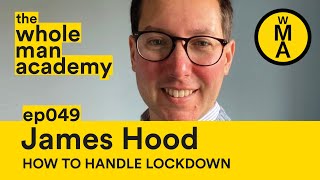
James Hood, co-founder of James & Jake, talks about staying sane during lockdown, building confidence through grooming routines, and why his skincare brand uses natural ingredients and masculine branding. He shares practical lessons from launching an online business during COVID.
So this is the whole Man Academy podcast. Today I am excited to be joined by James Hood, who is the co founder of James and Jake. James is going to explain more about the company but we've been very lucky to have James supporting us with the whole Man Academy pretty much from the start actually. So we're going to be covering the story of James and Jake starting an online business which I know a lot of people are interested in, especially with people being at home a lot now. Men's mental health, men's cosmetics, the use of natural products and anything else manly we can think about. James, how are you and where are you, sir?
I'm great, thank you. Thanks for having me, Anthony. I am in Oxfordshire at the moment, so yeah, usually London, but came out here at the beginning of the year when lockdown happened and haven't actually left, so.
So you've been here whole time. Have you been out at all? As in, have you been into London at all?
Yeah, I came in actually the last time in March I was there was for a Whole Man Academy event. It was for our burger night and I had been in a couple of times when they sort of eased the restrictions just for meetings and to go for dinner and have to do something nice sort of mid summer. But yeah, since the last sort of, since the restrictions have been tougher and they've sort of recommended people work from home. I've been, I've been out here.
So yeah, what's it been, working from home the whole time?
I think it's got pros and cons. You get a lot done, you can focus a lot better, you could. There are fewer distractions. But I think ultimately you need, or at least for me you need a bit of human interaction. It's. It can be tough if you are alone, I think to not have someone to bounce ideas off of and just. Yeah, to have general chit chat like. Which is great, which is one of the benefits of being in the office. I also think it's difficult from a business perspective. Any business owners out there who are trying to operate 100% from their homes, particularly when you're a small company and you're trying to sell to businesses or just do business speak with suppliers, it can be challenging but you have to sort of find the good in it.
I was going to say, I know there's, you know, we cover this a lot on the podcasts and I spoke to someone this morning who they are quite happy with working from home, but because they've got a partner and children and no money Worries. Um, and we said. But actually, you know, I know another guy I spoke to on Tuesday who is working from home but is single. So your existence is getting up, getting on your computer, sitting all day on your own, and then, you know, maybe doing a bit of exercise. So then you're sitting, watching TV overnight, and you're not actually having that interaction with people. How have you found it? Because with the business, do you have a lot of different meetings and are they all there for On Zoom?
Yeah. So, I mean, things scaled back massively. We, you know, we sort of. There was a lot less of that going on, sort of meetings. It was a bit more. I mean, I did a lot on the telephone. So, yeah, I mean, Zoom has been a godsend. But I know what you're saying about being alone. And I. And I did worry for a lot of people that I work with, freelancers, you know, we work with a lot of sort of creatives for the company and suppliers as well, who find themselves at home alone all day long, and they sort of go from the bedroom to the coffee table or the sofa or the kitchen table and then finish their daily work and then they end up back on the sofa again and they sort of don't leave those four walls. So, yeah, I had concerns about, particularly the younger people I work with, because I know you mentioned, obviously, people with families and partners, they. They kept very busy and they sort of get to the end of the day and they can have some quiet time when the kids have gone to bed. But, yeah, people who are sort of working for us on their own or perhaps in shared accommodation where they sort of live in close quarters with other people. I definitely was sort of aware of that issue for people during lockdown.
It's something I know we've, you know, we've spoken about before, and I know with James and Jake that the thing with the whole Man Academy is we want to make sure we align ourselves with companies that want to do some good in the world. And I know for you, you come on board with the whole Man Academy pretty much from kind of the first couple of events. So could you tell people why you, as the spokesperson for the company, were interested? Because I know you write your blog as well, and you've introduced us Olympic rower and different people. So why, for you, is it important to be part of something to do with men's health? Well.
We make skincare that conditions men's skin without ever compromising their health. And that includes, for me, the body, in the sense that we make products that contain A lot of natural botanicals and high quality ingredients. And we avoid certain, what we call, I would refer to as junk. The same way that you sort of think about the junk food that you consume, but it also includes mental health. So when creating the brand, we were quite deliberate about making sure that there were no shame tactics in the marketing and that I wanted to avoid any notion of this toxic masculinity that, you know, it's. It's okay to. It's okay to moisturize, but make sure you're off rock climbing afterwards. You know, I wanted to make sure that there was no sort of sense that there was anything to be ashamed of in taking care of yourself in mind, body and skin. And so the mental health element of that has been prominent from the beginning. And combining that, I mean, I have my own. I had my own mental health struggles before even making, creating this company. And it's obviously more prominent now and prevalent and been much more widely talked about, which I think is brilliant. So it all just came together and made sense for us to support men's mental health because I think that what we do actually has. I like to think that what we do has a positive impact on confidence and then self esteem and the way that men move through their lives.
Yeah, I think you've touched on it there. The event. We did one of the events at Geese and Hawkes when it was about strength through style. You know, does what you're wearing and your appearance might have an effect on your, you know, your mindset. And I think the resounding one was, yes, we know what it's like when you will you feel good and you're taking care of yourself. And also for us, if you want to go deeper than that, what you're putting on your skin is important to you because your skin is like a sponge and you're. If you're putting on stuff with a load of crap in it, unfortunately that's going to be absorbed by your body. So that's why when we, when we first got, you know, was contacted with you guys, it was important that it wasn't just something that looks good and smells good. It's that it's actually got some, you know, some actual natural ingredients in it instead of a load of chemicals.
Yeah, well, that's really nice to hear because we, you know, it's been a passion, something I'm really passionate about from the beginning. I didn't. I have, I've used products for a long time and I've been, I've had all sorts of Skin concerns throughout my life and I felt from a very young age that using products on your skin and it comes back, it's very similar. It's very similar to a men's diet as well. But using products on your skin that contain a lot of harsh chemicals or alcohol or colorants, it seemed, and I got this very early on, seemed very counterintuitive. I take care of your skin with a product that's essentially going to cause harm to your skin. So we were very clear from very early on that that should be important to the products, but also to the ethos as well. I've been quite open and people get surprised by my response to this but or approach. I've been quite open about the fact that skincare is actually not the first step in looking and feeling great. I don't want men to come to our website expecting some magical potion. They work, don't get me wrong, they make you look and feel terrific. But I always said, you know, health comes first. There's no health before. Handsome is a good way to think about it. And that's why, you know, one of our slogans is eat right, exercise, moisturize. I think living well helps you look good and feel good.
That's such an important point because I've said it countless times. From the whole man academy perspective, we see a man as made up of many segments. And, you know, you might have loads of money but really be really unhealthy or you might have a thriving business but your relationships are crap. You know, you might have all those things, but something else is not doing very well. Which is why we had our how to do Life Better exercise, which is the free downloadable and say, look, what are the eight segments of your life are important to you? Rate them all and which are the ones you want to work on. Because often guys don't give themselves the gift of actually sitting and focusing on themselves for a while. So as you said, using great products isn't necessarily going to be the magic potion to make you feel better because quite frankly, you're the one that gets to decide how you feel. But it can be one of those extra pieces in the jigsaw that can really help.
Yeah, I think that's brilliant point as well, because I'm, you know, confidence is key to feeling good about yourself. I think that's an important message. But, you know, I'm very uneasy with the concept that how you look in any way affects who you are and your value in life. When you, you know, grooming is terrific, I think you Know, taking care of yourselves and looking good for yourself and for other people is part of life these days. But when it starts to impact how you feel about yourself, I think you're on sort of, you know, risk, sort of rocky ground there. I think you should, you know, first focus on who you are, your values, what you bring to the world, and then work on. Work on the rest.
That bought me there was a saying that I'm trying to think which podcast we used on being comfortable in your own skin and being confident in your own skin is priceless, because I remember one of the guys that had seen one of our whole Mountain Academy events at. I can't remember whether it was at South Press Hotel or. So House doesn't really matter. Maybe it was Savarov because he messaged and said, look, I see that everybody there is very smartly dressed and wearing suits and what have you. You know, I always just wear shorts and is that going to be okay? And I messaged back, said, I couldn't give a shit what you wear, Whatever you feel comfortable in. For some of the guys, they're getting dressed up because it feels quite nice to, you know, sometimes a lot of us spend a lot of money on the suits, and they don't wear them very much, especially at the moment. So I said, you know, the guys are wearing them probably because they're coming to Savile Row. And, you know, it feels nice to get dressed up, but if you turn up in flip flops and a Hawaiian vest, I really don't care. And he was like, all right, that's so. It's so refreshing to hear. I was like, whatever you're comfortable in.
Yeah, I think I love that. And I say the same about, you know, grooming and skincare and hair and people have. Trust me, I say this to people. You have so much more to give than what you look like and how you show up to somewhere. Unfortunately, that's changing, I think, you know, formal events don't have to be quite so rigid with dress codes anymore. And, you know, we should be more open, I think, to people being themselves. You know, I think one of the problems that men have these days is that they feel sort of pigeonholed into a box and they kind of have to adhere to certain rules, and that sort of prevents you from expressing yourself a bit better, you know, that's huge. I hope that one of the things that lockdown has shown is that you actually. It's who you are that matters and what you contribute to a conversation and what you, you know, how good you are at your work or how good you are at home matters way than how you present to people.
Well, you've just touched on, I know we're going to talk about the fact of people being forced to be at home, but also there's going to be a rising amount of people who are going to be out of work already are or are going to be soon. And I think, I know I've noticed a rise in adverts for how to start your million dollar business online in three easy steps. And you're like, unfortunately it takes a bit longer than that. So you know, you're a living, breathing example of someone that's got a basically online business. And I know, you know, we've met up and we've had countless coffees and it's always a pleasure to spend time with you. But how for the guys listening, what was it like for you with the challenges of starting an online business?
I mean, I think the biggest question you have to ask is, is am I creating something that A, I have an interest in and B, other people will haven't have an interest or need for? I think, you know, that one of the, one of the way, one of the main reasons people fail in my experience is I think it's. I know passion is a word quite commonly used and flippantly and I don't want to sort of overuse it, but you have to love what you're doing because when the road gets rocky and things go wrong and you have a really crappy day, something has to bring you back to it the next day. And only an interest in what you're doing, a love for it, a passion, a belief in the problem you're solving for someone, the value that you're adding to someone else's life is going to get you through that. You know, I think you can make a lot of money if that's your goal, setting up a business and going and selling online. That's the beauty of the Internet and the way we're living at the moment. But yeah, I think you need to make sure that you believe in what you're doing before you even get started and make sure that there is an addressable market there for the product. Because now it takes minutes to set up a business, create an idea, create a service or a product, but you have to make sure that it's connecting with people and it has to connect with them in a new way because there's so much competition, there's this attention economy now, finding people finding you and you finding other end customers is so much harder.
Well, let me ask you about that because I had some good discussions recently with people who have commented on Instagram being so saturated now with adverts that they're not seeing the same return on investment of ad spend. And I just wondered if you had any thoughts on that or what your experiences of it.
Yeah, I mean, Instagram, again, is about attention and I think you need to be very conscious as a business, a about where your customers are, if that is where they are. I think you are probably doing the right thing to try and reach them across Instagram or other social media platforms. Where I think it sort of misleads or people get misled is that it can instantly convert to customers, when in actual fact, what I've seen over the last few years is customers buying less because you've got their attention and much more because you're adding value, which obviously is a bit of a given with a business, but. Or they believe in what you're doing or they buy into the brand. And I think that social media is much more valuable when you combine it with useful resources or entertaining content. So by all means, use them. But I think, you know, an advertising strategy on a social media platform alone is going to get you eyeballs on your brand. It takes an awful lot to move those customers to convert. We do it and I think it can be terrific for brand awareness and it's great for getting, you know, if you're a new brand and you want people to understand the value that you add, it's terrific. And it is the way of life now, you know, is the way you have to reach people.
You said something which is, you know, are you adding value to people? I would say it's that, you know, what, what problem when a friend will say, or, you know, somebody talks to you, so I want to start a business and you say, what problem are you trying to solve? And sometimes people don't necessarily know the answer to that one. What if someone asked you about that question for James and Jake? What would be your answer to kind of what problem for men were you trying to solve with launching the company or the products that you've got?
So, I mean, there's sort of two parts to that. There's the sort of advice, the advice part, and then there's the James and Jake part. And I think for the first part, I would say make sure that that story is not just your own, but that the customer reflects that back to you. So it's great to have a brand story and it's great to say, you know, I had XYZ problem, so I created this product. But if you are going down the route of setting up a business, make sure that is mirrored with the customer so you're talking to them about their problems and that will resonate better than if you just sort of talk about features and benefits. But speaking of James and Jake, I mean, we, like I said earlier, we wanted to create a brand that. The conditioned skin. Because I had my own concerns.
Yeah.
Without compromising men's health, either physically or mentally. And I started. So I used to. I used to go. I used to sneak, or sneak into shops because I was embarrassed. I used to go at 15, as a teenager, you know, with terrible skin problems, I would sneak into the body shop and it was the only place I could go in sort of in my price range on a. You know, I probably had a paper round back then.
That's exactly where I was thinking was the shop I would have gone into as well and bought some tea trees and put it on my spots.
Yeah, exactly. Brilliant. I mean, they. They were onto something back then. I mean, they. They do very well now, but. Yeah. And I used to sneak in and there was a very kind lady in there that would talk to me about my problem, about my. My skin issues, and I couldn't really go anywhere else. There was nowhere in the right price range and there was nowhere where I felt comfortable talking about it. And a lot of the big skincare brands, the sort of multinationals and the ones that you sort of see in big department stores, they didn't speak to me as a man the way I would like. I wasn't represented by any of them. And obviously, you know, you have the tagline for men. I'm not going to name any of them because I don't want to get in trouble with their big legal departments. But, you know, you've got a huge brand and they attach the words for men on the end and suddenly we're supposed to believe that, you know, these products, these. These big brands really care about us. And not to mention that back then I couldn't afford them anyway. But. And I felt. So you've got sort of a combination of things there that you've got, that you've got quality ingredients for a start, that weren't sort of counteracting what I was trying to achieve.
Yeah.
And then you've got the everyday element to it. I didn't want it to be unattainable for people. And on top of that, you've got the Fact that I wanted to speak to men, I wanted to feel proud of buying products, and I wanted men to feel proud of having a skincare routine or having, you know, products that they weren't sort of hiding.
Yeah. I mean, the branding, all your products. And I know, because I've been lucky enough to use various ones, the branding is, for me, just right, because it looks smart, sleek, it's quite luxury, but without it trying to be too Fortnum and Mason type. So if I was trying to design something, I'd probably be just basically saying, just do what they do.
Thank you. That's very kind. But I'm glad you said that. But it's also quite a good lesson if you are starting a business that, you know, every decision you make has to. Has to be founded in or be grounded, I think is probably the correct word in. In your original mission.
Yeah.
You know, it was quality and it was. It was masculine. And I wanted a guy to be able to say, yeah, yeah, that's my moisturizer. You know, like, what, do you have a problem? You know, you have a problem with that? I wanted feel so masculine, and that kind of filtered through into every decision we made. So you'll see that the logo is actually inspired by the name tags on the military. In the US Military, they kind of have a little line crossed out of them. Yeah, Blue as well. You know, I mean, I don't want to stereotype, but, you know, blue is for boys. Yeah. So every decision and whether or not you actually think that we did the right thing or not, every. Every decision we made further down the line, years after deciding on the concept of the business, really was influenced by the original. The original purpose.
So, no, it's. It's interesting because as I was saying, if you. I've been using moisturizer for many years, and I think when I was younger, I was using someone with a load of shit in it. And that's a technical, scientific term, because I didn't know. And then when I met Emma, who's a nutritionist and has been studying this stuff for years, she's like, you're chucking that out. You're chucking that out. That's got this in it. And I was like, what were you talking about? And that's the thing. I know I only look in my early 20s, but I'm actually 42, so I've always used moisturizer. So it's really important to have one that feels good, smells good, and also, as you say, you know that what you're putting on isn't complete rubbish. So what would you say for the average guy should be his morning morning routine? Is it just, just being able to put moist, you know the moisturizer you do on? Because it's an all day moisturizer, isn't it?
Yes, it's an anytime face moisturizer. I mean you morning routine is tricky because it's, it does depend on your skin type and the condition of your skin and when you wake up. So my first tip to everyone is get to know, get to know what works. I mean I think you should be cleansing once a day. Doesn't have to be in the morning. So to be honest, if you're working, going out and about, I always say do it in the evening anyway.
So what, what does that mean? What should a guy be doing for cleansing? Yeah.
So there are, there are multiple products on the market like find a good cleanser, preferably not foaming because they tend to sort of be quite stripping of the skin. So you want a cream cleanser or a milk cleanser or a gel cleanser is also good. Put it on dry skin. I know that often people will do it in the shower or wet their skin first, but rub it into dry skin. If you ever had a facial you'll know that they actually put cleanser on dry and that means you're essentially not sort of diluting it and washing it around the face. So be quite targeted with it. Put your, the cream or whatever the gel is that the product you're using all around your face and then rinse off with sort of lukewarm water. You don't want it too hot. And I recommend using a face cloth, but I get that people are busy and you just really want to just probably splash the water on it and dry and go. One of the mistakes I think people make a lot is that they sort of strip the dry, strip the moisture out. So they'll end up towel drying really sort of rigorously to get that dry. But moisture is good, moisture is good on the face. So keep it, keep it wet and then apply a moisturizer when your sort of skin is still quite dewy. And that's, that's a really good routine. You know you, there are a lot of targeted products which you can use between the cleansing and the moisturizing. So I'd advise people to sort of identify what their skin type is. It's a myth that men have heavily oily skin. I think that's just on your own personal skin type. And then find a product that suits you so is it for hydration? Are you trying to sort of work out, even create a more even tone in the skin because blemishes or spots, well, maybe you do have oily skin and then just work out a routine for you. But you know, it's another what I always say, don't overthink it either.
Yeah, simplicity is key.
Simplicity is key. Yeah. But I think my advice is get to know your skin and have a look at it, you know, to make sure that you sort of seeing if there's any targeted concerns that you have that you need to address.
Yeah. Because I was thinking I've. If I always try and take the average of all the guys I worked with in the city or if I sat down now and said, right, I've got 10 of my mates who are between the ages of actually through the whole man Academy, my social circle has massively increased. So you've got a huge amount more of friends dotted around the country or even other countries at the moment. But most of them just can't be bothered to do the cleansing. They just want to put a moisturizer on, if anything. So that's why when I saw your, you know, anytime moisturizer for most the guys, I think that's something that, you know, if someone's buying them a present, it's something that instead of thinking, oh shit, is it that one in the morning and that one in the evening and that's a face one. But you know, I can only put on a nostril on my left side if it's a Tuesday. It's like, listen, this is a good, you know, an all, a good all rounder, as some of my ex girlfriends were. But anyway, that's neither, you know, there's but someone who can find a product and not be too confused and just keep it simple and say, you know what, wash your face, put your moisturizer on from James and Jake and away you go.
I love it and I totally agree with you. And actually what I want for this brand and have always wanted goes back to what I was saying earlier about how, you know, when I said you have much more to give than how you look and we were talking about, you know, being presentable at the Wholeman Academy events and I stand by that and I think that grooming is terrific, like go nuts. If you enjoy looking after yourself and looking good, I think that's wonderful. But there is a, there is a limit and I think that, you know, you really want to be living your life and I say that as someone who owns a skincare brand. Because I believe that you want to be able to do whatever you can to look and feel great, but then get out there, you know, like, get. Go. Go live your life. And I don't really want to build products that create a lot of fuss. Is, you know, this is for. This is a brand for men's lifestyle as much as it is for their skin.
Yeah.
And, you know, grooming. Grooming is great, but I also think that there is a lot to be said for a little, you know, leaving a little bit of rough around the edges. Like, we don't want to be too preened all the time and sort of perfect. Like, I have zero interest in perfection.
I'm trying to give it up.
You know, I think we've been sold on perfection.
Yeah.
Magazines and by businesses and marketing departments because that's what we should be striving for. And, you know, everyone. And I think people get quite obsessive about how they look. But, you know, I think there's something deeply cool and potentially even sexy about, you know, not shaving one day or, you know, not spending hours looking in the mirror, tweaking your eyebrows. Like, you know, as I said earlier, you've got a lot. You've got a lot more to give.
Yeah. I think it's. I know we've touched on this before, but the rise of social media, especially things like Instagram, where it's selective, you know, selective sharing and you're not seeing, you know, the average person, like it or not, if they're taking a photo, firstly, everybody looks at themselves first. If it's a group photo and, you know, even if everybody else looks great and you got slightly blinking or gurning, you were like, no, it's a terrible photo. Get rid of it. Everybody will take lots of photos and then find the one that they look best in. So it is selective sharing.
Yeah.
On top of that, I know with, let's say, the Men's Health magazine and those cover models, you know, that guy with the sculpted abs and the chest where it should be in the arms and the shoulders and all the bits and pieces, the lighting is brilliant on that. And, you know, he will have been training. The likelihood is he's been training hard for that photo shoot. And again, the lighting and everything can make such a huge difference. But we're shown as that to be, oh, he just. He just jumped out of bed and he's like that. And you're like, unfortunately, you know, it's not really attainable for most. Most men. And not to look like that all the time.
Yeah, I agree. And I think that unfortunately now, I mean, I'm moving into another realm, which you might not want to go down yet, but, you know, now so much more accessible. You know, I think magazines have always been guilty of events sort of making. Creating an ideal world that people need to sort of strive for or body. And now with social media, it's so much more accessible and you can see it in an instant as soon as you turn on your phone. So that, that does nothing for feeding this culture of comparison that's, I think, having quite a detrimental effect on people.
I totally agree. I said it on the last podcast we did, I believe, which was comparison is the thief of joy. Because there'll always be someone, I'm sure. Actually even at the, at the event we did when Gaby was it. Yeah. When he said, even for him, he's now, what, 40, is he? Or 40, 41. But he said even he sees on Instagram, you'll see that, you know, the young guys, and he's just like, God, those guys look good. And of course, a few guys next to me, like, for sake, like, if. If David with the body that he's got. But then he would have been to the gym every day for probably the last 20 years.
I was at that event and I wanted to high five him in the middle of the day because he. I think it's really important for someone of his stature in society and with his fame and let's be honest, appearance to say which he did that day, you know, he looks through social media and he asks, why didn't I get that job? Like, why wasn't I booked for that campaign? And he had to really. He worked hard to train his mind to remember that, you know, that person lying on a beach in their Orlebar brown shorts has actually been sent there by the hotel, the holiday company and given shorts and, you know, it's not real.
Yeah, that's basically. You've just said it is not real. And, you know, people struggle to realize. And I worry more for the, I think, you know, guys of my age. How old are you?
40. Just. Just.
Just 40. So still young pup. But, you know, I'm. I'm 42 now, so I don't really give a shit about that stuff, but I worry for, you know, kid. I call them kids in their 20s who are bombarded by, you know, these images of guys. Although the interesting one now is I spoke to someone who's deep, deep in this industry the other day. So It's a very opening conversation. And he said, and I had as well. Have you noticed that so many big brands are now creating the men look kind of asexual? And you had Gucci the other day, I think had, you know, their campaign was with a guy that, quite frankly, just looked like a girl. He had a dress on and long hair. And you're like, I'm not sure that that's going to appeal to people like me. Maybe the youngsters who are confused about the way we all dress, maybe it's us getting old and long in the tooth. But it's interesting how, you know, your marketing for James and Jake is, you know, a guy with a bit of stubble, good body looks. You know, he looks like a professional male who lives in a pretty nice apartment or a house, which I remember seeing. But, yeah, it's just interesting to see the switch away from the stereotypical male to guys wearing dresses. But I don't think you'll see me in any of that, unfortunately.
I mean, I think there's a. I agree with you. I'm not going down that route anytime soon. But I guess the younger generation, certainly, we notice in our research and when from just anecdotal chats with our customers that they are quite interested in a world where there is this gender neutrality and a lot more sort of fluid sexuality, I suppose, is the way to describe that. And I think it's a good thing from an equality perspective. I would go back to the point I meant we talked about very early on in this conversation, which is, who are you? You know, men do struggle. You know, this is the whole Man Academy podcast. So, you know, I can. I feel I can probably say without getting too many letters, that men are struggling, I think, with finding a place and understanding who they are and blocking out a lot of the noise.
Yeah.
And now, you know, now we're telling them it's not okay. You have to be gender. You have to be more neutral, and you have to be more open, and you have to be whatever. You know, ultimately, I think any kind of labeling is not necessarily a good thing. And like I said earlier, who are you? And try and sort of switch off the external noise that's telling you otherwise.
I know you said about noise, and I think that's it. There is so much fun if today we're recording this on the day the election result is, or if it does get resolved today. But there is so much noise around at the moment with all the social media and, you know, everything else that a guy's Expecting to keep up with. How do you. I was thinking back because you came to the event where I spoke at Daylesford at the start of this year, didn't you? Which is their first and as far as I know, only ever event for men. Which tells you something. It tells you two things. Good that a company of that size are saying, do you know what, let's do an event for men. Because it's all for women. But interesting that a company that haven't ever done any events for men, but at least the tide is, you know, very, very slowly, or there's a drip, not a tide, but it's turning for you. How do you kind of keep. I mean, you're very busy, so how do you stay fit, healthy to an extent, and also keep your head straight because you've got, you know, a lot of work to do with running the company.
I mean, fitness wise, I would say I never beat myself up too much about either doing too much or too little. I try and get my heart rate up on a daily basis and we'll do a run or make sure I get fresh air. I've been fortunate enough to be able to do that this year, being pretty much in the countryside and going along walks, that kind of thing. So that's been quite easy this year. And I watch my diet and mentally, it's been a long road actually, to make that resilient, which is something I know Academy is promoting, promotes. But for me, the key to that is separating those thoughts from who I am. Like one of the breakthroughs for me when I. Because I went through massive periods of anxiety and self doubt and self loathing which all stemmed from, you know, issues with appearance actually, as a teenager, being painfully shy and sort of removing myself from society. And anyway, it was a long road to sort of build up that confidence again and that resilience mentally. And one of the breakthroughs, as I was saying was, was realizing actually all those thoughts, all that kind of negative self talk that people have bombarding them, sometimes it can feel like such a weight is actually very separate from who you are and it's very separate from reality.
Yeah.
And I think so to stay mentally strong, it's a case of quietening what you're hearing and being very still. And, you know, I don't want to get. I don't want to sound like a Californian Hollywood therapist from a movie, but who are you? You know, that's what reality is. Stand firm and be grounded and understand that what you're facing, as you've said, before, to me, what you're facing is actually it depends on how you frame it and how you think about it, which creates your world. And I think that's a real key. I think as well, the past is the past and I think people need to focus a lot more on where they are right now and what's the step. I often think that about when I'm facing challenges in the business or in my life. What is the next move here? There's a great quote I love by Arthur Ashe, the tennis player who said, start where you are, use what you have, do what you can. And it's a mantra. I wish I could put it on the wall because I think it stops you from looking in the past. Like I think, I think it grounds you in reality. Where am I? What do I have? What resources do I have to sort of solve this problem? And it works for a lot. So it works for, you know, if I have an issue with a stockist or a complaint versus suddenly you're in a pandemic and you get made redundant, likes at both extremes. And your mind sometimes doesn't help you. It clouds reality. So that would be my. That would. That's really mental strength for me is sort of separating the two.
I think it's good. I had a vision of you printing that saying Arthur Ashe saying out and pinning it to your. To your wall. And I think you said something there about, you know, for me it's about how can you. There's so much going on at the moment and we're bombarded by, you know, for people with emails and whatsapps and Twitters and all these different things, if you've got any of those and then you have work and you have family life maybe and etc. For me it's always about how can you spend some time quietening your mind so you haven't got all this, be it early in the morning meditation or just going for a walk. We're lucky we both live in the countryside and you've got a dog, so you're kind of forced to. But taking, as David Gandhi said at the event, taking time off from social media and. Or electronic devices and trying to get out because it feels so good when you do that. You just kind of try and detach from, you know, all the digital world that's going on around you.
Totally, yeah. And you do remember again going back to sort of like the therapist viewpoint, but you go back to nature and you suddenly you get a sense of how connected we all are as humans as a You know, on a planet. And that actually, you know, is really grounding. I think it gives you a sense of perspective as well. I'm all for. I'm a huge advocate of switching off your phone. I think it's great. And people don't talk about it enough because, again, you know, society has trained us to be on the phone all evening, you know, late at night. If we don't respond, we're bad employees.
Yes.
I, I categorically don't. I do not accept that. And I'd like to think that when we are, you know, anyone that works for us is not expected to respond unless it's on their own terms, in their own time, you know, notwithstanding potential dramas or, you know, or issues that we might face that need urgent addressing. But on the whole, yeah, switch off. Give yourself some downtime that you made.
Me think then about the joys of WhatsApp. When you can see someone's Reddit and they're online, because if you send an email to someone, they might not have seen it for a day, but when you send a WhatsApp or they send it to you and then, you know, they can see you're online so they know you've read it. And it might be a Sunday. I've had it where clients will message me at 9 o' clock on an evening and I might have just sat down on the sofa after putting the kids to bed and doing this and this, and I'm like, I'm sitting down. But you feel compelled to reply because they can see you're looking at their message.
Yeah, well, please believe me when I say you don't have to reply. I mean that little blue ticks show up and they know that you've seen it. You have to be looking after yourself and your own life and families or work or, or even just having downtime is an honorable thing.
Yeah.
It's not a selfish thing and it's not. You know, unfortunately, technology now means that we can see when someone has received or opened an email or read what we've sent. But yeah, as the receiver, you know your own time as best you can. And you don't have to have any guilt for not replying until you're ready and can do that fully. You know, it comes back to being present, like I said, being grounded. When you're going through mental struggles, be fully engaged in that person and that response and that conversation on WhatsApp whenever you can, when you can get to it. And you know, you know, and that might not be for an hour or a day or whenever and be fully engaged when you're, you know, having the Cheerios with the kids in the morning. And that's one of the reasons why people struggle so much is that they're sort of semi concentrating on this and that and you sort of, you're not present.
That's important for, you know, always trying to say tips for guys is if you are working from home, it's trying to. And I've had issues with it in the past where, you know, I don't work set hours. So sometimes you'll be halfway through seeing an email on your phone and then you'll come out and the kids are having lunch or something. So you're half. Yeah, yeah, yeah. Talking to them and then you're scrolling at your email and yeah, I'm just gonna. And you realize that your children are looking at you, looking at something that they deem more important than their attention is some device. So it's often very much like, right, hold on a minute, have I finished work now or not? Or if not, am I going to go back to it? But I have to try and leave that stuff alone.
Yeah, yeah. And it works the other way as well. So you end up, you know, going, yeah, yeah. And it works the other way as well, so you end up, you know, going to your work and then you, you get distracted by social messages or Instagram or Facebook or whatever that might be and you're not fully present in your work as well. I think, you know, it's easier said than done. I'm not proclaiming to be an expert at it, but focus, you know, focus takes time. Engage with your emails, engage with your replying to your whatsapps, and engage with your children fully and make sure you're sort of focused every moment on those one things and hopefully a lot easier too.
I've already thought that some, you know, one of the things that were mentioned on, on the notes of the podcast is about, you know, for all of us is saying, you know, go and put your phone in or, you know, put your phone down, put it on silent, do something and just say, I'm actually going to be present with people instead of, you know, sometimes when you go out and it's really sad now and you, you go out and, you know, you'll see a family sitting, having lunch and all of them just scrolling. Yeah, no one's talking to each other. As I say, it's a contactless society.
Yes, it's coming.
I fear now if guys, we're going to put obviously the website on. But where should the guy start with your products if he wanted to buy some? Is it just heading to the website?
James and Jake.com is where you'll find our products. It's the best place to at the moment to source them. Yeah, yeah, yeah that's.
That's really what I'd say and I, I know myself. I've. I've had your athletes spray for feet which was nice. I was distraught when I went on holiday that somehow we put your post shave, you know, creamy balmy, creamy balm and put it in our hand luggage. They took out and said oh sorry this isn't. And then they chucked it away.
I was oh, that's not.
I was distraught but I managed to get over it. But yes, so and a jar of peanut butter but that's neither here nor There.
Is only 70 mil so they probably just wanted to steal it.
Yeah the guy looked like he had a bit of a beard so maybe that was what was happening. And yeah we always say like firstly for you, thanks for supporting the whole man Academy over the years and we're only about to get bigger and grow stronger as it were from here so you know we appreciate all your time and your. And your products that you've kindly given out.
Well if you need, if you just let me know what else you'd like if you use up your foot spray. Are you doing much exercising in the. I suppose you are in your gym.
Every day some kind of exercise. I'm not saying necessarily it's all hardcore stuff but yeah it's. I think that's for everybody's get is try and get outside as much as you can before they ban you like they have in New Zealand's Australia from literally, you know, going outside for more than one hour a day whilst you can. You'd be surprised what when it's taken away from you, you. You have a new appreciation for just getting outside. So.
Yeah. Yeah, good.
Right, well I'm going to let you go as always I appreciate your time and always say to the guys listening, if you've enjoyed the podcast and want more information you can email me anthonyoleman Academy if you haven't already subscribed. What have you been doing? But we have hundreds of guys on the email which goes out on a Friday and some other bonus days. So just go to the website and subscribe to the E letter and you'll get the free 30 minute exercise on how to do life better. We're also on Instagram and on YouTube and on Facebook and Twitter. Feel free to follow us and then go and follow James and Jake as well. James, I wish you well, my friend, and hopefully we'll meet up for a coffee soon.
Can't wait. See you soon.
Thank you, mate.
Thanks. Bye.










