EP052 - The Power of the Little Things - Ryan Palmer
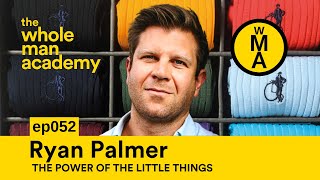
This is a YouTube video titled "EP052 - The Power of the Little Things - Ryan Palmer" containing an English podcast episode recorded in December 2020. The episode features Anthony Astbury as the host interviewing Ryan Palmer, co-founder of the London Sock Company. They discuss the origins of the company, the importance of style and confidence through small details like socks, entrepreneurship lessons, and the relationship with their business partner David Gandhi. The conversation covers business insights, personal routines, and the value of authenticity in building relationships.
So this is the whole Man Academy podcast. I'm Anthony Astbury. My guest today is Ryan Palmer. Ryan is the co founder with Dave of the London Sock Company which we're going to get into. We're going to talk about London Sock Company itself and how it was born, the British brand that it is, Mr. David Gandhi being part of it, the great socks, the good causes they're part of and anything else we can think of that is there with business, entrepreneurship and doing life better. Ryan, how are you and where are you, sir?
I'm very well, thanks. I'm currently kind of central west London, so Lancaster Gate west, which isn't the worst place to be spending lockdown and semi isolation being really close to Hyde Park. So I'm one of the lucky ones.
And how has it been for you? Because I know we spoke briefly before we started about you'd pretty much been working from home since March. So apart from necessarily the company, what has it been like for you? Because I guess you'd never planned to work from home, hence why you've got a nice office.
But yeah, I mean, to be honest, I've actually really enjoyed it. I think it's been a great opportunity to almost kind of just pace at your own time. Whereas like when you're in the office, like you're, you're so distracted by, you know, kind of people coming up to you, people wanting to talk to you, people asking questions all the time. It kind of seems that the kind of homeworking almost kind of like eliminates that and people wanting to communicate. You know, we've got, you know, we use Slack and it's a phenomenal, you know, kind of tool for kind of communications within the company. But you don't need to be immediately reactive to that. You know, you can kind of spend a bit of time just kind of continuing to focus on what you're actually doing. And you know, it's very different. It's very difficult for people, you know, when you're in the office to kind of know when you're really focused and when to distract you and when not to distract you. So, you know, I think it's been, for me personally, it's been, it's actually been, it's been quite, quite pleasant. I will look forward to going back into the office maybe, maybe a couple of days a week. But I think, you know, kind of, you know, a five day a week office routine is probably out the window and probably for a lot of businesses.
Yeah. Gives you a bit of versatility, I guess, if you can break up your week and go in. Does that mean that you've. Every day you do, you find yourself getting, you know, having a morning routine and getting dressed, ready for work? Because I know that's a lot of the, you know, for a lot of the guys, it's a. It's a mindset thing to start the day.
Yeah. So I've kind of gone into. It's actually probably a better routine than I was in before because what I'm doing is I get up at usually kind of 7, 7:30, and I go outside. We're lucky. We've got a little bit of outdoor space. It's a tiny terrace, but doing like a half an hour, one of these kind of fitness apps. And just first thing in the morning, just kind of literally getting out of bed, throwing on my shorts, my T shirt, my trainers and my socks, obviously, and going outside and actually just getting some exercise before I've done anything else. And then it kind of sets me up for the day. You know, I think when it comes to kind of dressing, I've probably fallen into the kind of more, you know, kind of casual, but still caring, if that makes sense. I've not kind of fallen into that kind of that sloppy joe, you know, kind of just don't give a shit, you know, just gonna wear whatever I want.
Showering at lunch.
Yeah, I definitely, I've definitely found myself, you know, kind of more casual. And even when I've been having like important Zoom meetings, I'll still find myself not putting a shirt on, but instead wearing like a nice jumper or something like that. But clearly nothing below the waist.
But no, no, to be clear, we're both completely naked as we're speaking. Actually, it reminds me, I think it was Steve Jobs that said he basically wore the same. He just wore whatever was a white or black T shirt every day. Because when you're at home or if you're having to think about what you're wearing. So I'm going to just get 10 Wholeman Academy T shirts and just rotate them. But let's talk about the London stock company, because was it 2013 that you kind of co founded it with Dave? And tell us a quick bit about how and why the sock company came about.
Yeah, so it was the tail end of 2013. We didn't actually have any socks until 2014. We got let down by our factory and we ended up selling IOUs for the socks to arrive in January to friends and family. That was our kind of official launch. But yeah, I mean, really kind of it came out of the realization that, you know, men have got very few opportunities to add individuality and personality kind of in a professional environment and in a stylish way to get noticed for the right reasons. And, you know, we were both in the corporate world. You know, everyone was wearing the same color suits, the same color shirts, the same color shoes. You know, most of the people the same color socks and. Less. Exactly. Less and less guys were wearing ties. And, you know, you could see this kind of almost kind of real, you know, Aaron, to kind of. To try and add that bit of color and personality. And, you know, guys were doing it through these really kind of like, novelty socks. And, you know, we would just see them and just be like, you know, that just, like, that just doesn't really look very good. Looks a bit shit. You just don't want to be, you know, when. Like, when you're looking in an important occasion or in any occasion, like, you just. You don't want to be known as the fun sock guy.
Right?
You know, you want to be known as the guy that just looks good and he's stylish. And, you know, you can see that attention to detail, and that says a lot about who that person is. And we kind of thought, well, we were really inspired by this whole kind of wave of subscription that was coming from the US and we hadn't really kind of stuck on the SoC idea. It was just an observation that we had. And we kind of thought, well, let's actually do a proper exercise to think about, well, what does someone do from the moment they wake up in the morning to the moment they go to sleep? And then it was just looking at observational growth industries, you know, so health and fitness, you know, vegetarian and veganism, men's fashion, you know, kind of sustainability, et cetera, et cetera. And then looking at, okay, well, where do we think that we could create an opportunity for subscription where we can have that recurring relationship with the customer, where we can really kind of build a community? And we just. We just strangely kept coming back to Sox, like, for some reason. We just, like every time that we were. We were trying to kind of get away from it, you know, we would just get pulled back in again as, you know, it's. It's an accessory, you know, but it's also a commodity. You know, it's a hugely popular, giftable item as well. So, you know, you've got your kind of. Your male customers, you know, for kind of like the wearers. You know, we were very much focused on that Kind of male brand element, but also you've got your female customers as your gift buyers.
Yeah.
And we really kind of, when we were. When we were researching and looking into this further, we couldn't really kind of find many. Any brands that were really owning the category. You know, there was lots of brands. I mean, clearly most menswear brands sell socks, but for most brands, it's an afterthought. It's not something that they're really kind of focused on quality, on the style, on the attention to detail. You know, it's really just that it's a, you know, it's a till purchase. So we kind of saw this opportunity where actually we could really kind of, I guess, kind of help guys, you know, feel better about themselves every day by thinking about how we can add that bit of color, that bit of personality, really help them get noticed for the right reasons. And it kind of all went from there.
Well, you said the word color there, and that was one of the big things. You know, think back to when I worked in the city. I only ever, I think, wore black socks. And quite frankly, I didn't have the courage to attempt to try and wear anything else because it probably looked a bit shit because I wouldn't have known what to pair it with. And as you said, you know, now I always look at your Instagram and you can. It gives you the ideas to how you can pair up, you know, a yellow pair or a red pair or a blue pair of socks with the right colors and not look, you know, like you've got confused and got dressed in the dark. So I think that's. I'll thank you for that because I use it as my pin board for style.
I think that's most guys problem, to be honest. Like, I think guys are notoriously bad at kind of styling and fashion. You know, it's like all you've got to do is just look at the catwalk to kind of realize, you know, how guys just have got absolutely no idea what's going on. And it's so true. You know, it's like, how on earth, like, can you translate, you know, kind of what I'm seeing in a catwalk into, you know, kind of what's being sold in the shops. It's just so far removed from kind of comprehension. And for us, it was the same where, you know, unless you're inspired, you know, kind of visually to kind of show you how good something can look, it's very difficult for you to kind of make that, you know, decision, you know, Kind of yourself. And. And it is actually a skill. It's a skill. Like, it's something that, you know, I mean, when I first started learning soccer company, I'd probably put myself in terrible bucket as well. And, you know, you do learn. You can learn about colors, you learn about tonalities. You know, you learn about, you know, the difference of kind of, you know, what you're wearing and what it might go with. But I think. I think kind of what's interesting is that most guys have a. They go and they go on their own journey, you know, and it might start where, you know, like yourself, you're a kind of. You're a black sock guy, you know, and then you kind of say, okay, well, you know, maybe I'll. Maybe I'll be a little bit kind of dangerous and go for a. I don't know, maybe I'll go for a burgundy, you know, Risque. Exactly. And then can the next thing, you know, like, people are commenting saying, oh, like, I really like that kind of bit of detail. And you're like, oh, you know, maybe I'll try a bit of mustard or a bit of pink.
Yeah.
You know, and the more inspiration that you can get from seeing examples of guys kind of wearing, you know, similar kind of styled outfits to what you do, but adding that little bit of detail and that little bit of color and, you know, and what can be a subtle way or what can be quite a boisterous way, you know, again, that's all about, you know, kind of personality and giving, you know, kind of that person the opportunity to be an individual. But know that they're going to get noticed for the right reasons.
That's. That's just what I was thinking about the amount of time since I moved out of the city and up to the Cotswolds. But I've been lucky enough to be wearing your socks for about two years now. So, you know, I've gone through the whole range of them, and it's probably one of the things that. Especially when you're sitting on a. On a trainer in a meeting, that people will notice when you've got bright colored socks, but you look good with. Will be that kind of, oh, where did you get those? You say, well, you want to check out London Sock Company. But that, for me, was one of those things. I know. I saw it on your website. You know, great socks aren't just a finish, finishing flourish on an outfit. They're the first step to effortless style. Um, and that's how I feel. There's a lack of getting dressed and going out at the moment because most people are working from home. Um, so putting on, you know, for me, getting dressed in the morning and putting on to start with a nice pair of socks is the first step in feeling that you're not just slobbing around the house, basically.
Yeah, I think as well, like, I mean, like most people are at home, like socks are technically the new shoes, like shoes around the house. So I think it is a detail. And one of the reasons that we kind of really were excited about at the start of the potential of the brand was the feedback that we were getting from guys who were used to kind of wearing pretty cheap, kind of poor quality socks and then experiencing actually kind of the difference of pulling on a really nice pair of socks that has got really nice material. That's the right kind of level of craftsmanship, you know, and the right kind of color vibrancy and actually like, it makes a difference to kind of how you feel. And we would get people saying that, you know, that they would wear our socks now as their lucky socks. So they'd be going into these kind of situations, whether it was, you know, a guy who kind of proposed to, you know, kind of like his girlfriend or, you know, another guy who he basically closed like the biggest investment deal of his life. And you know, they really make this association with, you know, it's a small detail, but actually it can have a big impact. And that kind of, you know, that opportunity to really kind of inspire that confidence and self belief and I think really kind of fundamentally to help, you know, try and make people feel better, you know, about themselves every single day. You can achieve that by small things, you know, like, you know, putting on a nice pair of socks. And I know it can sound a little bit ridiculous, but we've had so many stories from so many of our customers, you know, who have written in to tell us that and to share these experiences. It's pretty amazing, I think.
Funny, that leads me on to. I remember when we held our event where David Gandhi spoke at Geese and Hawks, when they were kind enough to allow us to take over for the night. A whole Man Academy takeover. But that was kind of the, you know, the basis of, you know, does what you're wearing affect you, the way you feel in your mindset and you know, talking to. Even if you, even if you haven't listened to the panel, talking to the guys afterwards and beforehand so many of them said, you know, getting. It's a bit like that saying, make your bed in the morning, start with that and it will help your mindset. But wearing the right things for you make you feel it might be those little compound decisions that make you feel a little bit more. Give you a bit more confidence through the day. And I think that ripples on to the way you hold yourself, the way the decisions you make, especially if people are working from home. So I think you're ticking the boxes now. For me, I know that with the London soccer, it's been kind of a bit an adventure because it's, as you say, roughly say, six, seven years. What was it like when you first tried to start the. Or when you got your first pairs of socks and then started sending them out?
It was. I mean, it was exciting. I mean, unfortunately, not many people bought them. So it was one of these. Yeah, exactly. You're like, you know, you kind of. You think, right, you know, this is. Is going to be massive, and we're going to make this huge from the start. And then you launch your website and you can look at the kind of traffic that's hitting it. It's like, you know, one person and you're so excited, and then they don't buy. But, yeah, you know what? Like, it's been a journey, and I think that's been something that we realized very early on that, you know, there isn't really a destination. It's really about the journey, and it's about enjoying the journey. It's about celebrating kind of like things that go well. You know, it's not taking things too seriously, and it's just making sure that you have fun. Like, if you're. If you're starting a business and you're not having fun and you're stressed out by it, you're probably doing the wrong thing. You know, it's incredibly hard. You know, it's very. It's very kind of like all kind of encompassing in terms of the amount of effort and energy it requires. But, you know, you either love that or you don't, you know, And I think for us, you know, when we first started, like, we. I mean, to be honest, we started with a mindset of, well, we'll just do this until we come up with a better idea. And here we are kind of seven years later, and, yeah, it's been a really tremendously exciting rollercoaster of a journey with lots of ups, lots of downs, and you just realize that it's never as good as you think, and it's never as bad as you think. It's always kind of somewhere in the middle.
That's a good one to remember. I might have to write that down for our Instagram quotes. What's it been like with you and Dave? I mean, firstly, how did you meet, but your relationship? Because as we all know, going as a business with someone is a bit like a marriage, as it were, especially if you're going to be working together and there's money on the line. So how's that developed over the years?
So we used to work together at Accenture, so in kind of slightly different parts of the business, but in the same kind of focus area group. And we were just really good mates. Like, we just, you know, we shared a love of, you know, kind of drinking, you know, kind of going out, having a laugh. You know, we would go to kind of various events and just always be the ones, kind of like, you know, the back of the room, standing by the bar, kind of, you know, and we just. We just had a really kind of good connection, you know, lots of similarities in terms of, you know, both entrepreneurial, shared values, shared outlook on life, I think, shared sense of ambition and, you know, both very, you know, both very kind of, I think, aware that, you know, Accenture, which is kind of where we were at the time, was about us trying to learn as much as we possibly could about big business, but it was a stepping stone to us going and doing our own things independently. And we weren't kind of necessarily planning on kind of starting a business together. We actually said, right, well, let's just get into kind of a room once a week in the Accenture building kind of, and just spend an hour or so after work, of course, spending an hour or so just brainstorming ideas to together. And, you know, I had my ideas. There's another business that I was kind of thinking about that I had started a few years before. And then Dave kind of had this mission where he was going to come up with 100 business ideas and shortlist it down to 10 and then really research five and then choose one of them. And I think he made it to like 50 something, but, you know, kind of kudos to him for getting that far. And we just realized that, you know, as we were kind of doing this brainstorming together, we were just brilliant at developing, you know, kind of ideas together, you know, kind of so much better than we were, than we were ourselves. And there was just this real kind of sense of ease, you know, and you kind of mentioned, like, relationship and marriage and stuff. And I genuinely think that there are, you know, so many kind of similarities, you know, to the relationship of co founders as there are to kind of, to actual kind of, you know, sexual partners, for that better word, you know, And I think it's quite funny, right, because, you know, we're both you know, kind of, you know, heterosexual individuals and both my mum and my dad and his mum and his dad were like, you know what, like, if you guys were gay, you would make the best couple ever, you know, And I think that there's a lot to say about just how kind of easy things are. And, you know, we support each other, you know, we have a kind of natural ability that, you know, when Dave's having a bit of a rough time, you know, I'll naturally take on a role to just try and support and to try and lift him and. Exactly. Vice versa, when it's the other way around. And, you know, we've also got a brilliant just ability to kind of understand, you know, when something is more important to the other person to do something than it is to ourselves to not do something, you know, and I think that comes from trust and respect and I think just, yeah, like, I genuinely feel very, very fortunate, you know, kind of having Dave, you know, as a, as a co founder, because I've firsthand spoken to other kind of co founders that have had horrendous experiences and it kind of seems to be more common to have a bad experience than it does to have a good experience.
It sure is a learning experience, whether it's a, as I know, you know, good or bad, you take along all the little lessons and I was thinking, hopefully know that at the end it will, it'll work itself out. What would you. Because, you know, I'm lucky enough to have spent a fair amount of time with you in the, in the HQ and you helping us kind of just guide the whole man academy. What were the kind of things that you would suggest for, you know, I'm not young entrepreneur, but guys that want to go out and start their own business. Where would you say? Even just the first simple steps.
I think the first step is kind of understanding what the purpose is, you know, so. And I don't mean kind of, you know.
Right.
Well, the purpose is about, you know, selling socks to making socks accessible. It's about like, what, what's the purpose that you personally feel passionate about, you know, you know, kind of putting into a better place than you start. So for example, you know, is the purpose of, you know, kind of a sustainability brand, for example, you know, kind of to create a healthier planet Right. I think, I think it's, I think it's really kind of understanding what that purpose is because everything flows from that point down. So in terms of what, you know, the decisions that you're going to make, why you're going to do, what you're going to do, what you should say yes to, what you should say no to, you know, the way that you want to present that kind of experience to the customers, how you want to present it to them, you know, I think it all kind of flows up and the brands that get that purpose, right are often the ones that get to success much faster than the ones that aren't and are trying to kind of figure it out as they go along. I think kind of the second key thing is focus. It's just focus is like they can say like, focus is like, you know, follow one course, you know, kind of until success. And, you know, I genuinely believe that it's so easy to be distracted when you're starting a business with so many different opportunities and so many different directions that you can go in. And I think it's really just taking a step back and just thinking, right, you know, what is the path to get me to where I want to get to in six months, you know, and then it's okay, well, what do I need to do in order to get to get me there this week, next week, the week after? And really kind of focusing on, you know, what can I do every day that's making things a little bit better and it's getting me a little bit closer to what that goal is. And having relatively short term goals will kind of allow you to one, achieve them, you know, but also, also stay really kind of focused because, you know, for everything you say yes to, you're saying no to other things.
Yes, good point.
And I think that it is just, it's amazing how many entrepreneurs that, you know, kind of, I'll speak to who just get totally lost and confused because they're just being pulled in so many different directions without really kind of understanding, you know, kind of what it is that they're trying to do and why they're trying to do it.
I think that just quickly on that point, I mean, there's a lot of bits there. But you know, that from my own journey of being a 20 year employee, you're not taught anything about how to work for yourself. And you know, with the whole man academy, there were so many shiny objects that you can follow and you'd be having people dangling different carrots in front of you. And saying, oh, have you thought about doing this and this and this. And at one point I realized that you were, you know, maybe posting on social media, just felt because you thought you had to, as opposed to ensuring there's some real value in what you're posting. And sometimes I had to say, do you know what? This week on Monday, I'm only focusing on the podcast and guests, and Tuesday, I'm only focusing on the website because just like you said, otherwise, it can be quite overwhelming.
Yeah. Do you know what? There's so much vanity over sanity in business. People just focused on the wrong things, people just thinking that they're doing something because it is genuinely that vanity feeling. And, you know, fundamentally, business is simple. You know, people often make it complicated. And I 100% believe that. And I think, you know, part of that kind of vanity, you know, kind of, you know, versus sanity, it's like sanity is really understanding what. What is going to grow your business. You know, what are the key metrics, the key drivers that I need to understand that I need to measure, that I need to make sure that I'm focused on in order to get me from A to B. Be, you know, it's not the, you know, the vanity of, you know, well, you know, this person is going to wear our socks and that's going to transform our business. It's absolutely not right. You know, it's great. And it's a great kind of, you know, validation of the product and the brand and, you know, that people who can, you know, kind of, you know, decide whatever they want to wear, they can wear, they can afford anything, regardless of the price, want to wear our product. That's brilliant. Right. And that's an important part of kind of what's exciting about it for us. But it's more of a vanity measure than it is a sanity measure. The sanity measures for us are much more analytical around how are we acquiring our customers, how are we making sure that we retain our customers, how are we trying to provide the best experience so that it de risks someone wanting to purchase from us? Which is why we can launch that SoC. Sure. Guarantee where if anyone has any problem within 12 months, we'll just will sort it out for them or replace the socks with no questions asked. And the reality is that most people never do that, and that's fine. We actually like people when they do do that because it gives us an opportunity to kind of understand where they have a problem and make things better.
Yeah. Improve the system.
Yeah. But I think really kind of understanding the Difference between what you're working on and almost splitting it into that. Right. Is this vanity or is this sanity? You know, I think is definitely a game changer when people kind of actually start really focusing on the right things.
I'm going to put that on some post it notes on my whiteboard. Whatever you're about to do, is this vanity or is this sanity? Yeah.
And you could give yourself an hour of vanity a day. That's fine, you know, just as long as it's not a full day of vanity.
That's. I'll have to ask permission. Well, moving on to. We've spoken about Dave, but what about David? So obviously he's one of the London sock company ambassador and he's modeled the socks. An investor and a designer I think as well. How did that come about? And I know you, I think you told me a long time ago about a bit of a crazy night where he finally got involved kind of fully with the London stock company. But how did that all start?
Yeah, it was quite random actually. So I mean we actually got, we got kind of aware of David through Joe Ottaway. So Joe's. He was actually kind of head of Men's personal shopping at Selfridges at that time. And when we left our jobs, you know, in the corporate world, we just thought, right, we just need to, we need to cleanse ourselves from this corporate attire. And being non fashion people, we kind of thought, well, let's just go and you know, let's just go and try and you know, have that experience. Let's spend some time kind of really trying to ask questions and also kind of get some new clothes at the same time. And yeah, they don't actually, they don't charge for that experience as well. There's no obligation to buy anything. There's just a, you know, there's just a hope from, from their part, I think. But anyway, so we, we were with Joe and Joe was brilliant. You know, Joe is like when you're, when you're kind of spending three hours with someone like they're as interested in what you do is as they are about, you know, helping you with your, you know, thinking about, you know, maybe different items that you wouldn't have thought about and the styling element of it. And you know, Joe was, he just loved the concept, he loved the simplicity of it, he loved the focus. You know, he thought, you know what like, guys like this is like socks are such a great starting point for most guys to start, you know, becoming more aware of style and fashion and you know, you can go on that journey from kind of conservative to color plain to pattern, and, you know, it's. It's brilliant. I really love the idea. If there's anything that I can do to help, let me know. So we basically got, you know, our samples. I think it was a couple of weeks later, and we kind of said to Joe, look, we'd love to just get your feedback on samples. And, you know, he was like, yeah, absolutely, 100% would love to. So we, yeah, we went in Selfridges and we kind of sat down with him and we showed him the socks. And, you know, he just loved them. He loved the simplicity, the quality, the attention to detail, the branding, and just thought, you know, what? Like, I know someone that I think would really love this brand. And, you know, clearly at this point, it was. It was all about the subscription. So kind of, you know, getting someone where they can actually kind of sign up and get a new pair of socks, you know, delivered to the letterbox every month, you know, which is. Which is still, you know, a strong proposition of what we've got. And it's as much about that kind of that monthly gift, you know, kind of. That is quite nice to receive, and then kind of having that addition to your wardrobe, your sock drawer every month. But Joe was like, you know, like, I think David Gandhi would really like these. And, you know, we were kind of like, who's David Gandhi? I probably shouldn't admit that on this podcast, but, yeah, I mean, not being in the industry at all, or not being particularly kind of involved in the industry and also not being a woman, you know, we. We. We. We had to do a bit of kind of Googling, and we were like, oh, my God. Like, this is. This is exactly the guy that, you know, kind of. That we would love to get some socks to.
Yeah.
And Joe said, okay, well, like, if you. If you let me have some, you know, I'll give them to him. So, you know, we reluctantly gave him one pair of socks because we only had 15 samples at this point.
Yeah, take care of it.
Yeah. And we gave them to him. And, you know, Christmas came a few months later, I think it was about a month later, actually, and we kind of gifted him a gift subscription. He was one of the IOUs for the. You know, when we get our socks in January, you know, you can kind of activate it and experience it. And he did, and we dropped him an email to follow up and just saying, oh, thank you so much for activating your subscription. We'd love to get some Feedback from you. And, you know, like an absolute kind of gentleman, he replied back saying, you know, I think that the product's brilliant. I love the quality, love the focus of the product and the category. I love the subscription idea because who wants to go shopping for socks? So just being able to kind of have that convenience of just socks turning up is what he thought was a really smart idea. Good luck. And we just thought, you know what? Shit, we need to kind of do something to get in this guy's radar more. And Joe had mentioned it was his birthday coming up and one of my friends just conveniently happens to be a world class mixologist and we just happened to know that that DG is a bit of a connoisseur of fine alcohol.
Nothing wrong with that.
We've since had many nights experiencing that together. And we said to her like, Dee, like, we need you to invent a cocktail for David Gandhi. And she was really excited. And I was like. She said, okay, I've got. When do you need it for? And we're like, tomorrow. And she said, okay, leave it with me. So I woke up in the morning and I had a WhatsApp message with the recipe of the, of the, of the cocktail. And we kind of typed onto some really nice card, you know, kind of took it to Snappy Snaps and kind of framed it in a really nice, what looked like hogany wooden frame. I'm not sure if it was probably more mdf, but it looked good. And, and then we kind of put a card on, like a card on top of it which was, you know, just, you know, we just wanted to say thanks for kind of like your feedback. And you know, we were really excited, you know, kind of, you know, to, to kind of to create this cocktail for you for your birthday as a thank you with our friend, you know, kind of Diane Quiones. And you know, the one condition is that we get to buy you your first one and we put it on top of a 15 pair box of socks and we took it to his agency and we're like, how do we get this box? How do we get this gift? Where is he? And it was really funny because I remember them saying to me, if, oh, if you just leave it here, we'll put it in the room with all the others. And we're like, oh, just out of curiosity, how many gifts does it. And they're like, oh, we're sending an Addison Lee minivan round to his house. And we're like, there's no way that. There's no way that he's gonna, he's gonna get it or open it. And, you know, our kind of. Our heart sank a little bit in that moment. And, you know, the next morning I woke up and had an email from David Gandhi saying, absolutely adored the London Gandhi, would love to meet you guys for drinks. Let's do it with Joe. Let's get something in the diary. And, you know, really looking forward to it. So, you know, a bit of kind of email banter back and forth as you'll be familiar with. And three weeks later, we were in, you know, in Donovan Bart Brown's hotel, having, you know, prepped them on how to make the London Gandhi, which we aptly named the Cocktail. And we ended up having rather quite a few of them and ended going out, out and back to his place at, you know, 5 o' clock in the morning and I'm cooking an omelette in his kitchen and Dave's passed out in his couch. And, you know, the best relationships, kind of what happened, happened like that.
Oh, definitely.
He's just been brilliant. Like he's been. He, he is just one of life's good guys.
Yeah.
And, you know, he cares. He. He's super. He's super kind of intelligent, you know, especially around branding and the whole kind of fashion industry. And, you know, he's been a real, like a real kind of, I guess, you know, mentor for us, you know, in terms of helping navigate us through, you know, kind of a lot of the, the marketing and branding elements, thinking about, you know, kind of creative ideas. And, you know, he's always really keen just to kind of get involved and, you know, kind of add any, any input and advice. And I mean, our kind of relationship now is more, is more kind of friendship than it is, you know, business.
You spend a lot of time whatsapping nonsense.
Yeah, I think, I think if I was to look at the amount of, you know, kind of videos and stuff that we've sent to each other, it's probably in my, in my top five. So it's.
There's a lesson, I guess, for, you know, I always say you've got to be persistent with these things. And remember one of the guys we had at one of our events who hosts one of the big podcasts, and he said, you know, you can ask people and sometimes a no is a not yet if you look like that. And sometimes you just have to keep, keep trying. So I guess that the lesson there is kind of mildly stalk someone in a nice way. And you can, you know, you can, but you could be thoughtful and find a way.
Yeah, I mean, I think, I think the thoughtfulness is the key. I mean, we are like, we're lucky because, like, the relationship with David has been extremely organic.
Yeah.
You know, so there's been, there's never been any, any kind of sense of. We are, like, we're trying to build a relationship with him for who he is. Like, we just, we, we get on really well, the three of us, and we've got a really kind of strong connection. I think we kind of come from quite similar backgrounds, you know, kind of, you know, fairly kind of working class, you know, trying to, you know, really kind of be ambitious about what we're trying to achieve and the journey that we really want for our lives. And, you know, I think that, you know, it becomes, if it's not. If it's not authentic, you know, it's very easy to see through it. And I think that, you know, for a lot of people, you know, kind of who are looking to try and kind of build relationships, you know, kind of with people, you know, it's got to be organic. And I think there also has to be a sense of kind of win, win for both. It's not to say that, you know, we're in a position to kind of be able to give Gandhi a lot, but from a, you know, from a personal perspective or from a, you know, just being able to kind of run ideas or trust an opinion, you know. And I think, you know, when you become uber famous, like, you know, like Gandhi has, you know, it's very difficult, I think, for people like that to kind of know who to trust and who's. Who just wants to be friends with them because of who they are versus be friends with them because of actually really who they are, you know, And I think that's a really important distinction. And I've always been a believer of, you know, if you treat them like a celeb, they'll treat you like a fan, you know, and it's as simple as that. And, you know, when you meet people, you know, who are. Who are kind of in that kind of limelight, in the kind of celebrity, famous world, you know, you have an opportunity of how. Of how you want to define that interaction with them, you know, and you can ask them for a picture selfie, you know, you can ask them for an autograph, but you're making a decision in that moment that you want to treat them like a celeb, and the only reaction that you're going to get is they're Going to treat you like a fan.
Yeah.
You know, so I think, I think that there needs to be kind of like just an awareness around that, you know, for anyone that is looking at trying to build relationships with, you know, with kind of with celebrities or high profile people.
It's funny as you say that because if someone took my phone now and had a look at what David and I share is generally pictures of chickens, cars and our kids doing stupid stuff. So it's, it's all the high brow, all the highbrow stuff. I also moved to one village away from in the Cotswolds, so that shows I was, I was quite dedicated. He's actually found out he lived one village away now. Well, let's, let's talk about the whole man Academy because that's generally the reason why we're all kind of on this journey, as it were, for you. Who do you talk to, apart from Dave Wholeman? Academy is all about guys getting together to talk and helping them kind of go on their own hero's journey, which I guess it's a bit like the London sock company. You could have stayed working in A, call it 9 to 5 job and be mildly unfulfilled or say, fuck it, I'm going to go and start something and take some risk. Who have you spoke to to get kind of, you know, advice over the years? Apart from obviously business partner?
I mean, I'm quite an open person, you know, I'm not, I'm not someone that kind of finds talking difficult, you know, so like my mum's a counsellor, right. So I think I've probably indirectly had counseling for 38 years. But no, and I think genuinely there is no off button, right. So I think I've just always kind of been comfortable expressing myself and I think that it's genuinely really important and I've got a few, you know, really close friends, you know, kind of, you know, I know that when I've got a problem, whether it's personal, you know, or whether it's, it's kind of, it's professional that, you know, I can trust their kind of perspective. And I think that there's a lot of friends that, you know, that people might have and it's like, you know, you absolutely love them to death and they're brilliant people. But, you know, when it comes to kind of asking for advice, you probably maybe, maybe not, maybe not the right person. And I think it just depends on, you know, kind of the qualities, you know, kind of from, from various friends. But I've got I've got, I'm very fortunate. I've got a few, you know, kind of very, you know, very kind of supportive friends that are, you know, that are always there regardless of if it's a, you know, if it's just a meltdown moment, which doesn't really happen very often, you know, kind of, or just, you know, personal kind of, with professional. Because, you know, when you're an entrepreneur and you're, you're, you're full on into a project, you know, there kind of often isn't an off button because you take everything home with you because you're so passionate and you care about it so much. So that can be really kind of, you know, kind of, that can play a toll on your kind of personal life. But, you know, I think it is important to, to kind of, to be vocal about it and to talk about it and, you know, I think it's something that, you know, if more guys do, then they're going to find themselves being infinitely more comfortable, infinitely less stressed. And I think just focusing on what they can control, not on what they can't control and, you know, focusing on what people can't control is often, you know, kind of the, that's the kind of the downturn. Right.
I think that's. That advice is similar to what trying to think which episode. But quite early on we interviewed Daniel Priestley, who, I don't know if you know, is a co founder of Dent, which is all about becoming a key person of influence and creating digital assets and very much about building a business, but he was very much about the same. Especially when you are running a business and you've got a lot of plates to juggle. If you're worrying about all the stuff that you can't control, you're going to quite frankly exhaust yourself. And what about, what's the dynamic then with that with you and Dave? Who's the worrier or are you equal in your kind of handling of situations?
Neither of us are actually worriers, you know, that we both seem to have a really kind of strong ability to just pause and then move forward. You know, we don't spend a lot of time worrying about things that have happened. Like we kind of, you know, we. All of our energy is spent on, you know, very quickly drawing a line and making a decision and moving forward. And I think that's been something that has been so important, you know, to one, our relationship together as co founders, but also in terms of moving the business forward and actually not dwelling on things that haven't worked or things that have gone wrong, but just very quickly drawing a line on top of that and then moving forward and we bring that to our relationship, regardless of whether it's something that I've done and maybe, okay, I shouldn't have done it like that. And that's kind of ended up not as good as we would have wanted to, or it's caused a problem and there's no blame culture kind of within the two of us. There's no, oh, that was. Can't believe you did that. We almost kind of have a kind of strange ability to just almost kind of pick the other person up when they're feeling shit, you know, so it's like, I know that Dave's feeling shit, right? I'm just gonna, I'm gonna step in and I'm gonna. I'm gonna do something. And, you know, often when Dave's in a bit of a, you know, if he's, if he's not, if he's in a bit of a mood, it's just, it's either because he's hungry or he's dehydrated, you know, and the number of times that I would just say to him, like, Dave, go get a snack and straight away, like, it's just like, he'll smile and he'll laugh and he'll go off and he'll get a stack and he'll come back and he'll be fine. And I think it's just, it's knowing. It's knowing each other so well. Yeah, we know, you know, we know when to kind of intervene and we know how to get the best out of each other. And I think that's really key.
Sounds just like some of the best friendships I have is that sometimes you know when to give someone a bit of space or when to step in. Well, one of the things that, you know, one of the many things I like about the London Sock Company is you're not just selling socks and, you know, on that side of it, but the good causes. So I know it was the share repair initiative and the different things you've done with staff for soldiers, etc. What was it that drew you into that in the first place?
Right from the kind of the outset, we were like, we were really kind of passionate about creating something that we would be proud of. And, you know, we've always been, you know, kind of quite socially aware, just as kind of as people. And I mean, one of my kind of, you know, kind of longer term ambitions is to start foundation and, you Know, I think thinking about, you know, kind of legacy and thinking about, you know, when you're. When you're kind of in that really morbid situation of lying in your deathbed and you're reflecting on your life and you're thinking about, do I feel fulfilled? What does that sense of fulfillment actually mean? And if you're spending your time kind of on stuff that isn't gonna say yes, in that moment, you're just spending your time on the wrong things. You need to literally, in that exact moment stop and just ask yourself, what the fuck am I doing? I need to be doing something else. And for us, that kind of, that social supporting element was always gonna be something that we wanted to do. And even from the outset, we were going and kind of buying these really thick, warm socks and just taking them and distributing them to homeless people around kind of the areas that we were living in. And it just evolved very organically. And anytime we had an opportunity to support with something, we would want to do it. And it kind of almost got to a point where it was becoming too. I guess there was too much stuff and not enough focus.
Yeah.
But we aptly named it our pull your socks up campaign because again, it's, you know, that thinking about that kind of moment when you wake up in the morning and you pull up your socks and, you know, you're kind of, you're defining your mindset for the day. And we want to try and get people thinking about, you know, kind of what they can do to support others as well as what they can do to make themselves feel good. And it's been an amazing journey. And, you know, it's. It's kind of three core areas of really inspiring confidence and self belief, you know, with. Within kind of our communities and within men, it's about kind of really kind of trying to support kind of people in need. So whether that's homelessness or refugees who just need that warmth. And also kind of like a newer kind of focus around sustainability, which is something that we've got some quite kind of exciting stuff planned for next year. But yeah, I mean, share of peer has been great. I mean, we like, we're looking at things. 47,000 peers in 2020.
Yeah, it's amazing. And yeah, the homelessness, I know there's, to state the obvious, there's lots of good causes that people can raise money for. But I always think, you know, it doesn't matter who you are, if someone said, listen, hey, tonight, you know, you're going to spend a night on the Streets. And very quickly, I only know because many years ago I did it as a charity thing and we spent one night basically sleeping in cardboard boxes. Don't forget, we'd had a nice shower that morning, we had warm clothes on, etc. But we felt so shit through the night and the next day that I cannot understand what it must be like so very much for me at some point with the whole man Academy, if it was going to be to do with helping men in another way apart from our podcast and etc, you know, the homelessness is one of the big things because no one should be out on the streets no matter, you know, matter what's happened to you, having a roof over your head and be able to have, you know, dinner and a hot shower and the security is. Should be a given, not, you know, if you're lucky.
Yeah, no, I completely agree. You know, it should be a basic human right. And, you know, sadly it's not, you know, and sadly, there are thousands and thousands and thousands of people, you know, kind of, you know, on the streets who are homeless. And, you know, it's. It's just looking at how you, in your own way can, can, can support them, you know, and I think a lot of times people just think, oh, well, you know, it needs to be something big, but, you know, actually it doesn't. And I think what's more meaningful as well is, you know, not. Not just kind of thinking, oh, I'm going to put my hand in my pocket, I'm just going to donate money, but actually kind of trying to kind of understand where there are some real problems and see how you can support that in whatever capacity that you can.
Yeah, no, that's the thing is, do what you can. I recall when my last job, when I was working in central London was just by Trafalgar Square, and there was a guy who was homeless called Steve who used to stand outside and do. And he was in his 60s, but he would stand outside. He was a big, big butch guy, but he would do kind of ballet poses and silly stuff, but it would make tourists stop and take a photo of him and get chatting to him. And I remember then it was a good example of I'd stop. And he loved Formula One, so we'd stand for five, ten minutes chatting about the latest F1 race and having a chat, and then it'd be hard to remember that that night he would be sleeping under a bridge or something. And I remember I went back out to the office and I bought my copy of the Big Issue and one of the guys said to me, what you got there? I said, oh, it's. It's my copy of the Big Issue. I got it from Steve, the guy downstairs. And he said, oh, is that that, you know, is that that idiot that does those silly poses and stuff? And I was like, that guy's homeless and he's doing whatever he can to, you know, he's running his own little business basically. And some people just don't understand and they just walk on by and you're like, you know what, as you said, anything that you can do is, you know, however little it is, is important. So it's on my vision board to help. Maybe it's focusing on men that are homeless, things with a whole man academy, but it's in the plan. So what next for the London sock company?
So, I mean, it's been a roller coaster year, to say the least. I mean, we're very kind of fortunate. I think any business that survived the last nine months is a better business as a result. And, you know, we've had a lot of change, you know, kind of both, you know, kind of within certain team members, you know, who have decided that they wanted to go off and pursue their own opportunities to thinking about how we can really reorganize the kind of the operating model of the business, the way. The way that we want to operate ourselves. And, you know, it's just about refinement. It's about getting better across all the different channels. And, you know, I think next year, I mean, we're particularly excited by a number of campaigns you're really looking at, you know, kind of trying to, I guess, kind of expand the relevancy, you know, kind of of of kind of what our, what our customers and communities are doing at the moment. So it's less going to the office.
It's.
And it's not that our socks can only be only be worn with suits. You know, I mean, I've been. And I'm sure. Well, I know a lot of our customers have, you know, are kind of sport sporting London sock company with their jeans or with their pajamas or whatever. But I think it's also kind of moving into the world of outdoors. So we're kind of launching an outdoor campaign as well with an outdoor collection in January. Like I kind of said, we've got a big focus next year on sustainability. So we've got some really exciting stuff that's happening around that into summer, spring, summer. So again, kind of being more relevant for all occasions for our customers of various things. That they want to do, but, yeah, I don't know. I think I have never been more excited about where we are as a business and the opportunity that's in front of us. And, you know, it can be a challenging roller coaster, you know, kind of as, you know, when you. When you're kind of founding a business. And, you know, I think that there's been. There's been some real positive change this year that puts us in such a phenomenally exciting, you know, kind of phase for next year that it's. Yeah, I'm nothing but excited, to be honest.
It's a priceless feeling to have. I know you, I'm guessing, with the success of the London sock company in the. How can I put? It's a cool, stylish men's brand. Do you find that you have lots of people that try to do some kind of collaboration with you? Because I know you're doing something with Groom at the moment.
Yeah, I mean, we get approached quite, quite regularly now, which is. Which is actually really, like. It's an amazing kind of compliment. It's quite humbling, to be honest. Why do you want to. Why do you want to collaborate with us? And, yeah, I mean, I think kind of collaborations are brilliant. Right. It's an opportunity, you know, to really kind of come together and create something that is better, you know, kind of than necessarily the, you know, kind of just what you're doing and just what they're doing. And I think it's an opportunity to just be creative. I mean, we've done collaboration as well with Sip Smith. We've got our kind of Sip and style set, and when we kind of came up with that idea, there was like a. What have gin and socks got to do with each other?
Who cares? It's a good combination.
Yeah, exactly. And, yeah, I mean, I think that we're always really excited. You know, we did a collaboration last year with McLaren, and, you know, we created this amazing kind of gift box which is inspired by the kind of the va. And, you know, it's just. It was just really fun to do it. And, yeah, I think collaborations are just part of our brand DNA. And I think that we're, you know, we're really kind of open and excited, you know, kind of to do partnerships. And I think the challenge is, you know, back to that point earlier where, you know, it's just about understanding which are the right partnerships and collaborations that we want, that we want to support, because, you know, for everything you say yes to, like I said, you're saying no, to something else.
Yeah, no, I think that's, you know, I'm on a much smaller scale, but learning about that with the whole man Academy because, you know, I guess it's always that thing of, as opposed to anybody that reaches out to you, you go, yeah, let's do a collab. You're like, actually, would I use their products? Am I, you know, I know I'd always wear your socks. And like James and Jake, who support us, I'd always use their stuff. It was great of geese and hawks to allow us to not only use their venue, but, you know, allowed me to wear one of their lovely blazers, which I loved. But yeah, certainly you had it where some people reach out and say how we want to do something. And I'm like, it's not that your stuff's not good or bad. It just doesn't. It doesn't resonate with what the whole man academy is. So basically, if I don't like it, it's not happening. So it's interesting to see.
That's a good line to have, though. If I don't like it, it's a no. I don't know. I think there is something. And, you know, it's like, if it's not a fuck yeah, it's a no.
Yeah, well, I'm gonna use that. I bought my email. That's my email sign off. If it's not a fuck yeah, it's a no. I was gonna ask you. So with, with the design of the socks, there was a couple of quick fire questions, but how long is it? If you said, right, I've got this new idea for a new spotty design for the socks or stripey or stars or whatever you want. What's the time from you coming up with the idea to you seeing it available on the website?
Roughly, it can be anywhere from three to six months. Sometimes it can be a little bit faster, sometimes it can be a little bit longer. I mean, a lot of it depends on how focused the team are on getting that done for a certain time frame. Because there's always so much stuff happening. You know, it's just about prioritizing what they're working on. They're prioritizing what they're working on, you know, so, yeah, I mean, typically I'd say three to six months.
It's always interesting. It's all these little things I learn, you know, as you're talking to guys who run a certain business is, you know, what's the design process like? And with the socks, remind me what they're made of because I actually read it, but typically it's gone out of my peanut brain.
So we, I mean, we kind of work with a number of different materials now, but, I mean, the most kind of popular common is our Scottish Lyle cotton. It's a really premium cotton, which is just, you know, it's super durable kind of, and it's just got a really kind of lovely premium feel to it.
Yeah, no, it's the biggest danger, I think, maybe for any men sitting at home with your socks is that their partner might steal them and start wearing them. So that, that's been my issue is that I'll say, where's my socks gone? And then we'll say, oh, I was just borrowing them and wearing them, so I'm gonna have to put a lock on the, on the sock drawer, to be honest. Would there be a male and female version or is it all going to be male?
So, I mean, funny you say that. So we actually launched this week our first kind of female specific collection, which is. Yeah, I mean, we've basically taken kind of 3 of the floral designs that we had within our Hilaria, who's like an amazing kind of, you know, a list celebrity stylist who, you know, styled people like Dwayne Johnson and Ryan Reynolds. And, you know, she's, she's been a massive kind of fan of the brand. We've worked really closely together for the last few years and she designed the collection for us and there's kind of three pairs in that which we just thought would be perfect. So we had them kind of recreated specifically for, you know, kind of like a female foot, you know, not that women can't wear our small size, because they can and a lot of women do. But, you know, there are, there are some kind of subtle. Yeah, as you know, but there are some subtle differences. And yeah, we were kind of really keen just to kind of test and see, see what kind of feedback we get. And, yeah, I mean, we launched them, I think it was on Tuesday. And, you know, kind of. We've already seen quite a bit, quite a strong pickup from them, which is brilliant.
I'm sure you'll have a fan at my house. I wouldn't worry about that.
I can. Sorry, you don't worry.
Well, before I go, I know you've got a busy schedule, but I just wondered if you had to give, you know, guys that are listening one or two bits of advice about how to do life better. What would come into your head as the little golden nuggets for Them?
Do you mean in terms of themselves or in terms of. I think, think about things like. I think really try. Really invest the time to think about things and try and understand why you might be feeling certain ways and, you know, what the root cause of that is. And, you know, I've had a number of kind of situations where, you know, I've kind of been forced to do that. And, you know, the difference of doing that versus not doing it is just incredible. And the clarity that you. You can really get around why you're feeling a certain way and what decisions you need to take as a result of that, I think are just profound. So, yeah, I think one is just really spend the time and invest the time thinking. And whether that's bike only for walks or kind of trying to get yourself outdoor in the fresh air, I think always helps. And the second thing is talk to people, people that, you know, that you trust. You know, even if it's someone that you haven't really spoken to about, you know, personal stuff before, you know, just. Just ask them to, you know, look, you know, I really would like to kind of have a chat with you about something and get your. Get your kind of perspective on it. And it's amazing how receptive, you know, people are to kind of be. Be there for you and support you however you need.
Yeah, no, I agree. The common thread of all our podcasts often is the guys saying, you know, taking time to focus on what you want. Which, incidentally, this podcast we released pretty much the same time as the E letter I wrote today. And the main part of that was for guys maybe that want to live a life with a bit more adventure. It doesn't mean that you have to leave your job, but maybe you want to write a book or climb a mountain or start a business, a side hustle. But taking the time to focus on what you actually want can be priceless. Otherwise, you just on a hamster wheel to nowhere.
Basically, it's a fuck yeah or no.
But we'll look on that bombshell on that highbrow comment from you. And I appreciate firstly helping me with the whole man academy for the last couple of years. It's much appreciated also for the socks, which is appreciated by me and Emma, unsurprisingly. And also just creating such a great brand because for I think the guys listening, the London stock company is one of those great British brands that you can have confidence in that you're wearing something that makes you feel that little bit better.
Basically, what we can do as well is for anyone listening, we can create code. So if you put in WMA at checkout, we can do a 20% off up until the end of the year.
Lovely stuff. Appreciate it. We'll put that on the E letter as well. Well, on that note, and I appreciate it, we will speak to you soon. Ryan, thank you for joining us.
Thank you, sir.
Thank you, Mike.










