EP058 - Special Forces - Richard Mann
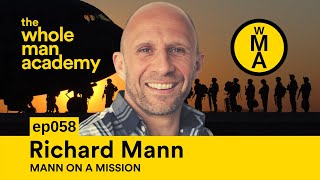
Richard Mann, a former Royal Marines and SBS operator, talks through commando training at Lympstone, SBS selection including combat diving and HALO jumps, and a near-drowning under an oil rig. He explains his coaching approach to fear, courage, and incremental change.
Okay, so this is the whole Man Academy podcast. My guest today is Richard Mann. He is a high performance coach. Among other things, he began his career in the Royal Marines. He completed the UK Special Forces selection to serve with the Special Boat Service, or SBS for short, for 10 years. We're going to talk about that. He also hosts the man on the Mission podcast, which is excellent. We're going to talk about optimal performance, fighting, being the best version of yourself mindset and any other man stuff that comes up. Richard, how are you and where are you, sir?
I'm very well, thanks, Anthony. Yeah, I'm in Nottingham. But that sounds like a good list, doesn't it? The fighting bit for some reason is really interesting me, but yeah, sounds great.
Good.
Thanks for having me on.
Well, it's a pleasure. You've actually been on my. You can't see my whiteboard because of my. My dodgy fake background here that's wooden and manly. But you've been on my.
If I should go with that in future, actually. But yeah, it's good.
It's an option. I could change it to one where it's just a beach, but it gets a bit, you know, it kind of distracts you. But you've been on my podcast to interview list probably for about a year. I know we spoke on the phone probably prior to even starting the podcast. And you were recommended to me as someone that was a must speak to. But I wondered if we could jump in by saying you've lived a real kind of, I say, life of adventure, which is what the whole Man Academy is all about. Guys going on their own hero's journey. So if you could start off by going back to your kind of beginning where you joined the Royal Marines, what was that like? And also, why did you join the Royal Marines?
Oh, it was horrific.
And finish.
Yeah, And I expand upon that. I don't know why I joined the. I was very sporty as a kid. I liked. I wasn't great in the classroom. One of my sons is like that actually. But I was very sporty and I was into football early days. And then we'll come back on to fighting, I'm sure. But then got sort of heavily involved in martial arts, but it was all about fitness and training and I just loved that and found peace in training and so it took me down that path. But having said that, I didn't really have a clue what I was going to do with my life at that point. Some thoughts. Was I going to try and be a professional boxer at the time and Things, you know, these things. But yeah, I was at college, I'd messed up a load of exams, totally clueless, totally lost. And then this guy comes in, life changing, actually, I didn't realize. And he said, oh, you know, I've spent a holiday with. My cousin's a Marine. I was like, marine? What's, what's that? So he brought this brochure in, which was a glossy brochure of Arctic Royal Marine on the front. And it was only like, you know, 10 or 12 pages or something, but I must have just looked through that over and over. I just sat in the library at the college just looking through it and start to get this feeling going in me that this could be the thing.
You know, this is it.
Yeah. So I ended up booking myself in at the careers office, did a few pull ups. I was saying, a fat matlow Navy fellow, as we would call him, a fat guy can do some pull ups up there. So I banged out a few pull ups and the rest is history then. And then it was to really go down to Lympstone. But I would say the way that it sort of works is you go down and you do three days potential recruits course down at lymphom there. So I went down and it was, it was good. We were going through the endurance course. Typical things that you might imagine that you'd. You'd do in, in the brain. But the whole thing, if I was honest, sort of petrified me a bit. I was looking at it, thinking, jesus Christ, look at this place. It's like, can I handle this?
Yeah.
And it was all. It was almost like, I've done three days. Thank God for that, I can get out of here. Although I'd passed, got back, everyone knew I was sort of going on it. So the local pub, it was like, how'd you go on? How'd you go on? Oh, yeah, I got accepted, got accepted and it was just this constant thing of like, when did you date? When you joining? When you joining? And it just made me feel sick every time I thought about it.
What were your family like? What were your family like? What did your family say when you, you know, said you were going to go and do this?
I think that was the. That was the thing, to be honest, particularly with my mum. I was like, really close and it was a sort of, I'll say, almost a soft upbringing with her. She was a bit of a warrior and all that, those sort of things. And that's probably what I was, why I was trying to do martial arts and fight and go against that a little bit.
Yeah.
My mum was like when I told him I've been in the careers office and joined the marines. No, you're not, you're not. My dad straight away was like, you can't stop him. That's what he wants to do, you know, with an air of proudness, I think. So fast forwarding that we went, we went. It was just leaving this cocoon village bubble to go down to Lympster and I was 17 and I was, didn't know anything.
Yeah.
And it was the day, the day of the race kind of finally came and I remember it well because mum and dad took me down to Nottingham train station and I was shitting myself. And there was two lads that were joining as well that I'd sort of met as well. And three of us sat there on the train. You have to go down quite smart as well.
Okay.
Yeah.
These 17 year old smart lads got down there and yeah, before we knew it we were at the train. Lympston Commando Training Centre brings you in on the train and you can see the assault course on your left hand side as you come in with trepidation. This part of me that was excited about it as I'm saying all this, but then you go up and it's before you know, it's head shaved, get to your grot, as we would call it, the accommodation. And then it went from there really.
So what was the training like? I mean. And so how long was the training?
Well, the training I would say was it's 32 weeks now. It's like 30 weeks at the time, but it was the longest training in the western world of. And it feels a long time. I bet that feels like forever when certainly for me it did. When I was, when I was in it, what happened really was I went down, I was so fit. I was. I've been through, I think mentally and physically and we can come back onto this. But prior to that I've been, I've been training at quite an elite level in with these Thai box guys in Nottingham. Really brutal sessions. Yeah, at the time, three hour sessions and I was a young lad and it was so amazing to train with these fighters. But when I went down to Lympston they were then certainly initially they were making us do these physical challenges and all the rest of it. And for me I was thinking I've done way harder than this. Yeah.
So you were prepped?
Yeah. I mean the place where I really was falling down was more where I wasn't prepped was on administration and getting your kit done and being a bit more savvy and what I struggled with. It sounds stupid now, looking back at it, was just getting your kit done quickly and all these kind of things which. Which had this effect of being late into bed at nights, being tired and one or two o' clock in the morning, I'm still trying to iron something next minute.
Would you say that's the one that's kind of the boring bit, because you go there for the. You want. You like, give me the action. But I didn't go there for the ironing.
Yeah, 100%. But it comes with. Obviously you realize very quickly that it comes with the whole package. Yeah, cleanliness is next to godliness, as they said to us when we first joined. And it was. We were shown how to shower. In fact, the lad that was was demonstrating the shower at the time. I've recently been in touch with him after about 30 years of not knowing. I've been doing some coaching work with him and we were laughing about it, but, yeah, all that administration stuff. But then when we were doing the fitness kind of things and it was. It was all very daunting in some ways to me at the time. But then I suppose as it went on, the physical challenges got harder because we got to halfway through training, which. And we had quite a big block before we got any leave. So the first leave was like, halfway through training and it was. It was Christmas leave and I just went home and it was two weeks, you know, I was the young Marine, as everyone was, like, thinking, just amazing. I was like, such a good time. And then the Lympston Blues, as they call it. But going back post, post, that leave was just, again, pretty traumatic. And the second half of training really then sort of ramps up and you end up. I mean, I found as an example, in the gym, when we're doing the first parts of training, I'd fly up the ropes on arm strength. Really?
Yeah.
And then when you get down what's called the bottom field, where they start putting all this kit on you and you start moving more towards the commando tests. Then climbing ropes became more difficult because you couldn't do it on arm strength alone.
So it's got to be wrapping it around the leg, pushing yourself up and.
Yeah, it was just a technique. And when you particularly knackered it. Yeah, the bottom field sessions were dreaded by everybody, really, because they were brutal by that point. You know, Fireman's Carries and through all the assault course and. And Everything, really. And obviously by this stage, they're still developing the soldiering skills on the exercises and then moving towards a commando test. And funny enough, I was talking to this somebody about the other day and then saw online little video of the commando test without sort of wanting to, I suppose, like, shout my neck my name. I had the. I always realized I had this mentality to dig in deeper.
Yeah.
And it was. It really sort of came about or was shown when we were doing the commando tests, when I was. I was doing the 30 miler, which is the very sort of last one, and I remembered we had one sort of safety pack. That safety pack was the weight. That was the biggest weight. And everybody else was just in what we called light order. And so we're taking it in turns to carry this pack. And I get. When it came my turn, I got this pack on my back and I was like. With the corporal, I was right up at the front and all the lads were just strewn behind and he's going, good effort. And I'm just like that different part. That bullshit worry of the mind had dropped away and I was just in the zone of going for it.
Yeah.
And. And that sort of. When I saw that and just working with that. And then as we finished the 30 mile, we're trying to get in. On. In the lane on in a certain time, and the lad was. One of the lads was dying with this pack on, and he was like, get that pack back on, man. You know, And I just chuck this pack on and I was gone. And it just.
So does that come into. I was going to ask about that, you know, when it. Because it goes beyond the physical to the point where, you know, your. Your mind says, you know, I'm tired and I want to give up, but, you know, you've. You know, there's something else left inside you. So how did they work on, especially at a young age like that, how did they work on the mental side of, you know, the mental strength as opposed to just the physical?
You know, something I've reflected on, really. And even when we take this forward into the sbs, and at the time, I never really thought that there was anything that was mental training. At the time, we were just doing what we could do. But I think you probably saw I had Rich Devini, one of the Navy SEAL guys on my podcast, this is my latest one, and we were talking about optimal performance as opposed to peak performance, but that ability to just dig in and when it's shit and keep going and all the rest of it. It's one of those where they're constantly challenging those things, pushing those boundaries. It's done in a very good way. And you didn't realize at the time that I suppose it builds a confidence in you because it's incrementally done. They don't just throw you straight into those commando tests, but over those weeks and months, it hardens you as you go, I suppose, really. So, you know, you start off with a speed march and it be a shorter speed march, and then you build that up and build that up and with the paces and things like that. So I think it was done in reflection in a. In a very macho kind of way, you know, get stuck in kind of way. But at the same time a way that was graduated. But I always felt that when that ability and that came in through, in the fight in the SBS or whatever that ability is, go to that point and then it was about sort of telling myself, I can go here. This is my. This is. And again, it wasn't something that was forcing. I just found myself saying to myself that this is where I kick in. This is where I really gain that mental strength. I'm in that zone now.
So, so what about. I've got loads of questions here, but I'll try and keep them in a. In a sensible manner. But I just wondered when, when you then kind of transitioned to the sbs, what took you from kind of. Would you say that's one part of your life and the SBS was a different because you were there for what, 10 years? So what, what took you. What made you kind of transition between the two.
Itchy feet almost. And I think a few guys kind of had. That was. Yeah, I was in four, two Commando. You know what? I think Foxy said this. You know Foxy that's on the, on the tv.
Yeah, he said Jason Fox.
Jason Fox, Yeah.
Not. Not Dr. Fox, the DJ?
Not exactly. No. That. That other Fox.
Yeah.
Yeah. I think he, he sort of said something about the commando unit almost not living up to expectation in some way. For me, I've always wanted to just push myself to that extreme. And that was the Marines initially. And it was, it was always if I was going to join, I was going to. I wanted to join the best. I wanted to like join the Marines. And we're going back to your previous question as well, I suppose. Really one of the things that they embed in you, and the same with the sbs, is just this ethos that you are the best. It's not up for doubt. You don't come out there thinking, oh, I wonder about them. It's like, it really is that. So I was in fortwo commando. I was dabbling with boxing, which was my love. Before. Before joining, I'd ended up at the bit at the boxing squad I was training. Was I going to. And you could almost be an athlete in. In the Marines and in the team, was I going to do that or was it going to go the sort of Special Forces bit? And the way the weird bit was, it wasn't that I was like the super keenest soldier. Some lads were really pissed with soldiering, but for me, that I wasn't like studying what the latest weapons were or anything like this, it just wasn't really. I just wanted to, like, train hard, push myself to limits and see where. Where I could go in my mind and those kind of things, really. So then it started to formulate this idea of there was a couple of guys that had done selection unsuccessfully, but they were still like, wow, they've been on selection. And so, yeah, it just. It felt like the right time. I've done about four years in 4. 2 Commando. I was in something that was in. I'd gone from mortar troop into recce troop and it was. Yeah, it got. Just got the itch and just started to get me a bit excited. And then I thought, yeah, you know what, let's get down to Paul, let's see if I've got it, really.
And what did that. What. What was the. How could it.
The.
The training like or the. The selection to actually get through and be in the sbs?
Well, I think again, you could in a different way, though. Horrific in some ways, but. But, yeah, I think. I think I was more hardened to it a little bit.
Yeah.
As you'd imagine by that point, I'm now sort of 22, 23. And you've been in the Marines for four years, so you kind of get in that area. But it was, it was. We were quite a big course that had gone through and it was pretty relentless, pretty sort of ruthless mentality still at that time to really push the limits. We were doing a sort of partly joint selection at the time with Hereford sas. Peter, you know, I've got to be. I'm just being honest with. It was like seeing their selection process just didn't do anything for me. And I thought, is that it? Yeah, that was my take on it at the time and I just saw them sort of coming through. We ended up. We had certain parts of the selection that were joined and one of those was Let me get this right in. The first part was. Was the jungle. And so that was a huge part of their sort of selection. So we'd been. We'd been thrashed down at pool. The mentality was very physical, very sort of thrashed. Early morning runs, cold swimming, as you'd imagine, in the lakes and rivers and all those kind of wake you up.
Yeah, yeah.
And the horrible feeling when you're all running as a group and you don't know whether you're going to be swimming. And it was like. Forefront of your mind is like that, are we going to be swimming? And we're going to be swimming. And the next minute you'd be coming down towards the lake again. You think, oh, my God, we're in again. And then you. In you go. And then we went. We'd sort of go up to Hereford and we did these joint parts in the beat up to the jungle and then out to the jungle. And by this stage, we'd lost a lot of guys that had already left because we'd been through a sort of boating phase, which was very bleak, very cold. In fact, weirdly, I was actually on. I put something out on social media the day, and the guy that was the main instructor for that boating phase was messaging me yesterday, and I've not spoke to him for years. And we were messing each other and saying how arduous and tough it was. It was cold, wet, miserable, fucking horrible, to be honest. Going through it, going out. We were using Second World War Klepper canoes, paddling and paddling and just. But at the same time, the beauty of it was the guys, that mentality and that humor of lads that come from the Marines. And it was just that ability to laugh at ourselves and take the piss and keep each other going, really. So we went to the jungle, trying to drag this out too far. But going to the jungle again, we lost next to nobody because all the lads had already gone that were gonna go. I tell the story quite often that one of the things that really led me to want to dive deeper was seeing people quit in that jungle on the army side, I don't think they'd been through anything sort of wet and cold and arduous at that point. I don't know, it might be contentious because other people say, oh, all the rest of it. But I was there and witnessing it, and they were. A lot of lads were leaving at that point. And you'd walk up to schoolhouse in the morning, and as you go past there, you'd see on the left Hand side where people were going to get the helicopter. Like I've said this story quite a few times, but get the helicopter out. And they were quitting. Well, for me that again just drove more mental resilience to just push on and keep going and get through that jungle phase. We, we got to the end of that jungle phase, obviously back down to pool again, more thrashing and more, you know, OP week and all this sort of stuff back up to Hereford again for combat and survival interrogation type phases. One thing I noticed by that point that their chief instructor was coming in and asking their guys. And this sounds like a real us and them. Dig it, sas. And it's not. It's just a reflection of the story. And there's. What I would say is there's good and bad guys in either of those organizations, as in any organization. Yeah, but it was like they were, they're almost choosing what squadron they wanted to go to. We felt a million miles away from still being badged, as they called it. So we did that, did that phase, came back back down to pool. They, they basically went off and were badged and we went back down to pool and continued with miserable diving phase. Well, we went up boating again, more boating up in Scotland in November in the locks of there. And then probably the grimmest part was the combat diving which was down in Portland in January. Three dives a day, just relentlessly diving and diving, just doing that. Combat swimming.
Had you done any diving before all this training?
Not really. I hadn't really done much. I dipped in an hour in pools. But it was something very different because we were, it was, it wasn't air diving. We were O2 diving which is basically a more shallow. You can't go to depth.
Right.
So we've just. It was basically to get us from A to B without being observed. So that's what we're doing. So a couple of the guys, and one guy I'm thinking of in particular was bit freaked out by the, you know, the dark and we'd already been down at the bottom of what they call in the bottom of the lake and you've just got some chain that you go along and you can't see anything.
Nothing.
Yeah. Yep.
But I was, I was kind of okay with it really. And. Yeah, but that diving phase was, was, was sort of challenging. But we finished that and then, you know, that was selection done really. But it felt like a lot. Felt like a long time.
I was going to say what was it like? You know, do you feel that at any point where you thought you might want to give up.
The immediate answer is to say no. It just didn't. I mean, don't get me wrong, there was times where you just like, oh, God, this is another night and we're gonna have to go out and dig a boat in somewhere or whatever it was, or go and mount an op, an observation post or something. You think, oh, God. And it's grim, you know, but never, never I was going to give up.
Yeah.
Because it just wasn't, I don't know, I just wouldn't allow myself to even go there. It just wasn't going to happen.
That's where it makes me laugh because you went, you went to talk about, you know, let's say submerging yourself in freezing cold water. And I don't mean I have any clue of what your training must be like, but I've done probably somewhere near 100 obstacle course races, you know, around the, around the country and in the US So at some points you did have to swim under things, you know, through lakes. And it would be January, so it would be freezing. And what I saw there was, you know, it didn't matter how fast or fit or strong or capable you were, when you got in that freezing cold water and your head underwater, it's like it sucked all the energy out of you and you got your head back out and you had brain freeze and you didn't know what fucking day it was. And someone would say, are you all right? And you'd go and they'd, you know, yank you out and you'd get out like a zombie. And it was suddenly, you know, you'd. You can train as much as you want, but if you're not used to getting in freezing cold water fully submerged, it is a big shock to the system.
Yeah, absolutely. And for me, doesn't really, it doesn't go away. Yeah, it's one of those things. If it's a freezing cold lake sat right next to me now you like. Whoo. Yeah, it's going to be, it's going to be cheeky.
But I remember from testing yourself though as well, because that's what I guess, you know, from that 17 year old age. And that's part of what we try and say the whole man academy about continually, you know, hasn't got to be a physical, you know, trying to do a death race or an assault course or something. But, you know, I always want to look back on the end of each year, which is why it's so shit at the moment that people aren't getting to go to these experiences, look back and be able to remember maybe how you tested yourself or some good experiences through the year. But it sounds like you did that for, you know, years and years and years on end.
Yeah. I mean, and you would. There is another thing as well. You were part of the guy, you were part of the guys that were with you. So you weren't gonna dabble your toe in and go, oh, it's a bit fresh. Yeah, not for me guys today. Get in there. You know, you were gonna get in. I do remember we were doing. We were doing a river crossing once up in Hereford. And we were there, this rope across the river and we're going across it, and one of these guys was having a meltdown halfway across this river. Not a good place, held everybody up. Everyone was like, fuck's sake, get going. So by the time we got out, there was a couple of people that were really struggling. And like we said that maybe that brain freeze or whatever, and it's like. But that's the point when, you know, it's just like, kick in. It's like right now, now's the time to almost like up the, the level of intensity.
Yeah.
Say, you know, right, let's get ourselves dry, let's get warm, let's get in the thing. You know, he's like, yeah, it was those kind of things, really. So. But. But the mental side, without any shadow of a doubt, puts us straight into sympathetic nervous response, fight or flight type responses. That takes a huge amount of energy.
I was going to ask you on that about, you know, when you're doing those things in the freezing conditions again. I know what it's like to have mild hypothermia where I couldn't hold, you know, I felt like my body was closing down and I'd been outside in a January race where you just had shorts and a T shirt on, it was freezing. You'd got wet and got in and out of mud for three hours and run 20K, which, you know, for your training was quite easy. But even for me there you. Once you got to that level of cold, I just couldn't, you know, I didn't feel like I could even get myself undressed to get warm stuff on. And I just wondered, at what point did you see guys getting pulled out of it? Because you get to that stage of starting to get hypothermia when you're dealing with the cold weather training.
You know, it doesn't immediately spring to mind that. Yes. I mean, some guys are sort of going down and it can be. I mean, I had an incident in basic training. Going back to the basic training, I got caught cheating, as I'll say it now. Fair enough, whatever what everyone was doing. We were on the Survival X. Everyone had sort of stitched a few quid into the pants and linings and all part of the game really quick. I mean a quick sort of story. But everyone had got. Had got caught. No, sorry. Everyone had gone to the, to the shops or was cheating and things like that. Me and this lab were like, you know, so we went to the shops, got away with that. We were in this field and then next minute we're like glugging this pint of milk and all of a sudden we saw this green berry and we're like, you know, and didn't know if we'd been seen. Well, we had been seen because next minute both our names were summons by the sergeant who was taking us through. It was horrific and it was just like the whole world falls out. Anyway, the reason I'm saying this is because he gave. You know, you can get charged or you can have the punishment. We had to accept the punishment we got. So we stood near the river and the corporal then literally sort of like boots us in the stomach and we're thrown into this river behind us and it was wet and cold up to that point, but now we're in the river and we're just going downstream in the river and we've got like three days of Survival X still to go. But now I'm absolutely soaked to the boat.
Frozen.
Yeah, I just remember we had these like, we had these rabbits that we were gonna have to kill at the end, but I had these two rabbits shoved down my top. I mean, whether they're going to toilet or not, I don't know, but it didn't really matter.
It doesn't matter at that time.
Yeah, I think people, people can shut down. But generally, generally speaking, I think the drive is like being. Being a Marine or certainly being there. SBS is one having the equipment and kit and knowledge to be in the right place so that you don't do these things. But also then the mental fortitude with the guys around you that you're not going to back down from it. I did actually say to my girlfriend yesterday, bizarrely because she was putting a wet glove on when it had been snowing. It just reminded me we took some navy lads up onto an island and we were basically doing wasn't survival, but we were taking them out across this island as part of the exercise. And again, it's like, by that stage, obviously, you know how to live in the field.
Yeah.
And so I'm kind of like, I've got up, I've sort my stuff out, I've got a cup of tea there, and I'm sat with a nice hot cup of tea, everything dry, nice and warm. And I see this fellow get out of his. The little shelter that he's in, and he's left his glove out and it's just wet through and he's just shaking, trying to put his hand in. I just looked at him and I was like that, oh, my God. I was like, yeah, you want some teammate? He's like, yeah.
Well, that's it. Because when you get that cold, I knew what it's like where at the end of the race they'd give you, you know, a cup of light drink, but you do that. But by the time it got to here, it all gone because you'd thrown it everywhere and they'd give you another one and you're like, this isn't going anywhere. But it's. It is dangerous when you get to that page. Well, talking about danger, I was. I interviewed James Elliot, who is. I think he's a military resilience coach and was an airborne soldier.
Right.
Interviewed him back in. Back in the summer, probably about 30 episodes ago. And one of the questions I think I put him, but to you as well, was what was your thoughts on, you know, you're doing all this training and, you know, obviously the point of it is you may go to see combat in dangerous areas. What were your thoughts on the possibility of you kind of giving your own life for your country?
Never thought of it once, to be honest. Yeah, I just, you know, you were trained and you just wanted to go and do what you were trained to do. And that sounds mad to people, but, yeah, you did. For me, that was. And that's not to say that in those. Those times, it's. It doesn't put that sort of pressure on and things. And again, go back to Foxy. He's talked quite, quite a lot about that when he. When he's been involved in different things. But, yeah, no, it didn't really. It's not one of those things that really sort of crosses the mind or didn't. Certainly didn't for myself, I don't think for most guys, really, we just wanted to be on operations. We wanted to be active and doing what we were trained to do.
Well, that's. That leads me on to, I always say, to people when they know who's going to be on the podcast. Like, some of the guys will message me and say, can you ask them this and that? And one of the questions I got was about what's the most dangerous. What was the most dangerous thing you did whilst you were, you know, in the SBS or in the forces in general?
I think. I always think for training purposes, I always go back to the Halo course, the high altitude, low opening, free fight. There was lots of other different things as well. But the halo. I wanted to go on the Halo course. One of the guys had tragically been killed on. Not the course before, but the course before that sort of friend of ours that had. Basically what had happened, he had a malfunction on the main canopy and then as he cut that away, it caught around the weapon, right? And then. And then his second shoot went into his main shoot. But yeah, going on that course and it becomes very stark and very real that you're going to be. And there's no sort of tandem about it. It's literally jumping out and then and again. But that progresses as well. So that eventually, you know, your qualifying jump is at 18,000 at night, fully kitted, and you're just left with this oxygen mask on. In the hook. We've got Hercules plane. There's probably eight of us in there and we're breathing off a central oxygen unit. And then we go into our own oxygen, which is honours stand up. And then, you know, you're going to go off into the darkness and it's a sort of like a faint red and then a faint green. And then off you go into the dark with all your kits strapped to your back and to your back of your legs and so on. But doing those things. But there was other things as well. I mean, I had an incident once where I almost drowned. I say almost drowned. It didn't feel like that, but it could have very quickly gone that way underneath an oil rig. Some of the. Some of the diving and climbing that we used to do could be fraught with danger and we try and negate those things. Obviously. I had an incident where I got. I basically got caught and I was. I was caught on a rope in simple terms. And it would. It caught on and the. The hose pipes of the dive set then got caught in this climbing device I had and it basically shut off the oxygen there and then. And I was just slightly subsurface, but I was getting just. Just out the loft of a wave and then back, then back under and then lop of A wave and then back under. Fortunately, the guy. The training sort of kicked in and the awareness of the guy that I was with who went on to be like the RSM as it went on. Great guy. But he looked in, he inflated my life jacket. I didn't come out the water because I was still fixed on this rope.
Right.
And he managed to sort of like come in and see what was going on and then just free it. And then I fought my way out the water and. And free of it. So, again, you didn't really think of the dangers, but I suppose there were dangers. People did die in diving situations. Other things where we were under. Slung underneath helicopters. The Chinooks.
Yeah.
I wonder, what's your thoughts on the, you know, we talk about the guys there with the SAS who Dares Wins program, because I always look at the, you know, the training that people have to do there and think, wouldn't it be great if everybody was made to go through something like that, you know, just for. Just for two weeks or something? Because it might, I don't know, toughen people up a bit, create less. Less Snowflake people around. And I just wondered, do you watch the program and if so, what was your thoughts on it?
First? First answer is, no, I don't watch it. It's no detriment to the lads. I did watch a bit of it.
Yeah.
It's not for me. Not for me to watch, if I'm honest. And that's not trying to be big about it. But, you know, good effort to the guys. I know a couple of the guys really well. Snowflake. Yeah. I mean, why not push your boundaries of people? I mean, some of the stuff that I do with people now in performance coaching is about the antidote to fear. Building courage.
Yeah.
How do you do that? Where do you even start with that? Because that's, you know, one of the big things about the whole man academy is, you know, helping guys, say, go on their own hero's journey, live a life of adventure. But a lot of that, I don't think you can do that if you're living with a lot of fear, especially about taking risks and getting out of your comfort zone. So where do you start with kind of helping people, you know, not live so much with fear?
I think the first thing is understanding fear and understanding that everybody feels fear, and fear is everybody's. Everybody's coming from that place of fear. Then also understanding that we will always feel fear when we push towards the edges of the boundary to our potential. We're Doing something that's uncertain to us, there's going to be some level of fear, and it doesn't matter who you are. And so I think when we start to come to terms with that, then we can start to recognize that, oh, right. That's the first part of reorientating myself, to understand how I push those boundaries a little bit. And I talk with people about people in the comfort zone, playing it safe. And obviously, the way that we're wired is to keep ourselves safe and ultimately avoid some of these things and whatever that is to people, those different fears that people have. But then it's a reorientation in terms of how. How we're actually approaching things. And I sort of break that down with people to look at how do they build courage? And it might be about small, incremental. It is about small incremental steps of pushing our boundaries. And there's something I read was like 4% was a number that came out from us from a study. So these are small things. But ultimately, that move towards doing something which challenges a little bit dopamine response, other neurochemicals, and it puts us in that sort of place. But crucially, it gives us that ability to say to ourselves that, yeah, I did it and I can. I can do this. And then we can start to build upon. Build upon that. So, in short, my answer to it. There's no easy fix to fear. We have to go and do what it is that we're fearful of to some extent.
You said one of the words there was about, you know, it's a compound. I guess even in life, it's compound decisions, isn't it? With your health, with your. With your fitness, with all these things, it's all the little decisions that you're making. And I was trying to think, like with coaching, the saying, if someone said how you're trying to sum up, I always thought it was that you're trying to help someone get from where they are to where they want to be. Either that or you try to help people do what they don't want to do, to be the person they want to become. Because often it's within them to do these things, but they need someone else to basically give them a bit of focus and clarity.
Yeah, absolutely. And clarity. And hold that mirror up and get them to actually see a different narrative, a different storyline. Because we're all caught in storylines and narratives that come from our conditioning, our circumstance, whatever it may be. I often say to people that people are lost in thought and don't know they're thinking a lot of the things that I see, it's the insanity of thinking is not really we're caught in loops of thinking but we don't actually know that we're telling ourselves this story of I'm not good enough or I can't do this or whatever that fear is. And often I think those fears are those fears and looking at those fears, it's, you know, the real fears that we've just been talking about may be drown underneath an oil rig or whatever it may be. But the predominant fears that people have, which are ego fears. So those fear of failure and fear of not being good enough and fear of other people's opinions or fopo as I, you know, fear people's opinions. How do we sort of break, break those down? So yeah, it is that, it is that changing that, changing that narrative, being able to, to take those compound as you said there really those small steps. And I know people that even guys that I've served with that are in one area of life hugely mentally tough if you like and can push to these bad but in other areas they're not really there.
Yeah.
So I call them fields of play. And often we've got some areas of our life sometimes do that in coaching, in starting that. First thing is people need to create awareness of where they're actually at. So it's that self discovery process, those bigger questions of, you know, who do I want to be, how do I want to live my life.
Yeah, well, one of the things you said there was and I think I saw it on your some that some of the blurb that I was reading a website, you know, it's for the guys listening or as we always say actually 25% of our listeners are female. So it hasn't just got to be the guys but you know, sometimes it can be about. Yeah, about. But are you, do you just want to be like the best dad? It hasn't got to be that you're the best in the world at something but do you to be the best version of what you are? You know, for me I'm a dad, I'm a partner, I'm a son, I'm a brother, you know, a friend. And you know, performance hasn't always got to be about reaching the higher echelons of whatever career you're in. It can be about, you know, how can you show up the best version of yourself day to day when you're dealing with all the people around you.
Yeah, absolutely. And for me, certainly what I'm Seeing with things have gone on in 2020, but I think very much prior to that was my sort of belief. And the mission in some ways is you see people living in such unconscious ways, they're not seeing the detrimental ways of being. And there's so many things that then factor into that and it could be anything that you know the pillars of recovery, of sleep and of nutrition and having those things in place. But yeah, totally hear what you're saying is really not, not always about, you know, I work with athletes and it's about a peak performance at a certain date that they know that they're training for.
Yeah.
Fighting at the start of March.
So you got a specific goal as it were, a specific date and yeah.
But, but, but on a day to day basis. And then people start saying what, what is being a good dad? What is being a good husband? And all these kind of things. Well, ultimately for me it's about can we create a level of self awareness and be able to regulate our emotions enough that we're able to be present in the moment as much as possible. And that sounds so almost cliche or easy or whatever, but it's not. This is where real mental toughness comes in. And it's like, you know, if you're a dad and you're snapping and reactive at your kids or your wife and it's not really you, but the pressures of life are really putting you in that sort of position. And ultimately you're in a position in your mind, you're taken with the worries and concerns of the future, of you're going to lose your business in the COVID lockdown or whatever it may be. You're caught in those thinking patterns and so you can get away from the core of who you want to be and who you are and start becoming reactive. And so for me, this whole thing and this whole process is about getting people to firstly be able to see it, to become aware of it. And then once they become aware of it, they can accept where they're at, not fight against it and be able to, to be able to make real change. Not just. I'm not, I have to say, and I think you'd probably be the same. I'm not a fan of quick fixes in any way, shape or form. This is daily practice and training that we have to apply ourselves to because it just doesn't sustain people. You know, people say oh I'm on the latest Paleo diet or whatever it may be. You know, I just don't. It's not, it's not something that's ever worked or been part of my life. And I think it's.
Yeah, it's a bit.
That's. My partner's a nutritionist and a proper one that spent years and years studying. Not one that's done a fucking weekend online course and says that they're a nutritionist. But. And we've seen that from the people we've helped with their, you know, lifestyle, et cetera, et cetera, is that the problem is people want a quick fix. And, you know, you look at the health of this country at the moment, a lot of people have had 10 months, 11 months to maybe try and optimize their immune system, but they'd rather just wait for an injection. And we saw that with fat loss, a lot of people like, oh, have you got any pills for fat loss? You're like, well, how about you? You know, you do some exercise and you eat less calories and you educate yourself on it. No, I'd rather just have a pill. And you're like, yeah, well, that's. As you. And actually you said about it, you know, people with the. The different fads of, I'm going to eat this, I'm going to do that. And you're like, is it sustainable? Because when you stop doing it, what happens? You just go back to where you were to start with. But it's a distraction for some people.
And also, I think you just create a bit of a beast, really, because you. You don't allow yourself these things and they just start to grow and fester in your mind and it's like, oh, my God, I can't wait to eat this. Or even if it's like on some subconscious level and it goes against intuition. I mean, one of the things I talk about is you see people that are exercising and on some level they've been taught that they need to push themselves or it's horrendous and they need to put themselves through this horrible thing.
Torture.
Yeah, torture. And they've got to achieve some sort of level of performance or some time on their watch. And it just creates mental, physical tension, which ultimately is like this friction. And this friction just doesn't. People don't want to go back to it because guess what happens next time I want to put the trainers on. And then they said sneakers, then went all American on us.
That's it.
Yeah, said sneakers. Once you put your sneakers on. But you. You wouldn't want to do that, would you? Because it's shit. And you put yourself. It feels grim and all the rest of it. And I sort of say, well, yeah, back off from. Back off from that pace, Back off from that pressure. Start to enjoy the process. As we start to enjoy the process, then it starts to become something that we start to embed in your life otherwise. And that's the same for me with nutrition. It's like find that. I know it's difficult for people to find balance, but yeah, you know, enjoy something at the weekend. But then you've got to then look at that challenge in that discipline to be able to say, right, okay, well, I'm not going to eat that crap on a Monday night.
I'm going to back to kind of an 80, 20 rule, I guess, isn't it?
Yeah, yeah, absolutely.
Well, I laughed when you said American because I think 15% of our listeners are based in the US so at least they'll understood what sneakers are.
Yeah, yeah.
I was going to ask when the whole man Academy, you know, originally we spoke about this before we started recording, but was originally about getting, just getting guys together to talk. But that wasn't enough because talking sometimes you, you know, what's next after that. And for us it's about also understanding that it doesn't make you a weak person if you're struggling in life to actually ask for help from someone. It doesn't have to be another mate, you know. But I just wondered for you as you've gone through life and I think you. 51. 52 now.
51 now.
Yeah, 51. So you're 10 years. 10 years old. 10 years wiser than me. But I just wanted for yourself, who have you had to speak to? If anybody at all because you've gone through some, I'm guessing from. Doesn't have to be tough times, but certainly challenging times being away doing these, you know, quite challenging kind of roles. So who have you, if anybody spoke to as you've kind of come through that?
Well, firstly, I have, you know. Yes. And we spoke just before we were recording. You know, through divorce, through court, things I've been through places in your life where you never thought you'd be. I was rock, you know, going back sort of six years ago. And for all the mental fortitude, this is why I talk about fields of play. It was like, yeah, in some areas I was strong, but then. But the underpinning, the real self, I call it underpinning all that was not robust enough to handle these things. And I was in a really, really dark place. I'd left the military job, wasn't. I was doing private Security. And I've done private security. I did it for numbers of years all around the world. Some amazing trips, amazing experiences, but it still wasn't really hitting what I wanted to do. I was then divorced. I was sort of living in a mate's flat. It was just a mess. And what do you do in those times? It's strange really. People I talk to have really, I suppose, mostly been the lads that I served with, the real close lads, because it's very difficult to now out in the civilian world. But they're always there and they're always the lads and they'll either take the piss out you all. That sounds a bit like. No, but mostly, really sort of. The lads have got such quality that they're really sort of caring, that they'll really listen to you. And I personally think that when people have got enough self confidence because they've been through these things, the bullshit about being weak because you're talking about something is. It doesn't even come on the agenda because if someone's, if someone's going to tell me I'm weak, I'm like, fair play, mate, crack on. Yeah, because I'm, you know, I know who I am. And so being that, you know, you can open up and talk about these things, you can talk about how you're struggling. Hugely important. Again, I keep bringing Foxy up that was talking about when he was feeling suicidal on a podcast that I did with him. But yeah, I think the support of the lads first and foremost and then obviously family, family around. I shouldn't, you know, have to say family because they really were there for me big time in, in those, those situations and local friends as well, so. But I think, sorry, just to say one last thing is I think it was also. I'm a very open book and I was like. And I was more than willing to, just to talk to people. I was not, I was not trying to like, hold it all in, in those more challenging times. I was just willing to talk to people and that really, I think if you're, if you're open, people are going to be open with you. People are going to support.
We always say it's a bit like, you know, safe. It doesn't mean that you have to tell everybody your woes every day or something like that. But if you are struggling, I would say, as it's a release of pressure off you, because as we know, if, you know, if you don't, if you are struggling and you let that pressure build up, then unfortunately we know how it usually ends with the coping mechanisms or, you know, or someone taking their own life. So obviously it's important for guys to hear from someone like yourself who's gone through what is a very tough, you know, you can't be a, say you can't succeed in that without having mental toughness, physical toughness. But to hear you say, you know, it is fine if you're struggling to have a good network of people to talk to, but that's where I think at the moment that's one of my big, I say, worries, concerns, whatever you want to talk it with. And if we talk about the guys here, so many men are just at home on their own at the moment and just because they've got their partner maybe with them or what have you, that's not the same as having your group of mates around you that you might go out and play football with them, go to the pub, go and watch a match, go, you know, do all these different things, go out, you know, go out for a night out. And those are the times. Maybe not saying that you're going to sit there and have some, you know, tell someone your deepest fears, but that's when you release a bit of aggression, have a laugh and maybe have the friends around you that say you were right at the moment. And look at a 20 year old guy since March last year you haven't basically pretty much been to a pub, a nightclub, a football game, the office or anything. And you know, isolation as we know kills full stop. But you're not getting those opportunities to just get amongst people and have a. I know, let off steam basically.
Yeah, I mean it's particularly at the moment, I mean going back to everything that you've said. My, my mainstay throughout all of my life has always been going back to fitness trait training. If I can get myself on a punch back somewhere, if I can get out and run or whatever it may be. And the thing that really got me through those darker times was, was training overall, but also Brazilian Jiu jitsu because I've done martial arts down the line over years. But there were so many things that I got from Brazilian Jiu jitsu was. And I had basically I didn't feel. The last thing in the world I felt like doing was, was grappling with other guys. I just didn't feel in that, you know, but it was just like, right, I just adopted a mantra and I didn't do this out of a sort of conscious process but all of a sudden it just became just get on the mats. Yeah Just get on the mats. And I'd be driving there dreading it because I just wasn't in the mood. And it's like just getting the mats, just getting the mats. And that's all I would say to myself. And it didn't really. All the. The bullshit of, you know, am I going to tap out? Is he going to tap out? Am I going to win? Am I going to do things, you know, those ego fears and all that, that just went away. And the wind was just been on the mats at that point.
Point, yeah.
Getting through. But at the same time, I was also getting a little bit of the common bond of people there, which I think was, I'm very happy in my own space and I'm happy running in the middle of nowhere myself or training on a punch bag on my own. But at the same time, that really did help and was massive. So, yeah, I mean, it leaves the. Leaves the question, what do people do at the moment? If the struggles really. And just trying to. Even if it's just going out for a run with another person.
Amy, just get outside.
Yeah.
Turn the TV off.
Yeah, get outside, get that movement. And if people aren't fit enough to get out and run, then be easy on yourself and walk and build it up or just walk and get out. Yeah, but, you know, there's no excuse not to get out and sort of see those things. There was one, There was one word that also that, as you were talking there, that kind of came up for me and it's something that I was appalling at over all these years was compassion and self compassion. And again, it's like, oh, my God, you know, SBS guys talking about compassion. But, yeah, just not beating up on ourselves. Take the proverbial stick that we beat ourselves up with all the time about I'm not good enough at this, or I'm not this or I'm not and comparing. And, you know, we're all unique, we're all who we are. If we can get grounded in that real self, just having some compassion with ourselves in these times, in any times. Because my personal belief is that. Is that people were massively struggling before any lockdown, any of this came about, ever since. Stress everywhere.
Yeah.
An epidemic. And then it's all of a sudden it's like now it starts to bubble up.
I got asked them, I was talking to a group, like a corporate event just before Christmas, and one of them was asking about some advice for someone they knew that was anxious at the moment and struggling. And I, I said, if you want a quick one is just stop watching the news. Turn off the BBC, turn off Piers Morgan, turn off any of that old bollocks. Stop reading newspapers. If something really important happens, someone will tell you about it. But I said, just try it, try it. Because people are so indoctrinated to get home and switch it on and watch Boris bumbling at 6 o' clock about what's happened. And I said, just try it for three days a week or whatever and just see, you know, don't look at it on your phone, just see how you get on with it. But most people go, okay. And then they won't do it.
Absolutely. And that's like I said to you before, I. I don't know why. And again, that wasn't a contradiction. I stopped watching the news when I was at that low point six years ago.
Yeah.
It wasn't something that I was like being. I don't know why I just didn't. I just thought, I can't be doing that anymore. And I just made. I just said to myself, I'm not going to watch it again. And I've watched the news probably five times in six years. Yeah, I'm not.
Good effort. I'm impressed.
Yeah. I just don't. I actually, at the start of the first lockdown, when they were doing the conferences, I sat with my girlfriend and actually started watching them because I thought, oh, this is a bit juicy. I got drawn in and very quickly had to have a word with myself and say, I kind of like felt the negativity coming on me. I've experienced like the bullshit of the news in different things. I mean, when I first left the military, I was working over in Baghdad and looking after film crews and CBS and ABC News. And we had like British cameramen as part of that as well. But they were like, they were saying that the BBC is one of the worst. And they were telling me this story about when Saddam statue got ripped down and it was this baying mob around the statue.
Yeah.
And basically they were like that. If you took the cameras back 20 yards back there, you'd realize that there was hardly anybody there really. It's just how they're framing it. And I think social media is another one as well. It's like, you know, people, people say, why don't. One of my biggest things is, you know, people taking the action to help themselves. Because again. Oh yeah, yeah, I tried that. And you can see with that glazed look that they're really like, whatever, but they won't try it. And social Media. My son actually has just sacked Instagram. He's done it once before, but he sacked it again. He's saying that he instantly feels better from not being on Instagram all the time. I'm not great on social media. I do LinkedIn. There's a few things that go out on Instagram, but what I can't do is sit and doom scrolling. Someone called it the other day, quite good. Just doom scrolling where you can't get out of it.
Yeah.
And that's the thing. We know that the, you know, all of the platforms have spent hundreds of millions of pounds, dollars or whatever trying to work out the best way to keep you addicted and keep you just scrolling. And I've said it myself on many podcasts, I will pick up my phone to have a look at something. You know, I might have. Let's say I wanted to look at your Instagram profile, but something pops up in my feed. I'm like, oh. And then five minutes later you go, what the fuck was I doing? I can't even remember. And you put your phone down and you look, oh, yeah, I was going to do that. And then you pick it up again. So. And it's not. You can't even blame us because, you know, you've got professionals working on how to make you addicted to it. So I'm a big one for that. If, to be honest, if it wasn't for the whole man academy, you know, a large percentage of the guys interact this through Instagram.
Yeah.
If it wasn't for that, I would just delete Instagram.
Yeah.
And I'm not saying I won't one day.
No, I'm the same. You know, that social media presence with the work at man on the mission is important because like you, I'm trying to build, build that followership and that, that camaraderie amongst the group. And it works that way. But absolutely. If I could. But what I do is I minimize it. I think you've got to be really sort of conscious of it. For me, it's get onto social media, put up hopefully not a lot of dribble. Put something out there that hopefully is helpful to people.
Yeah, it's valuable.
Valuable and then a little bit of interaction and then get off it and just have the awareness of that. So it's creating that awareness. I had a guy called Trevor Mo, I don't know if you saw him on the podcast. He was voted the number one brain trainer in the world, which I thought my Sports Illustrated, really nice guy. And he runs a company Called Limitless Minds in the States and he's a bit of name drop, but his business partner is Russell Wilson as quarterback of the south of Seahawks concept. The reason I mention him because his thing is like neutral thinking. He talks about neutral thinking a lot, but he also talks about like just if nothing else is dropping negativity. So there's this very push to be positive and get out there and I think it puts a lot of people off because they think their bullshitometer is saying to them, I just can't be positive. Yeah, I can't be positive in this environment or this time or whatever it is, but just drop the negativity and be aware of what you're saying to ourselves because words are powerful and if we, if we telling ourselves a story that I don't know that this is going to go wrong or I'm not good enough or the world's collapsing or whatever it is that we've seen from the news, it's only taken as one way.
Yeah, no, I think that's funny. We're always looking for the golden nuggets from all the different podcasts and often they can come in, you know, during mid conversation on something. But I always say one of those is, you know, do your best to distance yourself from the mainstream media and, or, and social media if you can, or just limit your time on it. And Bill, you said, you know, go outside and get, you know, just, just try and leave your phone alone and go outside and kind of, you know, realize that there is a world out there that you're not just looking through this screen the whole time and. Well, last, last question is we've covered, you know, talked a bit about the fighting, the SBS and et cetera, but with your podcast, you're up to episode 19. I would suggest that the guys who. I'll put it in the show notes anyway, go and have it, have a listen to it. But what other podcasts do you. Do you listen to yourself?
Oh, good question. I've got a whole list I'd have to look through. I'll actually look through a phone and see what, see what's in there.
Yeah, just ask your phone. Your phone knows.
Yeah, back to that. It's definitely Rich Roll. Rich Roll podcast. And again, I don't know if you listen to me, Lewis Howes. I did listen to Tim Ferriss a lot. Mindvalley podcast.
Yeah.
School of greatness is Lewis Howes. My favorite one of all time is. Is Finding Mastery.
Mm.
Have you listened to that?
Who's that one?
That's Michael Gervais.
Okay.
Dr. Michael Gervais, who's a performance and sports psychologist again with the Seattle Seahawks. That's. That for me has been almost life changing.
Yeah.
It's been a brilliant, a brilliant, brilliant podcast make Aubrey Marcus.
I've heard that. Yeah.
On it. Sorry.
There's so many good ones. That's the, that's the joy or difficulty.
Yeah, there really, there really is. There's so many and yeah, so those kind of feel. And as you can see from them, they're all of the same, the same area really in learning from people how to be at our best. And that's really what I wanted to do with the man on a Mission podcast. And yeah, you're doing there. So that, that's really the push for it. So on the podcast itself, just a range of people that have been on there. Trevor Mo had the guy I mentioned, I've just had on, Rich Devini, Navy ex. Navy seal, just written a book called the Attributes.
Yeah.
Great conversation with him. My mentor, Dr. Don Green is a performance psychologist as well. Bob Roth springs to mind as well. He taught me meditation. I was, I told the story of. I don't know if you knew this, this one, but it was, it was the stuff where I met him actually, bizarrely was I was doing security for Katy Perry and she flew in. Bob Roth, who was basically head of the David lynch foundation in the States. TM meditation, Transcendental meditation is something that they've brought into schools and troubled with troubled kids and with veterans suffering from PTSD and all these kind of things. But anyone really. And so he's, he's trained loads of people.
Bob.
I was fortunate enough to be trained by him, had him on the podcast and he breaks down some of the. There's so many misperceptions about meditation and woo woo and all these kind of things and that's been, I mean we haven't really mentioned it, but that's been a 10 year prep and I don't know why I do these things, but it's been a 10 year practice for me.
Sounds like we've got another podcast in us at some point perhaps we should, we should do one just on the, on the, on the kind of the wellness side of things all on its own.
Yeah, absolutely. Yeah. Yeah. I love.
This is part one.
Part one as well. Yeah. You know, the meditation bit has been massive.
Yeah, well, that's, that's one of them. I'm just finishing writing what will be our first online course and one of it was all about meditation and I, you know, for years didn't. Didn't know much about it. But, you know, we're trying to. We're trying to filter all that in as well. But also what I was going to say was, I appreciate we're coming up to the end of the pod, but we'd love to have you back on again because I think we probably find that we've scratched the surface, but also we do our. We do our zoom calls once a month with a group of guys that jump on. We'd love to invite you on for one at some point if you'd come on and, you know, just join in and have a. Have a chat to the guys, basically.
Yeah, absolutely, man, I'd love to.
And then when we're allowed to. When. When Boris says we're allowed to actually go out of our homes, perhaps we'll. We'll have to try and meet up.
For a beverage of me too. Absolutely. I mean, yeah, more than open for round two. You can scratch the surface of these things, but totally with. With chatting to the guys.
That'd be fantastic. Yeah, lovely. Well, I'm going to disappear off and go and go and edit this and get it out on Friday, which hopefully the guys will. Will be listening to it as soon as it. As soon as it comes out. And I will. I'll let you disappear off for the evening and enjoy. What is today Wednesday. And enjoy Evening Wednesday.
Yeah, yeah, we're there.
Well, I appreciate your time, mate. Richard, it's. It's really good to speak to you and hear your stories and. And, yeah, we will hopefully catch up soon for version, or I should say episode two of the. Of the man and Whole Man Academy podcast.
Yeah, sounds great, mate. I've loved it. Yeah, thanks, mate.
I'll catch you soon.
Take care, mate.
All right, see you then.
Cheers, mate.
Bye.










