EP061 - Going the Ultra Mile x WMA
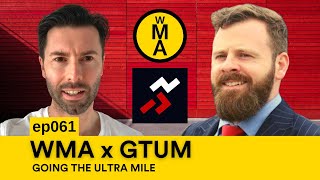
Long-form podcast interview (EP061: "Going the Ultra Mile x WMA") featuring Keelan Harrington and Anthony Astbury. They introduce the Whole Man Academy—events, podcast, newsletter, and upcoming mastermind—and discuss men’s wellbeing: unhealthy coping patterns, the value of accountability and morning routines, and mindset shifts (recognizing that thoughts influence feelings). The conversation critiques mainstream media and social media for heightening anxiety, recommends podcasts and self-education as healthier inputs, and examines COVID-19’s mixed effects on priorities and male social outlets. Episode closes with practical advice and CTAs (wholemanacademy.com, newsletter).
Okay, so this is the whole Man Academy podcast, episode 61. I'm Anthony Asprey, your host, and I'm lucky enough to be invited on podcasts at the moment to talk about men's health and the Hall Man Academy and everything to do with it. So today I'm going to share a conversation with Keelan Harrington, who is the host of the great podcast Going the Old. Now, before we jump into that, remember to subscribe if you don't already to join the hundreds of guys around the world who are reading our weekly E letter, which is www.wholemanacademy.com movement, or just click on any of our links below in the show notes. And also next week we're going to be sharing episode 62 is going to be four experts on men's fitness. And the week after it's going to be a delta with a man who is from the world of professional fitness, football and a bit of a ledge as well. Anyway, let's jump into today's podcast. What are you going to learn about? Why should you listen? We're going to talk about how to navigate bringing the inner greatness out of you if you haven't already. For some people, we talk about living the quiet life of desperation, which is a really interesting term. Getting comfortable, being uncomfortable, the importance of educating yourself. Media, social media, the common themes of high performance people. And I'll just share with you a quick quote which I've mildly butchered, but that Keelan said, which is everything you have is already inside of you. You just need to find a way to recognize it's there and bring it out of you and then it becomes a superpower. Lovely stuff. Anyway, enough from me. Let's jump into the podcast. It was recorded a couple of months ago and I'm sure you'll find decent value in it. So put your feet up, grab a coffee and enjoy and we will catch you next week.
This is going the ultra mile. I'm Keelan Harrington and my guest today is Anthony Asbury. Anthony is the co founder of the Whole Man Academy, very focused on empowering men, the importance of talking, leaving an impact on people so they can have a legacy in life. And as well as that, he talks a lot about, you know, avoiding mainstream media and looking at things through a different lens. Anthony, welcome to the show and thank you so much for joining me.
Thank you very much. It's a pleasure to be on the show.
Yeah, no, I know you're busy with your own podcasting and other agendas, so I do appreciate that you Take time out and spend it here with Ultramoil in our audience. Anthony, you do a lot there. What I even your introduction from the Holman Academy to the idea of media, they're two very different things. Let's unpack that a little bit. Start off with, what's the Holman Academy? How did you come up with this and what's its idea for the future?
Sure. So the whole man Academy was started just over two years ago by myself and another guy who initially understood the issue that men don't get together to talk. And, you know, neither of us were young guys. But what you realize is a lot of coping mechanisms for guys revolve around getting drunk, you know, doing the guy stuff, but actually not involving, actually kind of being okay, talking about not being okay. And that hasn't necessarily got to be people that are feeling suicidal. But, you know, the average guy, we would often say, would have, and I say high level conversations at the pub. What I mean is not being particularly deep about what's going on in their life and hiding the issues that are kind of underlying what drives some of our behavior. So we started off encouraging guys to get together in London, and we've run 12 events in London. And what that actually morphed into was, it's hard to get guys to get together just to talk. You need to state the obvious, some good topics. And, you know, as that evolved, we realized it's important to talk about your sleep, your health, your fitness, your finances, your relationships, your career, all the different things that kind of make up the segments of a man. So we then started a podcast. So I've been hosting the podcast since early this year. I think we're up to, what, 45 episodes now. And it was the importance of helping guys with all levels of their life so that they. How can I put it? You can have a guy that's got loads of money, but he's really out of shape and unhappy in that respect, and we can hopefully help him with that. You could have a guy that has got a rubbish job, but has got a great body and a great family life. So he needs that side of him, you know, to be. To be bought up a level if he wants to. So there's always something, and what we want it to be is that if you feel there's something missing in your life or you want more adventure in life, you know, come to me and we'll help you out.
Okay. Very powerful stuff. And I mean, when you look at that you said about coping mechanisms, I'd imagine that's a very challenging area because when you're talking about people and coping mechanisms, essentially, what's that expression, you can lead a horse to water, but you can't make them drink? You know, we do things at such a subconscious level beyond any understanding and recognition that we have, because when we're stuck in the picture, we can't see the frame around it as people, and it's hard to do that. How do you navigate bringing that inner greatness out of those individuals without hitting the. The typical reactions that become roadblocks and have the person standing in their own way?
Yeah. I think one of the big things, and I was guilty of this before, is not giving yourself time to quieten your mind. And that means actually just taking some time to compliment. Sorry, contemplate what. What do you want in life? Which is one of the tough questions, but it's one of the simplest where you should, you know, I think people should not always have a complete set of goals list, but have a good idea of what do you actually want in life? Because what we're finding is a lot of guys are kind of. How can I put it? Sleepwalking through life in the job that they're in because they, you know, they've got a mortgage or they've got kids at private school and they've got an expensive car and need the expensive watch and what have you, which are all good. But you often find that for those guys, they might not be kind of climbing the career ladder up the right wall. And you end up with it where you're stuck in a. Let's say stuck in a rut, and you get to your middle age and actually you're kind of stuck in. I can only do this because I don't know what else to do. So one of the big things, yeah. Is encouraging guys to actually, firstly have a good morning routine to just help you start the day in the right way, be more productive and hopefully thinking better. And the actual ability to help them just sit down and actually have a think about what do they really want in life? Because most people don't really know if you ask them.
Yeah, I've noticed that as well, from at least my experience. And look different strokes for different folks. And happiness and success, I always say, is by the individual's definition and measurement. And what works for one doesn't work for the other. However, you. You said guilty of this yourself. I definitely was guilty of this. I call it living the quiet life of desperation. And because you don't know any better or you're stuck in a survival mode or there's children or there's a relationship you're trying to keep together and you're thinking about, you know, when you're focused on having to survive. To ensure Maslow's hierarchy of needs remain intact in there can be very little growth occur. And for people that don't know the hierarchy of needs, this is the foundation you need to have in place in order to. Well, for many things. But to, to your point about having a still mind, you can't have a still mind if you're worried about that basic survival.
Yeah.
So I think we just end up in that rat race, hamster wheel effect of not knowing why we're doing where it's going, what the consequences of certain actions are, you know, because we, we do certain things and I mean we collectively as people, we do certain things that are not necessarily in our long term interest and they just reward a short term goal of some kind. And suddenly before you know it, there goes a year, there goes two, there goes five. And it's like, wow, I am still here in this same place or I've gone backwards because I haven't taken that action needed to change things. So what would your idea be on the accountability and the responsibility? You know, I've had conversations with some people and it's been very mixed. You know, I wouldn't be one to ever try and forcibly give an opinion. You know, it's like the show here. You can come and listen to it if you want, by all means. You know, we're not always right, but we do our best to have a conversation and see where it goes. So with that, I've had those conversations with people and in my opinion, coming from my experience, when it comes up as to the why and the how, for me it was always looking inwards, taking responsibility for things, even the things that, you know, don't feel fair to take responsibility of, even if it's a situation that's outside of one's control by taking responsibility for whatever led to ending up there. That's how I found was a good way to navigate out. What are your thoughts on this?
Yeah, I think you can with accountability is a big one. And you can use it in the basic term of why do people do better if they're maybe going to the gym with someone else or why do people do well to have a coach or a mentor? I mean, we both know who Dan Pena is and that's someone that's not going to fuck about and they expect you to keep on Track with what you're supposed to be doing. And I think that's where the life coaching side has exploded in the last few years. Because for everybody, having someone that you're reporting back to and what's your progress and what have you done and what haven't you done? For me, and I think a lot of the guys that we work with can actually be really. It's priceless because left on your own, we all know people, and I've done it again in the past where you've bought a course on something and you get excited about it and you pay lots of money for it, and then the day when you're left back on your own and you've got week one to start and suddenly it's, you know, it's like a. Of the balloon disappearing off into the distance that you've not tied up because the motivation and the excitement goes out of it. So to have someone saying, right, week one, what have you done? Well, I've actually done this. Is that enough? What else do you need to do? What resources do you need? How resourceful do you need to be? That's one of the big things for me, that having the accountability for a guy. And the higher up you get in business, the less people you have to talk to about these things as well. If you're a guy who's managing a big team, there might be one person you can talk to above and generally no one below you probably wants to hear what your challenge and issues are. So accountability is huge, and I think you touched on it there. I know a lot of guys that work in the city that are still doing the same job they were a long time ago, many years ago, and they don't want to do it, but they're not entirely sure what else they would do or if they do know what they wanted to do, they wouldn't earn as much money. So they stick with what they're doing. And unfortunately, that is a hamster wheel to nowhere.
Yeah. Yeah. I talk about it a lot. It's the comfort zone. And Marcel Hoffa said it to me and David Goggins says it. It's getting comfortable being uncomfortable because the whole familiarity and the safety mechanisms that we keep for ourselves, it's. It's almost sad to see that those things that are designed to help us survive are to our detriment when it comes to happiness, and particularly with the way things have gone in this day and age, how people have the perception of what the needs and the musts are. You know, when you were on about earning money to buy a car. What impress people either you don't like or they probably don't like you. And, and it just seems like that hamster wheel effect. So look, it's, it's crazy. It's crazy what we do, all the running around and being busy to get things for reasons that are essentially not valid enough to warrant the sacrifice of our time. And that's the most valuable thing that we're going to have and can never get back.
The last six months have, you know, have certainly changed a lot of things, rightly and wrongly, which is one of my opinions. But one of the things that I think it has done is make people appreciate now more having a place with open space. You know, if you had £2 million to spend now, would you be spending it on an apartment in London or somewhere with a nice big garden an hour and a half out in the countryside? Because people are realizing if they're going to be working from home or they've got kids that, you know, what they wanted before might be different to what they want now. So priorities are changing and the worry there is that guys then don't have the office space to go and interact with other guys and let off steam or go to football or go to the pub as much as they were. And that's another consideration for guys now is, you know, who did you used to talk to? Well, you might chat to some of your colleagues. Even if they weren't right next to you, you might chat to a guy. I used to sit on the train, on the same train every day at 6 o' clock in the morning chatting to the same guy. And that was one of your outlets. But when people start working from home, then you're just sitting on your own or you're just stuck with your family all day. So it's a new hurdle for guys to overcome and navigate.
I guess that has a double edged sword effect to it as well, which is in one way I could imagine that a lot of people are stopping to evaluate why they were doing some of these things like going to the pub or in a nighthouse, certain pressure valve release mechanisms that are not necessarily again in their best interest. So it's maybe to your point, good that it's come about in one sense and in the other sense there's a lot of limitations after coming in for the need to do some of those things like exercise or go to the gym. So it's going to be interesting to see how that does recalibrate and how much of that takes Effect in a positive manner. I mean, it's very sad to say, but I was just looking yesterday, suicide statistics are four and five times gone through the roof, you know, far more of a, of a consequence than Covid itself, unfortunately. You know, not taken away from any, not taken away or making light of anybody that has had a genuine Covid related death. But, you know, there's obviously the consequence to action.
Yeah.
And that's one of them. So hopefully the consequence to action here is going to be that, you know, people, men in your case, with the whole Man Academy recalibrate and come out the good side of it.
Yeah, I think if you time will tell, but the figures are already, you know, showing you the way that if, if the government's main aim was to, you know, protect life and have the least amount of deaths from the situation, then they've got it horribly wrong. When you see that, you know, X amount of times more people are dying from everything else and the knock on effect of the NHS not being able to see patients, you know, whole sectors being shut down, I think that's another, it's another worry. I know for a fact it's a worry for a lot of guys that we speak to or, you know, I talked to you through the whole Man Academy, it's that they've either elderly parents that have, you know, suffered with their health or their kids are now, you know, haven't seen, haven't been out. I mean, nightclubs aren't open and, you know, bars and things are kind of, some of it open. But London's a ghost town, so you've got the knock on effect and I think that's an additional consideration for men is, you know, like it or not, if a man's got a family, you want to be able to, you know, do your best for your family and everybody around you is being affected by this at the moment.
Yeah, well, with all the debate that's gone on around this, there's a quotation, I think it's Shakespeare paraphrasing, but there's no such thing as right nor wrong, but thinking makes it so. And it's been interesting to hear a lot of the, the opposing opinions that have been put forward on us. You know, should there be a consideration for people, the liability towards Covid, if you're taking that consideration in mind, you know, what about the liabilities on the other side? What's the outcome? Is it the reduction of the spread of COVID Is it the reduction of loss of life and where's that balance? And, well, look, you know, there's a, there could be a 3, 4, 5 hour podcast on just that polarizing topic alone. But where, where does your media then I get, I guess, yeah, this is a good point time to bring that in because you've got the Holman Academy. Then you also said about looking at the media through a different lens or a different perspective and stepping away from it a bit. Mainstream media, what do you mean by that? Could you unpack that a little bit?
Certainly. I mean, I'll give you a. In a nutshell example is someone. I was on a live call for the Cheltenham Wellbeing Festival a little while ago with a couple of guys from Sky Sports and someone that contacted through said, you know, they, their partner was suffering with anxiety and could you give some advice on it? So we, you know, we don't pretend we're expert, we're not mental health experts, but like most people, you can, you can give what would work for you. But one of the things I said was, look, if you could switch off social media and, or the mainstream media, you know, stop watching the BBC, stop watching Piers Morgan, stop looking at the websites and what have you, don't buy newspapers and just get on with your life. And if something really important happens, someone will tell you about it, you know, and you will find, I pretty much guarantee it, that you'll find your level of anxiety you're feeling will probably drop because I think we've all seen at the moment, you can understand it. Newspaper is a business and their business is to get attention. And the longer your attention is on them, the more money they're going to make with their advertising, especially online. So we know the word clickbait. You can see I've seen so many, an unbelievable amount of headlines that will say coronavirus surge and cases doubling. One of them, there'd been one case and the next day there was two. But they said coronavirus doubles. And unfortunately we're being led down this path, which means that it just leads to a heightened state of stress for people and it's like Project Fear at the moment. So I'm very much for. Maybe if you limit your time on social media and limit your time on looking at the mainstream media, it will probably do you a world of good. Not necessarily just today, but in the long run.
Yeah, and I agree with you on that point enormously. I've talked a lot about show me your friends, I'll show you your future. And you know, that's. I've heard that throughout the ages from your Bob Proctor to Tony Robbins to your Dan Pena's. It's not new, but it's a statement. And on your point about limiting the media, I guess something that stands out for me is you get the result out of where you decide to put your energy. And yes, we know that our daily energy is finite and where you decide to put it, it's like going to the gym. If you work out just one muscle group, that's all that's going to develop. And I had an incident recently where I was faced with a choice where, how do I put it? There were people had an opinion about a situation and I could have either delivered my opinion or intervened to rectify it. But you have to sometimes take a step back and realize you know what's meant for you won't pass you by. The individual has to be able to see us and decide to take action. And again, you know, you wish you had a magic wand that could fix the problems of the world, definitely. And give people that quality of life. But sometimes if you're putting that energy into that area, yeah, it ends up. There's a funny term someone said to me years ago, energy vampires, you know, and it's not, you know, your mood hoover. Oh, brilliant. That's my new one. Thank you. That's brilliant. But, yeah, so you have to evaluate those things in order to look for the outcome you're best aiming to achieve. And it's unfortunate, but what you said about the media then bring you back to that point is it's one of those things. It's a delicate balance, isn't this?
I think you've got to look at what you, as you say, what are you consuming during the day? And now there's no excuse to be watching it because you've got YouTube. And one of my sayings is that podcasts saved my life, which sounds a bit drastic, but if I take you back to when I was working in the city, which I worked in for nearly 20 years in London, I was one of those people that was doing a job, earning quite good money and was driving the car and had that nice house and tick, tick, tick, all the boxes. But honestly, I was very, a bit bored of it all and felt it was quite a toxic environment. But I didn't really know what. I knew I didn't want to do it anymore, but I didn't know what else to do. And then I started listening to podcasts and it led me on a path down into self development, personal development, Tony Robbins, Peter Sage, Dan Pena, et cetera, et cetera. And what that gave me was the belief that there is something different out there for you. And people have no excuse now because you could just pick any of the top podcasts and you can just consume those like you would the media and you're taking in positive, thought provoking content instead of just fear, death, rape, murder, etc. Etc. So that's my thing now. People are, if I'm not watching it, if they have a void to fill, I'm like, start listening to podcasts. You know, there's, there's millions of brilliant ones on whatever you want to listen to, but they can make a huge difference to your life.
Yeah, and then the self educating is very important because again, talk about mainstream media, mainstream education platforms like your colleges, etc. They're not necessarily going to give you all the answers either. You know, they essentially maybe even put down foundation and you got to build a lot of framework on this. And in my opinion, that only comes from pursuing your passions, finding out your why, as you said, and then if you can listen to your podcasts of whoever it is that can give you a bucket load of that information, you know, it's like hearing something over and over again and you hear 10 different ways and suddenly you hear that one way and it makes that click that catapults you from, you know, point A to Z and everything changes. So I really agree with that about podcasting. Saving life. Podcasting for me has been the best thing I've ever done. It's forced me to sort out so many other things to set up the business. First off the back of that, booking guests, networking, meeting incredible people, having conversations. I consider this my best education platform. I get to sit down, talk to amazing people like you, and sit down and be educated for an hour or two. And it's, it's, yeah, it's amazing that you can do that now. That's something we could not do 30 years ago, 20 years ago, even, not in this type of an environment, as an average person stepping into this world. So it's an amazing thing and I agree with you and I'd encourage anybody listening, if you want to change your life, start a podcast.
The technology that we know we're both using is the thing that's changed because, you know, five years ago it was quite technical to start a podcast, whereas now if you've got a phone, you just download an app and it's got a microphone and you're, you're away. So it's a bit like with the whole man academy where we're Developing a mastermind group, you know, before it would be that you've all got to try and get together, but now you've got the joys of Zoom. You know, for up for 100 quid a year, you can pay for Zoom for a whole year. You can have up to 500 people on it anywhere in the world and you can have your masterminding groups, you know, on all different time zones. So there's one good thing, you know, with the technology around, you can listen to the podcasts, you can watch who you want to on YouTube or new YouTube or bitch you, all the different platforms. So you've got no excuse to keep watching the fear porn on the mainstream where you can switch on to what you really should be on.
Yeah, yeah. And on your. I like that term, fear porn. I like, you know, what you said about the example of the clickbase and you've got people that. What was this? The coronavirus has doubled and it's going from one to two again. With this amazing technology, we have the ability as individuals to delve into information deeper and deeper and see it for what it is rather than how it's perhaps presented or comes across on that. So we've got a great self education, a great tool to be able to educate ourselves. I get the idea that social media isn't your number one choice or where do you see that in your future?
Yeah, I mean, I would say this. I guess it's a bit like. A bit like water, you know, if you drink too much water, you'll die, but you need it to live. And it's a bit like myself. I used to think that you should post something every day because you have to. And then I realized someone said, you know, especially only post when you've actually got something to say, which. So it drives me nuts when you see people, even some of my friends, that every day has to, doesn't matter what they're doing, they've stopped to take a photo, to post it online. And I'm like, who cares? Who cares what you're doing? But some people find that as their attention seeking thing. But it's been great for the whole man academy because I'd say 90% of the guys that have come through the whole man academy kind of understanding what we do are through Instagram. So, you know, we've found that as a great platform to interact with guys and it's actually much more or it's easier to navigate, I think, than Facebook because the algorithms are changing constantly on Facebook. So you're not Actually getting to see what you think you are seeing. It's a echo chamber of, how can I put it, Random posts on there at the moment, whatever you're interested in, they'll just show you more and more and more of that. Whereas with our Instagram stories, you can really keep in touch with guys. You can do polls on there and you can do countdowns and all the different things you can do. So certainly for me, I dream of one day being able to just have social media where it's just a few people in your life that you really care about and people don't feel the need to post a picture of their dinner every time they have it. But who knows, maybe they'll just shut social media down one day.
Well, you know, reality is stranger than fiction. We'll see how that pans out. I will say, though, a great sentence that I heard, and it was a conversation between Brian Rose and Guy Kawasaki and it was be a producer of social media, not a consumer of us.
Yes.
And again, to your, to your analogy of the water, you know, it's, it's necessary, but too much of something isn't good. I guess when I think of social media, I was anti social media. And for a lot of us, in its cognitive impact on kids and teenagers, I think we have a, a long way to go on refining us because it's a new thing and it's kind of like a monkey with a machine gun at the moment. It's new, it doesn't know what to do with it. And it's. Yeah, it could be really dangerous. Can you train it and teach it and, you know, instill responsibility? Yeah, over a long period of time. But what are the consequences to that in the meantime? And I think a very important counterbalance to us and this is the way in how I vision, say going the ultra mile is to be able to create those changes, shapes and molding from the top down as well as the bottom up when it comes to the audience. So by being a producer of it and understanding its dynamics and you notice yourself from your content delivery, at least you're able to, if you're doing that value added content, you're able to impact those people and hopefully those posts, those podcasts, those stories that are in line with your messaging of what you're trying to deliver, throw enough mud at a wall and some will stick. And at least we know we're able to do that and combat it. Because no matter what happens, I don't think it's going to go away. But at least for all the click base mainstream media tactics that are used just to generate revenue and income streams. On the other hand, at least there's this side of it. And I think that's an important balance to try and integrate into us. And. Yeah, well, you know, I want to say to a fellow podcaster who understands that I appreciate your contribution bringing that into the world from your side, you know.
Yeah, I certainly think, you know, with, with social media you do have the, as you say, you do have to find a balance. And that's why I like podcasts that are long form conversations. So London Real is a good example. You know, a two or three hour conversation. We've, I think our longest podcast is two and a half hours. But the problem is people are being bought up on the instant gratification of if you can't hold my attention for more than three seconds, then I'm off to the next thing and it's, you know, that. Hence why swiping left, swiping right, looking Instagram stories. You know, an Instagram story is 15 seconds, but it's probably about 12 seconds too long because people are just swipe, swipe, swipe, swipe. Whereas I always think it's good to have a bit more of a, you can delve deeper when you have a long form conversation. And that's actually why on Fridays we release an E letter which is written, which is quite a long E letter. And again, it's like, you know what, you can choose to read it or not, but to try and put something interesting, meaningful and educational in a quarter of a page blurb is quite difficult. Whereas actually being able to unpack something to be thought provoking is, I think one of the reasons why we've got a lot of guys who read the letter on a Friday. It goes out at the same time and then message back and just say, yeah, that's really something interesting to think about. Because at the moment everything is scattergun of, you know, we just want your attention every few seconds. So it's a long form conversation is, is not dead.
Thankfully, that's reflected in the response to certain audiences. Because if you look at, you know, huge podcast platforms that have two, three, sometimes five hour long podcasts, you see them at 400,000 views, 500,000 views, 1.2 million, which is a direct answer to. There is a enormous amount of people out there in the world today that are wanting these longer answers and these longer discussions. I can remember one of my first times being on a mainstream media platform. I've been on a Few of them, you know, from different interviews, radio shows, things like that. But it is, it's very disingenuous. You know, you have this idea of how it looks from the outside when you're listening it to us on your radio and it seems like it's got the bells and the whistles and everybody's friendly and happy and laughter. And then you go into the studio and it's, it's happening there in front of you and it's just not how you imagine, you know, it's like, yeah, you know, you've got, you've got 30 seconds till you're talking to so and so and it's, you're disconnected and suddenly you talk to them and even if see them, they're not looking at you, they're looking at everything, scripts. And then suddenly they, they click in and this happy voice and smiling comes out of nowhere. And then when it's done, you know, they, they're, they're, they just don't want to talk to you. And it's like, next, next. And it's a machine. And. Yeah, you know, whilst I understand how that system comes about, it doesn't allow. You can't say everything you need to say in six minutes to give an authentic version of us, you know, and allow for that gray area to be explored and unpacked and really put into context. But yeah, look, we live, we learn and we do our best.
I think I've, I've had experience of that myself where we were, we were asked to be part of one of the biggest media channels there were. And what we realized is they actually just give you four questions and they want you to say what you're going to answer on the questions pre interview, so they can screen what you're going to answer and then shape your answer to what they want you to hear. And that, that isn't, you know, so most people are, I mean, I'm pretty sure there's a lot of it going on at the moment where, you know, people that are going on, they're basically scripted as opposed to actually going on and saying what they honestly feel. And if they're not going to toe the line and they're probably not going to get the interview. So for me, I'm like, you know what? You know, I'll happily tell you roughly what we're going to talk about, but I will not be shaped by what they want to. People are going to interview you.
Yep, I hear you on that. And. Well, I won't go into it, but yeah, I I get it. And it's just one of those things, you go through it, you learn it and then you can make the decision as an individual with that informed choice, do I participate in presenting myself this way or am I going to go down this other way? And thankfully this other way is taking off more and more and allowing for an equal and proportionate voice to be heard, which is good for us.
Yeah.
Tell me a moment of clarity in your life. This one moment that came up that just hit you like a ton of bricks and went okay, that wow, this has made me stop and rethink everything. This aha.
Sure I've had, I'm lucky enough to have one or two. But one was a couple of years ago I went to, I was at Nebworth House, which is the big place where Robbie Williams sang to about a people, I think and it's down towards London. And I was on a week long training course which has involved NLP and hypnotherapy, but also talking about the three principles being mind, consciousness and thought. And it's funny, I was there for a whole week and if I could sum it up, and it sounds obvious but I realized that your thoughts control your feelings. And if someone had told me that just generally I'd have said yeah, yeah, I know that, you know, I know, but I didn't really know. And when I had that realization it was like a light bulb going off over me saying I get to decide on how I feel. Now that's not to say that you don't get pissed off and things happen and you get a bit stressed and a bit this that, but you realize that that's your brain taking that information and reacting instantaneously. But you just get to decide how long you're going to feel like that for after. So that was one of those things that means I'm so relaxed and nothing phases me. And I think that leads to a much calmer life and less, less stress in your life when you know that it's up to you how you feel.
Yeah, I agree with you wholeheartedly and that resonates hugely. And you know again, very important lesson to learn as an adult and I think it's not one that many people necessarily learn. You know, no disrespect, but there's a lot of people out there and whether it's from their 20s to their 50s or 60s and everything in between again, hamster wheel, going through the motions. I'll be better when it'll be the right time. If you know that would have been great, but this person did that to me. And all these, you know, you can come up with reasons or you can come up with results, and it's understanding that that's the choice. And again, you know, whatever example you have the choice, you know, you and I could have an argument and I could have a choice to perhaps even rightfully be offended and so on and so forth. And you know, how can he get away with that? And you know, you can go down that road or, you know, you can have the choice to. This isn't worth that energy. And again, it's about stepping out your comfort zone, you know, by at least stepping out of your comfort zone and not needing these circumstances, those people for necessity, for your hierarchy of needs, it allows you to move on to these people. And it's this common theme, and this is what podcasting has shown me. It's a common theme amongst what I call high performing people. Now, high performing people don't necessarily have to be just in business, but athletes, CEOs, philosophers, philanthropists, just people that are thinking completely outside the box. Not any one of them that I've come across, not one of them has not had to undergo that journey from the bottom up to some extent, which is what has given them the condition mindset to really get to the top of that position. And, you know, they'll all say the same thing. The journey itself is really hard and it's lonesome at times and it can feel unfair, but by undergoing it, kind of like how you and I connected, you know, we don't have coffee and talk every day by any means. You know, we don't even know each other that long, but there's that same mindset where we can pick up the phone and I've got this idea, you know, we don't have to start from the ground up and we don't depend on each other and we're not intertwined by these complexities of our survival, you know, because we've understood life is for me and it's my choice how I live it. I am living it my way and you are living it your way and it's independent. And then we can choose to collaborate together and do these other things. And that understanding, you know, just. Just flicking that mindset and going, hey, I've got choice suddenly, you know, and for you, I know from our conversation, it's like this catapult takes off and you're like, whoa. And whatever those troubles were, they just seem like a distant memory. It's like when you're A teenager and the big dramatic event happens and the whole school is talking about it and then 10 years later, you know, it's like, what was that thing? Did that happen? I don't really remember. And as an adult it happens in the same fashion. It's just like, you know, oh yeah, your marriage breaks apart, having difficulty with your kids or whatever it is and suddenly you go flick and this whole other world opens up. So great to have people like you making that contribution.
The mindset comes in and the mindset for me, you know, to state the obvious, but it controls everything because it doesn't matter where you are in life, what you've got, what you haven't got, who you with any situation, if you understand it's a bit like extreme ownership with Jocko willing, if you can understand that, you know where you are doesn't mean who you are. And you can, you know, you can decide how you feel at that time. That for me is even with the whole man academy. If you can take a guy who's comfortable in his own skin and knows where he's going and what he's about, doesn't matter whether he's, you know, got all the, all the toys and super yachts and all that are rubbish or not that there's anything wrong with those because they're very nice, but. Or he's living in a one bedroom flat and just about getting by. It's about him knowing there's something about me and I can, I'm in control of what I'm doing. I would say it's like needs and wants. I wrote about it a while ago, you know, I want my partner, Emma, but I don't need her. So if she wasn't around, yes, I'd be upset and. Etc, etc and someone else would have to cook the really good breakfast she does on a Saturday. But I don't need her, I want her. So I'm quite comfortable on my own and I'm able to handle whatever it is that life throws at me. And once you have that realization, that's priceless because yeah, life's going to throw shit at you left, right and center. But if you can be like, okay, well good, let's do this. Good, let's do that and evolve from it. The old saying, adapt or die. You know, the biggest problem most people have is that they think they shouldn't have problems.
Yeah. And I think a lot of people could take that the wrong way, but I get it completely and it's nothing. And to take the partner example, it's got nothing to do with. They're not being a sense of priority. But it's even. It's not up to anybody else to make you happy. You know, it's your job to make you happy. And that need, it's almost selfish to expect somebody else to do that. So it hones exactly in on that point. You don't need it. It's great that it's there. And ergo, it kind of works in synchronicity as parallel lines moving forward in the same direct. But you're in full control of it, and it reduces the ability for those feelings to be controlled by anyone or anything else because you remain in control of your thoughts and your why. So it can be tricky for people to perhaps get that in its completion, and our podcast could be two hours on that point alone, unpacking that in great length. But I do get it, and it's important to understand that some people get.
It like that and others it takes. Some people never get it. And it took me about 36 years to hear those words. And it actually sometimes you hear the right thing at the wrong time. So for me, it was a moment of realization.
Yeah, absolutely. I think the most valuable summary of that. And again, saying this, people are going to go. I know that. But everything you have is already inside of you, and you just need to find a way to recognize that it's there and bring it out. And then it becomes like a superpower. The more you practice this.
Yeah.
You know, the more amazing the whole situation gets. So going from that, if you had to give some piece of advice to that, I guess from your perspective, young, single or young men, not necessarily single, but, you know, the whole men academy, you've decided to try and help men from that sense. What would be a piece of advice that you would give to say, look, put this up as your North Star and keep looking at it and everything else will kind of navigate around that. But start with this.
Yeah. I think for me, it's about continually educating yourself. And that doesn't necessarily mean, as we said, reading books, but it can be podcasts and just trying to, if you know roughly where you want to go in life, find someone that's where you are already and, you know, analyze and study everything that they do. You know, if you're interested in business, go and read everything that Sir Richard Branson has written. You know, if you're interested in sport, go and find the top person and consume everything that they've ever done and, you know, start implementing it and see where you get to.
Okay, yeah, I think that's hugely important. It's kind of like if you want to be a expert martial artist, you'll go to an instructor and you will learn how one has gone before you and how they did it, you know, and repeat, emulate the process and take heed of their mistakes and what they tell you not to do. So look, I get that. I think that's very valuable. It sounds simple, but it's a lot harder to put into practice. So how can people find you if they want to investigate further what you do at the whole man Academy?
Certainly good question. So the best way is www.wholemanacademy.com and if you want to sign up for our weekly E letter for guys, you can go there and get get on the list. We've got a couple of hundred guys there and also we'll be launching our latest mastermind in the next couple of months, which means taking around 15 to 20 guys for a whole year and trying to help them achieve something amazing in life.
That sounds like a value added major contribution from your side. Well, listen, I really appreciate you taking the time to come on here. I know you're busy and gonna leave you back to impact the world and get everything you need in line for the week for Holman Academy. Thank you so much for coming on and I look forward to having you on again in the future.
Pleasure. Great to speak to you.










