EP068 - Life's Biggest Con - Rany Athwall
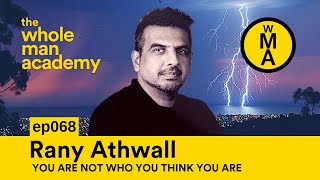
Podcast interview (EP068) with Rani Athwal discussing his book 'Life's Biggest Con' and his perspective that people are not their minds or thoughts. Major themes: early life conditioning forming a 'created self' or persona, the energy cost of preserving identity, mid-life questioning, practical practices like awareness/meditation (with caution about expectations), solitude, and the distinction between true self and personality. Includes personal history (lost father at 17) and references to influences (Brian Tracy, Tony Robbins, Deepak Chopra).
So this is the whole Man Academy podcast. My guest today is Rani Athwal. I've already checked how to pronounce his name. He is a mind mentor, editor of Expert Profile magazine, author of Life's Biggest Con, which I'm holding the book up, although my fake background probably doesn't show it. One of the things I love what he wrote was he's committed to, or committed his life to, teaching his profound understanding of human existence, which we're going to get into. So, Rani, how are you and where are you, squire?
I'm in Birmingham and I'm very well, thank you.
And how's it been in the last few days? Because I sense you've had your hair cut and how does that feel?
I have indeed, yes. My head feels a lot lighter. I've been wearing a sort of mullet, the 80s mullet, for quite some time now. So, yeah, it's almost felt like I had a constant polar neck around my ear.
It does. It does make a big difference. And we've spoke about this before where even for myself, I was talking to some this morning when I said, now I've had my hair cut, my hair had got long and I just felt like a bit of a mess, especially when you're doing stuff on camera. So, yeah, to have had a haircut and feel a bit sharper is quite priceless, to be honest. But, well, we're going to get into lots of the different bits and especially to talk about your book, because there's so much. But I just want you tell us a little bit about your own story of how you came to where you are in the world and have an. Have an understanding of, you know, profound understanding of human existence.
Yeah, you can interpret that many ways, Anthony. For me, personally, I've always been known as a bit of a thinker. Yeah. So even growing up, I'm the type of person that would have a thought and think about the thought and then think about thinking about the thought, and to the extent where, in essence, it will leave just a thought. And over time, obviously, it's changed. You know, I've got on a bit now, but certainly in my earlier years, there was a sort of almost like a disparity between how I was, what I perceived myself to be and certainly my thoughts. So it was never really. I think most people go throughout their lifetimes believing, you know, that they are their thoughts and that their mind is who they are and their thoughts are who they are. Whereas for me, it's never really been like that. In fairness, you know, Like. Like everybody, we get caught up in our life experiences. And so there are sort of what I would describe as large parts of my life or aspects of my life where I was no different.
Yeah.
But there's always been those glimpses, especially early on. We make certain life choices as we get older, and those life choices can sometimes take you away from that. But especially in the Last sort of 15, 20 years, it's been a lot more prevalent, and it's something that I've always wanted to share. I'm not a. Look, first and foremost, I'm not a religious kind of guy. I'm not a spiritual teacher or a guru in any way. And, you know, I don't go around banging this drum about, you know, human existence. But I think there's certainly, if you've experienced something yourself, I think there's a certain responsibility to be able to share that with others. We live in a world where everybody's struggling, especially now more than ever before, with their mental health, with their personal lives. And I think it's important that like everything, like we do in sort of personal development and self help, and we're always as individuals, we have a responsibility to people around us. And certainly the more people we can share, if there is an understanding or experience yourself that can help others, I think that we should do that. Absolutely.
That's a really important point. And I spoke before about. I went on a whole week's course, which was lovely to go. Remember that when you actually went to places and stayed in, you know, stayed away and got around people who had a similar mindset. Priceless. But that course, it was a whole week. But I took. There was one thing that I took out of it, which was a story of someone else that had a, you know, kind of a. A sudden insight, as it were. And that kind of. That caught me when I was reading your book. And I know you talked about when you were younger and you'd had the headaches and. And then kind of that it led on to where you said you felt like you discovered the truth about human existence. So tell us a bit about that with that. With the headaches and kind of. I mean, because you're a young pup at that time.
Yeah. I mean, look, a lot of those memories, to be fair, Anthony, are going to be quite vague. Yeah. But yes, certainly at that time I didn't. When we talk about human existence, it's not something that I understood at that time, but when you reflect back on certain experiences you had, you start to relate those experiences to what you understand later in life and about human existence really is, in essence, it's very simple, is that we are not our minds and we're not our thoughts. And that to me is the whole picture. And that's what I'm trying to help and explaining words in the book is to sort of go through a sort of more of a personal journey. A lot of the time if I, if I shared this with which I have with family, friends and colleagues, etc. You got a response that either was like an empty stair raised over, you know, he's lost the plot, you know, what is he on about? Type of attitude. Whereas there were some people who were relatively receptive. But explaining an experience in words is never the easiest thing to do. So you need to take somebody through a particular journey. When you say to somebody, you are not who you think you are, well, the first thing, well, who am I then? And how do you explain that? Who are you? Right. So unless you're prepared to ask that question yourself multiple times and try to find that answer, it's not that straightforward. So I thought, well, let's try and explain who you are not first and foremost. And that's what the book is all about. It's a journey to take you back to the day you were born, to your present state, and to help you to understand that everything you've been through, everything you've experienced is not who you are.
It's one of those where, and I said before we pressed record that it's one of those books where you can pick up a page, you could delve in at any point and you find yourself five minutes later still reading and you can't remember what you were doing in the first place, but going on to it, I mean, what you just mentioned about when you're young, but the book separated into, let's say, two sections, as it were, or two parts. But in part one, you spoke about life's early conditioning, which I think is. I have more of an understanding about it now how as you go through schooling and as you're brought up, you're conditioned by what you see, what you read, what you hear. I just wonder if you could talk a bit about your thoughts about life's early conditioning.
Yeah, so again, you've hit the nail on the head really. I mean, when you think about your environment, your families or your culture, what your parents, beliefs are certainly in essence the environment that you're brought up in, that is all conditioning you. So, you know, you start following and you start copying, you start imitating and really, in essence, that's just really acting.
Yeah.
What is acting out different roles. So you start to figure out, once you've got a name, you start something, you start to answer to, you start to. You start to create these likes or dislikes. And in essence, as I said, you have to sort of bring it all together. Because even early conditioning, as we talk about life's early conditioning, you're really conditioning yourself throughout with a bit like a. Well, we are like a computer program and a computer program that picks up a lot of viruses along the way and keep like, like Colby, we keep mutating. So in the early life experiences, then we. When we move on to sort of our early days at school, and then we. What I would call early adulthood. And, and then obviously when we become adults, it is really accumulation of experiences, and all we're doing is building on another experience, that interpretation of another experience, and we just become this really complex psyche. And in essence, we then feel like we're building into something and we're creating something with our minds and an identity. And the hardest part then becomes, is once we start to sort of have this picture of who we are, is we now trying to preserve that. And that's where the challenge comes in, because, you know, you're sort of protecting this so called, I call this fake identity that really is. We know deep down it's not the real self. But in essence, what we're trying to do is to portray to everybody else. We're always sort of finding ways of how can we, you know, almost prove to the world who we are and what we're trying to create within ourselves? And it's, it's, it becomes draining. It becomes almost something which you find very difficult to continue doing. So I say the early conditioning, in essence, does have a huge impact on how you carry on throughout your life and certainly as early adulthood. And some of the decisions we make today is still very much because of the way we were brought up.
I'll tell you why. As you were saying that, I was thinking also, you know, you and I are over 40. Let's, let's say that. So we, you know, we didn't grow up around social media and yeah, we didn't have mobile phones and all that when we were young. But you look at the youth today or, you know, the kids in their, in their teens and in their early kind of twenties, that you talk about social conditioning, but, you know, they've got the Instagrams and the Tiktoks and you're seeing people usually with More than them and them aspiring to be like that. And then you've got the TV shows like the Only Way is Essex, where all the people are driving around in Audi R8s and BMWs, and you realize that's not real life. And I just wonder what impact you think that will have on kids growing up naturally.
I mean, these things are part of that conditioning process. Society decides who we should be and how we should act and behave. But I mean, again, to me, Anthony, that's not as important to be thinking about those things all the time. I think what you try to do is, like I said, is to find that inner space that we have, that consciousness, that awareness within us that we are not that person, that we continue to believe. So whatever else happens out there happens. I mean, this is just the world that we live in. We're always going to be influenced by people or by television and media, and we're always. Society, as I said, kind of in an essence, decides who we should be as people. There are certain, There's a rulebook, there's what we should and shouldn't do and. Etc, etc. But I think all of that isn't important. We've still got to fit in. We've still got roles to play out. We can still have a life and enjoy life. But I think the key to what I'm sort of trying to get at, and certainly within my book, is to understand that is more to life than just that sort of Persona, that facade that we keep putting out, and it's because of that person, because of that Persona, because of that identity is why we struggle so much. And why are we so sensitive? Why are we always. Why, where does this conflict and struggle come from? We know again, it's just always trying to sort of protect that. We put this sort of, kind of what I would call walls around us and more like a boundary to say, look, this is who we are and we spend all our lives just protecting that. And there comes a point as we talk about the whole man academy and why sometimes us men struggle a lot more as we get a little bit older.
Yeah.
Somewhere there's a realization that, you know, this. What is it all about? You know, there's a lot of deeper questions that get asked and we start to realize that everything we've been building up and trying to create, either there's a certain expectation that we then decide, well, we're okay with this, or we start to lose ourselves in it. And it becomes. The psyche then becomes even more complex and we find it very difficult to sort of find the right answers and we sort of get lost within ourselves. And I think that's what's important, to sort of then step back and understand a little bit more about who you really are. You know, this, this identity isn't going to help you if you've got to somehow separate the two and, you know, find a way from it, sort of almost escaping from it, especially when you need to.
The old question of, you know, who am I and why am I here are one of those that I know with the whole Man Academy letter, we try and put out thought provoking content and questions that a guy can ask himself. And I remember one of our events when we had live events, which we will have again, but back when we were allowed to do things like that, we had an evening event at the South Place Hotel in Liverpool street in the central London. And towards the end we'd had a couple of guys talking and a chap in the crowd called John asked a question and he said, he asked one of the guests, what do you live for? And it was one of those great questions because when you put that to a lot of people, they haven't really got an answer and not saying they should, but it's always interesting where people are like, what do I live for? You know, and like you say, it's just like that, who am I? And one of the things I'd listen to was a podcast about like soldiers or guys in the army who, you know, had left the forces and their identity had all been around, you know, in the forces and some people considered them a hero. And then suddenly they left and you were just you again. And then some of the guys who were there like, I don't know who I am.
Yeah, because you've, you've created that identity, haven't you, with your job or with your profession? And that's where you feel in control and that's where you feel comfortable.
Yeah.
Sort of when you're taken away from that, everything starts to crumble a little bit around you and you're trying to find another identity. So you're reinventing yourself constantly. But I think, as I said, the realization that you are more than that. What you keep thinking and rotating because a thought is, you know, it almost can. And I have a saying that there is nothing to fear in life.
Yeah.
Other than your mind.
Yeah.
Because your mind, in essence is that part which unless you. And it's not a case of having control over your mind, Anthony. I think we've all come to realize that you cannot Control your thoughts. They just come and go. The problem is we identify so much with our thoughts. We identify so much with our emotions that we get lost in them. And unless we can step back from that and unless we can find that awareness and find that consciousness within us. I'll give you an example that I use quite often when I'm sort of talking and sort of coaching people is I always say, look, think about a baby. If somebody's ever trusted you, whether your own baby that was six months old. Yeah. And you're holding them in your arms, think of a perception that the baby has of what's happening around them. Not who the baby is or who the baby belongs to. The baby's name and date. But think from the baby's perspective. What can the baby see? And what is that? There's no thought there. The baby is seeing a face, is seeing, you know, color, whatever. He can feel, he can touch, he can do everything, but there's no thought. So what is that baby at that point? You know, who is that baby? Yeah, there's no identity there whatsoever. But it's alive, it can feel, it's got. It has emotions, it has. But there's nothing else there at that moment. And it's only through life that we then start to, you know, acquire all this and start to build all this.
Accumulate.
You absolutely accumulate and start to create something from our life experiences. Now, if anybody's gonna tell me that my. Your life experience is who you are, well, that's as a ludicrous thought. You know, somebody could share with me. How can you be your life experiences that is that everything you have, always yours, something. You know, it's your experience. It's not who you are. It's not you. It's your experience. It's your thoughts that your emotions. It's not you. Now, I appreciate when you say that a lot of people can't quite see past that because they don't experience it. They only ever experience thoughts, emotions and experiences and interpretations of those experiences. They never actually experience the you. But unfortunately, until we can get past the intellect. And which is why I try. Well, which is my attempt within the book itself to get past the intellect part to start asking those sort of more deeper questions about who you are. You will never experience it because it's not something the mind actually experiences.
I guess also trying to think for me. And I would guess a lot of the people that I hung around with, you know, when you were young, and I'm talking even up to, you know, in your 20s, and maybe up to about 30. You just didn't ever really ask yourself these questions. And you said something there which is like, you know, maybe it's that you get to. For me, maybe it should get to your 30s and you either, you know, you wise up a bit. And none of us were born enlightened, as I always like that saying. And that's when you start to look around you and maybe your parents are getting a little bit older and you might have friends that die young. All these different things that start to make you question a little bit more about, especially maybe who you're with, you know, your partners, what kind of job you're spending hundreds of hours a month at. And that led me on to. In your book, you talk about identifying needs. And isn't that one of those key things at the moment, there's difference between needs and wants?
Absolutely, absolutely. I mean, look, needs continue to change throughout your life. Your needs are generally based on what makes you feel good. So if you've decided X, Y and Z makes me feel good. They become your needs. Yeah, once I think they become more, you know, so you have your. Again, you know, as far as wants are concerned, we can decide we always have wants in terms of desires and so forth of what. But I think ultimately, end of the day, that are your basic needs, which, you know, again, there's psychological needs though, Anthony. And again we go back into that psychological model of always talking about what we need as people. Now, you know, you mentioned earlier that you get to a certain age, like sort of 30, 35 and so forth, where we start to question life a little bit more. I think that's when we come to the realization that because as children, and certainly as adult, sorry, early adulthood, we spend so much time building, imagining, having imaginary future of what our life is going to look like and the type of person we want to be and we're always building. So there's a future, you know, it is exciting. This is how this is, this is going to be. And we learn from other people's mistakes or we look, I don't want my life to be like that. I want it to be like this. And this is how I see myself. And I'd like whether it's family, children, whatever, and the type of role and job you're going to play and the impact you're going to have on the world and you know, what your bank balance might look like. And so you carry on doing that for so many number of years, then all of a sudden you come to a point where there's almost like an acceptance. Yeah.
Of what?
So all it be. You start to compromise a little bit of what you maybe have achieved or haven't achieved. And I think also then you come to this realization that I call it sort of almost a tipping point where you. Things start to be taken away from you. So you may, you know, when the gray hair starts showing or wrinkles. Wrinkles or maybe, you know, the body doesn't look as good as it used to. Certainly that relationships that you valued so much don't quite have the same feeling anymore and the job doesn't feel as good anymore. More or the. Certainly, you know, you've had certain experiences which now, you know, sometimes the second time around are not quite the same. And you've, you know, I don't know, you might have drove the cars and you've had the lifestyle for a certain while and. But then when, when things start to be taken away from, you start to realize now this is a decline.
Yeah.
This is when you start to realize there's less of a future, there's more of a past. And at that point is where I think a lot more men. And because us men don't in essence are comfortable with talking about emotions and thoughts or accepting them as they are, we're almost trying to always defend them. And when they do sort of surface that we feel more uncomfortable than probably women do.
Yeah.
And then. Yeah. So it's really in essence, we start to sort of almost get desperate. We feel like we're running out of time. We feel like, you know, maybe the purposes we once had or the sort of aspirations we once had don't quite have the same feelings anymore. And these things start to become a bit of a challenge. And you know, that might be at 30, and then at 40, it gets a little bit worse. And then, you know, at 50, obviously you start questioning it that little bit further. But like I said, it's all part around that identity because identity has been stripped away.
Yeah.
That's what's falling of this cracks appearing in it. And we don't know how to quite continue, you know, filling those cracks. And you know, that, that, that as I said, that's probably when we, we probably struggle more than we do in an earlier years. There's always a chance to reinvent or change something. And yeah. And always think, oh yeah, don't worry about, we made a mistake. We can, we can do this or we can do that. But then time is running out and there's, you know, we can't afford to make many more mistakes. And isn't that.
Isn't that so important, though? Like, we talk about the age and, you know, we've said before on the podcast, the average. When you look at the stats of the guys that listen to the podcast, I think, you know, maybe like 60% of them are guys between kind of 30, you know, kind of 30 and 40, let's say. And then it kind of drifts off a bit after that. And I do think, you know, speaking to some of my friends, it's those guys that have got. Yeah, if we basically use 30 as the cutoff point, that have started looking around and as you say, have thought, is this it? And we use the phrase, am I sleepwalking through life? And that was one of the things to work in the city. I found I always wanted, when I was young, apart from wanting to be a footballer and play for Liverpool, of course, which we'll come on to. But I wanted, in my head, I was like, I want to work in an office, earn lots of money. I want a fast car. I want a nice house, a beautiful girlfriend, to travel a bit and see my family a lot. And I'd got all of that. And when I got it all, I was like, what do I do now? And is this everything? And then I started to spend time with people in personal development, and I'd go to seminars around the world, and you'd meet people that had their own businesses and they were working on the business, not in the business, and they could take time off what they wanted, and they had a lot more freedom. And I was like, I've got all of this that I wanted, but I never thought about wanting freedom. And that was freedom to not have to ask permission to go on holiday when I was at work and stuff like that, which drove me fucking nuts. So I wonder, what about yourself now that you're over 40, just. But have you gone through those phases yourself or. I can see my 20s to 30s, I wanted to accumulate as much wealth and women and stuff. And then when I got to mid-30s, I was like, oh, fuck, that's not it.
Yeah, no, absolutely, absolutely. I think for me, this look like, like everybody else, you know, we. We want everything that we feel is, you know, obviously going to make us happy, or we've got this perception of what life should look like for us. And certainly, you know, having a business, you know, kind of ticks all the boxes of. Of being independent and being sort of financially free and equally, you know, you. You want to have a great relationship, you want Children, you want to live in a big house. Just all the things you've just ticked off yourself. Yeah, but I think certainly at the same time there were deeper questions that to me was very superficial and I was very superficial, but that didn't mean that I didn't want those things. I just kind of felt that that would never have been enough. And I think there's having that understanding that those things are not necessarily going to make you happy. And, you know, and rightly so, I'm proven right. It's not about. Because I think sometimes we always expect a certain thing, something that we, we want in our lives, that, that feeling of when we actually achieve it, it's going to remain, but it doesn't, you know, we all know that the novelty is wearing off and how we've got to keep working on everything to, to, to. To, you know, to keep that sort of feel good factor with. Within something.
Yeah.
Get the hit.
Yeah. And of course. But I think, you know, again, you know, as you get older, you know, it's not, I don't think necessarily call it maturity. I think life has just got a. Nature's just got a way of sharing with you the seasons.
Yeah, yeah, yeah.
And always kind of almost bringing to your attention that, look, you need to wake up, you know, this, this isn't what life is about. You know, get out of this sort of rigma hall and rat race of, you know, how many have done this in the past? And, and we've got to start looking at people older than us and thinking, how happy do they look? Yeah, right. You know, they've achieved X, Y and Z. They're not particularly happy to me, you know, well, from the outside, we're making a, you know, an assumption that they've got a great life, but internally they're suffering. Now why. Why do people continue to suffer for whatever reason, you know, why is there always this conflict between ourselves as people? And it's only when you start to have these realizations and you start questioning these, these things, you start to have, as I said, a deeper understanding. And you can maybe go to that place of where you can start to sort of let go of the psyche itself or not treat it as seriously as we do.
How do you think you would start trying to get, you know, trying to. Because you can't get someone to let go of it. I know, but trying to help someone get to that stage.
First of all, you've got to understand, I mean, this is why. I mean, writing the book was important is to help first of all you've got to help somebody understand. This is. This is not just you. This part of you, it's part. Your psyche is part of you, but it's not you. It's not real you. You've got to get to that deeper meaning. And I think that's why we're always looking for another purpose somewhere in life. We're always sort of thinking, well, what's our next purpose? What else can we do? How else can we help? What else can we do, you know, to make. It's always about making the psyche fit in, feel good about ourselves. Because we don't learn. Because we go through from 20 to 30 to 30 to 40, and we just keep going round and round around in circles, just trying to keep in, you know, somehow. How can we. How can we feel better about ourselves? How can we feel important? How can we feel significant? How can we, you know, how can we fulfill these new needs or these. You know, that's not what life's about. Yeah, that's not what life's about. It's part of life. Absolutely. You know, there's. I'm not. I'm not number one. I'm a great advocate of personal development, great advocate of enjoying your life. Enjoy every single experience, but enjoy knowing that it is an experience. It's not you knowing, you know, you. We can enjoy all types of thoughts, all types of emotions when we know they're not us. The problem is when we get so invested in them, when we start to really believe in them, that this is. It's me that's suffering. It's me that's going through these, having these thoughts. It's the. That's. That's. That's when we have a problem. That's when we can't see beyond that. And I think that's where everybody should sort of spend some time in their lives and certainly focus. I mean, like I share with my children all the time now. They're relatively successful in terms of where they are in their lives. Now. We say, look daily, spend some time, understand. Don't always look for distractions. You know, always trying to find something to do. Always. You know, it's like we're so scared of the unknown. We're so scared of finding out who we really are. You know, this fake personality that we keep following and keep trying to almost feed constantly is because of that fear. It's just, you know, we. We're so scared to be alone. I mean, I know so many people who can't even sit in a room on Their own.
Yeah.
Either have their phones in their hands, they've either got to have some music playing the background, or they've got to be thinking, you know, constantly, or they've. The television's got to be on there. Something's got to be happening. Talking, you know, it's just. And I think really deep down, unconsciously, we don't realize that we are scared of finding out the truth. That is scared about who we really are.
Yeah.
And I'll share something with you. For me, personally, it's when I realize what I feared and what I wanted was exactly the same thing. Now you're in trouble. Yeah, yeah. Your biggest fear is losing your personality, your psyche. Yeah. Ego. Don't like to use those words because people confuse the words.
Yeah, yeah.
The biggest fear, but it's also what you want.
We should let that one sit with people for a bit.
It's also what you want. You want rid of it because it's. It's the source of all your pain and suffering is that psyche.
And when would you say you had that realization?
I'd probably say about sort of. Maybe. I'd say probably about 15, 20 years ago. But again, it takes some understanding. It. It takes some almost. It's just something you process. You realize that I'm stuck here.
Yes.
You know, at the end of the day, look, you are this personality, this is something you've invested so much time, so much effort into, and you want to get rid of it. How do you get rid of it? You know, I mean, why would you want to get rid of it? That's who you are, you know, in that sense. Right. So. But really deep down is. That is the part that is, as I said, is a cause of all our pain and suffering, everything we go through. And that the sort of emotions and things that we experience in life and the frustrations and the. The boredoms and the, you know, the times where we want to bang our head again. So that is because of the psyche, and it is that sort of realization. When you can come to that, then you can start to do something about it. But until you reach that point, you're always going to keep hiding. You're always going to be. Keep trying to keep this. This. This. This fake Persona alive, and you'll do whatever you can to protect it, because that's. That's what the mind has created. Hence why even in the book, I don't talk about egos. I don't talk about spirituality. I talk about the created self and the true self simply because there is a subtle disparity between the two. And it's just finding that little bit of space that when you can do that, then you don't take yourself seriously. You don't take your thoughts as seriously, you don't take your emotions. You don't get offended that easily, you.
Know, not easy these days for people.
Well, no, it's not, because as I said, it's. It. We. As I said, you know, that. That. That psychological self. We want to protect it.
Yeah.
So when somebody says something that goes against that, then of course you get upset. You know, you. That's just how we're all. Is anybody any different in that respect? No.
Yeah.
Also, do you think that kind of comes from. People would have to do some level of unlearning because we're so, you know.
Definitely. That's a great word. Yeah, definitely. It is. It is a level of unlearning a lot of. Because we, as I said, we are just a recycled past, aren't we? Yeah, we just keep recycling it over and over and we keep building on it. And unfortunately, that's the program that we've built and we continue to. We defend it to the death.
Yeah.
You know, every conversation we have is, in essence, is some form of defense. Who we.
Oh, it's not. Oh, yes, it is.
What's your thoughts on.
And we'll. There's so many bits to go into, but talking about personal development, and that was one of the things with the whole man Academy. In fact, we had a message from a nice chap called Dennis who's out in Canada a couple of weeks ago, who's been on some Zoom calls, and he said, you know what he found? There was nothing really like the whole Man Academy for men out in Canada. An example, considering it's such a big country. But I just wonder if you kind of growing up, where did you get interested in personal development? Because for me, really, honestly, it wasn't until I was like 30, mid-30s.
Yeah. Log's a great question. Because to be fair, I mean, I was always in sales very much from a young age.
Yeah.
I got interested. There's a chap called Brian Tracy whose tapes that I purchased. And that kind of got me into a little bit of the old sort of psychology side of things, and certainly from a sales point of view. And then from there, I kind of like started to read books, follow people like sort of Jim Rowan, Anthony Robbins and people like that. And it got me really interested in terms of, you know, again, it's a thinking. Yeah. Had to Be better thinker and certainly be able to sort of ask better questions. And so over that time, you know, I was always into a level of spirituality as well. Intrigued me. I don't like to use the word spirituality because I think everybody's sort of perception of spirituality is very different. Some people seem to almost like a. An escape route or, or a weakness in some way. When life isn't going your way, what you turn to God. But it's not to me it was never like that. It was almost I had a, an interest in death or morbid. That sounds to a lot. I didn't mind talking about it. To me it's just part of life in essence. And so yeah, just just going off, going a bit of tangent. Is that from a personal development point of view? Yes, just sort of reading reading and being interested in you know, likes of even the, the Andrew Carnegie's and the Dell Carnegies and all, you know, all those sort of people that we're familiar with. Yeah, I think for me it was. Yeah, just. I just enjoyed reading and enjoyed listening to people with, for their experiences and knowledge and, and I think it sort of sat well with, with, with the other side. Like people like Deepak Chopra. Yeah, I'm a big fan of, of his work and yeah, so yeah, that, that kind of like always had me interested in certainly looking at people's behavior and how we, how we react to situations in life and how we. And. And certainly with relationships as well.
So.
Yeah, which is one of the, one of the big things and I, that was one of the things I learned from probably again in my 30s, I listened to a podcast and I realized, you know, podcasts are such a great resource as our books and everything but you know, with podcasts and ebooks at least you can put them on whilst you're doing other stuff if you're trying to. I know men can nearly do two things at once these days. We're working on it. But one of the things was about, you know, in relationships when I went away to one of the Tony Robbins events and they spent a whole day in relationships. And I thought it was ridiculous when I thought it was coming up. So like how are you going to spend a whole day on it? But it was more about doing your own inner work as opposed to who you were. And it was very much about what level are you showing up as. You know, are you, let's say one to five. Are you someone that a five is very attentive and being honest with that person? Or are you down at A one where you're being selfish and you're not really doing stuff for them. And it was like, wow, after that day, it completely transformed my perception of my relationship and how I was acting. I wondered, have you ever had any kind of times like that where you're seeing it affect your relationship with your kids or partner or colleagues?
Yeah, of course. Again, you know, as I alluded to earlier, you know, personal development, I'm a huge fan of. And I think everybody should be working on how to use their minds better. Certainly in terms of how we use language or how we relate to people, and certainly when we talk about the sort of inner work and how we react to certain situations. But like I said, unless we can find that little bit of space. Because I think once we get a glimpse of who we really are, as I come back to, then a lot of that changes automatically. You almost become. I wouldn't say it's an overnight experience, but you start to have so much more awareness of everything that you do, everything that you think. So that awareness is also then transpires into your awareness of what other people are doing and thinking. So you almost. There's a level of acceptance. You understand people better because you know that they're in the same predicament. You with me. That we're all really the same. We all want the same things. You know, we all have our same. We all got our frustrations, we've all got our, you know, shortcomings or, you know, want for a better word. And, you know, it's. It's that understanding that, you know, the human being is how. How we become who we think we are is from those experiences. So, you know, in essence, you know, like the great Anthony Roberts says himself many times that, you know, we are not our behavior. Just because we behave, behaved in, I don't know, in a stupid way, doesn't make us stupid. Right. So likewise, that is the human personality. Everything somebody's been through is the way they're behaving today, you know, their experiences of what I mean, two people, as we know, two people can have exactly the same experience, yet they can behave very differently. Yeah, but that's only because it's not just that experience we're talking about. We're talking about an accumulation of experiences. One experience is backed up or interpreted based on a previous experience, which could have been very different. Yeah, so that's what, you know, as I say, you know, we. That psyche is very, very complex. It's very hard to figure it out. Some of. We've got the greatest minds in the world who haven't understood that.
Yeah.
You know, and still trying today, so forth. Yes, absolutely. Look, I'm. What the work you guys do in terms of Wholeman Academy, I think more people should be doing stuff like that, helping people, as I say, one understand themselves or have the tools to be better people, to cope with life better and certainly be able to share that with each other and have a platform. I think it's fantastic.
Well, you said there about coping, and I would say from my scrapings of understandings from all the different great people that you follow, you might listen to an hour of a talk, but you might only take one thing away from it. But if that thing you actually bothered to implement, implement, remember, and you know, it helps you through life, then it's been, as we call it, a golden nugget. But it was that thing of, like you said, you listed a few of the different people that you followed. And I always say, you know, go and find one person that maybe it's Jim Rohn or something like that. And, you know, it's free these days to listen to what they're, you know, what they're saying, what they're talking about, these seminars and see what comes up for you. And it's because of those lifespeaker questions. But as you said, a lot of guys, I would guess, and I was certainly one of them, wouldn't give themselves the gift of actually spending some time working on doing the inner work and asking those questions. It was always got to have music on or YouTube on or the TV on or something else on. And it was Chevy Ruff who was on one of our first podcasts, and he said, you know, a lot of guys struggle with solitude and just. Just taking the time to be, you know, in. In silence on their own, as it were. What about yourself? How do you find. I know you're busy with everything, with business and you've got kids and etc. So where do you find the time? What do you do to kind of just settle your mind?
To be. To be fair, Anthony, I mean, it's part of the sort of daily structure. I don't, I don't try to do anything.
Yeah.
I think I find that the more you, you know, it's like the mind is. I remember a phrase somebody mentioned, and it's a great way of explaining. The mind is almost like a car with three accelerator pedals. There is no brake. So the more you try to do something, the harder it tends to become. So for me, it's Very much like finding solitude or finding, finding some sort of almost. It's constant.
Mm.
Now that's not to say I don't get rattled or I don't get frustrated or I don't worry you or I don't have anxious moments. Absolutely. But I'm aware of those. Yeah, there's a certain awareness when those happen. So they don't, I don't identify with them as much. Yeah, they sort of almost pass you by. So in essence there's, there's, there's very much, of course, like, like, like everybody, you know, you know, you can sometimes get so invested in something that can almost take over and then maybe that realization is sort of almost, you know, not there in that moment. Certainly going from a day to day basis, I don't really make any conscious effort to say that I should be like this. Yeah, I should be like that. Because to me that's just again reinforcing that identity, almost building on that. And it's almost like it becomes an expectation on you that this is how you should be feeling now, this is how you should be thinking now. If you get the time to have silence, have the time to. Don't have too many distractions, you don't need distractions because that's when you want to be the psychological self or you're scared that you're going to find out something about yourself. And so the reasons why you probably a lot of people don't like to sort of sit in solitude or to have that mindset, to be able to have that space. And I think also people talk about meditation, Meditation a lot of the time is another distraction.
I was just going to ask you.
About that because meditation is great. It's a great exercise to be able to implement in your day to day life. To be able to sit quietly, to be able to, you know, watch those thoughts running through and not paying them any attention, or to have a still mind. And it's fantastic. But I think if you do for the wrong reasons, it's not good because there's an expectation on there. Now if you go into meditation thinking that, oh, this is going to change the way I feel and I'm going to be this superhuman now all of a sudden and etc. Etc. And, and it's again, you're just hiding away from yourself, you true self. You're just trying to create another identity on top of the identity you already have. Because ultimately the day when you say you want meditation, what do you want meditation to change the way you think, the way you Behave. Right. Meditation really is something a little bit more deeper than that. And you go into meditation without expectations. It is about, it's not about changing the psychological self. So going to these yoga retreats and all this sort of stuff is all great. Yeah, but why is that any different to going to the gym?
Yeah.
Go for a great run or listen to some really nice music that you enjoy or watching your football team play. Yeah, me, that's, you know, watch. Going to Anfield and watching the reds plays is therapeutic of sitting, you know, for an hour in meditation if the expectation is just to make yourself feel better. But meditation is a little deeper than that. It's about realizing something a little bit more deeper than just.
It's a really interesting one because I know, I'm trying to think who it was I was listening to was saying that what they found to start with because they were pressurizing themselves and put an expectation on meditation. I'm starting a poem here. But was, was that they said when they first started meditation they thought that their aim was to have no thought. And, and it will come to me as who said it but said the problem was once you got to the stage you had no thought. You thought, oh, I've got no thought. And suddenly something's popped into your head. So it is that of, you know, saying I'm not putting pressure on myself. So here's a challenge. I'll set to that. It's really good. You said that. A challenge. I'll set to the guys and girls that are listening because still 25% of our listeners are female. Welcome. Coming in, the water's warm. So here's a challenge for you whenever you can. But can you see if you could go for 10, 20, 30 minutes where you just sit quietly with no distractions in a room or outside or something and then send us an email and let me know what it was like. Because I guarantee if I did that today, if Emma, my partner came in, I was just sitting in a room like this. She was like, what's wrong? What about yourself?
That's right. I mean it is. I'll say I've learned that myself. You know, when you think about things like meditation or having awareness or thing, you've got to be non judgmental. You can't create because ultimately end of the day the psychological self just keeps creeping back in. The whole process is to go beyond that. So you know, if you, if you sit in meditation and think this is going to change, you know, first of all it can absolutely calm you down. So for those reasons, when you have. If you're somebody who's anxious or going through some difficult emotions, to be able to sit down and to be able to quieten the mind down is a great tool, is a great sort of practice or just something. Something to have in your. In your daily routine. However, if you. If you want to go beyond or you want to experience something more or you. There's. You have to go into meditation is not about that. It's not about speaking quietly to experience something, to almost add to. Oh, now all of a sudden I'm an enlightened human being. Well, who's saying, who's the enlightened human being? Is it the psychological self again?
Yeah.
Just wants to add to the personality. It's just another label. Yeah. Before I was X, Y and Z. Now I'm an enlightened X, Y and Z. So what difference does that actually make?
I just think it could be a bit of procrastination as well. So I won't get on with that. I'm just going to do some meditation first. Well, I was going to ask you. One of the things was about, you know, we said about finding your true self and understanding your true self. If we were trying to give some, you know, guys listening some advice on if they said, you know, I want to have a go at finding my true self or understanding more like. Where do you start with that?
That. The book.
Get a book.
Yeah. No, look. Awareness. Pure awareness. You know, you've gotta. You know, there's a. There's a certain attention. Our attention is so much on what is happening around us. Yeah. Rather than what's happening within us.
Yeah.
Shift. Right. The more you can focus on what's happening within you. Right. That, that is auto. It's. It's almost like. Because at the moment we're on a default setting. Yeah. We are affected by everything on the outside. And then that. That makes it. Whatever happens, happening on the inside. It's just a slight turnaround. So when you start to focus more on what's happening on the inside and when I say when you focus on what's happening inside, it's not a question of judging yourself. Like, oh, here we. Here I go again, having these negative thoughts. Oh, here I go again. No, you just. It's almost like in the book, I call it being a silent witness.
Yeah.
You just watching it happening. Yeah. It's almost like you could be watching a movie in a sense. Just watch it. It's a subtle experience. And the more you can do that, the more you can practice that through all different situations in life. Even when you're having a conversation with somebody when you're at work or when you're. Whatever you're doing doesn't matter. Just watch. Just keep an eye on that. It's not, you know, it's not the most easiest of exercises to do.
Yeah.
You know, 24, 7. But the more you practice that, there's a. There's a. There's another dimension that creeps in, and it's not something that you'd ever be able to share with somebody else. Within words, what you probably find is you. There's a knowing. There's almost like something within you that's like, yeah, I'm getting this. Yeah. And without speaking. Do you understand? Without the thought. You're not adding to it. I know it sounds kind of. Yeah. Paradoxical in one sense sometimes, but it is. There's. There's a feeling within you which you can't share with anybody else. You can only say they can only experience it for themselves.
Yeah.
And what I. What I've done is whether it's through. Through the thought process originally or whether it's through having that awareness that has created you to get that. Because like I said, I'm not. I never share to anybody. I'm a spiritual teacher or I know more than somebody else. I'm just sharing my personal experience. As to. If you can get to that space, then everything in your life looks hell of a lot different. The problems that you perceive before, there could still be problems, but they're just problems on the outside in terms of life that you might need to solve. It's not a problem within you. Don't personalize yourself with that problem. You know, you're not almost identifying and saying, that's my problem. It's just a problem within a life that needs to be solved.
That comes to. What's the saying? Like, it's outside in thinking that, you know, understanding that everything that's happening around you, but it's how you internalize it and process it to create your. The feeling so that, you know, the saying, your thoughts control your feelings.
Yeah. Again, there's. There's. There's a. There's a level, though, Anthony. There you. When you talk about, you know, when something happens on the outside, certainly the questions we ask on the inside kind of determine how we feel or we can. Or again, how we may be having that experience itself. But the way I see what I share with people is that just don't judge it. Don't just the More you question it, the more you judge it or you try to find it. Not like if you are having a certainly sort of emotional experience of some kind, let's just say you feel anxious about something rather than questioning why I'm anxious. I need to change this. Let it be. It's just because that consciousness, that awareness of that feeling, you're not feeding it. The more you feed it, the more it remains and it gets stronger. And then what we try to do sometimes in our lives, we start to suppress these feelings. You know, oh, I shouldn't feel like this and I shouldn't do this, or I'm going to practice this now, or I'm going to do this, because I heard this. You should do this if this happens and you should think like this if that happens. And, oh, God, it just becomes.
I was thinking it's. Let's say it's distraction or ends up being like. People have, like, coping mechanisms. And, you know, you just said about being okay, it was. Oh, I was going to say it was last year, but I forget. We've had a fucking year of our life stolen, basically. But at least. But I remember doing a talk and it was at Soho House. And when. When they'd said it was being organized, I thought there was going to be about 30 people there. And I was, okay, that's cool. And then when the girl told us about joining up a bit late, she'd, oh, we've only had a few people sign up. And I was like, oh, suddenly your brain starts telling you that there's only going to be a few people there and starts creating that movie in your mind of that it's going to be embarrassing because you're going to be talking. And I started to feel anxious because there wasn't going to be many people there. And it was one of those that I had to go back to my own training. And like you say, go, Joe, what? It's okay to feel that and you're not trying to do something, you know, haven't got you some ninja technique to get rid of it. Here's the funny thing. I was anxious about it and I got there and they said, oh, no, we've got about 76 people in the crowd. And suddenly I became anxious because there was too many people in the crowd. And you can see how you make. You run these movies in your mind constantly. And like you said, it was that moment of thinking, do you know what? Like, I can see I've got that. I've had that feeling, but I don't have to try and do something. To suppress it or distract myself.
Absolutely. You just accept the feeling. It's there. It's part of your conditioning, it's part of your past, it's part of whatever you've experienced or experienced from somewhere else. Yeah, it's turned up. Big deal, move on, Just do it. Just the more you think about it, the more you create those. The anxiety just increases.
We said feeding it.
Yeah, feeding it, exactly. You just keep feeding it.
Yeah.
Or, you know, like, like thought. You know, you've heard all the cliches and the metaphors about thought, thoughts being clouds and all this stuff, they just run through your mind, etc, etc, and all that sort of stuff. And you know, you know, there's. There's an element of truth behind that. That's all they are. It's just a thought. It's a formless thing that just floats about in your mind. And sometimes you're in a. Your energy levels are a bit better. The thoughts might be a little bit better. Sometimes your energy levels, for whatever reason, might not be that great. So the thoughts might be a little bit, you know, they might gain a bit of momentum and yeah, you. A little bit. So what? Big deal.
Yeah, that's an important point. Actually, talking about energy levels as well, that's one of the things we're just finishing writing our online course on is, you know, I'm a believer in if your energy levels are high, you're probably, for me, you'd probably be more resilient. Whereas when it's. When your energy levels are low, those are when you make bad food choices, you binge watch things, you know, do the stuff you, you know, maybe you say the things you don't mean to say. So, yeah, we're kind of working on that.
I'll give you, give you an insight into energy as well, is of. There's nothing more that's energy sapping, Anthony, than trying to preserve this identity.
Yes.
Honestly, we know deep down as human beings who we really are. Deep down we know ourselves. We tend to pretend a lot, a lot of what we do, this role playing, this, like we talk about this sort of facade that we put on outside to the world. It's tiring, it's seriously energy sapping because all we're trying to do is to preserve that image or to build on it and. Or to pretend we're something that we're not. That's hard work, mate. Yeah, really is hard work. Hence why when we talk about ages, why we start seeing people in their 60s and 70s is, you know, just, you know, just spaced out. They just, you know, you. Unless they've come to a realization that. And that sometimes can be the sort of tipping point where they start to enjoy life a little bit more because they've let go, they've let go of that identity because there's nothing more to build on. They think, like, you know what? I've got X amount of years left. I'm just going to enjoy them to the best of my ability. Now during, well, as we're growing up, as I said earlier, you know, we build it, we build it, we build it, we build it. And we're always pretending and we've got to get away from that pretending. And that's why us men probably pretend more because of its macho immediate. We've got to be like this and we've got to be like that when women do.
Yeah.
Hence why sometimes we struggle that little bit more as well. Because we don't want to be found out. We're scared to be found out. Human beings are scared of the truth and sometimes at truth, we spend so much time. Sorry, not the truth itself. We spend so much time protecting everything we keep pretending to be. I know it doesn't sound like a nice thing to say, but ultimately, end of the day, it is very superficial because our thoughts are contradictory, the way we behave is contradictory. You know, we have conflicting thoughts all the time. And, you know, that's where the, when we talk about energy, why don't we have energy levels that are, you know, at their peak? Because it's hard work being yourself.
Yeah, well, actually that's a. There was a point where I remember one of the big personal development things when I first went, it was all about peak state and peak performance. Now. And the point is, it's great to be able to switch that on and off, but you can't stay in the peak state and peak performance and peak energy all the time. And, you know, sometimes you need to be okay with being in a, you know, in a normal state where you're not firing on all cylinders.
Yeah, I think there's the, that look again, if you, if you, if you're delivering something or you're doing something in life, I mean, if we said to Jurgen Klopp to get out there and get the guys in a peak state, we kind of understand why, where he's coming from, the guy could do that. Right. Otherwise they probably wouldn't perform to the, to the level that they, they can now. But again, we talk about peak states. It's Such a pressure to believe that I've got to be in a peak state. What you're really saying is you're not in a peak state. Yeah. Is how do you stay? Or how is that, how can you make that sort of a default setting? How can you make yourself in that state all the time regardless of what happens around you? So it's almost like we're always working towards it and that's what I talk about. The energy zapping is hard work.
Yeah.
We're always trying to be happy. We're always trying to be excited, trying to find moments of pleasure. We're always trying on a day to day. But that is hard work. That's tiring, draining. It's draining. It's no wonder we come home at night and whatever else. Are we absolutely zonked out and we need a few beers or we need whatever it is that, you know to make us feel better about ourselves because we've just trained the hell out of trying, just trying to be in a peak state or trying to be in a happy state. And you know. Yeah, that's, that's, that, that's not how I think you, you should, you know, adopt a lifestyle of, of trying and striving and struggling and it's not the way to be. You need to sort of pull back a little bit and just let, let.
Go a little bit. I was thinking of that. What, what about for you growing up and as you are now is who have you. You know, the whole man academy is all about encouraging men to talk, but also about reaching out to those around them. If you are finding things challenging or not, doesn't matter. But I just wanted for you as you kind of growing up, is there anyone particular in your life that you've kind of turned to be, you know, a friend or family member or colleague or.
Actually, to be fair, I've had some, you know, some, some interesting characters and some great people in my life. I lost my father when I was quite young.
Yeah.
Somebody who I admired a lot and would have, you know, always sort of aspired to be like.
What was that like for you, Rani? Because how old were you?
I was 17.
Yeah. So you're, you were a young man. And I just wonder what was that like? Because I've seen a real, you know, I'm very lucky that my dad is still fighting fit and you know, I see him all the time, but I have friends who either didn't have dads because, you know, from, from a very young age or dad's left, you know, Left this earth early on. And, you know, different people cope with it in different ways.
Yeah. Like I said, you know, for me at the time, it felt very surreal because, you know, I had. My sister was a couple of years older than me at the time. And then obviously, my mum being. And obviously being an Indian, she felt very vulnerable at that time as well. And we've got a. Quite a big family and the support network was there. For me as a person, I kind of felt like there was a big piece had gone missing. Sort of almost like, you know, some, you know, fathers are somebody you always look up to, somebody who's there to protect you and help you through or be. I was 17 at the time. And, you know, you describe yourself as almost an adult, but that is. There's a large piece of you that. That sort of goes with that. And you don't realize that until maybe later on in your life when you start to miss. Because I never. Although I. You know, we've got quite a large family at home. There was just myself and my two sisters.
Yeah.
And so I kind of missed that. That sort of what I would call male connection with anybody. And, you know, I had a great set of friends. But that doesn't always fill the void. And you try to fill those voids in different ways. But, yeah, it was. It was. It certainly was a tough time. I mean, like I said, you know, my. My father, when I look back on the type of life he had, you know, when we talk about enduring and going through adversity, this guy went through a hell of a lot of stuff. And he never lost his balance. He never lost his. I never once remembered, and I can have conversations with my mom even today, and they would never tell you that this guy was. Yeah. You know, in a different place, let's put it that way. And I think that's what got me because he was very spiritual himself.
Right.
That, that. That's sort of what sort of intrigued me about him as how can one person go through so much in, you know, in life? He lost his mother when he was very young, and he was only 11 at the time.
Yeah.
He lost his first wife as well. To suicide. Yeah. And, you know, he. He also lost a daughter to suicide. And this is a man who, if you ever saw him, you know, what. Hell of a character. You know what. His strength was phenomenal.
He had been, to say the word, you know, he'd been tested mentally tested in that, you know, to be resilient, I guess, more than. More than most people ever will.
Be.
Yeah. And being the oldest of three boys, you know, so he. And I think it's his spirituality that sort of got him through that. And it's not just spirituality as in his understanding of spirituality. I believe it's his experience of spirituality what got him through. Because just having an understanding of something does not, you know, get you through those. Those sort of traumatic events. But, yeah, certainly, I think. Yeah. Going back to your question with regards to. Yeah, it did. And, you know, even so many years later, you. You still miss that part of your life. But I think that there's a bigger meaning and a bigger understanding to, you know, situations or certainly things that happen in your life that I think we all need to, like I said, you know, understand. Not always. Everything's not always as black and white as in, this is a bad moment and this is a good moment. Things happen for whatever reasons there are. There's a bigger picture somewhere. Yeah.
There's always that saying of, you know, for some people, your worst day, you know, you might not realize it, but your worst day ends up being your best day. But, you know, sometimes you can't see the lesson in what's happened to you at the time because it seems so hard. And then years later, maybe you look back and think, oh, I've certainly learned something, you know, powerful and valuable there.
Yeah, absolutely. Absolutely. And I think we go back to sort of, you know, your own sort of consciousness and how much you, you know, I mean, you can have a particular experience that doesn't feel particularly great on the outside, but certainly your interpretation of it or the way that you feel about something, you know, you can, you know, you can think of it differently. Absolutely. You know, and I think, certainly, as I said growing up, that that's kind of the way I suppose I may probably have dealt with it at that time.
Yeah.
Is not to see it as always as being something that's taken away from me, but valuing what you can learn from that experience, and that's the big.
Thing, is one of the many reasons I do the podcast is a. To talk about myself a lot, but also to help guys just, you know, sometimes just contemplate a bit more about where they are in life, where they want to go, and what kind of person they are, because I think it can be a really valuable exercise, however you decide to do it. But I know that on your book there was a great kind of line, which is make living worth loving, which I think is great. So I'm going to be mentioning that to people, but I just Wondered how, you know, how the guys listening make their living worth loving at the moment. Is it taking some time to.
I think the less you identify, and this is a simple message, the less you identify with your thoughts and emotions, the more you love your life. It's as simple as that. The more you identify with your thoughts and emotions, the more you feel that this is me and this is what I'm going. The harder it becomes.
Yep.
It's a simple message. I mean that. And I know it's easier. Most people always say to me, well, look, Rani, that's easier said than done. I said, well, unless you try. Yeah, unless you can have that awareness about your thoughts, trust me, it happens automatically. You don't, you don't have to do anything. Just bring a little bit of awareness into how you think. And that doesn't mean you change your thinking. Just, just watching your thinking. There's a slight difference.
Again, awareness.
Yeah, awareness. Because when you, when you're, when you try to change what you're thinking, you're just thinking about thinking again. And, you know, it can get a little bit messy and it can get a little bit. You can go insane, you know, just, just chasing around your thoughts and trying to try to manage them all the time. Just, Just bring a little bit of awareness. That's all it takes, you know, bring awareness into it and all of a sudden, a lot more of those experiences and you don't take life as seriously. You just don't, you know, you don't take yourself that seriously. Because I think that's. That's part of our problem. I was thinking, you know, it's. I always say that we, we are individuals. We do have a level. We do. There's an individual individuality about us, but that's not personality. Yeah, there's a big difference between individuality and personality. What you want to try and find is just double a little bit more into your individuality, not into your personality.
Second task for the day. First one is find a. Find some time to just sit in silence and see what comes up and then, and then listen to the end of the podcast and have a think about it.
No expectations.
Yes.
I'm expecting them to have no expectations. Well, my last question for you really is with, with all of this that you've encompassed for people reading the book, what would be your big kind of takeaway from people if they, if they hoover the book and, and consume it, what would be the big thing that you want them to kind of, at the end of it, say they've Taken away from it.
I think. I think it's all in the title there, Anthony, is that we've. We've got to step away from. Yeah.
Is that life's biggest con? You are not who you think you are.
You don't want to. You know, we don't like. None of us like to be deceived or to be conned or into believing something that we're not. And. And certainly I think when we. When we try and explain to somebody who you are, that, again, can get a little bit complex and it's hard to comprehend and hard to digest. I certainly think if you read the. When you read the book, it's when you can start to understand that I'm not these things that I think I am. Then there's a. There's a little bit of an opening there. That's the beginning of making sense of a lot of those questions. I think when you can get to the point in your life where you have normal questions, I think you're there.
Yeah.
Just having, you know, it's. It's because too often we. We supposed to, as we get older, have less questions, but unfortunately, life creates more questions for us.
Just as you answer one, another one.
Comes up and less answers. And some of those answers are just not adequate. And they just don't. They're just all fitting.
Well, last question for you, Rannies. What do you do to relax?
I would like to think, not thinking simply. And again, I. Antony, what I found is more than anything else, I've stopped trying. You know, it's a bit like, you know, somebody says to me, what does it take to be happy? The question is, I don't know. What does it take to be happy? I mean, I've stopped trying. Why do you have to keep trying? Trying to relax.
Yeah.
Trying to be happy. Trying not to be frustrated. Trying not to be bored. Trying to find pleasure. Trying not to be pain. Trying not to suffer. Forget it. Stop trying. The sooner you stop trying, the sooner you realize you don't need to try. It's all there in within you. You are we as human beings, as a true nature, we are relaxed human beings. We're no different to nature. You know, we are calm. You know, we all. But the moment we try to be something, that's our problem. It is very much the trying where we struggle. Because when we try to do something and we can't do something, it's not the problem. Now that's a problem.
Get frustrated.
Yeah. Because now it's the emotion that becomes a problem. You Know, you know, it's like when we have a problem in our lives and the problem itself is, is, is there and we're trying to solve it. And because we're not solving it maybe the way we think we should be solving it or we're not, the feelings about it are very much. We're not comfortable with the feeling because it's never the problem we're scared of. It's the feeling that the problem is going to give us. Is that what we're scared of? So what tends to happen is now the problem isn't the problem in itself, it's the feeling that starts causing you the problem. So when you start reflecting on you thinking, I didn't deal with that very well, did I? Or you know, the problem's gone.
Yeah.
It's your. Now you've got a problem with your thoughts and emotions. And I think it's that type of sort of almost cycle of that why we sort of go insane just trying always to, you know, just, just be.
Yeah.
You know, and I think when you can just sort of just be and just accept things as they come, you know, if you feel a little bit like, you know, not so great, big deal, that's okay, just leave it.
I always think it leads to. When I spent the week away and you know, having more time to, to sit in silence. Think for yourself. I felt that the understanding that I got from it made me a calmer person, which was, which was quite nice actually, because I think when I, when I was a bit younger, you know, like you say, it was constantly about trying to achieve things and now I'm a bit more. But like you said, you like. I don't know, I don't, you know, I don't have all the answers and I'm probably never going to have them. So I'm a lot more relaxed.
Yeah. Because when you, when you, when you do something and it's not just about the outcome. Yeah. And it's not just about what I'm going to achieve from something. You enjoy it so much more because that's all we're obsessed with having the means to an end. We've just made our lives a means to the end. And I said to everybody, believe you me, it's going to end. Right. You don't need a means, don't become. Just live day to day, you know, enjoy whatever experiences you can enjoy. And sometimes, you know, you can find even joy and pain. I mean, I know it sounds bit crazy, but you know, there's sometimes when you are struggling A little bit. If you, if you can just sort of accept that as it is and rather than trying to always change everything and oh, I don't want to feel like this. I don't want to, you know, that's all you ever hear. People, people, I don't feel, I don't feel happy and I don't stop trying to feel and believe in me. You'll feel everything. It's the very trying that causes us to suffer.
Yeah.
And that's where all the frustrations and everything come from.
Well, I'm sure I always think with the podcast you hope that the people that get to the end of it, it's giving them some thought provoking content to, to go away with which is always what we're after. You know, is, is something where it makes people, especially the messages I get from guys, you know, say around the world. But you know, sometimes it might be a few words, sometimes it'll be, be a long, long email, but it will be, you know, that the podcast I listen to made me think about this and maybe I'm going to do this and which is always the golden nuggets that we're dropping in, to be honest. But, and maybe one day when we're, when we're doing more events, we'll, we'll, we'll be graced with your presence to come and say a few words in front of the chaps live, which would be nice.
It'd be a pleasure, my friend. I'm a great admirer of the work you guys are doing and you know, long way you continue to, to make a difference in people's lives because that's what it's all about, you know.
Yeah.
You know, we're always gonna, not, not everything we say is, you know, everybody can I try to try to stay as. What's the right word I'm looking for here, you know, as direct, less as I possibly could. But you know, absolutely, you know, certainly, you know, whoever we are, wherever we are, I think we've all got a sense of responsibility to each other.
Yeah.
And you know, if we can help and support people in any which way we can, then that should be our main purpose.
Yeah, no, we're working on it. We're getting there. But. Right. Randy. Well, I will say thank you very much. I appreciate all your time and also of course put the links for the book in the show notes because I urge people to go and buy and consume it and we're going to talk about it a bit more in the e letter. So for the guys that haven't already read the Eletter jump on it and we're going to pick a few of your delicious quotes out. But in the meantime, I appreciate all your time and hopefully we will speak to you soon.
Thank you very much, sir.
Thanks Rann.










